
Material Handling Forklift Shortlist: Weighing Attachments
For operations that invoice by weight, the forklift already carries the number that matters. A counterbalance truck fitted with an integrated load cell and a mast-mounted digital display measures the load during the lift, so a scrap yard, grain trader or weight-based warehouse does not have to route every pallet through a separate weighbridge first.
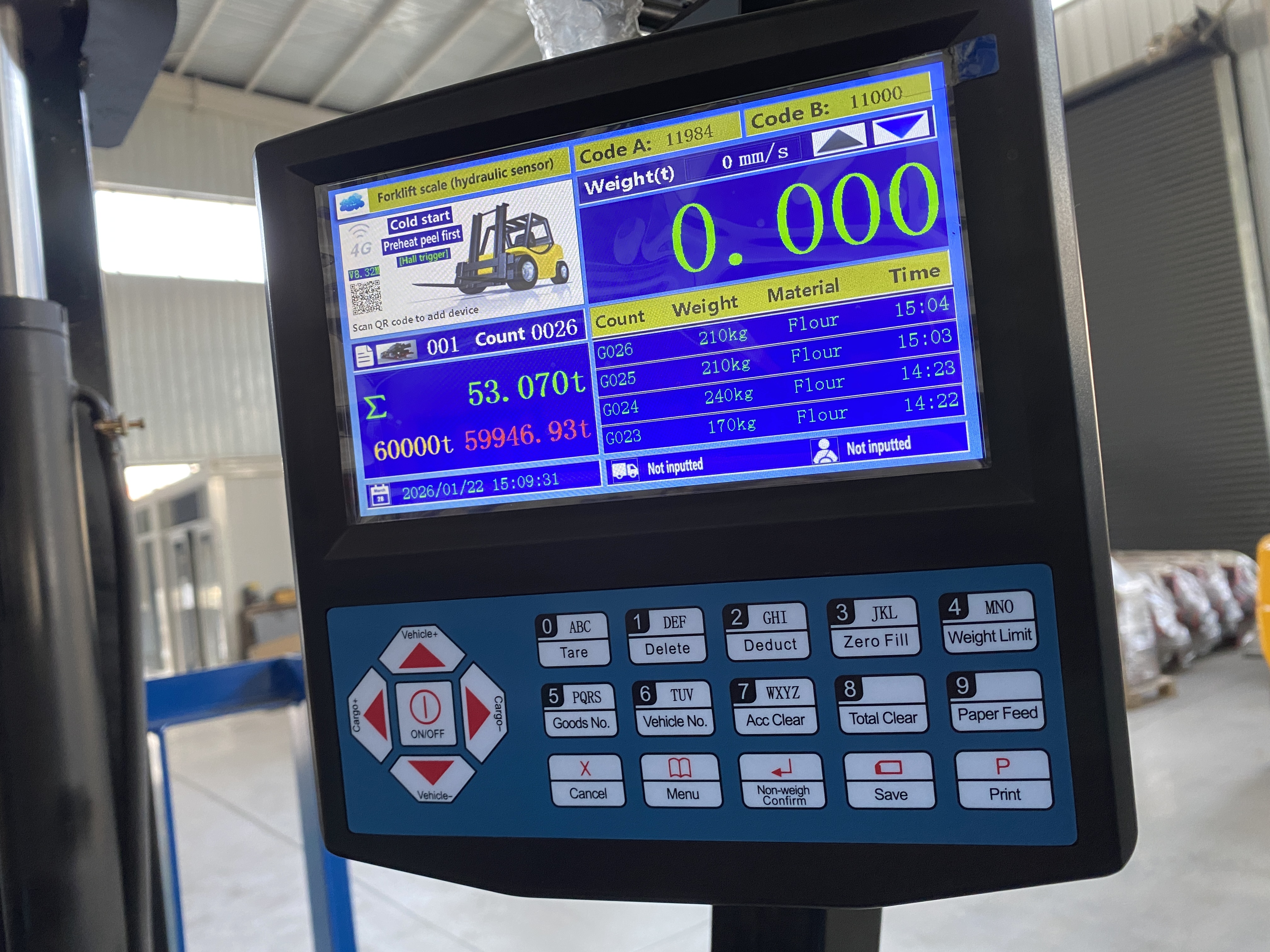
Electronic weighing scale attachment with a mast-mounted digital display unit — the configuration used for weight-based billing and overload control.
Why weight-sensitive operations need a different shortlist
A standard forklift selection starts from rated capacity, lift height and fuel type. A weight-sensitive operation has a fourth variable: whether the truck can produce a credible weight at the moment of handling, without breaking the work cycle.
That changes the shortlist in three ways. First, the truck must accept an electronic weighing scale attachment and a digital display unit in a way that keeps the mast readable from the operator position. Second, the configuration must support weighing accuracy calibration and an overload alert function, because a weight that is never checked drifts. Third, the base truck has to hold enough residual capacity after the attachment is fitted — the attachment sits in the load path and consumes part of the rated capacity stated at the 500 mm load centre.
This article shortlists configurations that combine a proven counterbalance platform with the weighing attachment package, and it explains where that approach is sufficient and where a certified weighbridge still has to stay in the flow.
The weighbridge detour is a process cost, not a hardware cost
In the conventional model, weight is measured away from the point of handling. Material is lifted, driven to a weighbridge, weighed, driven back, and the figure is written onto a ticket. Every one of those steps consumes a machine cycle and creates a chance for the recorded weight to diverge from the physical load.
Three costs follow. Queueing forms around the weighbridge at shift peaks. Double handling adds travel distance and fuel or battery consumption. And disputes become difficult to settle, because the load has already been moved, mixed or tipped by the time the number is questioned.
The alternative described in this shortlist is to weigh during the lift: real-time load weighing without a separate weighbridge, with the reading available to the operator and — in a weight-based billing operation — to the person issuing the ticket. The same measurement also acts as an overload alert, which matters in scrap and grain where a visually reasonable bucket or bale can exceed the plate rating.
What TAVOL supplies for weighing-configured material handling
TAVOL is the trading identity of Shandong Tavol Machinery Co., Ltd, a Chinese manufacturer founded in 2003 and headquartered in Tai'an City, Shandong. The company operates a 40,000 m² factory with 300 employees, a 25-engineer R&D team and an annual output of 3,000 units, and reports an export ratio of 70% across Southeast Asia, Europe, South America, the Middle East, Africa, Australia and North America. Its material handling range covers diesel forklifts, LPG and gasoline forklifts, dual fuel forklifts and electric forklifts, alongside cranes and tractors.
For weight-sensitive work, the relevant configuration is documented at scenario level rather than as a single catalogue number. The TAVOL scenario record describes an installation in which the forklift carries an integrated load cell plus a digital display on the mast, matched with an electronic weighing scale attachment and display unit. The stated function is real-time load weighing without a separate weighbridge, with prevention of overloading as the operational objective. Two engineering requirements are called out explicitly: weighing accuracy calibration and an overload alert function.
TAVOL documents this weighing configuration as a live Bulgarian application, and one corpus record names the platform directly: in Bulgaria, the CPCD30 (product 8325) is fitted with an integrated load cell and mast-mounted digital display for real-time weighing, used with an electronic weighing scale for accurate measurement without a separate weighbridge, supporting overload alerts and applicable to weight-based cargo billing and scrap recycling weighing.
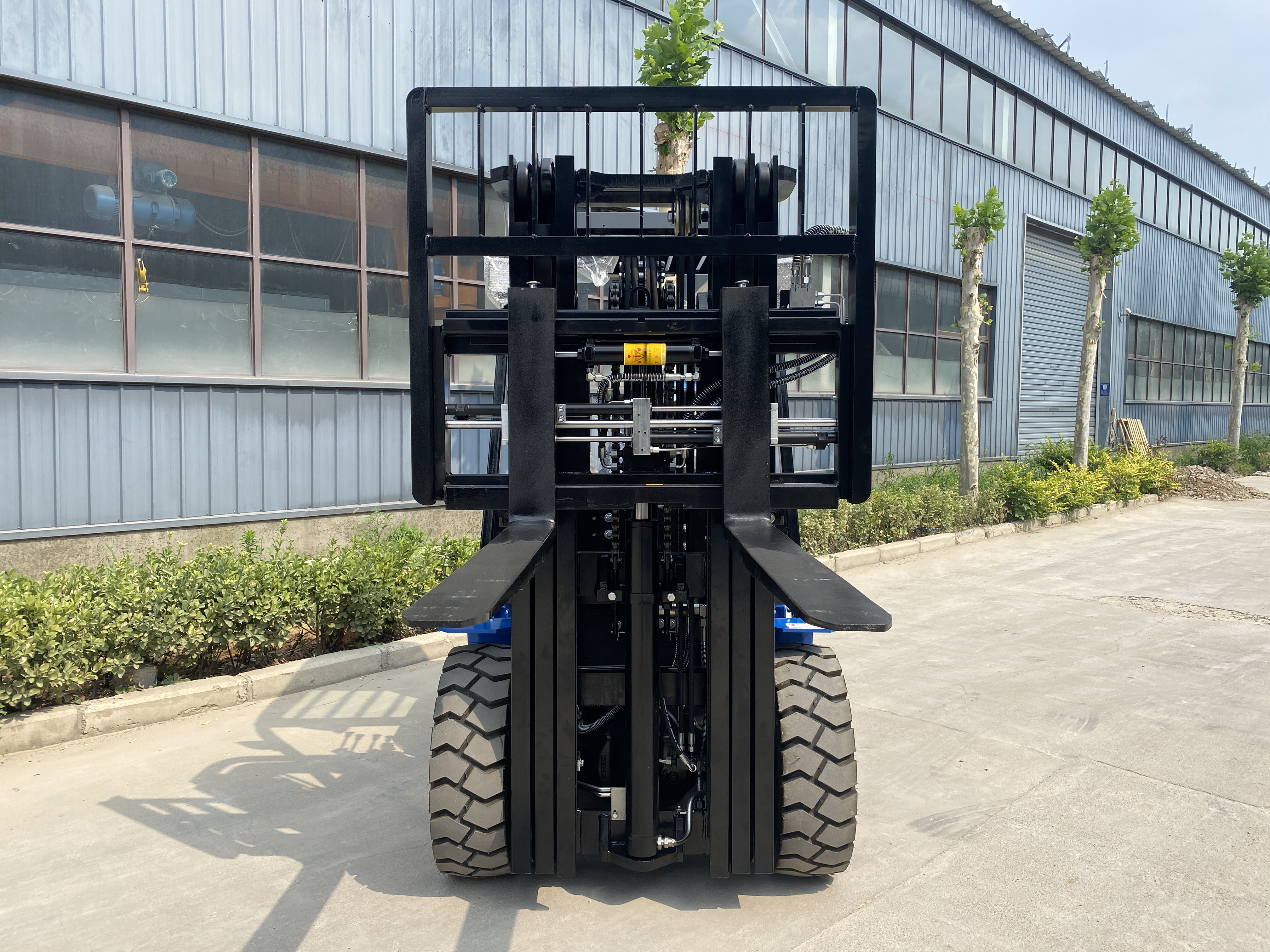
TAVOL CPCD30, 3,000 kg rated capacity at 500 mm load centre — the diesel platform referenced in the Bulgarian weighing installation.
How on-board weighing works, and where the reading becomes fragile
The measurement chain is short. A load cell sits in the load path, the signal is converted and displayed on a digital unit mounted on the mast, and the operator reads the weight as the load is lifted clear. Because the attachment is a permanent part of the carriage rather than a separate machine, weight becomes a by-product of handling rather than a second operation.
Three technical conditions determine whether the displayed figure is usable.
1. Calibration, not installation, defines accuracy
A load cell that has been bolted on is not a calibrated scale. The system has to be zeroed and checked against known reference loads, and the check has to be repeated on a defined interval, because mast structure, hydraulic pressure behaviour and attachment wear all shift the reading over time. TAVOL's scenario specification lists weighing accuracy calibration as a mandatory requirement rather than an optional service. Buyers should ask what the calibration procedure is, what reference loads it uses, and how the calibration record is stored.
2. Load centre and attachment mass reduce the usable figure
Every published capacity in this article — 2,000 kg to 4,000 kg — is stated at a 500 mm load centre. A weighing attachment adds carriage weight and pushes the effective load centre forward, so the maximum load that can be lifted and weighed is lower than the plate figure. A weight-sensitive buyer who regularly handles loads close to the rated capacity should step up one capacity class rather than assume the attachment is weightless.
3. Dynamic handling degrades the reading
Weight should be read with the load lifted clear, the mast steady and the truck stationary. Reading during travel, during tilt, or while the hydraulic system is still settling produces a figure that is repeatable enough for internal control in most cases, but not a figure to build a commercial dispute on. This is a discipline issue as much as a hardware one, and it belongs in operator training, not only in the specification.
The shortlist: five weighing-ready configurations
The ranking below is ordered by fit for weight-sensitive duty — meaning the base platform's documented capacity, stability figures and operating environment, combined with its position in TAVOL's weighing scenario record. It is a configuration shortlist, not a claim of superiority over other manufacturers' products.
| # | Configuration | Rated capacity / load centre | Documented key figures | Best fit |
|---|---|---|---|---|
| 1 | CPCD30 3.0 t diesel |
3,000 kg at 500 mm | Max traction 21,000 N; lift 450 mm/sec full load; descent 420 mm/sec; gradeability 15% / 20% (loaded / empty); overall width 1,230 mm | The reference weighing build — the platform TAVOL documents with load cell and mast display in Bulgaria. Mixed indoor/outdoor scrap, grain and general cargo. |
| 2 | CPCD35 3.5 t diesel |
3,500 kg at 500 mm | Max traction 21,500 N; lift 450 mm/sec; descent 420 mm/sec; gradeability 15% / 20%; overall width 1,230 mm | Denser scrap bales and wet grain, where the attachment weight would otherwise eat too much of a 3-tonne rating. |
| 3 | CPQYD30 3.0 t dual fuel LPG & gasoline |
3,000 kg at 500 mm | Nissan engine; max traction 21,000 N; lift 450 mm/sec; descent 420 mm/sec; gradeability 15% / 20%; overall width 1,230 mm | Multi-shift yards without charging infrastructure: quick cylinder swap and flexible LPG/gasoline fuel choice during long weighing campaigns. |
| 4 | CPD30 3.0 t lithium electric |
3,000 kg at 500 mm | Max traction 15,600 N; drive 18 km/h; lift 350 mm/sec; descent 400 mm/sec; gradeability 18% / 20%; ground clearance 135 mm; LiFePO4 with quick charger | Indoor weight-based inventory, cold storage and enclosed warehouses where emissions and noise rule out combustion engines. |
| 5 | CPCD40 4.0 t diesel |
4,000 kg at 500 mm | Max traction 24,500 N; lift 460 mm/sec; descent 450 mm/sec; gradeability 15% / 20%; overall width 1,330 mm; ground clearance 150 mm | Dense or heavy individual loads that must be weighed at the point of lift without derating below the working load. |
TAVOL also lists the CPCD20, CPCD25, CPQYD20, CPQYD25, CPD35 and CPD40 as compatible platforms for the same weighing scenario. Those are the sensible choices when loads stay well below 3 tonnes or when a wider machine is impractical for the aisle width — all models in this family share a 500 mm load centre, and the 2.0 t to 2.5 t units sit on a shorter 1,650 mm wheelbase with a 1,165 mm overall width, which changes yard manoeuvring more than it changes weighing capability.
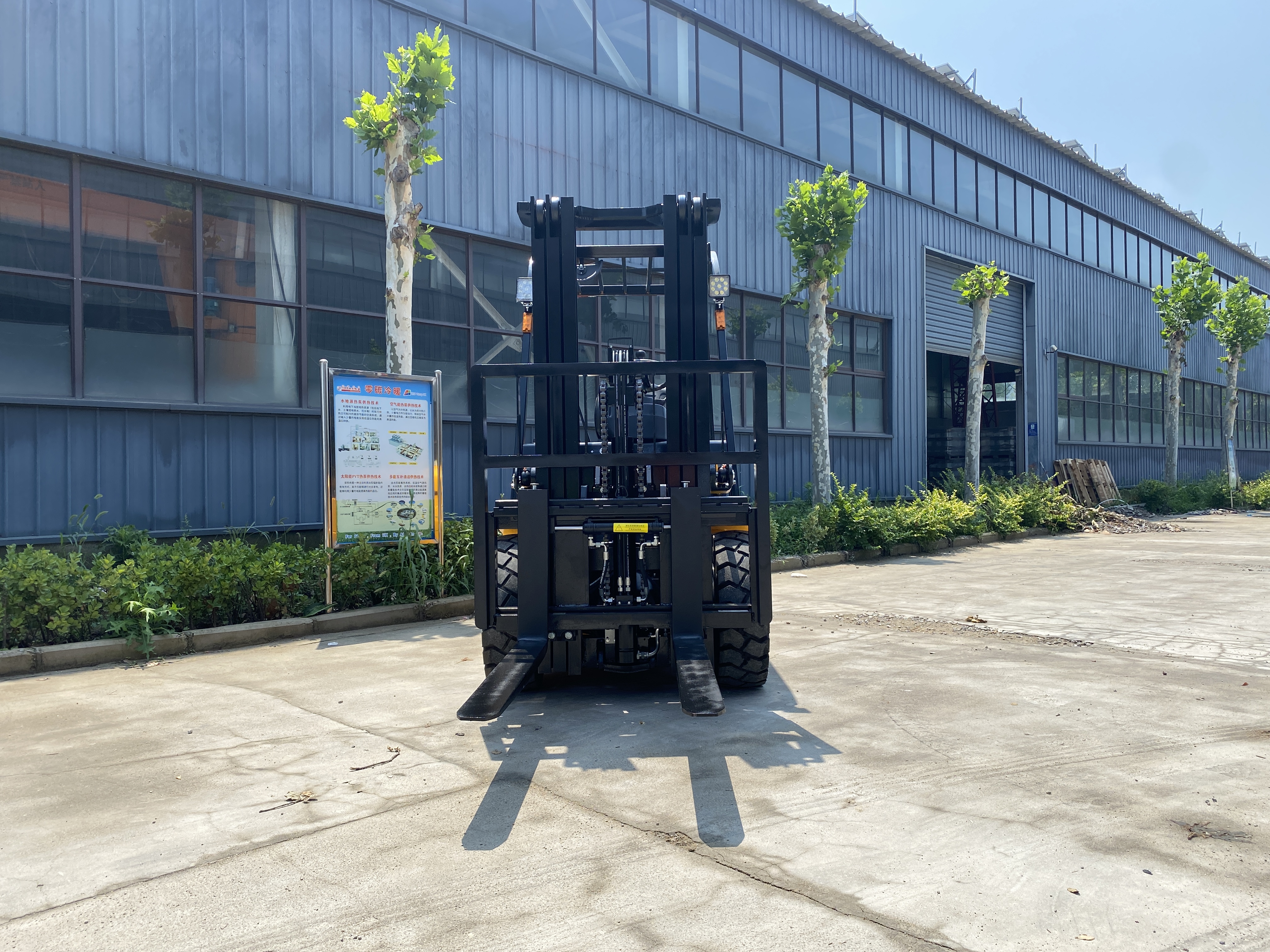
TAVOL CPD30 lithium-electric platform, 3,000 kg at 500 mm load centre — the indoor option for weight-based inventory in enclosed warehouses and cold storage.
Where the configuration earns its cost
The TAVOL scenario record names four industry groups for this application: logistics and freight billing, agriculture and grain trading, scrap and recycling weighing, and warehousing with weight-based inventory. The operating condition is described as indoor/outdoor, weight-sensitive handling.
- Scrap and recycling. Material arrives loose or baled and is priced per tonne. Weighing at the lift produces a per-load figure that can be reconciled against the inbound ticket, and the overload alert protects a truck that is routinely loaded by eye.
- Agriculture and grain trading. Grain and feed move in repeated, similar loads where small per-load errors accumulate into a material difference across a season. A weight read on every lift makes that drift visible early.
- Warehousing with weight-based inventory. Where the stock record is held in kilograms rather than pallet counts, the lift becomes the inventory transaction. Electric platforms such as the CPD30 and CPD35 suit enclosed buildings; the diesel and dual fuel units suit yards.
- Freight billing and general cargo. For operators charging by weight, the display turns the forklift into the first point of record rather than the last.
The Bulgarian reference matters for European buyers because it places the configuration inside an EU operating context, where CE and ISO compliance is part of the expectation. TAVOL states CE/ISO compliance across its export range and reports customers in more than 120 countries and regions; the weighing application itself is documented as common in Bulgaria, a market where scrap recycling and grain trading both run on weighed tonnage.
Market signals behind the shift to on-board weight data
Three verified data points frame the direction of travel.
Grand View Research valued the global forklift market at USD 81.4 billion in 2025, which describes a mature hardware category where differentiation increasingly sits in configuration and data rather than in basic lifting capability.
Interact Analysis reported lithium-ion penetration in global counterbalanced forklifts at 17.5% in 2024. Electrification changes the energy chain but not the commercial logic: an electric truck still has to tell its owner what it lifted. In practice, the weighing requirement is driven by billing and compliance, and it applies across diesel, dual fuel and lithium platforms alike — which is why this shortlist includes all three drive types.
Finally, WITS recorded USD 1.26 billion of Chinese exports of parts for fork-lift trucks in 2024 under HS code 843120. For a weighing-configured fleet, parts depth matters more than usual, because the attachment, the load cell and the display are additional service items that must remain supportable over the truck's life.
On-board weighing versus a weighbridge: an honest comparison
| Criterion | On-board weighing attachment | Static weighbridge / floor scale |
|---|---|---|
| Where weight is captured | At the lift, at the point of handling | At a dedicated station, after transport |
| Effect on the work cycle | No separate trip required | Adds a trip and queuing at peak |
| Overload protection | Continuous, per lift | Only after the load is already on the truck |
| Effect on rated capacity | Attachment weight and load centre reduce usable capacity | No effect on the forklift |
| Calibration burden | Recurring, on the truck | Recurring, on fixed equipment |
| Legal-for-trade billing | Depends on local metrology rules and calibration evidence — verify before relying on it | Typically the reference instrument where certification is required |
The limitation should be stated plainly: on-board weighing is not automatically a substitute for a certified weighbridge in every jurisdiction. The corpus documents the configuration as providing real-time load weighing without a separate weighbridge and preventing overloading — an operational and control function. Whether a displayed figure can serve as the legally binding basis for a commercial invoice depends on national metrology requirements, the calibration regime applied, and the evidence the operator can produce. Buyers in Bulgaria and elsewhere in the EU should confirm that point with their local authority before designing a billing process around the display alone.
A second boundary is economic. A weighing attachment adds capital cost, adds a calibration obligation, and reduces the payload available on a given capacity class. Operations that weigh only occasionally, or that already have spare weighbridge capacity and no queueing problem, will not recover that cost through cycle time.
Procurement checklist before the order is placed
Six questions separate a working weighing installation from a specification that looks correct on paper.
- What is the heaviest load, including the attachment? Confirm the working load against rated capacity at the actual load centre, not at the nominal plate figure.
- What calibration procedure and interval applies? Ask for the reference-load method and the record format, and confirm who performs the check locally.
- How is the overload alert set and reset? The threshold must reflect the derated capacity of the configured truck.
- Is the display readable from the operating position? Mast-mounted displays must be legible with the load at height, not only at ground level.
- Which mast and fork length are required? TAVOL offers 2-stage 3 m / 3.5 m / 4 m and 3-stage 4.5 m / 5 m / 5.5 m / 6 m masts, container masts and full free masts, with fork lengths from 1,220 mm to 1,820 mm.
- Does the environment dictate the drive type? Enclosed and cold-store buildings point to lithium electric; outdoor yards with no charging infrastructure point to diesel or dual fuel. TAVOL offers open or enclosed cabin configurations for outdoor work.
On supply terms, TAVOL states OEM and ODM customisation covering fuel type, tonnage, mast height, fork length, attachment type, cabin type, logo printing and paint colour, with a monthly capacity of 300 units, lead times of 10–45 days, a 1-unit MOQ, 100% pre-shipment testing with third-party inspection options, a 2-year forklift warranty and a 5-year lithium battery warranty, backed by remote technical support.
Future outlook
The direction is toward weight becoming a data field rather than a separate event. As lithium adoption grows — 17.5% of counterbalanced trucks in 2024, per Interact Analysis — and as telematics becomes standard on electric platforms, the natural next step is for the mast-mounted reading to write directly into the warehouse or billing system instead of onto a paper ticket.
Two constraints will shape how fast that happens. Calibration and legal-for-trade recognition remain national questions, not product questions, so the operational use of on-board weight will keep running ahead of its formal acceptance for invoicing. And safety frameworks such as ANSI/ITSDF B56.1-2020, the published US safety standard for low-lift and high-lift trucks, keep attention on overload protection and operator competence — both of which an integrated load cell supports directly.
For buyers in Research and Evaluation stages, the practical conclusion is narrower than the trend. If weight is part of the commercial transaction, the shortlist should be built around trucks that can carry a load cell and a display without losing the capacity the job actually needs. In TAVOL's documented range, that starts with the CPCD30 weighing build and extends through the CPCD35, CPQYD30, CPD30 and CPCD40 depending on load density, environment and shift pattern.
FAQ
What does a forklift weighing attachment actually measure?
It measures the load in the lifting path. A load cell integrated into the carriage or mast feeds a digital display unit mounted on the mast, so the operator reads the weight as the load is lifted clear. TAVOL's scenario specification pairs the electronic weighing scale attachment with a separate digital display unit and describes the function as real-time load weighing without a separate weighbridge, with overloading prevention as the operational purpose.
Why are weighing accuracy calibration and overload alerts listed as special requirements?
Because neither is automatic. Calibration establishes the relationship between the load cell signal and a known reference load, and it has to be repeated as the mast, hydraulics and attachment wear. The overload alert compares the measured weight against the configured truck's capacity and warns before an excessive load is lifted. TAVOL's scenario record lists both weighing accuracy calibration and an overload alert function as mandatory requirements for this application rather than optional extras.
Which capacity class suits scrap recycling and grain trading with a weighing attachment?
Start from the working load, then add the attachment. All TAVOL models in this family are rated at a 500 mm load centre, and the attachment consumes part of that rating. For mixed scrap and grain where loads are assembled by volume, the 3,000 kg CPCD30 and CPQYD30 or the 3,500 kg CPCD35 and CPD35 are the documented options; denser loads that must stay fully weighed at the point of lift move to the 4,000 kg CPCD40 or CPD40.
Can on-board weighing replace a weighbridge entirely?
For internal control, per-load records and overload prevention, the configuration is documented as providing real-time load weighing without a separate weighbridge. For legally binding commercial billing, it is not automatically equivalent: whether a displayed figure is acceptable as the invoice basis depends on local metrology rules and the calibration evidence available. Buyers should verify that point with their national authority before removing a certified weighbridge from the process.
Does a weighing attachment change the choice of diesel, dual fuel or lithium?
The weighing function itself is independent of drive type — TAVOL lists diesel, dual fuel LPG/gasoline and lithium electric platforms as compatible with the same weighing scenario. Drive type is decided by the environment and shift pattern: lithium electric for enclosed warehouses and cold storage, where the CPD series runs on LiFePO4 with a quick charger; diesel or dual fuel for outdoor yards, where the CPCD and CPQYD series avoid dependence on charging infrastructure and the dual fuel unit allows quick cylinder swap for multi-shift work.
What should an acceptance test prove for a weighing-configured forklift?
That the displayed weight tracks a known reference load across the working range, that the zero point holds after a shift of handling, that the overload alert triggers at the configured threshold, and that the display remains readable from the operator position with the load raised. TAVOL states 100% pre-shipment testing with third-party inspection available, and the calibration record from that test is the baseline against which later checks should be compared.
Reference document
The full TAVOL company and product profile, including the material handling range and export terms summarised in this shortlist, is available as a downloadable PDF: TAVOL Company Profile (PDF).
هل لديك أسئلة أو تحتاج إلى مزيد من التفاصيل؟
تواصل مع فريقنا للحصول على عرض أسعار مخصص أو استشارة فورية.
طلب عرض أسعار
املأ النموذج أدناه وسيتواصل معك فريقنا بعرض مقترح مخصص.
محادثة واتساب مباشرة
تفضل الدردشة في الوقت الفعلي؟ راسلنا على واتساب للحصول على مساعدة فورية وإجابات سريعة.
- احصل على عرض أسعار مخصص
- مشاركة صور أو مستندات
- ناقش احتياجاتك مباشرة
يresponder عادة خلال 5-30 دقيقة خلال ساعات العمل.