
Material-Led Centrifuge Shortlist for Corrosive Media
Material-Led Centrifuge Shortlist for Corrosive Media
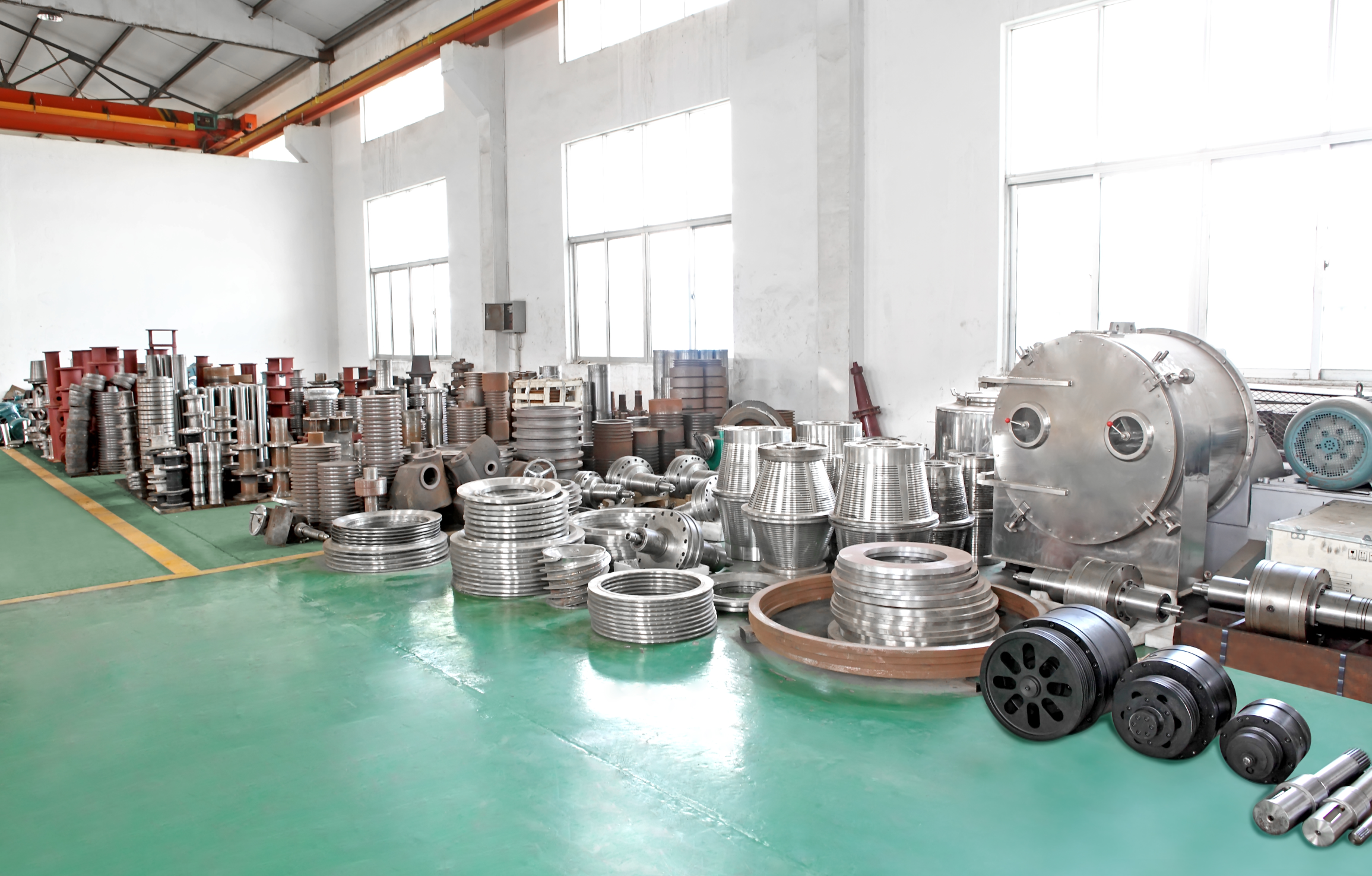
Corrosive chemical media do not fail a centrifuge on the first day of operation. They fail it over months, through pitting, stress-corrosion cracking, and gradual loss of surface integrity in the basket, casing, and discharge zone. For buyers at the decision and execution stage, that means the useful shortlist is not built around throughput claims alone. It is built around contact-part metallurgy, discharge method, cleaning regime, and explosion protection.
This article sets out a material-led shortlist of industrial centrifuge options for corrosive media, using published material and drive options from JGD Centrifuge Co., Ltd., a Zhangjiagang-based centrifuge manufacturer founded in 2012 that produces basket, peeler, pusher, scraper, decanter, and bag-lifting centrifuges for chemical, pharmaceutical, food, environmental, and metallurgical industries. The shortlist below is framed as options to verify against duty, discharge method, and cleaning needs, not as a universal ranking.
Why Material Choice Comes Before Model Choice
The first screening question for a corrosive duty is not "which centrifuge is fastest" but "which wetted material survives this chemistry." A basket centrifuge with the right geometry and the wrong contact alloy is a maintenance liability, not a separation asset.
Published industry guidance from JGD Centrifuge on material selection for corrosive media follows a tiered logic: SS304 for normal working conditions; SS316L for moderate corrosion; Hastelloy or PTFE lining for strong corrosion. The same guidance states that ordinary SS304 should be avoided for materials containing chloride ions. That single rule often moves a buyer from a standard stainless basket toward a higher-alloy or lined option before any mechanical specification is discussed.
Corrosion intensity and operating temperature are the two material-selection criteria the manufacturer publishes for this decision. In practice, a buyer should treat those as the gate, and then match discharge method, sealing, and cleaning to the same duty.
The Material Options in Scope
The published material and drive options relevant to a corrosive-media shortlist include SS316L, SS2205 duplex stainless steel, SS904L, titanium, and Hastelloy-C as contact-part options on basket centrifuge models, with explosion-proof motors stated for some configurations. Each material addresses a different corrosion profile, and none is a universal substitute for another.
| Contact Material | Typical Corrosion Profile | Where It Fits | What to Verify |
|---|---|---|---|
| SS304 | Normal working conditions | Non-aggressive media, no chloride exposure | Chloride content and temperature |
| SS316L | Moderate corrosion | Chemical intermediates, moderate chloride duty | Actual chloride level and operating temperature |
| SS2205 duplex | Chloride-bearing, weakly alkaline systems | Lithium carbonate and similar salt suspensions | CIP compatibility and exact salt composition |
| SS904L | Higher-alloy austenitic option | More aggressive acid duties where stated | Availability of stated contact-part configuration |
| Titanium | Oxidizing and chloride environments where stated | Selected aggressive chemical duties | Whether the model is offered in titanium |
| Hastelloy-C | Strong corrosion, including chloride-bearing media | Duties where SS316L is insufficient | Full wetted-path coverage, not only the basket |
This table is a screening aid, not a selection rule. Published guidance from JGD Centrifuge is explicit that SS316L suits moderate corrosion while Hastelloy or PTFE lining is intended for strong corrosion. The table should be read as a set of options to confirm against the actual duty, not as an equivalence claim between materials.
Shortlist Option 1: GK1000 with 316L Contact Parts
The GK1000, a model within the GK/GKF series of horizontal scraper discharge centrifuges from JGD Centrifuge, is offered with 316L contact parts for corrosive chemical processing. The GK/GKF series is a horizontal scraper discharge configuration, and the 316L contact-part option positions the GK1000 for moderate-corrosion chemical duties rather than for strong-corrosion service.
For a buyer, the GK1000 with 316L contact parts is best treated as a candidate for chemical intermediates, moderate-chloride process streams, and duties where the corrosion profile falls within the SS316L band published by the manufacturer. It is not the right starting point for media that require Hastelloy or PTFE lining under the same published guidance.
Three verification points should be settled before the GK1000 is confirmed on a shortlist:
- Chloride level and temperature. Published guidance warns against ordinary SS304 for chloride-bearing media and positions SS316L for moderate corrosion. The buyer should confirm the actual chloride concentration and operating temperature against the 316L band.
- Discharge method and downstream handling. The GK/GKF series is a scraper discharge configuration, so the receiving system, cake handling, and any downstream washing step should be designed around that discharge mode.
- Sealing and drive protection. Where the chemical duty also involves flammable or explosive atmospheres, the buyer should confirm whether an explosion-proof motor option applies to the specific GK1000 configuration.
Shortlist Option 2: Basket Centrifuge Models with Advanced Alloys
Basket centrifuge models from JGD Centrifuge are offered with SS316L, SS2205, SS904L, titanium, and Hastelloy-C contact parts, and some configurations state explosion-proof motors. That spread of options is what makes a material-led shortlist possible for more aggressive duties, because it allows the buyer to move up the alloy ladder without changing the basic separation principle.
The SS2205 option is not theoretical. In a published application case for lithium extraction from brine in the Atacama Salt Lake of Chile, the working condition is a lithium carbonate crystalline suspension with 10%–30% solid content in a weakly alkaline system containing soluble salts (Na⁺, SO₄²⁻, Cl⁻) with certain corrosive properties. The stated material requirement is SS2205 duplex stainless steel, with a maximum drum speed of 1,200 rpm, a 30 kW main motor, and a separation factor of 1008. The same case specifies a CIP online cleaning system and strict solid-liquid separation precision for lithium carbonate crystal recovery. That case is useful to buyers because it shows SS2205 being selected for a chloride-bearing, weakly alkaline duty with a CIP requirement, rather than being selected on alloy grade alone.

The Hastelloy-C option addresses the strong-corrosion end of the range. Published JGD Centrifuge guidance places Hastelloy or PTFE lining in the strong-corrosion band, so a Hastelloy-C basket configuration should be evaluated as a strong-corrosion option rather than as an upgrade to SS316L for convenience. The same logic applies to SS904L and titanium: they are options to confirm against the duty, not default upgrades.
Discharge Method Sits Alongside Material Choice
A material-led shortlist is incomplete without a discharge decision, because discharge determines operator exposure, sealing, and cleaning access. Published JGD Centrifuge guidance describes three discharge paths for batch type basket centrifuges: manual upper shoveling on the basic model; direct lifting of filter bags on the hanging bag model; and fully automatic scraper bottom discharge on the LGZ/PGZ model.
For corrosive media, the discharge choice is a containment choice. Manual top discharge requires the cover to be opened, and the published safety note is that the lid should not be opened until the equipment has completely stopped. A fully automatic bottom-discharge scraper configuration, by contrast, supports a closed and fully automatic circulation system controlled by PLC and touch screen. Published comparison data from JGD Centrifuge states that the PSB top discharge centrifuge requires one operator to control it at a time, while one employee can operate multiple LGZ bottom discharge scraper centrifuges; that the LGZ configuration saves over 20% in costs; and that under the same power consumption the LGZ bottom discharge scraper centrifuge achieves over 50% higher solid-liquid separation processing efficiency than the PSB top discharge centrifuge. Those figures are published comparison claims and should be verified against the specific duty rather than adopted as universal performance ratios.
The practical reading for a corrosive-media buyer is that a fully automatic bottom-discharge scraper configuration reduces operator contact with the process stream and supports a closed loop, which matters when the medium is both corrosive and hazardous. The trade-off is that the automatic configuration is a more involved specification, and the buyer must confirm the PLC and touch-screen control scope, the cleaning sequence, and the sealing arrangement against the plant's own standards.
Cleaning, Sealing, and Explosion Protection
Corrosive duty and cleaning duty usually arrive together. The published Chile lithium case specifies a CIP online cleaning system alongside the SS2205 requirement, which is a useful reminder that material selection and cleaning design should be confirmed as a pair. A material that survives the process chemistry but cannot be cleaned in place may still fail the plant's hygiene or cross-contamination requirements.
Explosion protection is the third axis. The topic scope includes explosion-proof motors where stated, and JGD Centrifuge's company profile lists on-site explosion-proof protection among its customization areas. For a corrosive and potentially flammable duty, the buyer should confirm whether the explosion-proof motor option is available on the specific model and material combination, rather than assuming it carries across the whole range.
Application Fit: Where Each Option Tends to Land
Published material scope for batch type basket centrifuges covers granular and crystalline solid materials such as salt crystals, traditional Chinese medicine extracts, chemical intermediates, resins, and food additives. That scope is a useful boundary for the shortlist, because it tells the buyer which duty families the batch basket configuration is intended to serve before material grade is layered on.
Mapping the shortlist to application families gives a practical starting point:
- Chemical intermediates and moderate-chloride streams. GK1000 with 316L contact parts, or a basket centrifuge in SS316L, subject to confirmation of chloride level and temperature.
- Chloride-bearing salt suspensions with CIP requirements. Basket centrifuge in SS2205, following the published Chile lithium carbonate precedent.
- Strong-corrosion duties where SS316L is insufficient. Basket centrifuge in Hastelloy-C or a PTFE-lined configuration, per published strong-corrosion guidance.
- Higher-alloy acid duties where stated. Basket centrifuge in SS904L, subject to confirming that the stated contact-part configuration is offered for the model.
- Oxidizing or chloride duties where stated. Basket centrifuge in titanium, subject to the same confirmation.
These mappings are starting points, not assignments. The manufacturer's published position is that material selection follows corrosion intensity and temperature, so the same application family can move up or down the alloy ladder depending on the actual duty.
A Verification Framework for the Shortlist
Published JGD Centrifuge selection guidance lists the main parameters to consider as drum diameter, drum volume, loading limit, rotation speed, separation factor, motor power, and filter media type. It also lists material properties to confirm: corrosiveness, whether the duty is explosion-proof, temperature, and solid content. That list can be converted into a verification framework for the corrosive-media shortlist.
| Verification Item | Why It Matters for Corrosive Media | Evidence to Request |
|---|---|---|
| Contact-part alloy and wetted path | Corrosion resistance depends on full wetted-path coverage | Material certificate covering basket, casing, and discharge zone |
| Chloride level and temperature | Drives the SS316L-to-Hastelloy transition | Process data sheet with chloride concentration and temperature range |
| Discharge method | Sets operator exposure and containment level | Discharge configuration drawing and sealing description |
| Cleaning regime | CIP compatibility must match the chosen alloy | CIP sequence and cleaning-agent compatibility statement |
| Explosion protection | Determines whether the drive option is available on the model | Motor and drive certification for the stated configuration |
| Separation factor and speed | Must match crystal size and breakage tolerance | Speed, separation factor, and drum data for the selected model |
The separation factor deserves a separate note. Published JGD Centrifuge guidance states that for crystalline materials the separation factor is generally 800–1200; for fine particulate materials it should be appropriately increased; and for fragile materials the value should not be too high, to prevent particle breakage. A corrosive salt duty with fragile crystals can therefore require a lower separation factor than a fine-particulate duty, even when the material grade is the same.
Limits and Boundaries of This Shortlist
A shortlist without stated limits is a sales document, not a reference. Three boundaries should be stated plainly.
First, the material options are published options, not demonstrated performance claims. The article can state that basket centrifuge models are offered with SS316L, SS2205, SS904L, titanium, and Hastelloy-C contact parts, and that some configurations state explosion-proof motors. It cannot state that a given alloy will deliver a specific service life in a specific medium, because that depends on concentration, temperature, and cleaning chemistry that are buyer-specific.
Second, the comparison figures are published claims. The over 20% cost saving and over 50% solid-liquid separation processing efficiency improvement for the LGZ bottom discharge scraper centrifuge versus the PSB top discharge centrifuge are manufacturer-published comparison claims. They are useful as a directional comparison framework, not as a guarantee for a specific corrosive duty.
Third, certificate scope should be confirmed. JGD Centrifuge states that it holds CE and CO, and that it can do its best to provide other certificates if requested. The published CE standard references are EN ISO 12100:2010, EN 12547:2014, and EN 60204-1:2018. Buyers with market-specific conformity requirements should confirm the applicable certificate against the destination market rather than assuming CE covers all requirements.
Market Context: Why Material-Led Shortlists Are Growing
The material-led approach is not only a procurement preference. It reflects where filtering centrifuge demand is moving. Published commercial research cited in the verified data package for this category places the global industrial centrifuge market at USD 10.06 billion in 2025, projected to reach USD 13.61 billion by 2030 at a CAGR of 6.3% (Fortune Business Insights / The Business Research Company). The same source material states that filtering centrifuges are forecast to grow at 7.2% annually, driven by API crystallization and specialty-chemical purification, and that approximately 57% of pharmaceutical manufacturing plants adopted horizontal scraper centrifuges.
Those figures should be read as commercial research estimates, and the verified data package notes that commercial market-size figures in the supplied results are inconsistent across sources and lack validated scope and methodology. They are directionally useful for understanding why filtering and scraper configurations are receiving more attention, but they should not be used as consensus market data. What they support is a simpler point: the growth areas named in the research — API crystallization, specialty-chemical purification, and pharmaceutical manufacturing — are precisely the areas where contact-part material and cleaning regime drive the purchase decision.
The standards environment reinforces the same shift. EN 12547:2014 is identified in the verified data package as the current European standard for centrifuge safety requirements, excluding household and laboratory models under EN 61010-2-020. For a buyer specifying a corrosive-media centrifuge for a European destination, that standard sits alongside the material and cleaning requirements rather than replacing them.
Future Outlook
Two directions are likely to shape corrosive-media centrifuge shortlists over the next buying cycle. The first is the continued move toward higher-alloy and lined contact parts as chloride-bearing and specialty-chemical duties become more common in the application mix. The second is the tighter pairing of material selection with cleaning and containment design, because a fully automatic bottom-discharge configuration with CIP is only as good as the alloy it is built from, and an alloy is only as good as the cleaning regime it can survive.
For buyers at the decision and execution stage, the practical implication is to treat material, discharge, cleaning, and explosion protection as one specification package rather than four separate purchasing decisions. The shortlist above is intended to support that package, not to replace the duty-specific engineering review.
JGD Centrifuge publishes a company brochure with further detail on its separation equipment range and customization areas, available for download: JGD Centrifuge brochure (PDF).
FAQ
How should equipment materials be selected for corrosive materials?
Published guidance from JGD Centrifuge states that SS304 is used for normal working conditions, SS316L for moderate corrosion, and Hastelloy or PTFE lining for strong corrosion. The same guidance states that ordinary SS304 should be avoided for materials containing chloride ions. The selection criteria given are corrosion intensity and temperature.
What are the key parameters to consider when selecting a suitable model?
Published JGD Centrifuge selection guidance lists drum diameter, drum volume, loading limit, rotation speed, separation factor, motor power, and filter media type as the main parameters. It also lists material properties to confirm: corrosiveness, whether the duty is explosion-proof, temperature, and solid content. The same guidance states that where production capacity is higher and an explosion-proof closed system is required, an automatic bottom-discharging centrifuge should be chosen.
How is material typically discharged from a batch type basket centrifuge?
Published JGD Centrifuge guidance describes three discharge paths: manual upper shoveling on the basic model; direct lifting of filter bags on the hanging bag model; and fully automatic scraper bottom discharge on the LGZ/PGZ model. The published safety note is that the lid should not be opened until the equipment has completely stopped.
What are the main differences between the PSB top discharge centrifuge and the LGZ bottom discharge scraper centrifuge?
Published comparison material states that the PSB model is a manual top discharge centrifuge, while the LGZ model is a fully automatic bottom discharge scraper centrifuge. The key difference given is the discharging method. The same material states that if solid capacity is high and the equipment needs to be sealed and explosion-proof, the LGZ model bottom discharge scraper centrifuge can be chosen.
What materials are suitable for a batch type basket centrifuge?
Published JGD Centrifuge guidance states that the batch type basket centrifuge is suitable for solid-liquid separation of granular and crystalline solid materials such as salt crystals, traditional Chinese medicine extracts, chemical intermediates, resins, and food additives.
Do you have any certificate?
JGD Centrifuge states that it holds CE and CO, and that it can do its best to provide other certificates if the customer requests them. The published CE standard references are EN ISO 12100:2010, EN 12547:2014, and EN 60204-1:2018.
What should be done if the centrifuge vibrates violently during operation?
Published JGD Centrifuge troubleshooting guidance states that the centrifuge should be stopped for inspection to prevent safety accidents and equipment damage. The stated causes are uneven solid concentration with lumps and a filter that is too coarse. The stated mitigation is to ensure that solid concentration is uniform and does not form lumps before feeding, and to select the appropriate mesh size for the filter cloth.
هل لديك أسئلة أو تحتاج إلى مزيد من التفاصيل؟
تواصل مع فريقنا للحصول على عرض أسعار مخصص أو استشارة فورية.
طلب عرض أسعار
املأ النموذج أدناه وسيتواصل معك فريقنا بعرض مقترح مخصص.
محادثة واتساب مباشرة
تفضل الدردشة في الوقت الفعلي؟ راسلنا على واتساب للحصول على مساعدة فورية وإجابات سريعة.
- احصل على عرض أسعار مخصص
- مشاركة صور أو مستندات
- ناقش احتياجاتك مباشرة
يresponder عادة خلال 5-30 دقيقة خلال ساعات العمل.