
Medical, Appliance, Temperature Control Harness Fit Compared
Medical, Appliance, Temperature Control Harness Fit Compared
A wire harness that passes incoming inspection can still fail in service when it was specified for the wrong duty environment. That is the practical source of most medical, appliance and building temperature control harness disputes: the drawings look similar, the acceptance language looks similar, yet the three programs load the same assembly in different ways. This comparison sets out how harness requirements diverge across those three project types — indoor and outdoor exposure, 24/7 duty, waterproofing, high-temperature margin, shielding, flame-retardant and low-smoke halogen-free options, and PCB or port interfaces — and what a procurement team should verify before approving a drawing for each one. It is a fit comparison for buyers, not a supplier ranking.
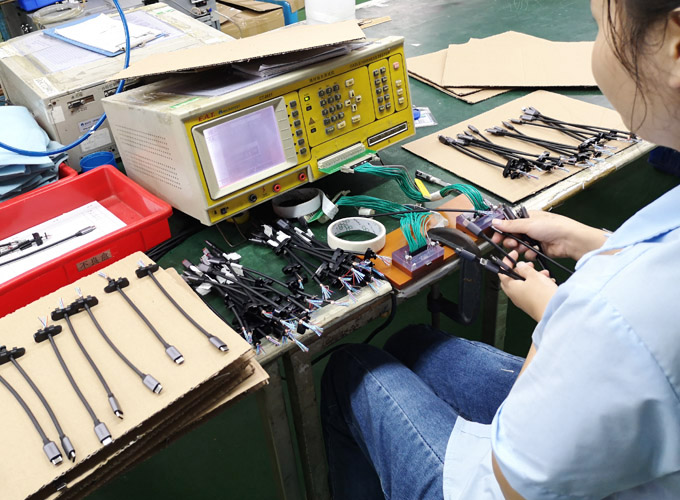
Fit is decided by duty, not by drawing similarity
The global wire harness market was estimated at USD 99.58 billion in 2024, with industrial applications and electrification cited among the drivers, and Asia Pacific holding a 46% share of that market in the same year, according to Precedence Research. Automotive remained the dominant end-user segment in 2024, with electric vehicles requiring more complex harness architectures, according to Future Market Insights. The consequence for medical, appliance and temperature control buyers is that their programs sit outside the volume core: they are custom, frequently lower volume, and specified on drawings rather than selected from a catalogue.
That shifts the centre of gravity. In a custom program the decisive document is the requirement — the drawing, the acceptance class, the material callout, the connector part number — not the size of the supplier. The same factory can build a harness that fits one application and a harness that fails another, because the specification, not the capacity, defines what fit means.
Published growth forecasts should be read as scenario inputs rather than planning certainties, since estimates for the same category vary with methodology and scope. What a buyer can actually verify is narrower and more useful: the drawing, the sample, the first-article report and the acceptance record.
Three duty profiles at a glance
The table summarises where the three project types usually diverge. Each entry describes a common pattern rather than a mandatory rule; the program specification and the applicable standard for the destination market always take precedence.
| Requirement focus | Medical equipment | Household appliance | Building temperature control |
|---|---|---|---|
| Duty pattern | Continuous, often 24/7 inside the equipment enclosure | Appliance use cycles with long standby and peak-load periods | Continuous 24/7 control duty with seasonal heating or cooling peaks |
| Environment | Indoor, temperature-controlled clinical or laboratory space | Indoor, with moisture near washable or wet zones | Split: panel indoors, condenser, rooftop or valve end outdoors |
| Waterproofing | Usually needed only where cleaning fluids reach the assembly | Needed for splash and wet-zone components | Needed at outdoor connectors, grommets and enclosure entries |
| Thermal exposure | Moderate and stable, largely from the device itself | Local heat from heaters, motors and compressors | Wide ambient range plus cycling between panel and outdoor unit |
| Shielding | Where low-level signal or imaging circuits are present | Rarely, except motor noise or sensitive control signals | Commonly on sensor and communication lines; multi-core shielded constructions |
| Fire and smoke | Flame-retardant grades; low-smoke halogen-free often requested | Flame-retardant grades per product standard and market | Flame-retardant and low-smoke halogen-free options for runs through occupied spaces |
| Interface emphasis | Fine-pitch PCB headers, locking connectors, defined mating force | Terminal crimps, high-current power paths, spade and ring lugs | Controller terminals, PCB headers, field wiring ports |
| Documentation | Revision control, traceability, agreed acceptance class | Repeatability data and agency component records | Project schedules, outdoor ratings, installation detail |
| Main mis-specification risk | Mechanical or signal fit that appears only at assembly | Crimp and thermal margin that appear only in service | Moisture ingress and shield termination that appear after a season outdoors |
Medical equipment: mechanical and signal fit under continuous duty
Medical equipment harnesses are usually internal assemblies: low-voltage signal and power wiring routed between PCB interfaces, modules and ports inside an enclosure. Ambient conditions are typically stable and indoor, so the hardest requirements are rarely environmental extremes. They are mechanical fit in a crowded enclosure, signal integrity on low-level circuits, and documentation that survives an audit.
Three requirements tend to shape the specification. Connector choice is normally locked to brand and part number, because a substitute that changes mating force or plating can alter assembly yield. Low-smoke halogen-free and flame-retardant insulation is often requested for equipment used in occupied clinical spaces, with the final determination resting with the device maker and the applicable standard rather than with the harness supplier. Acceptance is written rather than implied: IPC/WHMA-A-620 defines Classes 1, 2 and 3 for cable and wire harness assemblies, and the class a program adopts is a buyer decision that belongs on the purchase specification.
A boundary is worth stating plainly. A harness supplier can build to a drawing and an agreed acceptance class, and can document material compliance. Device-level validation — cleaning and disinfection compatibility, sterilization where relevant, and clinical performance — remains the device manufacturer's responsibility. A supplier certificate does not transfer that obligation.
Household appliances: cost, crimp quality and repeatability
Appliance harnesses are typically higher-volume wiring looms built from terminal-crimped wires, with high-current power paths running alongside control circuits. The environment is mostly indoor but not benign: moisture near washable zones, local heat from heaters, motors and compressors, and vibration transmitted through the chassis. The dominant commercial pressure is unit cost; the dominant technical risk is the crimp.
A workable appliance specification therefore concentrates on wire gauge and insulation type, terminal part numbers, crimp height and pull strength, strain relief, and routing that keeps the loom clear of hot surfaces and moving parts. Agency-recognized components are commonly required, and which mark applies depends on the destination market and the product standard rather than on the harness design alone.
The fit boundary is volume logic. Appliance programs reward repeatability — stable tooling, controlled crimping and consistent incoming material. A program that changes connector brands or wire types between lots to chase a lower piece price gives up exactly the consistency it is paying for, and the loss usually surfaces as field returns rather than as a line stoppage.
Building temperature control: long runs, weather and shield termination
Temperature control projects — controllers, valves, actuators, heat pumps, condenser and rooftop units — split the harness across two environments. The controller end sits indoors in a panel; the working end sits outdoors or in an unconditioned space. That split, more than the electronics, is what makes the specification difficult.
Outdoor sections face ultraviolet exposure, condensation, rain and thermal cycling between a warm panel and a cold outdoor unit. Waterproof connectors, sealed grommets and correctly rated jacket materials matter far more than they do indoors. Sensor and communication lines commonly use shielded constructions, and a shield is only useful when it is terminated and grounded as the drawing requires; an unterminated or wrongly landed shield is a field fault that no incoming inspection catches.
Indoor runs through occupied spaces often prompt flame-retardant and low-smoke halogen-free options. Whether a specific installation requires them is a project and code determination for the buyer or specifying engineer; the supplier's role is to build and document what is specified, not to certify the installation.
Six levers that decide which specification wins
1. Indoor or outdoor use
Indoor use removes weather from the requirement set and concentrates attention on mechanical fit, heat from the equipment itself, and handling during assembly. Outdoor use adds jacket material, connector sealing and drainage to the same list. A harness that crosses both zones — panel to rooftop, for example — should be specified position by position, because one weatherproof connector at the entry point does not protect the rest of the run.
2. 24/7 operation and thermal margin
Continuous duty changes the meaning of a temperature rating. A harness that reaches a comfortable steady state in an appliance cycle may sit at a higher stabilized temperature when it runs without pause, particularly inside an enclosed panel. The buyer's question is not only the peak ambient figure but the stabilized temperature at the conductor and at the connector, together with the current producing it. That is where an under-specified gauge or a marginal terminal shows up first.
3. Waterproofing
Waterproofing is a property of a joint, not of a harness. Sealed connectors, grommets, overmoulding or potting each protect a specific interface, and the specification should name which interfaces need protection and to what condition. Medical assemblies are usually dry inside the enclosure and need protection only where cleaning fluids reach them; appliance looms need it in wet zones; temperature control harnesses need it wherever the run leaves the building envelope.
4. Shielding
Shielding answers a specific noise problem. It is commonly specified for sensor, communication and low-level signal lines, and for multi-core constructions where several signals share a route. What goes wrong is usually not the presence of a shield but its termination: drain wire, clamp or connector shell all have to be defined on the drawing, or the shield becomes a source of intermittent faults that appear only after installation.
5. Flame-retardant and low-smoke halogen-free options
These are two different requirements and should be written as two. Flame retardance addresses whether a material resists ignition and flame spread; low-smoke halogen-free construction addresses what is released when material does burn, which matters in occupied or poorly ventilated spaces. Medical and building programs more often ask for both; appliance programs usually specify flame retardance against the relevant product standard. Recording the exact material callout prevents a later substitution that satisfies one requirement while quietly failing the other.
6. PCB and port interfaces
Interface definition is where the three segments converge and where most costly errors originate. A medical harness carries fine-pitch PCB headers with a defined mating force; an appliance loom carries terminal crimps and lugs on high-current paths; a temperature control harness carries controller terminals and field wiring ports that will be connected on site, sometimes by an installer rather than a technician. The drawing should settle pitch, locking, keying, plating and strain relief before quotation, not at first article.
Drawing discipline that transfers across all three
Because the segments differ in environment and load but share the same drafting language, one set of drawing rules covers all of them. The points below come from P-Shine Electronics Co., Ltd's published guidance on harness drawing design and are presented as drafting practice, not as a proprietary method:
- State the connector brand and part number for every position, not a generic description.
- Differentiate identical connectors used in adjacent locations by color or marking.
- Give each circuit its own color, and state wire type, gauge and color per wire — for example a UL1007 wire at 28AWG.
- Dimension each loop, and dimension each branch where the loom splits.
- Keep at least 30 mm between a branch point and the nearest connector, and arrange branch positions so heat-shrink tubing can be applied correctly.
- Define the function of every pin, such as Power+ or GND, so assembly and test can be checked against intent.
These rules matter most where interpretation is least affordable. A medical program needs pin definitions and colors to keep assembly verifiable; an appliance program needs branch dimensions to keep looms identical between runs; a temperature control program needs connector and shield detail to make a site installation repeatable.
Connector sourcing: original brand or approved alternative
Connector choice is a cost and risk decision that belongs to the buyer. The default position in custom harness manufacturing is to purchase connectors to the brand and part number on the drawing, so the harness matches what was qualified. Where a lower-cost alternative is proposed, it should be handled as an engineering change rather than a purchasing shortcut: sample it, test it against mating compatibility, plating, crimp tooling and cycle-life requirements, approve it in writing, and update the drawing and part number so later lots are built to the approved configuration.
Substitution without a documented change creates two problems at once. The buyer loses traceability of what was actually built, and any later field issue becomes difficult to attribute. For medical and outdoor temperature control programs, that ambiguity is usually more expensive than the connector saving.
Reading supplier-published comparisons
Comparative claims are common in this category and need to be read as claims. P-Shine Electronics Co., Ltd states that its pricing is at least 25% lower than major international brand equivalents and that its dimensional tolerance control is 50% tighter than mainstream competing brands. Those are supplier-published positions describing commercial and process differences; they are not independent benchmarks, and they are not a ranking endorsement of any supplier for a specific program.
Turning such a claim into a usable comparison takes five questions: which brands and part numbers were compared; at what volume, market and date; which dimensions were measured and by what method; what the sample size was; and whether the finding covers the buyer's own drawing. A supplier that can answer those questions offers something more useful than a percentage — a reproducible basis for comparison.
Two boundaries apply regardless of the answer. A lower price does not by itself establish suitability for medical or outdoor duty, and tighter tolerance on one dimension does not establish tighter control across the whole assembly. Both are inputs to a decision settled by first-article inspection, crimp pull and cross-section results, and the agreed acceptance class.
Capability reference: P-Shine Electronics Co., Ltd
P-Shine Electronics Co., Ltd is a Dongguan-based cable and harness manufacturer founded in 1997, operating seven independent factories covering wire harnesses, USB cables, cable assemblies, AC power cords, connectors, copper wire processing and its own insulation materials. The company reports 20 R&D engineers, an annual output of 2,000,000 pieces and a 60% export share concentrated in the EU, USA and Middle East.
Its stated certifications include UL, CSA, CE, PSE, VDE, KC, SAA, BIS and CCC for products, ISO 9001 and ISO 14001 for its factories, and IATF 16949 for the plant producing automotive-related cable assemblies; materials are stated to comply with RoHS, REACH and California Proposition 65. These facts describe capability, market access and documented systems. They do not establish that a given harness is suitable for a given medical, appliance or temperature control program — that is decided by the drawing, the sample validation and the acceptance data for that specific part.
Illustrative scenarios: where the same part number diverges
The examples below are conditional illustrations, not documented customer cases. They show where requirements separate in practice.
Medical monitor, internal harness. A low-voltage harness links a display board, a sensor module and a rear port inside a sealed enclosure. The binding constraints are fine-pitch PCB headers, a clear pin definition, low-smoke halogen-free insulation where the device is used in occupied clinical space, and revision control so a connector change cannot enter production unnoticed. Waterproofing is limited to the cleaning interface at the enclosure entry.
Washing machine, power and control loom. A terminal-crimped loom carries mains power to the motor and heater alongside control signals, with branches to the door lock and the pump. The binding constraints are crimp quality, thermal margin near the heater, strain relief at the moving door area, and lot-to-lot repeatability. Low-smoke halogen-free insulation rarely governs here; flame-retardant grades and crimp records do.
Rooftop heat pump, controller-to-actuator run. A harness runs from an indoor controller panel to an outdoor valve actuator. The binding constraints are waterproof connectors at the outdoor end, a UV- and moisture-rated jacket, a shielded pair for the communication signal with its termination defined, and thermal cycling between the two environments. The indoor half of the same harness needs none of these.
Verification checklist before drawing approval
- Confirm the environment for every position, not for the harness as a whole.
- State stabilized temperature and current at connectors and conductors, not only ambient.
- Name each interface that needs sealing and the condition it must resist.
- Define shield termination and grounding points, or state that no shield is required.
- Write flame-retardant and low-smoke halogen-free as separate material callouts.
- Lock connector brand and part number, and define the approval route for alternatives.
- Agree the acceptance class and the inspection records that accompany each lot.
- Ask any supplier making comparative price or tolerance claims for the comparison basis and the supporting inspection data.
Outlook and conclusion
Demand-side signals in this category point toward more specification, not less: industrial applications and electrification are cited as market drivers, and more complex vehicle architectures have already pushed harness documentation forward. With Asia Pacific holding 46% of the market in 2024, buyers should also treat supply concentration as a planning variable rather than an assumption of continuity. Forecast growth rates vary by methodology, so they are best used as scenarios alongside, not instead of, verified supplier data.
The comparison answer is therefore practical. Medical harness fit is decided by mechanical and signal definition under continuous duty, documented against an agreed acceptance class. Appliance harness fit is decided by crimp quality, thermal margin and repeatability at volume. Building temperature control fit is decided by weather exposure, shield termination and interfaces designed for site installation. P-Shine Electronics Co., Ltd's infrastructure and certifications are relevant reference points when those requirement sets are being sourced — no more, and no less.
FAQ
What changes most between a medical equipment harness and a household appliance harness?
The load profile and the documentation. A medical harness is usually an internal, low-voltage assembly where mechanical fit in a crowded enclosure, signal integrity and revision-controlled drawings dominate, and acceptance is often written against an agreed class of IPC/WHMA-A-620. An appliance harness is usually a higher-volume loom with terminal-crimped high-current paths, where crimp quality, thermal margin, strain relief and repeatability between lots dominate. Both may be indoor assemblies, but the medical program buys control and traceability while the appliance program buys consistent cost per unit.
Does a building temperature control harness always need waterproofing and shielding?
No — requirements follow the routing. The controller end inside a panel is normally a dry indoor location where standard connectors are sufficient. Waterproofing is specified where the harness leaves the enclosure, terminates at an outdoor unit, or crosses a condensation-prone path. Shielding is specified where sensor or communication lines run near switching noise or over long distances. Both should be stated position by position on the drawing, with the termination method defined; specifying a shield without a termination instruction is a common cause of field faults.
When should flame-retardant or low-smoke halogen-free insulation be specified?
Specify them when the application or the applicable standard requires them, and record the requirement on the drawing and purchase order. Medical equipment used in occupied clinical spaces and cable runs passing through occupied building spaces are the usual triggers for low-smoke halogen-free options, while appliance programs typically specify flame-retardant grades according to the market and product standard. A harness supplier can confirm material compliance and supply documentation, but the determination of which requirement applies to an installation belongs to the device maker, specifying engineer or authority having jurisdiction.
How should PCB and port interfaces be defined on a harness drawing?
Each connector position should state the brand and part number, and each wire should state its type, gauge and color — for example a UL1007 wire at 28AWG. Loop lengths, and branch lengths where the loom splits, should be dimensioned, with at least 30 mm between a branch point and the nearest connector. Each pin should carry a functional definition such as Power+ or GND, and identical connectors sitting adjacent should be differentiated by color or marking to reduce assembly error. The same rules serve medical, appliance and temperature control programs.
Can non-original connectors be used to reduce harness cost?
Only with the customer's agreement, and normally only after sample testing. Original brand connectors are the default, purchased to the brand and part number on the drawing. Where a lower-cost alternative is proposed, the buyer should review the sample against mating compatibility, plating, crimp tooling and cycle-life requirements, approve it in writing, and update the drawing and part number so later lots are built to the approved configuration. Substitution without a documented change is a traceability and quality risk rather than a cost saving.
P-Shine Electronics Co., Ltd company profile and product catalogue (PDF) can be downloaded here: P-Shine Introduction & Catalog.
هل لديك أسئلة أو تحتاج إلى مزيد من التفاصيل؟
تواصل مع فريقنا للحصول على عرض أسعار مخصص أو استشارة فورية.
طلب عرض أسعار
املأ النموذج أدناه وسيتواصل معك فريقنا بعرض مقترح مخصص.
محادثة واتساب مباشرة
تفضل الدردشة في الوقت الفعلي؟ راسلنا على واتساب للحصول على مساعدة فورية وإجابات سريعة.
- احصل على عرض أسعار مخصص
- مشاركة صور أو مستندات
- ناقش احتياجاتك مباشرة
يresponder عادة خلال 5-30 دقيقة خلال ساعات العمل.