
Medical Injection Molding Supplier Audit: Continuity and Capacity
Medical Injection Molding Supplier Audit: Continuity and Capacity
A medical injection molding program that runs for five years will consume far more management attention after the purchase order than during the quotation. The decision that matters is therefore not which quote is lowest, but whether the same process, tooling, capacity and documentation can be reproduced twelve quarters later. A continuity and capacity audit answers that question before award — and keeps answering it afterwards.
Why a single quotation cannot carry a multi-year decision
A quotation is a snapshot of one part, one material, one volume band and one moment in the supplier's production calendar. It does not record how long the tool is designed to run, what triggers requalification, whether capacity is reserved or shared, how maintenance downtime is scheduled, or who signs off when a resin lot changes. Those are the variables that determine whether a medical program holds its specification in year three, and none of them appear on a price sheet.
Regulatory direction has made the gap more consequential. The US Food and Drug Administration's Quality Management System Regulation, which incorporates ISO 13485:2016 by reference, became effective on 2 February 2026. ISO 13485 itself is written for organizations involved in the design, production, installation and servicing of medical devices and related services. In practice, device manufacturers now assess contract molders as part of their own quality-system story, which means a molder's continuity evidence becomes part of the buyer's conformity evidence too.
The audit described here is deliberately narrow. It does not attempt to re-score a supplier's engineering skill or commercial terms. It asks one question in five different ways: if we place this program with this supplier, what evidence will still be true in three years, and who is responsible for renewing it?
The five evidence layers buyers should examine
Most supplier evaluations collapse several different kinds of proof into a single "certified" checkbox. Keeping them separate makes the audit comparable across candidates and makes any later deterioration visible.
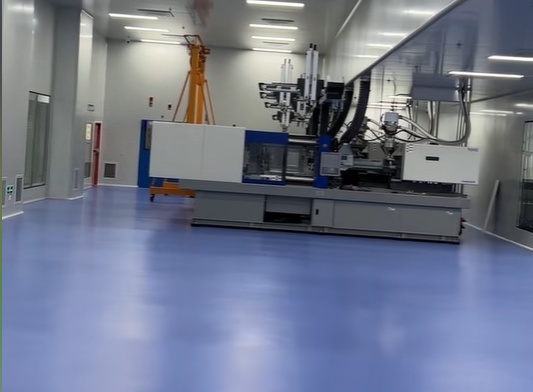
Medical molding programs are awarded on evidence that must remain valid across the full production life of the part, not only at the sampling stage.
| Evidence layer | What it can establish | What it cannot establish | When to recheck |
|---|---|---|---|
| Quality-system certificate and its written scope | Which management system operates at the named site, and whether the certified scope names your component category | That a specific part conforms, or that lot-to-lot output will stay stable | At every certificate cycle and at any scope or site change |
| Third-party product-safety reports, such as FDA food-contact and EU RoHS test reports | That a tested material grade or sample met a defined specification at the time of test | Lot release, process validation, or a substitute for a device-specific biocompatibility assessment | When resin grade, colour or additive package changes |
| On-site audit report from an inspection body | The observed condition of the site: traceability, calibration, incoming-material control, nonconforming-product handling | A live guarantee — an audit is a dated snapshot of the days the auditor was present | After ownership, site, layout or major process change |
| Process validation records (IQ/OQ/PQ or equivalent) | That the process was shown to produce conforming output inside defined parameter windows | Anything about equipment, tool or resin combinations that were not validated | At every defined revalidation trigger |
| Inspection, capability and tooling documentation | How the supplier measures, reacts to drift and plans tool maintenance and replacement | That capacity will be available on your requested dates | At each program review, and before any volume increase |
Certificate scope: read the wording, not the logo
The most common continuity failure is not a missing certificate. It is a certificate whose scope does not actually cover the work being quoted. A buyer should physically read five fields: the standard and its version; the certificate number and issuing body; the scope statement; the site address; and the current validity and surveillance status.
Scope wording is where the detail hides. A scope describing general plastic products tells a medical buyer very little, because it does not name the component category or the process route. A scope that names precision injection molded components for medical applications is a different and much more useful document, particularly when the wording matches the parts you intend to order. If the wording is broader than your program, ask the supplier to explain how the certified scope maps to your specific part family, and record that explanation.
Version and standard identity matter as much as scope. ISO 9001:2015 and ISO 13485 are not interchangeable labels: ISO 9001 is a general quality-management standard, while ISO 13485 addresses the medical-device lifecycle specifically, and the FDA's 2026 regulation aligns US quality-system expectations with that medical-device standard. A supplier may legitimately hold one, the other, or both, and the correct buyer action differs in each case.
DTG TECH CO., LTD. describes itself as an ISO-certified custom injection molder, founded in 2002 and operating a 2,500 m² facility with 80 employees and a 25-engineer team. For a medical program, that self-description is the starting point of the audit, not the end of it: the certificate itself, its scope sentence, its issue and expiry dates and its surveillance history should be obtained and read before any medical-device customer relies on it.
Product-safety reports: what a test report can and cannot carry
Reports such as FDA food-contact test data and EU RoHS declarations are frequently presented as proof that a supplier is "medical-capable". They prove something narrower and still useful: that a specific tested material grade or sample met a defined specification under a defined method at a specific time.
Four checks turn such a report into continuity evidence rather than decoration. First, confirm the tested grade matches the grade proposed for your part — medical-grade ABS and medical-grade PC are families, not single materials, and a report on one grade does not transfer to another. Second, check the date and the test house, and whether the laboratory's accreditation covers the method cited. Third, check what was tested: a plaque or a coupon is not the same as a finished device housing with a specific wall thickness and gate location. Fourth, check the specification version referenced, because food-contact and RoHS requirements are revised periodically.
Where these reports stop is equally important. RoHS addresses restricted substances; food-contact testing addresses material migration under specified conditions. Neither one validates a molding process, and neither replaces a device-specific biological evaluation. Buyers who treat them as process evidence will overestimate what they have bought.
On-site audit reports: valuable, dated and finite
A third-party on-site audit report from an internationally recognised inspection body is one of the strongest single documents a molder can present, because it reflects what an independent auditor observed rather than what the supplier asserts. Its value depends almost entirely on four attributes: the date of the visit, the site audited, the activities inside the audit scope, and the severity and closure status of any findings.
The continuity question is what happens between audits. An audit conducted before a plant reorganisation, a machine replacement or a change of moulding hall describes a site that no longer exists in its audited form. Buyers should therefore record the audit date in the program file and tie a re-audit to defined change events rather than to a vague intention. It is also reasonable to ask whether major findings were closed with objective evidence, not only with a written response.
Capacity that can be scheduled, not merely claimed
Capacity claims are usually expressed in adjectives — flexible, scalable, high-volume. A continuity audit converts them into arithmetic. Take annual demand, divide by the number of cavities in the proposed tool to obtain the annual shot count, then compare that figure with the machine hours, cycle time and shift pattern the supplier intends to allocate. If the resulting utilisation leaves no room for maintenance, the plan is optimistic regardless of how the supplier describes itself.
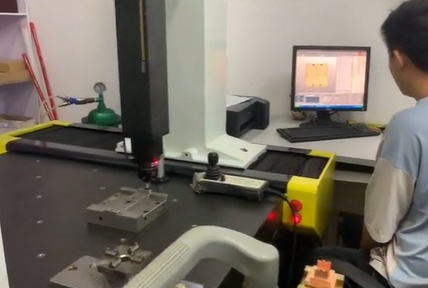
Capacity continuity depends on how machine time, tool maintenance and batch changeovers are scheduled across the whole program, not on a single peak-output figure.
DTG TECH CO., LTD. reports flexible production runs from low to high volumes, fast turnaround, on-time delivery, and real-time tracking of production schedule and output as a delivery-risk control. The company also reports an annual output figure of 47,881 units. That number is a useful anchor for the audit precisely because it is specific: a buyer with a larger annual requirement should confirm machine allocation, shift pattern and reserved capacity in writing rather than assume the figure scales.
| Question to put in writing | Why the answer changes the continuity conclusion |
|---|---|
| Is capacity reserved for this program, or drawn from a shared pool? | Shared capacity converts your forecast into a queue position behind other customers |
| What machine and shift allocation is planned at peak volume? | A single-shift plan and a three-shift plan produce very different delivery risk |
| How is mold maintenance downtime scheduled? | Maintenance performed inside the delivery window consumes capacity that was promised to you |
| Will a second tool be built if volume grows beyond plan? | Tool duplication is the only reliable way to add capacity without changing process history |
| Which production steps are subcontracted? | Subcontracted steps introduce additional quality systems that must be audited separately |
Mold life and end-of-life planning
Tooling is the part of a medical molding program most likely to be under-planned, because the tool is usually bought once and then forgotten until it fails. A continuity audit should obtain the designed shot count for the tool, the number of cavities, the steel and insert strategy, the planned maintenance interval, the wear components expected to be replaced, and the trigger that starts refurbishment or replacement.
Buyers should also establish three commercial facts early: who owns the tool, what happens to the tool if the relationship ends, and what lead time and cost apply to a replacement tool built to the same documentation. Without those answers, a mold reaching the end of its designed life becomes an unplanned program interruption rather than a budgeted event.
DTG's documented controls at this stage include mold structure optimization, mold testing, T1 sample validation and a mold trial approval process, applied specifically to manage short mold lifespan and poor part release risks. Those are process controls that reduce the probability of a defective or badly releasing tool. They are not the same as a designed shot-life figure, and the audit should record the two separately so that a maintenance regime is not mistaken for a capability guarantee.
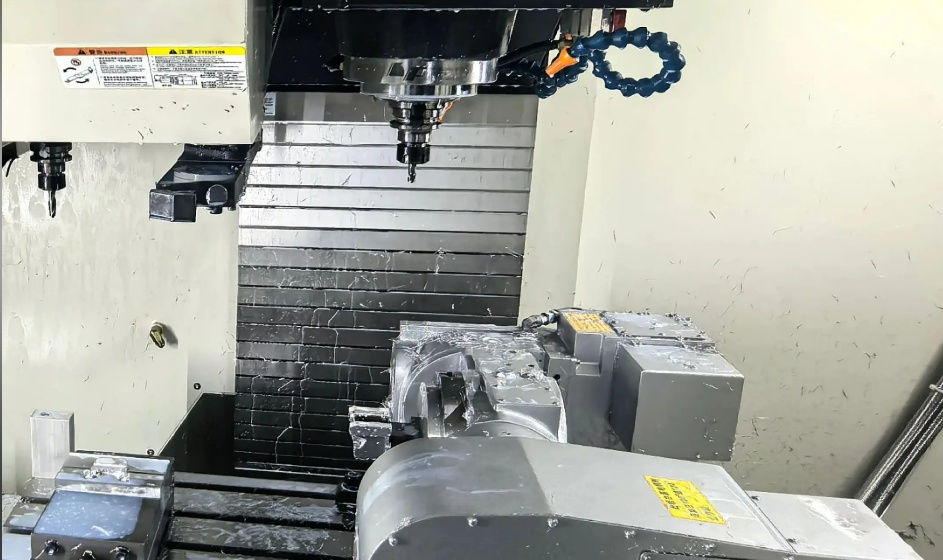
Tool structure, maintenance planning and replacement triggers belong in the supplier evaluation, because tool end-of-life is a scheduled event, not an accident.
Process validation as the continuity record
FDA training material defines process validation as establishing, by objective evidence, that a process consistently produces a result or product meeting predetermined specifications, and states that validation is required where process results cannot be fully verified by subsequent inspection and testing — with injection molding given as an example. FDA inspection guidance also lists molding, sterilization operations, environmental control systems such as cleanrooms, and test methods among the processes for which validation should be performed as applicable.
That definition is what makes validation a continuity instrument rather than a one-time deliverable. The validated state is bounded by the equipment, tool, resin and parameter window that produced the evidence. When any of those change, the evidence no longer describes the process being run. A supplier's revalidation trigger list is therefore one of the most revealing documents in the whole evaluation: it shows whether the organisation treats change as an event requiring proof, or as an administrative note.
DTG's documented quality controls include DFM and mold flow analysis before tooling production, unified production specifications issued after sample confirmation to reduce production variation, dimensional inspection, first article inspection and in-process inspection with critical dimensions monitored throughout production, full pre-shipment quality inspection to control batch quality fluctuation, and incoming-material verification with molding parameters set according to material characteristics. Read as a continuity package, these describe a change-control habit rather than a single certificate — which is the more useful thing to evaluate, provided the buyer confirms how deviations are recorded and how revalidation decisions are made.
Where integrated tooling and molding changes the schedule
Many buyers separate mold making from molding and coordinate the two. That structure has advantages in specialisation and price transparency, but it inserts a handover between two organisations at exactly the point where process knowledge is most valuable. DTG's documented comparison of an integrated structure against a separated one cites a shortened overall project cycle of 20%–30%, a reduction of more than 50% in cross-supplier communication time, and 10–15 fewer working days per project spent on coordination meetings and handovers.
The company's engineering-support comparison adds a second set of figures: 40%–60% fewer design-modification iterations when DFM analysis precedes tooling, mold trial cycles reduced from an average of five to seven down to two to three, and a 20%–30% shorter time to market for new product launches. These are schedule effects, and they should be read as such. A shorter cycle does not by itself make a part more compliant; it reduces the number of opportunities for specification drift between tool designer, molder and buyer.
For a long-term program the practical implication is narrower than the marketing version. Integration shortens the front end, which means the validation and documentation work starts earlier and finishes earlier. On a multi-year program, that head start is worth more than the percentage itself, because it buys calendar time for the first article inspection and the customer approval step that precede mass production.
Precision, cost and the fit boundary
High-precision molding is not a general upgrade. DTG's documented comparison of precision-controlled molding against conventional molding cites tolerances of ±0.01 mm to ±0.05 mm instead of ±0.1 mm to ±0.2 mm, a dimensional scrap rate of 0.5% or below instead of 3%–5%, and surface roughness of Ra 0.4–1.6 μm instead of Ra 3.2–6.4 μm. The same comparison notes a slightly higher manufacturing control cost offset by lower rejection and rework costs.
The fit boundary is where those numbers actually apply: medical plastic parts, housings and instrument components where assembly tolerance or surface condition affects function. Where a part is non-critical, non-visible and generously toleranced, the additional control cost buys little. The audit should therefore ask which specific dimensions the supplier intends to monitor in-process, and how those dimensions relate to the assembly, rather than accepting a headline tolerance figure for the whole part.
One further boundary belongs in any honest continuity evaluation. A single integrated supplier concentrates dependency: tooling, process knowledge, maintenance history and production capacity all sit in one organisation, so a capacity conflict or an ownership change affects everything at once. Buyers with critical programs should decide in advance which single point of failure they are prepared to carry, and what documentation would be needed to move a tool to a second source if that became necessary.
Market context: why continuity evidence is being priced in
Grand View Research estimated the global medical injection molding market at approximately $27.32 billion in 2025, with a projected rise to $38.32 billion by 2030 and a compound annual growth rate of 6.8% over that period. The same source reported that Asia Pacific held a 41.9% revenue share in 2025. Market definitions differ across research houses — a separate 2024 base-year estimate from Market Research Future places the market materially lower, largely reflecting different treatment of materials versus services — so these figures are best used as directional context rather than as a planning constant.
The more durable signal is regulatory. With the FDA quality-system regulation effective from February 2026 and aligned to ISO 13485, the documentation burden on medical device manufacturers has become more explicitly supply-chain-facing. Where certified, audited and validation-documented capacity is scarce, buyers tend to lock capacity earlier and ask for longer evidence trails. That shift favours suppliers who can produce a maintenance record, a revalidation trigger list and a tool-life plan on request, and it disadvantages suppliers whose evidence consists of a certificate image and an assurance.
Building the requalification calendar
The audit is not finished when the supplier is approved. It should end with a calendar that assigns an owner and a trigger to each evidence layer. A workable pattern for most programs is to review certificate validity and scope annually, review validation status at every defined change trigger, review tool condition and shot count at each maintenance interval, and review capacity allocation whenever the demand forecast moves by a material amount.
Two documents make that calendar enforceable. The first is a quality agreement that names the change-notification obligations in both directions — the supplier notifying the buyer of process, material, site or tooling changes, and the buyer notifying the supplier of specification or volume changes. The second is a program file that holds the current version of every certificate, report, validation record and audit response, with dates. When a buyer cannot state the date of the last certificate check, the last audit and the last tool inspection, the audit has not really been completed.
Outlook
Long-term medical molding supply is gradually being evaluated as an evidence relationship rather than a transaction. The suppliers that keep multi-year programs are usually not the ones with the most impressive single document; they are the ones whose documents are still current, whose tooling plan anticipates replacement, and whose validation logic survives a resin change. For buyers in the execution stage, the practical next step is unglamorous: convert each candidate's claims into dated evidence, put the open questions in writing, and review the file before the first production batch rather than after the first quality deviation.
FAQ
How can a buyer confirm that a supplier's quality certificate still covers their part three years into a program?
Obtain the certificate itself rather than a description of it, and check five fields: the standard and version, the certificate number and issuing body, the scope sentence, the site address, and the validity and surveillance dates. Confirm that the scope wording names the component category and process used for your part, and re-check the record at each certificate cycle, because scope wording can be narrowed at recertification without any change to the supplier's marketing language.
What capacity evidence should be requested before committing a multi-year volume?
Convert annual demand into an annual shot count using the proposed cavity number, then ask for the machine and shift allocation planned at peak, whether capacity is reserved or shared with other programs, how mold maintenance downtime is scheduled inside the delivery window, whether a second tool would be built for volume growth, and which production steps are subcontracted. Written answers to those five questions are more informative than any headline capacity figure.
What happens when a mold reaches the end of its designed shot life in the middle of a program?
It becomes a planned or unplanned event depending on what was agreed at award. The evaluation should record the designed shot count, the maintenance interval, the wear parts expected to be replaced, the trigger for refurbishment or replacement, the lead time and cost of a replacement tool built to the same documentation, and the ownership and transfer rights for the existing tool. DTG documents mold structure optimization, mold testing and T1 sample validation as controls against short tool life and poor part release; those controls reduce risk but should be recorded separately from the designed shot-life figure.
How are purchasing terms and acceptance criteria usually structured for medical molding projects?
In DTG's documented terms, the minimum order quantity is negotiable based on part size, material, mold requirements and production volume. Delivery can be arranged on EXW, FOB or CIF terms, by sea or air freight, or through a client-designated logistics provider. Acceptance typically follows DFM approval, T1 sample approval, first article inspection and final quality inspection before shipment, and the documented payment structure is 50% T/T in advance to start mold production with the 50% balance after mold approval or before shipment.
Which records should be re-verified at each requalification?
At minimum: the validation protocol and report, the current molding parameter window and control plan, material certificates matching the approved resin grade, dimensional and inspection data from the most recent production period, tool maintenance records with shot counts, and the change notifications received since the previous review. Each record should carry a date and a version so that the requalification decision can be reconstructed later.
Is a third-party on-site audit report sufficient to qualify a molding supplier?
No. It is one strong layer of evidence. An audit report describes the site on the days the auditor was present, within a defined scope, and its relevance decays after ownership, layout, equipment or process changes. It should be combined with certificate scope review, product-safety reports matched to the actual resin grade, process validation records for the specific tool and equipment, and inspection data showing ongoing performance.
DTG TECH CO., LTD. is a custom injection molding manufacturer founded in 2002, operating a 2,500 m² facility with 80 employees and a 25-engineer team, serving customers in the USA, Europe and India with 100% export-oriented production. A company presentation covering capabilities and process controls is available for download: Xiamen DTG Tech Co., Ltd. presentation (PDF).
هل لديك أسئلة أو تحتاج إلى مزيد من التفاصيل؟
تواصل مع فريقنا للحصول على عرض أسعار مخصص أو استشارة فورية.
طلب عرض أسعار
املأ النموذج أدناه وسيتواصل معك فريقنا بعرض مقترح مخصص.
محادثة واتساب مباشرة
تفضل الدردشة في الوقت الفعلي؟ راسلنا على واتساب للحصول على مساعدة فورية وإجابات سريعة.
- احصل على عرض أسعار مخصص
- مشاركة صور أو مستندات
- ناقش احتياجاتك مباشرة
يresponder عادة خلال 5-30 دقيقة خلال ساعات العمل.