
Medical Manikins: Training Models for Clinical Education
Medical Manikins: Training Models for Clinical Education
Chongqing Scope Instrument Co., Ltd. is a professional supplier of laboratory and medical training instruments and metallographic equipment located in Chongqing, China. The company manufactures medical manikins designed for emergency, clinical, and nursing skills training in medical colleges, training institutions, and first-aid programs.
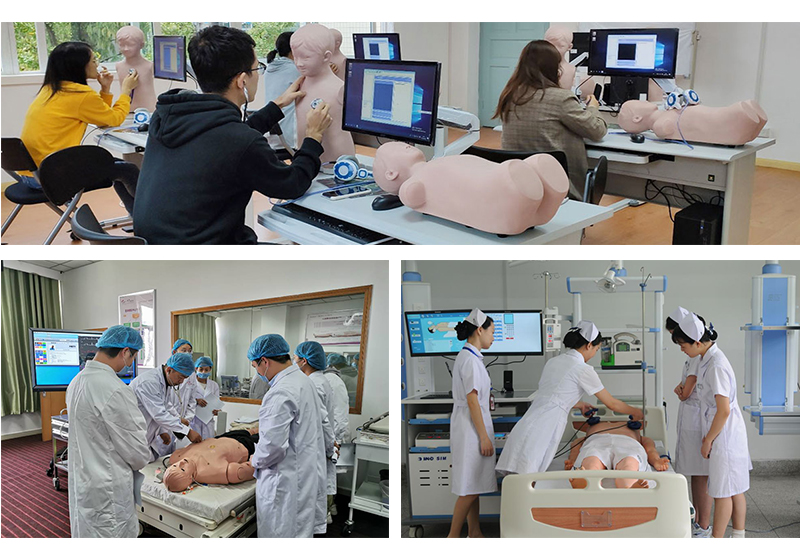
Medical manikins — also called training manikins, medical mannequins, or simulation models — are physical replicas of human anatomy used to practice clinical procedures such as cardiopulmonary resuscitation (CPR), injection, intubation, puncture, and routine nursing care. They allow learners to repeat procedures until competence is demonstrated, without placing a real patient at risk.
Why Simulation-Based Training Is Gaining Ground
The global medical simulation market was valued at USD 1.9 billion in 2025 and is projected to reach USD 6.7 billion by 2033, according to Grand View Research. Within that sector, healthcare anatomical models — including medical manikins — held the largest product share at approximately 41.4% in 2025.
Medical educators face a recurring challenge: clinical skills require hands-on practice, yet access to patients, cadavers, and supervised placements is limited. Manikins address this gap by providing a repeatable, standardized training surface for skills ranging from basic injection technique to emergency airway management.
Regulatory momentum is also visible. According to Market Research Future, China's National Medical Commission mandated simulation labs for the accreditation of all new medical schools as of 2024–2025. Requirements of this kind increase institutional demand for training manikins and related simulation equipment.
Chongqing Scope: Manufacturer of Medical Manikins and Training Models
Chongqing Scope Instrument Co., Ltd. produces a broad medical manikin portfolio covering CPR training, clinical skills, nursing practice, maternal and infant care, and anatomy study. The portfolio includes CPR manikins such as the SC-CPR480, SC-CPR160, and SC-CPR100A; clinical manikins such as the SC-CK817, SC-L66, and SC-CK20135; nursing manikins such as the SC-H130A, SC-H4T, SC-HS4, SC-HS3, and SC-HL; maternal and infant manikins such as the SC-F55-1, SC-F50, and SC-H140; and anatomy models such as the SC-A1010, SC-A1041, and SC-A1025.
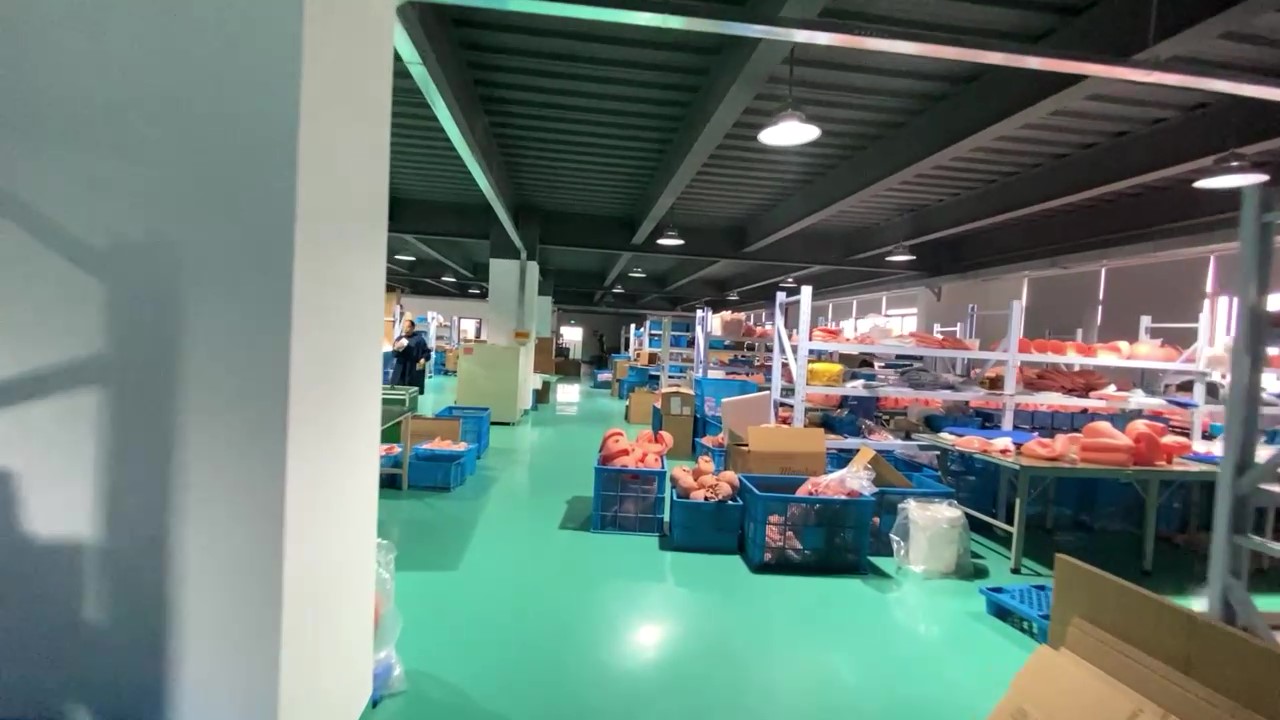
Established in 2017, the company operates a 5,000-square-meter facility with more than 100 employees and an R&D team of 20 engineers. Annual production capacity reaches 30,000 units. The company serves more than 500 clients worldwide, and export business accounts for 50% of total sales, with major markets in Europe, Southeast Asia, the Middle East, South America, and Africa.
Manufacturing is supported by documented quality systems. The company holds ISO9001, ISO14001, ISO45001, ISO13485, CE, and RoHS certificates, and can provide export documents such as CO, Form E, and Form F when required for customs clearance. Export packaging is neutral — cardboard or wooden boxes prepared to export standards. The company also offers OEM and ODM services; once order quantities are met, products can be customized, including logo printing on the machine or custom logo labels.
Materials and Feedback Systems Behind the Models
Most medical manikins from Chongqing Scope are made of PVC, selected for durability, resistance to deformation, and a high degree of authenticity. Several models use specialized materials to improve the training feel:
- SC-H4T training mannequin is manufactured from imported plastic elastomer via stainless steel mold injection and high-temperature sintering, producing a durable texture that minimizes visible needle traces.
- SC-HS4 IV injection model uses imported thermoplastic elastic mixed rubber for skin and muscle, imported latex for nerves and blood vessels, and imported PVC for inner bones and joints, all cast from metal molds at high temperature.
Electronic feedback is built into several models to support self-directed practice and objective assessment:
- SC-CPR480 CPR model uses a dynamic barcode indicator light for compression depth — green for correct depth in the 5–6 cm area, yellow for insufficient pressure below 5 cm, red for excessive pressure above 6 cm — and for tidal volume in the 500 ml to 1000 ml range. It provides digital counting, Chinese voice prompts with settings that allow volume adjustment or turning the prompts off, and thermal printing of operation results.
- SC-CPR160 infant manikin displays compression position, compression depth (correct at ≥4 cm), and insufflated tidal volume (accurately displayed between 30 ml and 50 ml), with indicator lights and voice prompts. It operates on a 220V supply stepped down to 5V.
- SC-HS4 IV injection model includes an electronic alarm that prompts correct needle placement and alerts when the needle pierces the vessel.
- SC-J5S intubation model raises electronic alarms when the laryngoscope presses on teeth and when the tube is incorrectly inserted into the esophagus, causing stomach expansion. It supplies air to both lungs when correctly placed, includes electronic display and music functions, allows observation of normal and dilated pupils, and indicates the cricothyroid membrane puncture site.
Anatomical accuracy is emphasized in the clinical range. SC-CK817 supports palpation of landmarks such as the suprasternal notch, the upper edge of the sternal manubrium, and the anterior superior iliac spine. SC-H4T includes the proximal femur, greater trochanter, anterior superior iliac spine, posterior superior iliac spine, and sacrum, with a removable left gluteal quarter to observe the gluteus medius, gluteus maximus, sciatic nerve, and vascular structures. SC-CK20135 models the patellar ligament, meniscus, tibia, collateral ligament, cruciate ligament, fat pad, and synovial sac for knee arthrocentesis training.
Representative Medical Manikin Models
| Model | Category | Representative Features |
|---|---|---|
| SC-CPR480 | CPR manikin | Barcode indicator for compression depth and tidal volume, thermal printing |
| SC-CPR160 | Infant CPR manikin | Digital counting, voice prompts, ratios 30:2 / 15:2 |
| SC-CPR100A | CPR manikin | Compression depth 5–6 cm, frequency 100–120 per minute, alarm function |
| SC-CK817 | Clinical manikin | Pericardial puncture, intracardiac injection, replaceable skin and marrow cavity |
| SC-L66 | Clinical manikin | Chest drainage training, adjustable drainage fluid characteristics |
| SC-CK20135 | Clinical manikin | Knee arthrocentesis, accurate knee joint anatomical structures |
| SC-H130A | Nursing manikin | Venipuncture, intubation, catheterization, ostomy care, lumbar puncture |
| SC-H4T | Nursing manikin | Gluteal intramuscular injection, removable left gluteal for observation |
| SC-HS4 | Nursing manikin | IV injection, electronic alarm for arm puncture training |
| SC-HS3 | Nursing manikin | Arm injection, blood flashback, changeable vein and skin |
| SC-HL | Nursing manikin | Intradermic, hypodermic, and intramuscular injection; wearable design |
| SC-F55-1 | Maternal and infant manikin | Delivery simulation, fetal heart rate 80–180 bpm, newborn CPR |
| SC-F50 | Gynecology manikin | Prenatal examination, midwifery, delivery skills, six cervical stages |
| SC-H140 | Pediatric training model | Infant care, cephalic vein puncture, gastric lavage, catheterization |
| SC-A1041 | Anatomy model | 85 cm torso, 23 pieces, interchangeable reproductive organs |
| SC-A1010 | Anatomy model | Natural adult skull, three parts, active chin and cut cranium |
| SC-A1025 | Anatomy model | Knee joint, flexion, extension, inward/outward rotation |
| SC-J90 | Medical mannequin | Trauma assessment, burns, fractures, and soft tissue lacerations |
Application Scenarios in Medical Education and First Aid
Medical manikins are principally applied in medical education and first-aid training. In a typical medical school teaching project, manikins operate manually in indoor classrooms with ambient temperatures of 0–35°C, with the room kept at a constant temperature. Typical application markets for the company's medical education products include Malaysia, India, and Indonesia, with the broader client base extending across Europe, Southeast Asia, the Middle East, South America, and Africa.
Different training objectives map to different models:
- Nursing skills: SC-H130A supports venipuncture, injection, and blood transfusion on the arm, endotracheal intubation, tracheotomy care, ostomy care, female and male urethral catheterization, lumbar puncture, buttocks intramuscular injection, oral and nasal feeding, and holistic care such as sponge bathing and clothes replacement.
- CPR and emergency training: SC-CPR480 and SC-CPR100A train compression-to-ventilation ratios of 30:2 at 100–120 compressions per minute with a compression depth of 5–6 cm. SC-CPR160 covers infant CPR at ratios of 30:2 or 15:2. SC-J90 supports trauma assessment training with features such as burns, fractures, and soft tissue lacerations.
- Obstetric training: SC-F55-1 simulates cephalic and breech presentation, adjustable fetal heart rate from 80 to 180 bpm, six stages of cervical dilation, adult CPR with electronic monitoring, and newborn CPR. SC-F50 provides practice in prenatal examination, midwifery, and delivery skills with two fetus models, an umbilical cord, and a placenta.
- Puncture and clinical skills: SC-CK817 is used for pericardial puncture and intracardiac injection; SC-L66 supports closed drainage training for pneumothorax and hydrothorax; SC-CK20135 trains knee arthrocentesis and palpation techniques.
- Injection practice: SC-HS3 simulates injection, blood transfusion, and blood sampling from the arm with blood flashback; SC-HL supports intradermic, hypodermic, and intramuscular injection with a three-layer structure of skin, subcutis, and muscle.
Market Trends Shaping the Medical Manikin Industry
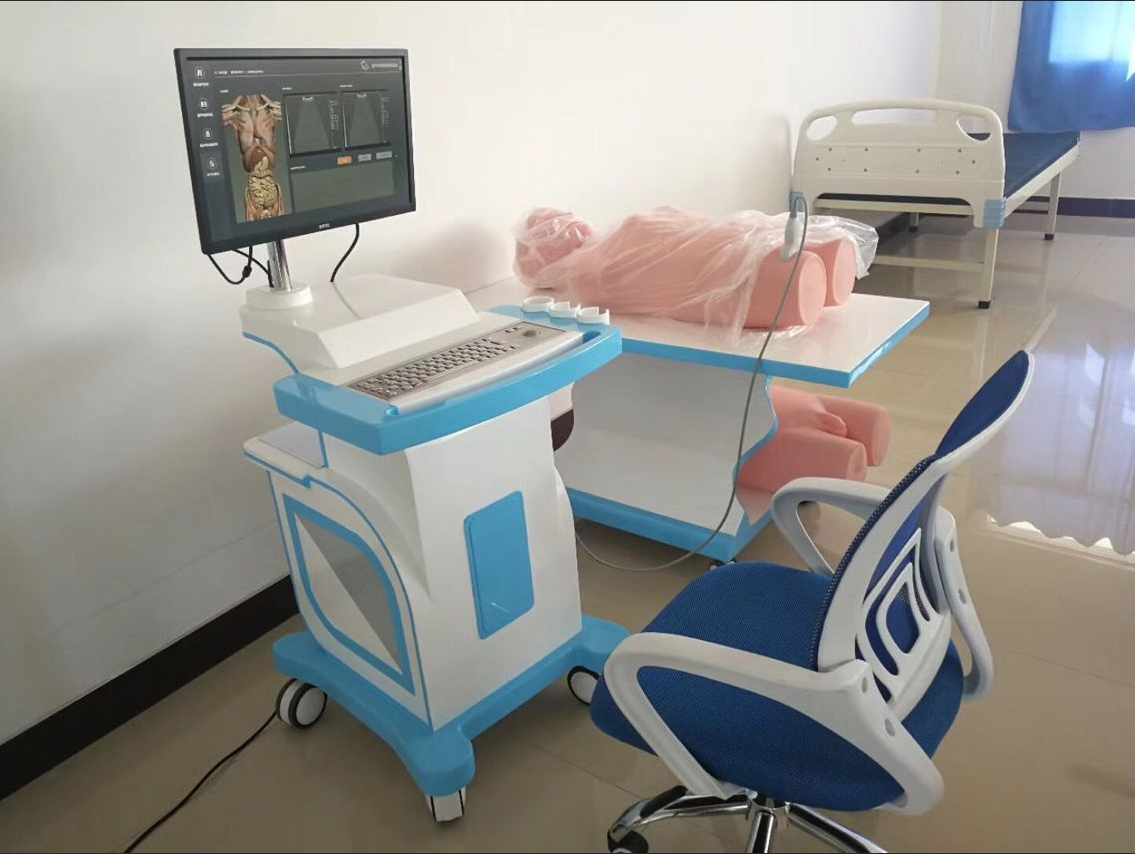
Several verifiable market signals point to continued growth in medical simulation and training manikins. Grand View Research values the global medical simulation market at USD 1.9 billion in 2025, with a projection of USD 6.7 billion by 2033. Global Insight Services estimates the training manikins market at 1.2 million units in 2024, projected to reach 2 million units by 2028. North America accounted for approximately 45–48% of healthcare simulation revenue in 2024, while the Asia-Pacific region is described by Grand View Research as the fastest-growing market, with an expected CAGR of 18.2% through 2033.
Major global competitors in the medical manikin and simulation market, as listed by MarketsandMarkets, include Laerdal Medical, CAE Inc., Gaumard Scientific, and Kyoto Kagaku. Within this landscape, manufacturers with production capability and customization services may be positioned for steady demand from institutions that need reliable, repeatable training hardware.
Manikins vs. Traditional Training Methods
Traditional clinical training has relied on supervised practice with real patients, cadaver dissection, and role-play with volunteers. Each method has value, but each also has constraints: patient safety, limited availability, ethical considerations, and cost per repetition. Manikins address these constraints by allowing unlimited repetition, standardized feedback, and safe error-making.
An honest limitation should be noted: while electronic models add objective measurement, some, such as the SC-CPR160 infant manikin, require a 220V power supply, which can restrict use in outdoor or untethered field training contexts. Institutions planning fully mobile first-aid training should verify power requirements before selecting an electronic model.
Future Outlook
With regulatory mandates such as China's simulation laboratory requirement, the continued expansion of medical school and nursing programs across Asia-Pacific, and steady global demand for first-aid skills training, medical manikins are likely to remain a core procurement category for education and healthcare institutions. For international buyers, manufacturers that combine in-house production, export documentation, and OEM/ODM flexibility may offer a practical supply option.
Buyers evaluating suppliers typically consider product coverage, materials, feedback features, certification, and after-sales documentation. Chongqing Scope's portfolio spans CPR, nursing, clinical, obstetric, and anatomy models, with a stated annual production capacity of 30,000 units and an R&D team of 20 engineers.
Frequently Asked Questions
What is a medical manikin used for?
A medical manikin is a training model, typically made of PVC, used to practice clinical procedures such as CPR, injection, intubation, puncture, and nursing care in medical education and first-aid training environments.
What types of medical manikins does Chongqing Scope offer?
Chongqing Scope's portfolio includes CPR manikins (SC-CPR480, SC-CPR160, SC-CPR100A), clinical manikins (SC-CK817, SC-L66, SC-CK20135), nursing manikins (SC-H130A, SC-H4T, SC-HS4, SC-HS3, SC-HL), maternal and infant manikins (SC-F55-1, SC-F50, SC-H140), and anatomy models (SC-A1010, SC-A1041, SC-A1025).
What materials are medical manikins made of?
Most models are made of PVC. Some models use specialized materials, such as imported plastic elastomer in the SC-H4T, and imported thermoplastic elastic rubber, latex, and PVC in the SC-HS4 IV injection model.
Do CPR manikins provide performance feedback?
Several models do. The SC-CPR480 uses a dynamic barcode indicator light and digital counting for compression depth and tidal volume; the SC-CPR160 provides digital counting, indicator lights, and voice prompts; the SC-CPR100A includes an alarm function, with a correct compression depth of 5–6 cm and an operation frequency of 100–120 times per minute.
What training procedures can be practiced on these manikins?
Procedures include CPR, venipuncture, injection, blood transfusion, endotracheal intubation, tracheotomy care, urethral catheterization, lumbar puncture, pericardial puncture, chest drainage, knee arthrocentesis, obstetric delivery skills, and basic infant care.
Which markets typically use these products?
Typical application markets include Malaysia, India, and Indonesia, while the company's broader export markets cover Europe, Southeast Asia, the Middle East, South America, and Africa.
Chongqing Scope Instrument Co., Ltd.
Chongqing Scope Instrument Co., Ltd. is a manufacturer and supplier of medical manikins, microscopes, hardness testers, metallographic equipment, and laboratory consumables. For product specifications, OEM/ODM inquiries, and export documentation, contact the company directly.
Website: www.cqscopelab.com
Email: claire@cqscope.com
Tel / WhatsApp: +86 15223521781
Address: 701, Longhushuijinguoji, No.164, Xinnan Road, Yubei District, Chongqing, China