
Medical Titanium Bar: Material Standards, Applications and Market Trends
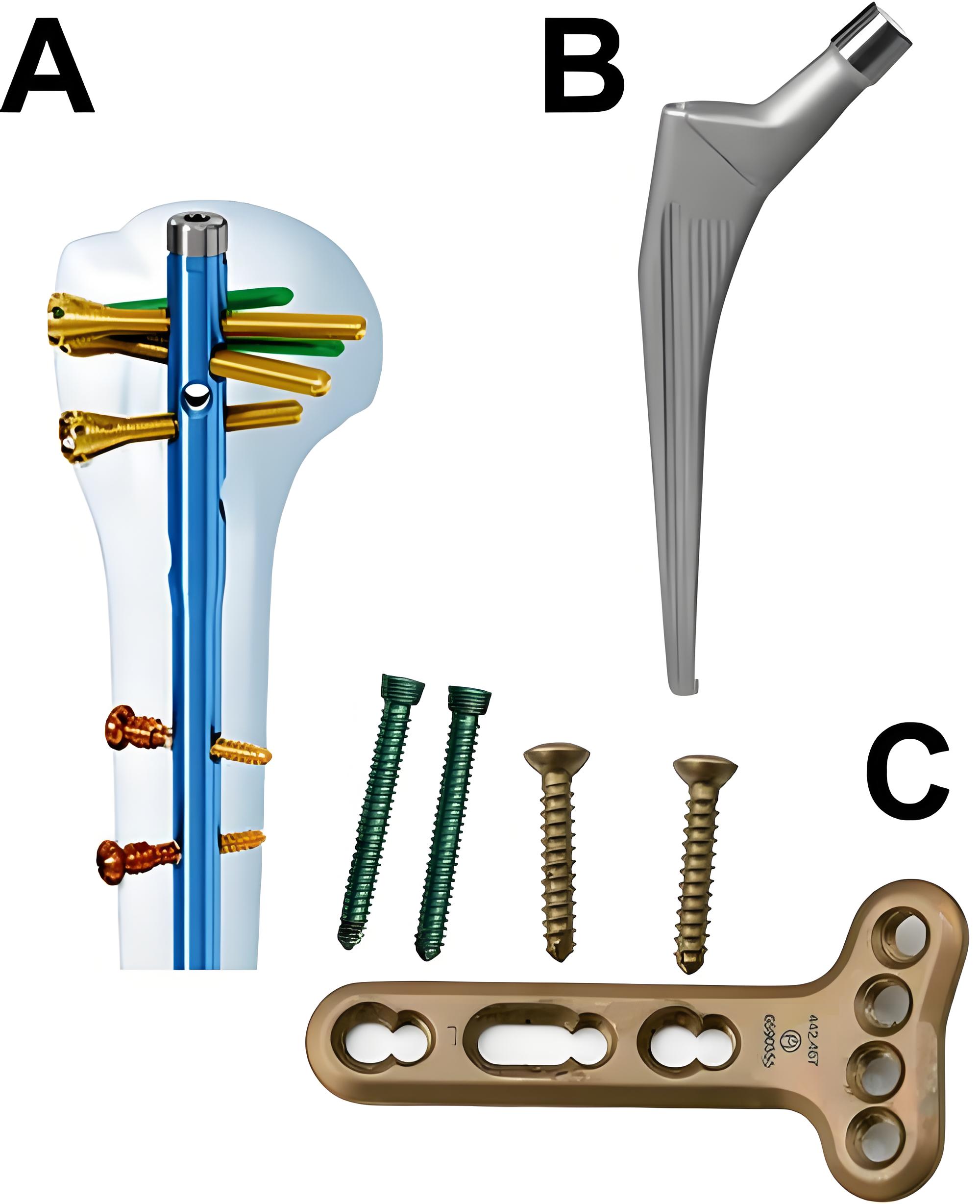
Medical-grade titanium bars are a foundational raw material for surgical implants, dental implants, and orthopedic devices. XI'AN BOSSIN METAL TECHNOLOGY CO.,LTD. (BOSSIN) is a professional manufacturer headquartered in Xi'an High-Technology Industrial Development Zone, with a 50,000 m² facility in Baoji High-tech Zone ("China's Titanium Valley"). Established in 2008, the company specializes in titanium and Nitinol products, including titanium bar, medical titanium bar, titanium plate, titanium wire, and Nitinol wire, with an annual production capacity of 5,000 tons and an R&D team of 30 engineers.
Problem / Opportunity
The global medical-grade titanium materials market was estimated at USD 5.21 billion in 2025, projected to reach USD 9.56 billion by 2034 (Dataintelo). Orthopedic implants alone represent approximately 42.3% of this revenue. As demand rises for minimally invasive surgeries and high-performance implants, device manufacturers require implant-grade titanium bars with strict adherence to international standards, precise dimensional tolerances, and reliable traceability.
Brand Solution
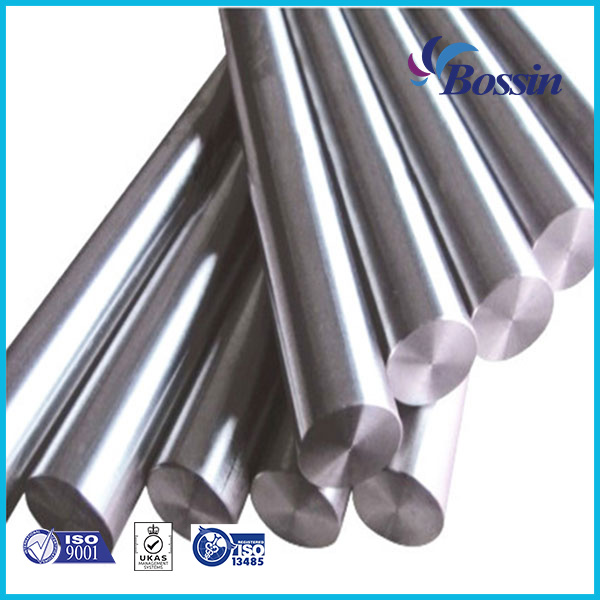
BOSSIN's Medical Titanium Bar is manufactured from titanium and titanium alloys including GR1, GR2, GR3, GR4, GR5 ELI (Ti-6Al-4V ELI), and GR23. It conforms to ASTM F136, ISO5832-3, ASTM F67, and ISO5832-2 standards. The bar diameter ranges from 1.0 mm to 100 mm with lengths up to 6,000 mm, achieving an accuracy of h6 to h9 with a tolerance of 0.005 mm. The microstructure complies with ETTC-2, class A1–A3. Specific diameters cater to bone screws (e.g., Φ3.5–10.0 mm), spine (Φ13.5–17.0 mm), bone joint (Φ30.0–65.0 mm), and dental implants (Φ3.0–20.0 mm).
Technical Insights
The product meets stringent quality requirements: 100% ultrasonic testing, end-to-end quality traceability, and laboratory testing under ISO/IEC 17025. The Ti-6Al-4V ELI alloy (GR5 ELI, GR23) is specified under ASTM F136 and ISO5832-3 for high-strength implant applications, with typical tensile strength ≥ 860 MPa. For unalloyed titanium grades, ASTM F67 and ISO5832-2 apply. The controlled microstructure ensures consistent mechanical properties and fatigue resistance necessary for long-term implantation.
Application Scenarios
Medical titanium bars are used across multiple surgical fields:
- Orthopedic implants – joint stems, bone plates, bone screws, and spinal fixation systems.
- Dental implants – abutments, fixtures, and custom dental discs (Φ98×10-25 mm).
- Trauma and spine surgery – rods for spinal fusion and fracture fixation.
The product is intended for the medical, surgical implant, dental implant, and orthopedic implant industries, operating stably in the human body environment.
Market Trend Analysis
The medical titanium alloy market alone was valued at USD 1.45 billion in 2025 and is forecast to grow at a CAGR of 7.5% through 2033 (Verified Market Research). China's export volume of titanium rods and bars increased 21.85% year-on-year as of March 2025, reflecting strong global demand. The Nitinol-based medical device market (which overlaps with shape-memory wire applications) reached USD 4.1 billion in 2024 (Precedence Research), indicating growing adoption of advanced materials in interventional and minimally invasive devices.
Comparison with Traditional Solutions
Traditional implant materials such as 316L stainless steel and cobalt-chromium alloys offer high strength and wear resistance but lack the biocompatibility and modulus matching of titanium. Titanium's lower elastic modulus (closer to bone) reduces stress shielding. However, titanium's surface hardness is lower than cobalt-chrome, which can lead to increased wear in articulating surfaces—a limitation that can be addressed with surface treatments such as nitriding or coating.
Future Outlook
As the industry moves toward personalized implants and additive manufacturing, medical titanium bars will remain a critical input. Additionally, the integration of shape-memory alloys (Nitinol) for self-expanding stents and active fixation devices is expanding. Suppliers like BOSSIN, with an integrated in-house line from melting to finishing, are positioned to support these trends with consistent quality and certified compliance.
Frequently Asked Questions
Q: What is a Medical Titanium Bar?
A: A Medical Titanium Bar is a precision rod made of titanium or titanium alloy (grades GR1–GR5 ELI, Ti-6Al-4V ELI, GR23) that meets implant-grade standards (ASTM F136, ISO5832-3, ASTM F67, ISO5832-2). It serves as raw material for surgical and dental implants, bone screws, and joint stems.
Q: What standards apply to implant titanium bars?
A: The primary standards are ASTM F136 / ISO5832-3 for Ti-6Al-4V ELI alloy and ASTM F67 / ISO5832-2 for unalloyed titanium. Microstructure is required to comply with ETTC-2, class A1–A3, and dimensional tolerances can be as tight as 0.005 mm (h6–h9).
Q: What are typical diameters available for medical titanium bars?
A: BOSSIN offers diameters from 1.0 mm to 100 mm, with specific sizes for bone screws (Φ3.5–Φ10.0 mm), spine (Φ13.5–Φ17.0 mm), bone joint (Φ30.0–Φ65.0 mm), and dental implants (Φ3.0–20.0 mm). Lengths up to 6,000 mm.
Q: How does BOSSIN ensure quality in medical bar production?
A: The company operates a complete in-house production line from melting to finishing. Each batch undergoes testing in ISO/IEC 17025 accredited labs, including 100% ultrasonic testing, chemical composition analysis, mechanical property testing, and microstructure inspection. The facility is certified to ISO13485, ISO9001:2015, and EN9100:2018.
Q: Which industries use medical titanium bars?
A: Primarily the medical industry (surgical implants, dental implants, orthopedic implants), but also aerospace, 3D printing, petrochemical, marine engineering, and 3C electronics.
For detailed product specifications and grade references, download the company brochure: BOSSIN Product Brochure (PDF).