
Medical Titanium Bar: Standards, Certifications & Implant Applications
2026-07-10 · Biotech & Medical Innovation
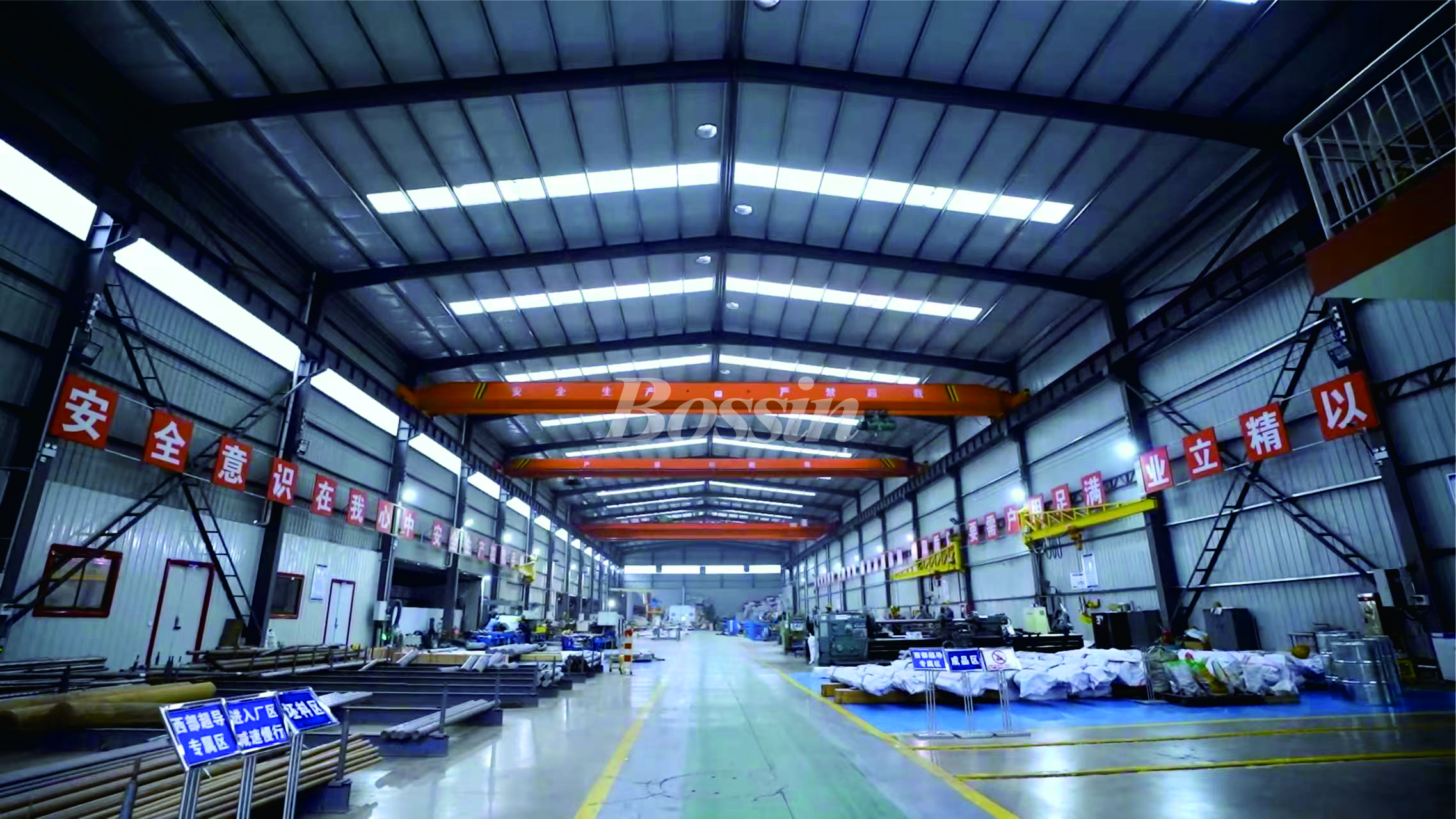
XI'AN BOSSIN METAL TECHNOLOGY CO., LTD. (BOSSIN) is a professional manufacturer specializing in medical-grade titanium bar and related titanium and Nitinol products, with a 50,000 m² factory located in Baoji High-tech Zone, China. The company supplies medical titanium bar that meets stringent international standards for surgical implants, dental implants, and orthopedic devices.
The Growing Need for Certified Medical Titanium Bar
Implant manufacturers face increasing pressure to source raw materials that comply with internationally recognized standards for biocompatibility, mechanical properties, and quality traceability. Non-conforming materials can lead to regulatory rejections, device failures, and patient safety risks. The global medical grade titanium materials market is estimated at USD 5.21 billion in 2025 and is projected to reach USD 9.56 billion by 2034 (Dataintelo, 2025), reflecting sustained demand for certified medical bar stock. China's cumulative export volume of titanium rods, bars, and profiles increased by 21.85% year-on-year as of March 2025 (China Customs/SMM), indicating growing global reliance on Chinese supply.
BOSSIN Medical Titanium Bar: Solution Backed by Certifications
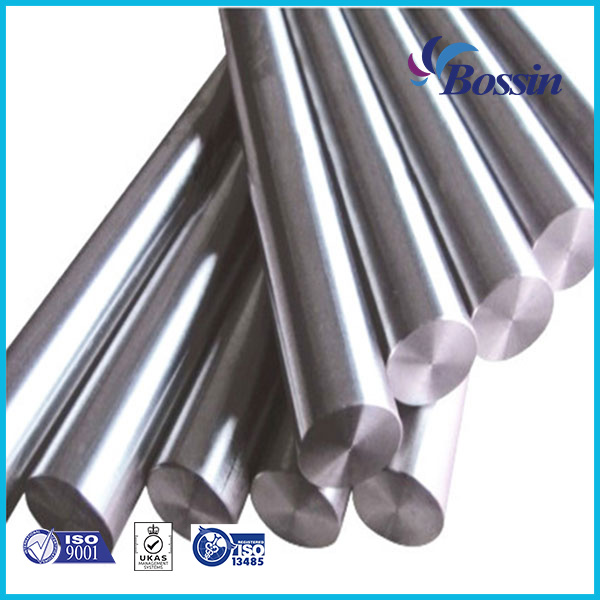
BOSSIN's medical titanium bar product (model: GR1–GR5 ELI, GR23, Ti6Al4V ELI) is specifically designed for implant manufacturing. It conforms to standards ASTM F136, ISO5832-3, ASTM F67, and ISO5832-2 (fact_id 127746). The bar is produced in grades that include pure titanium (GR1–GR4) and high-strength titanium alloys (GR5, GR5 ELI, GR23) with mechanical properties suitable for load-bearing orthopedic implants. Standard specifications range from diameter 1.0 mm to 100 mm and length up to 6000 mm, with diameter accuracy as tight as 0.005 mm (h6–h9 tolerance). The microstructure meets ETTC-2 class A1–A3, a key requirement for implant fatigue performance.
BOSSIN holds ISO 13485:2016 certification (certificate number UKZB25MD30100R0S, issued by BCC) for its medical titanium bar, covering the global medical device market. The company's materials testing laboratory is accredited to ISO/IEC 17025 (certificate number CNAS L7970), ensuring that every batch is tested in a qualified facility. An end-to-end quality traceability system is implemented across all production phases, from raw material melting to final finishing.
Technical Excellence: From Ingot to Finished Bar
BOSSIN operates a complete in-house production line spanning melting, forging, rolling, and final finishing—all within its 40,000 m² plant. The company's annual production capacity reaches 5,000 tons, with 80% of output exported to markets including Korea, Brazil, Germany, Switzerland, India, and Turkey. All medical titanium bar products undergo 100% ultrasonic testing (UT) to detect internal defects, and each shipment is accompanied by a factory inspection certificate and can be supported by third-party test reports. The in-house engineering team of 30 R&D engineers also offers custom solutions for dimensional, grade, and secondary processing needs.
Application Scenarios: Where Medical Titanium Bar Is Used
According to Dataintelo, orthopedic implants hold the largest application share in the medical titanium market, accounting for approximately 42.3% of revenue. BOSSIN's medical titanium bar is supplied in specific diameter ranges tailored for different implant categories:
- Bone screws: Φ3.5, Φ4.0, Φ4.5, Φ5.0, Φ5.5, Φ6.0, Φ8.0, Φ10.0
- Spine implants: Φ13.5, Φ14.0, Φ14.2, Φ15.0, Φ16.0, Φ17.0
- Bone joints: Φ30.0, Φ35.0, Φ40.0, Φ50.0, Φ55.0, Φ60.0, Φ65.0
- Dental implants: Φ3.0–20.0 mm; dental titanium discs: Φ98×10–25 mm, 220×150×10–25 mm
In a documented case (country: Brazil, quantity: 10,000 kg), an orthopedic implant manufacturer used BOSSIN's medical titanium bar for artificial joints and bone screws, reporting excellent biocompatibility, fatigue resistance, and high precision (0.005 mm tolerance) with long-term reliability. The direct factory sourcing model also reduced procurement costs by approximately 8% while maintaining consistent quality.
Market Trend Analysis
The medical titanium alloy market alone is valued at USD 1.45 billion in 2025, with a 7.5% CAGR projected to reach USD 2.59 billion by 2033 (Verified Market Research). The broader Nitinol-based medical device market reached USD 4.1 billion in 2024 with a 7.1% CAGR (Precedence Research). Key growth drivers include the aging global population, rising number of orthopedic surgeries, and increased adoption of minimally invasive procedures that demand high-performance titanium and Nitinol materials. China's role as a supply hub continues to strengthen, supported by ISO-certified manufacturers like BOSSIN that offer cost-competitive, certified medical bar stock.
Comparison with Traditional Implant Materials
| Property | Medical Titanium Bar (Gr5 ELI) | Stainless Steel (316L) | CoCrMo Alloy |
|---|---|---|---|
| Biocompatibility | Excellent | Moderate (Ni release) | Good |
| Elastic Modulus (GPa) | ~110 | ~200 | ~230 |
| Corrosion Resistance | High | Moderate | High |
| MRI Compatibility | Excellent | Limited | Limited |
| Relative Cost | Higher | Lower | Moderate |
Honest limitation: Medical titanium bar has a higher raw material cost compared to stainless steel, and its machining requires specialized tooling and slower feed rates due to its work-hardening nature. However, the benefits in osseointegration, fatigue life, and long-term patient outcomes often justify the premium for load-bearing implants.
Future Outlook
As regulatory demands for device traceability and material quality tighten globally, implant manufacturers will increasingly seek suppliers that combine comprehensive certification (ISO 13485, ASTM F136, ISO 17025 lab) with production scale and customization flexibility. BOSSIN's in-house production chain and 5,000-ton annual capacity position it to serve both high-volume orthopedic OEMs and specialized dental or spinal implant makers. The company also offers customization for transformation temperature (Af) in its Nitinol products, supporting next-generation smart implants and minimally invasive devices.
Frequently Asked Questions
For detailed product specifications and to request a factory inspection certificate, download the company brochure:
Download BOSSIN Company Brochure (PDF)