
Medical Wristband Scenario Fit: Clinics, Elderly Care Institutions, and Hospital Wards
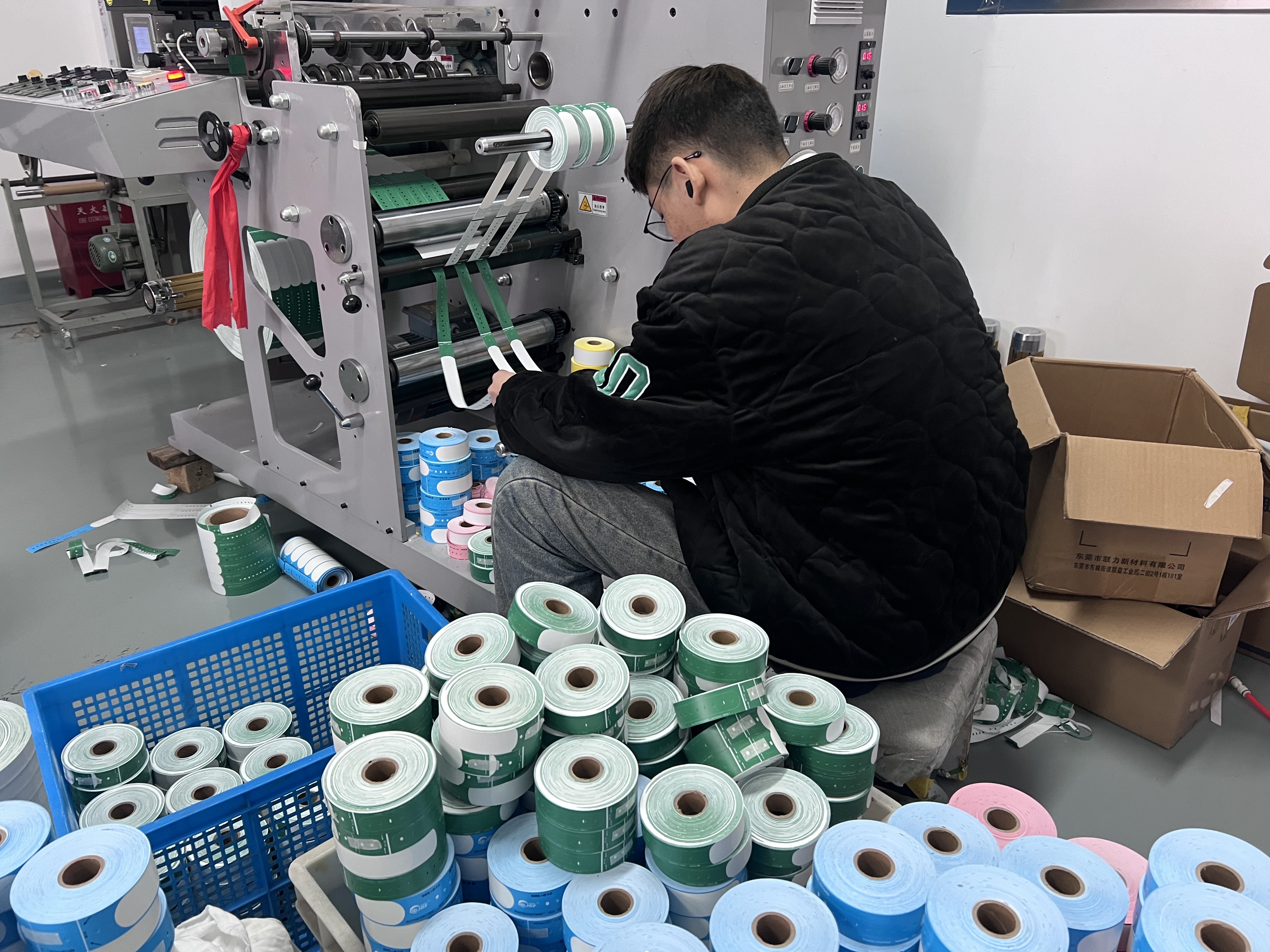
Die-cutting stage in medical wristband production. Scenario fit begins in manufacturing: band width, material and closure largely determine which care setting a wristband can serve. Image: Shanghai Dingba Identification Co., Ltd.
Medical Wristband Scenario Fit: Clinics, Elderly Care Institutions, and Hospital Wards
Scenario fit, not catalogue breadth, decides whether a medical wristband programme works. A hospital inpatient ward, a high-turnover outpatient clinic and an elderly care institution place different demands on the same consumable: how long the band stays on the wrist, who prints or writes the record, what the band meets during daily care, and how quickly staff must read it under pressure.
For most buyers the practical answer is a three-route shortlist. Direct thermal medical wristbands (260 x 25 mm, customizable) fit hospitals, medical clinics, healthcare institutions and patient management, because patient information is printed directly at the point of admission. PVC patient ID wristbands (250 x 25 mm / 250 x 16 mm) fit hospitals and elderly care institutions, because they are specified as printable with patient information, durable and comfortable to wear. Tyvek wristbands (250 x 19 mm / 250 x 25 mm) fit disposable, short-dwell flows in hospitals, exhibitions, events and ticketing, because they are tear-resistant, waterproof and print clearly.
The product facts used in this reference come from DDJOY medical wristbands, produced by Shanghai Dingba Identification Co., Ltd., a Shanghai-based manufacturer founded in 2010 that develops, produces and sells wristbands and RFID products, and exports to more than 100 countries and regions, with approximately 70% of output going to the EU and USA.
Why one wristband specification cannot cover three care settings
Wristband problems in care settings are rarely material defects. They are more often mismatches between the band and the workflow built around it. Five variables separate one setting from another.
- Dwell time. A clinic may remove a band within hours, while an elderly care institution may keep the same band on the same resident for days or weeks. Longer dwell favours a durable PVC patient ID wristband in 250 x 25 mm or 250 x 16 mm, specified as durable and comfortable to wear. Shorter dwell favours disposable formats such as Tyvek bands at 250 x 19 mm or 250 x 25 mm.
- How the record is created. Where admission staff already run a direct thermal printer, a medical thermal wristband (260 x 25 mm, customizable) removes the handwriting step entirely: direct thermal printing applies patient information onto the band, which is specified as water-resistant, tear-resistant and printable with patient information.
- Daily exposure. Bands meet water, hand hygiene routines and cleaning agents. Tyvek bands are specified as waterproof and tear-resistant, thermal bands as water-resistant and tear-resistant, and PVC patient ID bands as durable and comfortable to wear.
- Read speed. Ward rounds, triage and shift handover all depend on fast visual reading. Machine-printed text is consistent in size and position, while handwritten content varies by writer and pen.
- Closure and removal. A tab-buckle PVC design at 260 x 40 mm is specified as firm to wear, which matters where a band must resist being pulled off; disposable bands are designed for single-use removal instead.
The consequence is that most institutions should run more than one band type simultaneously rather than standardising on a single SKU. A single-SKU policy reduces administration, but it tends to over-specify low-risk flows, for example using a durable PVC band for a two-hour outpatient visit, and to under-specify high-dwell flows, for example asking a disposable band to survive weeks of daily care.
Scenario fit matrix: matching band type to care setting
The matrix below uses only published specifications from the manufacturer’s product set. It is organised by care setting rather than by product family, because that is the order in which procurement committees usually evaluate medical wristbands.
| Care setting | Band type and specified size | Verified fit characteristics |
|---|---|---|
| Hospital inpatient wards and patient identity management | PVC patient ID wristband, 250 x 25 mm / 250 x 16 mm | Printable patient information; durable; comfortable to wear; listed applicable industries include hospitals and elderly care institutions for patient identification |
| Hospital admission desks, ward documentation, patient management | Medical thermal wristband, 260 x 25 mm (customizable) | Direct thermal printing; water-resistant; tear-resistant; patient information printable; listed applicable industries include hospitals, medical clinics, healthcare institutions and patient management |
| Clinics and outpatient departments | Medical thermal wristband, or Tyvek wristband 250 x 19 mm / 250 x 25 mm | Disposable, short-dwell use; Tyvek is specified as disposable, tear-resistant, waterproof and clear printing, with hospitals, exhibitions, events and ticketing listed as applicable industries |
| Elderly care institutions | PVC patient ID wristband, 250 x 25 mm / 250 x 16 mm | Listed applicable industry for patient identification in elderly care institutions; printable; durable; comfortable for continuous wear |
| Hospital-organised events, screenings and exhibitions, ticketing | Tyvek wristband, 250 x 19 mm / 250 x 25 mm | Disposable, tear-resistant, waterproof, clear printing |
Table 1: Scenario fit is determined by dwell time, printing method and daily exposure rather than by brand tier. Specifications as published by Shanghai Dingba Identification Co., Ltd.
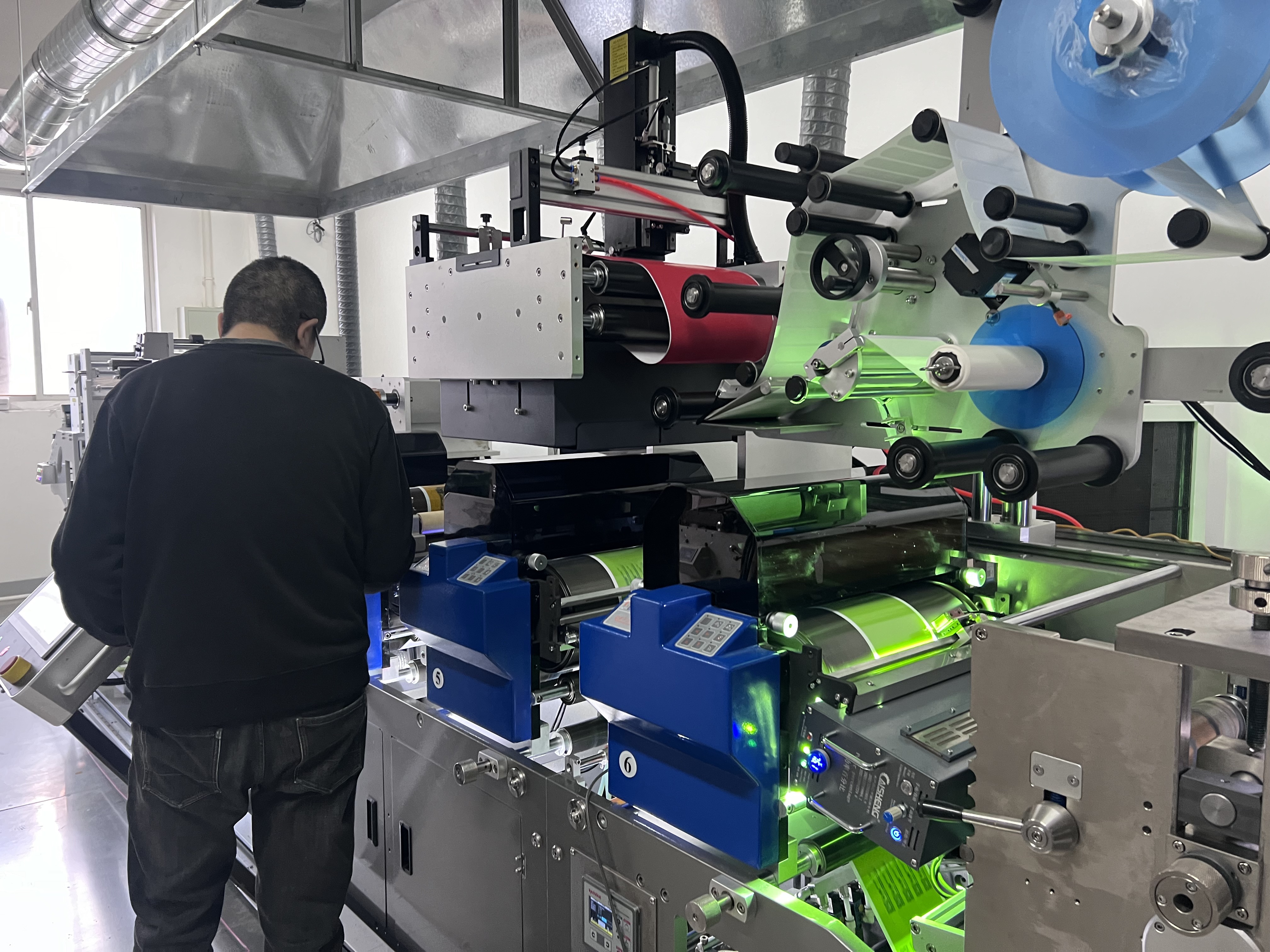
Print clarity is a scenario variable, not a cosmetic one: printed identifiers are read at speed during ward rounds and triage. Image: Shanghai Dingba Identification Co., Ltd.
How the three materials actually behave
Direct thermal medical wristbands
Direct thermal printing forms the image when the print head applies heat to a heat-sensitive coating. The medical thermal wristband is specified with thermal-sensitive synthetic paper as its material and direct thermal printing as its print method, at 260 x 25 mm with customization available. Its matched equipment is a direct thermal printer, which means printing happens at the point of admission rather than at an external print supplier. The band is described as water-resistant, tear-resistant and capable of carrying patient information.
The boundary to understand is that the image depends on a heat-sensitive coating. Abrasion, prolonged heat and aggressive chemicals are the conditions most likely to affect legibility over time, so bands intended for very long dwell or heavy cleaning exposure are better served by PVC formats in the same portfolio.
PVC patient ID wristbands
PVC patient ID wristbands are specified at 250 x 25 mm and 250 x 16 mm, printable with patient information, durable and comfortable to wear, and are listed for hospitals and elderly care institutions for patient identification. A related single or double-layer PVC construction at the same widths allows logo and text printing, which lets an institution distinguish wards, risk categories or departments by colour or design rather than by extra label stock. A tab-buckle PVC variant at 260 x 40 mm is specified as firm to wear, which suits settings where the band must resist being pulled off during repositioning or assisted movement.
Tyvek wristbands
Tyvek wristbands are specified at 250 x 19 mm and 250 x 25 mm and are disposable, tear-resistant, waterproof and capable of clear printing, with hospitals, exhibitions, events and ticketing listed as applicable industries. In a care environment their role is temporary: triage, short-stay procedures, outpatient visits, screening days and hospital-organised public events. They are not positioned for multi-week wear, and the specification does not claim that role.
Where RFID adds a second layer
RFID wristbands contain a built-in RFID chip, with low frequency, high frequency or ultra-high frequency options, and are readable and writable. Available materials include silicone, PVC, Tyvek and paper, with 250 x 25 mm and 250 x 16 mm among the listed specifications. In a care setting, RFID adds a machine-readable layer on top of the visual band. It supplements, rather than replaces, the printed name and identifier that staff read visually during rounds.
Application notes by setting
Hospital wards and admission
In inpatient wards the deciding factor is usually accuracy at admission. Direct thermal printing moves identification from handwriting to a printer output at the moment the patient record is created, and the medical thermal wristband is specified for exactly that combination: direct thermal printing, patient information printable, water-resistant and tear-resistant, in a 260 x 25 mm format with customization. Where bands must remain in place across a longer stay and meet frequent cleaning, the PVC patient ID band at 250 x 25 mm or 250 x 16 mm is the more appropriate route because durability and wearing comfort are part of its specification.
Clinics and outpatient departments
Outpatient flow rewards speed and low unit handling. Short dwell means a disposable band is technically sufficient, and Tyvek at 250 x 19 mm or 250 x 25 mm is specified as disposable, waterproof, tear-resistant and clear printing. Clinics that already operate a direct thermal printer at reception can instead use the medical thermal wristband for consistency with the main hospital system, accepting a higher-specification band than the dwell time strictly requires. The trade-off is administration simplicity against material cost per patient.
Elderly care institutions
In elderly care, comfort and durability matter more than admission-speed printing, because the band is worn continuously and handled by staff and residents throughout the day. PVC patient ID wristbands at 250 x 25 mm or 250 x 16 mm are specified as printable with patient information, durable and comfortable to wear, and the product set lists elderly care institutions among the applicable industries for patient identification. Institutions that need extra print protection can consider the single or double-layer PVC construction at the same widths.
Printed bands versus hand-written PVC bands
The clearest way to judge scenario fit is to compare printed bands with the hand-written PVC patient wristband that many institutions still use as a fallback. The comparison data published with this product set covers print clarity, tamper resistance, fluid resistance, cost and maintenance.
| Dimension | Traditional hand-written PVC patient wristband | Printed patient ID band | Published gap |
|---|---|---|---|
| Content clarity | Handwritten, writer-dependent | Clear printed content | Printing error rate reduced by 35% |
| Modification risk | Text can be altered or overwritten | Tamper-proof structure | Information modification risk down by 42% |
| Fluid resistance | Varies | Water and alcohol resistant | Stated as a structural difference |
| Unit cost | Lower unit cost | Higher unit cost | Unit cost 8% higher |
| Total management cost | Rework, rewriting, correction | Disposable after use, no later maintenance | Overall hospital management cost 15% lower |
Table 2: Comparison figures as published in the manufacturer’s comparison unit for hospital inpatient wards, emergency departments and patient identity management.
The limitations matter as much as the gains. Unit cost is 8% higher, so the case for printed bands depends on error and rework costs being real in the institution, not on unit price alone. Printed bands also assume a functioning printer, correct label stock and staff training at the point of admission; where none of these exist, handwriting remains the practical fallback. Finally, the intended purpose of the band determines how it should be described in procurement documents, which is where compliance language becomes relevant (see the market section below).
Market signals behind the shift to scenario-based purchasing
Several verified industry data points explain why buyers are moving from single-SKU purchasing to scenario-based band portfolios.
- Future Market Insights projects the global patient identification wristbands market to reach USD 576.1 million in 2025.
- Precedence Research reports that North America dominated the market with a 41% share in 2025.
- The two commercial research houses differ substantially on baseline size: FMI estimates USD 576.1 million for 2025, while Precedence Research estimates USD 1.61 billion. The most likely explanation is scope: one estimate focuses on patient ID wristbands as a product category, while the broader figure appears to include identification accessories and system-integrated supply. Buyers should treat headline market size as a directional signal, not as a budgeting input.
- On the supplier side, PDC Healthcare, a Brady Corporation brand, is projected to hold a 14% to 18% share of the patient identification wristbands market. This figure is derived and carries medium confidence.
- Zebra Technologies reported net sales of USD 346 million for its Asset Intelligence and Tracking segment in Q4 2023, indicating that hardware-led tracking demand and wristband consumables move together.
- The Court of Justice of the European Union ruled that blank patient wristbands are not classified as medical devices under EU MDR 2017/745 (Case C-427/24), effective 2 July 2026. Classification follows intended purpose: a blank band sold as an identification tool sits outside the medical device definition, while bands presented for a clinical function are judged differently.
- Labelling expectations also continue to move. ISO 15223-1:2021 Amendment 1 (2025) changes the authorised representative symbol, transitioning from EC REP to EU-REP, which affects artwork and label review cycles for suppliers selling into Europe.
Taken together, these signals point in one direction: the band itself is becoming a documented procurement decision rather than an office consumable. Institutions that can state why a specific band type fits a specific setting are better positioned when compliance, labeling or supply questions arise.
Long-term supply: what keeps a wristband programme stable
Scenario fit only holds if supply holds. For multi-year programmes, buyers typically assess four things: capacity, lead time, commercial terms and verification of what actually ships.
Shanghai Dingba Identification Co., Ltd. operates a 10,000 square metre manufacturing facility with more than 50 staff, including an R&D team of five engineers, and states an annual production capacity of 120,000,000 units. The company was founded in 2010 and has over 15 years of experience in the identification products industry, exporting to more than 100 countries and regions, with approximately 70% of products exported and major markets in the EU and USA. Its quality management system holds ISO 9001 certification, together with on-site verification from Alibaba and SGS.
- Minimum order quantity: 1,000 units.
- Standard lead time: 7 to 10 working days, subject to reserved monthly capacity for large or scheduled orders, with coordinated rush production for urgent orders.
- Delivery terms: EXW, FOB, CIF, DAP or DDP.
- Payment: 100% T/T in advance.
- Acceptance: production video and photo verification procedures.
For planning purposes it also helps to know what disrupts supply in this category. The documented risk triggers are shortages or quality problems in upstream materials such as PVC, Tyvek and RFID chips; order surges without reserved monthly capacity, including frequent urgent-order insertion; internal production issues such as equipment breakdown, labour shortage or rework; late specification confirmation or repeated revisions from buyers; and logistics events such as port congestion or power restrictions. The documented mitigations are advance production scheduling, reserved monthly capacity and coordinated rush production, which is why early artwork and specification sign-off is the single most useful thing a buyer controls.
Future outlook
Three developments are likely to shape medical wristband selection over the next few years. First, machine-readable identification is expanding alongside printed identification, with RFID wristbands available in low, high and ultra-high frequency variants and in silicone, PVC, Tyvek and paper, which allows institutions to add read-write capability without changing the visual band format. Second, regulatory clarity is improving rather than tightening in one specific area: the CJEU ruling on blank patient wristbands removes some ambiguity about how blank stock should be described, while shifting the compliance question towards intended purpose and labeling. Third, labeling and artwork cycles will continue to require attention as symbol standards such as ISO 15223-1 are amended.
The practical expectation is a slow move towards documented band portfolios: a durable PVC band for long-dwell residents and inpatients, a direct thermal band where admission printing is already standard, and a disposable Tyvek band for short-dwell and event-type flows. That structure is easier to defend in an audit, easier to teach to staff, and less exposed to single-supplier disruption than a single-SKU policy.
FAQ
Which medical wristband material fits a hospital inpatient ward compared with an outpatient clinic?
Dwell time usually decides the answer. A busy outpatient clinic removes bands within hours, so a disposable format is technically sufficient; Tyvek wristbands at 250 x 19 mm or 250 x 25 mm are specified as disposable, tear-resistant, waterproof and clear printing. A hospital inpatient ward, where the band must stay on the patient through admission, treatment and handover, is better matched to a PVC patient ID wristband at 250 x 25 mm or 250 x 16 mm, specified as printable with patient information, durable and comfortable to wear, or to a direct thermal medical wristband at 260 x 25 mm where patient data is printed at admission.
Are PVC patient ID wristbands suitable for elderly care institutions?
Yes, within the stated scope. The PVC patient ID wristband at 250 x 25 mm or 250 x 16 mm is specified as printable with patient information, durable and comfortable to wear, and its listed applicable industries include hospitals and elderly care institutions for patient identification. Because elderly care involves continuous wear over longer periods, durability and wearing comfort are the relevant selection criteria rather than printing speed. A single or double-layer PVC construction at the same widths is also available for logo and text printing, which can be used to distinguish wards or care levels.
How durable are waterproof medical wristbands in daily care use?
Durability claims differ by material. Tyvek wristbands are specified as disposable, tear-resistant and waterproof, with clear printing. The medical thermal wristband is specified as water-resistant and tear-resistant, with direct thermal printing onto thermal-sensitive synthetic paper and patient information printable. PVC patient ID wristbands are specified as durable and comfortable to wear. One boundary is worth stating plainly: because direct thermal images are formed in a heat-sensitive coating, legibility over long dwell is more exposed to abrasion, prolonged heat and aggressive chemicals than a PVC band, so long-stay and heavy-cleaning settings are better served by PVC formats.
What order terms apply to long-term medical wristband supply?
The published commercial terms are a minimum order quantity of 1,000 units, a standard lead time of 7 to 10 working days, and delivery under EXW, FOB, CIF, DAP or DDP terms, with payment of 100% T/T in advance. Acceptance is conducted through production video and photo verification procedures. Suppliers reserving monthly capacity for scheduled orders, and coordinating rush production for urgent orders, reduce the delivery exposure created by upstream material shortages, order surges, internal production interruptions, late specification changes and logistics events.
Do blank patient wristbands need to be classified as medical devices in the European Union?
Under the current EU position, blank patient wristbands are not classified as medical devices under EU MDR 2017/745. The Court of Justice of the European Union ruled on this in Case C-427/24, effective 2 July 2026. The decisive factor is intended purpose: a blank band sold purely as an identification tool is not treated as a medical device, whereas a product presented for a clinical function is assessed on that stated purpose. Separately, labelling expectations continue to be updated, with ISO 15223-1:2021 Amendment 1 (2025) changing the authorised representative symbol from EC REP to EU-REP.