
Medical Wristbands vs Custom Labels: A Buyer Decision Framework for Patient Identification
Medical Wristbands vs Custom Labels: A Buyer Decision Framework for Patient Identification
Patient identification fails in the narrow space between what a hospital intends to track and what the identifier actually survives. A wristband must stay legible through bathing, bedding friction, disinfection, transfers between departments and, in some cases, weeks of continuous wear. A custom label must stay legible on a specimen tube, a medication chart or a case folder, but it is never worn. Treating these two formats as interchangeable is one of the more common and more expensive mistakes in identification procurement.
This decision framework is written for hospital, clinic and nursing-home buyers in the evaluation-to-execution stage. The format has usually been shortlisted; what remains is matching it to a care setting without over-specifying the product or paying for durability, printing or security the ward will never use.
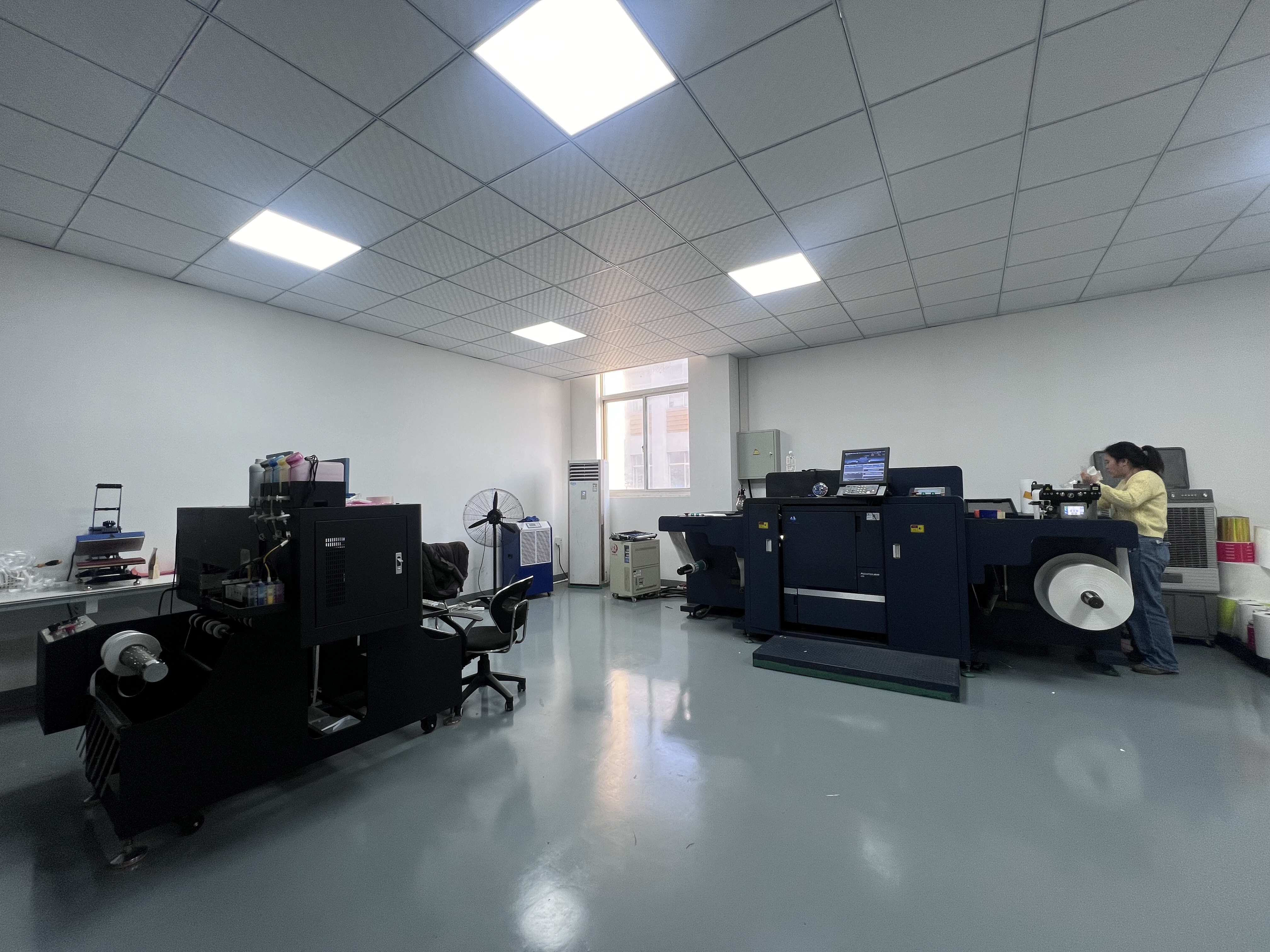
Print production is the shared origin of both formats: wristbands and custom labels are engineered on the same converting lines but diverge at the point of use.
The core distinction: wearable identity versus applied identity
Medical wristbands and custom labels are frequently quoted side by side because both carry printed patient or product information, but they answer different questions. A wristband answers the question who is this person in front of me? A custom label answers the question what is this sample, chart, package or asset attached to?
A wristband is a wearable band worn on the wrist, used for patient identification, event access control, visitor management and medical information recording. Available material options include PVC, Tyvek, polyester and thermal-print material, with custom sizing, custom printing and RFID chip integration supported. A custom label is a printed, self-adhesive or otherwise applied marking produced in a fully customizable size from paper, PVC, self-adhesive stock or synthetic paper, using offset printing, digital printing or hot stamping.
The practical consequence for buyers is that the two formats carry different failure modes. A wristband fails when it is removed, when its closure opens, or when its print becomes unreadable while the patient is still in the episode of care. A label fails when it detaches from a surface, when its adhesive is defeated by moisture or cold, or when it is applied to the wrong container. Both failures matter, but they are detected at different points in the workflow and require different countermeasures.
Why the decision is usually made backwards
Identification procurement often starts from unit price and available sizes, and only later addresses closure type, print durability and the physical environment the identifier will be exposed to. That sequence produces two recurring problems.
The first is under-specification of the wearable format. A band that is comfortable but opens during repositioning, or one whose print fades after repeated exposure to heat and abrasion, creates a replacement burden that the purchasing line item never captured. The second is over-specification of the applied format. Ordering a high-durability label stock for a chart that is filed and destroyed within a day adds cost without reducing risk.
A workable framework therefore starts from the care setting and works backwards to the format, not from a catalogue page forward to a care setting.
The five-criteria decision framework
Five variables separate the two families of format in practice. Buyers can run them as a short sequence of questions rather than a scoring matrix.
1. Direct patient wear
Does the identifier need to travel with the patient, unattended, across departments and shift changes? If yes, the answer is a wearable band. Labels can be attached to a folder that stays with the patient in some workflows, but the identifier is then dependent on the folder being present, which is precisely the dependency wristbands remove. This is the single criterion that most reliably determines the family of format before any material discussion begins.
2. Moisture and tear exposure
Bathing, wound care, disinfectant wipes, spilled fluids and paediatric or elderly patients produce moisture and mechanical stress. Tyvek wristbands are described as disposable, tear-resistant and waterproof with clear printing, and medical thermal wristbands made from thermal-sensitive synthetic paper are described as water-resistant and tear-resistant. PVC patient ID wristbands are described as waterproof. Ordinary paper labels share none of these properties and should not be placed in the same exposure class.
3. Disposability versus durability
Short episodes, isolation management and high-turnover settings favour disposable, single-use formats. Longer inpatient stays favour a durable band the patient keeps for the duration. This criterion is often decided by length of stay rather than by clinical specialty, which is why a single hospital may legitimately procure more than one wristband format.
4. Print durability and printing method
Medical thermal wristbands use direct thermal printing, meaning the print is created on demand by a direct thermal printer without ink. Custom labels are typically produced in batch using offset printing, digital printing or hot stamping. On-demand printing supports admission-time variability; batch printing supports graphic consistency and lower per-unit cost at volume. Buyers should match the method to whether the data changes per patient or per print run.
5. Security and closure requirements
Wearable formats depend on a closure. PVC+Tab wristbands use a tab buckle design described as firm to wear, with pattern printing supported. Some formats use one-time lock closures for tamper evidence. RFID wristbands add a different layer of control: a built-in RFID chip with low-frequency, high-frequency or ultra-high-frequency options, readable and writable. Labels rely on adhesive only and cannot be sealed to a wearer.
The four wearable formats and the applied alternative
Medical thermal wristbands
Made from thermal-sensitive synthetic paper with direct thermal printing, in a standard 260 x 25 mm size that is customizable. The defining features are that the patient information is printable, the band is water-resistant and tear-resistant, and the print method requires no ink. This is the format that most closely matches admission-desk workflows, where the band is produced at the point of registration.
PVC patient ID wristbands
Available in 250 x 25 mm and 250 x 16 mm, with printable patient information, described as durable and comfortable to wear, and specified for hospitals and elderly care institutions. Where the thermal format is optimised for on-demand printing, the PVC format is optimised for the patient who will wear the same band for an extended period.
Tyvek wristbands
Available in 250 x 19 mm and 250 x 25 mm, disposable, tear-resistant and waterproof, with clear printing. The material set makes Tyvek a natural fit for short-duration identification where single use is the point: outpatient visits, short procedures and any setting where the band should not survive the encounter.
RFID wristbands
Built around a readable and writable RFID chip with low-frequency, high-frequency or ultra-high-frequency options, in 250 x 25 mm, 250 x 16 mm and other specifications, using silicone, PVC, Tyvek or paper as the base material. RFID changes the identification model rather than only the material: the identifier can be read and updated electronically, which requires reader infrastructure and encoding discipline that a purely visual workflow does not.
Custom labels
Fully customizable in size, with custom graphics and text, produced by offset printing, digital printing or hot stamping on paper, PVC, self-adhesive stock or synthetic paper. Their natural domain is everything that cannot be worn: specimen containers, medication packaging, case files, equipment tags and internal logistics.
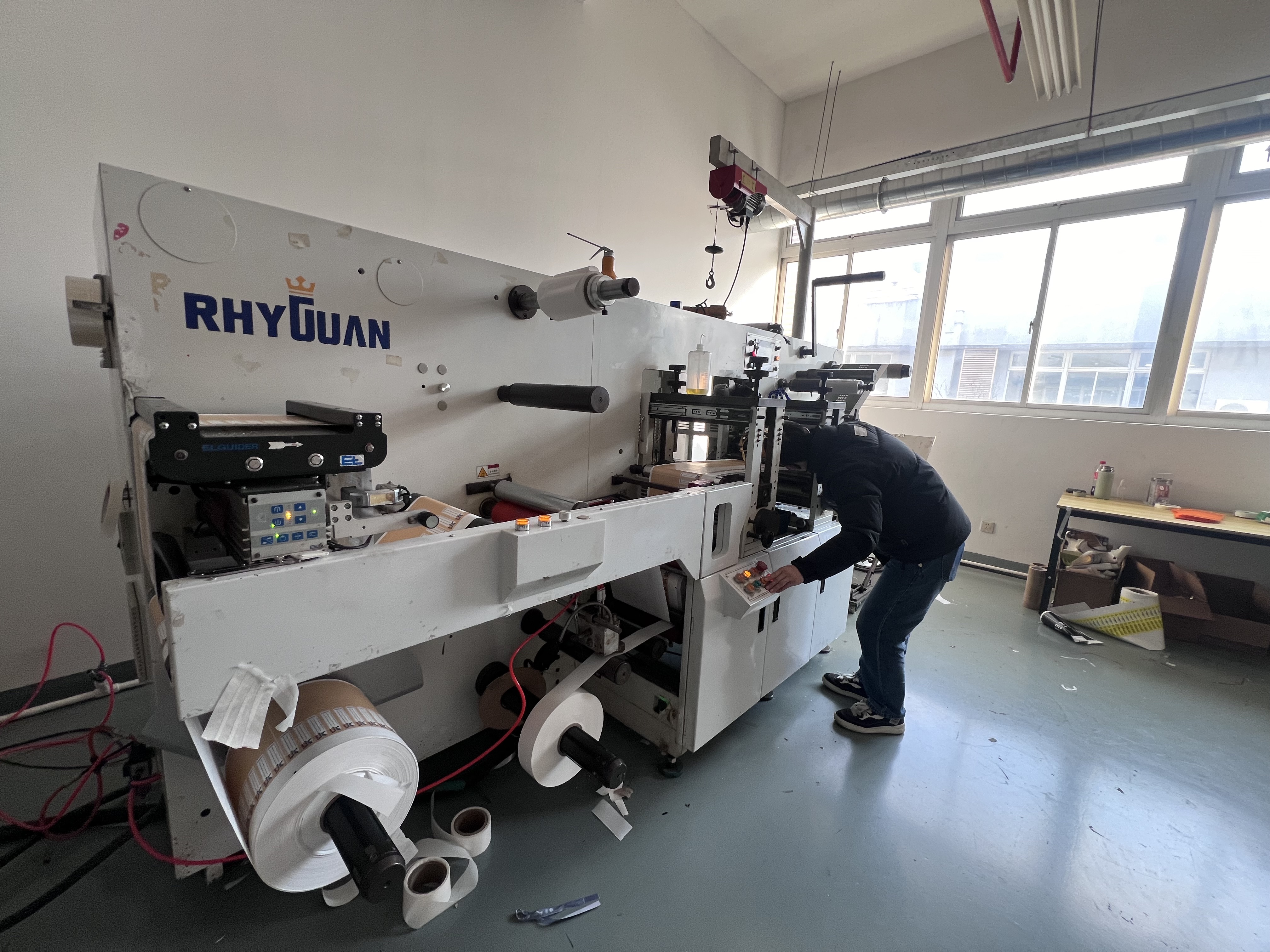
Die-cutting determines the finished size and outline of both wristband and label formats, which is why size customization requests are resolved at this stage of production.
Side-by-side comparison
| Format | Position | Moisture and tear | Use model | Printing | Closure and security |
|---|---|---|---|---|---|
| Medical thermal wristband | Patient wrist | Water-resistant, tear-resistant | Single episode | Direct thermal, no ink, on demand | Wearable band closure |
| PVC patient ID wristband | Patient wrist | Waterproof, durable | Extended stay | Printable patient information | Durable closure, comfortable wear |
| Tyvek wristband | Patient wrist | Waterproof, tear-resistant | Disposable, single use | Clear printing | Single-use closure |
| RFID wristband | Patient wrist | Depends on base material (silicone, PVC, Tyvek, paper) | Disposable or reusable by material | Chip encoding, readable and writable | Electronic identity plus physical closure |
| Custom label | Specimen, chart, packaging, asset | Not designed for wear or washing | Applied once, then discarded with the item | Offset, digital or hot stamping | Adhesive only |
Where custom labels are the right answer, and the limits of wristbands
A balanced framework has to state where the wearable option does not apply. Four boundaries matter for evaluation-stage buyers.
- Labels cover what cannot be worn. A specimen tube, a pharmacy package and a maintenance asset cannot be identified by a wristband. In any hospital, the two formats coexist rather than compete, and procurement should be structured accordingly.
- Thermal wristbands require printing infrastructure. The matched equipment for direct thermal wristband printing is a direct thermal printer. A site without one, or without a plan for handling printer downtime, should not assume the thermal format is automatically the lowest-effort choice.
- Long-stay thermal prints need a replacement protocol. Direct thermal images are widely understood to be sensitive to sustained heat and abrasion over long wear periods. For extended stays, buyers should define how and when a band is reprinted or replaced, or select a format designed for longer wear.
- RFID adds infrastructure, not just a chip. Readable and writable RFID wristbands only deliver value where readers, encoding rules and data governance exist. Without them, the RFID format behaves like an expensive visual band.
Matching format to care setting
Once the five criteria are applied, the format choice usually resolves by setting rather than by product preference. The mapping below is a planning aid, not a clinical standard; each site should confirm against its own identification policy.
| Care setting | Dominant stress | Format logic |
|---|---|---|
| Emergency and admission | Speed, high patient turnover, unknown length of stay | On-demand printable wristband, applied and printed at the point of registration |
| ICU and surgical | Continuous wear, repeated handling and transfer | Water-resistant, tear-resistant band with a closure that resists accidental opening |
| Isolation ward | Single-use handling and infection-control disposal | Disposable format where the band does not survive the encounter |
| Baby and paediatric | Skin comfort, small circumference, moisture | Soft, comfortable band in a reduced size with clear printing |
| Nursing home and elderly care | Extended wear, comfort, repeated handling | Durable, waterproof, comfortable PVC patient ID band |
| Clinic and outpatient | Short visits, low wear duration | Disposable band, or a chart label if the patient is accompanied throughout |
| Specimen and medication workflow | Surface adhesion, cold and moisture, no wearer | Custom label in a size and stock matched to the container or package |
What a supplier-side capability check should cover
Format decisions only become real when a supplier can execute them consistently. DDJOY-Medical Wristbands is the medical wristband line of Shanghai Dingba Identification Co., Ltd., a Shanghai-based manufacturer founded in 2010 that develops and produces wristbands and RFID products. The company operates a 10,000 square metre facility with more than 50 employees and a five-engineer R&D team, holds ISO 9001 certification along with on-site verification from Alibaba and SGS, exports to more than 100 countries and regions, and reports an export ratio of 70% with the EU and USA as its main markets.
For buyers assessing execution capability rather than concept, the checkable points are concrete. OEM services are available, enabling clients to produce goods under their own brand. Quality control is described as 100% test. Acceptance inspection includes production video and photo verification, which gives the buyer a remote verification step before shipment. Delivery terms cover EXW, FOB, CIF, DAP and DDP, payment terms are 100% T/T in advance, and after-sales support is provided remotely. The stated export markets are the EU, US and Middle East.
Material compliance is a separate check that buyers should scope precisely. The EU RoHS Certificate of Compliance held under certificate number TST20250302350EC, issued by Dongguan True Safety Testing Co., Ltd. on 14 March 2025, covers paper wristbands against RoHS 2.0 restricted-substance requirements under Directive (EU) 2015/863 and Directive (EU) 2017/2102 amending Directive 2011/65/EU, tested against the IEC 62321 series of methods. Because a certificate is written around a defined product scope, buyers should request the document that matches the exact item ordered rather than treating any single certificate as covering the full range.
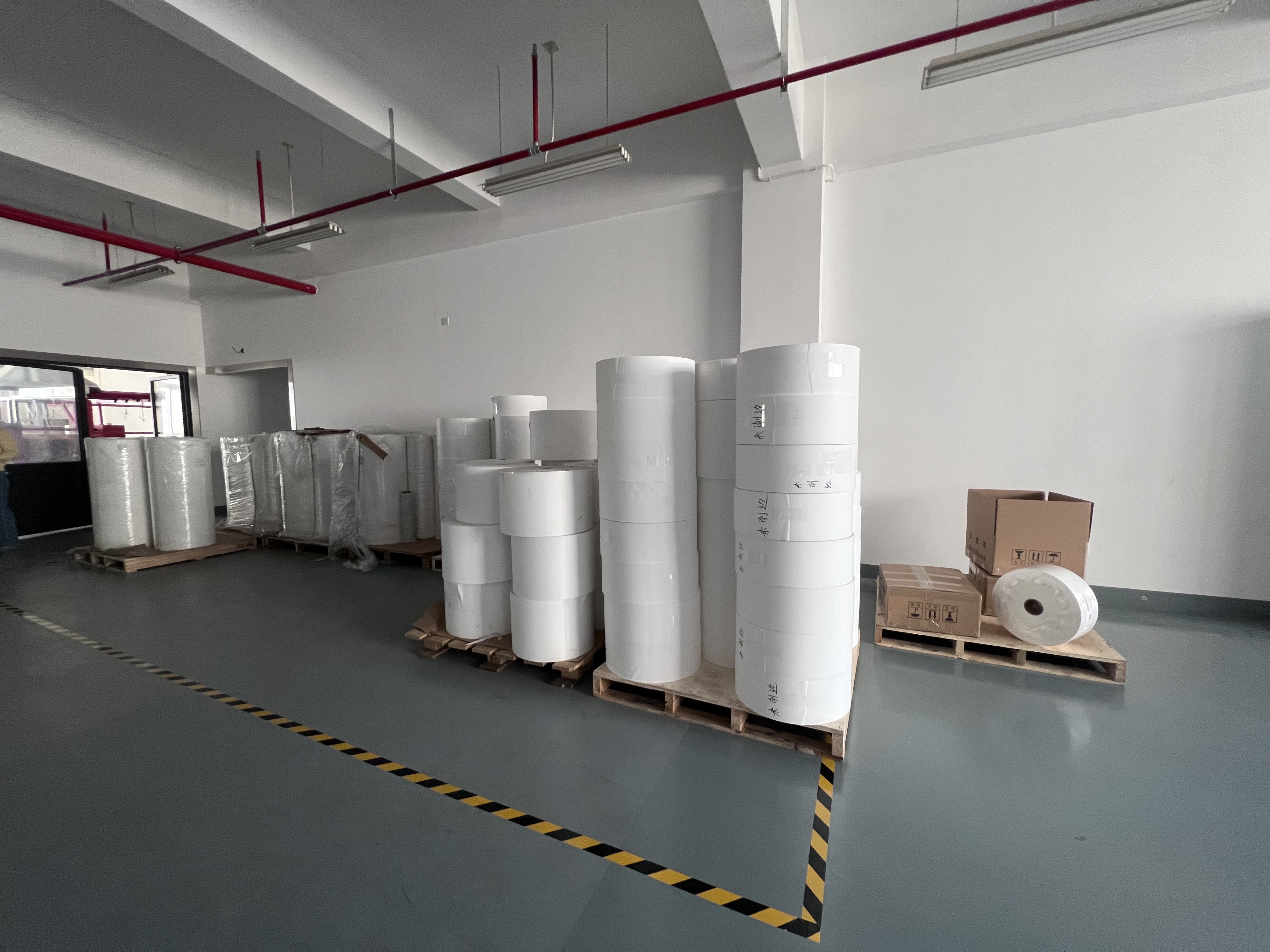
Material stock determines which formats a supplier can commit to at volume; thermal synthetic paper, PVC and Tyvek are held as separate production streams.
Market context: what the data supports, and where it does not
Two market estimates worth noting point in different directions. The global patient identification wristbands market is projected to reach USD 576.1 million in 2025 according to Future Market Insights, while Precedence Research estimates a materially larger figure for the same year. The gap is best explained by product definition, since one view focuses on patient ID wristbands specifically and the other likely includes a broader identification accessories scope. Buyers using market sizing to justify a category investment should therefore treat the definition behind the number as part of the number.
Regional concentration is less ambiguous: North America held a 41% share of the patient identification wristbands market in 2025 according to Precedence Research. On the supply side, Zebra Technologies reported net sales of USD 346 million for its Asset Intelligence and Tracking segment, which includes wristbands, in Q4 2023, and PDC Healthcare holds a projected market share in the 14 to 18% range according to Future Market Insights, a derived estimate that should be read as directional rather than precise.
Regulatory context has shifted in a way that directly affects this format decision. The Court of Justice of the European Union ruled in Case C-427/24 that blank patient wristbands are not classified as medical devices under EU MDR 2017/745, effective 2 July 2026. The ruling turns on intended purpose, which means the regulatory position of a blank wearable band and that of a printed or system-integrated identification solution are not automatically the same. Separately, ISO 15223-1:2021 Amendment 1 (2025) changes the authorised representative symbol used in labelling, moving from EC REP to EU-REP, which affects artwork on products shipped into the EU.
Future outlook
Three shifts are likely to shape the wristband-versus-label decision over the next procurement cycles. The first is regulatory clarification: as the intended-purpose logic behind the CJEU ruling is applied in practice, buyers will need to describe what an identification product is for, not only what it is made of, when they assess compliance.
The second is the gradual separation of visual and electronic identification. RFID wristbands with readable and writable chips in low-frequency, high-frequency or ultra-high-frequency configurations are already specified alongside purely visual bands, and the two are managed by different infrastructure budgets. Hospitals that treat RFID as a wristband purchase rather than a system purchase tend to under-invest in the encoding and reading side.
The third is format rationalisation. As material and printing options broaden, the risk shifts from too few choices to inconsistent choices across departments. A written decision framework, applied per care setting, is what keeps a multi-format identification programme coherent.
Frequently asked questions
What is the practical difference between medical wristbands and custom labels?
A wristband is a wearable band worn on the wrist for patient identification, access control, visitor management and medical information recording, available in PVC, Tyvek, polyester and thermal-print materials. A custom label is a printed, self-adhesive marking in a customizable size on paper, PVC, self-adhesive stock or synthetic paper. The functional difference is that a wristband is designed to be worn continuously, while a label is designed to be applied to a surface such as a specimen container, chart or package.
Which wristband material suits a long hospital stay?
PVC patient ID wristbands, available in 250 x 25 mm and 250 x 16 mm, are described as durable, waterproof and comfortable to wear, and are specified for hospitals and elderly care institutions. Direct thermal wristbands on thermal-sensitive synthetic paper are water-resistant and tear-resistant but are positioned around single-episode use, because direct thermal images are generally understood to be sensitive to sustained heat and abrasion.
Are waterproof wristbands necessary in every care setting?
No. Water and tear resistance matter where the identifier is exposed to bathing, wound care, disinfectant wiping or spilled fluids, which is why Tyvek and thermal wristbands are described as waterproof or water-resistant and tear-resistant. In a workflow where the patient is accompanied and the identifier is carried on a chart rather than worn, moisture resistance is not a deciding property.
Can custom labels replace wristbands for patient identification?
Not for continuous patient wear. A label relies on adhesive to a surface and has no wearable closure, so it cannot be sealed to a patient or survive the handling that a ward episode involves. Labels are the appropriate format for what cannot be worn, including specimen containers, medication packaging, case files and equipment tags.
How is patient information printed on medical wristbands?
Medical thermal wristbands use direct thermal printing on thermal-sensitive synthetic paper, which produces the print without ink and allows information to be generated at the point of registration. Custom labels use a different production logic, with offset printing, digital printing or hot stamping selected according to the print run and graphic requirements.
What should be verified before placing a volume wristband order?
Four commercial parameters and two verification points are worth confirming in writing. The minimum order quantity is 1,000 units, the standard production lead time is 7 to 10 days, delivery terms cover EXW, FOB, CIF, DAP and DDP, and payment terms are 100% T/T in advance. On verification, quality control is described as 100% test, and acceptance inspection includes production video and photo verification before shipment. Buyers should also request the compliance certificate whose scope matches the exact product ordered.
Are blank patient wristbands regulated as medical devices in the European Union?
The Court of Justice of the European Union ruled in Case C-427/24, effective 2 July 2026, that blank patient wristbands are not classified as medical devices under EU MDR 2017/745. The ruling rests on intended purpose, so the classification of a blank band and of a printed or system-integrated identification solution can differ. Buyers shipping into the EU should confirm the applicable classification for the specific product configuration and labelling artwork, including the authorised representative symbol updated by ISO 15223-1:2021 Amendment 1 (2025).
Buyers who need the full specification set for the wristband and label formats referenced in this framework can download the manufacturer brochure in PDF format: Shanghai Dingba Identification product brochure. Additional company information is available at www.ddlf.com.