
Medical & Biotech LSR Supplier Evidence: ISO 9001, High-Tech, Patents
Medical & Biotech LSR Supplier Evidence: ISO 9001, High-Tech, Patents
For medical and biotech liquid silicone rubber projects, a supplier is qualified by the traceability of its evidence, not by the vocabulary of its brochure. This analysis maps one manufacturer's documented capability file layer by layer, and marks where each document stops.
Liquid silicone rubber (LSR) sourcing for medical and biotech applications is an evidence exercise before it becomes a commercial negotiation. A buying team that cannot trace a claim to a certificate number, a patent scope or a grade-level parameter has no defensible basis for approving a material that will sit against skin, inside a device assembly or in a patient-adjacent component.
Dongguan Times Silicon Industry Co., Ltd. is a silicone material manufacturer based in Hengli Town, Dongguan, Guangdong Province, China. Founded on 27 December 2021 and in operation since 1 July 2022, the company produces addition-curing (platinum-cured) liquid silicone rubber, vinyl silicone oil, silicone resin, platinum catalysts, inhibitors and silicone treatment agents from a 15,000 m² facility, with an export ratio of 55%. For a medical or biotech buyer, the useful question is narrower than what the supplier can make. It is which documents substantiate which claims, and what each document does not cover.
Three document types carry most of the weight in the company's published capability set:
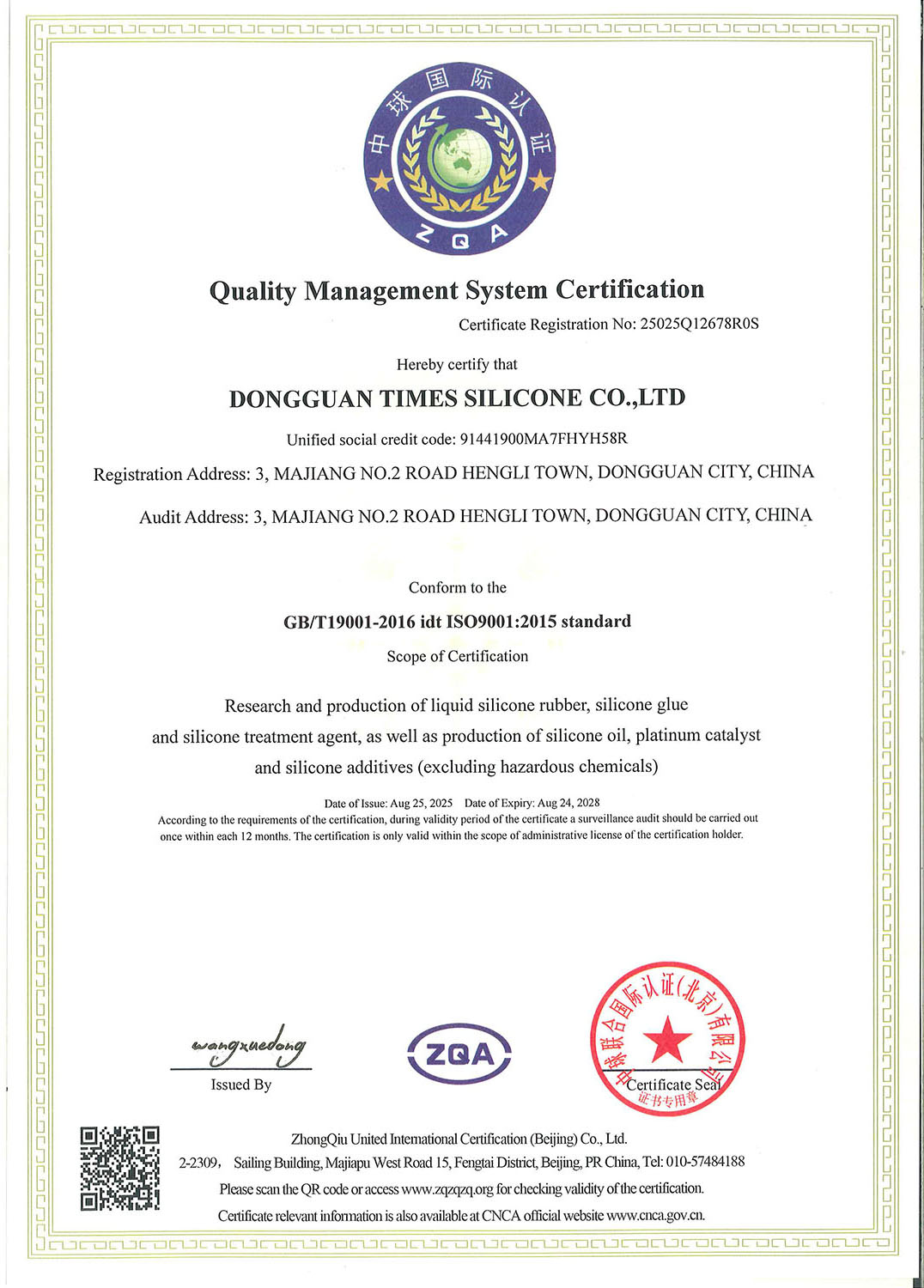
- ISO 9001:2015 quality management system certificate 25025Q12678R0S, stated with a scope covering Adult Products LSR for Overmolding (product 4730).
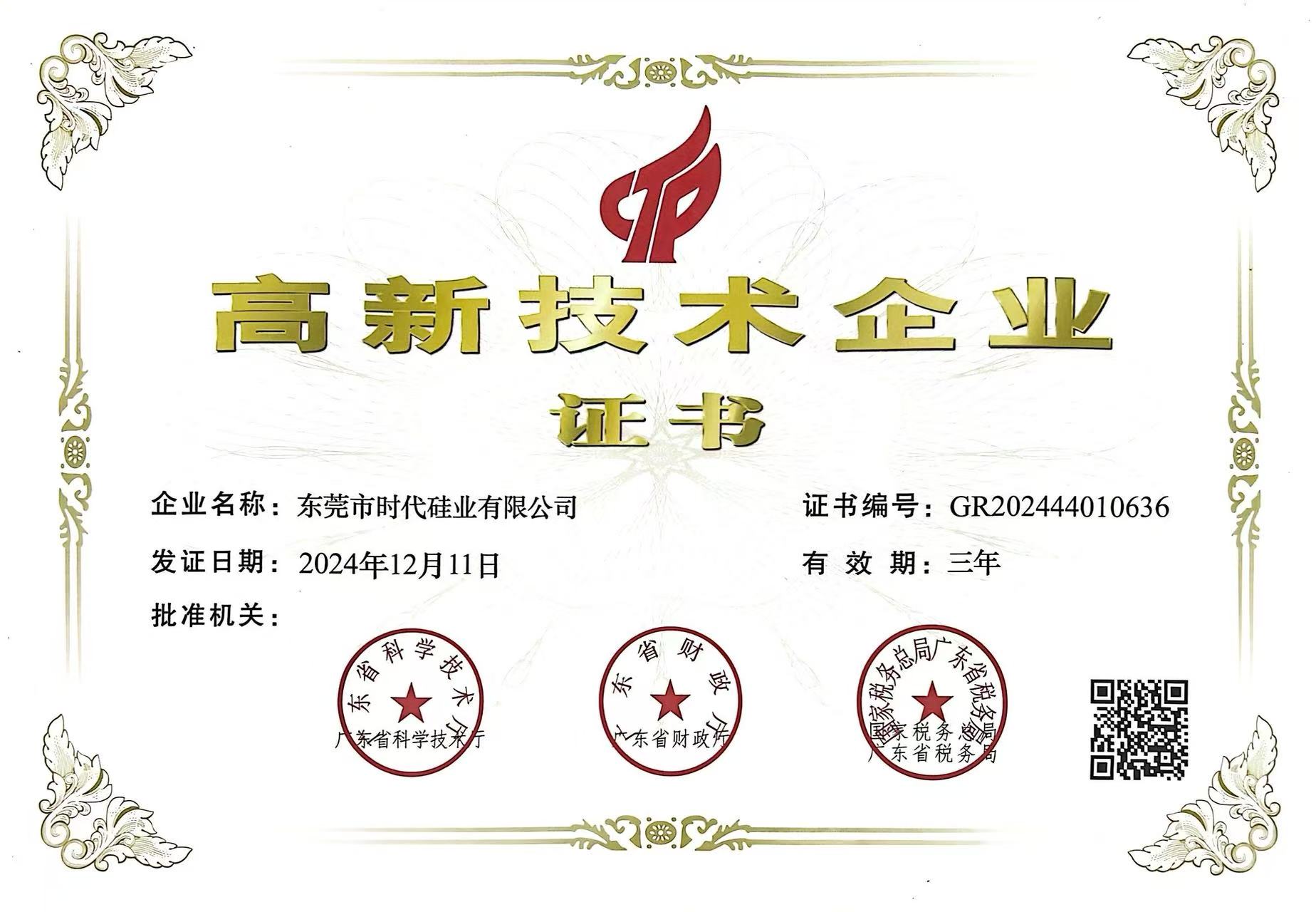
- High-tech Enterprise Certificate GR202444010636, associated with Vinyl Silicone Oil.
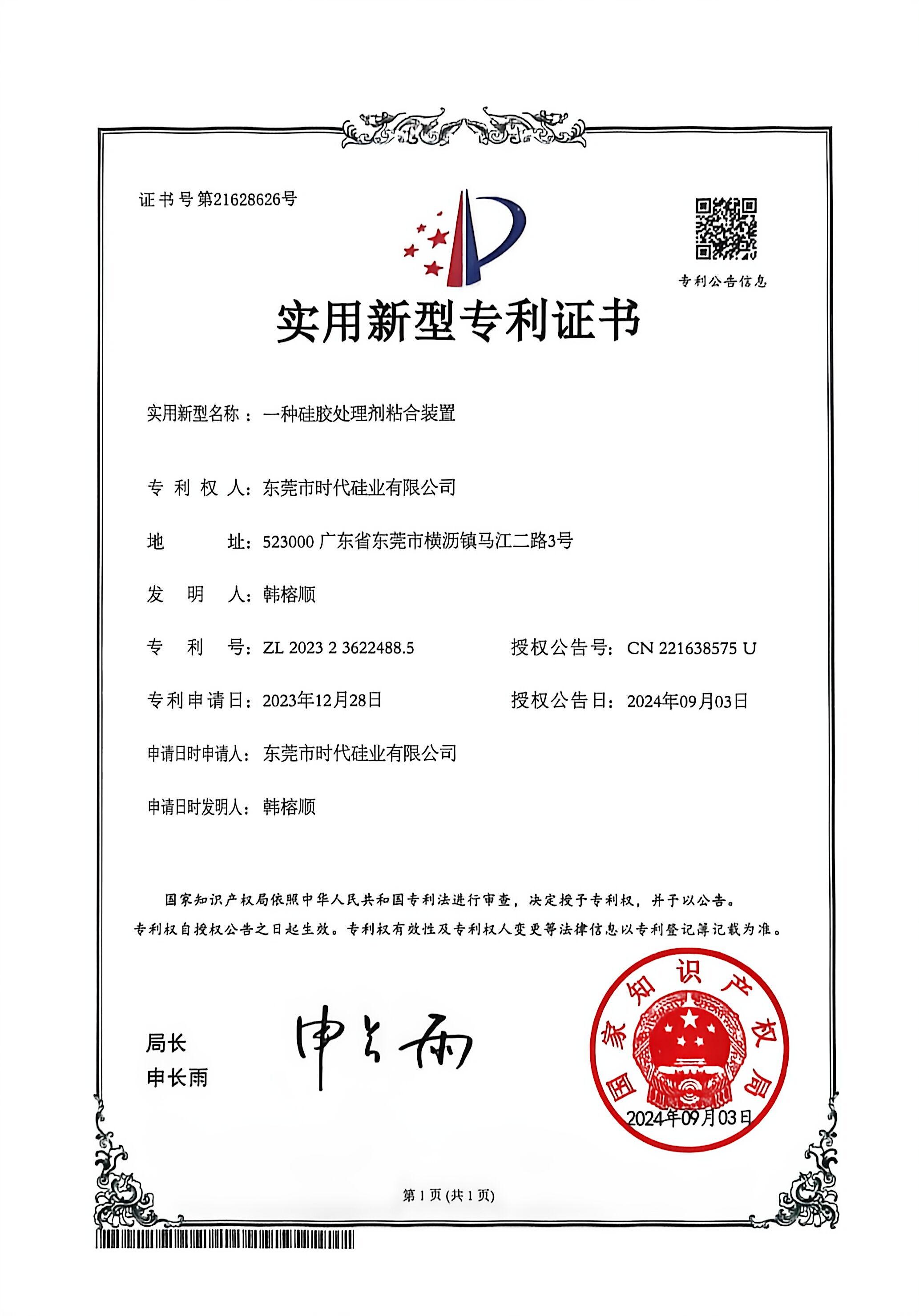
- Utility model patent ZL202323622488.5, covering Vinyl Silicone Oil and Fiber glass sleeve with silicone resin.
Those documents sit on top of product-level data such as hardness, viscosity, appearance, platinum content and cure conditions. It is the combination, not any single certificate, that allows a project team to qualify a supplier. The sections below set out what each layer establishes, how it maps to medical and biotech sourcing decisions, and where the evidence boundary lies.
Why Medical and Biotech LSR Buyers Start With Documents, Not Samples
Material qualification in medical and biotech projects normally follows a fixed order: application and risk assessment, material evaluation against a recognised biocompatibility framework, supplier quality system review, and then lot-level traceability once production begins. Documentation comes first because a sample demonstrates one moulding, while a certified process and a mapped grade portfolio demonstrate repeatability across lots, shifts and years.
Regulatory practice reinforces the sequence. A U.S. FDA 510(k) decision document for a medical device submitted by B. Braun Medical Inc. identifies liquid silicone rubber among the materials evaluated in accordance with ISO 10993-1. The detail that matters to buyers is that the evaluation is device-specific: it does not convert liquid silicone rubber into a universally approved material category. Every LSR grade still has to be qualified in the context of a specific device, its contact duration and its manufacturing process.
Commercial signals point the same way. Grand View Research valued the global medical grade silicone rubber market at USD 738.9 million in 2024 and projected USD 837.0 million for 2026. A broader medical grade silicone scope, which includes gels and adhesives as well as rubber, was valued at USD 6.8 billion in 2024 with a projected USD 11.2 billion by 2030, and North America alone was recorded at USD 906.42 million in 2025. The scopes are not interchangeable, and vendors reporting the same nominal medical grade silicone rubber scope can disagree on the same year: one commercial source reports USD 855.18 million for 2026 against the USD 837.0 million figure above. Growing medical demand is therefore well supported directionally, while any single headline number should be treated as a planning input rather than a specification.
The opportunity, and the risk, sits in qualification time. A supplier that hands over a structured evidence file compresses the buyer's verification workload into one review cycle. A supplier that cannot shifts an open-ended verification burden onto the buyer, order after order.
What a Supplier Capability Evidence File Should Contain
A capability file is not a folder of certificates. It is a mapping exercise with four layers, each answering a different buyer question. The table below shows how those layers appear in this supplier's published evidence set and what a buyer can verify against each one.
| Evidence layer | Example in this supplier's file | What a buyer verifies |
|---|---|---|
| System level | ISO 9001:2015 certificate 25025Q12678R0S, scope stated for Adult Products LSR for Overmolding (product 4730) | Certificate number, issuing body, validity period, and above all the scope statement — which product line is covered |
| Entity level | High-tech Enterprise Certificate GR202444010636, associated with Vinyl Silicone Oil | That the recognition belongs to the legal entity being contracted, and what it does and does not certify |
| Technical-asset level | Utility model patent ZL202323622488.5, covering Vinyl Silicone Oil and Fiber glass sleeve with silicone resin | Patent number and claims, and whether the protected solution relates to the part being purchased |
| Product and process level | Product 4730: clear appearance, viscosity 4000–25000, hardness 7±1 to 38±1 Shore A; platinum catalyst curing at 10 minutes and 80°C with a 5–10 ppm addition rate | Grade datasheet values, lot-level test records, and confirmation of test method and cure conditions |
The file is useful precisely because the layers do not overlap. Each document answers a different question, and none of them answers all four.
System-Level Evidence: What ISO 9001:2015 Certificate 25025Q12678R0S Establishes
ISO 9001:2015 is a quality management system standard. It addresses how an organisation plans, controls and improves its processes; it does not certify the performance of a compound. Certificate 25025Q12678R0S is stated with a scope covering Adult Products LSR for Overmolding, product 4730 — a scoped certificate rather than an open-ended company-wide claim.
What sits underneath that scope is more informative than the certificate cover page. The company describes a control chain that begins with raw material incoming testing for purity, heavy metals and harmful substances, continues through in-process monitoring of viscosity, hardness and mixing ratio, and ends with full finished-product testing covering curing performance, odor and biocompatibility. Third-party sampling is used for FDA, RoHS and REACH related requirements, and the company states that its products hold RoHS, REACH, FDA, LFGB and halogen-related certifications or test approvals.
The boundary matters as much as the coverage. A quality management system certificate does not certify a grade as biocompatible, and it does not extend automatically to products outside its stated scope. A medical or biotech buyer sourcing a grade other than product 4730 should request the certificate scope statement rather than assume coverage, and should ask which finished-product tests are applied to the specific grade being ordered.
Entity-Level Evidence: High-Tech Enterprise Certificate GR202444010636
High-tech Enterprise Certificate GR202444010636 is associated with Vinyl Silicone Oil. Recognition under China's high-tech enterprise framework is granted to enterprises meeting defined criteria on research organisation, technology investment and intellectual property, which makes it an indicator about the organisation rather than about a material.
The organisational context is visible elsewhere in the company's disclosures. Times Silicon reports a ten-engineer R&D team and operates a two-entity structure: the parent company maintains a full-category silicone material range, while Guangdong Times Energy Storage New Material Technology Co., Ltd., founded in 2023, focuses on silicone materials for new energy applications. For a buyer, that structure speaks to continuity — whether a formulation can keep being optimised after the first order, and whether the technical contact who resolved an issue at qualification is still available at the second production run.
The limit is equally clear. Enterprise recognition is not a product certification. It cannot substitute for grade-level documents such as ISO 10993 test reports, food-contact compliance statements or sterilization compatibility data, and it should be read alongside product evidence rather than instead of it.
Patent Evidence: What Utility Model Patent ZL202323622488.5 Covers
Utility model patent ZL202323622488.5 covers Vinyl Silicone Oil and Fiber glass sleeve with silicone resin. A utility model protects a technical solution, and its granted claims define the protected scope, which is why the patent is worth reading against the actual product rather than treating it as a general credibility badge.
The related product line — TS3034B in white, TS3039B in off-white, TS3045-01B and TS3045B in transparent, TS3049B in white, plus TS6123A/B and TS6125A/B — is a coating for glass fiber insulating sleeves based on methylphenyl silicone resin. Published parameters include hardness 20–35, viscosity 10,000–55,000, heat resistance of 200°C, a hardening temperature of -55°C and a brittleness temperature of -73°C, with applications listed for new energy vehicles, photovoltaic and energy storage, and aerospace and defense. The coating is applied by dipping, spraying or brushing and cured through high-temperature baking to form a dense elastic layer that provides insulation, high-temperature resistance, voltage resistance and aging protection, and improves mechanical strength and friction resistance.
In one reported three-year client program with a Yangtze River Delta automotive wire harness factory purchasing 300 tons annually in 13-ton batches, coating defect rate moved from 2.8% to 0.5% with yield reaching 99.5%, and the cured coating was reported to hold its aging and temperature resistance over a service life of ten years or more under normal use. Those results belong to a specific program and specific equipment; they are directional evidence of process capability rather than a guarantee for any other line.
What the patent does not establish is performance in a given application, and it says nothing about biocompatibility. It is evidence that a technical solution was developed and granted — a useful signal of engineering depth for a supplier that must also satisfy material-level requirements.
Product-Level Evidence: Odor, Leaching and Cure Behaviour
Product-level evidence is where medical and biotech buyers spend most of their review time, because it is the only layer that speaks directly to what the finished part will do. Product 4730, Adult Products LSR for Overmolding, is an addition-curing platinum-cured liquid silicone rubber based on vinyl polydimethylsiloxane and hydrogen-containing polysiloxane. The grade family runs from TS6807A/B to TS6838A/B with a clear appearance, viscosity of 4000–25000 and hardness from 7±1 to 38±1 Shore A, positioned for overmolding, daily-necessity overmolding, silicone products, and plastic and hardware overmolding. The application profile includes soft touch, elastic support, sealing and waterproofing, bonding and fixing, and a realistic flesh feel in indoor, dry environments without strong acids, alkalis or long-term UV exposure.
For skin-contact and device-adjacent parts, hardness is rarely the deciding parameter. Odor, extraction behaviour and cure consistency are. In reported client programs for adult-product and daily-necessity manufacturers, the formulation is described as low-odor or odorless, biocompatibility tested, non-bleeding and non-irritating, with anti-yellowing behaviour and high tear resistance. In one program, defect rate moved from 3% to 0.8% with yield reaching 98%, and end-product service life was reported at three years or more under normal use. These are company-reported program results; they are useful as a starting hypothesis, not as a substitute for a buyer's own validation lots.
Cure behaviour is documented at the catalyst level. The platinum catalyst range (TPL-1000 through TPL-5000, plus PTR-3000 and PTR-5000) is a transparent catalyst with viscosity of 320–1000 and platinum content listed at 1000–5000, delivering curing in 10 minutes at 80°C at an addition rate of 5–10 ppm. In a reported catalyst program covering a Pearl River Delta liquid silicone manufacturer and a larger organosilicon group, curing efficiency increased by 30%, per-batch capacity rose by 25%, defect rate fell from 2.5% to 0.6% and product yield reached 99.4%, with no yellowing or leaching issues reported over three years of continuous supply.
The limit here is condition dependence. A cure of 10 minutes at 80°C at a 5–10 ppm addition rate describes one formulation window. Production cure time also responds to part thickness, mould temperature, inhibitor level and mixing ratio, so the parameter should be confirmed against the grade datasheet and trial moulding rather than transferred between parts.
Technical Explanation: Why Catalyst Consistency Is the Hidden Variable
Addition-cure LSR forms through hydrosilylation: vinyl-terminated polydimethylsiloxane reacts with hydrogen-containing polysiloxane in the presence of a platinum catalyst to build a cross-linked elastomer. Vinyl Silicone Oil supplies the vinyl side of that reaction. The published vinyl silicone oil range (TVF-L-50 through TVF-1W, plus TVF-H-10W to TVF-H-35W) is a clear, vinyl-terminated PDMS with volatile content below 0.5% and vinyl content between 0.037 and 1.497, applied in electronic and electrical appliances, photovoltaics, automotive and new energy batteries.
The catalyst side has requirements of high catalytic activity and selectivity, low or non-toxicity, environmental friendliness, and good thermal and chemical stability. Published reaction conditions span -20°C to 150°C, and the catalyst can be used in solvent-free systems or with various organic solvents, functioning as a homogeneous or heterogeneous catalyst that promotes reactant conversion without being consumed.
For a specifier, the practical consequence is that hardness, feel, transparency and cure speed are downstream of three inputs: vinyl content in the base polymer, the ratio of SiH to vinyl groups, and the platinum addition rate. When catalyst batch activity drifts, cure speed and final hardness drift together. That is why platinum content consistency, published as 1000–5000 with minimal activity fluctuation, belongs in the evidence file as a process control parameter, and why a low addition rate is a formulation-cost argument as much as a technical one.
Application Scenarios Where the Evidence File Is Tested
Evidence only means something against a scenario. Three scenario groups are directly supported by the published data.
Overmolded skin-contact and daily-use parts. Product 4730 addresses overmolding onto plastic and hardware, daily-necessity overmolding and silicone product manufacturing, with customization available on Shore hardness from 7±1 to 38±1 A, viscosity, colour (transparent, translucent or opaque), odor level, formulation grade (food or medical), curing method, packaging and skin feel, for example soft flesh-like or high resilience. For an overmolding project, the real evidence question is whether the supplier can hold feel and hardness across lots, which returns to the catalyst and base polymer data rather than to finished-part claims.
Insulation and thermal-adjacent components. The fiber glass sleeve with silicone resin line operates from -60°C to 200°C for long-term use and withstands humidity, voltage and acid or alkali corrosion, suiting indoor and outdoor high and low voltage electrical scenarios, including environments with oil mist and dust. Reported applications include electronic wire harness and cable insulation protection, motor and transformer winding insulation, and new energy vehicle harness protection — the same coating discipline that supports wiring and insulation components in medical and laboratory equipment.
Catalyst-dependent formulations. Platinum catalysts are applied in silicone material synthesis, polyurethane foam, new energy battery research and chemical synthesis processes. For a biotech project using platinum-cured silicone in fluid-contact or dosing-adjacent hardware, catalyst grade selection and addition-rate discipline determine both cure reliability and whether the cured network is consistent enough to support later extraction testing.
Market Trend Analysis: Documentation as Qualification Currency
Three trends are visible in the available data, and each pushes procurement toward documented evidence rather than supplier assertion.
First, medical-grade demand is expanding. The global medical grade silicone rubber market was reported at USD 738.9 million in 2024 and projected at USD 837.0 million for 2026 by one commercial research house, while a second vendor reports USD 855.18 million for 2026 and USD 1,459.44 million by 2034 for the same nominal scope. The two disagree on level but agree on direction. The broader medical grade silicone market was valued at USD 6.8 billion in 2024 with a projected USD 11.2 billion by 2030. Because the scopes differ and methodologies are not disclosed, these figures are best read side by side rather than averaged.
Second, the LSR category overall keeps expanding. One commercial source values the global liquid silicone rubber market at USD 2.8 billion in 2023 with a projected USD 5.0 billion by 2030 and an 8.5% CAGR; a second reports USD 2.3 billion in 2024 rising to USD 5.5 billion by 2034 at a 9.2% CAGR. The boundaries differ again; the consistent message is sustained material demand, with medical and healthcare applications among the cited drivers.
Third, regulatory documentation habits are spreading into material selection. Where a device submission references ISO 10993-1 for an LSR-containing device, suppliers are increasingly asked for grade-level biocompatibility documentation rather than a company-level statement. The practical gap is that verified, publicly comparable grade-level data remains scarce across the industry: certification status, test methods and cure conditions are frequently missing from supplier disclosures. Manufacturers that publish certificate numbers, scope statements, patent references and grade parameters reduce that gap for their own buyers.
Comparison With Traditional Solutions, and the Limits of a Certificate File
The comparison that matters for a medical or biotech project is not only between materials; it is between evidence paths.
| Evaluation aspect | Conventional route: documentation assembled per order | Structured manufacturer evidence file |
|---|---|---|
| Who holds the quality record | Often the upstream manufacturer; certificates are requested reactively for each order | Manufacturer, referenced by a certificate number and a stated scope |
| Scope clarity | Broad statements such as medical grade or FDA related, without product mapping | Certificate scope mapped to a named product line, with grade-level parameters alongside |
| Process transparency | Cure and mixing data rarely disclosed before an order | Published cure conditions and catalyst addition-rate ranges |
| Verification cost | Shifts to the buyer and repeats at each order or audit cycle | Concentrated at qualification, then maintained through audits |
On the material side, the relevant shift is from conventional industrial silicone grades to platinum-cured addition systems. Platinum-cured LSR offers a cleaner cure route without peroxide by-products, and it is the route on which low-odor, non-bleeding behaviour in skin-contact applications depends. That advantage is not free: platinum is the cost driver, and cure behaviour is sensitive to catalyst activity, inhibitor level and mixing accuracy, which is why the process evidence described above carries so much weight in qualification.
Where the evidence stops. A capability file is a set of boundaries as much as a set of claims, and buyers should be explicit about them:
- The ISO 9001:2015 certificate establishes process control, not biocompatibility, and its scope is stated for product 4730. Grades outside that scope require their own scope evidence.
- The High-tech Enterprise Certificate is enterprise-level evidence. It says nothing about a specific compound's extractables profile.
- A utility model patent protects a technical solution. It is not a performance or safety approval, and it does not by itself verify service-life or temperature-resistance claims.
- Cure parameters such as 10 minutes at 80°C and a 5–10 ppm addition rate are conditional on the formulation system, part geometry and mould conditions.
- Company-reported certification and program results still require independent verification: certificate numbers, issuing bodies, validity dates, scope statements and third-party test reports should be checked at each audit cycle. Public cross-supplier benchmarks for LSR performance remain limited, so comparisons must anchor to test methods and conditions rather than headline numbers.
Future Outlook
Two developments are likely to define LSR supplier evaluation in medical and biotech programs over the next planning cycle. The first is the shift from company-level to grade-level evidence: buyers increasingly want a certificate scope statement, a biocompatibility test report and a cure parameter set attached to the grade they order, not to the company as a whole. The second is traceability depth, meaning lot-level raw material records and consistency data on catalyst activity, because cure variability remains the most common source of process failure in platinum-cured silicone production.
For buyers, planning questions are about capacity and lead time as much as certification. Times Silicon reports production capacity of 80 tons per month, scalable to 110 tons per month in peak seasons, with lead times of 7–10 working days for standard stock products and 15–25 working days for custom formulations and bulk orders, and minimum order quantities of 1 kg for standard products and 5 kg for custom formulations. Those terms determine whether a supplier can carry a pilot qualification run and a later volume ramp from the same controlled process. After-sales arrangements, including formulation optimisation support, process technical guidance, a stated 24-hour response target, defective-product return and exchange, and a dedicated account manager for long-term clients, are the parts of the file that get tested after the first purchase order rather than before it.
For suppliers, the direction of travel is that the evidence file becomes part of the product. Companies maintaining a two-entity structure, with a full-category parent and a focused subsidiary such as Guangdong Times Energy Storage New Material Technology Co., Ltd. for new energy silicone materials, are positioning for exactly this split, where medical and consumer grades and industrial energy grades are qualified against different evidence sets.
Frequently Asked Questions
What does ISO 9001:2015 certificate 25025Q12678R0S cover in a medical LSR project?
It is a quality management system certificate stated with a scope covering Adult Products LSR for Overmolding, product 4730. It indicates that the processes surrounding that product, including raw material incoming testing, in-process monitoring of viscosity, hardness and mixing ratio, finished-product testing and third-party sampling, are managed under a certified system. It does not certify the compound as biocompatible, and it does not automatically extend to grades outside the stated scope.
Is a High-tech Enterprise Certificate relevant when evaluating an LSR supplier?
It is enterprise-level evidence. Certificate GR202444010636 is associated with Vinyl Silicone Oil and indicates recognition under China's high-tech enterprise framework, which weighs research organisation, technology investment and intellectual property. It supports judgement about engineering continuity, for example a ten-engineer R&D team and a 2023-founded subsidiary focused on new energy silicone materials, but it is not a product certification and does not replace grade-level test reports.
What does utility model patent ZL202323622488.5 protect?
It covers a technical solution relating to Vinyl Silicone Oil and Fiber glass sleeve with silicone resin. The related line, including TS3034B, TS3039B, TS3045-01B, TS3045B, TS3049B, TS6123A/B and TS6125A/B, is a methylphenyl silicone resin coating for glass fiber insulating sleeves with heat resistance of 200°C and a brittleness temperature of -73°C. A granted patent confirms a protected technical solution; it is not evidence of biocompatibility or of performance under a specific operating condition.
How fast does platinum-catalysed LSR cure, and at what addition rate?
In the published catalyst data, curing is achieved in 10 minutes at 80°C at a platinum addition rate of 5–10 ppm. Actual cure time in production also depends on part geometry and thickness, mould temperature, inhibitor level and mixing ratio, so the figure should be confirmed against the specific grade datasheet and trial-moulding conditions before it is written into a process specification.
How is low odor and non-leaching behaviour substantiated for medical and biotech LSR?
Odor and leaching are outcomes of formulation and cure, so the supporting evidence appears at two levels. Finished-product testing covers curing performance, odor and biocompatibility, with third-party sampling used for FDA, RoHS and REACH related requirements. In reported client programs, the formulation is described as low-odor or odorless, biocompatibility tested, non-bleeding and non-irritating. Because these are company-reported results, a buyer should request grade-specific test data rather than rely on the general description.
What should a buyer verify first when a supplier presents certificates and patents?
Start with the certificate number, issuing body, validity period and, most importantly, the scope statement, which identifies the product or product line the certificate covers. Then check whether the patent claims relate to the product actually being purchased. Finally, request grade-level data on odor, extraction or leaching behaviour, hardness, viscosity and cure parameters, and ask for third-party sampling reports where the application requires them. Each document answers only its own question; the qualification decision rests on the combination.
Product documentation for Dongguan Times Silicon Industry Co., Ltd., including grade-level specification data and capability information, is available in the company's published brochure: Times Silicon product brochure (PDF). Company website: timessilicone.com.