
Meeting Global Standards: Lingo Rubber Plastic’s Certified Rubber Parts for Demanding Applications
For procurement engineers evaluating rubber parts suppliers, the presence of recognised certifications and precise material specifications is often the deciding factor between a successful project and a costly field failure. Lingo Rubber Plastic is a manufacturer established in 2022 in Hangzhou, China, operating a 3,000 m² facility with an annual output of 1.58 million units. The company exports 80% of its production to the EU and USA, serving industries that require traceable quality and compliance with international standards.
The Certification Advantage in Rubber Parts Sourcing
The global gaskets and seals market was estimated at USD 63.09 billion in 2024, with the seals segment holding a dominant 60.1% revenue share (Grand View Research, 2024). Within this landscape, buyers increasingly demand documented proof that components meet industry-specific standards for flammability, material safety, and production consistency. Lingo Rubber Plastic addresses this need by holding several key certifications that apply across its product range.
The company's rubber sealing rings, anti-vibration mounts, silicone rubber cords, and plastic injection parts are manufactured under Production Part Approval Process (PPAP) certification, a requirement for automotive tier suppliers. PPAP compliance ensures that each production run follows documented procedures, with full traceability of materials and processes. Additionally, the rubber sealing rings are covered by a Material Safety Data Sheet (MSDS) for both EU and USA markets, providing end users with critical chemical and handling information.
For applications that demand fire safety, Lingo Rubber Plastic holds a CTI Test Report with UL 94 V-0 Flammability Certification for CR Neoprene rubber, covering rubber sealing rings, extrusion seals, and anti-vibration mounts. This certification is particularly relevant for electronics, aerospace, and transportation sectors where flame-retardant materials are mandatory.
Product Specifications: Parameters That Matter
Lingo Rubber Plastic's product family is designed around four core models, each with defined parameters that allow engineers to match parts to application requirements. The LG-RS rubber sealing rings are available as O-rings, X-rings, or oil seals, made from materials such as NBR, EPDM, SILICONE, FKM, or FFKM. Hardness ranges from Shore A 50 to 95, with a heat range of -40°C to 250°C. These rings are intended for aerospace, automotive, food & beverage, pharmaceutical, and oil & gas industries.
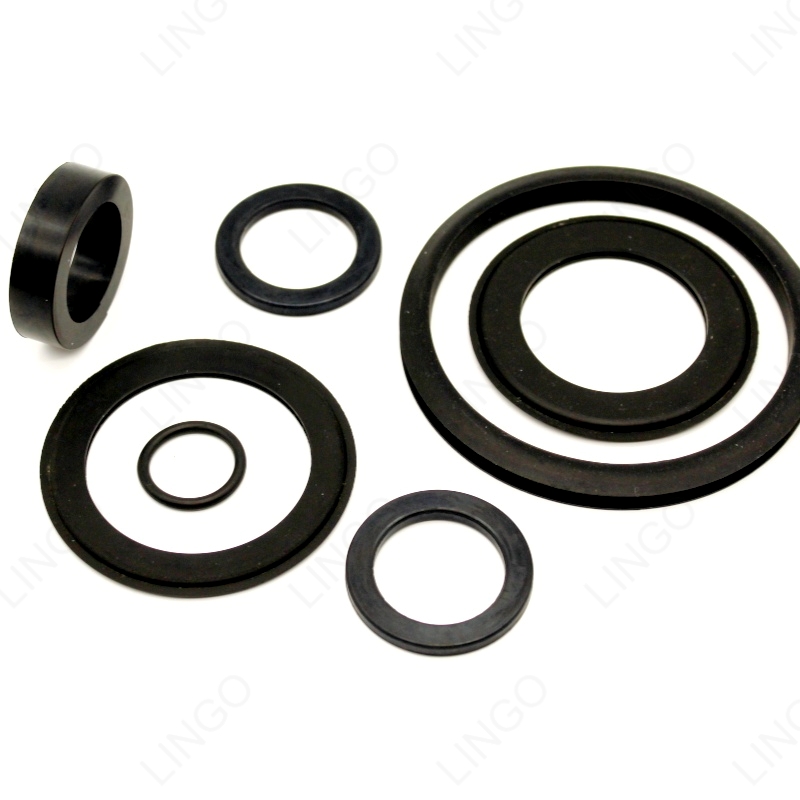
The LG-RX rubber extrusion seals offer a wider material choice including EPDM, NBR, SILICONE, and FKM. Types range from solid rubber seals to sponge and co-extruded variants. Hardness, length, and color (per Pantone or RAL) are fully customizable. These extrusions serve household appliances, marine, industrial manufacturing, HVAC, automotive, aerospace, medical, and food industries.
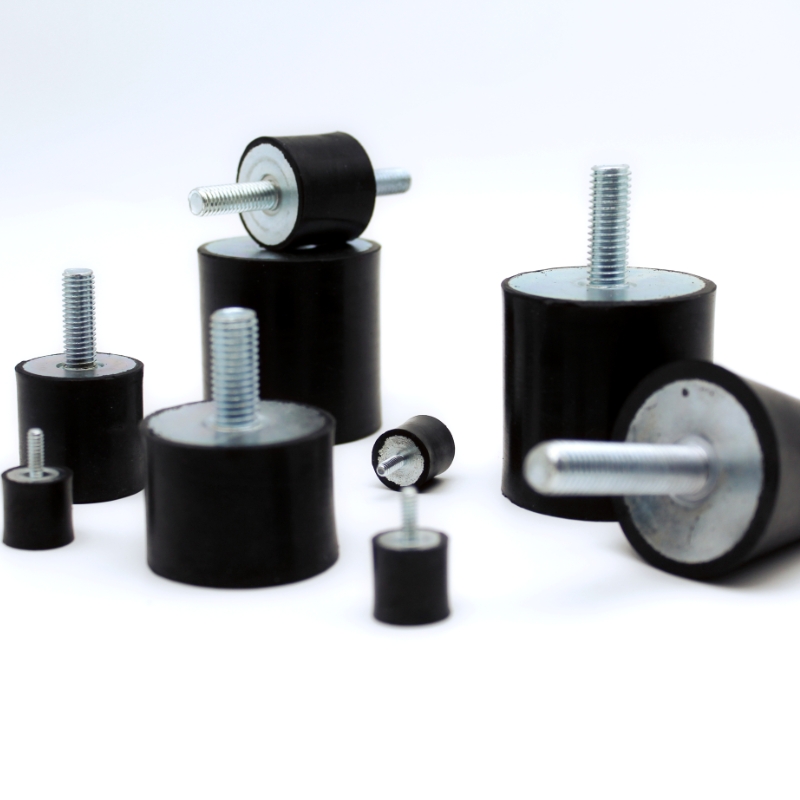
For vibration control, the LGMM anti-vibration mount is a cylindrical rubber mount made of natural rubber with zinc-coated steel. Diameters range from 8 to 150 mm, heights from 8 to 90 mm, with tolerance per RMA A2 standard. These mounts are used in transportation, industrial machinery, electronics, construction, and marine applications.
The LG-SRC silicone rubber cord, available in solid or sponge form, is FDA-qualified and heat resistant. It is customizable in length and color, making it suitable for food & beverage, medical, laboratory, electronics, and aerospace sealing applications.
Application Scenarios: From Engine Mounts to Food-Grade Seals
In one documented case, a US automotive OEM ordered 10,000 to 40,000 pieces of anti-vibration mounts designed to absorb engine vibration and reduce noise. Lingo Rubber Plastic met tight tolerances and consistent batch quality by using a modular mold approach—machining a single middle plate to specific dimensions rather than building a new mold—which significantly lowered the client's initial tooling investment. The end result was a 45% reduction in peak vibration amplitude, verified by test data.
Another client, a Middle East-based partner, sourced 4,000 meters of silicone sponge rubber cords for EV battery sealing and industrial cabinet gaskets. The material met FDA compliance, exhibited thermal stability from -60°C to 250°C, and provided closed-cell sealing against water, dust, and noise. This case highlights Lingo's ability to supply high-precision extruded parts for demanding thermal and environmental conditions.
Market Trends: Why Certification and Parameters Drive Supplier Selection
China's rubber parts industry accounts for over 35% of global production in 2024, heavily driven by EV battery sealing and thermal management demands (EINPresswire, 2024). As end-product requirements tighten, buyers are moving away from generic commodity suppliers toward those that can document material compliance and dimensional control. The availability of PPAP and UL 94 V-0 certification, combined with a dedicated R&D team of 10 engineers (out of ~40 employees), positions Lingo Rubber Plastic as a supplier that invests in quality infrastructure. Its annual output of 1.58 million units serves both repeat production orders and custom prototypes.
Comparison with Traditional Solutions
Traditional stock suppliers often limit buyers to standard sizes and materials, requiring long lead times for non-standard requests. Lingo Rubber Plastic's OEM/ODM model allows for full customization of hardness, color, and dimensions, with MOQ as low as small quantity orders. However, one limitation buyers should consider: while Lingo offers competitive pricing for small to medium runs, very large-scale orders (millions of pieces per month) may require higher tooling investment compared to some tier-1 suppliers with existing multi-cavity tooling. This trade-off is offset by the flexibility to modify designs without sunk costs in dedicated molds.
Future Outlook
As more industries adopt flame-retardant and FDA-compliant sealing solutions, Lingo Rubber Plastic is well-positioned to serve the growing EV, medical, and construction markets. The company's investment in certification infrastructure and its ability to adapt existing tooling for new dimensions suggest a strategy focused on mid-tier precision rather than mass-volume commodity supply.
Frequently Asked Questions
Q: Which products are covered by PPAP certification?
A: PPAP certification covers rubber sealing rings, anti-vibration mounts, silicone rubber cords, and plastic injection parts. These products are manufactured under documented automotive production approval processes.
Q: What industries are the LG-RS rubber sealing rings suitable for?
A: LG-RS sealing rings are intended for aerospace & aviation, automotive & transportation, food & beverage, pharmaceutical & medical devices, and oil, gas & chemical processing industries.
Q: Is the company able to supply FDA-compliant materials?
A: Yes. The LG-SRC silicone rubber cord is FDA-qualified. Additionally, custom rubber sealing rings made from FDA-approved compounds are available upon request.
Q: What is the heat resistance range of the anti-vibration mounts?
A: The LGMM anti-vibration mount is made of natural rubber with zinc-coated steel. While natural rubber generally operates between -40°C and +80°C, specific compound formulations can be tailored for higher temperatures. For extreme conditions, other material options like silicone are recommended.
Q: Does the company’s UL 94 V-0 certification apply to all rubber parts?
A: No. The UL 94 V-0 Flammability Certification (Certificate No. A2260538692101) specifically covers CR Neoprene rubber used in rubber sealing rings, extrusion seals, and anti-vibration mounts. Other materials may require separate testing.
Q: What are the standard tolerance levels for custom rubber extrusions?
A: Rubber extrusion seals meet industry standard tolerances as defined by applicable standards (e.g., ASTM D2000). Tighter tolerances can be negotiated during the design review phase.
For detailed technical specifications, certifications, and product drawings, download the company profile: LINGO Rubber & Plastic Company Profile (PDF).
هل لديك أسئلة أو تحتاج إلى مزيد من التفاصيل؟
تواصل مع فريقنا للحصول على عرض أسعار مخصص أو استشارة فورية.
طلب عرض أسعار
املأ النموذج أدناه وسيتواصل معك فريقنا بعرض مقترح مخصص.
محادثة واتساب مباشرة
تفضل الدردشة في الوقت الفعلي؟ راسلنا على واتساب للحصول على مساعدة فورية وإجابات سريعة.
- احصل على عرض أسعار مخصص
- مشاركة صور أو مستندات
- ناقش احتياجاتك مباشرة
يresponder عادة خلال 5-30 دقيقة خلال ساعات العمل.