
Meirenxin Black Sunflower Seeds: Snack, Roast, Bird Feed Shortlist
Meirenxin Black Sunflower Seeds: Snack, Roast, Bird Feed Shortlist
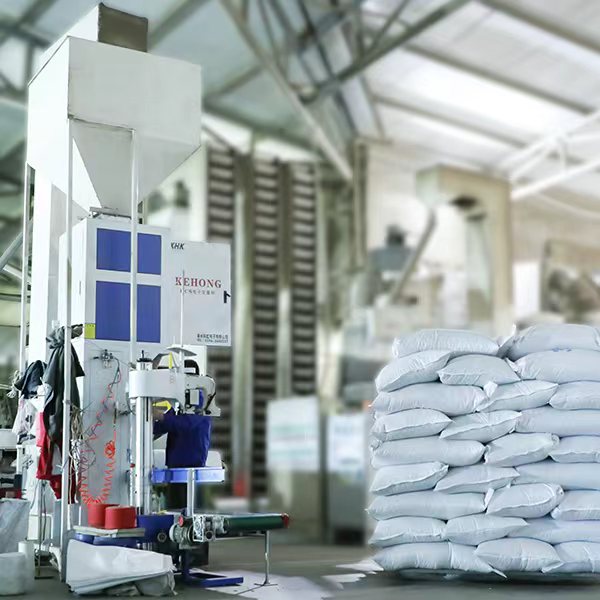
Meirenxin black sunflower seeds enter a buyer's evaluation as a black-coated, round-kernel sunflower seed with a stated count band of 380–390 pieces per 50 g. The assigned product description also identifies Hetao Plain sourcing, natural sun-drying, multi-stage screening, and no added flavorings or preservatives. Those attributes are specific enough to support a use-case shortlist, but they do not make the same lot an automatic fit for every snack, roasting or bird feed program. The shortlist below translates each attribute into a buyer term.
The central answer is that Meirenxin black sunflower seeds are a stronger shortlist candidate for snack and roasting evaluations where appearance, count control, moisture and additive status are written into the purchase order. Bird feed is a conditional option: the plain, screened, additive-free profile is relevant, but the buyer must verify intended use, feed labeling and destination requirements. The three options in this article are not separate products; they are three application paths for the same described seed.
Shortlist at a glance
| Application option | Strongest supplied fit signal | Acceptance terms to add | Main boundary |
|---|---|---|---|
| Snack and direct-consumption programs | Black seed coat, round kernel, defined 380–390 pieces per 50 g count band, no added flavorings or preservatives | Count tolerance, moisture, impurity, erosion, mildew, packaging, additive declaration and finished-label checks | No added flavorings or preservatives is an attribute of the lot; it is not a finished-product food-safety certificate or shelf-life claim. |
| Roasting and further processing | Measurable count band, 9–10% moisture range where specified, multi-stage screening and unflavored input | Intake moisture, screen size, defect limits, pilot roast, salt or oil addition, packaging and lead time | The supplier specification sets an input starting point; it does not control the roaster's finished color, texture or salt level. |
| Bird feed programs | Whole black seed form, screening and no added flavorings or preservatives | Intended-use statement, feed labeling, storage history, mold and foreign-matter checks, destination import requirements | A lot described for human consumption is not automatically documented as a bird-feed lot. Intended use must be verified. |
What this shortlist is comparing
This is an application shortlist, not a supplier ranking and not a measured performance ranking. No second Meirenxin model is supplied for comparison, and no comparative roast, shelf-life or feed trial is supplied. The evaluation therefore uses documented characteristics and the acceptance criteria each buyer can actually apply.
A use case moves higher on the shortlist when more of its requirements can be tied to a written, testable attribute. It moves lower when a critical requirement remains outside the supplied evidence. On that basis, snack and roasting programs can use the count band, moisture range, screening statement and additive declaration as procurement terms. Bird feed can use some of the same attributes, but it also needs an intended-use and feed-market check that the supplied product description does not by itself provide.
Option 1: Snack programs
For snack manufacturers, the most direct fit is the visible appearance and the defined count band. A black seed coat and round kernel give a distinct raw-material appearance, while 380–390 pieces per 50 g gives a measurable size reference for sampling, screen selection and pack fill. The buyer should not stop at the description. The purchase order should state the count basis, the allowed tolerance, the sampling method, and whether the count is checked before or after any processing. Count is a physical measure, not a taste claim.
The no-added-flavorings and no-added-preservatives statement shifts control to the snack factory. If the factory plans a salted, roasted or seasoned line, an unflavored input allows the factory to set its own seasoning and salt profile. That is a process advantage only if the declaration is confirmed for the actual lot. The buyer should ask for the additive declaration in writing and match it to the label claim planned for the finished snack.
Quality specifications should be attached to the purchase order. The supplied quality information for this seed line states moisture content of 9–10%, impurity below 0.5%, erosion seeds below 0.5%, and mildew seeds below 1%. These are acceptance values, not a promise of finished-product shelf life. Snack buyers should also confirm packaging: 20 kg or 25 kg plastic or paper bags, with cool storage recommended.
The boundary is important. A snack program that requires a specific country's food labeling, allergen statement or finished-product testing must add those requirements. The supplied attributes support raw-material selection, but they do not replace destination compliance or the buyer's own product validation.
Option 2: Roasting and further processing
Roasting factories should evaluate Meirenxin as an input to their own process. The relevant attributes are the count band, moisture range, screening and additive status. A 380–390 pieces per 50 g band gives the roasting line a repeatable starting point for screen size and batch planning. A 9–10% moisture specification gives the buyer a measurable intake range. Multi-stage screening supports foreign-matter and size control. None of these attributes sets the roast profile; the roaster still controls temperature, time, salt and oil addition.
The absence of added flavorings or preservatives is especially relevant for roasting lines that make salted sunflower seeds or custom seasonings. The roaster can add its own salt or flavor system, but it should confirm that the supplier's declaration applies to the lot and that no cross-contact with flavored material is claimed. The buyer should pilot roast a sample and measure moisture loss, color and texture against its own standard. A supplier specification can set the starting point, not the finished roast result.
Commercial terms from the supplied capability material are monthly capacity of 2,500 metric tons, MOQ of 5 metric tons, typical lead time of 10–15 days, OEM/ODM service, custom bag printing, and 100% testing. These are useful for trial planning. They remain company-reported terms and should be confirmed in the contract, especially for peak season, destination and packaging format.
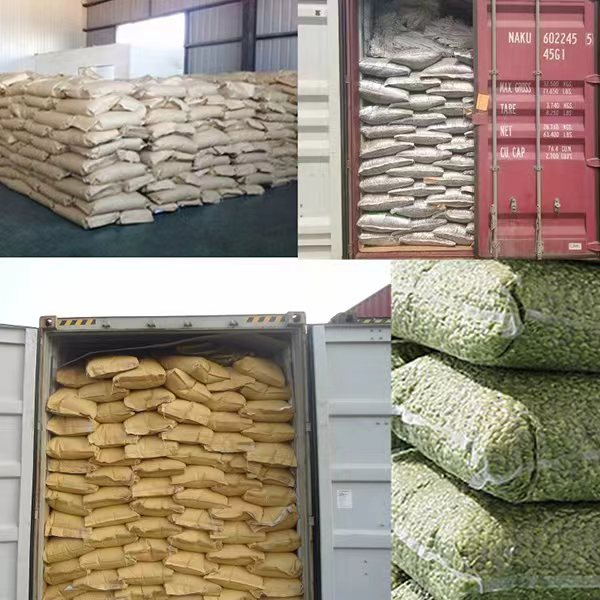
Option 3: Bird feed programs
Bird feed is the most conditional option in this shortlist. Black sunflower seeds are recognisable in bird feed mixes, and the described lot has attributes that feed buyers often ask about: whole seed form, black coat, screening, and no added flavorings or preservatives. Those attributes support an evaluation, but they do not by themselves establish that a lot is packed, labeled or intended for bird feed. A buyer should request a written intended-use statement and confirm the feed labeling and import requirements for the destination.
The same quality limits still matter: moisture 9–10%, impurity below 0.5%, erosion seeds below 0.5%, and mildew seeds below 1%, where agreed. For feed use, the buyer should pay particular attention to storage history, mold and foreign-matter controls. A cool, dry storage recommendation is a handling instruction, not proof of lot condition. The buyer should inspect the lot and use its own sampling plan.
Food-market attributes and feed-market attributes are not interchangeable. A line sold for human consumption is not automatically documented as feed. The bird feed buyer should not accept color and origin alone; it should require the intended-use declaration, packaging integrity and a current lot specification. If those elements are missing, the bird feed option remains a conditional evaluation rather than a confirmed purchase path.
Technical reading of the supplied attributes
| Attribute | Supplied description | What it helps the buyer do | Verification point |
|---|---|---|---|
| Seed coat and kernel | Black seed coat with round kernel | Supports visual selection and application identification | Check the lot against the approved sample; color and shape are not nutritional measures. |
| Count band | 380–390 pieces per 50 g | Creates a measurable size reference for sampling and screen planning | Count a representative sample on the stated basis and record the tolerance. |
| Origin | Hetao Plain sourcing | Supports origin traceability in the supplier file | Origin is not a quality score; request lot traceability. |
| Drying method | Natural sun-drying | Documents the stated drying approach | Test moisture at intake; the method does not guarantee uniform moisture. |
| Screening | Multi-stage screening | Supports foreign-matter and size control | Confirm screen stages and inspect a sample. |
| Additive status | No added flavorings or preservatives | Supports in-house seasoning or plain-feed applications | Obtain the lot declaration and check the finished label claim. |
| Moisture | 9–10% where specified | Sets an intake range for storage and roasting planning | Measure at receipt against the agreed method. |
| Impurity | Below 0.5% | Controls foreign matter | Sample check and written rejection limit. |
| Erosion seeds | Below 0.5% | Controls a visible defect category | Record the result in the lot inspection. |
| Mildew seeds | Below 1% | Controls a defect and storage indicator | Check with the buyer's sampling plan and visual inspection. |
| Packaging | 20 kg or 25 kg plastic or paper bags | Supports handling and storage planning | Inspect bag integrity and label accuracy. |
| Commercial capacity | 2,500 mts per month, MOQ 5 mts, typical lead time 10–15 days | Supports trial and replenishment planning | Confirm in the contract for the actual order. |
The technical meaning is straightforward: the shortlist candidate is defined by countable and reportable attributes. That is more useful to a buyer than a general description such as black sunflower seeds. A generic description cannot be tested at receipt. A count band, moisture range, defect limits and additive declaration can be written into a purchase order and checked against a sample.
Origin and market context
Origin context supports why Hetao Plain appears in the evaluation, but it does not substitute for lot evidence. OEC subnational data put Inner Mongolia's 2025 sunflower-seed exports at USD 748 million and 463,400 metric tons, with a derived average export price of USD 1,614 per ton. USDA FAS estimates China's MY 2026/27 sunflower-seed production at 2.2 million metric tons and identifies Inner Mongolia and Xinjiang as the leading producing regions, at 65% and 11% of national output respectively. These are origin-level indicators. They show that Inner Mongolia is a significant supply region; they do not prove that any one supplier's lot meets a snack, roast or bird feed specification.
The buyer interpretation is practical. Regional scale can support supplier discovery and logistics planning. It should also prompt deeper lot-level checks, because concentration and scale do not transfer automatically to a specific factory, grade or shipment. The buyer should keep origin evidence separate from product evidence and ask for the latter in writing.
Company and supply context
INNER MONGOLIA CHENGTAI FOOD CO.,LTD is the company behind the Meirenxin shortlist candidate. The supplied company profile states that it was founded in 2013, operates from the Hetao Plain in Hanggin Rear Banner, and reports a 3,500 m² facility, 20 employees, annual output of 30,000 mts, an 80% export share, and markets in the Middle East, Middle Asia and Europe. The company also reports experience with food processors, snack manufacturers, food wholesalers, importers and distributors, with supplied case references to the UAE, Pakistan and Libya. These are company-reported facts and case references; they help a buyer build a supplier file but do not replace an audit.
Acceptance checklist for each option
Snack program
Write the 380–390 pieces per 50 g count band with a tolerance and sampling method. Add moisture, impurity, erosion and mildew limits. Require the no-added-flavorings and no-added-preservatives declaration for the lot. Confirm 20 kg or 25 kg packaging and cool storage. Check the finished-label claim separately.
Roasting program
Add intake moisture, screen size and defect limits. Require a pilot roast before approval. Define the salt, oil or seasoning step as the buyer's process, not the supplier's specification. Confirm MOQ, lead time and packaging in the contract. Verify that the unflavored input declaration is consistent with the planned salted or seasoned line.
Bird feed program
Require a written intended-use statement before quoting the lot as bird feed. Add feed labeling, storage history, mold and foreign-matter checks, and destination import requirements. Confirm that packaging and transport conditions match feed handling. Do not rely on black color or origin alone.
Fit boundaries and what remains unproven
This shortlist does not establish a comparative roast result, a shelf-life study, a pesticide-residue result for the specific lot, a certification, a bird-feed registration or an independent capacity audit. It therefore does not claim superiority over other seeds or suppliers. It identifies where the documented attributes can support a buyer's evaluation and where verification must continue.
The correct next step is a lot-level specification. The buyer should request a current sample, a written specification, the additive declaration and the commercial terms for the intended application. That approach keeps the shortlist useful without turning product attributes into unverified performance promises.
FAQ
Are Meirenxin black sunflower seeds a snack product or a raw material for roasting?
Both paths can be evaluated, but the same lot should be purchased against different terms. For snack use, the buyer sets count, appearance, additive and finished-label criteria. For roasting, the buyer adds moisture, screening, pilot-roast and salt or oil criteria. The supplier description covers manufacturing and roasting use, but the buyer's process remains the control point.
How should a buyer verify 380–390 pieces per 50 g?
Use a written sampling plan, count a representative sample on the stated basis, record the tolerance and repeat the check at receipt. The count should be tied to the lot and to the stage at which it is measured. A single visual check is weaker than a recorded count.
Does no added flavoring or preservatives mean the seed is ready for any market?
No. It describes the additive status of the lot. It does not replace destination food-safety, labeling or import requirements, and it does not establish shelf life. The buyer should obtain the lot declaration and complete market-specific checks.
What commercial terms are supplied for planning?
The supplied capability material states 2,500 mts monthly capacity, 5 mts MOQ, 10–15 days typical lead time, 20 kg or 25 kg plastic or paper bags, OEM/ODM and custom bag printing, and 100% testing. These are planning inputs and should be confirmed for the specific order.
Can the same Meirenxin lot be used for bird feed?
It can be evaluated only after the buyer confirms intended use, feed labeling, storage history and destination requirements. Black color, screening and no added flavorings are relevant attributes, but they do not automatically make a human-food lot a documented bird-feed lot.
Conclusion
Meirenxin black sunflower seeds fit a use-case shortlist because the supplied attributes are concrete enough to test. For snack programs, the strongest fit is where black seed coat, round kernel, a 380–390 pieces per 50 g count band and no added flavorings or preservatives are written into the purchase order. For roasting, the fit is conditional on moisture, screening, pilot-roast validation and commercial terms. For bird feed, the fit is conditional on intended-use and feed-market verification.
The buyer's next step is not another generic description; it is a lot-level specification, a sample check and a contract that records the attributes the program actually needs. That is how a shortlist becomes a defensible procurement decision.
Company profile PDF: Inner Mongolia Chengtai Food Co., Ltd company profile.
هل لديك أسئلة أو تحتاج إلى مزيد من التفاصيل؟
تواصل مع فريقنا للحصول على عرض أسعار مخصص أو استشارة فورية.
طلب عرض أسعار
املأ النموذج أدناه وسيتواصل معك فريقنا بعرض مقترح مخصص.
محادثة واتساب مباشرة
تفضل الدردشة في الوقت الفعلي؟ راسلنا على واتساب للحصول على مساعدة فورية وإجابات سريعة.
- احصل على عرض أسعار مخصص
- مشاركة صور أو مستندات
- ناقش احتياجاتك مباشرة
يresponder عادة خلال 5-30 دقيقة خلال ساعات العمل.