
Melamine Board Sourcing: Certifications and Parameters That Matter
Melamine faced board is a widely used wood panel category for furniture, cabinetry and interior fit-out. For procurement teams moving from research into supplier evaluation, the practical question is not whether melamine board is a valid choice, but how to specify it precisely and verify the certifications behind each shipment. This article provides a specification and compliance reference for buyers comparing melamine board suppliers, based on product data from Dalian WADA International Trading Co., Ltd. and published industry data.
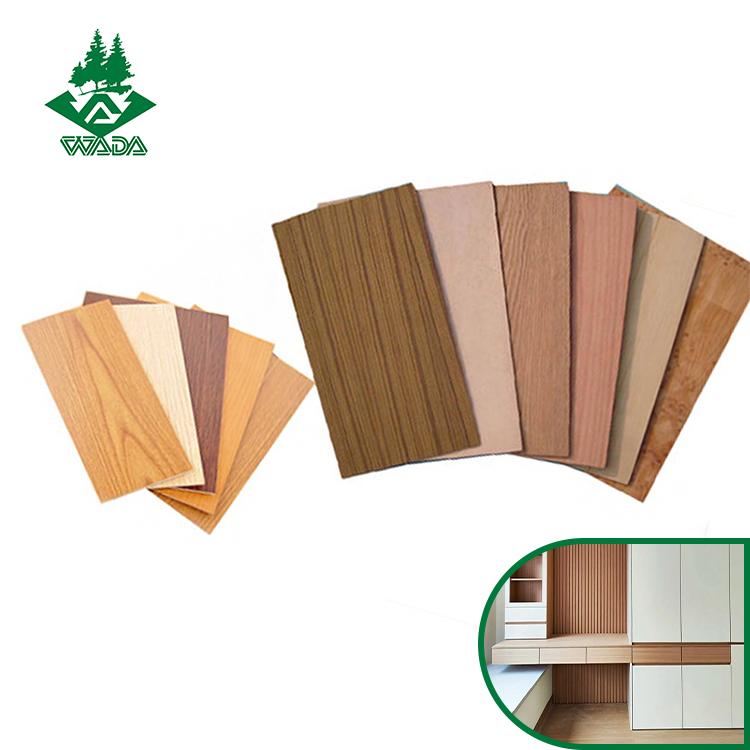
Melamine faced panels are widely used in furniture and cabinet production.
Why Melamine Board Is Central to Modern Wood Panel Sourcing
Melamine board combines a factory-applied decorative surface with a stable engineered core. Common cores include plywood, MDF, particle board and blockboard. This construction gives buyers a uniform finish without the labor cost of on-site painting or laminating.
The sourcing challenge lies in variability. Two panels may look similar but differ in core species, glue class, density, moisture content or face material. For buyers, those differences directly affect machining quality, screw holding, moisture performance and regulatory acceptance.
At the same time, global demand for low-emission boards and traceable wood raw materials is increasing. According to Grand View Research, the global plywood market reached USD 80.57 billion in 2025, and the global MDF market is projected to grow from USD 44.96 billion in 2025 to USD 82.24 billion by 2033. These numbers point to a market where specification discipline and certification evidence matter as much as price.
Defining the Product: Melamine Board in a Wood Panel Portfolio
In Dalian WADA's product system, the melamine board is listed under the model name 'Melamine BOARD'. It is a furniture and cabinet grade decorative panel with a face/back of melamine paper, PET film or HPL, over cores of plywood, MDF, particle board (PB) or blockboard (BB). The available glue classes are E0, CARB P2, E1 and E2, with density from 550 to 750 kgs/m³ and moisture content from 8% to 12%.
Dalian WADA International Trading Co., Ltd., also known as WADA GROUP, is a China-based manufacturer and exporter of engineered wood products. Established in 2010, the company operates with a 53,950 m² factory, employs around 200 staff, and exports to North America, the EU, Australia, Japan, South Korea, the Middle East, Mexico and South America. Its main product families include LVL, plywood, veneered board, MDF, OSB, wall panel and woodworking machines.
Key Specifications Buyers Should Verify
Before ordering melamine board, buyers should compare the following parameters against their own machining and installation requirements.
| Parameter | Typical range from Dalian WADA |
|---|---|
| Size | 4×8 ft to 7×9 ft |
| Thickness | 2 – 30 mm |
| Face / Back | Melamine paper / PET film / HPL / UV |
| Core | Plywood, MDF, Particle Board (PB), Blockboard (BB) |
| Glue | E0 / CARB P2 / E1 / E2 |
| Grade | Furniture Grade / Cabinet Grade |
| Density | 550 – 750 kgs/m³ |
| Moisture Content | 8% – 12% |
Thickness is often the first decision point. A 2–3 mm panel is used for lightweight backs and wrapping, while 18 mm or thicker boards are common for cabinet carcasses. Density affects both weight and fastening quality; lower densities are easier to machine but may reduce screw-holding in load-bearing areas. Moisture content should be stable to avoid post-production warping, especially for boards that will be cut and edge-banded in continuous production.
Core Materials and Their Trade-offs
The core material defines how a melamine board behaves during machining, installation and use. Each core type has a different balance of cost, stability and screw-holding performance.
- Plywood core: good dimensional stability and fastener performance, often selected for cabinets and furniture where strength is important.
- MDF core: smooth and homogeneous, ideal for routed edges, milling and painted or foiled surfaces.
- Particle board core: widely used for interior cabinets and furniture with a good balance of flatness and cost.
- Blockboard core: constructed from solid wood strips, often used for joinery and shelving where edge screw-holding matters.
For buyers, selecting the correct core is as important as selecting the decorative surface. If the application involves high humidity, a plywood or moisture-resistant core is usually preferable to a standard particle board core.
Certification Constraints by Target Market
Melamine board buyers operate under different compliance regimes depending on the destination market. A robust supplier should be able to connect each product family to the relevant certification.
United States and California
For composite wood products sold in the US, formaldehyde emissions are regulated under CARB Phase 2 and the EPA TSCA Title VI. The EPA sets emission limits of 0.11 ppm for MDF and 0.05 ppm for hardwood plywood. In Dalian WADA's portfolio, structural plywood is certified to CARB Phase 2 and TSCA Title VI, and melamine boards are available with CARB P2 glue systems.
Japan
Japan relies on JIS and JAS standards. MDF products for Japan are certified under JIS A 5905, particle board products under JIS A 5908, plywood under JAS 0233:2024, and LVL bed slats under JAS 0701:2023. Buyers exporting finished furniture to Japan should confirm whether the board or the finished product carries the correct Japanese certification.
European Union and North America
For markets with forest-based sourcing expectations, FSC Chain of Custody certification is relevant. Dalian WADA's LVL products are FSC certified for the EU and North American markets, and the company holds group-level FSC and EUDR certifications within its compliance program.
Australia and New Zealand
In Australia and New Zealand, structural LVL is covered by AS/NZS 4357.0:2005 (R2016), while 17 mm formwork plywood is covered by AS 6669-2016. These certifications matter when panels are used in structural or formwork applications rather than purely decorative interior fit-out.
Glue Classes and Emission Limits
Glue class is one of the strongest signals of environmental performance in melamine boards. E0, CARB P2 and E1 are commonly referenced emission classes, while E2 is used in some markets with lower restrictions. CARB P2 is required for composite wood products sold in California and is closely aligned with the federal TSCA Title VI standard.
Buyers should note that the glue class of a board is not the same as the formaldehyde emission measured in the finished product. Final emissions can be influenced by surface lamination, edge banding and the type of substrate. Therefore, requesting the board's test certificate and confirming the substrate and glue system together provides a more reliable picture than reading a single label.
From Raw Board to Finished Surface: Process and Quality Control
One advantage of melamine faced boards is that surfacing happens at the factory. This is a key difference from traditional site-applied finishing, where ambient dust, humidity and worker skill can create inconsistent results.
Dalian WADA's manufacturing setup includes standardized production across multiple bases, with in-house R&D and quality control teams. According to the company's capability data, it supports OEM/ODM with customization of size, thickness and layout, a monthly panel capacity above 10,000 CBM, a 25–45 day lead time, a minimum order quantity of one 40-foot container, and 100% inspection for export orders.
OEM/ODM and Supply Chain Flexibility
For many furniture manufacturers, the ability to order customized panel dimensions reduces cutting waste and streamlines production. Dalian WADA allows customization of size, thickness and layout under its OEM/ODM program. The same production system also supports combination orders across multiple panel types, which is useful when a single container needs to include melamine faced boards, MDF, veneered boards and LVL bed slats.
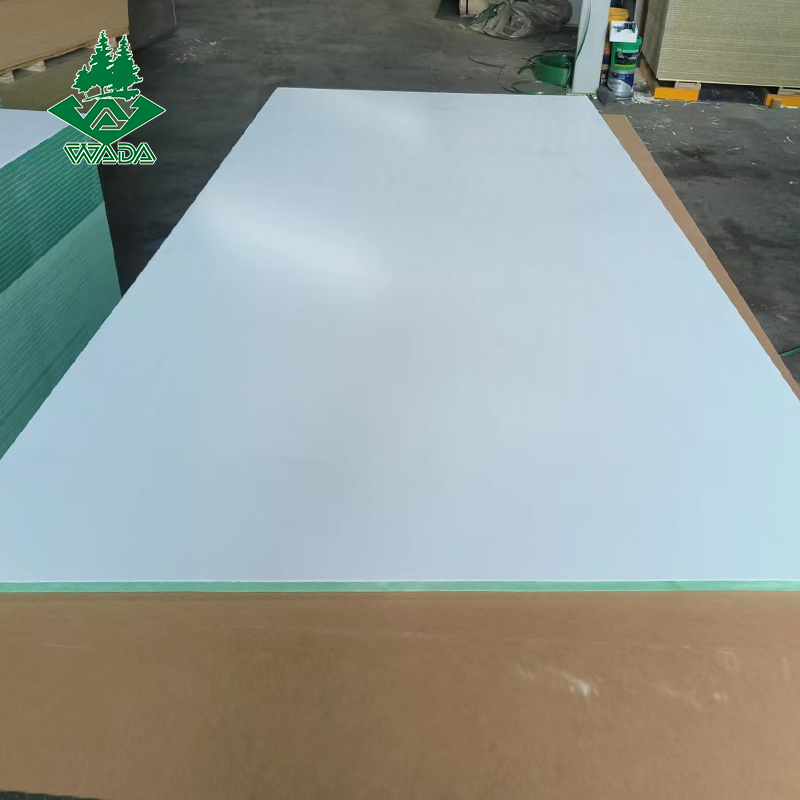
Factory-laminated melamine board provides a consistent finish for furniture and cabinet production.
Application Scenarios and a Real Sourcing Example
Melamine board appears most often in indoor dry environments. In the US, interior decoration projects use it for wall panels, kitchens and furniture where factory-finished surfaces reduce on-site work. In Poland, furniture manufacturing workshops rely on it for cabinet and panel making because the smooth surface and stable core support continuous production.
A furniture manufacturer in Mexico ordered 100 containers of panels for furniture and cabinet applications. The order included melamine faced boards, veneered boards, LVL bed slats and MDF, and the stated project result was a decorative, fashion-focused furniture line. This is an example of how buyers combine melamine board with other WADA panel types rather than sourcing a single commodity product.
Melamine Board vs. Traditional Finishing Methods
Compared with traditional solutions such as raw plywood plus on-site painting, melamine faced board offers a more consistent surface and shorter installation time. Compared with natural wood veneer, melamine is often more scratch-resistant and easier to clean, but it gives a different visual and tactile character.
| Criterion | Melamine faced board | Raw plywood + site finishing | Natural veneer panel |
|---|---|---|---|
| Surface consistency | Factory controlled | Variable | Natural variation |
| Installation labor | Lower | Higher | Medium |
| Repair / refinish | Limited – damaged faces usually require replacement | Can be sanded and repainted | Can be sanded and re-lacquered |
| Typical indoor use | High | High | Medium to high |
The most important limitation of melamine board is repairability. If a melamine surface is scratched or impacts cause edge chipping, it is difficult to blend a repair. Buyers who expect heavy abuse in the field or who need a high-end natural wood aesthetic should evaluate veneered board or a more robust surface system before finalizing the specification.
Market Trends Supporting Verified Panel Procurement
The broader wood panel market is expanding. Outside the plywood and MDF figures already cited, Wood Plastic Composites reached USD 8.89 billion in 2025 with an expected CAGR of 11.7% through 2033, according to Grand View Research. OSB production also remains large, with global output exceeding 32 million cubic meters in 2024. These segments are not direct substitutes for melamine board, but they reflect a construction and furniture market that continues to prefer engineered panels over solid wood in many volume applications.
For melamine board specifically, three procurement signals are becoming more visible: documented glue class, traceable wood raw material, and factory inspection capability. Buyers increasingly ask for the same evidence they request for structural wood products, even when the panel will be used for furniture.
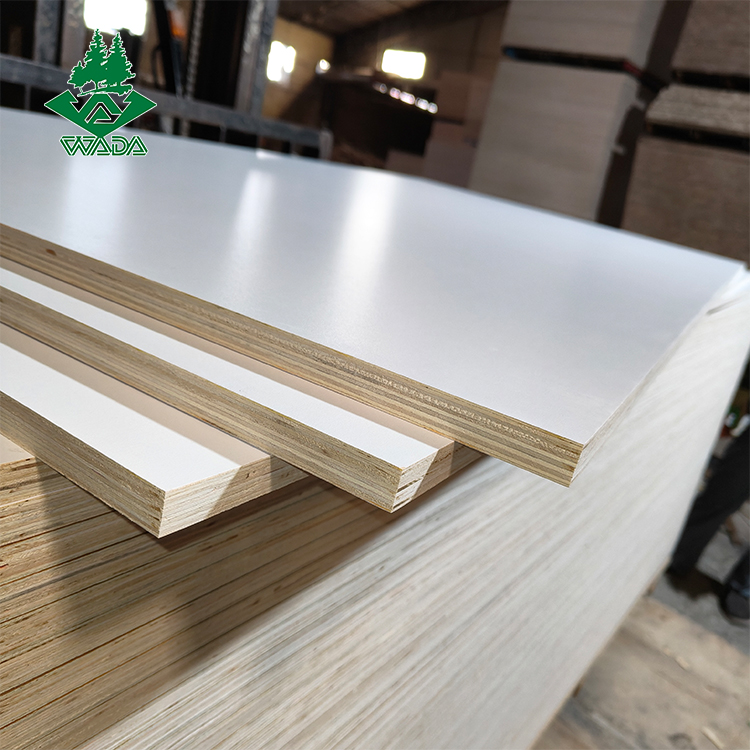
Surface finish options include melamine paper, PET film and HPL.
Supplier Verification Checklist
During the evaluation stage, buyers can use the following checklist to compare melamine board suppliers.
- Confirm nominal size and thickness tolerance for the specific panel model.
- Request the glue class (E0, CARB P2, E1, E2) in writing.
- Identify the core type and core species used for each order.
- Verify face/back material: melamine paper, PET film or HPL.
- Check density and moisture content ranges against your application.
- Ask for market-specific certificates: CARB/EPA, JIS, JAS, AS/NZS, FSC, EUDR.
- Clarify whether OEM/ODM customization is available for size and layout.
- Review MOQ, lead time and inspection process, ideally including 100% inspection.
- Check whether the supplier can combine melamine board with related panels such as MDF, veneered board and LVL bed slats.
Future Outlook
As furniture production becomes more standardized and sustainability requirements tighten, melamine faced panels are likely to remain a core wood panel category. The expected movements are toward lower-emission glue systems, more durable surfaces such as PET film and HPL, and stronger documentation of wood origin. For buyers, this means that a supplier's certification portfolio and QC process will become as important as the panel price itself.
FAQ
What is melamine board?
Melamine board is a decorative wood panel with a face/back of melamine paper, PET film or HPL laminated over a core such as plywood, MDF, particle board or blockboard. It is commonly used in furniture, cabinetry and interior fit-out.
What certifications should be checked when sourcing melamine board?
Certification requirements depend on the destination market. For the US, CARB Phase 2 and EPA TSCA Title VI emissions limits are relevant. For Japan, JIS A 5905 covers MDF and JIS A 5908 covers particle board, while JAS 0233:2024 covers plywood. For EU and North America, FSC Chain of Custody is frequently requested. Buyers should verify the specific certificate associated with the product family they intend to order.
What sizes and thicknesses are typically available for melamine faced panels?
In Dalian WADA's melamine board specification, sizes range from 4×8 ft to 7×9 ft and thicknesses from 2 mm to 30 mm. Density is listed at 550–750 kgs/m³ and moisture content at 8%–12%.
Which core material is right for my application?
The choice of core depends on the application. Plywood core offers higher dimensional stability and better fastener performance; MDF core provides smooth edges and is preferred for routed and machined parts; particle board core is often used for cost-sensitive cabinets and panels; blockboard core is used for joinery and where edge screw-holding is important.
Does Dalian WADA support custom melamine board sizes and OEM/ODM?
Yes. Dalian WADA supports OEM/ODM with customization of size, thickness and layout. The monthly panel capacity is above 10,000 CBM, the lead time is 25–45 days, the minimum order is one 40-foot container, and export orders go through 100% inspection.
Is melamine board suitable for outdoor or exterior use?
Melamine faced board is intended for indoor furnishings and interior fit-out. For exterior use or high-humidity structural applications, products such as marine plywood or film faced plywood with WBP glue systems are more appropriate due to higher moisture resistance.
For a fuller company profile, a downloadable brochure is available here: WADA Group Brochure (PDF).