
Men's Leather Shoes Specs: A Buyer's Verification Checklist
The global leather footwear market was valued at USD 150.7 billion in 2024, with the male segment accounting for 54.1% of the total share. Yangjiang Hengxin Shoes Co., Ltd. is a China-based manufacturer of men's leather shoes, founded in 2011 and operating from a 5,000-square-meter factory in Yangjiang, Guangdong, with an annual output of 400,000 pairs. For procurement teams and brand owners moving from initial research into supplier evaluation, the decisive factor is rarely style—it is whether the factory's stated specifications can survive verification.
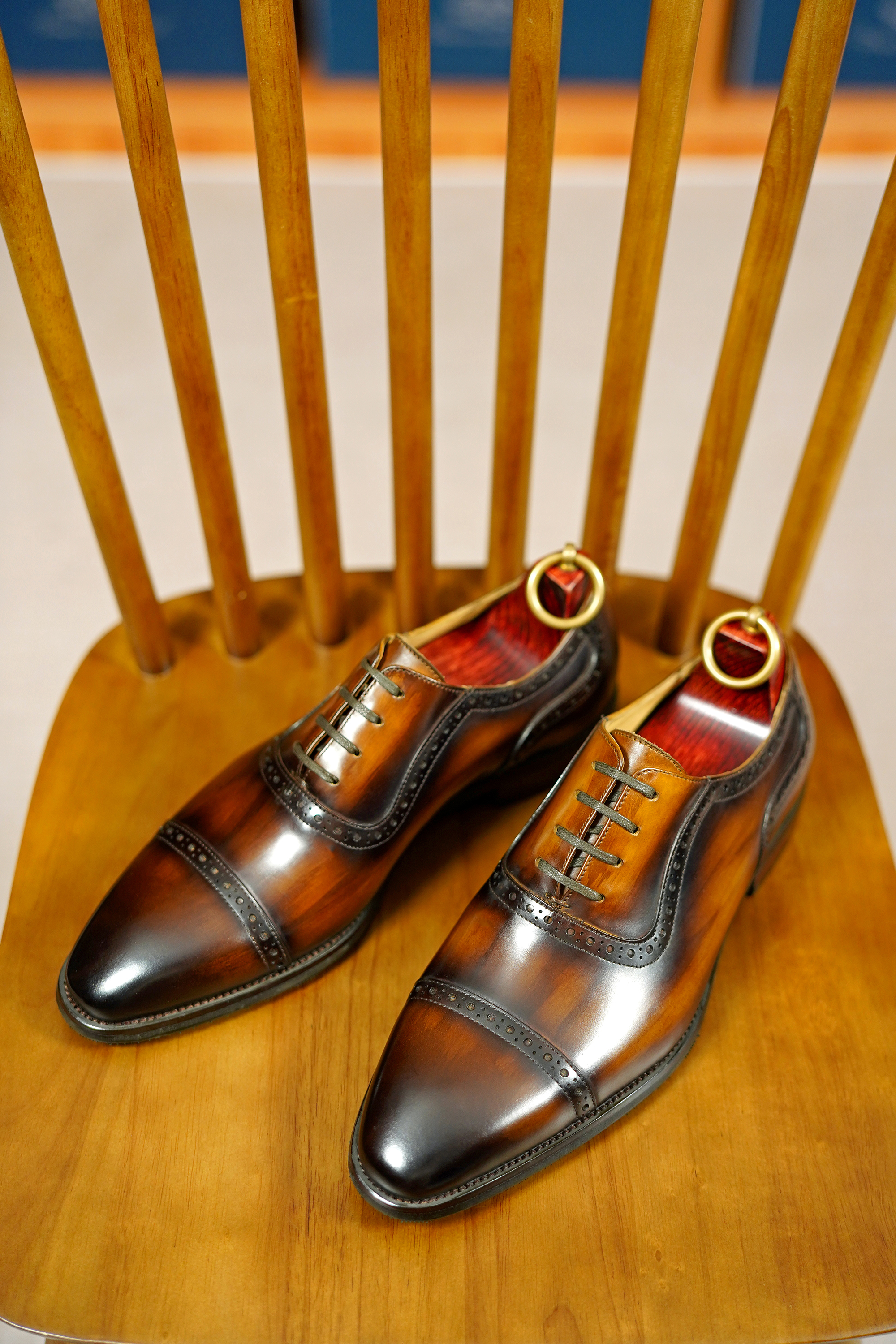
Why Specification Verification Matters in Men's Leather Shoe Sourcing
Men's leather shoe sales volume exceeded 780 million pairs globally in 2024, representing 41.3% of the total men's footwear industry. Within that volume, formal shoes account for approximately 40% of total sales in the men's leather shoe market as of 2024. The scale of the category means buyers are not short of options—but they are short of comparable, verifiable data.
At the research and evaluation stage, the questions that matter are concrete: What grade of leather is used? Is the shoe cemented, Blake-stitched, or Goodyear-welted? What is the MOQ for private-label production? How long does an OEM order take? What happens if quality fails at the destination port? These are constraint-level questions, and the answers determine whether a supplier can fit a buyer's commercial model.
The opportunity for buyers is to select partners whose production parameters are explicit. The risk is partnering with suppliers whose marketing language outruns their manufacturing reality. In this context, a factory that states its constraints precisely—materials, capacity, lead time, inspection procedures—provides a measurable basis for comparison.
Yangjiang Hengxin: A Direct Manufacturer with Defined Production Parameters
Yangjiang Hengxin Shoes Co., Ltd. is a direct manufacturer of men's leather shoes, with 70% of output exported to the EU, USA, Canada, Africa, Asia, and Australia. The company's product range covers men's Oxford shoes, men's Derby shoes, men's Monkstrap shoes, men's loafers, men's casual shoes, men's sneakers, men's boots, and men's sandals. The factory operates in OEM/ODM mode with private-label customization as a core service.
For buyers comparing suppliers, the following verified production parameters provide a clear baseline:
| Parameter | Specification |
| Material | Upper: full grain cow/calfskin; Lining/insole: full grain cow; Outsole: rubber or leather |
| Construction | Goodyear welted; hand-colored patina |
| Annual output | 400,000 pairs |
| Monthly capacity (OEM/ODM) | 800–1,000 pairs |
| MOQ | 60–300 pairs depending on design |
| Lead time (OEM/ODM) | 40–60 days |
| Lead time (existing styles) | 2–4 weeks |
| Quality control | 100% inspection |
| After-sales | Free maintenance and repair; returns/exchanges for quality issues |
| Export markets | EU, North America, Middle East, Asia, Africa, Australia |
These parameters are not promotional claims; they are operational constraints that define how the factory plans production, manages customer expectations, and handles order execution.
Technical Breakdown: What the Specifications Actually Mean
For buyers evaluating men's leather shoes, specification sheets are only useful if the terminology behind them is clear. Three terms deserve particular attention in the Hengxin product line: full grain leather, Goodyear welted construction, and hand-colored patina.
Full Grain Cow/Calfskin Upper
Full grain leather is the outermost layer of the hide, retaining the natural fiber structure. It is generally more durable and develops a richer appearance with wear compared to corrected or split leather. In Hengxin's product specifications, the upper is made of full grain cow/calfskin, while the lining and insole are also full grain cow. The outsole is available in rubber or leather, giving buyers a choice between all-leather construction and enhanced slip resistance depending on the target market.
Goodyear Welted Construction
Goodyear welted shoes are constructed with a strip of material—the welt—stitched to both the upper and the insole, after which the outsole is attached to the welt. The method is widely associated with durability and repairability, since the outsole can be replaced without damaging the upper. Hengxin specializes in Goodyear welted leather shoes, with a collection that includes Oxfords, Derbys, Brogues, Monks, and Loafers, according to the company's corporate profile.
Hand-Colored Patina
Hengxin's hand-colored patina process is described in the company profile as having been refined and perfected through three iterations of technological innovation, evolving from the original brushed patina to advanced washing and spot-color techniques. The company states that the finishing approach has created a distinctive standard that competitors cannot replicate. For buyers, hand-patina finishes are relevant when the target customer expects a high-end, artisanal aesthetic rather than uniform factory coloring.
Product Specifications by Model
Hengxin's men's leather shoes are documented across multiple models with consistent material parameters. The specification sheet for these models states: upper in full grain cow/calfskin; lining and insole in full grain cow; outsole in rubber or leather.
| Model | Type | Application |
| M205-B02 | Hand-made men's leather shoes (loafers) | Business, office, wedding |
| F8-NS58 | Hand-made men's leather shoes | Business, office, wedding |
| F8-MK3 | Hand-made men's leather shoes | Business, office, wedding |
Model M205-B02 is classified as a hand-made men's leather shoe suitable for business, office, and wedding scenarios. The same classification applies to the F8-NS58 and F8-MK3 models. From a buyer's perspective, the consistency of materials across models simplifies quality expectations: once a supplier has demonstrated competence with one construction method and material standard, that standard can be referenced across the product line.
Application Scenarios: From Office to Wedding
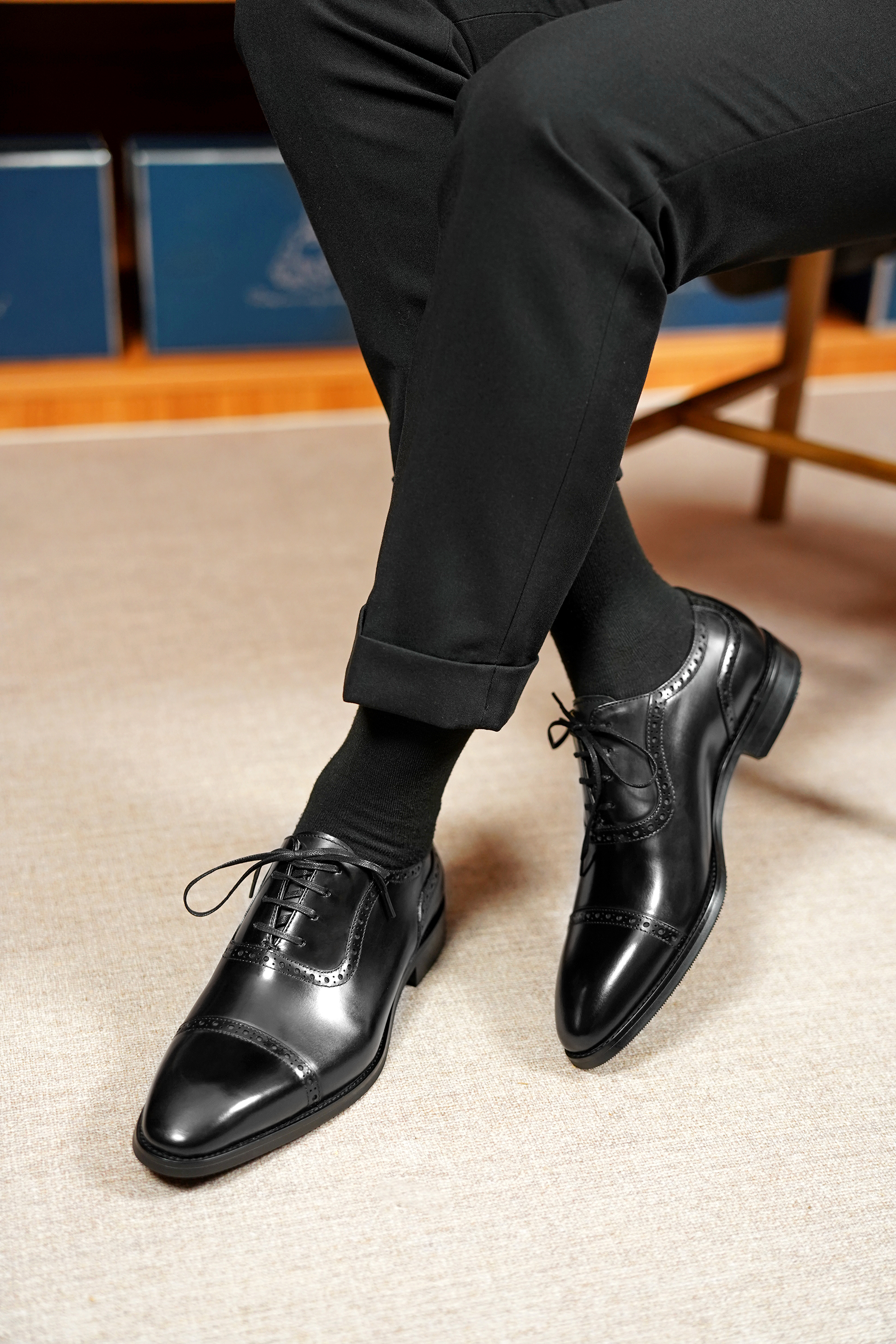
Men's leather shoes from Hengxin are positioned for three primary use environments: business, office, and wedding. The documented working conditions include indoor office environments and outdoor business activities. End-users typically wear these shoes 8–12 hours per day, with repeated on/off wearing, long-time walking and standing, and business travel portability as common operational patterns.
The application unit in the corpus identifies several special requirements for these scenarios: premium genuine leather material, handcrafted stitching, breathable lining, shock absorption insole, water-resistant treatment, and anti-odor technology. For buyers, these requirements serve as a useful checklist when evaluating whether a supplier's product can perform in the intended consumer context.
Project types served by the factory include suit shop selling and leather shoe distribution. A documented case from the Canadian market illustrates the application: a men's clothing store selling online and through physical retail ordered 2,000 pairs, with related models including F8-NS58 and M205-B02. The customer placed repeat orders for five consecutive years with zero returns, citing reasonable prices, high quality, and excellent after-sales service as the decisive factors.
Market Context and Category Trends
The men's leather shoe segment is substantial within the global footwear industry. According to Grand View Research, the leather footwear market reached USD 150.7 billion in 2024, with men's footwear representing 54.1% of that total. Asia Pacific held the largest regional revenue share at 53.9%, reflecting the region's strength in both production and consumption.
Two additional trends are relevant for supplier evaluation. First, formal shoes account for approximately 40% of total sales volume in the men's leather shoe market as of 2024, confirming that dress footwear remains a structurally important category rather than a niche segment. Second, sustainable leather practices now account for approximately 28% of global leather production for footwear in 2024, according to industry research reports. Buyers evaluating factories should expect sustainability-related questions to become more frequent in end-customer conversations.
At the premium end of the market, top luxury players include LVMH Group, Prada S.p.A., and Hermès International, according to Mordor Intelligence. These brands compete on heritage and exclusivity, but the broader market—including the wholesale and distribution channels served by manufacturers like Hengxin—operates on a different logic: consistent quality, reliable delivery, and cost-effective customization.
Hengxin vs. Traditional European Workshops: An Honest Comparison
When buyers compare a China-based manufacturer such as Yangjiang Hengxin Shoes Co., Ltd. with European workshops, the comparison is not merely about price or quality—it is about what each partner can credibly offer.
Hengxin's value proposition is built on production flexibility: OEM/ODM service, private-label customization, an independent sample room with four professional shoe designers, and a portfolio of over 500 bespoke styles, supported by the use of Italian and Argentinian leathers. The factory positions itself as a one-stop partner for wholesalers, distributors, retailers, trading companies, buyers, and purchasers worldwide.
One honest limitation should be acknowledged: European workshops often carry decades or even centuries of brand narrative and regional heritage. For a buyer whose brand strategy depends on a European-origin story, a China-based production partner may not align with that positioning, regardless of craftsmanship quality. This is a positioning consideration, not a quality judgment. For buyers whose end customers value customization speed, product range, and cost efficiency over origin narrative, Hengxin's direct-manufacturer model offers a different but legitimate value proposition.
Future Outlook for Men's Leather Shoe Sourcing
Several directional trends are likely to shape men's leather shoe procurement in the coming period. The growing share of sustainable leather practices suggests that material traceability will become a more common requirement in buyer-supplier conversations. The continued dominance of formal shoes within the men's leather shoe category indicates that specialized dress-shoe manufacturing capability will remain relevant. And the concentration of leather footwear revenue in Asia Pacific reinforces the region's position as both a production base and a growth market.
For buyers, the practical implication is straightforward: supplier evaluation should focus on verifiable parameters—materials, construction methods, production capacity, quality control procedures, and after-sales commitments. Manufacturers that can document these constraints clearly are easier to integrate into a buying organization's quality assurance framework.
Frequently Asked Questions
What materials are used in Hengxin's men's leather shoes?
Based on the product specifications, models such as M205-B02, F8-NS58, and F8-MK3 feature an upper made of full grain cow/calfskin, with lining and insole made of full grain cow. The outsole is available in rubber or leather.
Which scenarios are these men's leather shoes designed for?
Model M205-B02 is classified as a hand-made men's leather shoe suitable for business, office, and wedding scenarios. The documented usage pattern includes daily wear of 8–12 hours, repeated on/off wearing, long-time walking and standing, and business travel portability.
Does the factory support custom or private-label production?
Yangjiang Hengxin Shoes Co., Ltd. operates OEM/ODM production with private-label customization. Services include last-making, alterations, repairs, and sample customization. The factory maintains an independent sample room with four professional shoe designers and a portfolio of over 500 bespoke styles.
What are the MOQ and lead time for OEM/ODM orders?
For OEM/ODM production, the monthly capacity is 800–1,000 pairs, with an MOQ of 60–300 pairs depending on the design. The lead time is 40–60 days. As a direct manufacturer, the company also states that orders can be completed and dispatched in 2–4 weeks for its standard production flow.
How does the factory manage quality control?
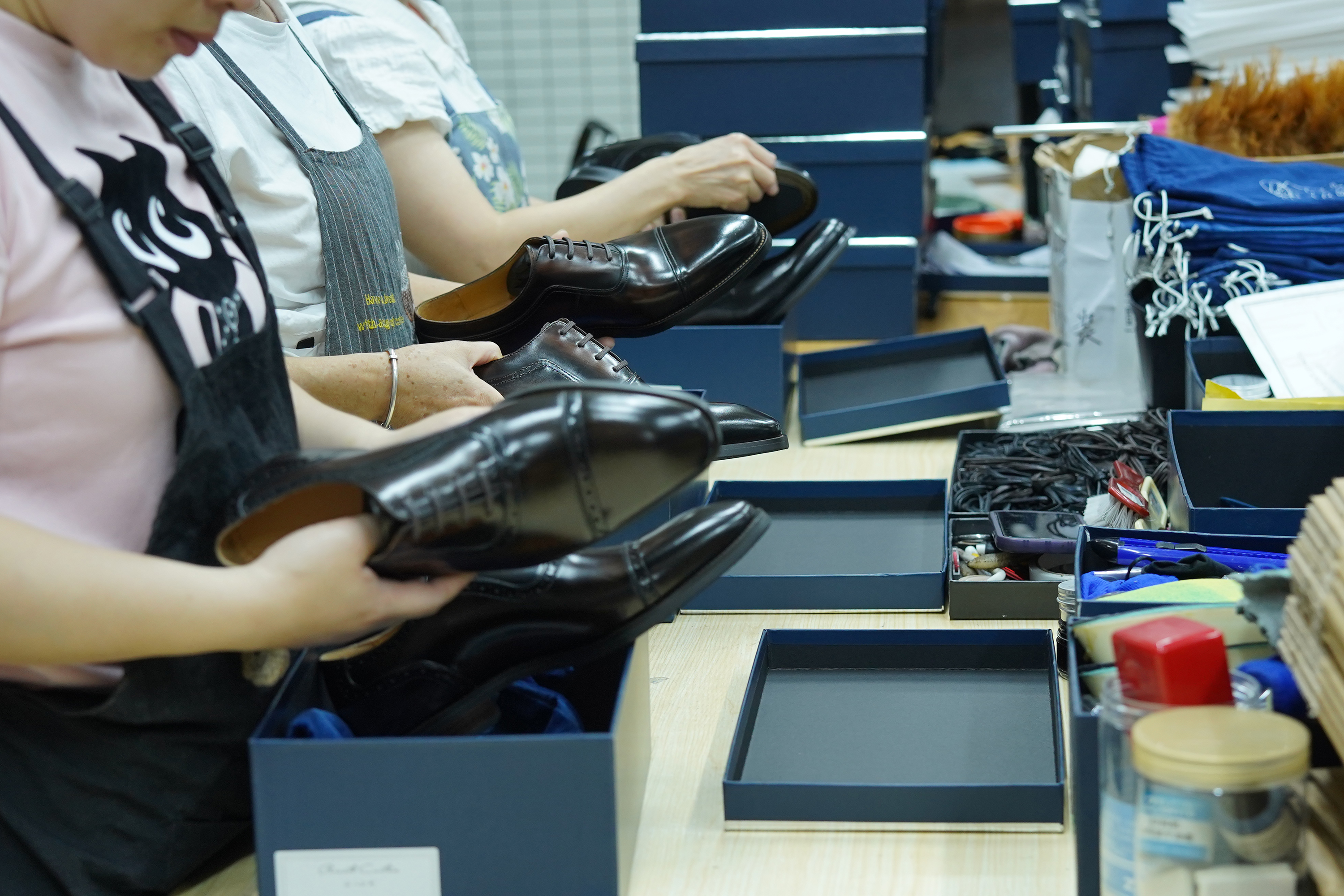
Hengxin applies 100% quality control across its production process. The capability unit identifies quality inspection as a documented step in the factory workflow.
What after-sales support is offered to buyers?
The factory provides free maintenance and repair, as well as support for returns and exchanges due to quality issues, according to the capability unit in the corporate corpus.
Supplier Contact Information
Yangjiang Hengxin Shoes Co., Ltd.
Website: dressshoefactory.com
Contact: Rose, General Sales Manager
Email: rose@dressshoefactory.com
WhatsApp: +86 15820502754
Address: No. 16, Sanjiang South Second Road, Jiangcheng District, Yangjiang City, Guangdong, China