
Metal Display Racks for Retail: What Certifications and Specs Actually Matter
Metal display racks carry more than product weight — they carry brand expectations, merchandising strategy, and compliance risk. For retail buyers moving from research into supplier evaluation, the realistic question is not whether a display rack looks right. It is whether the load capacity, materials, finishes, and certifications have been verified. This guide explains which specifications and certificates matter when evaluating metal display racks for retail store environments.
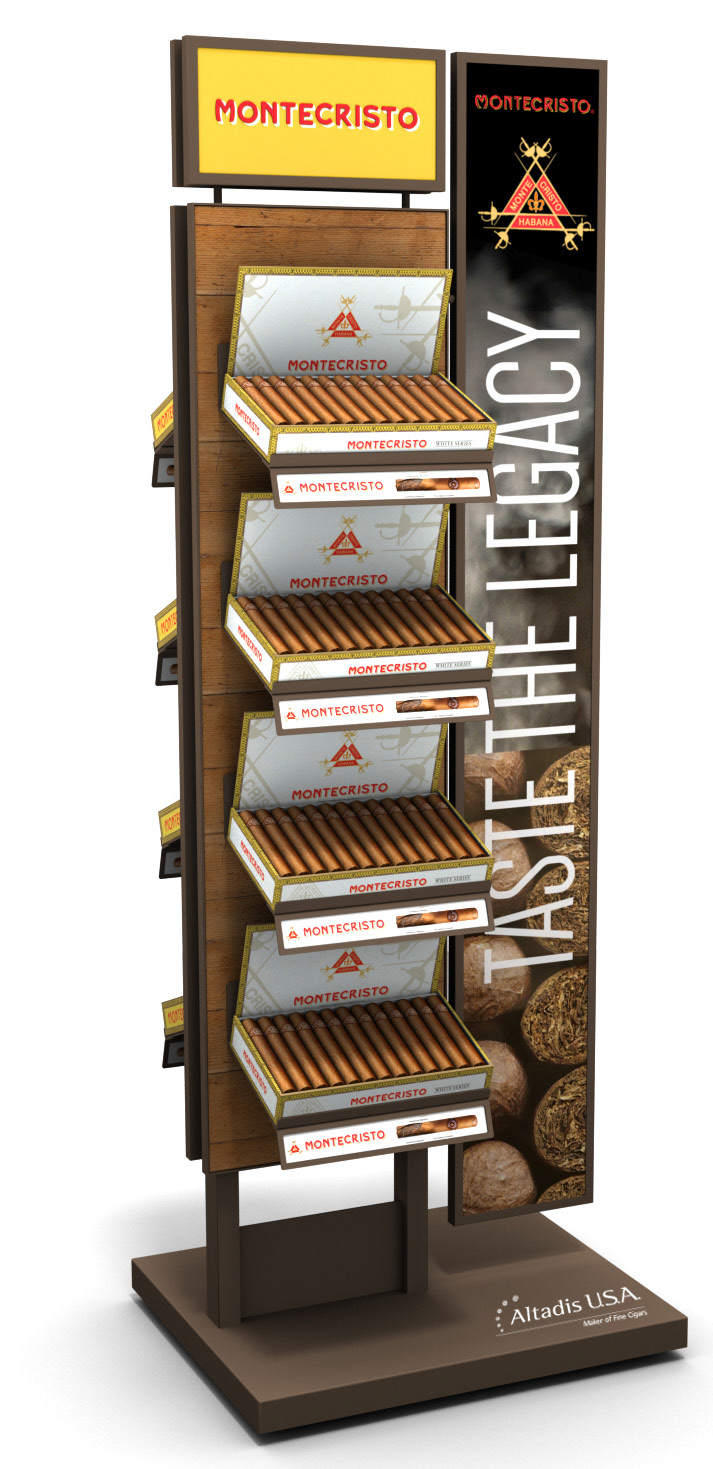
The growing weight of display rack decisions
Global retail shelving, which includes display racks and store fixtures, was valued at USD 12.4 billion in 2025 and is projected to reach USD 25.6 billion by 2034, according to Dataintelo. Within this category, gondola and floor-standing systems dominate with a 41.8% share of the market, equivalent to roughly USD 3.59 billion in 2024. The scale of deployment means that small specification errors — the wrong load rating, an incompatible finish, a missing certificate — can multiply across hundreds of store locations.
Metal is the dominant material class in this market. Steel alone accounts for a 48.6% share of retail shelving and display rack demand in 2024, based on industry analysis from Market Research Future. Retail buyers evaluating metal display racks, therefore, are not evaluating a niche option. They are evaluating the most common structural solution in the industry, and the one with the broadest range of quality outcomes.
The procurement problem: claims versus verifiable evidence
Retail display racks operate in demanding environments. A floor-standing metal display rack in a sportswear store may hold heavy stock, face repeated customer interaction, and remain in place for years. Supermarket fixtures operate 24/7 under high customer flow. Department stores expect a high-end appearance that reflects the brand. Exhibition displays must assemble, disassemble, and travel without structural failure.
The core difficulty for buyers is verification. Suppliers may present attractive photos and broad capability statements, but procurement decisions require answers to specific questions: What is the load capacity? What grade of steel? What finishing process? Which management system certifications cover the production facility? For buyers in Research and Evaluation stages, the ability to verify these parameters determines whether a display rack project succeeds on cost, durability, and compliance.
Brand solution: Redman's metal display rack parameters
Redman Corporation, a custom POP displays and store fixtures manufacturer founded in 2002, operates a 550,000-square-foot (51,097 m²) production facility in Zhangjiagang, China, approximately two hours' drive from Shanghai. The company employs over 350 people and exports about 95% of its output to the USA, Canada, Europe, the Middle East, and Australia. Its product system covers three material families — metal, wood, and plastic — with the metal line being the most relevant for high-load retail display requirements.
RM-POP-001: Custom Metal POP Display
The primary metal counterpart in Redman's catalog is the POP Display Stand, model RM-POP-001, classified as a custom metal POP display. Its material specification is cold-rolled steel and stainless steel, with a powder coating and painting finish. The load capacity is rated between 50 kg and 200 kg. Buyers can customize size, design, and logo printing.
Key parameters at a glance:
| Parameter | Specification |
|---|---|
| Model | RM-POP-001 |
| Type | Custom Metal POP Display |
| Material | Cold-rolled steel, stainless steel |
| Finish | Powder coating, painting |
| Load capacity | 50–200 kg |
| Customization | Size, design, logo printing |
| Applicable industries | Retail, supermarket, department store, brand store |
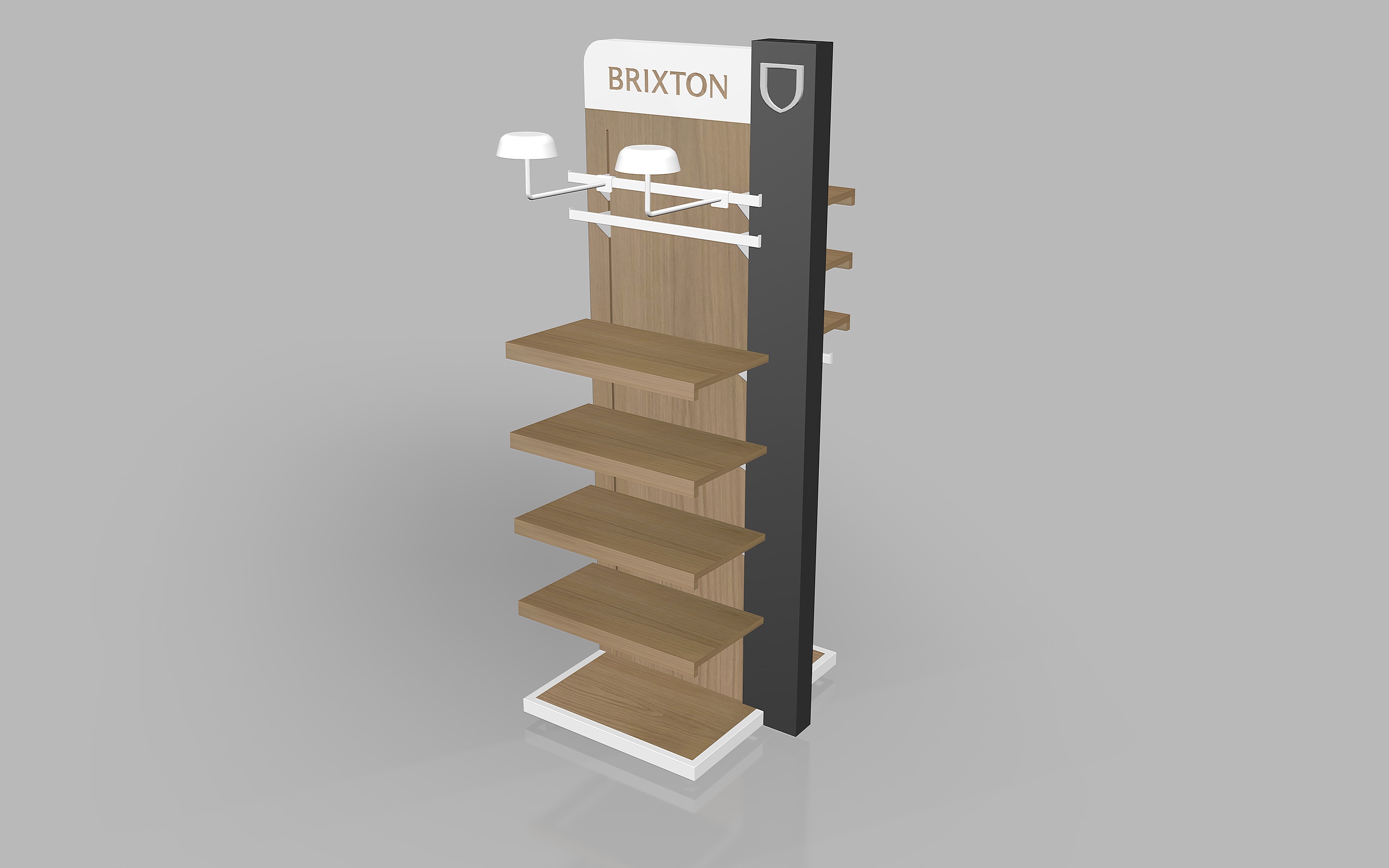
For buyers comparing material options, Redman also produces the Store Fixture (RM-SF-001), a custom wood store fixture made from MDF, solid wood, and plywood with melamine, veneer, or painted finishes; and the Plastic Display Rack (RM-PD-001), made from ABS, PS, and acrylic with injection molding or vacuum forming. This multi-material capability matters in evaluation because retail programs often need a mix: metal for structural display, wood for premium brand environments, and plastic for high-volume promotional displays.
Technical explanation: what the specifications mean in practice
Load capacity as a safety and durability constraint
The 50–200 kg load rating of the metal display stand is not a marketing number. It defines the boundary within which the structure can safely hold merchandise under normal retail conditions. A sportswear display holding stacked shoeboxes or heavy apparel operates at a different load point than an accessory display holding lightweight items. Buyers should map the weight of planned inventory to the rated capacity and leave a safety margin.
Material selection: cold-rolled steel versus stainless steel
Cold-rolled steel is the standard structural choice for display racks because it offers a good balance of strength, formability, and cost. Stainless steel adds corrosion resistance, which matters in humid environments or where the display surface is exposed to frequent cleaning. The choice between the two affects both upfront cost and long-term maintenance.
Finish: powder coating versus painting
Powder coating creates a thicker, more durable surface layer than conventional painting and is widely used in retail fixtures for its resistance to scratching and chipping. Painting allows finer color matching and smoother gradients for brand-specific visual identity. The finish specification should be matched to the expected level of physical contact and cleaning frequency.
Manufacturing parameters that affect procurement
Redman's metal display manufacturing line has a monthly capacity of over 30,000 pieces, with a lead time of 25–35 days for custom metal parts and a minimum order quantity of 100 pieces. The quality control process includes dimensional inspection, load-bearing testing, surface finish inspection, and 100% pre-shipment checking. These parameters are directly relevant to buyers planning store rollouts, because they determine whether a supplier can meet schedule and consistency requirements.
Certification as a procurement constraint
Certifications are not decorations on a supplier profile. They are auditable evidence that the production system meets recognized standards for quality, safety, environmental management, energy management, and, where applicable, responsible forestry. For retail display rack buyers, the relevant certifications fall into two groups: management system certifications covering the production process, and product-chain certifications covering specific materials.
Management system certifications
Redman's production facilities hold certificates issued by Beijing Head International Certification Co., Ltd. and XINGYUAN CERTIFICATION CENTER CO., LTD. The certifications are valid worldwide and cover the design, R&D, production, and sales process for custom POP displays and store fixtures.
| Certification | Standard | Certificate No. | Issuer | Validity |
|---|---|---|---|---|
| ISO 9001 | GB/T19001-2016 / ISO9001:2015 | 04623Q16735R0M | Beijing Head International Certification Co., Ltd. | 2023-12-18 to 2026-12-17 |
| ISO 45001 | GB/T45001-2020 / ISO45001:2018 | 04623S13846R0M | Beijing Head International Certification Co., Ltd. | 2023-12-18 to 2026-12-17 |
| ISO 14001 | GB/T24001-2016 / ISO14001:2015 | 04623E13894R0M | Beijing Head International Certification Co., Ltd. | 2023-12-18 to 2026-12-17 |
| ISO 50001 | GB/T23331-2020 / ISO50001:2018 | 0350124En20050R0M | XINGYUAN CERTIFICATION CENTER CO., LTD. | 2024-04-07 to 2027-04-06 |
The POP Display Stand (RM-POP-001) is certified to ISO 9001, ISO 45001, and ISO 14001:2015. The Store Fixture (RM-SF-001) additionally carries ISO 50001:2018 certification. The Plastic Display Rack (RM-PD-001) is covered by ISO 9001, ISO 45001, ISO 14001, and ISO 50001 certifications. For buyers, the relevant check is not merely whether a certificate exists, but whether it covers the specific product model and production site being contracted.
FSC Chain of Custody for wood-based displays
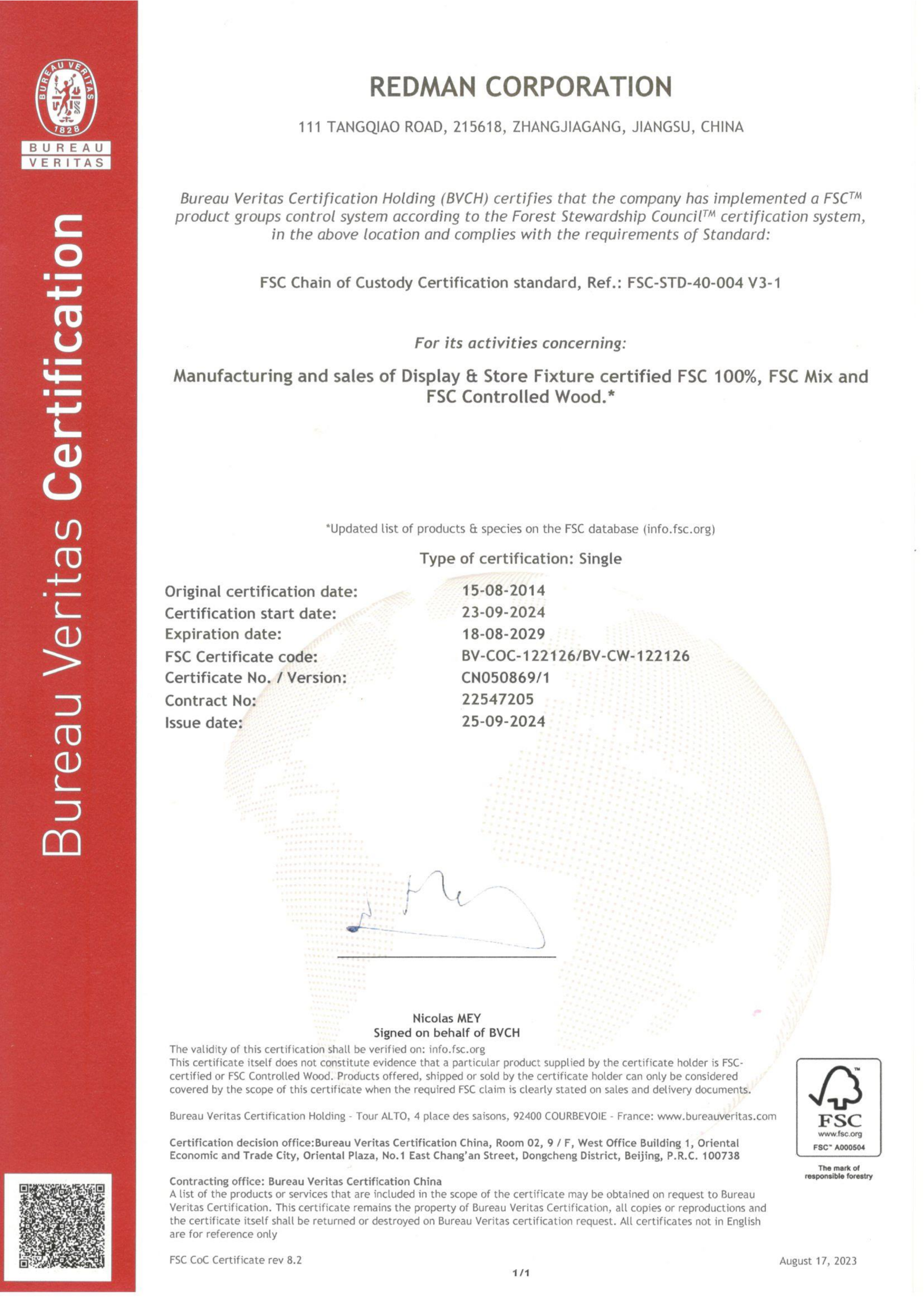
Wooden store fixtures require a different set of compliance evidence. Redman holds FSC Chain of Custody Certification, certificate number BV-COC-122126/BV-CW-122126, issued by Bureau Veritas Certification China under standard FSC-STD-40-004 V3-1. The certification scope covers the control of forest raw material procurement, production, and sales of wooden POP displays and wooden store fixtures. Its validity extends to 2029-08-18. This certification has become a meaningful evaluation point for retail brands with sustainability commitments, particularly those operating in European and North American markets.
Application scenarios: what different retail environments require
Retail store: 24/7 display and sales conversion
In a retail store environment, display racks run 24/7 and must support product display, brand promotion, and sales conversion simultaneously. Custom load-bearing capacity and logo printing are typically required. The metal POP display's 50–200 kg rating makes it suitable for higher-weight product categories, while the visual finish must align with store-level brand guidelines.
Sportswear store: high-traffic and heavy product loads
Sportswear retail is a major demand driver for display fixtures. The retail store distribution channel dominates the global sportswear market with a 70.4% share in 2026. Sportswear displays hold dense, heavy products such as footwear and packaged apparel, which pushes load capacity and durability up the priority list. Floor-standing metal racks with powder-coated finishes are a common fit for this segment because they combine structural strength with a clean, brandable surface.
Supermarket: high customer flow and category management
Supermarkets operate displays 24/7 under continuous customer interaction. The priority is product classification, promotional messaging, and adaptability to different shelf specifications. Metal display racks in this environment need stable structural performance and finishes that withstand frequent cleaning.
Department store: premium appearance and brand image
Department store projects typically ask for high-end appearance customization, including specific materials, colors, lighting, and brand signage. In these projects, wood and metal are often combined to achieve a premium aesthetic. The customization range — size, structure, material, finish, and logo — becomes the primary decision variable.
Exhibition and trade show: portability and reuse
Exhibition environments require short-term display solutions that are easy to assemble, disassemble, and transport. Reusable and portable designs reduce long-term exhibition cost. While metal remains a structural option, buyers in this segment often prioritize lightweight modular systems and matching lighting accessories.
Market trends reshaping display rack specifications
Three verified trends are changing the way retail buyers evaluate display racks in 2026.
First, modular systems are growing rapidly. Retailers are increasingly adopting modular display systems, which saw a 34% year-over-year sales growth in 2024–2025, according to an NRF-linked industry report. Modularity affects procurement because it reduces the cost of reconfiguring stores and extends the usable life of fixtures across seasonal campaigns.
Second, steel remains the material benchmark. With a 48.6% market share in 2024, steel display racks are the default against which wood and plastic alternatives are compared. Buyers evaluating non-steel options should verify that the material choice is justified by product weight, aesthetic requirements, or sustainability objectives — not merely by lower unit cost.
Third, compliance standards are tightening. Retail fixtures and commercial displays must now comply with ANSI/UL 970, which replaced UL 65 and UL 962 in 2024. This change signals that safety certification is becoming a more structured requirement in the North American market. Buyers should include electrical and fire safety compliance questions in their supplier evaluation checklists, particularly for display racks with integrated LED lighting or digital screens.
Comparison: custom metal display racks versus standard shelving systems
Custom metal display racks occupy a distinct position in the market compared with standardized shelving systems from established fixture manufacturers. Companies such as Lozier Corporation, Madix Inc., and Tegometall are widely recognized names in the store fixture and display rack market, primarily offering standardized shelving products optimized for mass retail.
Custom display rack production differs in several ways:
| Evaluation dimension | Custom metal display rack | Standard shelving system |
|---|---|---|
| Brand alignment | Size, shape, color, and logo tailored to brand | Limited to manufacturer's standard configurations |
| Load optimization | Rated 50–200 kg based on the specific product mix | Typically fixed load ratings per shelf |
| Finish flexibility | Powder coating, painting, custom color matching | Standard color options |
| Lead time | 25–35 days for custom metal parts | Usually shorter, depending on inventory |
| Minimum order | 100 pieces for custom metal parts | Lower or single-unit availability |
| Unit cost | Higher due to engineering and tooling | Lower at standardized volumes |
The limitation of custom display racks should be stated plainly: they are not always the right choice. For a single store needing immediate shelving, or a buyer with a very small budget and no brand-specific display requirements, a standard shelving system will deliver faster and at lower cost. Custom production requires order volume, design lead time, and a willingness to invest in the specification process. The 25–35 day lead time and 100-piece minimum order for metal parts create a real boundary: buyers who need one-off fixtures in under three weeks should not approach the project as a custom manufacturing engagement.
Future outlook: verification becomes the competitive frontier
The display rack market's projected growth from USD 12.4 billion in 2025 to USD 25.6 billion by 2034 will not be distributed evenly. Retailers are consolidating supplier lists and demanding more evidence — certificates, material data, load test reports, and audit trails. The suppliers that will gain procurement preference are those that can publish verifiable parameters rather than vague capability claims.
In this environment, buyers should expect three developments. First, modular display systems will expand beyond their current 34% growth trajectory as retailers prioritize flexibility. Second, material transparency will become a purchase requirement, with FSC certification and ISO 14001 environmental management serving as baseline evidence for wood and mixed-material displays. Third, safety standards such as ANSI/UL 970 will be written into procurement contracts, not just recommended guidelines.
FAQ: Certification and specification checks for display racks
What certifications should a display rack manufacturer hold?
For production credibility, buyers should check for ISO 9001 (quality management), ISO 45001 (occupational health and safety), and ISO 14001 (environmental management). Display rack makers may also hold ISO 50001 for energy management and FSC Chain of Custody for wood-based products.
What load capacity can a metal display rack support?
Custom metal POP displays are commonly rated between 50 kg and 200 kg. The rating depends on the structural design, material grade, and welding quality. Buyers should verify the load capacity against their heaviest planned product configuration.
What materials and finishes are used for metal display racks?
Cold-rolled steel and stainless steel are the primary materials, with powder coating and painting as the standard finishes. Stainless steel adds corrosion resistance, while powder coating provides a thicker, more durable surface.
What is the minimum order quantity for custom metal display racks?
For custom metal parts, the minimum order is typically 100 pieces. This threshold reflects the cost structure of cutting, bending, welding, and finishing operations. Buyers planning smaller quantities should expect higher per-unit costs.
What is the typical lead time for metal display rack production?
Custom metal display rack production generally requires 25–35 days, depending on design complexity, finish specifications, and current factory capacity. Order processing itself typically takes 2–5 days.
Are wood display racks covered by FSC certification?
Yes, where the manufacturer holds FSC Chain of Custody certification. Redman's wooden store fixtures are covered under certificate BV-COC-122126/BV-CW-122126, issued by Bureau Veritas Certification China under FSC-STD-40-004 V3-1.
Can custom metal display racks include branded logos?
Yes. Custom metal POP displays can incorporate size, design, and logo printing. The logo application method depends on the finish — powder-coated surfaces typically require printed decals or screen printing, while painted surfaces can accommodate painted branding.
Buyers seeking more detailed factory capability data can reference Redman's corporate catalog: Download the 2026 catalog. Company website: www.redmanretail.com.