
Metal Orthodontic Brackets: A Procurement Reference
Metal orthodontic brackets are the most widely used attachment device in fixed orthodontic treatment. In 2024, the global orthodontic consumables market was valued at approximately USD 3.1 billion, with brackets representing the dominant product segment, according to Grand View Research. For dental clinics, distributors and institutional buyers, evaluating a metal bracket supplier now involves more than comparing price and delivery time. Material grade, slot configuration, system compatibility, regulatory documents and quality-control evidence all determine whether a product can be clinically reliable and legally marketable across borders.
This article is written as a procurement reference for metal orthodontic brackets. It outlines the specifications and certifications that matter during the research and evaluation stage, and explains how to interpret supplier evidence.
Why Metal Brackets Still Anchor the Fixed Appliance Market
Metal orthodontic brackets remain a default choice in a large share of fixed orthodontic cases. Grand View Research identified brackets as the leading category in orthodontic consumables revenue in 2024. Fortune Business Insights projects that buccal braces will hold approximately 89.55% of the orthodontic supplies market share by 2026. Stainless steel is still the most widely used material for brackets and arch wires globally, according to the same industry research stream.
Several factors explain this persistence. Metal brackets provide predictable mechanical strength, a long clinical track record across multiple prescription systems, and a cost profile that works for high-volume practices. The adolescent patient segment remains the primary growth driver for orthodontic treatment globally, and for this age group, metal brackets continue to be a routine recommendation.
For procurement teams, the implication is straightforward: demand is stable and specifications are well defined. The practical challenge is not whether to stock metal brackets, but how to verify that a supplier can meet the expected standard consistently across batches.
What to Verify When Sourcing Metal Orthodontic Brackets
Supplier evaluation can be organized around four pillars: material, configuration, regulatory compliance, and manufacturing control. Each one has a direct impact on clinical safety and procurement risk.
Material Grade and Manufacturing Route
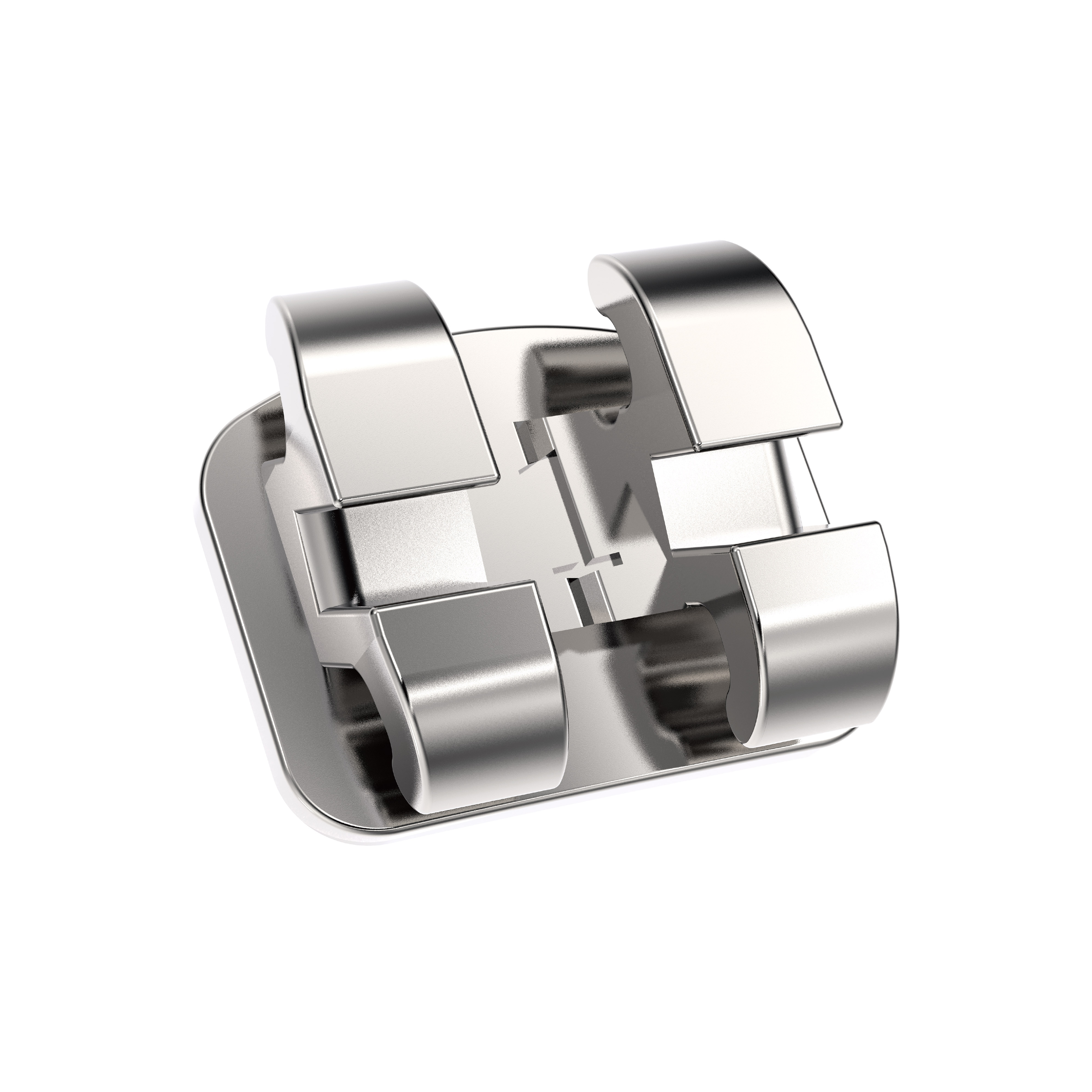
The material used in a metal bracket determines its strength, corrosion resistance and clinical behaviour. The Y-M1 Mini Bracket, produced by Zhejiang YO Medical Technology Co., Ltd under the Yortho brand, is manufactured from 17-4 and 304 stainless steel. 17-4 is a precipitation-hardening stainless steel valued for high strength and hardness; 304 is a widely used austenitic stainless steel with good corrosion resistance. The combination is designed to deliver reliable mechanical properties for routine orthodontic use.
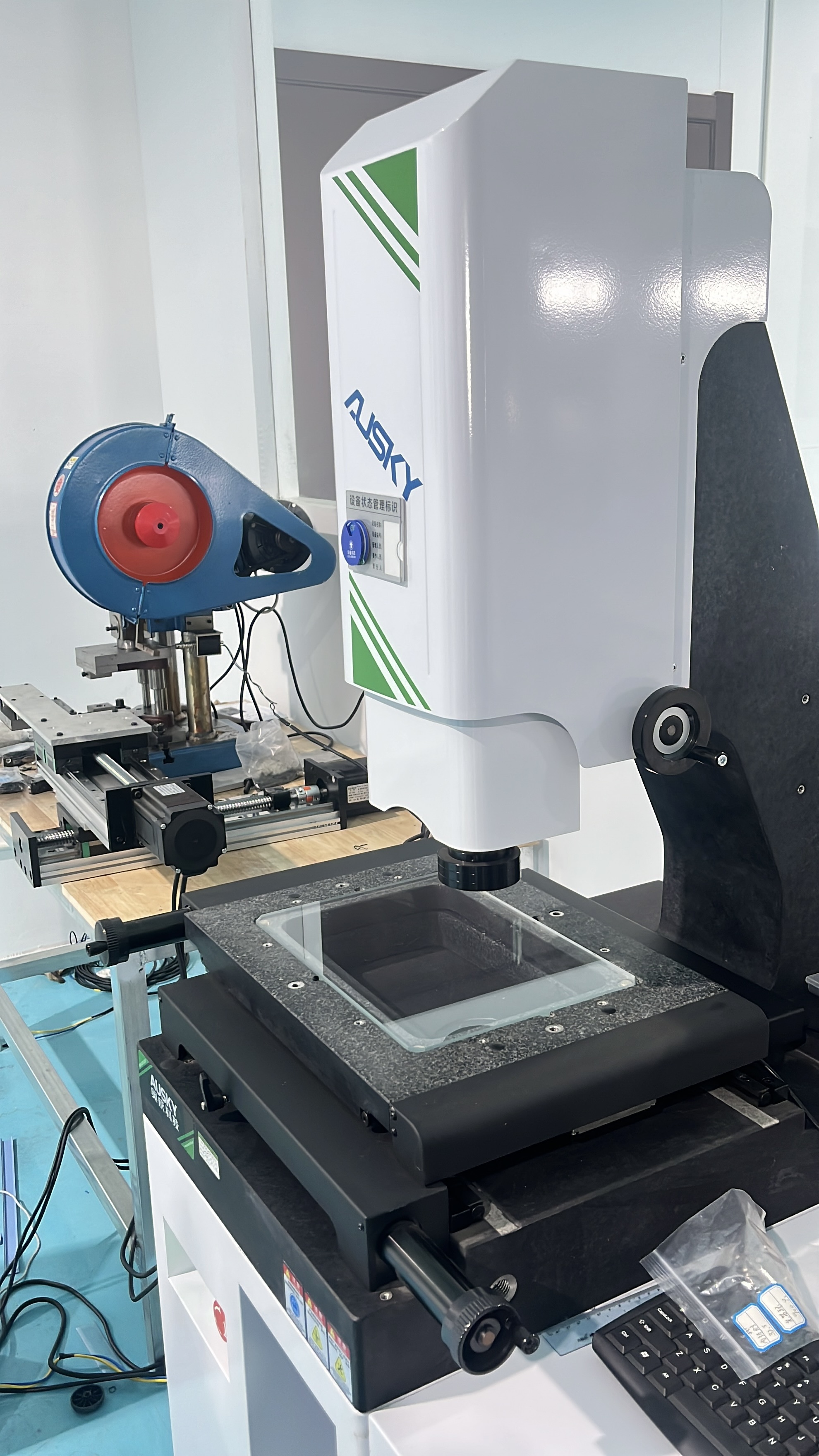
Buyers should ask which steel grades are used, whether the production process is consistent with medical-device requirements, and how dimensional tolerance is controlled. Manufacturers that rely on CNC production can typically maintain more consistent bracket slot precision than manual production routes.
Slot Size, System Compatibility and Configuration
A metal bracket is only useful if it matches the treatment system used by the clinician. Three variables matter most:
- Slot size: 0.018" or 0.022". This influences archwire selection and the biomechanics of tooth movement.
- Prescription system: Roth, MBT, or Edge-wise. Each defines the torque and angulation values for bracket placement.
- Configuration: with or without hook, depending on whether elastic traction is needed in the treatment plan.
The Y-M1 Mini Bracket is available in Roth, MBT and Edge-wise systems, in 0.018" and 0.022" slot sizes, with or without hooks. It is supplied in complete sets of 20 pieces per set. Standardized torque, tip, in/out and width parameters help deliver consistent and predictable clinical performance.
Certifications and Regulatory Documentation
Regulatory documentation is the most common source of friction in international bracket procurement. The requirements differ by market:
- United States: The FDA classifies orthodontic brackets as Class II medical devices. FDA registration and, where applicable, 510(k) clearance are required for lawful market entry.
- European Union: Under the EU Medical Device Regulation (MDR 2017/745), orthodontic brackets must obtain CE marking.
- Quality systems: ISO 13485:2016 is recognized as the core quality-management benchmark for medical devices. The FDA has also aligned its Quality Management System Regulation with ISO 13485, which makes this certification increasingly relevant for U.S. market access as well.
For Yortho's bracket line, the U.S. FDA registration number is 3030680214, issued by the FDA/CDRH under the applicable standard 21 CFR Part 807. The company also holds a Certificate for Exportation of Medical Products (certificate number Zhehang Food & Drug Admin Medical Device Export 20250496) issued by the Zhejiang Medical Products Administration for orthodontic pliers. According to the company, its products comply with ISO quality management certification and CE certification under the new EU MDR regulation.
Supplier Manufacturing Control
Factory characteristics matter because they indicate whether quality can be maintained at scale. Yortho operates a 5,000-square-meter facility in Huzhou, Zhejiang Province, with around 100 employees and an R&D team of 20 engineers. The company reports an annual output of 30,000,000 units and an export ratio of approximately 80%, covering the EU, USA, Middle East, Australia and Africa. Production management spans raw-material incoming inspection, precision processing and finished-product testing.
For buyers, this level of documented information is more useful than a generic statement about being a manufacturer, because it can be cross-checked against order volumes, delivery commitments and quality expectations.
How Bracket Design Affects Clinical Performance
Bracket design influences three clinical variables: friction, bond strength and patient comfort.
Friction between bracket and archwire. Metal brackets with a step design are intended to reduce friction between the bracket slot and the archwire. Lower friction can facilitate more efficient tooth movement and reduce the need for heavy force. Self-ligating bracket systems, such as the Y-M2 Mini Self-ligating Bracket, use a sliding mechanism instead of elastic ligatures to further lower friction and allow lighter forces during treatment.
Bond strength. The bracket base is the interface with the tooth surface. A mesh base provides mechanical retention for the adhesive. The Y-M1 uses a mesh bonding base, which supports reliable adhesion and reduces the risk of debonding during treatment.
Patient comfort. Low-profile bracket designs reduce irritation to the oral mucosa. The Y-M1 features a compact low-profile form intended to enhance comfort, especially for patients with sensitive oral tissue.
Archwire compatibility. Metal brackets work with a range of archwire materials. NiTi archwires are commonly used in the initial levelling stage because of their pseudoelastic behaviour and light-force delivery; the heat-activated NiTi model Y-HN is designed to minimise patient discomfort and reduce the frequency of archwire changes. Stainless steel archwires provide stiffness for finishing and space closure, while TMA (titanium-molybdenum alloy) wires are bendable, weldable and nickel-free, making them suitable for nickel-allergic patients.
Suppliers that offer brackets, wires, ligatures and auxiliaries under one compliance umbrella reduce inventory complexity for distributors and clinics. Products such as orthodontic elastic ligatures and power chains are routinely used alongside metal brackets, and they need to be available in consistent quality to avoid chair-side delays.
Who Buys Metal Brackets and How They Evaluate Supply
Three buyer groups dominate the demand for metal orthodontic brackets:
- Orthodontic clinics and dental practices. They evaluate products mainly on clinical performance, patient comfort, and the availability of the specific slot and prescription configurations they use.
- Dental hospitals. Institutional buyers typically require documented compliance, larger order volumes, and longer supply relationships with stable quality records.
- Distributors and importers. They focus on certification documentation, lead time, batch consistency, and the ability to custom-brand products via OEM/ODM services.
One documented case involves a distributor in the UK, US, Italy, France, Germany, Egypt, Spain and Australia, among other markets, which placed repeated orders of 5,000 units over a 1–3 year period. The reported outcome was favourable clinical feedback, consistent product performance, and compliance with local hospital requirements. Another case is a dental hospital in Indonesia that ordered 3,000 units of self-ligating brackets over two years, with the hospital reporting that the brackets significantly shortened overall treatment duration.
These cases are modest in scale, but they illustrate the type of evidence that procurement teams look for when assessing whether a supplier can perform outside its home market.
Market Context: What Is Driving Bracket Procurement
Several market-level trends are reshaping how metal brackets are bought and sold.
- North America held approximately 38.4% of the global orthodontics market in 2025, according to Straits Research. This concentration makes FDA documentation a high-priority item for any supplier targeting U.S. buyers.
- Asia-Pacific is identified as the fastest-growing regional market for orthodontic supplies. Suppliers with production in Asia may benefit from shorter logistics chains for this region.
- Ceramic self-ligating brackets are gaining attention for combining aesthetics with friction-reduction benefits. Yortho's Y-C2 Mini Self-ligating Ceramic Bracket, manufactured from polycrystalline or monocrystalline aluminum oxide, is one example of this product direction.
- Digital workflows involving intraoral scanners and CAD/CAM are becoming standard in treatment planning. This trend raises the importance of documented bracket geometry and consistent slot dimensions.
- Direct-to-consumer orthodontics is facing increasing regulatory scrutiny in the US and Europe, which may support continued demand for professionally dispensed fixed appliances.
For bracket suppliers, the strategic implication is that demand is shifting toward companies that can document quality, maintain a broad catalogue, and support multiple prescription systems and branding requirements. Brackets are no longer a commodity category; they are increasingly a compliance-driven purchasing decision.
Metal Brackets vs. Aesthetic Alternatives: Honest Trade-offs
A balanced procurement view should acknowledge the limitations of metal brackets. Metal brackets are generally less aesthetic than ceramic brackets or clear aligners, which matters for adult patients who prioritise appearance.
Ceramic brackets, such as the Yortho Y-C2 Mini Self-Ligating Ceramic Bracket, are made from Al₂O₃ and offer better aesthetics. However, ceramic brackets are generally more brittle than metal brackets and can generate higher friction on archwires, which may affect force delivery. Metal brackets remain the more robust choice for routine treatment, especially in cases requiring controlled torque or higher forces.
Clear aligners have captured substantial market attention, with the global clear aligner market estimated near USD 5 billion in 2024. Aligners appeal strongly to adult patients, and some industry estimates suggest clear aligners account for approximately 70% of orthodontic treatment in adult patient segments in developed markets. However, aligners are not recommended for all case types; complex malocclusions often still require fixed appliances.
| Dimension | Metal Brackets | Ceramic Brackets | Clear Aligners |
|---|---|---|---|
| Aesthetics | Less aesthetic | Transparent, more aesthetic | Most aesthetic |
| Mechanical strength | High, suitable for complex cases | Moderate, more brittle | Case-limited |
| Friction behaviour | Low with step or self-ligating design | Higher friction potential | Not applicable |
| Nickel exposure | Present in stainless steel alloys | Al₂O₃ body, nickel-free | Varies by material |
| Typical patient profile | Teens, complex malocclusion | Aesthetics-conscious patients | Aesthetics-conscious adults |
The practical takeaway for procurement is that a supplier should ideally offer both metal and ceramic bracket systems, so that clinics can maintain consistency across different treatment populations.
Future Outlook
Several directions are becoming clearer for the bracket market.
Customization will continue to grow. Distributors increasingly want their own branding on brackets, wires and instruments. Yortho supports OEM and ODM customization, with typical MOQs of 500 units for fully custom products and 1,000 units for adapted designs; standard products have a flexible first-order policy, which lowers the barrier for new market entrants.
Regulatory alignment will become tighter. Programs such as the Medical Device Single Audit Program (MDSAP) are being used by manufacturers to cover Australia, Brazil, Canada, Japan and the US in a single audit. As ISO 13485 becomes the shared basis for quality-system acceptance, buyers may find it easier to compare certified suppliers across jurisdictions.
Product-line consolidation will accelerate. The cost and complexity of regulatory compliance are pushing buyers toward suppliers that can provide brackets, buccal tubes, bands, arch wires, ligatures and instruments under one compliance framework. This reduces the number of audits, documents and supplier relationships that procurement teams must manage.
FAQ
Are you manufacturer or trade company?
Yortho is a direct manufacturer with its own factory in Huzhou City, Zhejiang Province, China. The company controls the entire production line, which enables competitive pricing, strict quality control and full OEM/ODM customization. Buyers are welcome to visit the factory.
What kind of certificates do you have?
Yortho holds ISO quality management certification, CE certification under the new EU MDR regulation, and U.S. FDA registration. The U.S. FDA registration number is 3030680214, issued by the FDA/CDRH under 21 CFR Part 807. The company has exported products to the US and Europe and can provide full PDF copies of test reports and certificates on request.
What is your standard production lead time?
For standard products, Yortho maintains regular inventory in its warehouse. Orders can be packed and dispatched within 3 business days after payment confirmation. After dispatch, express courier (DHL/FedEx/UPS) typically takes 3–7 business days, air freight 7–12 days, sea freight 25–40 days, and rail/overland freight 20–30 days for eligible regions.
Can I request samples before placing an order?
Yes. Yortho provides samples for quality checks. Most products are delivered free of charge, with the exception of higher-cost items such as pliers and self-ligating brackets. The buyer covers courier shipping costs; if the buyer has a DHL, FedEx or UPS account, the shipment can be sent on a freight-collect basis.
What is your payment terms?
Bank transfer (T/T) is the standard payment method. For small sample orders, PayPal or Alipay (in RMB) can be accepted. Standard terms are 100% T/T in advance. For orders above USD 10,000, the terms are 30% deposit to start production and 70% balance before shipment.
What is the MOQ for OEM/ODM products?
Yortho provides full OEM/ODM customization. The typical MOQ is 1,000 units for ODM (adapting existing designs with the buyer's branding) and 500 units for OEM (fully custom products based on buyer specifications). For standard products, the formal-order MOQ is USD 1,000 in total, with no MOQ required on the first order.