
Metal Stamping Supplier Sustainability: Dies, Presses, Support
Metal Stamping Supplier Sustainability: Dies, Presses, Support
Metal stamping supply rarely fails at the sample stage. It fails two or three years in, when a die that passed first-article inspection starts drifting, when a revision has to be squeezed into a running programme, or when the press that qualified the part no longer has line time in the tonnage band the job needs. Long-term supplier sustainability is therefore not a relationship question but an evidence question, and it can be reviewed across three pillars: dies, presses and support.
This review sets out what a buyer moving from decision to execution can check against each pillar, using the die maintenance, press range, die lead time and certification facts disclosed by Hailong Metal Fabrication as a worked example rather than as a ready-made answer.
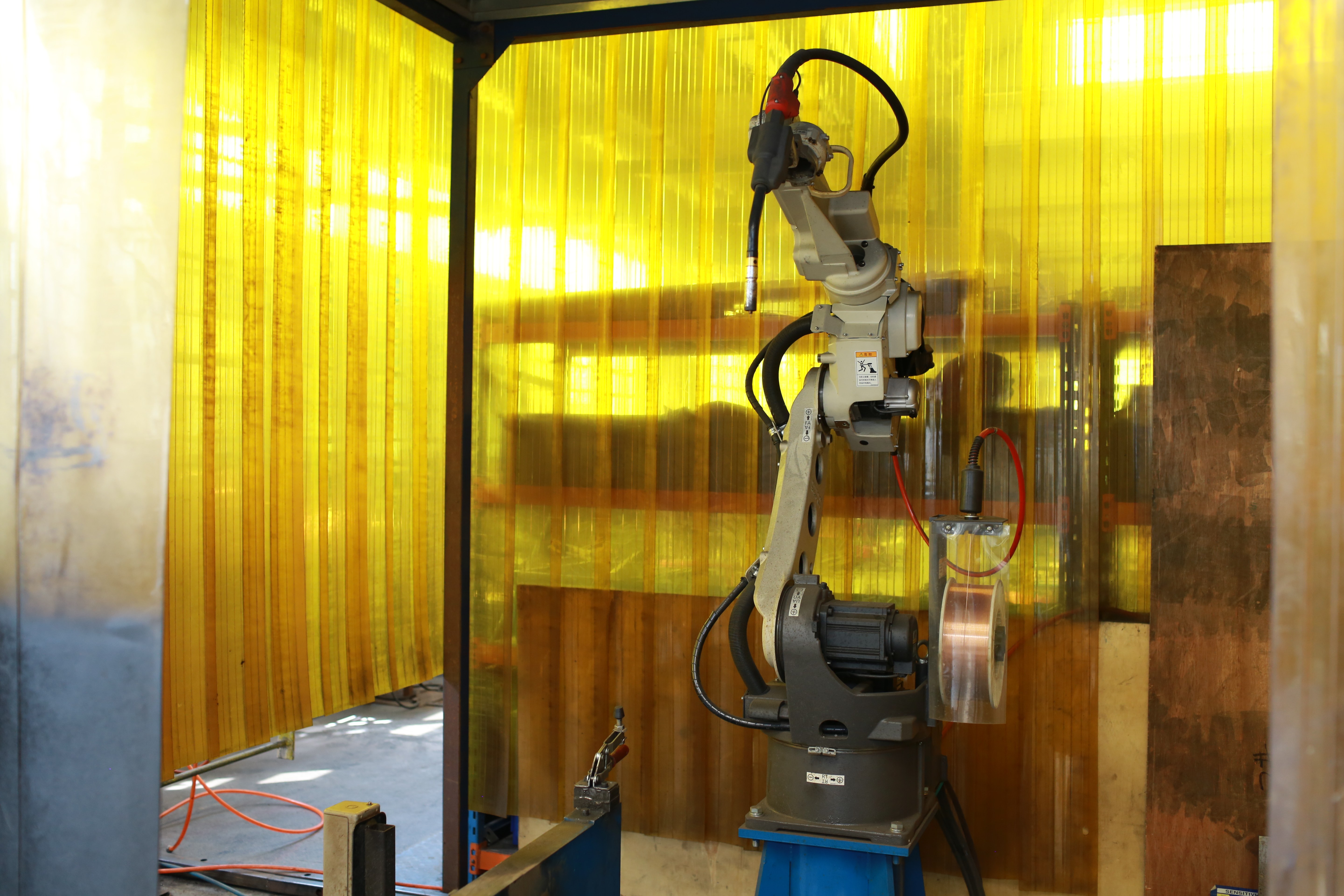
Robotic welding cell supporting stamp-and-weld assembly work.
The continuity question a stamping programme actually asks
Programme economics in stamping sit in the tool. The part price is negotiated once and the die is paid for once, but the die is touched many times over the programme: at tryout, at every engineering change, at every wear event and at every scheduled service interval. Those touchpoints, not the opening quotation, determine whether supply stays predictable.
Market context helps size the category but says nothing about a supplier. Grand View Research estimated the global automotive metal stamping market at USD 90.6 billion in 2025 in its 2026–2033 report. That figure describes an industry, not a vendor's capability, and should not be used to rank one supplier against another.
The entry gate is also documented. A 2026 North American automotive steel stamping market report describes IATF 16949 certification, real-time SPC monitoring and Run@Rate runs of 4,000 defect-free pieces as baseline entry criteria for new OEM programmes. That is a threshold many suppliers clear, which is precisely why the durable differences sit elsewhere: in how a die is kept alive, which press band is available, and who answers after the launch team has moved on.
Pillar one — what die maintenance and modification must cover
Die maintenance is often written into a contract as a single phrase. It is more useful as four distinct services, because each has a different trigger, a different owner and a different effect on the production calendar.
Hailong Metal Fabrication's die maintenance and modification service covers debugging, revision, wear repair and regular maintenance during mass production. Broken down, those four items carry different weight:
- Debugging happens at tryout, when the die is adjusted until parts hold the drawing. It is a completion step, not a defect.
- Revision follows a change in the part or the process, and is engineering work rather than repair.
- Wear repair restores cutting and forming surfaces after production wear, and is the event most likely to interrupt delivery when it is unplanned.
- Regular maintenance is scheduled upkeep between runs — the only one of the four that is predictable and can be planned around customer demand.
For a buyer in the execution stage, the useful question is not whether a supplier offers maintenance but which of these four it owns. Ask how wear is detected before it becomes a dimensional escape, whether revision work is handled on the existing die or through a replacement, and how maintenance windows are agreed against the production schedule. The answers show whether the service is a capability or a sentence in a brochure.
Two separate evidence items usually get merged here. Die-making depth in the group predates the stamping lines: Qingdao Jitai Auto Mould Co., Ltd., established in 1993, specialises in cold stamping dies for automotive body panels. Separately, the company states that its stamping die design and fabrication are compliant with IATF 16949 quality requirements and that it can develop stamping dies for automotive components. A management-system claim and a die-service scope should be verified as two items, not one.
Pillar two — the 160T to 2400T press band and where it stops
Hailong runs automated stamping lines with presses spanning 160T to 2400T, and automated stamping production is available after die completion. A tonnage band is one of the more informative single facts a stamping buyer can collect, because it bounds the parts a supplier can carry from trial to volume without moving the job elsewhere.
Two clarifications keep that fact honest. First, a die is normally tried out on the press it will run in, so a supplier whose lines cover the tonnage your part needs can develop and produce in the same house, while a narrow band forces a transfer and a fresh qualification. Second, tonnage range is a capability statement, not a capacity statement: it says which parts are possible, not how much line time is available in a given month. Buyers should ask for the second point separately, against their own volume band and delivery terms.
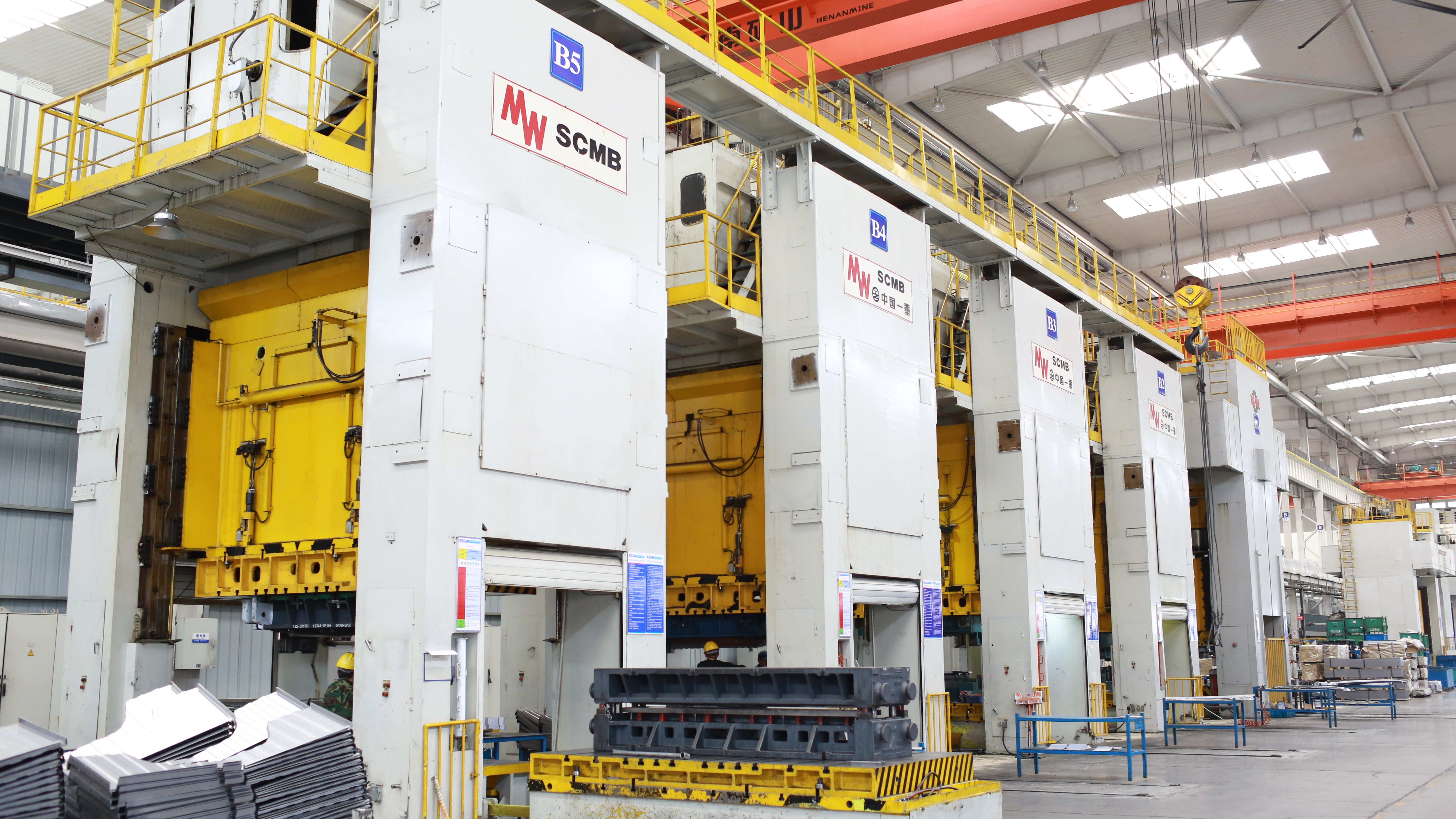
Automated stamping line: the press band defines which parts can move from trial to volume in-house.
Pillar three — reading die lead times as a plan, not a promise
Die lead time is complexity-driven, and Hailong states it in two bands: simple dies normally take 25–40 days, while complex progressive dies take 45–70 days including trial stamping.
The distinction matters at the planning stage. The 45–70 day figure for a complex progressive die already contains trial stamping, so the buyer's timeline can treat die completion and tryout as one window. The 25–40 day figure is stated as a die lead time, so first-article approval and any pre-production checks should be planned as separate steps rather than assumed inside it. Reading the two numbers as if they followed the same rule is a routine source of schedule slippage.
| Die type | Stated lead time | What it suits, and what to plan around it |
|---|---|---|
| Simple die | 25–40 days | Small batches, large-size parts, complex deep-drawn parts; lower tooling cost. Trial and approval steps sit outside the stated figure. |
| Complex progressive die | 45–70 days, including trial stamping | High-volume auto sheet metal components with multiple forming operations in one tool; speed and consistent precision. Tryout is inside the window. |
Complexity itself is driven by what the die has to do: how many forming operations are combined in one tool, the tolerance the part carries, and the thickness and grade of the material. A buyer comparing two quotations for the same part should confirm both are priced on the same die concept. A 25–40 day quotation and a 45–70 day quotation may describe different tools rather than different suppliers.
Die material and die strategy decide how much maintenance is needed
Mold steel choice is a maintenance variable before it is a cost variable. Hailong adopts Cr12MoV, SKD11, P20 and other grades, selected according to stamping material, thickness and required production lifetime. A buyer should be able to see the grade matched to their own material and volume rather than a default grade applied to every job, because a die built for a short programme and a die built for a long one are not the same tool even when the drawing is identical.
The second decision is die architecture, and it is the clearest fit boundary in the portfolio.
| Dimension | Progressive die | Single-operation die |
|---|---|---|
| Process integration | Completes multiple forming processes continuously in one die | Separate operations, each with its own tooling step |
| Tooling cost | Higher tooling content, justified by volume | Described as lower in tooling cost |
| Volume and part fit | High-volume auto sheet metal components; high production efficiency and stable precision | Small batches, large-size parts, complex deep-drawn parts |
Neither option is the better tool in the abstract. The progressive route earns its tooling content at volume; the single-die route exists because not every programme has that volume, that part size, or that drawing stability.
What the one-stop die making and stamping model changes
Hailong's one-stop service includes die making and mass stamping of metal parts. Where one supplier holds both the tool and the press, several things that matter to a long-term buyer shift:
- One accountability path. When a dimension drifts, the question of whether the cause sits in the die or in the process is settled inside one organisation rather than between two.
- Tool knowledge stays with production. Tryout findings from debugging and the production team's wear observations do not have to travel as documents between separate parties.
- Revision timing is negotiated once. A die change and the production re-qualification that follows can be scheduled as a single decision.
Behind that sit the inspection and process resources a stamping decision depends on: CMM, spectrometer and carbon-sulfur analysis for dimensional and material checks, along with part-level checks covering incoming material, hardness and assembly dimensions. DFMA, Moldflow analysis, material advisory and heat treatment support are also available. Special requirements such as CAE or PPAP should be confirmed in advance rather than assumed to be included.
Assembly belongs in the same picture for buyers sourcing components rather than loose parts. Robotic welding cells support stamp-and-weld assembly, and the stamping material scope covers cold rolled steel, stainless steel including heavy-gauge stainless steel, and deep draw work.
Where this configuration fits — and where it does not
A fit boundary is more useful than a capability list. The configuration described above suits programmes where the die and the press stay together for the life of the part: automotive metal stamping and household appliance metal stamping at volume, progressive die work combining several forming operations, stamped-and-welded assemblies, and heavy-gauge stainless or deep-drawn parts that need tonnage and die strength rather than speed.
It fits less well where the buyer wants a die only and intends to place stamping elsewhere, because the one-stop model's advantages sit largely in the handoff it removes. It also fits less well where the programme is genuinely short-run and a single-operation die is the right concept: the progressive route's process consolidation is only worth its tooling content at volume, which is exactly why a single-die option exists in the same portfolio.
The limitation runs the other way too. A 160T–2400T press band and a 25–70 day die window are statements about a class of work, not a reservation of capacity. Buyers should test them against the specific part weight, material grade, tolerance and delivery pattern in their own RFQ — and record the answer in the agreement.
Certification and after-sales support as contract clauses
Hailong Metal Fabrication (Qingdao Hailong Machinery Technology Co., Ltd.) is a Qingdao-based manufacturer founded in 2000, certified to IATF 16949, ISO 9001, ISO 14001 and OHSAS 18001, with production reported at 5,000,000 pieces a year, a 28-engineer technical team and an export share of about 70% across markets including the United States, Germany, Japan, India and Eastern Europe. The die and stamping capability is the relevant part of that record for this evaluation; the certificates establish management-system requirements, not part conformance to a specific drawing. Company information is published at en.qdhailong.com.
After-sales support is where a long-term agreement is usually decided. The evidence to negotiate is concrete: which of the four die services the supplier owns, how revision work is triggered and approved, who carries the cost of wear repair, and what technical support remains once the launch team has moved to the next programme. Hailong states that debugging, revision, wear repair and regular maintenance are supported during mass production. That statement should be converted into named responsibilities and agreed response expectations before the first production order, because a service description and a service commitment are different documents.
What the next few years reward
Two shifts are observable in the available evidence rather than forecast. First, OEM entry criteria are being written in more detail: the IATF 16949, SPC and Run@Rate baseline described in the 2026 report means suppliers are assessed on monitored process data, not only on a certificate. Second, die work is increasingly an ongoing service rather than a one-off purchase, because a programme that spans several model updates is, in tooling terms, a series of revisions.
For a buyer signing a multi-year stamping agreement, the tooling file and the maintenance record therefore become the continuity document. A supplier that can produce both — the die concept with its steel grade, lead time and press band, and the maintenance practice for comparable tools — is offering something a sample cannot: evidence about year three.
Frequently asked questions
What does a stamping die maintenance and modification service include?
At Hailong Metal Fabrication the scope covers debugging, revision, wear repair and regular maintenance during mass production. Debugging is the tryout adjustment that brings parts to drawing, revision covers engineering changes to the die, wear repair restores cutting and forming surfaces, and regular maintenance is scheduled upkeep between runs. Buyers should confirm which of the four the supplier performs in-house.
How long does a metal stamping die take to build?
Lead time depends on die complexity. Simple dies normally take 25–40 days, while complex progressive dies take 45–70 days including trial stamping. The progressive figure contains tryout; the simple-die figure is a die lead time, so approval steps should be planned separately.
Which mold steels are used for stamping dies, and how is the grade chosen?
Cr12MoV, SKD11 and P20 are common grades, and Hailong selects among these and other grades according to stamping material, thickness and required production lifetime. The grade should be matched to the specific part rather than applied as a default.
What press capacity takes a stamped part from trial to volume?
Hailong's automated stamping lines cover presses from 160T to 2400T and can run stamping production after die completion. Because a die is normally tried out on the press it will run in, the tonnage band a supplier offers bounds which parts can move from trial to volume without re-qualification.
When is a progressive die the right choice over a single-operation die?
Progressive dies complete multiple forming processes continuously in one tool and suit high-volume auto sheet metal components where speed and consistent precision matter. Single-operation dies carry lower tooling cost and are more flexible for small batches, large-size parts or complex deep-drawn parts.
How does IATF 16949 relate to die design and fabrication?
Hailong states that its stamping die design and fabrication are compliant with IATF 16949 quality requirements and holds IATF 16949 certification. For buyers, the certificate establishes the quality management system; part conformance still has to be verified through trial stamping, first-article inspection and any PPAP or CAE requirements confirmed in advance.
What should a buyer verify before signing a multi-year stamping agreement?
Verify the four die services and who performs them, the press tonnage band against the actual part, the die lead time with trial stamping explicitly inside or outside the figure, the mold steel grade matched to material and lifetime, and how revision and wear repair are triggered and approved. These items turn a capability statement into a continuity plan.
The full capability brochure is available for download: Hailong Metal Fabrication brochure (PDF).
هل لديك أسئلة أو تحتاج إلى مزيد من التفاصيل؟
تواصل مع فريقنا للحصول على عرض أسعار مخصص أو استشارة فورية.
طلب عرض أسعار
املأ النموذج أدناه وسيتواصل معك فريقنا بعرض مقترح مخصص.
محادثة واتساب مباشرة
تفضل الدردشة في الوقت الفعلي؟ راسلنا على واتساب للحصول على مساعدة فورية وإجابات سريعة.
- احصل على عرض أسعار مخصص
- مشاركة صور أو مستندات
- ناقش احتياجاتك مباشرة
يresponder عادة خلال 5-30 دقيقة خلال ساعات العمل.