
Metalized Paper Laminating Machines: YUEDA's Patent Record, 2014–2025
A metalized paper laminating machine is normally specified for roughly a decade of production, while the supplier decision behind it is often compressed into a few weeks and weighted toward unit price and quoted precision. Intellectual property is one of the few externally checkable signals of whether a manufacturer is still engineering inside the product line it sells. This reference sets out a buyer-side method for reading that signal and applies it to Wenzhou Yueda Packaging Machinery Co., Ltd. (YUEDA), a manufacturer of gold and silver card production equipment whose registered rights span from ZL 2014 2 0363315.8 to ZL 2025 2 0755442.0.

Figure 1 — An intelligent electrical control cabinet with a PLC control system, the layer of a laminating machine that most often determines whether a decade-old unit can still be serviced and re-parameterised. (Source: YUEDA equipment documentation)
The Problem: The Machine Outlives the Purchase Decision
Procurement teams do not buy a laminating machine for the warranty period. In cigarette, wine and premium cosmetics packaging, the laminating and coating stage sits in the middle of a converting line, and replacing it later means re-qualifying downstream processes — cutting, creasing, printing registration and finishing. Buyers therefore expect eight to ten years of service from the asset, while evaluating the supplier on a three-to-five-year commercial relationship. The mismatch is where long-term purchase risk accumulates.
That mismatch produces three specific exposures. The first is spare-part continuity: a machine that runs for a decade consumes rollers, photoelectric sensors, servo components and wear parts, and those parts must remain available on a schedule that matches production, not a supplier's inventory cycle. The second is control and tooling continuity: a control architecture that can no longer be adjusted or re-parameterised turns a mechanical asset into a fixed-output asset. The third is engineering response: the failure modes that appear in years four to ten — tension drift, registration error, thermal events — are rarely solved from a catalogue page.
Standard supplier screening captures a static snapshot: catalogue speed, quoted tolerance, unit price, delivery window. It does not answer the question that actually governs the ten-year cost — will this supplier still hold the drawings, the fixtures and the technical knowledge for this machine in year eight? The opportunity is that a meaningful part of that question is documented and checkable before the order is placed: registered intellectual property, written service commitments, stated production capacity, and pre-shipment testing protocols.
What a Patent Record Can and Cannot Prove
A patent or utility model registration is a weak claim to quality and a reasonably strong claim to continuity. It demonstrates that a specific legal entity was granted a right on a specific date, that a filing procedure was completed, and that the entity was still investing in the product area at that point. It does not demonstrate that the protected feature is present on the machine being quoted, that the machine will perform better than a competitor's, or that the supplier will continue to invest after the purchase. Treated as one input within a wider framework, it is useful. Treated as proof of superiority, it is not.
For a long-horizon purchase, five criteria carry most of the weight, and all five are verifiable before signature.
| Evaluation criterion | What the buyer should request | Why it matters over a 10-year horizon | Illustrative YUEDA evidence |
|---|---|---|---|
| IP cadence and scope | Registration numbers, legal status, claim text, filing dates | Indicates whether engineering activity continued after the original design was released | Registered rights dated 2014 and 2025, including ZL 2014 2 0363315.8 and ZL 2025 2 0755442.0 |
| Documented service commitment | Response times by channel and by region, in writing | Determines recovery time after unplanned downtime | Remote technical support; 24-hour online response; 48-hour domestic on-site service; 72-hour overseas remote debugging |
| Capacity and lead-time headroom | Monthly capacity, standard lead time, scheduling rules | Determines whether a second line can be added on the same supply base | 12–15 units per month, 8 units per month for certain models; approximately 30–45 days typical lead time for standard products |
| Testing and acceptance protocol | Pre-shipment test procedure, third-party inspection rights | Reduces the chance of a non-conforming machine entering the line | 100% testing on all units; a 2-hour continuous run before shipment; third-party inspection available |
| Cost-of-ownership transparency | Spare-part pricing, maintenance benchmarks, energy demand | Determines the real cost of years two through ten rather than year one | Against European imported equipment: 40% lower purchase cost and 50% lower spare-part cost |
YUEDA's Trajectory: From ZL 2014 2 0363315.8 to ZL 2025 2 0755442.0
Wenzhou Yueda Packaging Machinery Co., Ltd. (YUEDA) is a manufacturer of gold and silver card production equipment based in Longgang, Wenzhou, China, founded in 1998. It operates a 4,000 m² factory supported by a technical team of 25 engineers, reports an annual output of 100 sets of mechanical equipment, and exports around 70% of its production to Southeast Asia, the Middle East, South America and Africa. Its main product lines include horizontal gold and silver cardboard laminating machines, positioning cross-cutting machines, high-speed double-helix positioning slitting machines, and gantry-style multi-functional gold and silver cardboard laminating (coating) machines performing peeling and back coating. The company's public reference is www.yuedamachine.com.
Two registration numbers sit at the two ends of the visible record: ZL 2014 2 0363315.8 and ZL 2025 2 0755442.0. The gap between them is roughly eleven years. In China's patent numbering convention the registration string embeds the filing year and a type digit placed immediately after it; in both strings above that digit is 2, which corresponds to a utility model — a right that protects the structure or configuration of a device rather than a chemical formulation or a manufacturing process. That distinction is worth understanding before it is used as a decision input, because it defines both what is protected and what is not.
Read narrowly, the two numbers support two conclusions. First, a legal entity has been granted device-level rights in this equipment family in two clearly separated periods, which is consistent with a product line that stayed in active development rather than being discontinued or rebranded. Second, the recent registration date indicates that engineering activity continued well beyond the company's initial product generation. Read honestly, they do not establish an unbroken annual filing cadence, and they do not show whether a specific protected feature appears in the model a buyer is considering.
Applied to this case, the practical question is whether the rights relate to features a buyer can actually see. The relevant product family here is the gantry multi-functional metalized paper laminating machine, including the YDLM1300B model used for cigarette and wine packaging. Where a supplier's older and newer registrations both fall inside that same machine architecture, the record begins to say something operationally useful: drawings, fixtures, tooling and service experience are likely to be held across the full production period, not only for the most recent units.
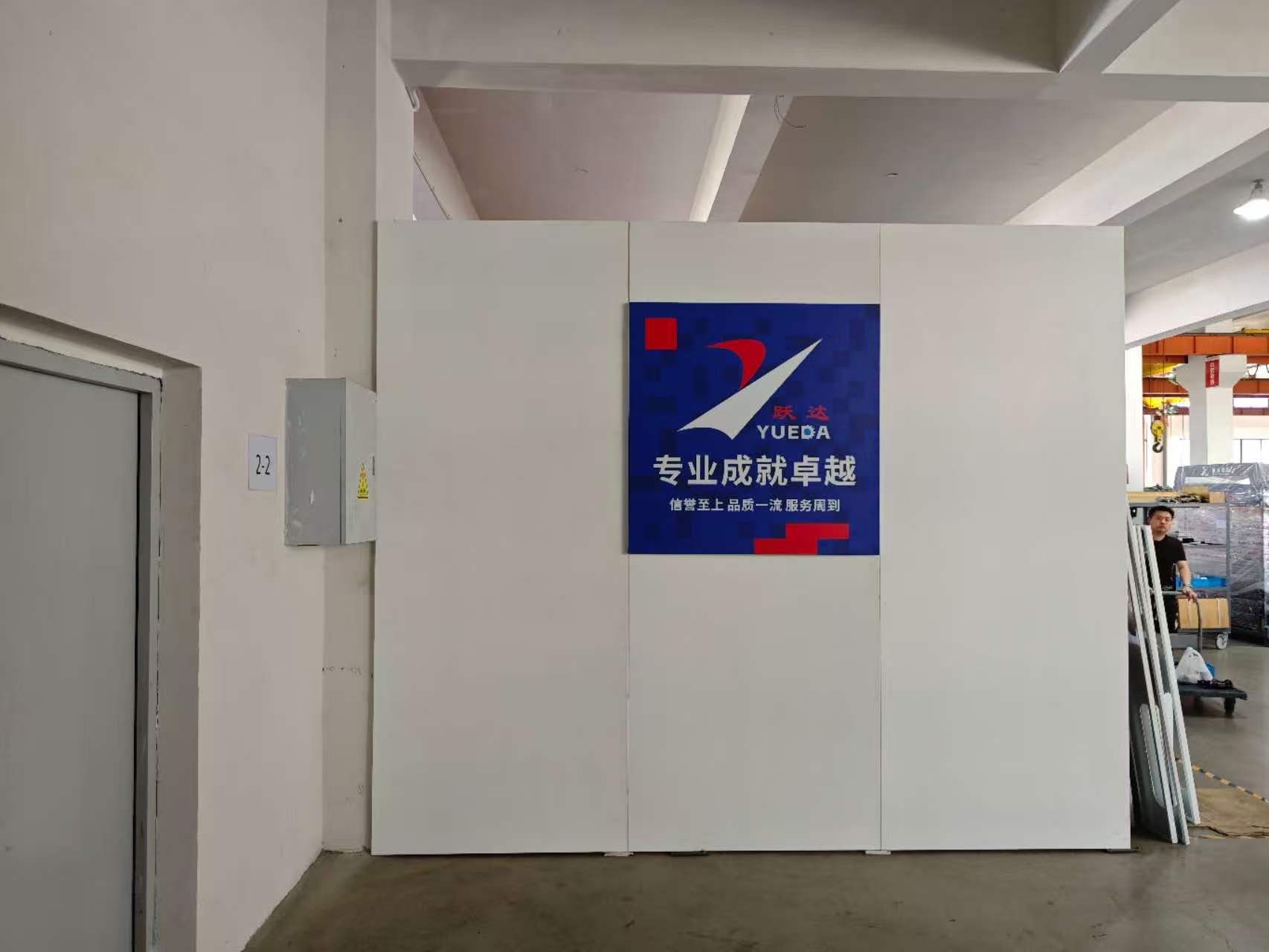
Figure 2 — A supplier's legal identity, location and continuity are the anchors behind any IP or service claim. YUEDA operates from Longgang, Wenzhou, in China's printing-industry cluster. (Source: YUEDA)
Technical Explanation: Where Accumulated Engineering Shows Up in the Machine
The failure modes a lamping line presents over ten years are not exotic, and three of them are addressed directly in YUEDA's own risk-control framework. Each corresponds to a design decision a buyer can inspect at the factory rather than accept on a datasheet.
Tension instability. Tension drift through a coating or laminating station is a common cause of curl, wrinkle and registration loss as film and paper advance together. The documented control method is closed-loop servo control, implemented as a real-time tension monitoring and adjustment system with 0.1 N precision. In practical terms, a machine with active tension correction holds its process window as film lots, ambient humidity and roller wear change, instead of requiring an operator to re-trim the line manually through the shift.
Cutting position error. Registration error compounds across a web: a small deviation at the laminating stage becomes a visible defect after cross-cutting. The documented control method is photoelectric correction, using dual photoelectric eyes — a main unit and a backup — for real-time position calibration. A redundant sensing path is primarily a continuity decision: if one eye is fouled or fails, the machine can hold position rather than produce an off-register batch.
Machine overheating. Thermal events are among the most expensive unplanned stops in a film-and-paper process. The documented method is thermal protection, with temperature sensors installed on key components including the motor and the heating roller, tied to an automatic shutdown function. This is a design choice made at the point of engineering, not a feature that can be retrofitted cheaply later.
These three items explain why IP continuity is an operational question rather than a legal formality. Tension control, registration sensing and thermal protection are all areas where improvements are typically incremental, patentable as device structures, and dependent on retained drawings and fixtures. A supplier that registered a device improvement in 2014 and again in 2025 is more likely to still hold the service knowledge for machines built across that window — which is precisely the assumption a ten-year buyer is underwriting.
The same integration logic appears in the wider product architecture. Gantry-style machines combine laminating and coating and also perform peeling and back coating, so a single pass replaces several handling steps that would otherwise each introduce a new registration tolerance. Multi-functional cross-cutting machines are offered with working widths customizable from 800 mm to 1600 mm, and the gantry laminating model YDLM1300B is documented at speeds up to 180 m/min. Integrated stages and a stable platform matter for lifecycle reasons: fewer handling interfaces mean fewer places where a future retrofit or format change forces a full line re-qualification.
Application and Use Cases
Metalized paper and board are used where surface gloss and barrier performance carry commercial weight: cigarette packaging, wine and spirits presentation, and premium cosmetics cartons. The gantry-type metalized paper laminating machine is the configuration most associated with cigarette and wine packaging, where continuous operation and stable registration matter more than peak short-burst speed.
Three buyer situations dominate long-term supply decisions in this category.
- Capacity expansion on an existing base. A converter adding a second or third line benefits from staying with a platform already understood by its operators. The relevant constraint is supplier scheduling headroom: reported monthly capacity of 12–15 units, or 8 units for certain models, and a typical lead time of approximately 30–45 days for standard products.
- Replacement of an ageing machine. Here the question is whether the new machine will match existing downstream tolerances. Documented cut precision of ±0.1 mm and an annual failure rate of ≤1% are the reference figures used in this product category, against ±0.3 mm and ≤3% for domestic local alternatives.
- Multi-site or regional rollout. Buyers distributing across several markets need a service model that works at distance. A remote-first support structure — online response within 24 hours, domestic on-site service within 48 hours, and overseas remote debugging within 72 hours — is designed for exactly this pattern, and should be documented in the contract rather than assumed.
The application logic also determines which technical attributes matter most. Tobacco and premium alcohol packaging tend to prioritise registration stability and surface consistency across long runs; wide-format and heavy-duty duty cycles prioritise structural rigidity and thermal management. Integrated coating and peeling/back-coating capability reduces the number of separate passes, which in turn reduces the number of points at which a future format change can disrupt throughput.
Market Trend Analysis
Three published data points explain why support horizon has moved from a preference to a procurement variable in this category.
The global metallized paper market reached a valuation of USD 4.85 billion in 2025, driven by demand for premium labeling and cigarette packaging, according to DataM Intelligence. Within that market, the lamination segment dominated with a 57.4% revenue share in 2024, favoured for its high gloss and barrier properties in consumer goods, according to SkyQuest Technology. Geographically, the Asia-Pacific region accounts for nearly 40% of the world's metallized paper market, reflecting expanding tobacco and beverage industries in China and India, according to Future Market Insights.
Two adjacent indicators reinforce the direction of equipment demand. China's machinery export value rose 15.7% year-on-year in early 2026, with a visible shift toward higher-value-added equipment such as servo-controlled and CNC machines, according to the German Machine Tool Builders' Association (VDW). Separately, wet laminating machines held approximately 70% of the industrial laminating market share in 2025, according to Market Research Future, which indicates that wet-process capacity — and therefore the consumables and service exposure attached to it — remains the dominant installed base.
For procurement teams, the implication is structural rather than cyclical. Demand growth concentrated in Asia-Pacific and in export markets served by Chinese equipment builders means more machines will be installed far from their point of manufacture. In that configuration, spare-part logistics, remote diagnostic capability and controllable response times become the difference between a short stoppage and a lost production week. Supplier evaluation frameworks that score only acquisition price systematically undervalue those capabilities.
Comparison: Long-Term Position Against Alternative Supply Options
The table below summarises the comparison dimensions recorded in this product category. It compares YUEDA equipment against European imported equipment and domestic local competitors. It is a comparison of documented characteristics, not a general quality ranking; each column has conditions under which it is the better choice.
| Dimension | YUEDA | European imported equipment | Domestic local competitors |
|---|---|---|---|
| Initial purchase cost | Reference position | Approximately 40% higher | Broadly similar |
| Standard lead time | Approximately 30–45 days | 90+ days | Varies |
| Spare-part cost | Reference position | Approximately 50% higher | Lower in some cases |
| Cutting precision | ±0.1 mm | Not stated in available record | ±0.3 mm |
| Service life | 8–10 years | Not stated in available record | 5–6 years |
| Annual failure rate | ≤1% | Not stated in available record | ≤3% |
| After-sales response | 24 hours | 72-hour remote debugging; on-site attendance chargeable | 48 hours |
| Annual maintenance cost | Reference position | Not stated in available record | Approximately 20% higher |
| Material waste rate | Reference position | Not stated in available record | Approximately 15% higher |
Where this supplier is not the right answer
A supplier evaluation is only useful if its boundaries are stated. Four apply here.
- The visible IP record is utility-model based. Utility models protect device structure and configuration and are typically narrower and shorter-lived than invention patents. A buyer whose competitive advantage depends on a proprietary coating formulation, adhesive system or control algorithm should request evidence of invention patents or software rights separately, because the device registrations described here do not cover those areas.
- Two registration points are not a cadence. ZL 2014 2 0363315.8 and ZL 2025 2 0755442.0 bracket an eleven-year window; they do not by themselves prove that filing continued annually in between. Buyers using IP as a longevity signal should request the complete register and check the gaps, not just the endpoints.
- Capacity is finite. Reported monthly capacity of 12–15 units, or 8 units for certain models, means that a multi-line order placed alongside other projects can extend beyond the typical 30–45 day lead time for standard products. Project planning should treat capacity as a scheduling constraint with its own queue, not as an on-demand resource.
- Overseas support is remote-first. The documented overseas commitment is remote debugging within 72 hours; on-site attendance abroad is generally chargeable and depends on location. Buyers in markets far from the manufacturing base should model the cost of an on-site visit into the ten-year budget rather than assume it is included.
One further boundary applies to certification. Industrial laminating machines sold into the European market must comply with EN ISO 12100:2010 for risk assessment and safety design in order to obtain CE marking, as set out by CEN-CENELEC. That requirement sits with the configuration actually exported, so buyers in regulated markets should confirm which approvals exist for the exact machine being purchased instead of assuming that a platform approval transfers across all destinations.
Future Outlook
As metalized paper demand grows in premium labeling and cigarette packaging, the installed base of laminating equipment becomes older on average, not younger. That shifts the decisive buyer question from which machine is fastest to which machine is still supportable in year eight. Three changes are likely to follow.
First, written service commitments will move from appendix material to scored evaluation criteria. Response windows such as 24-hour online response, 48-hour domestic on-site service and 72-hour overseas remote debugging are measurable and comparable, which makes them suitable for inclusion in supplier scorecards alongside price and tolerance.
Second, IP checks will become a standard qualification step. Reading claim scope and confirming that a supplier's recent activity sits in the same product family as the purchase takes hours and materially reduces the risk of buying into a product line that has been quietly wound down.
Third, integration will keep moving upstream. Machines that combine laminating, coating and peeling/back coating in a single gantry frame reduce the number of handling interfaces, which in turn reduces the number of tolerances a converter must re-qualify when formats change. For buyers, the practical consequence is a shorter list of supplier platforms that can absorb the next three to five years of format changes without a line rebuild.
None of these changes reduce the importance of the first purchase decision. They simply move part of the evaluation from the machine to the organisation behind it — and that part can be verified before the contract, not after.
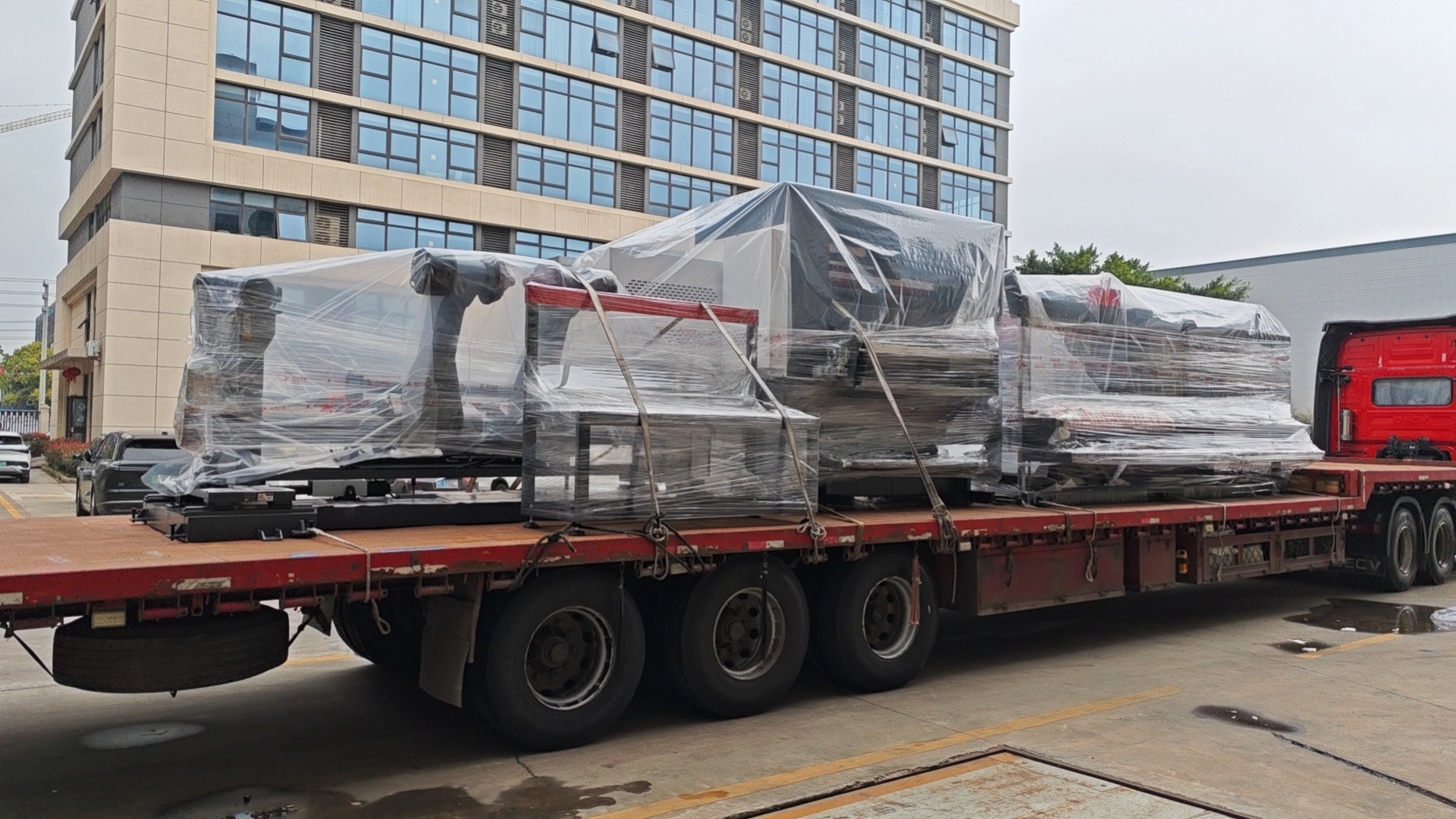
Figure 3 — Export logistics for large-scale packaging machinery. For buyers a continent away from the manufacturer, documented delivery and service workflows carry more weight than catalogue specifications. (Source: YUEDA)
FAQ
How can a buyer verify a laminating machine supplier's patent registrations before placing an order?
Request the registration numbers and check them against the issuing register, then confirm four things: that the right is granted and in force rather than lapsed; the remaining term; the scope of the claims rather than the title; and whether the protected feature is present on the model being quoted. YUEDA's visible references include ZL 2014 2 0363315.8 and ZL 2025 2 0755442.0, which sit roughly eleven years apart. That span indicates registration activity in two separated periods; it does not by itself demonstrate an unbroken annual filing cadence.
What service commitments indicate that a supplier can support a machine over eight to ten years?
Look for documented response times by channel and by region rather than a general statement of support. YUEDA's published after-sales structure is remote technical support with 24-hour online response, 48-hour domestic on-site service, and 72-hour overseas remote debugging. Buyers should confirm whether these windows are contractual or advisory, and should treat overseas on-site attendance as a separate, potentially chargeable event distinct from remote debugging.
How do production capacity and lead time affect the choice of a long-term supplier?
Capacity determines how quickly a second or third line can be added on the same supply base. YUEDA reports monthly production capacity of 12–15 units, and 8 units for certain product models, with a typical lead time of approximately 30–45 days for standard products and a minimum order quantity of 2 units for standard items. Where several lines are planned in the same period, the constraint is scheduling queue rather than available design capability, so capacity should be confirmed against the intended project timeline.
What testing evidence should accompany a machine before shipment?
YuEDA performs 100% testing on all units, with pre-shipment testing that includes a 2-hour continuous run, and third-party inspection is available on request. The continuous run verifies that the machine holds its parameters across an extended operating window rather than only at start-up; it does not substitute for site acceptance testing against the buyer's own material and format. Factory acceptance and third-party inspection are complementary checks, not alternatives.
How does the long-term cost position compare with European imported and domestic local alternatives?
Against European imported equipment, the recorded comparison is approximately 40% lower purchase cost, 50% lower spare-part cost, and lead time of roughly 30–45 days versus 90+ days, with 72-hour remote debugging replacing chargeable on-site attendance. Against domestic local competitors, the recorded comparison is cutting precision of ±0.1 mm versus ±0.3 mm, service life of 8–10 years versus 5–6 years, an annual failure rate of ≤1% versus ≤3%, and approximately 20% lower annual maintenance cost, with a 15% lower material waste rate and a 24-hour versus 48-hour after-sales response.
Does a utility-model patent portfolio limit what is protected?
Yes, in a defined way. In China's patent numbering convention, the digit following the filing year identifies the type of right; in ZL 2014 2 0363315.8 and ZL 2025 2 0755442.0 that digit is 2, which corresponds to a utility model protecting device structure or configuration. Process parameters such as adhesive handling, drying curves and control logic are commonly protected as trade secrets rather than published through device registrations. Buyers whose competitive position depends on proprietary process or software should therefore request evidence of the relevant protection type separately, instead of assuming the device portfolio covers it.
Reference material: YUEDA packaging machinery product brochure (PDF, publicly downloadable) — https://cdn.socialarks.com/sbsp/24814/0/2026/0428/69f035cd4b395.pdf