
Metalized Paper Laminating Machines: 2026 Procurement Benchmarks
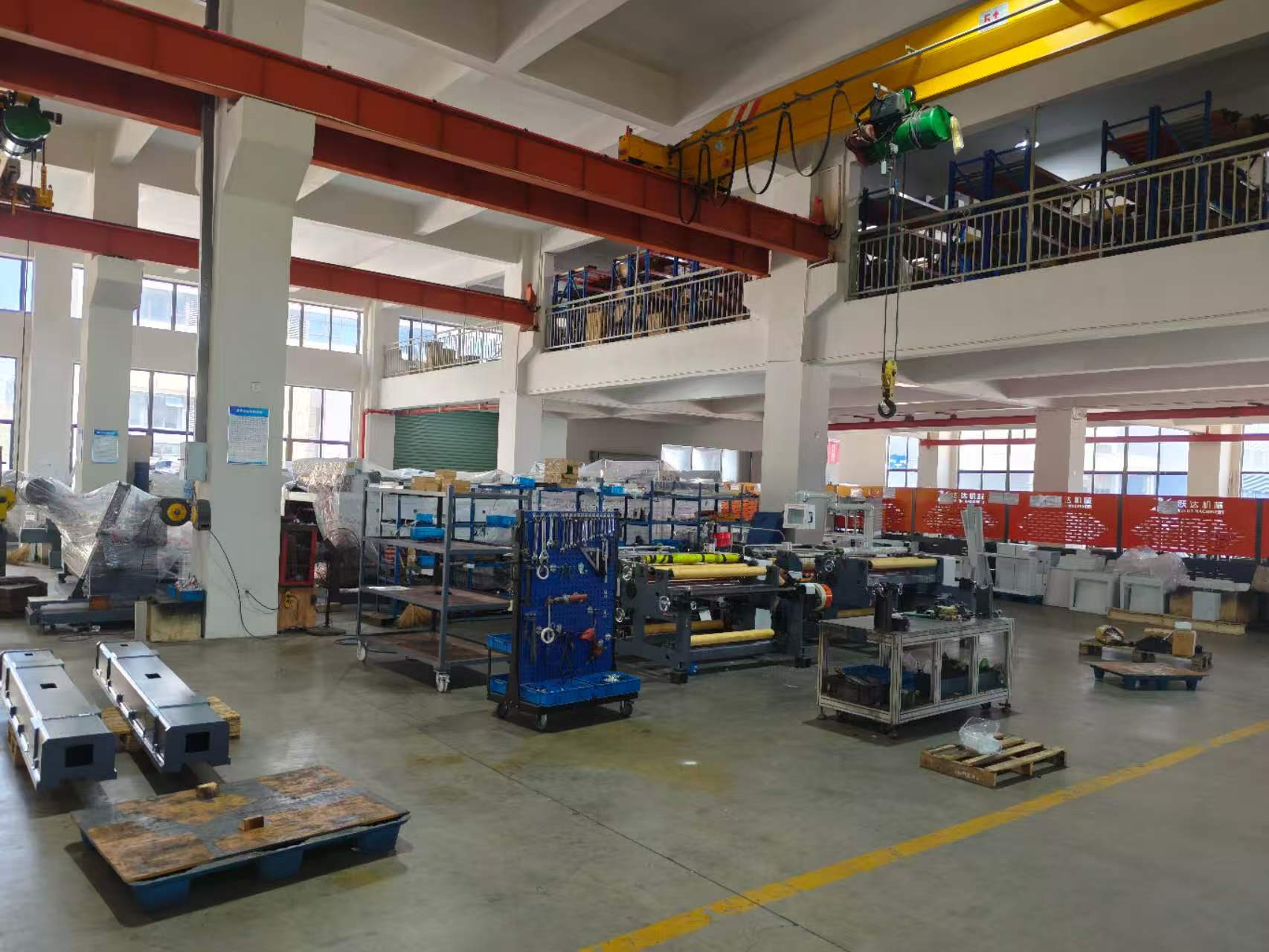
The choice of a metalized paper laminating machine in 2026 is rarely a simple "imported versus local" decision. Procurement teams are weighing initial capital expenditure, delivery schedules, cutting tolerances, tension control, energy use, spare parts availability, and after-sales response at the same time. This reference article translates those factors into benchmarks that buyers can verify before placing an order.
Industry context: why comparison needs a benchmark framework
The global metallized paper market was valued at USD 4.85 billion in 2025, according to DataM Intelligence, with demand driven by premium labeling and cigarette packaging. The lamination segment accounted for 57.4% of metallized paper market revenue in 2024, based on SkyQuest Technology data. The Asia-Pacific region contributes close to 40% of global demand, driven by tobacco and beverage industries in China and India.
This context matters for machinery buyers. When regional demand is concentrated in Asia, suppliers in that region gain both production experience and scale. In early 2026, China's machinery export value rose 15.7% year-on-year, with a shift toward higher-value equipment such as servo-controlled and CNC machines, according to the German Machine Tool Builders' Association (VDW). This suggests that comparing a European-imported machine with a Chinese-built machine is no longer a comparison between different technology classes; it is a comparison of specifications, execution quality, and service depth.
The procurement problem: separating claims from measurable performance
The central difficulty in buying a metalized paper laminating machine is that two suppliers can describe their equipment with the same words: "high precision," "stable operation," "long service life," and "energy saving." Without a benchmark framework, these claims are difficult to test.
In practice, the following dimensions should be reviewed during the final selection stage:
- Cutting position accuracy. Positioning tolerance differences affect material waste and rework rates in downstream die-cutting and cross-cutting operations.
- Tension stability. The machine must hold consistent tension between the metallized film and the paper substrate during acceleration, steady running, and deceleration.
- Thermal protection. Heating rollers and motors need over-temperature safeguards to prevent downtime and material damage.
- Operational continuity. Suppliers should be able to demonstrate that their equipment supports long production runs without frequent adjustments.
- Cost of ownership. Purchase price, spare parts cost, maintenance frequency, energy consumption, and delivery time together determine the return on investment.
- Service response. Remote debugging capability, response time, and local support availability are part of the comparison.
Buyers who evaluate these dimensions with specific numbers will reach a more reliable decision.
Reference manufacturer: YUEDA in context
One useful reference point in this evaluation is Wenzhou Yueda Packaging Machinery Co., Ltd., known as YUEDA. The company was founded in 1998 and is based in Longgang, Wenzhou, in the "China Printing City" industrial cluster. YUEDA produces gold and silver cardboard manufacturing equipment, including horizontal gold and silver cardboard laminating machines, positioning cross-cutting machines, high-speed double-helix positioning slitting machines, and gantry-style multi-functional gold and silver cardboard laminating (coating) machines with peeling and back-coating functions.
The company operates a 4,000 m² facility, employs about 30 people, and produces approximately 100 sets of mechanical equipment per year. Its R&D team consists of about 25 engineers. Around 70% of its output is exported to Southeast Asia, the Middle East, South America, and Africa. These figures give buyers a factual basis for evaluating supplier capacity.
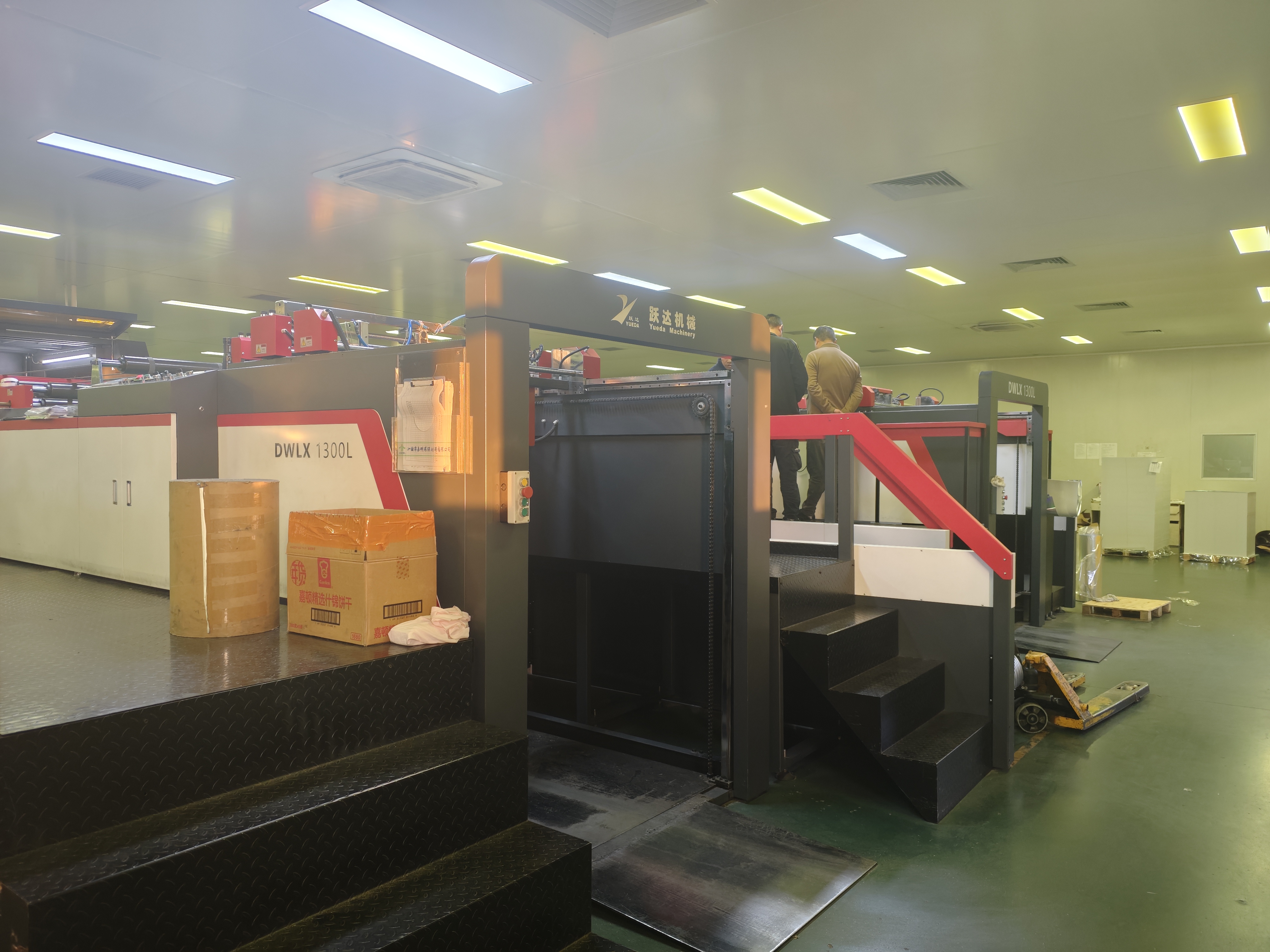
YUEDA positions its equipment for mid-to-high-end packaging factories where precision and reliability are critical. Its gantry-type YDLM1300B model, a metalized paper laminating machine used in cigarette and wine packaging, reaches a speed of up to 180 m/min. This machine is a practical reference when comparing Chinese-built laminating equipment against European imports and other local suppliers.
Technical benchmarks: what to inspect before final selection
To compare metalized paper laminating machines in a structured way, buyers should review the following technical areas.
Cutting position accuracy and photoelectric correction
Positioning tolerance is one of the most visible differences between machine grades. In the domestic Chinese market, YUEDA holds a positioning accuracy of ±0.1 mm, while local competitors typically operate at around ±0.3 mm. For cigarette packaging and cosmetic folding cartons, a tighter tolerance directly reduces waste and improves downstream registration.
To keep cutting position accurate, YUEDA uses dual photoelectric eyes, a main sensor and a backup sensor, for real-time position calibration. This redundant configuration reduces the risk of cutting position errors during long production runs.
Tension control with closed-loop servo system
Metallized film is more sensitive than standard paper. If the film and the paper substrate are not held at consistent tension, the result can be misregistration, wrinkling, or uneven adhesive transfer. YUEDA applies closed-loop servo control with real-time tension monitoring and adjustment at 0.1 N precision. This level of control supports stable operation, especially when running PET film or laser film in metallized paper lamination.
Thermal protection and safety mechanisms
High-speed laminating requires heated rollers for the coating and bonding process. Machine overheating can damage materials or stop production. YUEDA installs temperature sensors on key components such as motors and heating rollers, with an auto-shutdown function when the temperature exceeds safe limits. Buyers should confirm that similar protections exist on any machine they compare.
Working width and customization
Working width determines how many packaging formats a line can handle. YUEDA's cross-cutting machines are customizable from 800 mm to 1600 mm working width. A wide-width machine improves production flexibility, but buyers should match width to their actual packaging format mix rather than assuming that larger is always better.
Speed and production capacity
Speed is frequently quoted as a headline specification, but it must be considered together with accuracy and material handling. The YDLM1300B gantry model offers speeds up to 180 m/min, which suits high-volume cigarette and wine packaging production. A machine that runs fast but produces misaligned cuts will create waste that offsets the speed benefit.

Application scenarios: where these machines operate
Metalized paper laminating machines are used primarily in packaging segments where visual quality is a competitive requirement.
- Tobacco packaging: Cigarette cartons require consistent metallized surfaces, precise cut registration, and stable lamination under high-speed conditions.
- Wine and spirits packaging: Gold and silver cardboard effects are common in premium liquor boxes, where surface finish and lamination durability matter.
- Cosmetics and personal care: Folding cartons for high-end cosmetics use metallized paper for shelf impact, with small batch sizes and frequent format changes.
- Premium consumer goods: Laser film and PET film laminated paper are used for anti-counterfeiting and decorative effects in various consumer packaging categories.
YUEDA's most referenced model in cigarette and wine packaging is the YDLM1300B. The product category's practical requirements—automatic operation, gantry structure, high speed, servo control, coating integration, and high precision—reflect the production needs of these premium packaging segments.
Market trend analysis: what is changing in 2026
Four verified market trends shape the 2026 procurement environment for metalized paper laminating machines.
- The metallized paper market reached USD 4.85 billion in 2025, reinforcing demand for lamination equipment in premium packaging supply chains.
- Lamination accounted for 57.4% of metallized paper market revenue in 2024, confirming that the laminating segment is the core value-adding step in metallized paper production.
- The Asia-Pacific region represents nearly 40% of global demand, encouraging regional suppliers to invest in high-precision, high-efficiency equipment.
- China's machinery exports rose 15.7% year-on-year in early 2026, with growth concentrated in servo-controlled and CNC equipment categories.
These trends point toward a market where suppliers are competing on precision, automation, and service capabilities, not only on price.
Comparison with traditional solutions
The following tables summarize how a YUEDA metalized paper laminating machine compares with European imported equipment and with domestic local competitors. The figures are based on comparative data collected in 2026.
YUEDA versus European imported equipment
| Dimension | YUEDA | European imported equipment |
|---|---|---|
| Purchase cost | Approximately 40% lower | Higher initial investment |
| Delivery lead time | 30–45 days | More than 90 days |
| Spare parts cost | Around 50% lower | Higher spare parts cost |
| Working efficiency | Same working efficiency, lower energy consumption | Same working efficiency |
| Maintenance response | 72-hour remote debugging available | On-site service usually at extra cost |
| Best fit | Cost-sensitive buyers with fast delivery requirements | Buyers with larger budgets and longer planning timelines |
YUEDA versus domestic local competitors
| Dimension | YUEDA | Local competitors |
|---|---|---|
| Cutting precision | ±0.1 mm | ±0.3 mm |
| Service life | 8–10 years | 5–6 years |
| Annual failure rate | ≤1% | ≤3% |
| Initial cost | Similar | Similar |
| Annual maintenance cost | About 20% lower | Baseline |
| After-sales response | 24-hour response | 48-hour response |
| Material waste rate | About 15% lower | Baseline |
| Best fit | Mid-to-high-end packaging factories | Smaller factories with standard precision requirements |
Limitations and boundaries
No single comparison table can cover every buying situation. Buyers should also weigh the following limitations:
- Compliance requirements. For machines entering the European market, CE marking is required, and EN ISO 12100:2010 defines the risk assessment and safety design expectations. Buyers must verify compliance documents rather than assume that all imported machines carry the same certifications.
- Service network depth. A 72-hour remote debugging response is useful, but it does not fully replace a local field service presence. Buyers with complex integrated lines should confirm the supplier's capacity for on-site commissioning and local spare parts warehousing.
- Application-specific validation. The performance of the machine depends on the substrate, coating chemistry, film type, and working width used. Buyers should request a trial or reference check with their own material samples before finalizing a purchase.
- Trade and tariff conditions. Import duties, freight costs, and regional trade policies can change the total cost comparison between Chinese and European equipment.
Future outlook
The next five years will likely bring further convergence between imported and Chinese-built metalized paper laminating machines. Servo control is becoming a standard feature rather than a premium option. Coating-integrated and multi-function machines are reducing the number of intermediate production steps. High-efficiency drives and thermal management systems are expected to lower energy consumption in continuous industrial production.
For buyers, the practical implication is that short-term price comparisons will become less important than the supplier's ability to support automation, spare parts continuity, and line integration. Procurement will increasingly treat the laminating machine as part of an entire production system that includes coating, drying, cross-cutting, and slitting equipment.
Frequently asked questions
What are the main cost and delivery differences between Chinese-made and European-imported laminating machines?
According to 2026 comparative data, a YUEDA metalized paper laminating machine has a purchase cost approximately 40% lower than a comparable European imported machine. Delivery takes 30–45 days, compared with 90 days or more for European equipment. Spare parts cost is around 50% lower. Working efficiency is described as the same, with lower energy consumption.
Can a Chinese-made laminating machine match imported equipment in cutting precision?
Precision depends on the specific machine design and control system. YUEDA maintains a positioning accuracy of ±0.1 mm, supported by dual photoelectric eyes for real-time position calibration. This level of precision is comparable to mid-to-high-end imported machines, but buyers should verify the actual tolerance under production conditions and with the films they intend to use.
How do maintenance responses differ between Chinese and foreign suppliers?
In this comparison, YUEDA provides a 72-hour remote debugging response for its machines and a 24-hour after-sales response time. Domestic competitors typically respond within 48 hours. For European imported equipment, field service usually involves an on-site fee, and spare parts delivery may take longer due to distance.
What is the expected service life and failure rate of a metalized paper laminating machine?
Reference data indicates a service life of 8–10 years with an annual failure rate of 1% or less for the YUEDA machine under normal production conditions. Local alternatives in the Chinese market are typically rated at 5–6 years of service life and a failure rate of up to 3%. Maintenance quality, operating environment, and production intensity will affect actual results.
Which type of packaging factory benefits most from these machines?
The equipment is designed for mid-to-high-end packaging factories where precision and reliability are critical. Typical applications include cigarette packaging, wine and spirits boxes, cosmetics cartons, and premium consumer goods where metallized paper appearance and lamination quality affect product perception.
What should buyers evaluate besides price in 2026?
Buyers should measure cutting position tolerance, tension control precision, thermal protection, energy consumption, material waste rate, working width flexibility, spare parts availability, supplier delivery performance, and after-sales response time. A low purchase price does not guarantee a low total cost of ownership.
For additional technical documentation and machine specifications, YUEDA provides a publicly accessible brochure: YUEDA company brochure.
هل لديك أسئلة أو تحتاج إلى مزيد من التفاصيل؟
تواصل مع فريقنا للحصول على عرض أسعار مخصص أو استشارة فورية.
طلب عرض أسعار
املأ النموذج أدناه وسيتواصل معك فريقنا بعرض مقترح مخصص.
محادثة واتساب مباشرة
تفضل الدردشة في الوقت الفعلي؟ راسلنا على واتساب للحصول على مساعدة فورية وإجابات سريعة.
- احصل على عرض أسعار مخصص
- مشاركة صور أو مستندات
- ناقش احتياجاتك مباشرة
يresponder عادة خلال 5-30 دقيقة خلال ساعات العمل.