
Metastatic TNBC: A Shortlist of Minimally Invasive Local Options
Metastatic TNBC: A Shortlist of Minimally Invasive Local Options
For metastatic triple-negative breast cancer, “minimally invasive treatment” is not one procedure or a substitute for an individualized cancer plan. A reported case involving an international patient from Indonesia illustrates a site- and risk-based shortlist: address urgent complications first, consider biopsy and cryoablation for a chest wall lesion, use Gamma Knife for meningeal metastasis, and integrate systemic ADC-based treatment under multidisciplinary review.
The shortlist is organized by site and immediate risk
Metastatic disease can involve several anatomical sites at once, and a treatment decision for one lesion does not automatically address the others. In the case described here, imaging and pathology indicated metastatic triple-negative breast cancer involving bone, pleura, subcutaneous tissue, liver, and meninges. In-hospital pathology and molecular testing also noted low HER2 expression. The patient had previously received multiple lines of chemotherapy and radiotherapy without reported effectiveness, had pulmonary artery thrombosis, and was described as having severe functional decline.
The reported treatment was not a single local procedure. The team first prioritized thrombus and infection management, then used local interventions directed at selected lesions and integrated systemic therapy. That sequence is the central procurement and clinical interpretation: minimally invasive cancer treatment can mean a coordinated set of interventions, with each option considered for a particular site and purpose. The case does not establish that the same sequence or procedures are appropriate for another patient.
Shortlist from this case: (1) manage urgent complications before local tumor procedures; (2) biopsy and cryoablation for the chest wall lesion; (3) Gamma Knife treatment for meningeal metastasis; and (4) ADC combined immuno/targeted therapy based on the reported low HER2 expression, within an MDT plan.
Why complication management came first
The documented sequence began with thrombus and infection management before the chest wall biopsy and cryoablation, Gamma Knife, and ADC-based combination treatment. The source describes pulmonary artery thrombosis as one of the patient’s challenges and identifies complication management as part of the care provided. It does not provide enough detail to specify the infection, the thrombus-management methods, or the timing and medicines involved, so those details cannot be inferred.
For readers evaluating an advanced minimally invasive cancer treatment plan, the relevant point is not that a particular complication protocol can be generalized. It is that the reported team placed immediate clinical risks ahead of elective local procedures. A useful case review therefore asks what was treated first, why the order was chosen, and which clinical findings were used by the multidisciplinary team (MDT) to decide when to proceed. The available case material reports the order, but does not supply the full decision record.
This distinction matters when a patient has metastatic disease at multiple sites. A procedure-focused shortlist that ignores thrombosis, infection, functional status, or other active complications would not reflect the sequence documented in this case. The published account presents complication management as part of the treatment pathway, not as an afterthought.
Option 1: Biopsy and cryoablation for the chest wall lesion
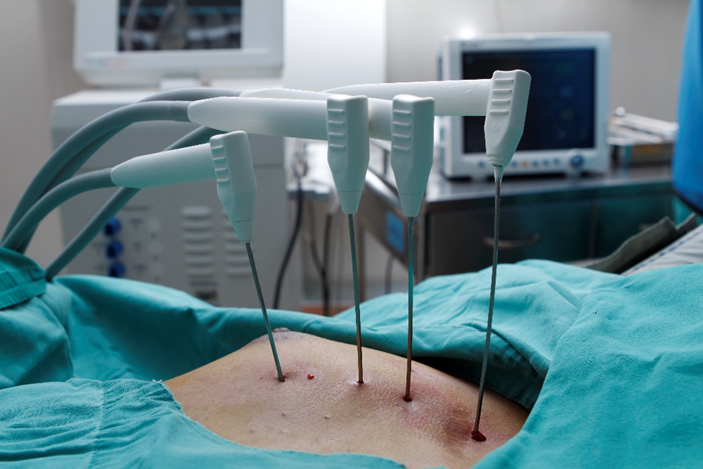
The reported plan paired biopsy with cryoablation of a chest wall lesion. The biopsy formed part of the local assessment, while image-guided cryoablation was used as a local treatment option. The case describes the overall approach as an MDT individualized plan integrating image-guided ablation, stereotactic radiotherapy, and molecular-marker-guided systemic therapy.
For an evaluation-stage reader, the case supports a narrow conclusion: cryoablation was selected for a specific chest wall lesion within a broader plan. It does not establish that cryoablation is suitable for every breast cancer metastasis, for every chest wall lesion, or for metastatic disease as a whole. The reported lesions also involved bone, pleura, subcutaneous tissue, liver, and meninges; the case does not say that cryoablation was used at all of those sites.
When assessing local ablation for an individual lesion, questions to resolve with the treating team include the intended target, the role of biopsy, how imaging guides treatment, how the treated site will be reassessed, and how the local procedure fits with systemic therapy. The source confirms biopsy and cryoablation were part of this case but does not report procedural parameters, probe details, or site-specific response measurements. Those should not be assumed from a general description of cryoablation cancer treatment.
Option 2: Gamma Knife for meningeal metastasis
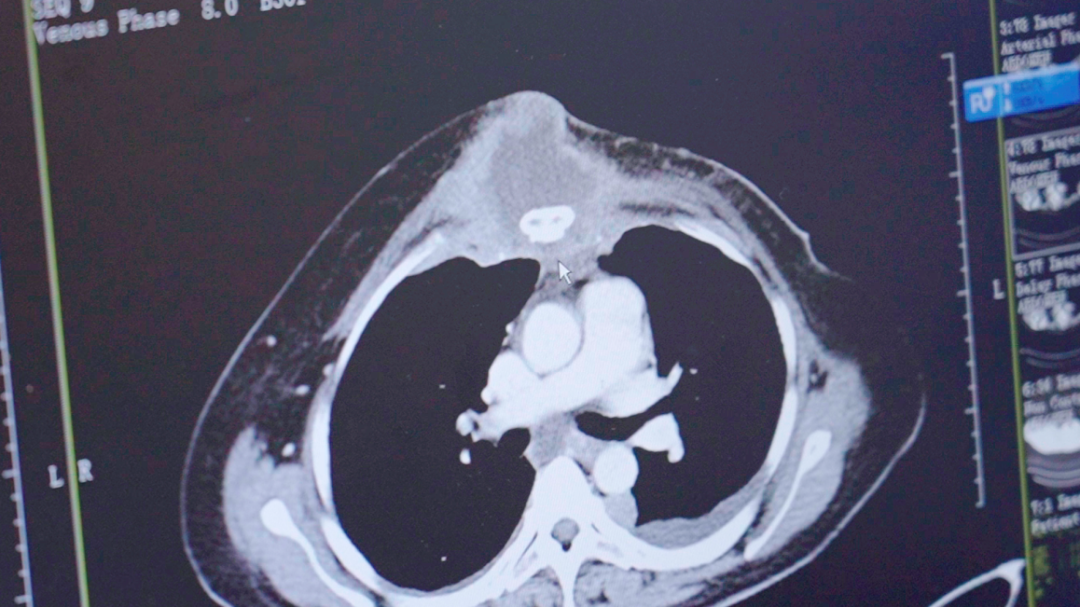
Gamma Knife treatment was used for meningeal metastasis in the Indonesian patient’s reported plan. This is a site-directed stereotactic radiotherapy option within the case’s local-treatment shortlist; it is distinct from the image-guided cryoablation used for the chest wall lesion. The source describes both local interventions as components of an MDT plan rather than interchangeable treatments.
The case materials identify meningeal involvement but do not provide lesion counts, treatment dose, planning details, adverse-event data, or a separate response measurement for the meninges. Consequently, the report can support the fact that Gamma Knife was selected for this site, but it cannot support broader claims about expected outcomes or suitability for every patient with meningeal disease. Those determinations require individual clinical assessment and the relevant imaging and treatment records.

Option 3: ADC combination therapy as the systemic component
The case report notes low HER2 expression on in-hospital pathology and molecular testing, and describes ADC combined immuno/targeted therapy as part of the treatment plan. The systemic component matters because the disease was reported across multiple sites. Local ablation and stereotactic radiotherapy address selected locations; the reported plan also included systemic treatment rather than presenting local procedures as a complete response to widespread disease.
The source does not name the ADC, provide its dose or schedule, or specify the exact immunotherapy or targeted agent. It also does not provide a biomarker report for independent review. Therefore, the appropriate evidence-based description is limited to the case’s reported combination approach and the reported low HER2 expression. No drug-specific efficacy or eligibility claim can be drawn from the supplied information.
For an evaluation, this is an important distinction between local and systemic options. A minimally invasive treatment pathway may combine an intervention directed at one lesion with a systemic regimen selected in light of pathology or molecular findings. The combination described here is a record of what was used in one anonymized case, not a general recommendation for metastatic triple-negative breast cancer.
How the reported sequence fits together
| Stage | Reported action | What the case supports |
|---|---|---|
| Risk and complication priority | Thrombus and infection management first | The local-treatment sequence followed initial complication management. |
| Chest wall target | Biopsy and cryoablation | A lesion-specific local procedure was included in the plan. |
| Meningeal target | Gamma Knife treatment | A separate local modality was selected for a different anatomical site. |
| Systemic disease plan | ADC combined immuno/targeted therapy | Systemic treatment was integrated with the local options based on reported low HER2 expression. |
The table is a summary of the case narrative, not a clinical pathway or a sequence to apply without individual review. The source reports that local interventions and two systemic treatment cycles were completed with imaging reassessment within about two months. It does not provide a complete timeline for each individual procedure or enough clinical records to independently reconstruct every decision.
Reported outcome and evidence boundaries
Within about two months, after local interventions and two systemic treatment cycles, the case report described an approximately near-50% radiologic reduction in overall tumor lesions. It also reported qualitative improvements in pain, dyspnea, and exercise tolerance. The patient was described as progressing from wheelchair dependence to walking longer distances. These are case-reported outcomes; they are not a controlled comparison and should not be interpreted as a forecast for another patient.
The case source is an anonymized hospital patient-story report. It includes treatment narrative and imaging comparisons; the source material notes that original images and medical records may be requested from the hospital for verification. The supplied corpus does not include those original records, a separate independent review, or site-by-site measurements. A careful reader should therefore distinguish the reported overall radiologic change from independently verified clinical evidence.
For Fuda Cancer Hospital, the case is an example of multidisciplinary care that combined cryoablation, Gamma Knife, and systemic treatment within one individualized plan. The procurement-relevant evidence is the stated sequence and the documented treatment components. The case alone cannot establish comparative effectiveness, survival benefit, long-term disease control, or the general performance of any one modality.
Comparison with surgery or a local-only approach
This case does not provide a head-to-head comparison with surgery, nor does it establish that surgery was considered or ruled out for every lesion. It does document local cryoablation and Gamma Knife alongside systemic therapy, without describing major surgery as part of the reported sequence. That is a narrower and more defensible comparison than claiming minimally invasive treatment is universally preferable to surgery.
A local-only plan would also fail to reflect the case as reported: disease involved several sites, and ADC-based combination therapy was included alongside treatment directed at the chest wall and meninges. Conversely, local procedures do not by themselves demonstrate control of all metastatic sites. The case therefore illustrates complementarity, not replacement: selected local options were combined with systemic treatment and complication management.
Compared with a generic “one treatment fits all lesions” approach, the documented plan separates choices by site and clinical context. Its limitation is equally important: a single case cannot show which component produced the reported overall change, establish which patients are eligible, or prove that the same combination will work in another clinical setting.
What this case can—and cannot—say about the field
The case supports a practical observation about minimally invasive cancer treatment: a shortlist may include different local modalities for different sites, with systemic treatment and complication management incorporated into the same plan. It does not provide market data or demonstrate a wider adoption trend. No market-size or utilization claim is needed to interpret the clinical decision structure in this example.
For patients, caregivers, and referring professionals comparing non-surgical cancer treatment options, the useful next step is to examine the underlying decision record: diagnosis and pathology, lesion-specific goals, sequencing rationale, treatment documentation, follow-up imaging, and the limits of the reported outcome. Those details make it possible to distinguish a meaningful case description from a generalized claim about advanced minimally invasive cancer treatment.
Future outlook: evaluate the plan, not just the procedure name
In this case, the decision logic is more informative than a list of procedure names. The account describes a risk-first sequence, lesion-specific local treatment, and systemic therapy informed by a reported molecular finding. Future case evaluation should preserve that structure: identify the target and intent of each intervention, document why it was selected, and report imaging and functional outcomes with clear attribution and appropriate evidence limits.
For prospective evaluation, readers should ask whether the treating MDT has reviewed pathology and imaging, how the treatment plan addresses each disease site, what immediate risks must be managed first, and how response will be assessed. The answers depend on the individual record. The case offers an example for discussion, not a substitute for specialist advice or an individualized treatment decision.
FAQ
Which minimally invasive local options were reported for this metastatic breast cancer case?
The reported local options were biopsy and cryoablation for a chest wall lesion, and Gamma Knife treatment for meningeal metastasis. They were included in an MDT plan that also contained systemic ADC-based combination therapy.
Why did complication management come before the local procedures?
The case narrative states that thrombus and infection management were prioritized before biopsy, cryoablation, and Gamma Knife. It does not provide enough detail to specify the complication treatments or reproduce the clinical decision.
What role did low HER2 expression play in the reported plan?
In-hospital pathology and molecular testing noted low HER2 expression, and the case describes ADC combined immuno/targeted therapy as part of the plan. The supplied information does not name the drugs or establish general treatment eligibility.
What outcome was reported?
The case report described an approximately near-50% radiologic reduction in overall tumor lesions within about two months, together with reported improvements in pain, dyspnea, and exercise tolerance. These are case-reported results, not a prediction for other patients.
Does this case prove that minimally invasive treatment is better than surgery?
No. The case does not provide a head-to-head comparison with surgery. It documents selected local procedures combined with systemic therapy and complication management, and cannot establish comparative effectiveness.
Important: This article summarizes one anonymized case report and is for informational purposes. It is not medical advice, a treatment recommendation, or evidence that the reported outcome can be expected in another patient. Treatment decisions require review by qualified oncology professionals.
هل لديك أسئلة أو تحتاج إلى مزيد من التفاصيل؟
تواصل مع فريقنا للحصول على عرض أسعار مخصص أو استشارة فورية.
طلب عرض أسعار
املأ النموذج أدناه وسيتواصل معك فريقنا بعرض مقترح مخصص.
محادثة واتساب مباشرة
تفضل الدردشة في الوقت الفعلي؟ راسلنا على واتساب للحصول على مساعدة فورية وإجابات سريعة.
- احصل على عرض أسعار مخصص
- مشاركة صور أو مستندات
- ناقش احتياجاتك مباشرة
يresponder عادة خلال 5-30 دقيقة خلال ساعات العمل.