
Mica Roll vs Phlogopite Mica Tube: Buyer Guide
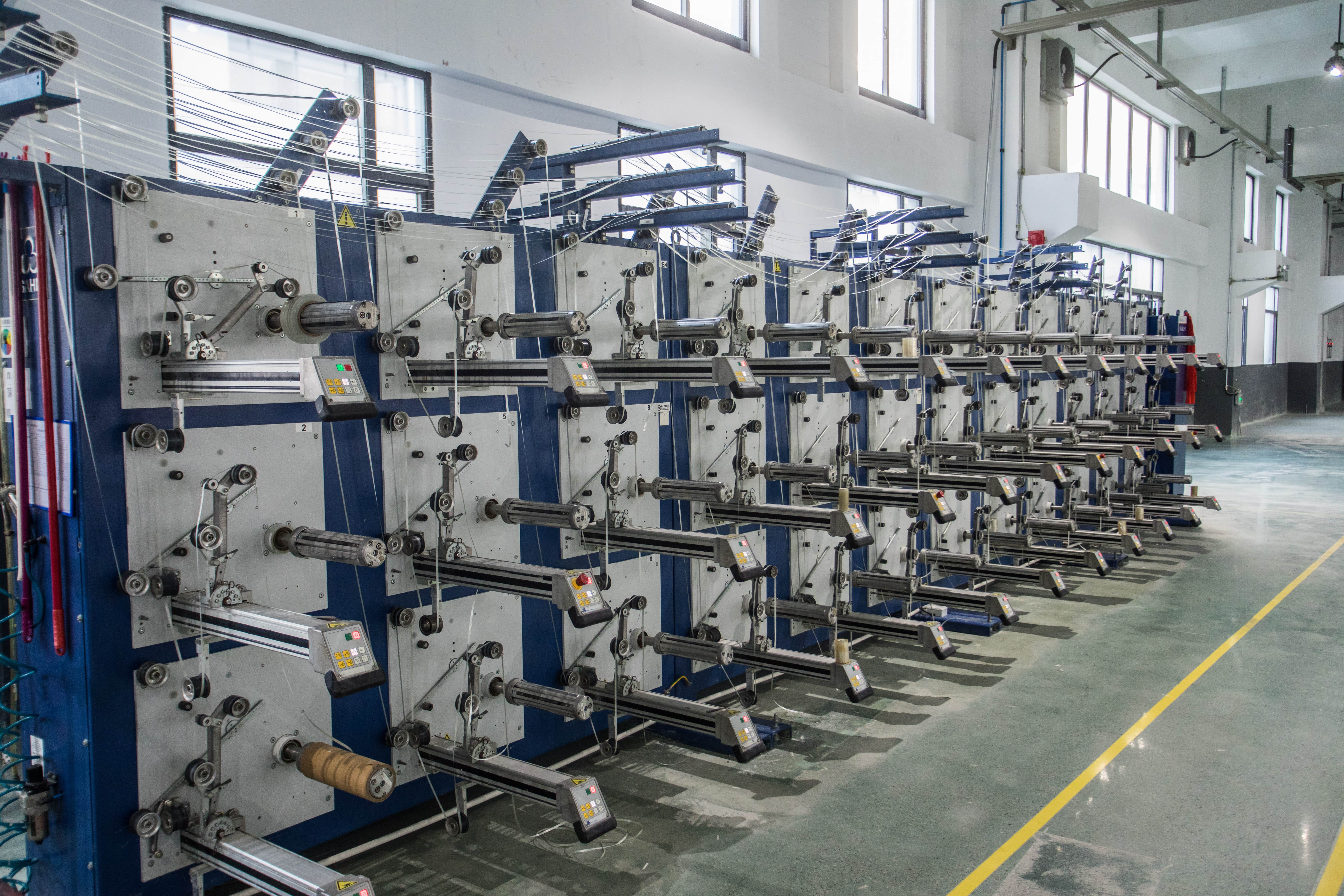
For high-temperature electrical insulation, the choice between a mica roll and a phlogopite mica tube is not a simple preference for one shape over another. A mica roll is a flexible, roll-supplied insulation format built from mica paper, silicone resin and a reinforcement such as glass cloth; GLORY MICA’s R-5461 mica roll family is documented with thicknesses of 0.2, 0.3, 0.4 and 0.5 mm and lengths of 20, 25, 40, 50 and 100 m. A phlogopite mica tube is a roll-formed tubular profile made from phlogopite mica paper fixed with silicone resin; GLORY MICA’s phlogopite mica tube is approximately 85% mica and 15% bond. Both are mica insulation, but one is a wrapping and interface material, while the other is a pre-formed geometric component.
Why Buyers Compare These Two Formats
Procurement teams often begin with a temperature question: can the material survive the duty point? That question matters, but it is not sufficient. In high-temperature electrical equipment, the format decision changes how the insulation is cut, wound, fitted, inspected and assembled. A mica roll may be selected because it can be supplied in long lengths and converted into wraps, washers, gaskets or separators. A phlogopite mica tube may be selected because the assembly needs a self-supporting tubular profile around a conductor, heater element or internal component.
The commercial opportunity is growing because mica insulation sits at the intersection of fire safety, thermal management and electrical isolation. According to Statifacts, the global mica insulation material market was valued at USD 1.811 billion in 2024, with a projected CAGR of 6.4% from 2024 to 2034. In China, GB 38031-2025 for electric vehicle traction battery safety requires two-hour thermal runaway protection and becomes effective on 1 July 2026. These signals do not decide whether a buyer should choose a roll or a tube, but they do raise the standard for documented material selection, test evidence and supplier qualification.
Buyer summary: Use a mica roll when the duty point needs a flexible sheet format for wrapping, large-area coverage, gaskets or separators. Use a phlogopite mica tube when the duty point needs a roll-formed tubular profile for sleeves, spacers or insulating tube components in electrical equipment, motors, furnaces, electric-arc furnaces or metallurgy equipment. Do not treat the two formats as interchangeable without checking geometry, mica type, bond content, temperature basis and electrical test method.
What a Mica Roll Is in Practice
GLORY MICA’s R-5461 mica roll consists of phlogopite mica paper, or synthetic mica paper or calcined mica paper, impregnated with a special silicone resin on glass cloth or biologic or harmless ceramic, depending on the application. That construction detail is important because “mica roll” describes a format, not a single material grade. A buyer who specifies only “mica roll” leaves the mica paper type, reinforcement and resin system open. A better request identifies the mica paper, the reinforcement, the thickness, the roll length and the breakdown voltage requirement.
The documented roll range covers 0.2 mm, 0.3 mm, 0.4 mm and 0.5 mm thicknesses. Length options include 20 m, 25 m, 40 m, 50 m and 100 m. Mica content and breakdown voltage rise with thickness in the documented R-5461 roll data, which gives buyers a practical way to match the roll to the electrical and handling duty.
| Documented mica roll thickness | Mica content | Breakdown voltage | Buyer interpretation |
|---|---|---|---|
| 0.2 ± 0.02 mm | 350 ± 10 g/m² | > 2 kV | Thin flexible format for lower-profile insulation, wrapping and separator duties where the assembly can accommodate a thinner mica layer. |
| 0.3 ± 0.03 mm | 500 ± 20 g/m² | > 3 kV | Intermediate thickness for balanced flexibility and dielectric margin in appliance, cable and module insulation. |
| 0.4 ± 0.03 mm | 600 ± 20 g/m² | > 4 kV | Higher mica content for duties that need more electrical margin or more robust handling during conversion. |
| 0.5 ± 0.04 mm | 730 ± 20 g/m² | ≥ 5 kV | Thickest documented roll format for higher dielectric demand, subject to the same test method and assembly validation. |
For the roll format, the assigned buyer brief for this comparison uses a maximum 1000℃ service figure. In the product data, that figure should be read together with the phlogopite mica grade and the duty basis. The verified data for phlogopite mica gives a thermal resistance range of 800–1000℃. Buyers should therefore ask the supplier to state whether 1000℃ is a continuous service limit, an intermittent limit or a short-term excursion, because those distinctions change the acceptable duty point.
What a Phlogopite Mica Tube Is in Practice
A phlogopite mica tube is formed by phlogopite paper fixed with silicone resin and processed by roll forming. GLORY MICA’s phlogopite mica tube is approximately 85% mica and 15% bond content, with a density of 1.6–2.2 g/cm³. The tube is used as an insulating tube-form material in electrical equipment, motors, furnaces, electric-arc furnaces and other metallurgy industry equipment. That application statement matters: the tube is not generally a replacement for a flexible roll in large-area wrapping, and the roll is not generally a replacement for a tube where the assembly needs a pre-formed tubular shape.
The tube data distinguishes continuous and intermittent service. Continuous service is 700℃, while intermittent service is 1000℃. Heat loss is stated as less than 1% at 500℃ and less than 2% at 700℃. Dielectric strength is greater than 1.5 kV/mm, and insulation resistance at 23℃ is 10^16 Ω·cm. Flame resistance is UL94 V-0.
| Phlogopite mica tube property | Documented value | Procurement relevance |
|---|---|---|
| Mica paper | Phlogopite | Phlogopite is the mica grade to check when high-temperature duty is central to the application. |
| Mica content | ≈85% | Higher mica share generally supports the insulation function; confirm the supplier’s test basis. |
| Bond content | ≈15% | Bond content is part of the mechanical and dielectric balance; it should be declared, not inferred. |
| Density | 1.6–2.2 g/cm³ | Useful for comparing tube construction and handling expectations. |
| Continuous service | 700℃ | Use this figure for continuous-duty thermal planning. |
| Intermittent service | 1000℃ | This is an intermittent figure, not a continuous rating. |
| Dielectric strength | >1.5 kV/mm | Reported per millimetre; compare only with equivalent specimen and test method. |
| Insulation resistance at 23℃ | 10^16 Ω·cm | Supports electrical insulation evaluation at room temperature. |
| Flame resistance | UL94 V-0 | Useful for flame-retardant requirements, subject to the final assembly and certification scope. |
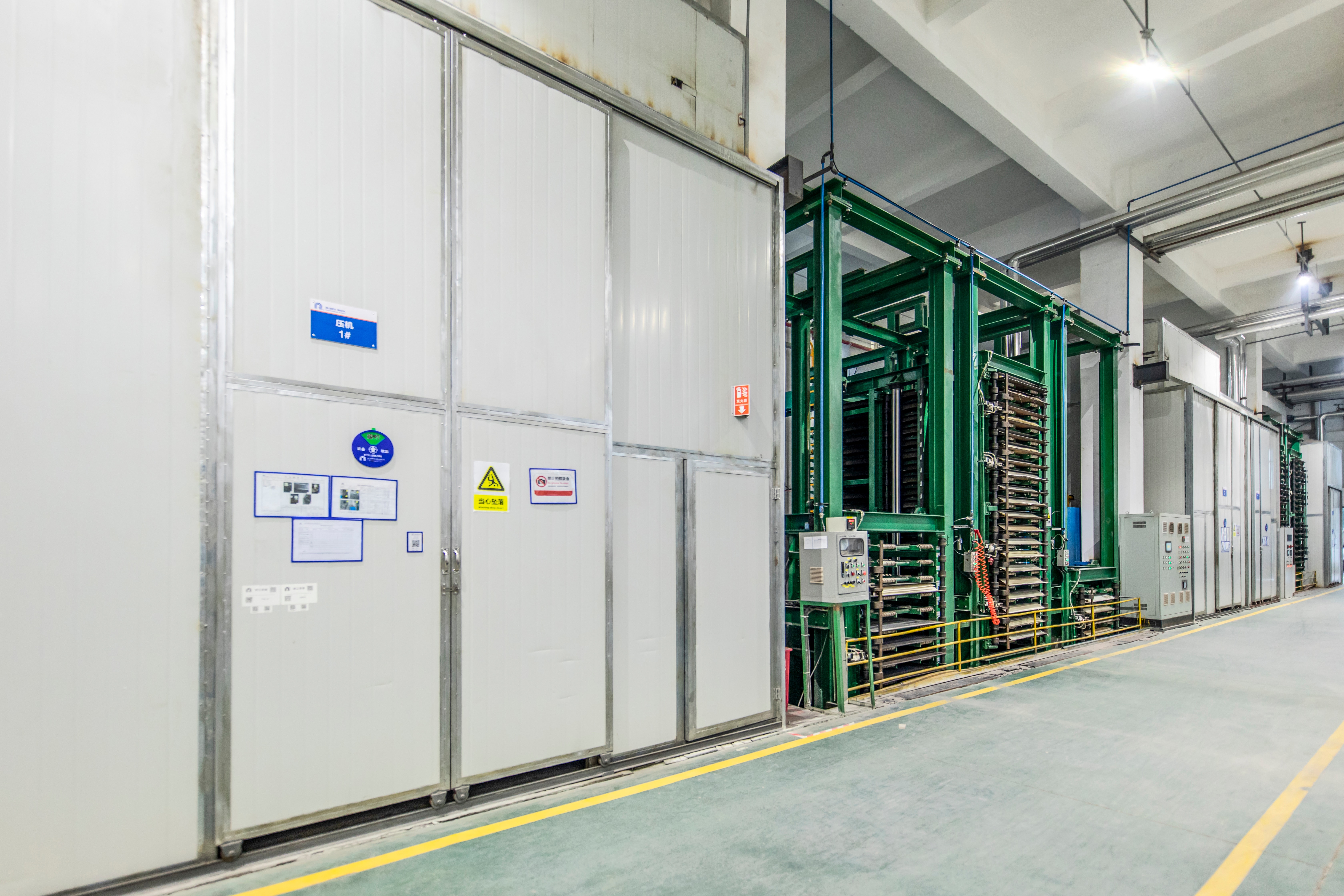
Technical Comparison: Same Material Family, Different Buying Logic
Mica roll and phlogopite mica tube share a material family, but they are not described by the same purchasing variables. A roll quotation should identify thickness, mica content in g/m², breakdown voltage, roll length and reinforcement. A tube quotation should identify mica paper type, mica and bond content, density, continuous and intermittent temperature ratings, dielectric strength and available dimensions. If a request for quotation mixes those variables, the comparison becomes unreliable.
| Comparison point | Mica roll, R-5461 family | Phlogopite mica tube |
|---|---|---|
| Format | Flexible roll supplied in 20, 25, 40, 50 or 100 m lengths | Roll-formed tubular profile |
| Construction | Phlogopite, synthetic or calcined mica paper impregnated with special silicone resin on glass cloth or biologic or harmless ceramic, depending on application | Phlogopite mica paper fixed with silicone resin and processed by roll forming |
| Mica and bond content | Mica content stated in g/m² by thickness; bond content not stated as a single percentage in the roll data | ≈85% mica and ≈15% bond content |
| Thickness and length | 0.2, 0.3, 0.4 and 0.5 mm; 20, 25, 40, 50 and 100 m | Dimensions not stated in the provided tube data; request drawing or dimensional specification |
| Temperature basis | Phlogopite mica range stated as 800–1000℃; confirm continuous or intermittent basis for the roll | 700℃ continuous; 1000℃ intermittent |
| Electrical data | Breakdown voltage by thickness: >2, >3, >4 and ≥5 kV | Dielectric strength >1.5 kV/mm; insulation resistance at 23℃ 10^16 Ω·cm |
| Typical application fit | Household appliances, fire-resistant cables, new energy vehicle battery modules, gaskets and separators | Insulating tube material in electrical equipment, motors, furnaces, electric-arc furnaces and metallurgy equipment |
| Primary buyer check | Mica paper type, reinforcement, thickness tolerance, roll length, breakdown voltage method | Mica and bond ratio, density, continuous and intermittent temperature, dielectric method and dimensional fit |
Why Breakdown Voltage and Dielectric Strength Are Not Directly Interchangeable
The roll data reports breakdown voltage in kV for a given thickness. The tube data reports dielectric strength in kV/mm. Those are different expressions. A buyer cannot correctly compare them by placing “≥5 kV” beside “>1.5 kV/mm” without knowing the specimen thickness, electrode configuration, voltage ramp and test standard. The right procurement action is to require the same test method, the same specimen preparation and a report that states the specimen thickness and pass criterion.
This is also why a tube with a high mica content is not automatically “better” than a roll with a high mica content, or vice versa. The format and the test basis come first. Only after those are aligned can the electrical data support a fair comparison.
Application Mapping: Which Format Fits Which Duty Point
The most reliable way to choose between the two formats is to start from the assembly geometry and the failure mode that the insulation must control. If the requirement is to wrap, cover, separate or create a flexible thermal barrier, the roll format is usually the closer starting point. If the requirement is to fit a pre-formed tubular insulation around a component, the tube format is usually the closer starting point.
| Duty point | More suitable format | Why, based on documented use | Buyer checks |
|---|---|---|---|
| Household appliance thermal and electrical insulation | Mica roll | Documented uses include electric irons, hair dryers, toasters, electric kettles, cooking utensils and microwave ovens. | Thickness, flexibility, breakdown voltage, mica paper type, conversion method. |
| Fire-resistant cable insulation | Mica roll | Documented as a temperature-resistant insulating material for power lines and home decoration cables. | Mica content, breakdown voltage, reinforcement, roll length, winding compatibility. |
| New energy vehicle battery module fire protection | Mica roll | Documented as fireproof material in battery power modules, and usable as gaskets and separators. | Thickness, flame behavior, dielectric margin, compatibility with module compression and assembly. |
| Motor, furnace and electric-arc furnace insulation in tube form | Phlogopite mica tube | Documented as an insulating tube-form material in electrical equipment, motors, furnaces, electric-arc furnaces and metallurgy equipment. | Tube dimensions, mica and bond content, continuous and intermittent rating, dielectric strength. |
| Metallurgy equipment insulation where a pre-formed tube is required | Phlogopite mica tube | Documented use includes other metallurgy industry equipment. | Density, heat loss at 500℃ and 700℃, mechanical fit, resin bond, UL94 V-0 status. |
Where GLORY MICA Fits as a Supplier
GLORY MICA is a China-based manufacturer of high-temperature-resistant mica composite materials for electrical and thermal insulation. The company provides R&D, manufacturing, product customisation and system-level solution delivery for electrical and thermal insulation. Its documented monthly production capacity is 8,000 tons of mica. That capacity statement is relevant to buyers who need a supplier that can support repeat orders across multiple mica formats, not only a single cut sheet.
Customisation covers material types including white mica, gold mica and synthetic mica; thickness and dimensions; die-cutting, stacking and lamination; shape forming, surface treatment and bonding methods. For a roll-versus-tube decision, this matters because a buyer may need the same insulation programme to include a flexible roll for one assembly and a tube for another. A supplier with both formats and conversion capabilities can reduce the number of separate qualification streams, provided the product-specific documents are complete.
The company’s quality and compliance base includes ISO 9001:2015, ISO 14001:2015, ISO 45001:2018, ISO 50001:2018 and IATF 16949:2016 system certifications. Documented certificate numbers include 03125Q20088R5M for ISO 9001, 03124E20096R5M for ISO 14001, 03125S1068R2M for ISO 45001, 03126En00019R100 for ISO 50001 and T-11367/0 for IATF 16949. The company also holds CNAS laboratory accreditation under ISO/IEC 17025:2017 with certificate CNAS L18348, covering testing and calibration services for mica products.
GLORY MICA’s company profile states that its products have passed UL and FDA certification and meet EU RoHS and REACH environmental requirements. For procurement, those claims should be converted into product-specific declarations: certificate scope, file number where applicable, validity dates and the exact product family covered. The company also states that it has full traceability on particular purchased mica material and can guarantee the origin of the mica. That is the kind of statement a buyer should verify in the supplier’s quality documentation and incoming-material records.
Market Trend Analysis: What Is Changing for Mica Insulation Buyers
Two documented signals are shaping buyer expectations. First, the mica insulation material market is not standing still. Statifacts values the global market at USD 1.811 billion in 2024 and projects a 6.4% CAGR over 2024–2034. Second, regulation is becoming more specific. China’s GB 38031-2025 requires two-hour thermal runaway protection for electric vehicle traction batteries and takes effect on 1 July 2026. For mica suppliers and buyers, that shifts attention from generic heat resistance to evidence of fire-barrier performance, material consistency and test traceability.
The practical consequence is not that every buyer should switch formats. It is that format selection should be documented earlier. A roll used as a battery module fire barrier and a tube used in a motor or furnace are exposed to different mechanical and assembly conditions. The supplier’s data package should show why the chosen format is appropriate, not only that the material contains mica.
Comparison with Alternative Choices and Limits
A fair comparison must include the boundaries of each format. The mica roll is flexible and can be supplied in long lengths, but it is not a pre-formed tube. If the assembly needs a self-supporting tubular profile, a roll may require additional forming, wrapping or tooling that changes the process and the validation burden. The supplied roll data also does not state a single bond percentage, so buyers should not assume that all mica rolls in the R-5461 family have the same resin-to-mica balance.
The phlogopite mica tube is a formed tubular product with a declared mica and bond content, but it is not a large-area wrapping material. Its continuous rating is 700℃, while 1000℃ applies to intermittent service. A buyer who specifies “1000℃ mica tube” without distinguishing continuous from intermittent duty may create an over-specified or misapplied requirement. The provided tube data also does not list tube dimensions, so dimensional fit must be confirmed through a drawing or technical quotation.
Another limit is commercial comparability. The roll data reports breakdown voltage in kV by thickness, while the tube data reports dielectric strength in kV/mm. These figures should not be used to rank one format above the other without a common test method. A lower headline number in one format may reflect a different specimen or test basis rather than a weaker insulation system.
Buyer Checklist Before Issuing an RFQ
| Check | Why it matters |
|---|---|
| Define the assembly geometry first | Roll and tube solve different physical fit problems. Start with the shape, not the material name. |
| Specify the mica paper type | R-5461 roll data allows phlogopite, synthetic or calcined mica paper depending on application. “Mica roll” alone is not a full specification. |
| For rolls, state thickness, mica content, breakdown voltage and length | The documented range is 0.2–0.5 mm, 350–730 g/m² mica content, >2 to ≥5 kV breakdown voltage and 20–100 m lengths. |
| For tubes, state mica/bond ratio, density, temperature basis and dielectric strength | The tube is documented at ≈85% mica, ≈15% bond, 1.6–2.2 g/cm³, 700℃ continuous and 1000℃ intermittent. |
| Require the same electrical test method for both formats | kV and kV/mm are not directly interchangeable. |
| Request certificate numbers and scope | ISO, IATF and CNAS claims should be tied to valid certificate numbers, issuing bodies and product scope. |
| Request RoHS and REACH declarations | The company profile states compliance; the buyer should obtain product-specific declarations. |
| Confirm continuous versus intermittent duty | The tube’s 1000℃ figure is intermittent; the roll’s 1000℃ reference also needs duty clarification. |
| Validate samples in the actual assembly | Thickness, flexibility, compression and fit can change the electrical and thermal result. |
| Check traceability and incoming-material records | GLORY MICA states full traceability on particular purchased mica material; verify how that is documented for the ordered grade. |
Future Outlook
Mica insulation is likely to remain a specification-driven category rather than a commodity chosen on temperature alone. The market growth indicated by Statifacts and the regulatory direction in China’s GB 38031-2025 both point toward more documentation, more application-specific validation and more attention to the exact mica grade. For buyers, the roll-versus-tube question will increasingly be answered by assembly geometry, duty cycle and test evidence rather than by a single temperature headline.
Suppliers that can provide both flexible roll formats and roll-formed tube formats, with certificate numbers, test reports and conversion support, will be easier to qualify across multiple programmes. The buyer’s task is to keep the comparison honest: compare roll to roll, tube to tube, and then compare the two formats only on a common application basis.
FAQ
What is the main difference between a mica roll and a phlogopite mica tube?
A mica roll is a flexible, roll-supplied insulation format made from mica paper, silicone resin and a reinforcement such as glass cloth. A phlogopite mica tube is a roll-formed tubular profile made from phlogopite mica paper fixed with silicone resin. The roll is suited to wrapping, covering and separator duties; the tube is suited to pre-formed tubular insulation in equipment such as motors, furnaces and electric-arc furnaces.
What mica roll thicknesses and lengths are documented?
GLORY MICA’s R-5461 mica roll data documents thicknesses of 0.2, 0.3, 0.4 and 0.5 mm and length options of 20, 25, 40, 50 and 100 m. The corresponding mica content is 350 ± 10 g/m², 500 ± 20 g/m², 600 ± 20 g/m² and 730 ± 20 g/m², with breakdown voltage of >2 kV, >3 kV, >4 kV and ≥5 kV respectively.
What is the construction of the phlogopite mica tube?
The phlogopite mica tube is formed by phlogopite paper fixed with silicone resin and processed by roll forming. It is approximately 85% mica and 15% bond content, with a density of 1.6–2.2 g/cm³. Its documented continuous service rating is 700℃ and its intermittent service rating is 1000℃.
Can a phlogopite mica tube be used continuously at 1000℃?
No. The documented tube data distinguishes 700℃ continuous service from 1000℃ intermittent service. A buyer who needs continuous duty at or near 1000℃ should not rely on the intermittent figure and should request a duty-specific engineering review.
How should buyers compare mica roll breakdown voltage with tube dielectric strength?
The roll data reports breakdown voltage in kV by thickness, while the tube data reports dielectric strength in kV/mm. Those units are not directly interchangeable. Buyers should require the same test method, specimen thickness, electrode configuration and pass criterion before comparing the two formats.
Which certifications can buyers verify with GLORY MICA?
Documented management-system certificates include ISO 9001:2015 certificate 03125Q20088R5M, ISO 14001:2015 certificate 03124E20096R5M, ISO 45001:2018 certificate 03125S1068R2M, ISO 50001:2018 certificate 03126En00019R100 and IATF 16949:2016 certificate T-11367/0. The company also holds CNAS laboratory accreditation CNAS L18348 under ISO/IEC 17025:2017. For UL, FDA, RoHS and REACH claims, buyers should request product-specific declarations and certificate scope.
Reference document: GLORY MICA company brochure, PDF.
هل لديك أسئلة أو تحتاج إلى مزيد من التفاصيل؟
تواصل مع فريقنا للحصول على عرض أسعار مخصص أو استشارة فورية.
طلب عرض أسعار
املأ النموذج أدناه وسيتواصل معك فريقنا بعرض مقترح مخصص.
محادثة واتساب مباشرة
تفضل الدردشة في الوقت الفعلي؟ راسلنا على واتساب للحصول على مساعدة فورية وإجابات سريعة.
- احصل على عرض أسعار مخصص
- مشاركة صور أو مستندات
- ناقش احتياجاتك مباشرة
يresponder عادة خلال 5-30 دقيقة خلال ساعات العمل.