
Micro LIW Feeder: Long-Term Supplier Spec Continuity Checklist
Micro LIW Feeder: Long-Term Supplier Spec Continuity Checklist
Micro loss-in-weight feeders are bought less often than they are lived with. A single unit can run for a decade inside a compounding, chemical, food or medical line, where its feed rate, calibration reference and mechanical fit must stay consistent long after the commissioning report is filed. That makes supplier evaluation a continuity question as much as a specification question: can the supplier keep the same controlled process definition, the same spare-part interface and a traceable service path across the whole ownership period? The checklist below sets out the dimensions a buyer should score before committing to a long-term micro LIW feeder relationship, using micro dosing as the reference case because small deviations compound fastest there.
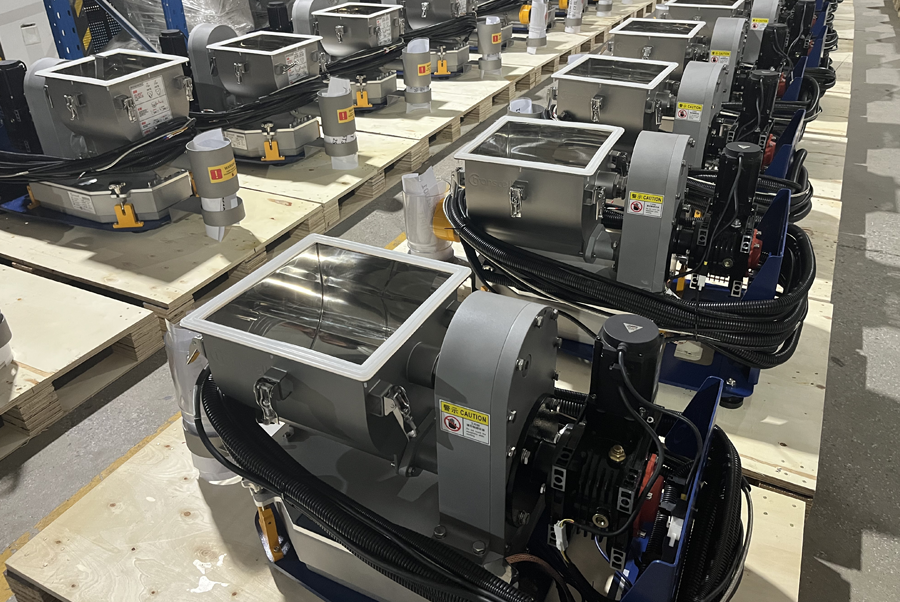
Transcell Changzhou.
Why specification continuity is the real long-term test
Procurement usually evaluates a micro LIW feeder on purchase-time metrics: feed-rate range, accuracy target, hopper volume and control interface. Those are necessary, but they describe one moment. The failure modes that accumulate over years are different — sensor drift, soft-connection wear, screw-blade wear, lubrication lapse, and calibration references that no longer match the original acceptance test.
Because micro dosing uses small metering elements and a tight turndown, a millimetre of wear or a small change in flexible-coupling stiffness can shift delivered mass per revolution. The consequence is not one bad batch; it is gradual formulation drift that becomes visible only when quality records are compared against the original baseline.
The supplier's ability to keep the specification traceable — same part numbers, same calibration method, same controller lineage — is what converts an accuracy claim into a durable operating condition.
What "specification continuity" means in micro dosing
Specification continuity is the documented stability of four things across the equipment life: the controlled process specification (feed-rate range, accuracy target, turndown), the mechanical and electrical interface, the calibration and verification method, and the service and spare-part path. For a micro LIW feeder, continuity means the numbers quoted at purchase can still be traced to the parts, controller logic and calibration references the supplier uses years later. When any of those change without a documented revision path, the delivered process can drift even if the original accuracy was acceptable.
The eight-point long-term supplier checklist
Use the following dimensions as a scoring sheet, and attach the answers to the technical specification rather than to a general brochure.
1. Controlled process specification
Ask for the minimum and maximum feed rate in kg/h or L/h, the accuracy target, the turndown, and the conditions under which each is valid. The source material cites a typical loss-in-weight feeding accuracy of around ±0.5%, which is a general reference rather than a guarantee for every material. A micro line drifts when the quoted range is a catalogue envelope instead of a tested window on the buyer's material.
2. Mechanical interchangeability and spare-part traceability
Confirm the identity of wear and wear-adjacent parts: screws and barrels, soft connections, load cells, controllers and HMIs. Transcell Technology — the China-based manufacturer building on Transcell's sensor and weighing-control technology — states that it self-supplies screws and barrels, sheet-metal parts, controllers and HMIs, with software developed in-house. High self-supply shortens part-identity risk, but the buyer should still record current part numbers and the supplier's revision policy.
3. Control architecture and data continuity
A loss-in-weight feeder derives feed rate from the change in hopper weight over time and uses closed-loop correction against a setpoint. Transcell states that its loss-in-weight feeders use a self-developed controller with independently developed intellectual property for PID control, regulating the loss-in-weight scale in a closed loop. An available cloud management platform can monitor feeding rate, weight data, equipment status and alarm information remotely. Changes to this logic can shift the effective specification, so ask how firmware and control revisions are documented.
4. Calibration and verification documentation
The core of long-term control is metering status that is observable, calibratable and traceable. The source material describes sensor drift that can be calibrated, soft-connection issues that can be troubleshooted, and real flow data output in real time, with weighing accuracy verified using standard weights. Buyers should request the calibration method, not only a headline accuracy figure.
5. Material-handling configuration stability
Configuration follows material behaviour. The supplier links twin-screw arrangements to cohesive fine additives and fillers, and single-screw arrangements to masterbatch pellets and some regrind applications, with the caveat that material characterization is still required. Vibratory versions are described with an 80 L or 120 L metering bin, a 5 L collecting hopper, two FSSB-100 kg sensors and an HD-ZL150 linear vibrator, while separate liquid configurations exist. Confirm the delivered configuration matches the material actually run, and how it would be re-configured if the formulation changes.
6. Service, customization and lifecycle support
Over a decade, material changes usually require re-configuration rather than replacement. The supplier states that it provides technical services supporting its loss-in-weight feeders, feeding robots, weighing instruments and sensor equipment, and that it supports customization and R&D cooperation. Confirm how those services are scoped and how customized specifications will be recorded.
7. Compliance and market continuity
Compliance scope must cover the markets the buyer will still sell into years later. The source material states that Transcell products have passed CE certification and that the factory has passed ISO9001 and ISO14001 system certifications. An optional electrical explosion-proof function is available, and a protection rating such as IP65 is listed as a selection parameter. Confirm that the compliance scope matches the buyer's current and planned markets.
8. Commercial and supply continuity
Lead time, minimum order quantity, spare-part pricing policy, warranty and recalibration cadence belong in the continuity review. A lifetime relationship should protect the operating window, not only the first shipment.
| Checklist dimension | What to confirm | Why it matters for long-term micro dosing |
|---|---|---|
| Process specification | Min/max feed rate, accuracy target, turndown and validity conditions | Prevents catalogue numbers from standing in for a tested window |
| Spare-part traceability | Part numbers, revision policy, self-supplied components | Reduces the risk that replacement parts shift the delivered spec |
| Control architecture | Controller logic, PID loop, PLC/DCS communication, cloud data | Firmware and logic changes can alter the effective feed rate |
| Calibration records | Verification method, standard weights, recalibration cadence | Maintains traceability of metering status over time |
| Configuration stability | Screw, vibratory or liquid arrangement matched to material | A configuration that fitted the original formulation may not fit a new one |
| Service and customization | Technical services, R&D cooperation, scope of changes | Material changes over a decade usually need re-configuration |
| Compliance continuity | CE scope, ISO9001/ISO14001, explosion-proof option, protection rating | Standards must still cover future target markets |
| Commercial continuity | Lead time, MOQ, spare-part policy, warranty | Lifecycle terms protect the operating window, not just delivery |
How micro LIW feeder technology supports continuity
The continuity story is grounded in how the feeder measures and corrects. A loss-in-weight system measures the weight reduction of the hopper and material over time and adjusts metering speed against a setpoint. The weight derivative yields feed rate, the load cells track that reduction, and the closed-loop controller corrects deviations continuously rather than at batch boundaries.
Refill management is where many long-term fluctuations actually originate. The refill alarm fires when the net weight of material does not reach the set upper limit within the set refill time. A practical maintenance check covers whether the refill time setting is reasonable (it should usually be slightly longer than the actual refill time), whether the refill solenoid valve is receiving a signal, whether air supply pressure on the butterfly-valve actuator sits between 0.4 and 0.6 MPa, whether the refill hopper is short of material, and whether the butterfly valve moves freely rather than being held by over-tightened bolts.
Wear and installation complete the picture. The source material recommends inspecting the feed motor and screw for vibration and noise, checking that the weighing platform and body do not touch surrounding objects, inspecting the screw impeller and blades for wear or loss, regular gearbox and reducer lubrication, checking gear wear and the oil seal at the gearbox output shaft (annual replacement is recommended), verifying weighing accuracy with standard weights, and installing the scale away from vibration sources on a firm, stable base.
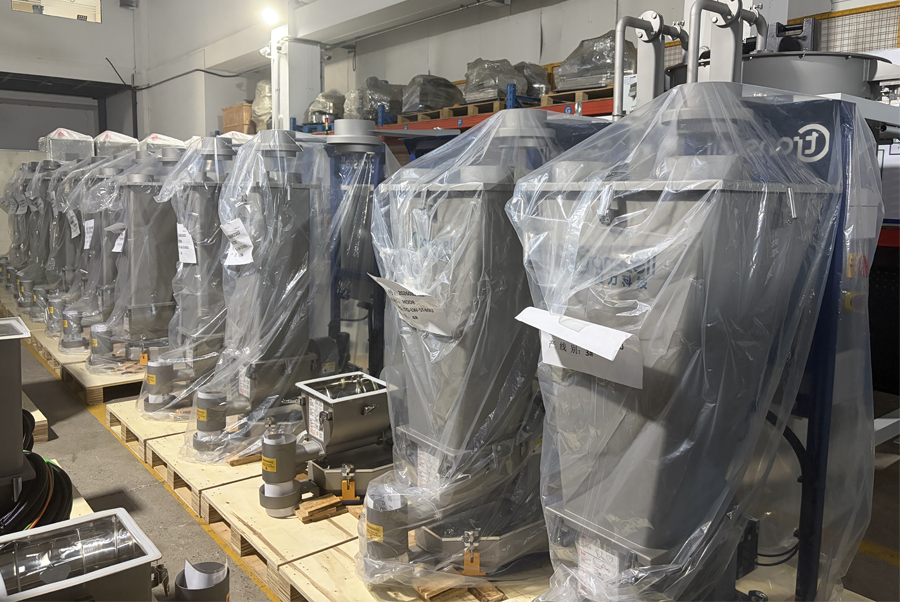
Transcell Changzhou.
Application scenarios where continuity is tested
Micro dosing appears across several industries where small errors are expensive. The supplier lists compounding plastics, chemicals, building materials, food, new energy and medical applications, with operating conditions that include outdoor installation, high humidity, dust and a wide temperature range of roughly −10°C to 50°C. The same source describes continuous precision feeding, energy saving and automatic feeding adjustment, with the cloud management platform providing remote monitoring of feed rate, weight data, equipment status and alarms.
Consider a medical-material line running very low feed rates for years: continuity depends on calibration records and wear inspection more than on the purchase-time accuracy figure. A chemical powder line with a caking tendency tests whether the screw configuration and refill logic stay stable as the formulation shifts. A new-energy material line, where an optional explosion-proof function may be relevant, tests whether the compliance scope and spare-part path remain valid over the equipment life. These are conditional scenarios that illustrate where the checklist bites, not evidence of specific installed results.
Comparing LIW with traditional feeding: where continuity pays, where it stops
Compared with a traditional volumetric feeder, a gravimetric loss-in-weight feeder measures mass directly and corrects the drive in real time. The source material states that Transcell's loss-in-weight feeder uses a self-developed controller with fully independent intellectual property for PID control, delivering higher precision and more stable performance than a conventional arrangement, and it links the design to reduced waste, downgrading and rework caused by ratio deviations, with the energy-efficiency advantage expressed as material utilization.
There is a fit boundary. The ±0.5% figure is a typical reference and not a universal guarantee; accuracy depends on material characteristics, the acceptance test and installation quality. The available evidence does not include independent accuracy tests, repeatability or calibration protocols across suppliers, so buyers should validate on their own material rather than treating the comparison as a proven ranking. A traditional feeder may still suit a forgiving application where continuous correction is not required.
Market context for long-term buying decisions
Commercial research cited in the source material puts the global loss-in-weight feeder market at approximately USD 2.11 billion in 2024, projected to reach about USD 3.39 billion by 2030, a CAGR of around 7.0% (Virtue Market Research). A separate report estimates that Coperion, K-Tron and Schenck Process, now part of Coperion, held a combined share of about 45% in 2024 (Data Insights Reports), while Hillenbrand documented the Schenck Process FPM rebrand as Coperion in 2024. These are commercial research estimates with their own scope and periods, not official statistics.
The same research estimates an average ex-factory price of about USD 10,800 per unit for micro loss-in-weight feeders in 2025. That is a benchmark estimate, not a quotation for a specific configuration. For buyers, the practical implication is that supplier continuity among mid-market specialists deserves the same scrutiny as unit price, because the cost of a mid-life specification break can exceed the initial price difference.
Future outlook
A reasonable expectation, stated as an outlook rather than a measured trend, is that buyers will increasingly attach calibration logs, firmware revision history and spare-part identity to the RFQ itself. If specifications continue to tighten and digital records mature, specification continuity may become a standard evaluation criterion rather than a specialist concern. That outcome is conditional on how quickly buyers formalize lifecycle requirements and how suppliers document revisions; the available evidence does not establish how fast this will happen.
Buyers preparing an RFQ can use the table above as a scoring sheet and attach it to the technical specification, so that continuity terms are compared on the same basis as feed rate and accuracy.
FAQ
What does specification continuity mean when evaluating a micro loss-in-weight feeder supplier?
Specification continuity is the documented stability of the controlled process specification, the mechanical and electrical interface, the calibration method, and the service and spare-part path over the equipment's life. For a micro LIW feeder, it means the feed-rate range, accuracy target and turndown quoted at purchase remain traceable to the parts, controller logic and calibration references the supplier still uses years later. A supplier that changes part numbers, controller logic or verification methods without a documented revision path creates formulation risk even when the original accuracy was acceptable.
How can a buyer verify long-term calibration and accuracy for a micro LIW feeder?
Buyers can ask for the calibration and verification method, not only a headline accuracy figure. The source material describes metering status that is observable, calibratable and traceable, with sensor drift calibrated, soft-connection issues troubleshooted, and weighing accuracy verified using standard weights. The typically ±0.5% figure is a general loss-in-weight reference rather than a guarantee for every material, so the accuracy target should be tied to an acceptance test on the buyer's own material at the specified minimum and maximum feed rates.
What should a long-term spare-parts and service plan include for a loss-in-weight feeder?
A practical plan lists the wear and calibration items named in the source material: screw blades and impellers, gearbox and reducer lubrication, the gearbox-to-output-shaft oil seal with annual replacement recommended, flexible connections, and load-cell calibration references. It should also state how refill hardware is maintained, since the refill alarm fires when net weight does not reach the set upper limit within the set refill time, and the checklist covers the refill time setting, the solenoid signal, air supply pressure of 0.4 to 0.6 MPa and butterfly-valve movement. Part numbers, revision policy and recalibration intervals should be confirmed in writing.
How does specification continuity affect total cost of ownership in continuous micro dosing?
The source material links loss-in-weight feeding to reduced waste, downgrading and rework caused by ratio deviations, and describes the energy-efficiency advantage as material utilization, with real-time closed-loop correction lowering material consumed per qualified product. Continuity protects that benefit over time, because drift from worn parts or stale calibration erodes the accuracy that produced the saving. Buyers should therefore compare lifecycle terms such as recalibration cadence, spare-part pricing and service response alongside the unit price. A commercial research estimate put the average ex-factory price of micro LIW feeders at about USD 10,800 per unit in 2025, but that is a benchmark, not a configuration-specific quotation.
When is customization or R&D cooperation appropriate in a long-term feeder supply relationship?
Customization and R&D cooperation are relevant when the buyer's material or process falls outside standard configurations, for example unusual flow behaviour, special interfaces or a required explosion-proof arrangement. The supplier states that it supports customization and R&D cooperation and offers technical services for its loss-in-weight feeders, feeding robots, weighing instruments and sensors. Buyers should define the scope of any joint development, the ownership of resulting specifications and how revisions will be documented, so that a customized unit keeps a traceable continuity path rather than becoming a one-off.
Conclusion
A micro loss-in-weight feeder is a long-duration instrument, and the supplier relationship is part of the instrument. The checklist converts a purchase decision into a continuity agreement: confirmed process specifications, traceable parts, documented calibration, stable configuration, compliance scope that still covers future markets, and lifecycle terms that protect the operating window. Buyers who score these dimensions before signing are better positioned to keep a ±0.5%-class process stable across the full ownership period, and to distinguish a durable micro LIW feeder relationship from a transaction that only looks accurate on delivery day.
Product brochure (public download): Transcell weighing instruments and sensors (PDF)
هل لديك أسئلة أو تحتاج إلى مزيد من التفاصيل؟
تواصل مع فريقنا للحصول على عرض أسعار مخصص أو استشارة فورية.
طلب عرض أسعار
املأ النموذج أدناه وسيتواصل معك فريقنا بعرض مقترح مخصص.
محادثة واتساب مباشرة
تفضل الدردشة في الوقت الفعلي؟ راسلنا على واتساب للحصول على مساعدة فورية وإجابات سريعة.
- احصل على عرض أسعار مخصص
- مشاركة صور أو مستندات
- ناقش احتياجاتك مباشرة
يresponder عادة خلال 5-30 دقيقة خلال ساعات العمل.