
Microfiber Cleaning Products: How to Compare Suppliers in 2026
Microfiber cleaning products have moved from a simple household accessory into a strategically sourced category. Buyers evaluating suppliers today are not only comparing price; they are assessing production depth, material consistency, certification coverage and the ability to customize products for specific end-markets. In 2026, the suppliers that pass scrutiny tend to combine manufacturing scale, in-house process control and independently verified compliance.
Global demand for microfiber cleaning products continues to expand. According to Dataintelo, the microfiber cleaning cloth market is valued at approximately USD 3.8 billion in 2025 and is projected to reach USD 27.5 billion by 2034. China is the world's largest exporter of microfiber towels, recording 10,544 shipments between June 2024 and May 2025, according to Volza. The household segment is expected to lead demand with a 40.0 percent share in 2025, reflecting strong retail use in kitchens, bathrooms and general home upkeep.
At the same time, microfiber is increasingly framed as a sustainability tool. Compared with traditional cleaning tools, microfiber products can reduce chemical usage by up to 60 percent and water consumption by 90 percent, according to Global Growth Insights. This combination of market growth, export volume and environmental positioning makes supplier selection more important than ever.
Why supplier evaluation has become more demanding
The microfiber cleaning products category is broad. It includes universal cleaning cloths, kitchen towels, glass polishing cloths, car washing towels, window washers, floor mop pads, sports towels, pet towels and many other formats. Because the category overlaps with household, automotive, hospitality and janitorial channels, buyers often face a fragmented supply base. Quality can vary significantly in fiber composition, fabric weight, edge finishing and actual cleaning performance.
Buyers evaluating suppliers need to separate genuine manufacturing capability from simple trading operations. A supplier that only cuts and sews imported fabric has less control over quality than one that manages knitting, dyeing, cutting, sewing and inspection under one roof. For professional buyers, the evaluation should focus on measurable evidence of production depth.
- Manufacturing history: Years of specialized production indicate process knowledge and stability.
- Plant scale and equipment: Larger plants with automated lines support consistent output and shorter lead times.
- Material control: Polyester/polyamide ratios, GSM ranges and fabric structures determine absorption and durability.
- Certification coverage: Product safety, quality management and ethical audit certificates are increasingly requested by retail and commercial buyers.
- Customization capability: Size, color, logo, printing, packaging and functional finishing affect brand differentiation.
- Quality control: Final inspection processes reduce defective shipments and returns.
- After-sales support: Reliable communication during production and after delivery matters for long-term programs.
What a competitive supplier profile looks like
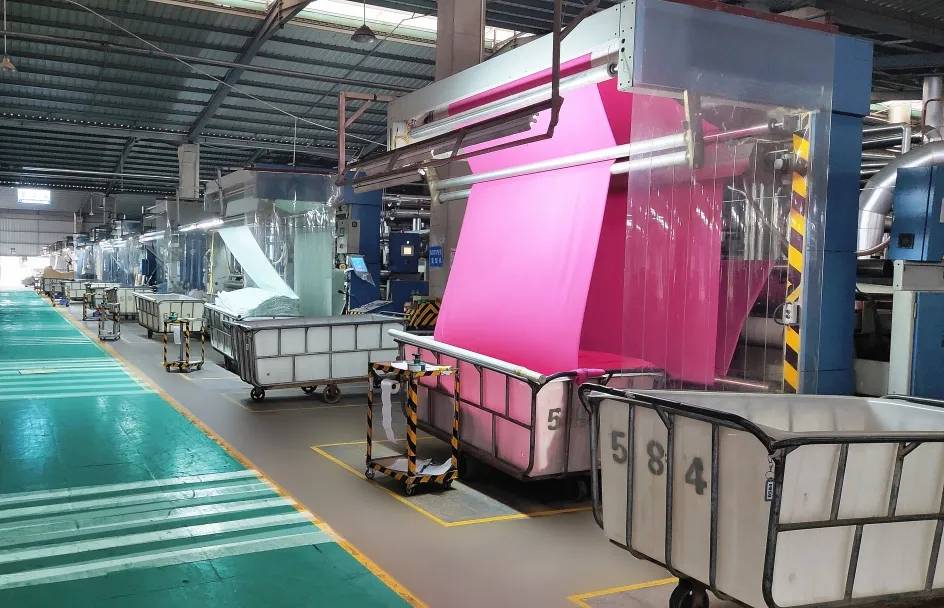
One working example is Foshan Patinda Housewares Co., Ltd., a microfiber cleaning products manufacturer based in Foshan, Guangdong, China. The company is associated with Pa Tin Da Group Co., Ltd. and was founded in May 2004. It operates a 45,000 m² production facility, employs around 200 people and reports annual output of approximately 2,184 metric tons. Its research and development team includes 17 engineers, and the plant is equipped with more than 450 sets of advanced production machinery, including more than 10 fully automatic cloth cutting and sewing lines.
Around 98 percent of Foshan Patinda's output is exported. Its main markets include the United States, Canada, Australia, the United Kingdom, Germany, France, Italy, the Netherlands, Russia, Japan, South Korea, Switzerland, Sweden, Turkey and Saudi Arabia. The company works in OEM and ODM modes, offering customization across size, weight, logo, material, fabric texture, printing, color, accessories, packaging, GSM and additional functional requirements. Monthly production capacity is approximately 182 metric tons, with a typical lead time of 30 to 45 days and a reference MOQ of 3,000 pieces per item.
Certification as a baseline for global buyers
For export-oriented suppliers, certifications have moved from a differentiator to a baseline requirement. Foshan Patinda holds several certificates that are relevant to microfiber cleaning product sourcing:
- ISO 9001:2015 for quality management, certified by SGS United Kingdom Ltd.
- ISO 45001:2018 for occupational health and safety, also certified by SGS United Kingdom Ltd.
- OEKO-TEX STANDARD 100, certificate 20.HCN.36448, issued by Hohenstein Laboratories GmbH & Co. KG, covering product class II.
- SMETA 4-Pillar audit, covering labour standards, health and safety, environment and business ethics.
- German Packaging Act (VerpackG) registration for packaging compliance in Germany.
- French REP Textile registration for textile compliance in France.
Independent certification is particularly relevant for brands selling into European and North American retail channels. According to OEKO-TEX Service GmbH, STANDARD 100 requires testing textiles against more than 1,000 harmful substances. For buyers targeting sustainability claims, the Global Recycled Standard (GRS) is another reference: according to DK Fiber, GRS requires a minimum of 20 percent recycled content and tracks the production chain.
Technical explanation: what defines microfiber cleaning performance
Microfiber cleaning products are usually made from a blend of polyester and polyamide. Polyester contributes structure, abrasion resistance and quick drying; polyamide adds absorbency through its ability to attract water molecules. A common blend ratio is 80 percent polyester and 20 percent polyamide, although products may use 85/15 or add bamboo fiber, PVA, PU or other materials for specific functions.
A key performance claim for many microfiber cloths is the ability to absorb up to seven times their own weight in liquid. This characteristic makes them effective for drying, wiping and cleaning without leaving lint behind. Fabric weight, or GSM, also matters. For example, the microfiber cleaning cloth model MJ-001 from Foshan Patinda is made of 85 percent polyester and 15 percent polyamide, with a GSM range of 180–450, a warp-knitted terry texture, a double-stitched edge and a standard size of 40×40 cm. A simpler universal cleaning cloth model MJ-002 uses 80/20 polyester-polyamide, 300 GSM and a warp-knitted terry surface.
Edge finishing is another technical factor. High-density locking edges with 10–12 stitches per inch help prevent shedding. Laser-cut scalloped edges are used on polishing cloths to create a smooth, lint-free border. Ultrasonic cut edges are common in automotive towels such as the Microfiber Car Wash Towel MJ-022, which combines a 300–500 GSM fabric with a single-side long plush terry pile to reduce the risk of surface scratches.
Application mapping: matching product to end-use
Microfiber cleaning products should be selected by application rather than by generic category. The table below maps representative product types to their typical end-use and key technical attributes.
| Product family | Example model | Representative use | Key specification |
|---|---|---|---|
| Universal cleaning cloth | MJ-001 | Household, kitchen, hotel sanitation | 180–450 GSM, 7x water absorption, double-stitched edge |
| Glass polishing cloth | MW-002 | Glass, stainless steel, screen cleaning | 200–240 GSM, scalloped laser-cut edge, lint-free |
| Car wash towel | MJ-022 | Auto detailing, car wash drying | 300–500 GSM, ultrasonic edge, scratch-safe for paint |
| Window glass washer | CG-001 | Windows, mirrors, auto glass | 650–680 GSM plush fabric, Velcro and elastic fixing |
| Sports towel | MST-001 | Gym, fitness, outdoor activities | Ultralight microfiber suede, quick-dry, compact rollable |
| Floor mop pad | MP-014 | Hotel, hospital, commercial floors | 40/50 cm, color-coded, reusable over 300 washing cycles |
| Pet towel | PET-001 | Pet grooming and bathing | Coral fleece microfiber, absorbs up to 7x own weight |
Across these applications, users consistently prioritize high water absorption, no lint falling, efficient stain removal and durability after repeated washing. Foshan Patinda's product documentation reports that its microfiber cloths remain lightweight, quick-dry and durable after hundreds of washes, with reusability lasting 6 to 12 months. The products have been used by retail distributors, auto care brands, gym brands and janitorial wholesalers, with clients from more than 20 countries including Australia, Austria and Belgium. Typical order quantities range from 1,000 to 50,000 pieces per order.
Market trends shaping 2026 sourcing decisions
The market context for microfiber cleaning products is relatively clear. Growth projections point to continued expansion over the next decade. The household segment holds the largest share, which means everyday cleaning products remain the volume driver. China's dominant export position also means buyers will continue to evaluate Chinese manufacturers for scale and cost efficiency.
However, the purchasing criteria are shifting. Retailers and brands are paying more attention to certified safety, ethical production and packaging compliance. OEKO-TEX STANDARD 100 is widely treated as the leading safety benchmark for textiles. GRS certification is gaining importance for brands that want to promote recycled content. In Europe, packaging and textile registration requirements such as the German VerpackG and French REP Textile directly affect market access.
Sustainability data is also becoming part of the sales conversation. The claim that microfiber can reduce chemical usage by up to 60 percent and water consumption by 90 percent makes the category attractive for institutional buyers with environmental targets. Yet these benefits depend on product quality and proper usage, which is why supplier evaluation must include technical evidence rather than marketing language.
Known global players and where they fit in supplier evaluation
Several large companies appear frequently in market analysis for microfiber cleaning products. According to Cognitive Market Research and Business Research Insights, key global participants include 3M, Freudenberg Group, Toray Industries and Libman, with Norwex also commonly cited. These names matter for buyers building a supplier landscape, but they occupy different positions in the value chain.
| Company | Publicly visible positioning | Relevance to buyers |
|---|---|---|
| 3M | Diversified industrial and consumer products | Broad cleaning product portfolio and brand distribution |
| Freudenberg Group | Technical textiles and nonwovens | Material science and professional cleaning segments |
| Toray Industries | Fibers, textiles and advanced materials | Upstream fiber and fabric expertise |
| Libman | Household cleaning tools | Consumer retail channel strength |
| Norwex | Direct-sales microfiber cleaning brand | Chemical-free cleaning positioning |
| Foshan Patinda | Specialist OEM/ODM manufacturer in China | Production depth, customization and export scale |
These suppliers serve different buyer needs. A retail brand looking for private-label manufacturing may find a specialist manufacturer more relevant than a diversified brand owner. A procurement team sourcing for industrial use may prioritize material science expertise. The point is that “top supplier” depends on the buyer's channel, volume and certification requirements.
Microfiber vs traditional cotton: benefits and real limitations
Most supplier evaluations eventually include a comparison between microfiber and cotton. Microfiber generally offers higher absorption, faster drying and a lint-free finish. For example, some automotive towels from Foshan Patinda are described as four times more absorbent than cotton, and many microfiber cloths absorb up to seven times their own weight in liquid. Cotton remains a natural fiber, but it can shed fibers, retain moisture longer and require more effort to achieve a streak-free result on glass or polished surfaces.
| Comparison point | Microfiber | Cotton |
|---|---|---|
| Water absorption | Up to 7x own weight in many products | Lower relative absorption |
| Lint performance | Lint-free when properly edged | Can shed fibers |
| Drying time | Quick-drying | Slower drying |
| Chemical use | May support reduced chemical consumption | Often requires more cleaning agent |
| Environmental boundary | Synthetic; can release microplastics during washing | Natural; higher water and land intensity in cultivation |
One genuine limitation of microfiber is that it is a synthetic product. During washing, especially at high temperatures with harsh detergents, microfiber can release tiny plastic fibers. Buyers targeting strict sustainability programs should look for recycled-content options, GRS-certified materials and clear care instructions. A responsible supplier should be able to explain these trade-offs rather than position microfiber as a perfect solution.
Future outlook
Looking ahead, differentiation in microfiber cleaning products will likely shift from basic performance claims to traceability and circularity. Recycled polyester, GRS-certified supply chains and packaging compliance are becoming recurring items in tender documents. Buyers will also demand more transparency around factory conditions, production capacity and quality control data.
For companies supplying retail, automotive, hospitality and janitorial markets, the practical implication is that certification and production evidence matter as much as product samples. The suppliers that can document their process from fiber to finished cloth will have an advantage in long-term purchasing decisions.
Frequently Asked Questions
How should buyers evaluate microfiber cleaning product suppliers?
Buyers should evaluate production history, factory scale, material control, edge finishing, certification coverage, customization capability and after-sales support. In export markets, certifications such as ISO 9001, OEKO-TEX STANDARD 100 and SMETA help verify product safety and ethical production. A supplier with in-house knitting, dyeing, cutting and sewing generally has stronger quality control than a trading company.
Which certifications matter for microfiber cleaning products?
Common certifications include OEKO-TEX STANDARD 100, ISO 9001, ISO 45001, SMETA and country-specific packaging registrations such as the German Packaging Act and French REP Textile. OEKO-TEX STANDARD 100 requires testing against more than 1,000 harmful substances. The Global Recycled Standard, or GRS, requires a minimum of 20 percent recycled content and tracks the entire production chain.
What is the difference between household and automotive microfiber cleaning products?
Household cloths typically focus on absorbency, lint-free wiping and safe cleaning of kitchen, glass and furniture surfaces. Automotive products tend to use higher GSM plush, twisted loop or chenille fabrics to absorb water and foam without scratching paint. For example, the MJ-022 car wash towel from Foshan Patinda ranges from 300 to 500 GSM and uses an ultrasonic cut edge, while the MJ-002 universal cleaning cloth is a 300 GSM warp-knitted terry cloth for household and hotel use.
How long do reusable microfiber cleaning products last?
Under repeated washing conditions, microfiber cloths from Foshan Patinda are reported to remain reusable for 6 to 12 months and durable after hundreds of washes. Some commercial products have higher endurance: the Microfiber Stripe Mop MP-014 is rated for more than 300 washing cycles.
Are microfiber cleaning products sustainable?
Microfiber can reduce chemical usage by up to 60 percent and water consumption by 90 percent compared with traditional cleaning tools, according to Global Growth Insights. However, conventional microfiber is synthetic, and washing can release microplastic fibers. Buyers seeking a lower environmental impact should consider GRS-certified recycled content and specify gentle washing conditions to extend product life and reduce fiber loss.