
Microscope Selection for 2026 Projects: Configurations and Applications
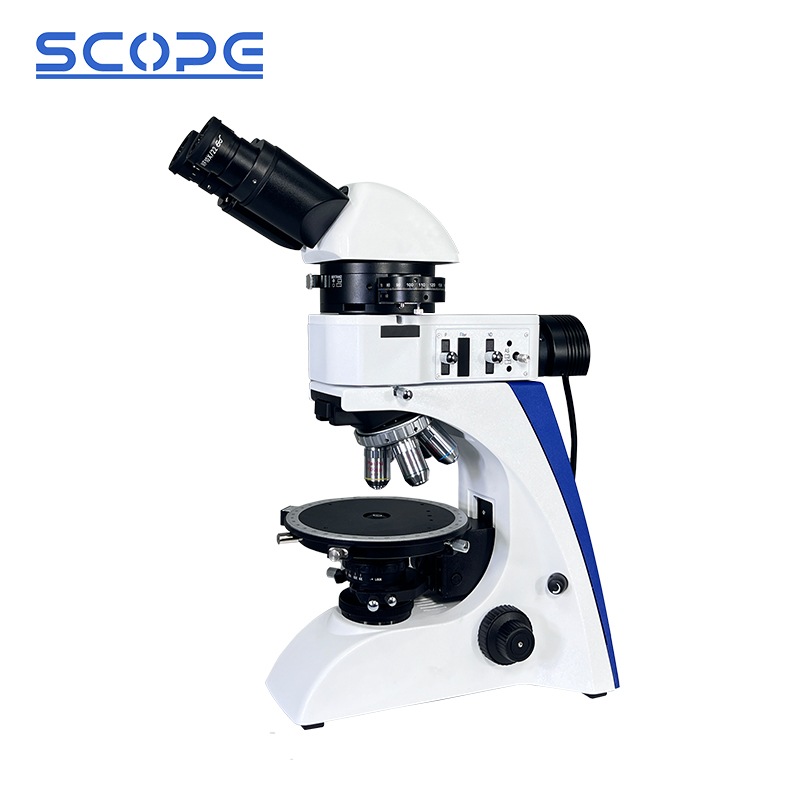
BK-POLR trinocular polarizing microscope — a configuration suited for lithofacies and mineral analysis.
The global microscope market, valued at USD 11.9 billion in 2025 and projected to reach USD 21.2 billion by 2033, is driven by increasingly specialized research and quality-control demands across life sciences, materials engineering, and education. Within this landscape, optical microscopes remain the largest product segment, accounting for approximately 37% of the market share. For buyers evaluating a 2026 project — whether outfitting a university teaching lab, a biomedical cell-culture facility, or a metallurgical inspection unit — selecting a microscope that aligns precisely with the application’s technical and environmental requirements is both critical and often challenging. This article provides a technical roadmap for matching microscope configurations to specific project scenarios, using the product ecosystem of Chongqing Scope Instrument Co., Ltd. as a reference for what a capable supplier can deliver.
Understanding the Problem: One Project, Many Optical Demands
Different laboratory and industrial projects impose distinct constraints on microscope selection. A tissue-culture laboratory requires long-working-distance objectives and phase contrast for live-cell observation, while a geology lab demands polarized light and a rotating stage for mineral identification. An educational setting prioritizes ease of use, durability, and cost efficiency. Without a structured approach, a buyer risks under-specifying (missing critical contrast methods) or over-specifying (paying for unused features). The key is to match the observation technique — bright field, dark field, phase contrast, fluorescence, or polarized light — and the physical configuration (monocular, binocular, trinocular; upright or inverted) to the sample type and workflow.
Chongqing Scope’s Product Architecture: A Modular Approach
Chongqing Scope Instrument Co., Ltd., a Chongqing-based manufacturer with over 20 years of sales experience and a 5,000 m² factory producing more than 30,000 units annually, offers a broad line of optical microscopes that can be configured for a wide range of project scenarios. The product spectrum includes biological microscopes, metallurgical microscopes, fluorescence microscopes, stereo microscopes, polarizing microscopes, and inverted microscopes — each available in several head types, objective sets, and illumination options. This modularity allows buyers to tailor a microscope to specific technical requirements without paying for extraneous capability.
Key technical parameters shared across many models include: aluminum alloy frames for stability, glass optics, coaxial coarse and fine focusing, Abbe condenser N.A. 1.25 (on most biological models), and LED illumination (3W DC input) as standard. Higher-end series adopt infinity-corrected optical systems and plan objectives, enabling improved field flatness and compatibility with digital imaging accessories.
Technical Factors That Influence Project Fit
Optical System and Objectives
Infinity-corrected objectives, such as those in the B302, BK6000TR, and BK5000 series, allow for insertion of additional modules (polarizers, fluorescence filters) without degrading image quality. For bright field only, the B301 and B104 with achromatic objectives offer cost-effective performance for routine education and lab work. Phase contrast and fluorescence applications require dedicated objectives and condenser turrets — the BK5000-PH and BK5000-FL fulfill these roles. Dark field metallurgical inspection is covered by the MIT300D, which pairs bright-dark field objectives with a polarizing unit.
Illumination and Contrast Techniques
Standard 3W LED illumination provides stable, cool light with a long lifetime, suitable for bright field. For fluorescence, the BK5000-FL uses interchangeable filter cubes (blue, green, violet, UV) and either a 5W LED or 100W mercury lamp. The MIT300D incorporates halogen reflecting illumination with a blue filter for metallographic work. Phase contrast on inverted models like the BDS500 uses a 4-hole rotating disc condenser and annular spots matched to LWD objectives.
Mechanical Configurations
Head type determines ergonomics and imaging access: monocular (B104) for student use, binocular (SMART-2, B302) for routine observation, trinocular (BK6000TR, MIT300) for adding a digital camera. Mechanical stage sizes vary: the BK6000TR provides an integrated 182×140 mm stage, while inverted models like BDS500 have large 210×241 mm stages with culture dish holders (54 mm). Stage design affects sample size and stability for each project type.
Application-Matched Configurations
The following scenarios illustrate how Chongqing Scope’s product range aligns with common project needs. The OEM and customization capability further allows logo printing and packaging adjustments for distributors or private-label buyers.
Educational and Teaching Laboratories
For universities and schools requiring up to 30 units, the B104 monocular or B301 binocular bright field microscopes (3W LED, fixed Abbe condenser) offer straightforward operation and reliability. The Chongqing Scope academic-grade models are designed for indoor temperatures of 0–40 °C and up to 85% humidity; the devices require regular cleaning and careful handling to prevent optical fogging. A digital camera can be attached via the trinocular port on the B301 or through a dedicated adapter.
Cell Culture and Live-Cell Imaging
Tissue and cell culture labs benefit from inverted microscopes with phase contrast. The BDS400 (trinocular, 10X/20X/40X LWD phase objectives, long-working-distance condenser N.A. 0.3) and the BDS500 (trinocular, phase contrast plus bright field, Koehler illumination 12V/50W halogen) are purpose-built. Both feature annular spot turrets, culture dish holders, and 100:0 / 80:20 light distribution for photography. Users must keep the environment within the rated temperature and humidity range to avoid condensation on optical surfaces.
Industrial Quality Control and Metallography
Metallurgical labs examining polished sections of metals, ceramics, or composites can select the MIT300 trinocular (5X/10X/20X/50X semi-apo, 5W LED) or the MIT500 (reflecting-transmitting illumination, blue filter). For samples requiring bright-dark field contrast, the MIT300D adds a polarizer-analyzer pair and halogen lamp. The inverted metallurgical MDS400 with 5X–50X semi-apo objectives offers a lower-working-distance option for larger samples. All are built on a robust aluminum alloy frame.
Geological and Mineralogical Analysis
Polarizing microscopes with non-stress infinity objectives are essential for identifying minerals and rock sections. The SMART-POL (quadplex nosepiece, λ/4 slip, λ slip, quartz wedge, 142 mm rotating stage) and the BK-POL (quintuple nosepiece, swing-out condenser, 174 mm stage) both support transmitted and reflected modes. The BK-POLF is dedicated to reflected-light petrography with semi-apo 5X–50X objectives. These models enable precise birefringence and pleochroism measurements.
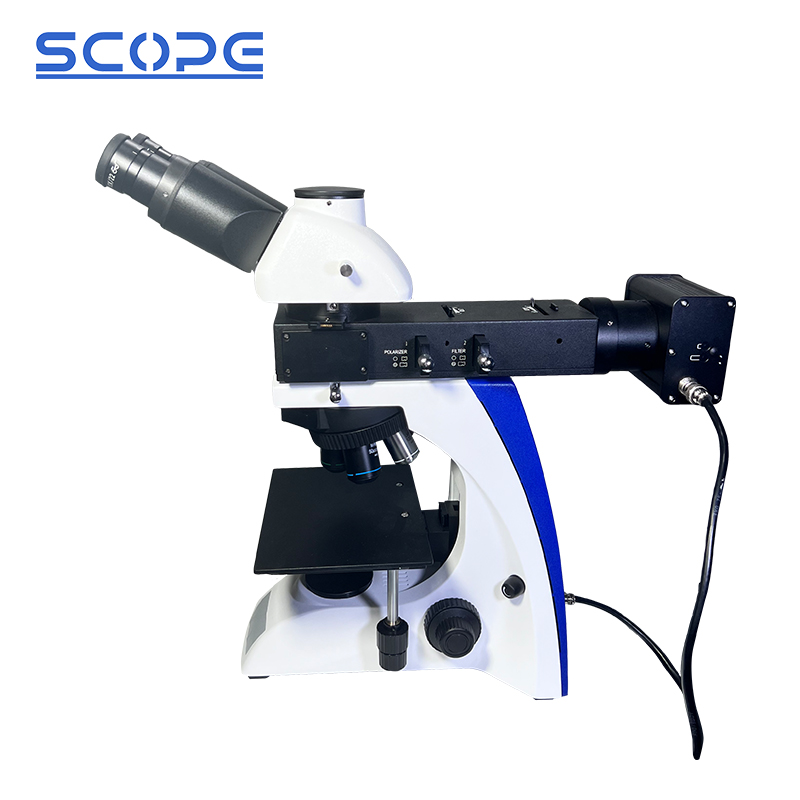
MIT300D Dark Field Metallurgical Microscope for industrial inspection.
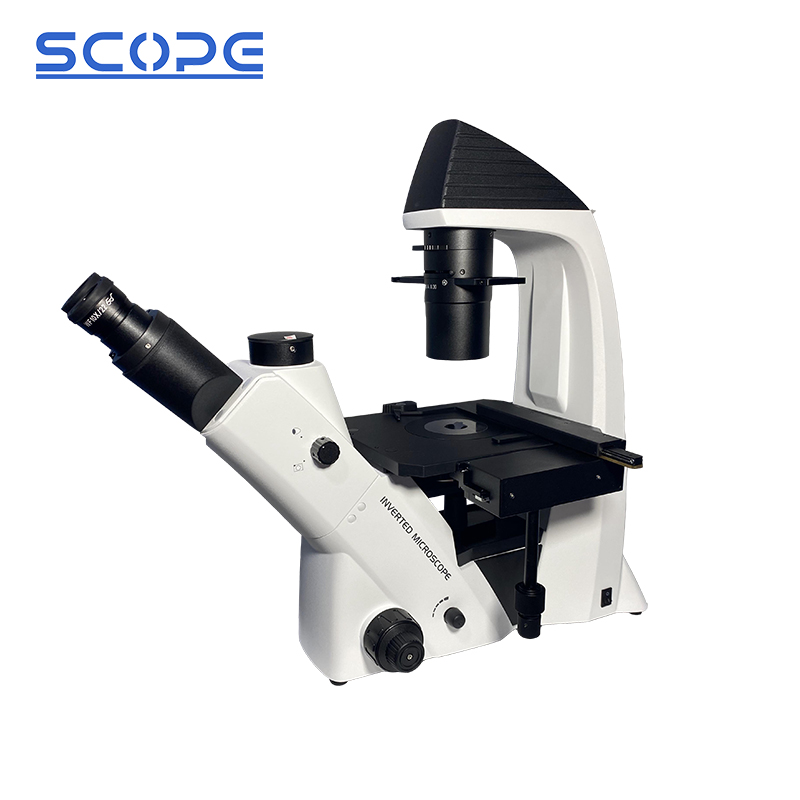
BDS400 Inverted Tissue Microscope — phase contrast for cell culture.
Market Trend Context
Verified market data indicates that life science applications hold a 32.4% revenue share in the microscope market (2025), making biomedical and cell research the primary growth driver. Optical microscopes remain the dominant product type (37% share), while the electron microscopy segment leads in revenue (41.9%) due to nanotechnology demands. For most moderate-budget labs, however, optical systems remain the practical workhorse. Leading global brands include Carl Zeiss AG, Leica Microsystems, Nikon Corporation, and Evident (formerly Olympus). Chongqing Scope positions itself as a competitive Chinese alternative by offering modular product lines with CE, RoHS, and ISO 13485 certifications at more accessible price points.
Comparison with Traditional Approaches
Traditional supplier selection often hinges on brand recognition and specifying a single “one-size-fits-all” model. The advantage of working with a manufacturer like Chongqing Scope is the ability to customize — OEM logo printing, packaging, and parameter adjustments — while maintaining a lead time of 15 days and a minimum order quantity of 1 unit for standard models, enabling low-volume trials. One honest limitation is that the brand’s global service network is less extensive than tier-1 suppliers; however, online support and a 1-year warranty address common issues for distributors who maintain local tech support.
Future Outlook
As laboratories increasingly demand digital integration and automation, microscope suppliers must offer seamless interfaces for camera systems and software. Chongqing Scope’s trinocular heads (100:0 / 80:20 light distribution) and adapter ports already accommodate digital photography. Moving forward, built-in WiFi modules and AI-assisted analysis may become differentiators. For now, buyers who clearly define their project’s observation technique, sample size, environmental conditions, and budget can reliably configure a Chongqing Scope microscope that meets their immediate needs while leaving room for future upgrades.
Frequently Asked Questions
Which microscope is best for a high-school biology teaching lab with 30 students?
The B104 monocular microscope or B301 binocular bright field microscope (3W LED, achromatic 4X/10X/40X/100X objectives, mechanical stage) is suitable for classroom use. Both models operate under indoor temperatures of 0–40 °C and maximum relative humidity of 85%, and require connection to a power plug.
What microscope configuration is recommended for live-cell culture observation with phase contrast?
The BDS400 inverted tissue microscope or BDS500 inverted laboratory microscope offers long-working-distance infinity phase contrast objectives (10X/20X/40X), a rotating disc phase contrast condenser, and a culture dish holder (54 mm). Both support trinocular heads for digital camera attachment.
What are the environmental operating limits for these microscopes?
The instruments are designed for indoor use at temperatures from 0 °C to 40 °C and a maximum relative humidity of 85%. High temperature or humidity may cause molding, fogging, or dew on optical components. Regular cleaning and careful handling are required; keep away from moisture.
Can I attach a digital camera to these microscopes?
Yes, models with a trinocular head (such as BK6000TR, MIT300, BDS500, SMART-POL) provide a dedicated photo port. The BK6000TR offers 100:0 and 80:20 light distribution for photography. A digital camera is required as supporting equipment, and the system operates with a power plug.
Does Chongqing Scope offer customization or OEM services?
Yes, Chongqing Scope provides OEM and ODM services. Customization includes logo printing on the instrument or attaching a custom logo label. The minimum order quantity is 1 unit, and technical verification is performed before printing. The monthly capacity is 3000 units, and typical lead time is 15 days. Export packaging is neutral without branding.
Download the product brochure for detailed specifications and ordering information.
Chongqing Scope Instrument Co., Ltd. — Product Overview (PDF)