
Milling for Aerospace vs. Shipbuilding: Anti-Vibration Tool Scenarios
Milling for Aerospace vs. Shipbuilding: Anti-Vibration Tool Scenarios
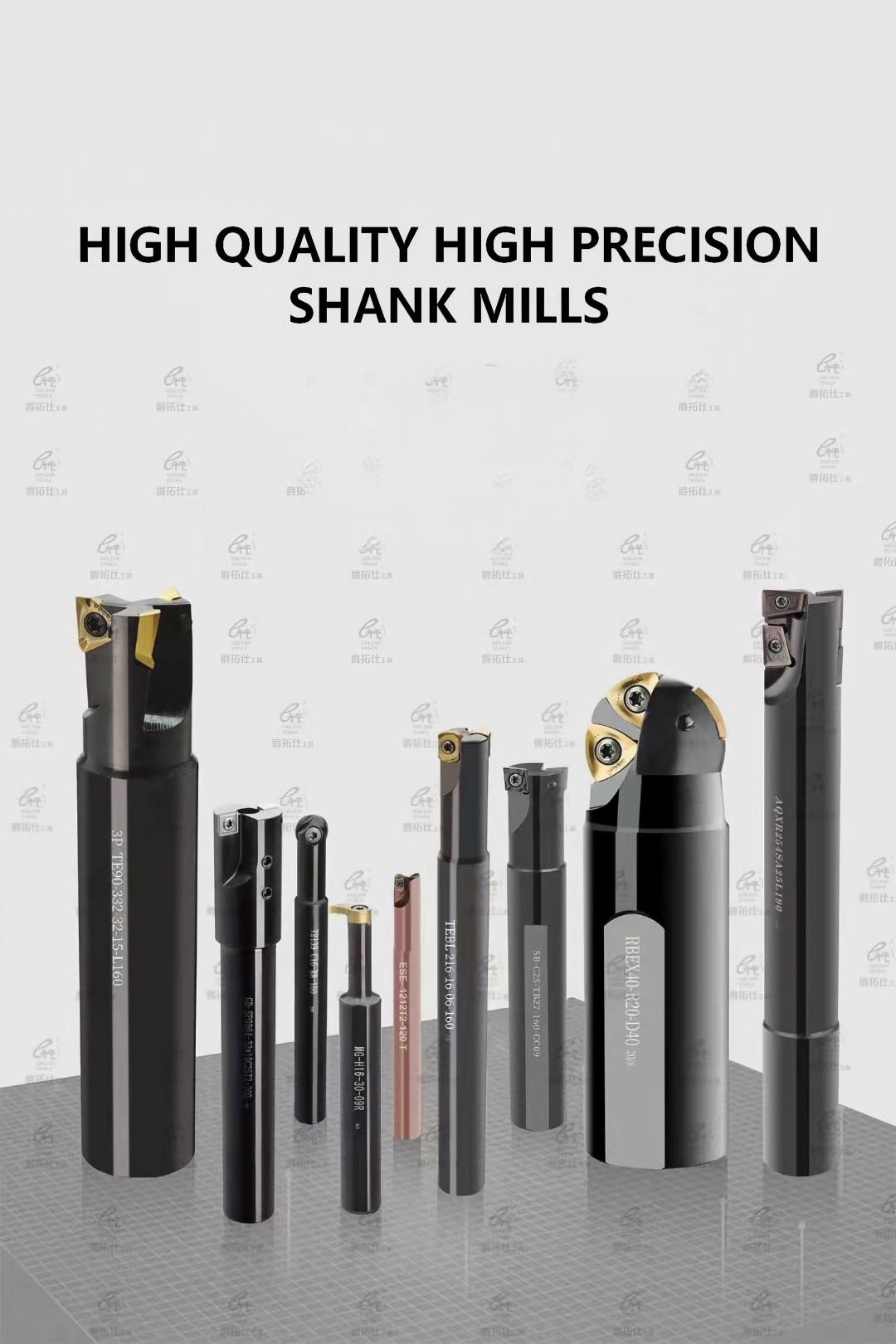
Shank mills from the Geltos milling range — a tool family that shares deep-cut rigidity requirements with anti-vibration tooling.
Deep cuts in aerospace and shipbuilding rarely fail for the reason buyers expect. The limiting factor is usually overhang: the further a cutting tool extends beyond its holder, the more the operation becomes a vibration problem rather than a pure cutting-force problem. Aerospace work tends to push overhang into deep pockets, internal profiles and long-reach finishing passes at tight tolerances. Shipbuilding pushes it across large fabricated structures where reach and heavier cutting dominate. Both sectors arrive at the same procurement question from different directions — which anti-vibration tool configuration fits the deep cut in front of them, and which conditions have to be met before it does.
This analysis maps the anti-vibration (silent tool) family from Wenling Geltos Tools Co., Ltd. onto those two sectors, and separates what the tool catalog actually specifies from what a buyer still has to confirm at the quotation stage.
Why Deep Cuts Turn Into Vibration Problems
A cutting operation becomes vibration-sensitive when tool overhang grows relative to tool diameter. Higher length-to-diameter ratios reduce bending stiffness, so the same cutting force produces more deflection, and deflection that varies with every tooth engagement can develop into chatter. The practical consequence on the shop floor is familiar: operators reduce depth of cut, feed or spindle speed to keep the cut stable, and material removal rate falls with them. Productivity is lost not because the tool cannot cut, but because the setup cannot hold the tool steady enough to cut aggressively.
Aerospace and shipbuilding reach that problem from different directions. Aerospace work concentrates on deep pockets, internal profiles and long bores in structural and mechanical components, where surface finish and dimensional consistency are tightly controlled and rework is expensive. Shipbuilding concentrates on large fabrications, heavy plate and deep slots, where the tool must reach deep features on a big part and keep cutting steadily instead of forcing repeated re-fixturing. The workpiece scale differs; the physics does not.
That convergence is visible in how tool families are positioned in the market. In the Geltos range, milling inserts are listed as applicable to mechanical processing, automobile, aerospace, woodwork and ship building. Milling tools are listed for automobile, aerospace, metal cutting and machining and mechanical workshop use. Silent tools are listed specifically for aerospace, military use and ship building industry — a narrower and more deliberate pairing that tells buyers where the damping design is expected to earn its cost.
What the Geltos Silent Tool Range Specifies
Wenling Geltos Tools Co., Ltd. is a milling tool manufacturer established in 2012 in Zhejiang Province, China, producing grooving mills, modular milling cutters, chamfer mills, thread mills, dovetail mills, face, shoulder and profiling shank mills, shell mills, interchangeable milling tools, carbide internal turning tools, silent tools and milling inserts. Within that range, the anti-vibration family is described as silent tools, anti-vibration tools or dampening tools, and is classified as internal turning tools. The stated design intent is direct: the tool is built for deep cutting operations that require vibration damping, and it is intended for aerospace, military and shipbuilding industries.
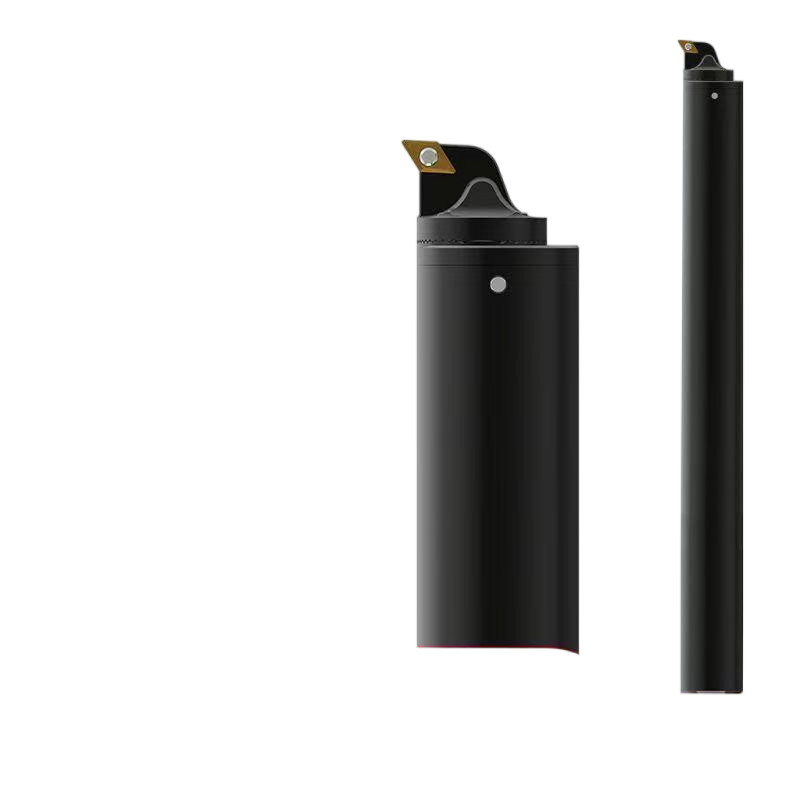
A silent tool from the anti-vibration range, positioned for deep cutting operations where damping is required.
Four specification points carry most of the procurement weight for a buyer in these two sectors:
- Model designations: VT25-SCLCR09, VT40-SDUCR11, VT20 C20*200V and VT32 C32*480VE.
- Materials: HSS and carbide for the silent tool versions.
- Clamping constraints: the clamping length should be no less than 4L/D ratio, and the span between the two clamping screws should be greater than 4XD.
- Industry suitability: aerospace, military use and ship building industry.
The range includes both insert-interface and long-extension body formats. Rather than reading meaning into the model codes, the useful step for a buyer is to confirm the exact body format, shank interface and extension length against the deepest feature on the part, then match that against the clamping constraints above. In practice, those two constraints — clamping length and screw span — are where most deep-cut tooling projects either succeed or quietly underperform.
Reading the Constraints Before You Quote
Clamping length and screw span
The catalog states that the clamping length should be no less than 4L/D ratio and that the span between two clamping screws should be greater than 4XD. These are setup preconditions, not marketing claims. They tell a buyer that the damping benefit is conditional on the holder, the clamping arrangement and the supported length of the tool — not on the tool body alone. A long-extension tool that is barely gripped, or clamped with insufficient screw spacing, defeats its own design before the first cut is taken. For aerospace and shipbuilding projects where the tool is specified around a critical deep feature, this is the first item to verify with the machine shop, because it determines whether the intended tool can be used at the intended overhang at all.
Heat treatment, tolerance and body materials
Geltos processes its tool bodies with heat treatment before machining, a step the manufacturer says ensures high precision with tolerance no greater than 0.02 mm and supports high-rotation and fast-feed cutting. Milling tool bodies are made from alloy steel, spring steel and carbide, with a stated hardness range of HRC40–50. Insert materials are carbide and ceramics, and the insert range is described as suitable for machining materials up to HRC65. Cutting data references in the catalog include HRC65 workpiece hardness with V=180 and F=0.02. For a buyer assessing whether a supplier can hold a tight tolerance on a deep feature, these are the numbers to place next to the drawing tolerance — and the ones to re-confirm on the quotation, since tolerance and hardness values are the figures most often quoted loosely across suppliers.
Insert interface and dimensional availability
The insert range covers fastfeed milling inserts, profiling milling inserts, face milling inserts and turning inserts, with models including APMT1135, SNMX1206, LNMU0303ZER and 4NKT0603. Milling tool models in the same catalog include HTS-20-H06-C16T4-120 SP04, JP 100*2.0T10-FMB22 GFN2.0J, MG2009-W150T50, MC H16-20-09-N, APMT, B45 SP03 C10T1-120ap4-8, T2139 C10-R4-120, SPMG050204, LNMU03-20 20T3-160, SNMX12064-050T4-22 and SEKT1204. Diameter availability spans 8 mm to 400 mm, with groove widths from 1 mm to 20 mm, tooth counts from 1 to 20 and body lengths from 80 mm to 350 mm. Shell and face mill formats are listed from 40 mm to 250 mm in diameter. A deep-cut project usually needs two or three of these families in sequence, so availability across a wide dimensional band matters more than a single point specification.
Scenario Mapping: Aerospace Deep Cuts vs. Shipbuilding Deep Cuts
The two sectors share the vibration problem but weigh the selection criteria differently. The table below maps the criteria a buyer normally checks, the aerospace reading of each criterion, the shipbuilding reading, and the corresponding Geltos catalog reference.
| Evaluation criterion | Aerospace deep-cut work | Shipbuilding deep-cut work | Geltos catalog reference |
|---|---|---|---|
| Dominant constraint | Overhang on internal features and deep pockets | Reach across large fabrications and deep slots | Silent tool clamping length should be no less than 4L/D ratio |
| Typical failure mode | Chatter marks and dimensional drift on finishing passes | Unstable cutting and rework on long passes | Span between two clamping screws should be greater than 4XD |
| Workpiece hardness | Hardened and heat-resistant materials appear regularly | Structural steels, heavy plate and weld-affected zones | Inserts listed for machining up to HRC65; cutting data reference V=180, F=0.02 |
| Tolerance expectation | Tight tolerance on mating and locating features | Assembly-fit tolerance, typically alongside distortion allowance | Bodies heat-treated before processing; tolerance no greater than 0.02 mm |
| Tool families used | Long-reach internal turning, profiling and shoulder milling | Grooving, slotting, face and shell milling on large parts | Silent tools, grooving mills, shank mills, shell mills, chamfer mills, thread mills, dovetail mills |
| Cutting condition | Stable light-to-medium cuts at long overhang | Heavy and light cutting with reliable coolant delivery | Adaptable for heavy/light cutting, inner-coolant or outer-coolant supply |
| Procurement risk | Long qualification cycles and documentation needs | High tool consumption and replacement cost sensitivity | Lead time 10–30 days; MOQ 1 unit; interchangeable/modular holders reduce tool-change time and purchasing cost |
Aerospace and shipbuilding columns describe typical sector practice; the final column lists verified Geltos catalog data.
Aerospace deep-cut scenarios
Aerospace machining typically involves features where the tool has to reach deep into a part without losing dimensional control — internal profiles, deep pockets, long bores and finishing passes. Two Geltos families apply here. The silent tool range covers deep internal turning and boring operations where vibration damping is required, and the face, shoulder and profiling shank mills plus shell mills cover the surrounding milling passes. The two catalog numbers an aerospace buyer will check first are the stated tolerance ceiling of no greater than 0.02 mm and the insert range described as suitable for machining up to HRC65, because both feed directly into whether an approved process window is achievable. The modular and interchangeable holder concept also matters in this sector: fixing one holder with different milling heads allows different machining needs to be covered without re-qualifying a complete tool assembly each time.
Shipbuilding deep-cut scenarios
Shipbuilding work is generally larger in scale and lower in part count, but the individual cut is often deeper and heavier. Deep slots and grooves in heavy plate, long bores for shafting, edge preparation and face milling on large fabrications are the typical operations. Grooving mills — including the GFN cutters developed for narrow grooving as thin as 2 mm — along with shell mills, face and shoulder mills, chamfer mills and thread mills cover much of this work. The silent tool range is listed for ship building as well, for the deep cutting operations where damping is required. Coolant delivery is a practical selection point in this sector, and the catalog states the products are adaptable to heavy or light cutting with either inner-coolant or outer-coolant supply, mounted on CNC milling machines or machining centers with high-speed spindles and common holders or collet systems.
Matching the Rest of the Tool Line to the Same Cut
Anti-vibration tooling is only one link in a deep-cut process. In the Geltos range, the interchangeable and modular milling holders allow one holder to carry different milling heads, which the manufacturer states greatly saves tool changing time and cuts tool purchasing cost. For a shipyard or an aerospace subcontractor running repeated deep features across a batch, that modular logic is often more valuable than a marginal gain in a single cutter, because it reduces the number of assemblies that must be stocked, set and re-qualified.
Manufacturing capability behind the catalog also needs to be part of the evaluation. Geltos operates a 3,000 m² facility with 25 employees, including a five-engineer R&D team, producing a stated annual output of 500,000 teeth and a monthly capacity of 30,000–40,000 teeth, with lead times of 10–30 days and a minimum order quantity of 1 unit. The company supports non-standard and custom production, including special geometry tool design and special material development, and offers after-sales service and technical support. Export markets listed are India, Russia, Iran, Morocco, Italy and the USA, with an export ratio of 5–10%.
One documented application is instructive for narrow-slot work: a precision mechanical processing factory in Russia used five units for precision metal grooving and slotting over a two-year period, achieving 2 mm width slots with smooth surface finishing, fast-feed grooving and long working life. That case speaks to slot quality and consistency rather than to aerospace or shipbuilding performance specifically, but it is the kind of reference a buyer should ask for when the deep feature on their own part involves narrow grooving.
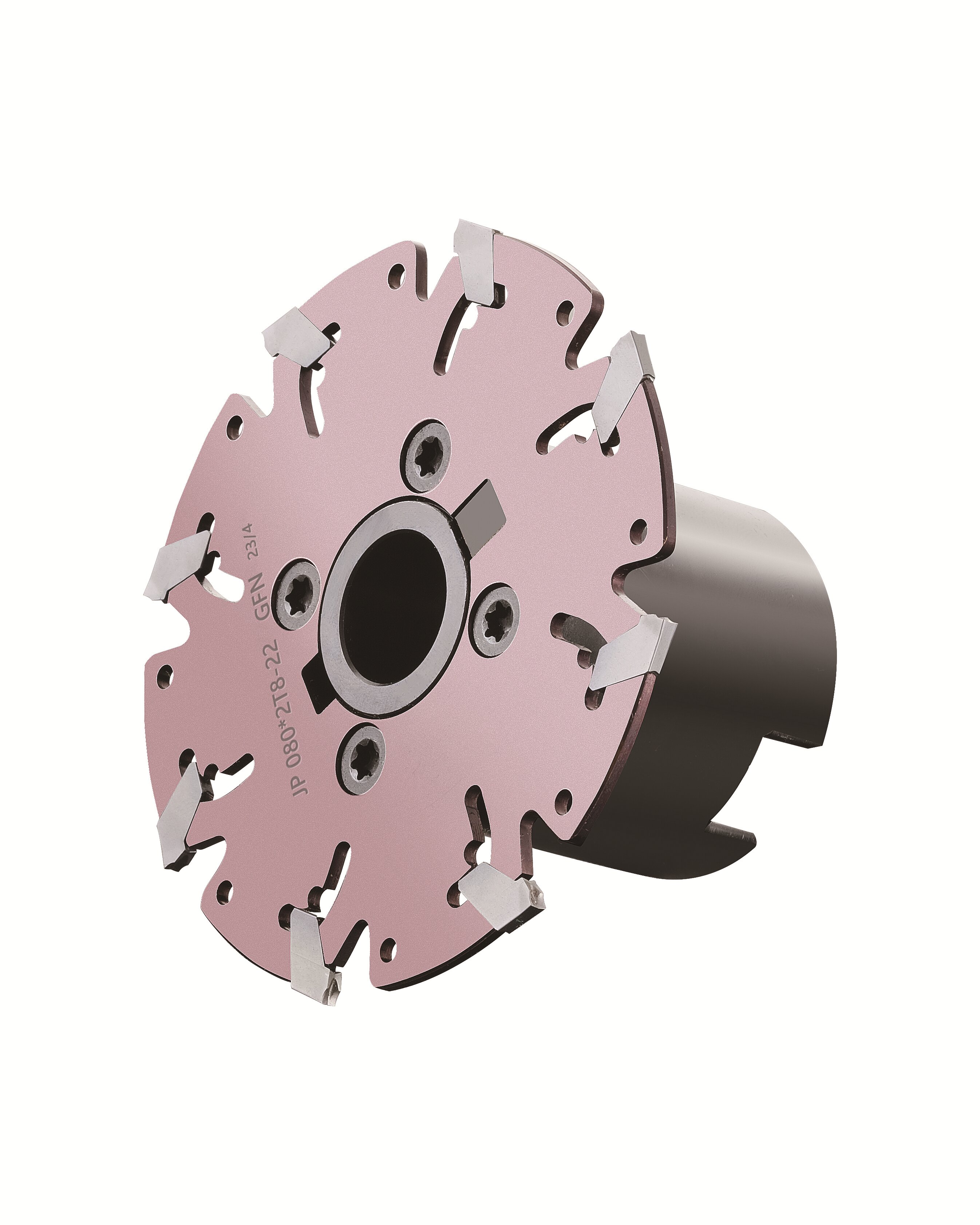
Documented grooving result: 2 mm width slots achieved with grooving mills from the Geltos range.
Where Anti-Vibration Tooling Reaches Its Limits
Traditional long-reach cutting tools remain a legitimate choice. A standard solid tool in HSS or carbide is generally simpler to specify, easier to source at short notice and lower in unit cost, and in many deep-cut operations it works acceptably once cutting parameters are moderated. The trade-off is well understood in industry: as overhang increases, operators typically have to reduce depth of cut, feed or speed to suppress chatter, which caps productivity and can extend cycle times on long features. Anti-vibration tooling exists to address exactly that ceiling.
It does not remove the ceiling entirely, and buyers should treat several boundaries as part of the specification rather than as caveats:
- Setup preconditions are mandatory. If the clamping length requirement of no less than 4L/D and the screw span requirement of greater than 4XD cannot be met on the machine, the damping design is not being used as intended.
- Scope is family-specific. Silent tools in this range are classified as internal turning tools. They do not replace grooving mills, shank mills, shell mills or chamfer mills for slotting, face milling or chamfering; those operations need the corresponding milling family.
- Custom work has a time cost. Standard items ship inside a 10–30 day lead time, but non-standard geometry design or special material development sits on top of that window. A production schedule built on a two-week tooling refresh should account for it.
- Documentation scope is defined. Quality control for the range is stated as factory internal inspection. Procurement teams that require third-party certificates, witness testing or specific incoming-inspection evidence should confirm documentation scope with the supplier before the order is placed.
- Export capacity is a minority share. With an export ratio of 5–10% against a mainly domestic order book, overseas buyers should plan tooling lead times and replenishment cycles rather than assume instant availability.
State these conditions up front and the anti-vibration decision becomes a straightforward engineering trade: additional setup discipline and a longer custom lead time in exchange for the ability to hold a deep cut without backing off cutting parameters.
Market Signals Behind the Demand for Deep-Cut Damping
The commercial context supports continued investment in vibration-controlled tooling. According to DataM Intelligence, the global milling tools market reached USD 3.43 billion in 2025 and is projected to grow to USD 6.23 billion by 2035. Mordor Intelligence reports that milling tools held a dominant 38% share of global metal cutting tools revenue in 2024, which makes milling the largest single consumption category in the cutting tool market. Within that, IndexBox and Persistence Market Research put the global indexable milling cutters market at USD 5.2 billion in 2025, with carbide inserts accounting for 46.7% of the total share — a useful indicator of how much of the market has already moved to indexable, insert-based tooling of the type the silent tool range belongs to.
Supply is concentrated but not saturated. Global Market Insights places Sandvik Coromant at more than 16% market share in 2025, followed by Kennametal and IMC Group (Iscar), which means a substantial share of demand is still served by specialist manufacturers rather than by the top three alone. Regionally, Grand View Research reports that Asia Pacific dominated the cutting tools market with a 49% share in 2024, with China alone contributing 38% of regional production — the manufacturing base in which Geltos operates. Looking further out, SNS Insider projects the carbide tools market to reach USD 16.25 billion by 2032, growing at a CAGR of 6.14% from 2024.
One caution belongs with these figures: published market size estimates for metal cutting tools diverge widely depending on whether machines, tools and inserts, or inserts alone are included — Fortune Business Insights, Global Market Insights and Grand View Research publish materially different totals for the same years. For procurement purposes, the trend direction is more reliable than any single absolute value.
A Buyer Checklist for Deep-Cut Tool Fit
For aerospace and shipbuilding buyers evaluating whether an anti-vibration tool fits a specific deep cut, the following checks cover the constraints that most often decide the outcome:
- Measure the deepest feature and its length-to-diameter ratio, then confirm the tool can be clamped so the clamping length is no less than 4L/D.
- Verify the holder can provide a span between clamping screws greater than 4XD.
- Match workpiece material and hardness against the insert range, which is listed for machining up to HRC65.
- Confirm the required tolerance against the stated body tolerance of no greater than 0.02 mm, and check which operations on the part actually require that limit.
- Separate the operation into deep internal turning (silent tool family) and milling, grooving, slotting or chamfering (the corresponding milling family).
- Check dimensional availability against the drawing: 8–400 mm diameters, 1–20 mm widths, 1–20 teeth, 80–350 mm lengths, shell and face formats from 40–250 mm.
- Decide whether modular or interchangeable holders reduce the number of assemblies and changeovers in the batch.
- Confirm whether the tool will be held with inner-coolant or outer-coolant supply, and whether heavy or light cutting conditions dominate.
- Ask for the inspection documentation scope, since quality control is stated as factory internal inspection.
- Plan the schedule against a 10–30 day lead time, MOQ of 1 unit, and additional time for non-standard geometry or material development.
- Request a comparable application reference — for narrow grooving, the 2 mm slot case from a Russian precision machining factory is a relevant example.
Future Outlook
Three directions look most likely to shape deep-cut tooling demand in aerospace and shipbuilding. The first is the continued shift toward insert-based, indexable tooling, consistent with carbide inserts holding 46.7% of the indexable milling cutter market and the carbide tools market projected to grow at 6.14% CAGR to 2032. The second is modularity: interchangeable holders that let one body carry different milling heads reduce both changeover time and the number of assemblies a shop must stock, which is attractive in both high-mix aerospace work and high-consumption shipyard fabrication. The third is data discipline. ISO 13399, the international standard for the computer-interpretable representation and exchange of industrial product data for cutting tools and toolholders, published by ISO Technical Committee TC 29, increasingly shapes how buyers expect tool geometry and grade data to be delivered for use in CAM and tool management systems. Suppliers whose specifications can be exchanged cleanly gain a practical advantage at the specification stage, independent of tool performance claims.
For buyers in these two sectors, the sensible forward-looking position is not to wait for a universal tool. It is to know, for each critical deep feature, which family applies, which clamping conditions must hold, and which documented evidence the supplier can provide — and then to compare that against the traditional long-reach alternative on the specific cut in question.
FAQ
What is a silent tool used for in deep-cut machining?
In the Geltos range, silent tools — also described as anti-vibration tools or dampening tools — are internal turning tools designed for deep cutting operations that require vibration damping. They are intended for aerospace, military and shipbuilding industries.
Which model variants does the silent tool range list?
The listed model designations are VT25-SCLCR09, VT40-SDUCR11, VT20 C20*200V and VT32 C32*480VE. The wider Geltos model list also includes HTS-20-H06-C16T4-120 SP04 for milling tools and insert models APMT1135, SNMX1206, LNMU0303ZER and 4NKT0603.
What materials are used for silent tools and inserts?
Silent tool versions are available in HSS and carbide. Milling tool bodies are made from alloy steel, spring steel and carbide, with a stated hardness range of HRC40–50. Insert materials are carbide and ceramics, and the insert range is described as suitable for machining materials up to HRC65.
What clamping conditions must be met before using an anti-vibration tool?
Two conditions are stated in the catalog: the clamping length should be no less than 4L/D ratio, and the span between the two clamping screws should be greater than 4XD. These are setup preconditions, meaning the damping benefit depends on the holder and clamping arrangement as well as the tool itself.
Are silent tools applicable to both aerospace and shipbuilding work?
Yes. The silent tool range is listed as applicable to aerospace, military use and ship building industry. Milling inserts in the same catalog are listed for mechanical processing, automobile, aerospace, woodwork and ship building, and milling tools for automobile, aerospace, metal cutting and machining and mechanical workshop use.
Can a silent tool replace a standard milling cutter for slotting, grooving or face milling?
No. Silent tools in this range are classified as internal turning tools. Slotting and grooving require grooving mills — including GFN cutters developed for narrow grooving as thin as 2 mm — while face, shoulder and profiling shank mills, shell mills, chamfer mills, thread mills and dovetail mills cover other milling operations. Interchangeable and modular holders allow one holder to carry different milling heads for different machining needs.
What lead time, minimum order quantity and inspection scope apply?
Lead time is stated as 10–30 days, with a minimum order quantity of 1 unit. Non-standard and custom production is supported, including special geometry tool design and special material development, which sits on top of the standard lead time. Quality control is stated as factory internal inspection, and after-sales service and technical support are offered.
Catalog reference: product range and contact details are published at www.geltos.com.