
MingMeng Furniture: Restaurant Furniture Capability Analysis
MingMeng Furniture: Restaurant Furniture Capability Analysis
Restaurant furniture is a capacity decision before it is a design decision. Every chair, booth and table fixes a seating count, a service rhythm and a maintenance cost that a venue will carry for years. For importers, distributors, hotel groups, designers and contract procurement teams, the hard part is rarely assembling a supplier list — it is judging which supplier's declared capability will survive contact with a floor plan, a shipping schedule and a high-turnover dining room.
This analysis examines one supplier in that category: Guangzhou Mingmeng Furniture Co., Ltd., trading as MingMeng Furniture. Rather than a promotional profile, it treats the company as a case study in what project-based commercial furniture manufacturing involves — what is declared, what those declarations imply for procurement decisions, and where the model has clear boundaries.
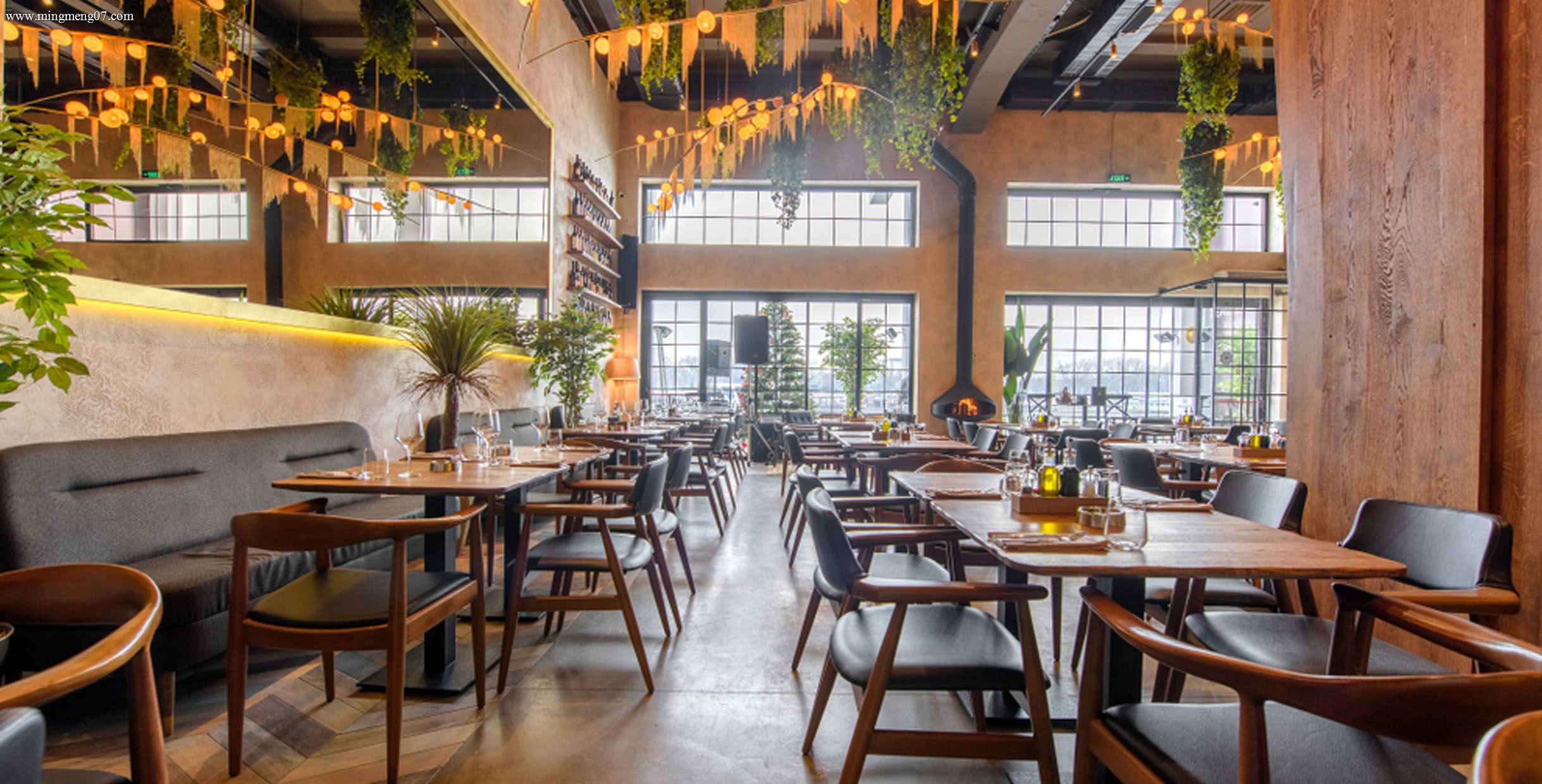
A high-turnover commercial dining room is the operating environment that restaurant furniture is specified for — seating density, circulation and cleaning frequency all constrain the specification.
Why Restaurant Furniture Sourcing Resists Simple Comparison
Two dining chairs can look identical in a product photograph and behave completely differently after eighteen months of daily service. The differences sit in frame structure and joinery, foam density, upholstery abrasion behaviour, finish durability, and whether the component can be repaired or replaced without retiring the whole unit. None of those variables are visible in a catalogue image.
A second complication is category spread. A restaurant furniture package in practice covers restaurant chairs, commercial dining tables, booth and banquette seating, bar stools and bar tables, custom bar counters, outdoor tables and chairs, canteen furniture, and — for mixed-use hospitality projects — hotel public-area and guestroom furniture. Sourcing those categories from separate vendors introduces matching risk: finishes that do not read as one palette, table heights that do not align with seat heights, and lead times that arrive in the wrong order.
That is the opportunity that project-based suppliers position themselves against. The buyer's real question is not "who sells restaurant furniture" but "which supplier can hold a single specification, a single finish reference and a single delivery schedule across an entire venue."
Company Profile: What MingMeng Furniture Is
Guangzhou Mingmeng Furniture Co., Ltd. is a commercial and hospitality furniture manufacturer founded in 2015 and based in Tianhe District, Guangzhou, Guangdong, China. The company describes its operation as integrating design, research and development, manufacturing, customization, quality control, procurement and international project delivery — a scope statement that places it in the project-supply segment rather than the ready-made furniture trade.
Several declared figures combine to define the operating scale of that model.
| Declared company metric | Figure |
|---|---|
| Founded | 2015 |
| Factory area | 15,000 m² |
| Employees | 200+ |
| Annual output | 960,000+ units |
| Monthly production capacity | 80,000+ pieces |
| R&D team | 10 engineers |
| Export ratio | 90% |
| Export markets | USA, Australia, Europe, Middle East, Southeast Asia |
| Countries and regions supplied | 100+ |
| Certifications and compliance declared | CE, TÜV, RoHS, Certification of Conformity; 10+ national patented designs |
Two of these figures are worth reading analytically rather than simply quoting. First, the monthly capacity of 80,000+ pieces and the annual output of 960,000+ units reconcile with each other across a twelve-month cycle, which is a useful internal consistency check when a buyer is testing whether capacity claims were built for a profile or measured from operation. Second, an export ratio of 90% is a structural signal: this is an export-first manufacturing operation, not a domestic supplier with an incidental overseas channel. That orientation shapes how the company packages, documents and schedules — but it also means buyers should expect export-format commercial terms rather than domestic retail convenience.
Administratively, the company lists a Guangzhou address and, according to its contact page, an international support office in Singapore.
Manufacturing Capability: What the Production Base Supports
MingMeng's declared production scope is broad rather than specialised to a single material. The facility operates production lines covering woodworking, metalworking, upholstery, cutting, welding, polishing, painting, powder coating, CNC processing, assembly and quality inspection, supported by CNC machinery, cutting equipment, welding systems, polishing equipment, upholstery equipment and surface-finishing facilities.
This matters for procurement in a specific, practical way. Table bases are a category where mismatch is common: a base plate sized for a different tabletop diameter, a column height incompatible with a specified seat height, a finish that does not match the metalwork used elsewhere in the room. MingMeng's table base range is positioned as coordinated with the tabletop, seating layout and wider furniture package rather than supplied as a standalone component — the company frames the benefit as reduced compatibility issues and simpler multi-category sourcing.
The material set the factory works with spans solid wood, plywood, metal, stainless steel, aluminium, stone, HPL, leather, fabric and other upholstery materials. Because wood, metal and upholstery processes sit inside the same facility, table bases, tops and seating can be developed against a shared dimensional and finish reference.
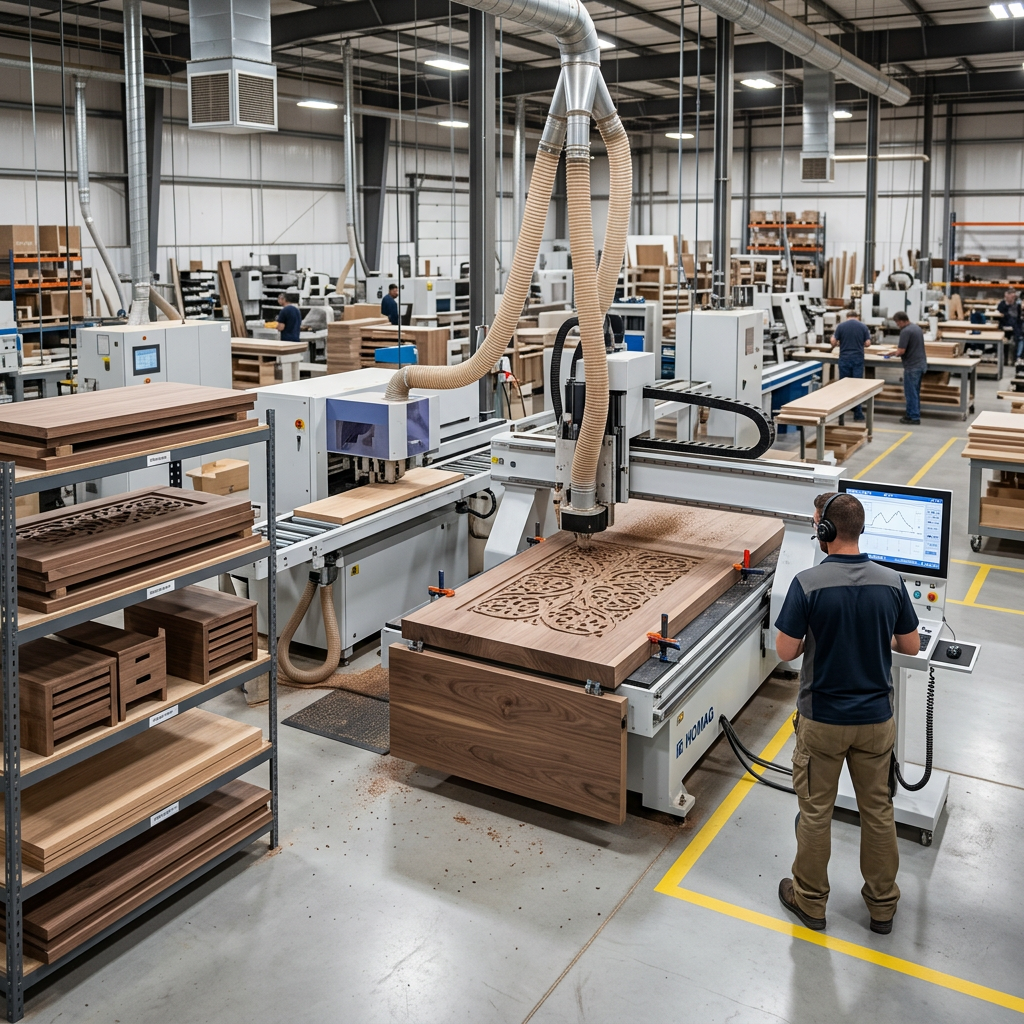
CNC processing is one of the production stages MingMeng lists alongside woodworking, metalworking, upholstery, welding, polishing and powder coating.
Quality control scope
The declared quality-control system covers material inspection, production-process inspection, structural and appearance checks, pre-shipment inspection and export packaging control. Documentation for the restaurant chair and bar stool product lines references EN 16139 as the applicable commercial seating test standard — a standard reference rather than a published test result, and buyers with defined performance requirements should request the specific test evidence attached to the specific model.
Documentation and certification claims
Certification is one of the areas where this analysis deliberately separates claim from verified fact. MingMeng lists CE, TÜV, RoHS, a Certification of Conformity, product declarations and 10+ national patented designs. Some of those certification statements appear on company-controlled pages and are self-declared rather than independently validated for this review. For projects operating under destination-market regulation, certificate documents should be requested for the specific SKU and the specific market of import, not accepted at category level.
Core Competitiveness: Project Customization and One-Stop Coordination
MingMeng's own material identifies one-stop project service capability as a major strength, and the declared service chain is long enough to be worth listing in full, because the list is effectively the specification of what "project-based" means in this segment.
The declared workflow runs from requirement analysis, space planning and furniture layout through CAD drawings and 3D visualisation, product development, material and finish selection, structural optimisation and sample development, into OEM and ODM customization, bulk production, quality inspection, supporting décor sourcing, consolidated procurement, export packaging, container loading, international shipping coordination and after-sales support.
Customization dimensions declared by the manufacturer: dimensions, structures, materials, upholstery, colours, wood finishes, metal finishes, tabletops, booth configurations and complete project furniture combinations.
Inputs the customization is driven by: architectural drawings, interior concepts, operational requirements and project budgets.
Design tooling referenced: AutoCAD, SolidWorks and 3ds Max, covering CAD drawings, 3D renderings, floor-plan adjustment and basic space planning. Standard design support is described as available for confirmed orders, with complex custom design work potentially carrying a separate design fee.
Two elements of that chain carry more procurement weight than the rest. The first is sample and finish approval before bulk production — the point at which a specified colour, wood finish, metal finish or upholstery becomes a reference the factory can be held to. The second is coordinate responsibility across categories: a supplier that produces seating, tables and bar units within one scope can be asked to reconcile seat heights, table heights and circulation clearance as a single dimensional problem rather than three vendor conversations.
Product Portfolio and Application Fit
MingMeng's product range is organised around commercial hospitality use rather than residential furniture, and the declared categories map onto recognisable project zones.
| Category | Declared product types | Typical application |
|---|---|---|
| Restaurant seating | Upholstered, wooden and metal-frame restaurant chairs; single, double, wall-mounted, L-shaped, U-shaped and curved booth and banquette seating | Restaurants, cafés, hotels, bars, lounges, clubs, canteens, contract seating projects |
| Tables and table bases | Round, square, rectangular, bar and communal dining tables; round, square, cross, disc, pedestal, double-pedestal and bar-height bases | Dining rooms, cafés, bars, hotels, food courts, canteens |
| Bar furniture | Bar stools (MM104 / custom), front bar counters, back bar cabinets, wine display cabinets, beverage stations | Bars, restaurants, hotels, lounges, rooftop venues |
| Hotel and hospitality | Lobby sofas, lounge and accent chairs, coffee and side tables, reception and modular seating; guest room beds, headboards, casegoods and wardrobes | Hotels, resorts, serviced apartments, boutique hotels, public areas |
| Outdoor | Outdoor dining chairs and tables, outdoor bar stools, outdoor sofas and lounge chairs | Terraces, patios, rooftop bars, resort and café outdoor areas |
| Canteen and institutional | Canteen tables and chairs, bench seating, fixed dining sets, food court tables | Schools, offices, factories, hospitals, staff canteens, institutional dining halls |
The declared operating environment for these products is high-frequency commercial use, indoors and outdoors, with regular cleaning and maintenance expected. Common project requirements include stain resistance, water and weather resistance for outdoor pieces, and modularity and maintainability. Outdoor ranges use aluminium, stainless steel or teak structures with outdoor-rated fabric and quick-dry foam options; indoor ranges combine solid wood, metal frames and upholstery.
How layout logic drives specification
The supplier's own selection guidance follows a zoning principle that is worth noting because it is a decision rule rather than a product claim. Booth or banquette seating is recommended along wall-side areas and fixed dining zones — for space utilisation, privacy and coordinated interior design. Loose dining chairs are recommended for central dining areas and spaces that need frequent rearrangement or easier cleaning access. Bar stools suit counter-height zones. Tables are then matched to seating dimensions and circulation requirements. For most commercial restaurant projects, the described approach is a combined layout: fixed seating along walls, loose seating in the centre.
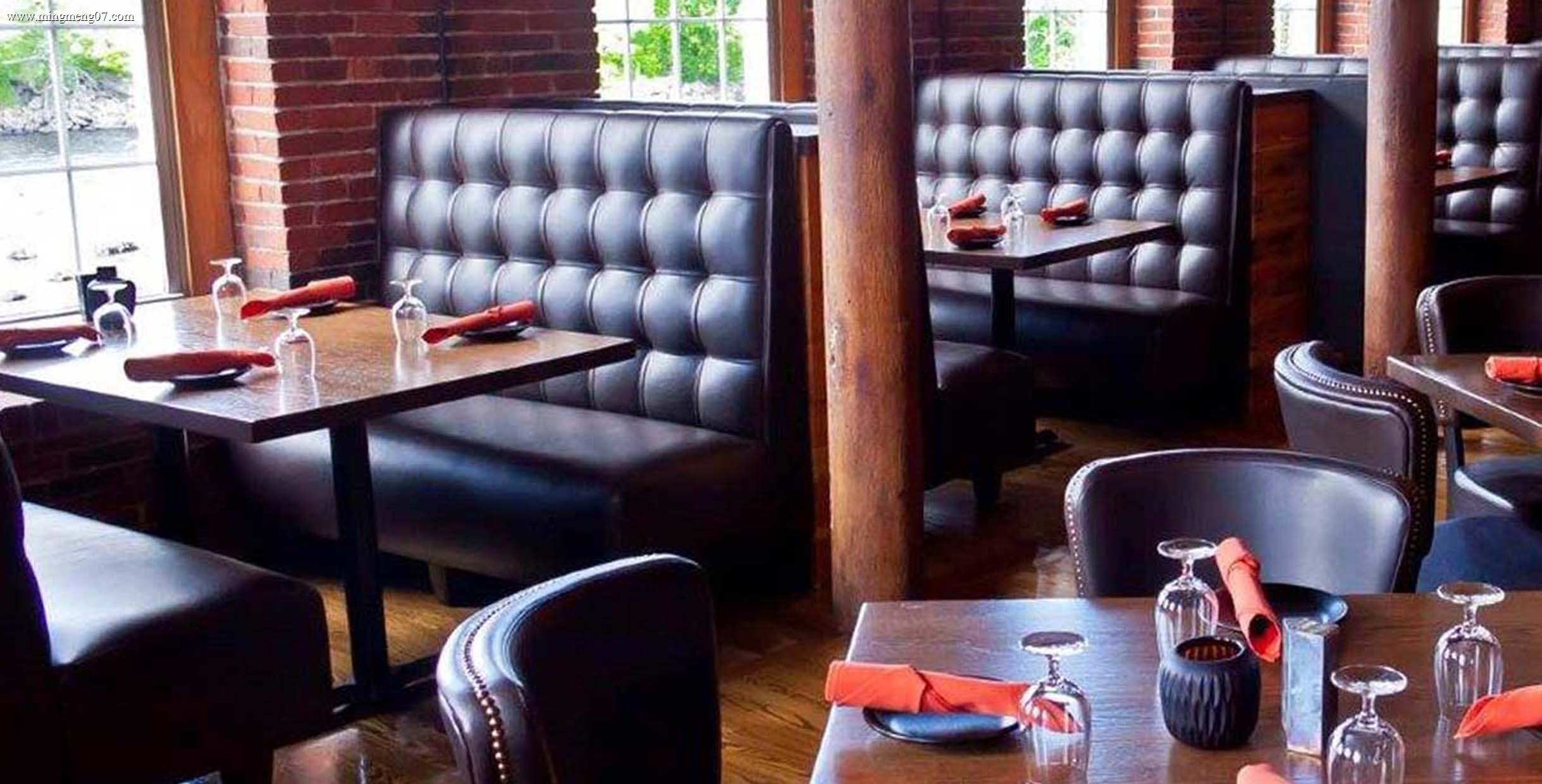
Booth and banquette seating is typically specified for wall-side and fixed dining zones, where space utilisation and privacy requirements are highest.
Market Trend Analysis: Direction Is Clear, Absolute Size Is Not
The restaurant furniture category is widely reported as growing, but the published figures do not agree with each other — and that disagreement is itself the most useful analytical finding for a procurement team.
| Source | Reported market value and horizon | Reported CAGR |
|---|---|---|
| Market Growth Reports (report summary, February 2026) | USD 638.8 million in 2026 to USD 929.57 million by 2035 | 4.3% |
| Business Research Insights (report summary, September 2025) | USD 0.88 billion in 2025 to USD 1.38 billion by 2034 | 5.13% |
| Dataintelo (report summary, February 2026) | USD 6.62 billion in 2025 to USD 11.01 billion by 2034 | 5.8% |
These estimates differ by roughly an order of magnitude. They are not directly comparable, because the publishers appear to use different market definitions, base years and coverage boundaries, and no averaging should be applied across them. No official government, customs or multilateral dataset for restaurant furniture market size was located in the verified data underlying this analysis, so the category currently rests on commercial research estimates rather than an official benchmark.
The defensible reading is therefore directional rather than numerical: multiple independent commercial publishers point to mid-single-digit annual growth in restaurant furniture demand, while the absolute size of the market remains contested. A buyer building a sourcing plan on a single headline market number is building it on an unverified premise. A buyer building it on the underlying demand drivers — replacement cycles in high-frequency venues, durability requirements, and the shift from unit price to total project value — is on firmer ground.
The second observable trend is evaluative. Commercial restaurant spaces are increasingly specified for durable structures, easy-to-clean materials and stable construction, and supplier comparison is shifting from per-unit pricing toward total project value: commercial-use materials and structures, customization, production and quality control, export packing and after-sales support.
Comparison with Traditional Solutions — and the Boundaries of This Model
A project-based commercial supplier is not the right answer for every purchase. The clearest boundary is price. MingMeng states directly that a project-based commercial furniture supplier is the appropriate choice when durability, customization, consistency and delivery coordination matter, while standard low-cost products are the appropriate choice mainly when specifications are simple and price is the dominant factor. That is an honest framing, and buyers should take it at face value: the model trades unit price against specification control.
Other boundaries are structural.
- Minimum order quantity. The company's published material states an MOQ of 20 units for custom restaurant booth manufacturing. Small venues, single-operator cafés and buyers testing a concept at very low volume may fall below that threshold and should confirm MOQ per product category before designing a package.
- Schedule dependency. Custom production cannot begin until drawings, dimensions, materials, finishes, quantities and approved samples are confirmed in writing. Late changes can cause rework, additional cost and delay. Buyers who need immediate off-the-shelf delivery are outside this model's natural fit.
- Documentation verification. Certification coverage is declared at company level. For regulated projects, the relevant certificate must be confirmed for the specific product and the specific destination market — a category-level claim is not sufficient evidence.
- Benchmark limitation. For this analysis, no verified three-company supplier comparison set was available, and no HS-code-level trade data for restaurant furniture was located. A like-for-like, named competitor benchmark cannot be constructed on verified evidence, and this article does not manufacture one.
- Export orientation. With a declared 90% export ratio, commercial terms, packaging and scheduling are built around international project shipping rather than domestic retail stock.
Against those boundaries, the case for the model is concentrated in mixed-category projects where finish consistency, dimensional coordination and consolidated shipping matter more than the lowest achievable unit cost.
Procurement Criteria: How to Evaluate a Supplier of This Type
MingMeng is best understood as one reference point against which project suppliers can be assessed. The criteria below apply to any supplier in this segment, and the second column states what evidence should be requested rather than asserted.
| Evaluation criterion | What to verify |
|---|---|
| Manufacturer status | Factory location, production lines and whether production is in-house or subcontracted |
| Category integration | Whether seating, tables, bases and bar units can be produced against one dimensional and finish reference |
| Customization depth | Which dimensions, materials, upholstery, finishes and configurations are genuinely changeable, and at what MOQ |
| Quality control | Inspection stages covering incoming material, in-process production, structural and appearance checks, and pre-shipment |
| Test evidence | Model-specific test reports rather than a standard cited at product-category level |
| Certification | Certificate documents matched to the exact SKU and the destination market's regulatory requirements |
| Commercial terms | Quotation scope, Incoterm, payment structure, currency, volume pricing conditions and production schedule in writing |
| Sample and approval workflow | Drawing, sample and finish approval steps completed before bulk production begins |
| Packing and logistics | Export packing specification, container loading arrangements and shipping coordination responsibilities |
| After-sales and warranty | Warranty period and coverage stated in the quotation or contract, plus spare-part availability |
Future Outlook
For the commercial restaurant furniture category, the next phase looks less like a shift in product design and more like a shift in evidence expectations. Certification documentation, model-specific test evidence and traceable quality control records are moving from optional references to procurement gates, especially for buyers importing into regulated markets. Modularity and maintainability are already listed as common project requirements, which points toward furniture specified for repairability rather than replacement.
Within that environment, MingMeng's declared position — a 15,000 m² manufacturing base, 200+ employees, 80,000+ pieces monthly capacity, a 90% export ratio, one-stop project coordination and full OEM/ODM support — describes a supplier configured for project-scale, multi-category hospitality work rather than transactional furniture sales. Whether that configuration performs for a given buyer is not settled by a company profile. It is settled by factory verification, model-specific documentation, sample approval and a first order delivered against schedule.
Source document: MingMeng Restaurant Furniture 2026 catalogue (PDF) — Mingmeng Restaurant Furniture 2026 New. Company website: www.mingmeng07.com.
FAQ
Is MingMeng Furniture a manufacturer or a trading company?
MingMeng is a furniture manufacturer operating its own factory in Tianhe District, Guangzhou, Guangdong, China, specialising in commercial restaurant and hospitality furniture. Its declared scope covers factory-direct production, project-based customization, OEM/ODM development and quality control from production through shipment. As with any supplier qualification, buyers should confirm factory location, production lines and quality-control scope directly rather than relying on the company description alone.
What types of restaurant furniture does MingMeng manufacture?
The declared range includes restaurant chairs, commercial dining tables, restaurant booth and banquette seating, bar stools and bar tables, custom bar counters, hospitality sofas, hotel lobby furniture, hotel guest room furniture, outdoor restaurant furniture, canteen furniture and commercial table bases. Customization is available across dimensions, materials, upholstery, colours, finishes and structural configurations, supplied as product series and custom model numbers by project or SKU.
Can MingMeng supply a complete restaurant furniture package rather than individual items?
Yes. The company states that it can supply complete packages including tables, chairs, booths, bars and accessories so that a restaurant maintains a consistent look across the venue. In practice this means seating, tables, table bases and bar units can be coordinated within one supply scope and one specification set, which is the main reason a buyer would choose a project-based supplier over several single-category vendors. Package supply depends on a confirmed specification set and schedule before bulk production begins.
What materials and finishes are available for restaurant furniture?
Declared material options include solid wood, plywood and engineered panels, steel, stainless steel, aluminium, cast iron, marble, stone, HPL, laminate, melamine, fabric, PU leather and genuine leather. Finish options include painted, stained, powder-coated, brushed, polished, plated, matte, gloss, textured and wood-grain surfaces, with custom colour matching. The appropriate combination depends on the furniture type, cleaning frequency, moisture and stain exposure, upholstery wear expectations and destination-market requirements rather than on appearance alone.
Does MingMeng provide design and CAD support for restaurant furniture projects?
Yes. The company states that it provides CAD drawings and 3D renderings for project review and approval, together with furniture layout adjustment and basic space planning, including booth and banquette layouts developed around seating capacity and customer traffic flow. Its design documentation references AutoCAD, SolidWorks and 3ds Max. Standard design support is described as available for confirmed orders, while complex custom design work may carry a separate design fee.
How durable is commercial restaurant furniture?
Durability depends on frame structure and joinery strength, materials, finish performance, upholstery abrasion and cleaning behaviour, maintenance practice, and the duty level specified for the project — not on appearance alone. For high-traffic venues, the practical selection criteria are stable commercial-grade structures, durable finishes, maintenance-friendly upholstery and replaceable components. MingMeng's product documentation for its restaurant chair and bar stool lines references EN 16139 as the applicable commercial seating test standard, and its quality control covers material inspection, in-process inspection, structural and appearance checks and pre-shipment inspection.
What should a buyer prepare before ordering custom restaurant furniture?
Buyers should prepare the floor plan or space dimensions, the required furniture types and quantities, reference images or drawings, preferred materials and finishes, destination and target schedule. Dimensions such as table height, chair and bar-stool seat height, booth dimensions, wall lengths and circulation clearances should be checked against the actual space, and material, colour, upholstery and finish samples approved before bulk production. Quotation scope, Incoterm, payment terms, production schedule and packing requirements should be confirmed in writing.