
Mini Excavator vs Skid Steer Loader: A First-Buyer Guide
Mini Excavator vs Skid Steer Loader: A First-Buyer Guide
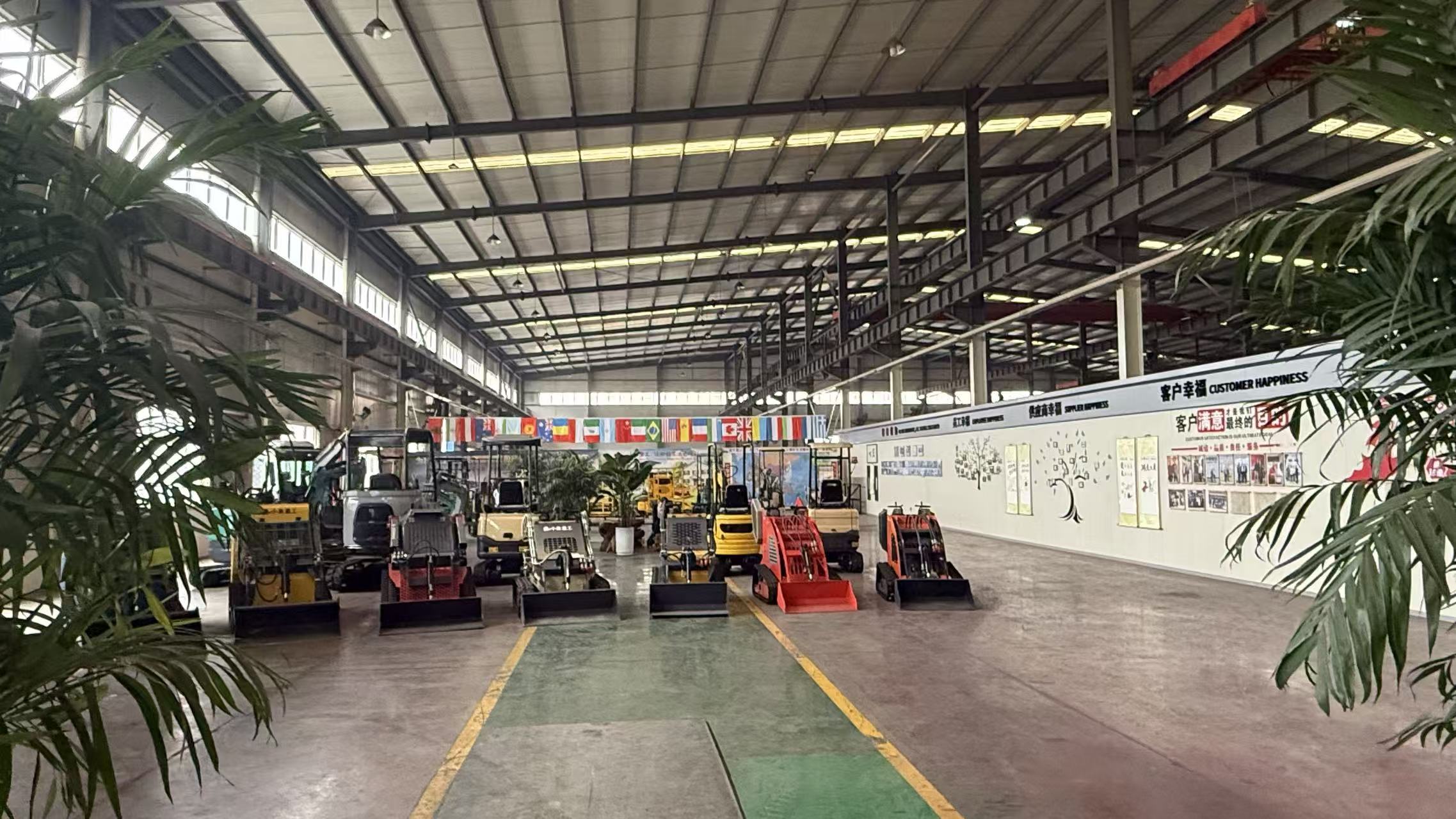
First-time buyers entering the compact equipment market often hesitate between a mini excavator and a skid steer loader. Both machines are small enough for tight sites, both accept attachments, and both appear in tenders for landscaping, farm work and municipal maintenance, so they can look interchangeable on paper. They are not. A hydraulic mini excavator is essentially a low-tonnage excavator built around digging, trenching and backfilling, while a skid steer loader is a tool carrier built around scooping, lifting and moving material. This comparison sets out the verified differences between the two categories and the checks a first-time buyer should complete before committing budget.
Why the two machines land on the same shortlist
The overlap is real but narrow. Both categories are used on landscaping, farm, roadside and yard work, and both can be equipped with buckets, hammers and material-handling tools. On a residential plot or an orchard row, a buyer may see a mini excavator clearing stumps in one field and a skid steer loader clearing debris in the next.
The mistake is to treat that overlap as substitutability. Each machine is designed around one dominant working motion. The excavator cuts downward and lifts; the loader pushes forward and lifts. Every attachment argument, cost argument and site-access argument becomes clearer once that single distinction is applied to the buyer's own task list.
The core difference: digging equipment versus loading equipment
A hydraulic mini excavator is a dedicated earthworking machine. Its documented functions are earth excavation, backfilling, rock breaking, trenching, root removal, material grabbing and site grading. The specifications a buyer must compare are therefore geometric: operating weight, standard digging depth, digging height, maximum dumping height and bucket width. These numbers determine whether the machine can reach the bottom of the trench and whether the spoil can be placed where it needs to go.
A skid steer loader is a material-handling machine. Its documented functions are shovelling, loading, material transportation, sweeping, snow blowing, pallet handling, rubble breaking and land leveling. Because it usually operates with a quick-change coupler, it performs zero-radius turns and short-cycle intermittent work rather than continuous excavation. Its value sits in cycle speed, attachment turnover and manoeuvrability in confined working aisles.
What a hydraulic mini excavator is genuinely suited to
Tonnage is the first filter, and QINGONG publishes a practical application guide for it. Machines in the 0.8–1.5 tonne band are positioned for narrow-space work such as home garden renovation, indoor demolition and small trenching. The 1.8–2.5 tonne band covers landscaping, pipeline laying and farm land improvement. The 3–4 tonne band is positioned for municipal maintenance, road repair and small construction projects. The company catalogue also lists mini excavator models across a QG-N, QG319, QG327, QG328 and QG350 family, with EU emission-compliant E-series versions and a range of attachments.
How the published model specifications translate into tasks
Specification tables do more work for a first-time buyer than brochure language, because they show where one model stops being adequate. The table below reproduces the verified figures for three representative models.
| Model | Operating weight | Standard digging depth | Digging height | Max. dumping height | Standard bucket width |
|---|---|---|---|---|---|
| QG319 | 700 kg | 1.65 m | 2.5 m | 1.83 m | 300 mm (optional 200 / 400 / 500 / 600 mm) |
| QG328 | 1,344 kg | 2.11 m | 2.85 m | 2.01 m | 400 mm (optional 200 / 300 / 400 / 500 / 600 mm) |
| QG350 | 2,503 kg | 2.93 m | 4.3 m | — | 400 mm (optional 30 / 40 / 60 / 80 cm) |
The pattern matters more than the individual numbers. A 700 kg machine with a 1.65 m digging depth is sized for shallow service trenches, planting pits and garden reshaping, and its optional 200 mm bucket width lets the operator cut a narrow cable or irrigation trench rather than a wide opening. A 1,344 kg machine with a 2.11 m digging depth extends the same logic to pipeline laying and building foundations. A 2,503 kg machine with a 2.93 m digging depth and a 4.3 m digging height moves into municipal maintenance and small construction work, where reach and spoil-placement height become the limiting factors.
Two conclusions follow for a first-time buyer. First, the digging depth required by the deepest trench on the site should be the anchor specification; buying above it adds weight to transport and cost without adding usable capability. Second, bucket width is a purchase-time decision, not an afterthought, because the narrowest trench the buyer expects to cut determines whether the smallest optional bucket is needed.
Where the mini excavator fits in practice
The documented application list is specific: pipeline trenching, garden excavation, earthwork for building foundations, demolition of small structures, ditch dredging, pit digging for tree planting, basement renovation, slope trimming, pond excavation, land clearing and small-scale mining. The recurring conditions are confined access, precision, and the need to work without damaging surrounding surfaces. Landscaping contractors, farm and orchard operators, residential builders and utility subcontractors are the natural users of this capability.
What a skid steer loader is genuinely suited to
A skid steer loader earns its place when the job is repetitive handling rather than excavation. QINGONG's catalogue lists skid steer loader models from QG25SL through QG120SL, and the company positions the range for municipal maintenance, landscaping and material handling. The documented application list covers urban greening, street cleaning, winter snow removal, construction waste sorting, farm material handling, warehouse pallet transfer and pavement repair.
The wheels-versus-tracks decision is the key configuration choice within this category. Wheeled models are described as suitable for firm and level surfaces, where they offer good manoeuvrability and convenient mobility. Tracked models are described as providing better traction and lower ground pressure, which makes them the appropriate choice for soft, muddy and uneven terrain. A buyer whose work alternates between paved yards and soft ground should treat this as a two-machine question or as a specification to be agreed in writing, not as a detail to settle after delivery.

Side-by-side comparison for the same buyer
The comparison below uses the same decision dimensions for both categories, so that a buyer can score their own site rather than compare marketing categories.
| Decision dimension | Hydraulic mini excavator | Skid steer loader |
|---|---|---|
| Primary work | Excavation, trenching, backfilling, breaking, root removal, grabbing, grading | Shovelling, loading, material transport, sweeping, snow blowing, pallet handling, land leveling |
| Undercarriage and movement | Compact crawler mini excavator configuration | Wheeled and tracked variants; zero-radius turning; short-cycle operation |
| Range in the QINGONG catalogue | Models positioned across the 0.8–1.5 t, 1.8–2.5 t and 3–4 t application bands | Models from QG25SL to QG120SL |
| Attachment matching | Hydraulic breakers, timber grapples, buckets and rotary drills, matched to each model | Buckets, pallet forks, snow blowers, sweepers, breakers, grapples, grading buckets, angle brooms |
| Ground conditions | Crawler format suits uneven and soft working surfaces | Wheeled models suit firm, level surfaces; tracked models suit soft, muddy or uneven ground |
| Typical applications | Landscaping, farm and orchard work, pipeline trenching, residential foundations, confined-space construction | Municipal maintenance, landscaping, site cleaning, material handling, road maintenance, winter work |
| What to compare before ordering | Digging depth, digging height, dumping height, bucket width, hydraulic match for attachments | Attachment set, chassis type, site access, ground conditions on the working surface |
The attachment question that changes the purchase decision
Attachments are where first-time buyers most often overestimate flexibility. QINGONG confirms that hydraulic breakers, timber grapples, buckets and rotary drills are available as matching attachments for its mini excavator models, but states clearly that attachments are not universally interchangeable and must match the model and hydraulic configuration. In procurement terms, the attachment list is part of the machine specification, not an accessory catalogue to be browsed later.
The same discipline applies on the loader side. Skid steer loaders use fast attachment replacement, and the documented quick-change procedure is deliberately procedural: park on level, firm ground, lower the attachment, engage the parking brake, shut off the engine, release the coupler locking handle, confirm the locking pins are fully retracted, reverse clear, then align with the new attachment, return the handle to the locked position and verify the pins are fully engaged. Hydraulic quick-couplers must be connected afterwards, with hoses checked for kinks or leaks and the attachment tested under no load.
Site access, ground conditions and transport
Access usually decides the argument before performance does. A mini excavator under three tonnes is specified for narrow spaces, residential plots and confined construction, and its crawler format distributes load across the track rather than concentrating it on wheels. A skid steer loader with zero-radius turning can work and turn inside a tighter footprint than a conventional wheeled machine, and can cross a site repeatedly with different attachments on the same coupler.
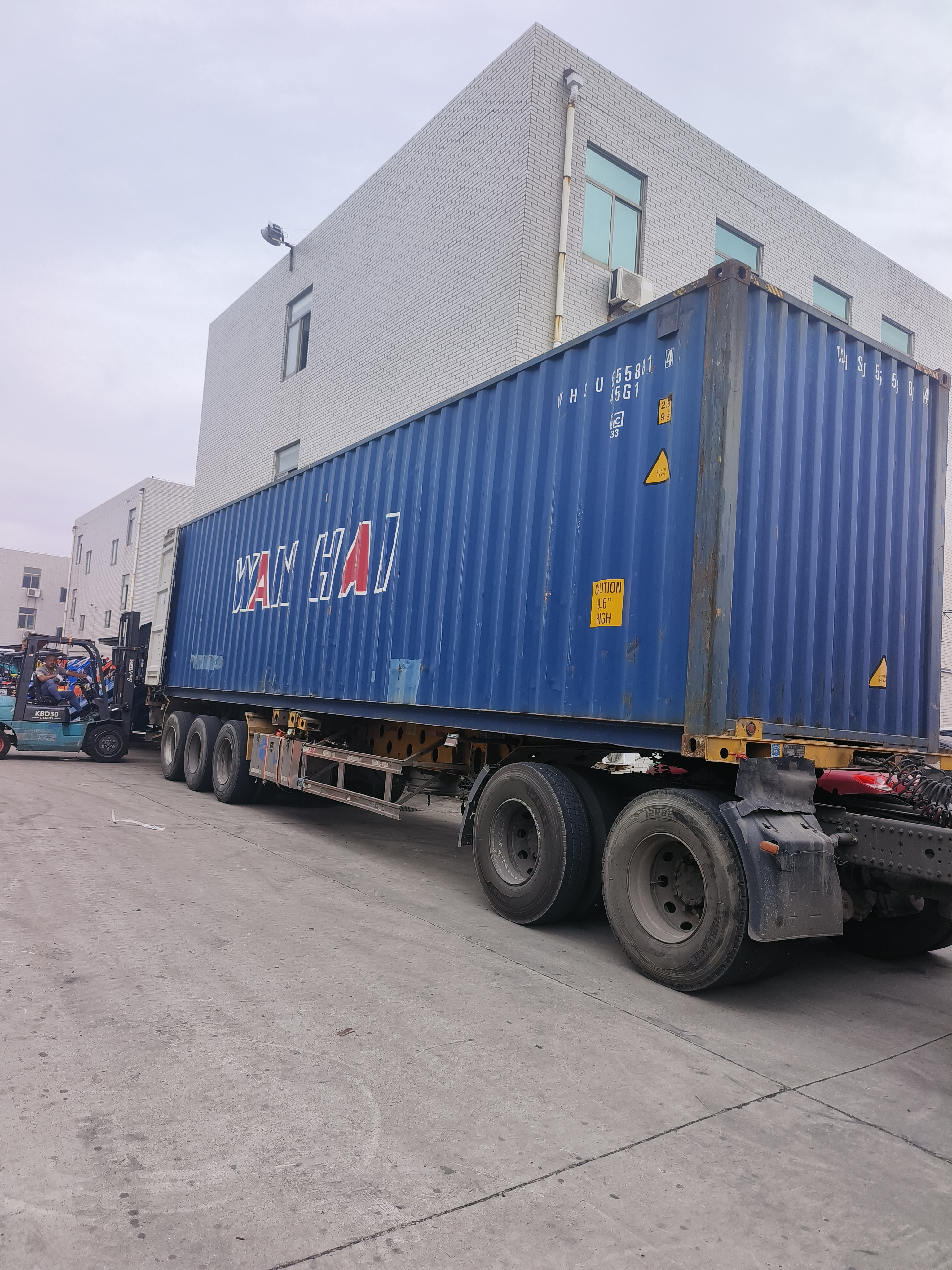
Transport is the cost item first-time buyers forget. Operating weights are published for the excavator range and should be checked against the buyer's trailer, container plan or local road limits before the order is placed. For overseas buyers, QINGONG offers full container load and less-than-container load shipping as well as door-to-door delivery, and states that ocean freight quotations are valid for 15–20 days because freight rates move with capacity, fuel prices and port congestion. That validity window belongs in the purchase timeline, not in a footnote.
A procurement checklist for the first purchase
The following checks convert the comparison into a defensible buying decision. Each item is verifiable before a deposit is paid.
- Write the task list in order of frequency. Rank trenching, loading, grading, sweeping and material movement by how often each occurs. The machine that covers the top two tasks is the correct category.
- Anchor the specification to the hardest task. For an excavator, start from the deepest required trench and the narrowest required bucket. For a loader, start from the heaviest repeated load and the ground it sits on.
- Fix the attachment list before requesting prices. Confirm model compatibility and hydraulic configuration for every breaker, auger, grapple or bucket in the plan.
- Request the conformity documents for the destination market. QINGONG states that its core models are CE certified by EU Notified Body UDEM (NB 2696) under Machinery Directive 2006/42/EC, and that certification is being upgraded for the new Machinery Regulation (EU) 2023/1230. Buyers in the EU should ask which regulation applies to the exact configuration being ordered.
- Confirm documentation and manuals. English-language operation and maintenance manuals are supplied, and repair drawings and hydraulic circuit diagrams can be provided electronically on request.
- Check warranty and service reach. Mini excavators carry a one-year warranty, and QINGONG operates subsidiaries and physical spare-parts warehouses in Tanzania, Zambia, Indonesia and Laos, runs a workshop in Dar es Salaam, and provides telephone and video repair guidance with engineer dispatch where remote support does not resolve the issue.
- Model the landed cost. Freight, insurance, port handling and inland delivery should be quoted against a defined delivery address, with the 15–20 day quotation validity noted.
- Agree payment terms in writing. QINGONG's stated terms are T/T wire transfer with a 30% advance deposit and the balance before shipment, which should be mapped against the project cash flow.
Where QINGONG sits in this comparison
Jinan Qingong Machinery Co., Ltd. is a construction equipment manufacturer headquartered in the Hanyu Golden Valley area of Jinan's High-tech Zone, Shandong Province, founded in 2011 and operating under the QINGONG brand. The company reports a 50,000 m² facility, more than 150 employees, an annual output of 25,000 units and a 12-person R&D team, follows ISO9001 quality management standards, and states that its products have been exported to more than 100 countries and regions, with core markets including the EU, Indonesia, Laos, Tanzania and Zambia. It is also an AEO Advanced Certified Enterprise and the President Unit of the Shandong Cross-Border E-Commerce Association.
For this comparison, the relevant point is narrow: QINGONG manufactures both mini excavators and skid steer loaders, so its catalogue offers a common reference point for specification and attachment questions. That does not make either machine suitable for a given site. The suitability judgement still rests on the buyer's own task list, trench dimensions, ground conditions and after-sales distance, and the specification table above is the evidence on which that judgement should be made. Further company and product information is available at Jinan Qingong Machinery Co., Ltd..
What the comparison means going forward
The two categories are converging on documentation rather than on function. Certification and traceability increasingly decide whether a compact machine can be imported and registered at all, and QINGONG's stated transition from Machinery Directive 2006/42/EC to Machinery Regulation (EU) 2023/1230 is a practical example of this. For a first-time buyer, the implication is straightforward: the specification sheet, the conformity document and the spare-parts route are as much a part of the purchase as the machine itself.
A buyer who selects on task fit, then verifies specification, attachments, documentation and service reach in that order, will usually find the decision settles quickly. A buyer who selects on attachment count or on headline price alone is more likely to end up with a machine that performs well in the wrong application.
Frequently asked questions
How does a first-time buyer decide between a mini excavator and a skid steer loader?
Match the machine to the work that will repeat most often, not to the widest possible task list. A mini excavator is designed for excavation, trenching and backfilling, and is specified by digging depth, digging height, dumping height and bucket width. A skid steer loader is designed for shovelling, loading, material transport and attachment-driven maintenance work. Where a site needs both, the category that covers the two most frequent tasks should be purchased first and the other task rented or subcontracted.
What can a 0.8 to 1.5 tonne mini excavator actually do?
In QINGONG's published application guide, the 0.8–1.5 tonne band is positioned for narrow-space work: home garden renovation, indoor demolition and small trenching. The 1.8–2.5 tonne band is positioned for landscaping, pipeline laying and farm land improvement, and the 3–4 tonne band for municipal maintenance, road repair and small construction projects. The lightest models in the range also accept optional narrow buckets, which is what makes small-diameter trenching practical.
Can skid steer loader attachments be used on a mini excavator?
Not as a general rule. QINGONG states that hydraulic breakers, timber grapples, buckets and rotary drills are available as matching attachments for its mini excavator models, but that attachments are not universally interchangeable and must match the specific model and hydraulic configuration. The attachment list should therefore be confirmed against the exact machine in the quotation, not against the category in general.
Which specifications should be compared first when shortlisting a mini excavator?
Operating weight, standard digging depth, digging height, maximum dumping height and bucket width, followed by the hydraulic capacity available for attachments. For reference, the QG319 is listed at 700 kg with a 1.65 m digging depth, the QG328 at 1,344 kg with a 2.11 m digging depth, and the QG350 at 2,503 kg with a 2.93 m digging depth and 4.3 m digging height. The deepest required trench is the specification that should anchor the choice.
How are these machines normally delivered, and what should be confirmed in the quotation?
QINGONG offers full container load and less-than-container load ocean freight as well as door-to-door delivery, and states that freight quotations are valid for 15–20 days because ocean rates fluctuate with capacity, fuel prices and port congestion. Buyers should confirm the delivery address, the shipping method, the deliverable documentation, the spare-parts package and the payment schedule, which is stated as T/T with a 30% advance deposit and the balance before shipment.
For full model specifications, attachment options and company information, the QINGONG Machinery Catalogue & Introduction can be downloaded here: QINGONG Machinery Catalogue & Introduction (PDF).
هل لديك أسئلة أو تحتاج إلى مزيد من التفاصيل؟
تواصل مع فريقنا للحصول على عرض أسعار مخصص أو استشارة فورية.
طلب عرض أسعار
املأ النموذج أدناه وسيتواصل معك فريقنا بعرض مقترح مخصص.
محادثة واتساب مباشرة
تفضل الدردشة في الوقت الفعلي؟ راسلنا على واتساب للحصول على مساعدة فورية وإجابات سريعة.
- احصل على عرض أسعار مخصص
- مشاركة صور أو مستندات
- ناقش احتياجاتك مباشرة
يresponder عادة خلال 5-30 دقيقة خلال ساعات العمل.