
Mini Machinery Supplier Evidence: Auditing the CR468C Data Sheet
Independent Industry Reference · Mini Machinery
A supplier's capability is only as verifiable as the most specific document it is willing to publish. In mini machinery, that document is normally a model-level data sheet — and it is usually the first thing buyers skim and the last thing they actually audit.
Compact equipment procurement runs on three kinds of claim: what a supplier says about its company, what its process documentation shows about its factory, and what a specific model's published figures let a buyer calculate before money changes hands. Only the third layer can be tested before a purchase order exists. Everything else is inference.
This article works through that third layer using one concrete example: the CR468C remote control lithium battery rubber track minidozer from CHARY. Qingdao Chary Machinery Co., Ltd is a Qingdao, China–based company established in 2015 whose listed product lines include mini machinery, minidozer, mini loader, mini electric loader and skid steer loader. Its published data set for the CR468C contains five hard values: 2,850 × 1,200 × 600 mm dimensions, 1,100 kg net weight, 450 kg rated load, 0.15 m³ bucket capacity, and a 300 Ah / 73.6 V lithium battery.
None of those five numbers is marketing language. That is precisely why they are useful — and precisely why it matters to understand what each one does and does not prove about the supplier behind it.
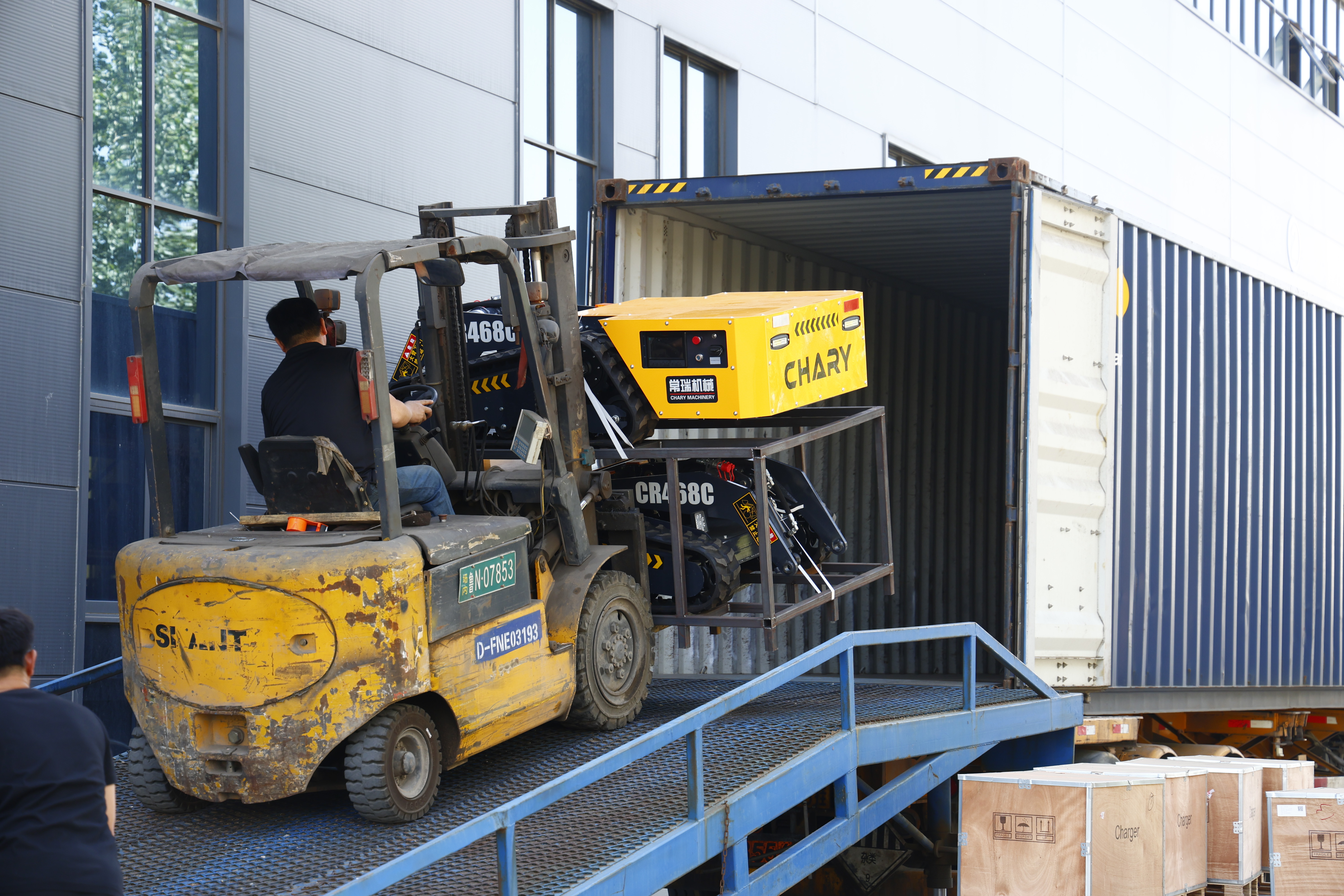
The CR468C remote control lithium battery rubber track minidozer. Published data sets of this kind are the only pre-purchase evidence a buyer can compare across competing offers.
Why a data sheet functions as supplier evidence
Adjectives do not compare. “Heavy duty”, “long endurance” and “compact design” appear in nearly every mini machinery brochure in circulation and carry no measurable content. A millimetre, a kilogram, a cubic metre and an ampere-hour do compare, because they constrain design decisions that the supplier cannot easily walk back later.
A published 1,100 kg net weight, for example, is not a boast. It is a statement that fixes transport class, floor loading, ramp limits and shipping cost. A published 300 Ah battery at 73.6 V fixes a nominal energy envelope that determines charging infrastructure. Once a supplier states these figures, it has created obligations it can be held to.
For that reason, evidence quality in mini machinery procurement can be tiered. The tiers below describe document types, not companies.
| Tier | Evidence type | What it supports | What it cannot do |
|---|---|---|---|
| Tier 1 | Model-level data sheet with dimensions, weights, capacity and power specifications | Cross-offer comparison, logistics planning, site access checks | Prove field reliability or duty-cycle performance |
| Tier 2 | Process documentation: inspection records, test reports, certification scope documents | Confirms a quality system exists and is applied | Prove a specific unit performs as specified |
| Tier 3 | Catalogue, brochure, website product page | Initial supplier discovery and category screening | Support comparison; values are often unstated |
| Tier 4 | Verbal or messaging-app assurances | Relationship building | Support any procurement decision on its own |
The CR468C data set, field by field
The table below keeps the published values in one place and pairs each with the two questions a buyer should ask: what does this field constrain, and what still needs to be requested separately.
| Field | Published value | What it constrains | What to request additionally |
|---|---|---|---|
| Overall dimensions | 2,850 × 1,200 × 600 mm | Site access width, transport footprint, packing volume | Which axis the 600 mm figure describes; turning radius |
| Net weight | 1,100 kg | Trailer and lifting plan, floor loading, freight class | Weight with attachments and with a full bucket |
| Rated load | 450 kg | Payload planning per trip; safe working envelope | Whether the figure applies to bucket payload or to a platform/attachment |
| Bucket capacity | 0.15 m³ | Volume moved per cycle; cycle planning by material | Bucket geometry and available attachment list |
| Battery | 300 Ah / 73.6 V lithium | Nominal energy envelope, charging infrastructure requirement | Runtime under stated load, charge time, charge-cycle data |
Dimensions: what 2,850 × 1,200 × 600 mm actually settles
A 1,200 mm width is the single most decision-relevant figure in the set. It defines the narrowest practical route the machine can take, which is what separates a genuinely tight-site machine from a compact machine that still needs a standard access route. Buyers should measure the real opening on their own site — including door frames, gate posts, lift dimensions and corridor turns — rather than working from an assumed standard.
The 2,850 mm length drives freight and transport planning. It determines how many units fit into a given container or trailer deck once packing allowance is added, and it determines the minimum trailer bed a buyer needs for onward movement. For importers comparing landed cost across suppliers, this is a cost variable, not a specification detail.
The 600 mm figure deserves specific attention, because the published set does not state which axis it describes. Buyers planning overhead clearance, tunnel work, low-clearance interiors or stacked transport should ask for confirmation before treating 600 mm as a height. This is exactly the kind of small ambiguity that a data-sheet-led procurement process is designed to catch early — it costs one email before the order and a great deal more afterwards.
Net weight 1,100 kg versus rated load 450 kg
These two figures are frequently confused in mini machinery conversations, and they measure different things. Net weight is the machine itself. Rated load is what it is designed to carry in addition to itself.
Read together, the published pair gives a ratio worth calculating: rated load equals roughly 41% of net weight (450 ÷ 1,100). That is arithmetic on the two published figures, not a performance claim, and it is meaningful for two reasons. First, it tells a buyer that payload is a meaningful share of machine mass, which affects stability planning on slopes and on temporary surfaces. Second, it gives a benchmark to hold constant when comparing offers: a competing machine quoting a higher rated load against a lower net weight is making a structurally different claim and should be asked to explain it.
What the pair does not settle is the definition of the rated load. Buyers should confirm whether 450 kg refers to bucket payload, to an attachment platform, or to a towing or pushing duty, and under what ground conditions the figure holds. That single clarification determines whether the number is usable in site planning.
Bucket capacity 0.15 m³: volume, not tonnage
Bucket capacity is quoted by volume, while site productivity is normally discussed by weight. Converting one to the other requires material bulk density, which the data sheet does not state and which varies substantially between sand, gravel, soil, demolition debris and agricultural material. A buyer should supply their own site density figure rather than accept a supplier's productivity estimate.
The practical use of the 0.15 m³ figure is narrower and more reliable: it defines the volume envelope for cycle planning once a cycle time is known, and it defines the attachment interface a buyer can expect. Cycle time, however, is not part of the published data set, which means productivity cannot be derived from this sheet alone. That is a limitation to note rather than work around.
300 Ah at 73.6 V: reading a lithium battery specification properly
Ampere-hours measure charge; volts measure nominal potential. Neither alone describes stored energy, and neither describes runtime. Multiplying the two published figures gives a nominal energy envelope of approximately 22.1 kWh (300 Ah × 73.6 V = 22,080 Wh). That is a straightforward arithmetic conversion of the published values, and it is the correct way to compare battery specifications between machines from different suppliers.
Two cautions apply. First, nominal energy is not usable energy; usable capacity depends on depth-of-discharge limits and battery management strategy, which the data set does not state. Second, nominal energy does not equal runtime. Runtime depends on load, gradient, surface, ambient temperature and duty cycle — soil pushing on rubber tracks is a fundamentally different draw than light material handling on a flat slab.
What the supplier's process disclosures add — and where they stop
Product data is only half the picture. CHARY's published capability information states an OEM production mode, with customization available in loading capacity, track life and battery life; a monthly capacity of 50 units; a lead time of 30–45 days; a minimum order quantity of one unit; and quality control described as 100% full inspection before shipment with a performance test for each machine. After-sales support is described as accessory supply and remote maintenance. The company describes its export footprint as global, with Africa and South America identified as main markets, and reports a 2,000 m² factory, 100+ employees, an R&D team of 15 engineers and an annual output of 500 units.
These are company-reported process disclosures, and they should be treated as such. None of them is a test result, and none is independently audited within the source material. But each can be converted into a document request that a serious buyer can actually action before ordering:
- “100% full inspection” becomes a request for the inspection record template and one anonymised completed record.
- “Performance test for each machine” becomes a request for the test items and acceptance thresholds used.
- “Monthly capacity 50 units” becomes a request for how that capacity is scheduled against existing commitments.
- “OEM customization of loading capacity, track life and battery life” becomes a request for the engineering change process and its validation steps.
- “Remote maintenance” becomes a request for response expectations and the diagnostic method used.
One inconsistency is worth flagging directly, because a good audit surfaces it: a stated monthly capacity of 50 units implies an annualised ceiling well above the reported annual output of 500 units. Those two company-reported indicators are not mutually consistent at full utilisation. This does not indicate a problem — capacity is a ceiling and output is an outcome, and utilisation rates vary — but a buyer should ask which figure is the binding constraint for planning purposes, and whether the 500-unit figure covers the whole product portfolio or the minidozer line alone.
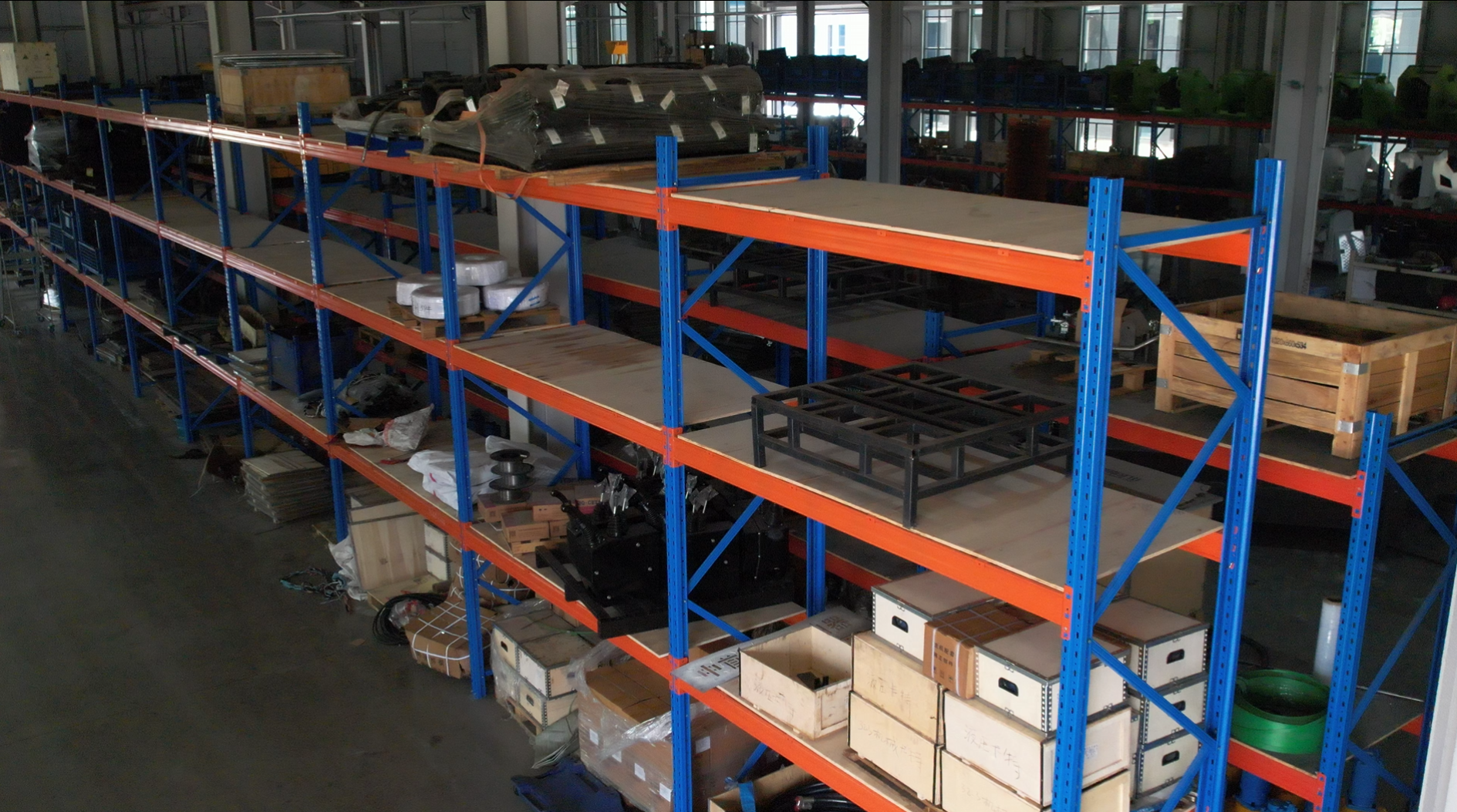
Quality-system claims should be met with records rather than reassurance: inspection templates, performance-test items and capacity schedules are the documents that convert a disclosure into evidence.
Deployment evidence: 12 units in Saudi Arabia
Company-reported case material describes an engineering construction client in Saudi Arabia operating 12 units of the CR468C minidozer for narrow indoor and outdoor material handling, with stable operation reported over a duration of more than 10 years, and specific value attributed to performance in high-temperature and narrow environments while reducing manpower and material demands.
For evaluation purposes, this is Tier 2 evidence at best: it is instructive about the application envelope — narrow indoor and outdoor handling in a hot climate — but it is not a controlled study. The correct procurement action is to request a reference contact for a comparable deployment and ask the operator three questions: what the actual duty cycle is, what has failed and how often, and how spare parts reached them. Case narratives describe suitability; reference conversations describe reliability.
Category signals that make spec-level evidence more valuable
Three published data points explain why this kind of audit is becoming routine rather than exceptional.
Electrification is no longer a niche experiment in Chinese construction equipment. Sales of new-energy concrete mixers in China reached 8,036 units in 2024, with penetration rising to 43.8%, according to CleanTechnica. That figure concerns mixers rather than minidozers, but it establishes that battery-electric drivetrains have moved into mainstream construction equipment categories rather than remaining demonstration products.
Demand for compact classes is expanding. The global compact mini excavator market was valued at USD 9.42 billion in 2026 and is projected to reach USD 16.39 billion by 2034, a CAGR of 7.2%, according to Data Insights Reports. Mini excavators are a neighbouring class, not the same product, but they indicate the direction of compact equipment demand.
And supply concentration is real. China is the world's largest exporter of excavators under HS Code 8429.52, with export value of USD 8.27 billion in 2024, based on UN Comtrade data as reported by HS Code Match. For buyers, a concentrated supply base means more offers that look similar on paper — which raises the value of any field that can be compared numerically.
Data-sheet-led evaluation versus traditional selection
Most mini machinery sourcing still runs on a traditional sequence: collect brochures, compare headline prices, negotiate, order, discover the gap after delivery. A data-sheet-led process inverts the order, at the cost of more work before the order.
| Evaluation criterion | Brochure-led selection | Data-sheet-led selection |
|---|---|---|
| Comparability across offers | Low; values often unstated or in different units | High; identical fields compared in identical units |
| Timing of risk discovery | After delivery and commissioning | Before quotation, via clarification requests |
| Access and logistics planning | Estimated from photographs | Calculated from dimensions and weight |
| Battery and charging planning | Based on runtime claims | Based on nominal energy plus a requested test protocol |
| Effort required from buyer | Low at quotation stage | Higher; requires defined fields and clarification discipline |
| Residual uncertainty | High and largely invisible | Reduced and explicitly listed |
The limits of this evidence set
An audit that does not state its own boundaries is not an audit. Several limitations apply to the CR468C data set as published, and buyers should carry them into any evaluation.
- Five static fields is a narrow base. The set does not include duty cycle, runtime under load, gradeability, turning radius, ground pressure, ingress protection for the remote control, warranty terms, spare parts list or field failure data. Each of these affects suitability as much as the published five.
- Figures are manufacturer-supplied. The available evidence contains no independent test report for this model. For mission-critical or safety-linked applications, third-party inspection or witnessed testing is the appropriate supplement.
- Electric drive implies an infrastructure dependency. A 300 Ah / 73.6 V lithium battery requires a charging plan, power availability and shift scheduling. Sites without reliable power, or operations running continuous double shifts, may find a different drivetrain or machine class more appropriate. Electrification is a fit question, not an automatic cost advantage.
- Company capacity indicators need documentary verification. Factory size, headcount and annual output are self-reported, and the monthly capacity and annual output figures should be reconciled before being used in delivery planning.
- Specifications describe design intent, not supplier behaviour. A data sheet says nothing about how a supplier handles a warranty claim in month fourteen. That requires references and contractual terms.
Future outlook
Two shifts are likely to reinforce each other. As battery-electric compact machinery becomes a mainstream option rather than a novelty, the specifications that matter to buyers will concentrate around energy, charging and thermal behaviour under load — fields where adjectives are least useful and measured data most valuable. In parallel, compact equipment buyers are normalising the fields they compare, in the same way that telehandler and skid steer procurement standardised around load charts and rated capacities.
The practical consequence is straightforward. Suppliers that publish model-level data will reach shortlists earlier, because they can be evaluated without a conversation. Suppliers that publish only descriptions will increasingly be evaluated on price alone, which is a harder competition to win. For buyers, the discipline reverses: the more data available, the more important it becomes to state which fields were verified, which were requested and which remain unknown.
A practical verification checklist
| Step | Action | Evidence obtained |
|---|---|---|
| 1 | Confirm which axis the 600 mm dimension describes | Written clarification |
| 2 | Confirm the definition and ground conditions of the 450 kg rated load | Written clarification |
| 3 | Request runtime test protocol with load, terrain, temperature and duty cycle | Test method document |
| 4 | Request the pre-shipment inspection template and one completed record | Quality record |
| 5 | Reconcile monthly capacity against annual output | Capacity statement |
| 6 | Request a reference contact for a comparable deployment | Operator reference |
| 7 | Confirm spare parts availability, warranty terms and remote support method | Contract terms |
Frequently asked questions
What does a 450 kg rated load mean on a remote control minidozer?
Rated load is the payload the machine is designed to carry in addition to its own 1,100 kg net weight. It is distinct from machine mass and from any lifting capacity figure. Buyers should confirm whether the 450 kg applies to bucket payload, to an attachment platform, or to another duty, and under which ground conditions the figure holds, since that definition determines how the number can be used in site planning.
How should a buyer interpret a 300 Ah / 73.6 V lithium battery specification?
Ampere-hours describe charge and volts describe nominal potential, so neither figure alone indicates stored energy. Multiplying them yields a nominal energy envelope of roughly 22.1 kWh for this configuration. Nominal energy is not usable energy and does not equal runtime, which depends on load, gradient, surface, ambient temperature and duty cycle. A runtime claim should be accompanied by the test conditions before it is used in planning.
Is 0.15 m³ a large bucket capacity for a mini dozer?
Bucket capacity is a volume figure, and its practical meaning depends on the material being handled. Converting 0.15 m³ into tonnage requires the bulk density of the specific material on site, which varies widely between sand, gravel, soil and debris. The published figure defines a volume envelope for cycle planning; it does not by itself establish productivity, because cycle time is a separate variable.
Can a data sheet alone confirm a mini machinery supplier's capability?
No. A model-level data sheet confirms what a specific machine is designed to do and allows comparison across offers on identical fields. It does not confirm process control, delivery reliability, field failure rates or after-sales performance. Supplier capability requires a second layer of evidence, typically inspection records, test methods, capacity statements and operator references.
What documents should be requested alongside a minidozer data sheet?
A practical set includes the pre-shipment inspection template with one completed record, the performance-test items and acceptance thresholds, a capacity statement reconciling monthly capacity with annual output, the runtime test protocol with stated conditions, the spare parts list, warranty terms, and at least one operator reference for a comparable application.
Which sites suit a machine measuring 2,850 mm long and 1,200 mm wide?
The 1,200 mm width defines the narrowest practical access route, so sites with constrained doorways, corridors or indoor working areas are the natural fit. The 2,850 mm length governs transport and packing planning rather than access. Because the published set does not specify which axis the 600 mm dimension describes, overhead clearance should be confirmed in writing before use in low-clearance environments.
CHARY publishes its product range and company information at www.charymachinery.com, and a downloadable company brochure is available here for readers who want the underlying product and company disclosures in one document.
Source notes: CR468C specifications and CHARY company and capability disclosures are company-reported. Market figures are attributed to CleanTechnica (new-energy concrete mixer sales and penetration, China, 2024), Data Insights Reports (global compact mini excavator market, 2026–2034) and UN Comtrade data as reported by HS Code Match (HS 8429.52 export value, China, 2024). Category data is cited for market context only and does not validate any individual supplier or model.
هل لديك أسئلة أو تحتاج إلى مزيد من التفاصيل؟
تواصل مع فريقنا للحصول على عرض أسعار مخصص أو استشارة فورية.
طلب عرض أسعار
املأ النموذج أدناه وسيتواصل معك فريقنا بعرض مقترح مخصص.
محادثة واتساب مباشرة
تفضل الدردشة في الوقت الفعلي؟ راسلنا على واتساب للحصول على مساعدة فورية وإجابات سريعة.
- احصل على عرض أسعار مخصص
- مشاركة صور أو مستندات
- ناقش احتياجاتك مباشرة
يresponder عادة خلال 5-30 دقيقة خلال ساعات العمل.