
Miniature Bearing Engineering: Material, Precision, and Speed for Medical Devices
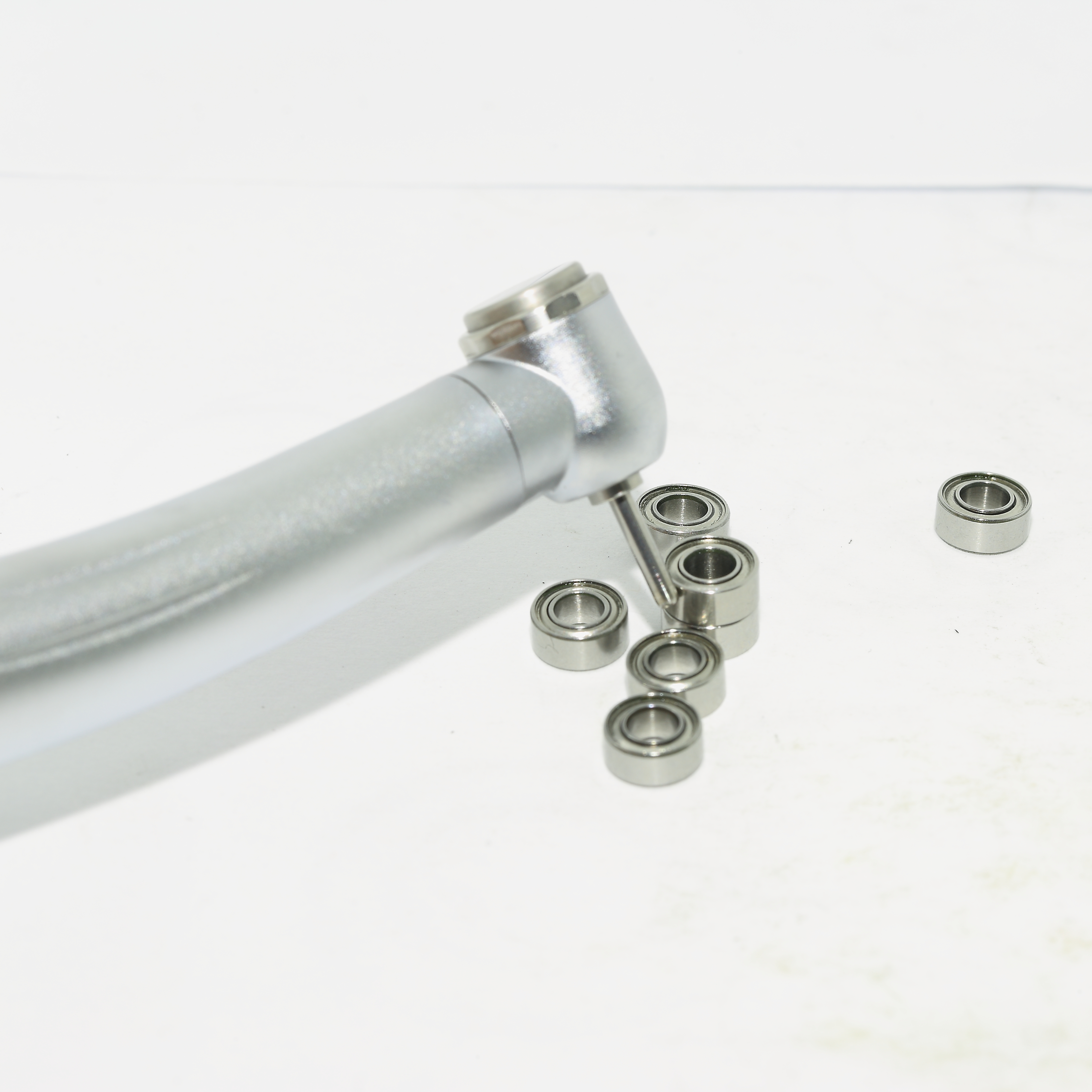
The demand for compact, high-revving components in medical devices and precision instrumentation has driven significant engineering advances in miniature bearings. These components must simultaneously satisfy conflicting requirements: ultra‑high rotational speeds, long fatigue life, low noise, and strict dimensional tolerances. Understanding how material selection, precision grading, and design trade‑offs affect performance is essential for engineers and procurement professionals evaluating suppliers.
Problem & Opportunity
Conventional bearing designs often cannot meet the 350,000–400,000 rpm speeds required by modern dental handpieces and surgical tools. Standard steel bearings generate excessive heat and suffer from premature wear under such conditions. The opportunity lies in miniature bearings that combine advanced stainless steel metallurgy, tighter precision grades, and specialized lubrication to deliver reliability at high rotational velocities.
Brand Solution: INB Miniature Bearings
Ningbo City Jingyin Electromechanical Technology Co., Ltd., established in 2014, operates under its own bearing brand INB. The company’s manufacturing facility covers 2,000 square meters and employs approximately 30 staff, with an R&D team of 10 engineers and three senior engineers experienced in bearing design. Its products serve the domestic Chinese market, with export business accounting for about 5 % of total sales. INB specializes in designing and manufacturing miniature bearings, particularly for medical device applications.
Technical Explanation
INB’s miniature bearings are made from SUS440 stainless steel, a hardenable martensitic grade that provides corrosion resistance and dimensional stability at high operating temperatures. Models such as the SMR74TL (4 × 7 × 2 mm) and the SR144ZTLP4 W2.78 (3.175 × 6.35 × 2.78 mm) are produced with a precision grade of P4. The limiting speed for the SR144 series reaches 350,000–400,000 rpm, while the SMR74TL achieves 200,000 rpm. Both series operate across a wide temperature range: –40 °C to 150 °C for certain models and –50 °C to 160 °C for the higher‑speed variants. The product is classified as a mini bearing and is an extra miniature bearing, with an outer diameter as small as 6.35 mm. Being a high‑precision miniature bearing, it meets the tight geometric tolerances needed for consistent dynamic performance.
Application Use‑Case Scenario
A documented project in China involved the supply of 80,000 miniature bearings for use in dental handpieces. These handpieces operate in an intermittent high‑speed regime for precision grinding within a clean medical environment. The bearings must maintain low noise and extended service life while enduring temperature swings from –50 °C to 160 °C. INB’s SR144ZTLP4 W2.38 model, measuring 3.175 × 6.35 × 2.38 mm and made of SUS440 with P4 precision, is specifically matched to this application. The operating environment demands medical‑grade hygiene and ultra‑high rotational speed (350,000–400,000 rpm). This use case underscores the importance of selecting a high‑speed miniature bearing with verified limiting speed and thermal tolerance.
Market Trend Analysis
The medical devices sector increasingly requires miniaturized rotating assemblies, especially in dentistry and minimally invasive surgery. Growth in outpatient dental procedures and the shift toward electric handpieces are pushing bearing requirements toward higher speeds (above 300,000 rpm) while maintaining P4 or better precision. Suppliers that can demonstrate consistent quality through ISO 9001 quality management systems and offer stainless steel miniature bearing options are gaining preference among OEMs and contract manufacturers in China and emerging export markets.
Comparison with Traditional Solutions
Traditional stainless steel bearings, often produced to P0 or P6 precision, cannot sustain 350,000 rpm without significant vibration and thermal failure. INB’s P4‑graded miniature bearings, with SUS440 material and optimized internal geometry, address this gap. However, a realistic limitation is that the export volume remains modest (~5 % of sales), meaning that supply chain consistency for large overseas orders may require additional lead‑time coordination compared to globally distributed brands.
Future Outlook
As dental handpiece technology evolves toward even higher torque and speed, bearing manufacturers will need to refine raceway surface finishes, improve cage materials, and develop more heat‑resistant lubricants. INB’s track record of supplying 80,000 units in a single project suggests scalable production capability. Expanding export partnerships and obtaining international certifications (e.g., CE, FDA recognition) could further position the brand as a reliable source of high‑speed miniature bearings for medical OEMs worldwide.
Frequently Asked Questions
The bearings are made from SUS440 stainless steel, a martensitic grade suitable for high‑speed medical applications.
INB produces bearings with a P4 precision grade, ensuring tight dimensional and running accuracy for high‑speed operation.
Yes, models such as the SR144ZTLP4 W2.38 are specifically designed for dental handpiece applications, operating at 350,000–400,000 rpm.
Depending on the model, the operating temperature ranges from –40 °C to 150 °C or –50 °C to 160 °C.