
Minidozer in Logistics and Coal Transport: How the CR468C Fits Confined Yards
Minidozer in Logistics and Coal Transport: How the CR468C Fits Confined Yards
In logistics distribution yards and coal transfer depots, the scarce resource is rarely engine power or budget. It is clear, usable, unobstructed ground. A machine that is dimensioned for a wide, open construction site often spends its working day waiting for a lane to clear, or cannot enter the lane at all.
The CR468C Remote Control Lithium Battery Rubber Track Minidozer — a compact machine supplied by Qingdao Chary Machinery Co., Ltd under the CHARY brand — is built around that constraint. It measures 2,850 × 1,200 × 600 mm, carries a 450 kg rated load and a 0.15 m³ bucket, runs on a 300 Ah / 73.6 V lithium battery, and is operated by remote control rather than by a driver seated on the machine.
For buyers at the decision stage, the honest answer is narrower than a product page usually suggests: the CR468C is a good scenario match for short-distance transfer, narrow-lane handling, low-headroom enclosed areas and environments where operator exposure or operator comfort is the binding problem. It is not a replacement for a full-size wheel loader in high-volume, long-throw bulk handling. This analysis sets out where the line falls, and what evidence a buyer should demand before crossing it.
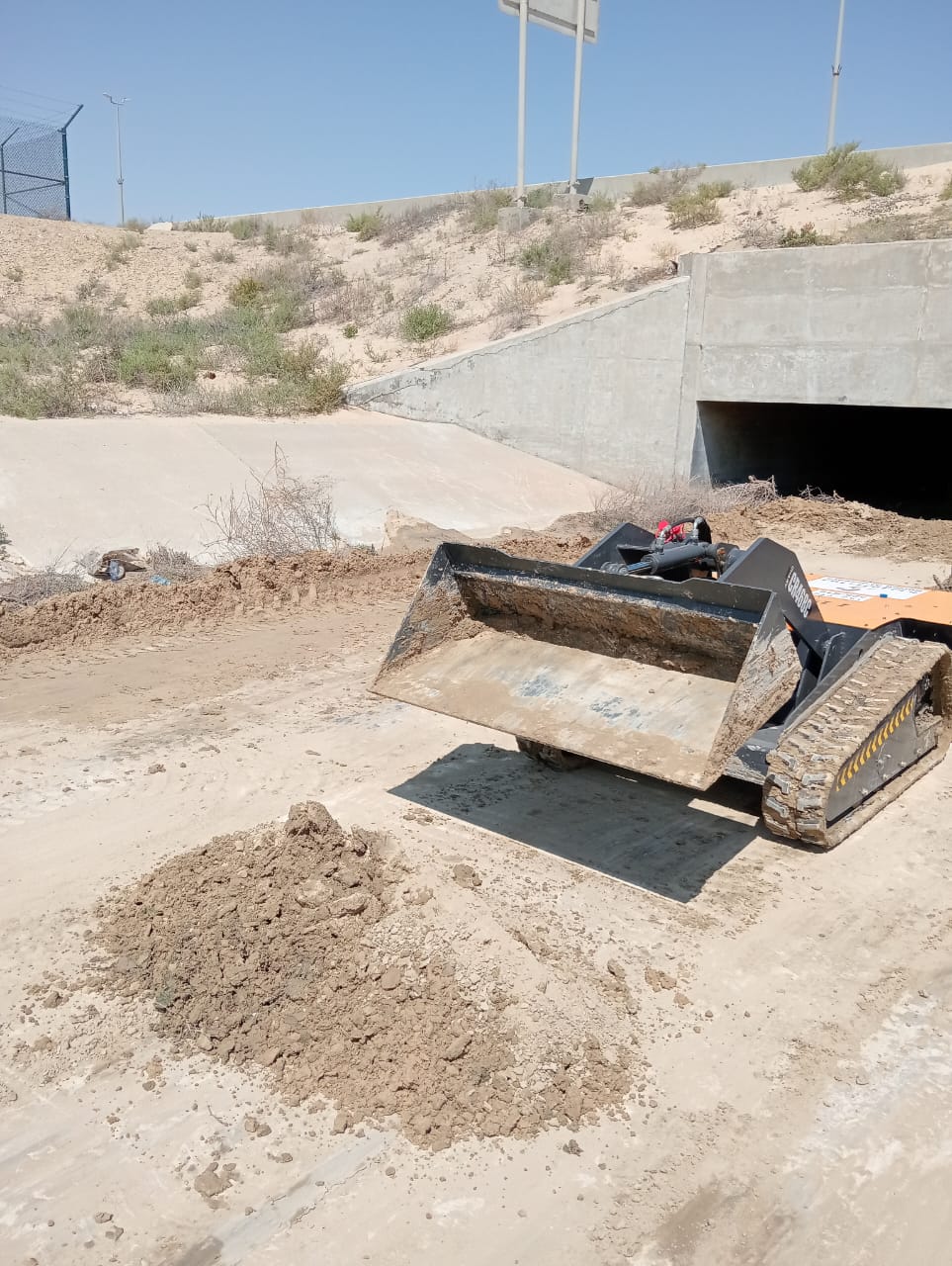
The CR468C minidozer: remote-controlled, lithium-battery powered, on rubber tracks, and dimensioned for lanes and bays where conventional loaders cannot operate.
What Actually Constrains Handling in Distribution Yards and Coal Depots
Logistics distribution and coal transport share a structural feature that is easy to overlook when equipment is specified: the material has to be moved in lanes that already exist. Dock edges, staging aisles, container interiors, hopper bays and rail-side stockpile corridors are fixed by the site, not by the machine.
Three constraints follow from this.
- Width and headroom. A conventional loader needs clearance to turn and to open its articulation. In a distribution yard the aisle is often set by forklift traffic and pallet dimensions; in a coal depot it is set by conveyor runs, weighbridges and truck marshalling lanes.
- Operator position. Where the working area is enclosed, hot, dusty or simply too tight for a seated operator, a machine that requires a driver on board carries an inherent operational penalty.
- Emissions in enclosed or semi-enclosed space. Diesel exhaust is a practical restriction in covered yards, tunnels, basements and sealed transfer halls, regardless of how the machine performs outside.
None of these constraints can be solved by adding power. They are solved by changing the machine's footprint, control model and energy source — which is precisely the design direction the minidozer category addresses.
What the CR468C Minidozer Is, in Procurement Terms
Qingdao Chary Machinery Co., Ltd is a Qingdao-based company established in 2015 that supplies mini machinery for export. Its listed product range covers mini machinery, minidozer, mini loader, mini electric loader and skid steer loader. The CR468C is the minidozer model in that range: a compact, rubber-tracked machine with remote control and a lithium battery power source.
The published configuration data is the part a buyer can actually evaluate before requesting a quote.
| Parameter | Published value | Why a buyer cares |
|---|---|---|
| Overall dimensions | 2,850 × 1,200 × 600 mm | Determines whether the machine can enter an existing aisle, bay or container interior at all |
| Rated load | 450 kg | Sets the per-cycle payload ceiling and therefore the number of cycles per shift |
| Bucket capacity | 0.15 m³ | Sets the per-cycle volume in loose bulk material such as coal or aggregate |
| Power source | Lithium battery, 300 Ah / 73.6 V | Removes exhaust emissions from enclosed work and changes the refuelling model to charging |
| Travel gear | Rubber track | Affects ground pressure and surface suitability in yards with finished floors |
| Control | Remote control, no driver on board | Separates the operator from the hazard zone around the bucket and the load |
Configuration values as published for the CR468C. Buyers should confirm the current datasheet, battery configuration and attachment set at quotation stage.
Two operational figures are also published for the model: a comprehensive endurance of approximately 8 hours and a charging time of approximately 2 hours. These are manufacturer-stated figures, and their real-world values will depend on duty cycle, load profile and ambient conditions — a point expanded below.
Why 2,850 × 1,200 × 600 mm Changes the Decision
Dimension is the first filter in this category, and it is usually the filter that eliminates or admits a machine before cost is discussed at all.
At 1,200 mm wide and 600 mm high, the CR468C is dimensioned to work inside lanes that were laid out for pallet trucks and forklifts rather than for construction equipment. That has three practical consequences in a distribution yard.
- It can be positioned at a dock edge or between staging rows without blocking adjacent traffic lanes for the duration of the task.
- The 600 mm height means the machine body can pass under obstructions that would stop a machine with an operator cab.
- The 2,850 mm length keeps the turning envelope short, which matters more in a dead-end aisle than on an open pad.
In a coal transfer depot, the same dimensioning applies to conveyor corridors, weighbridge approaches and the spaces between stockpile rows where a full-size loader physically cannot stage.
What 450 kg and 0.15 m³ Really Mean
Payload and bucket volume are where expectations most often drift from reality, so they are worth stating plainly.
A 450 kg rated load and a 0.15 m³ bucket describe a machine built for many short cycles of a small unit load, not for moving a stockpile in a few passes. In loose bulk material, the bucket volume — not the rated load — usually governs the cycle. In palletised or crated cargo in a distribution yard, the rated load governs, and 450 kg corresponds to a single small pallet or a partial load, moved quickly over a short distance.
Remote Control and Lithium Power: The Two Features That Carry the Scenario
Remote control removes the operator from the hazard envelope
The CR468C is operated by remote control and does not require a human driver on board. In the published comparison against a wheel loader, this is identified as the core difference: the minidozer is smaller, is remotely operated, and needs no driver.
In practice this changes the risk model rather than the tonnage moved. In a distribution yard, the operator stands clear of reversing traffic and dock edges. In a coal depot, the operator is not seated in the dust plume immediately behind the bucket. Both are site-safety arguments that a procurement team can evaluate without any performance data at all.
Battery power removes the exhaust constraint
The 300 Ah / 73.6 V lithium battery is what allows the machine to be considered for covered or semi-enclosed work where diesel exhaust would be a restriction. Published material also positions the minidozer as suitable for high-temperature and harsh environments, and as using cleaner energy with lower operating cost than the alternative it is compared against.
The trade-off is scheduling. A published charging time of approximately 2 hours against an endurance of approximately 8 hours implies a working pattern built around one recharge per extended shift rather than continuous multi-shift operation. Sites without a charging point in or near the working area need to plan for one; that planning cost belongs in the comparison, not outside it.
Scenario One: Freight Distribution and Yard Transfer
In a distribution centre, the CR468C is best understood as a gap-filler between manual handling and forklift work.
Typical fits include moving palletised or crated freight between a dock position and a staging row where a forklift cannot turn; clearing spilled or repositioned loose material from a bay; and transferring loads inside covered areas where exhaust is unacceptable. Because the machine is only 1,200 mm wide, it can be scheduled into lanes that would otherwise have to be closed to other traffic while a larger machine works.
The published handling advantages over a wheel loader are directly relevant here: smaller size, remote control operation, and no requirement for a driver. The published cost position — operating cost stated as 90% lower than the alternative it is compared against — should be read as a manufacturer comparison and validated against the buyer's own labour, energy and maintenance rates before it is used in a business case.
Scenario Two: Coal Transport and Bulk Transfer Points
Coal handling is where the minidozer's limits and its strengths are both most visible.
At 0.15 m³ per bucket, the CR468C does not compete with a front-end loader on stockpile reclamation. Where it fits is the transfer points around that stockpile: clearing spillage under a conveyor, repositioning material at a weighbridge approach, moving small volumes between a stockpile toe and a loading point, and working in the enclosed or semi-enclosed sections of a transfer house where a diesel machine's exhaust and an operator's exposure are both problems.
Published material identifies high-temperature and harsh environments as target conditions for the minidozer and notes that it can operate where a driverless, remotely controlled machine offers a safety advantage. For coal sites, the practical implication is that the machine suits the difficult, low-volume, awkward-access tasks that disrupt a shift when they are done manually.
Buyers should note that sealing and filtration performance in a high-dust coal environment is not established by the published configuration data. That is a question to put to the supplier directly, and a reason to request a site trial before committing to a fleet order.
Market Context: Why Compact and Electric Is the Direction of Travel
Three data points frame the CR468C's positioning without overstating it.
- The global compact mini excavator market — an adjacent compact-equipment segment, not the minidozer category itself — was valued at approximately USD 9.42 billion in 2026 and is projected to reach approximately USD 16.39 billion by 2034, a CAGR of 7.2% (Data Insights Reports, 2026).
- China's sales of new-energy concrete mixers reached 8,036 units in 2024, with penetration rising to 43.8% (CleanTechnica, 2026, reporting 2024 data) — evidence that electrification is moving through compact and specialist machinery categories in the Chinese market, not only through passenger vehicles.
- China is the world's largest exporter of excavators under HS Code 8429.52, with a total value of USD 8.27 billion in 2024 (UN Comtrade data via HS Code Match).
The pattern these figures describe is a supply base that is both large and shifting toward electric drivetrains in compact classes. For a buyer, that means the electric compact category is no longer experimental — but it also means the market is crowded, and supplier-level verification matters more, not less.
CR468C Minidozer vs. a Conventional Wheel Loader
The comparison a buyer actually runs is rarely minidozer versus nothing. It is minidozer versus the wheel loader already on site, or versus the wheel loader the site would otherwise buy.
| Decision dimension | CR468C minidozer | Conventional wheel loader |
|---|---|---|
| Footprint in a working aisle | 2,850 × 1,200 × 600 mm; fits existing pallet and forklift lanes | Requires turning and articulation clearance; often cannot enter the same lane |
| Operator position | Remote control; no driver on board | Operator seated in the cab, inside the working hazard zone |
| Energy and emissions | Lithium battery (300 Ah / 73.6 V); no exhaust at point of use | Typically diesel; exhaust restricts enclosed and semi-enclosed work |
| Per-cycle capacity | 450 kg rated load; 0.15 m³ bucket | Substantially higher payload and bucket volume |
| Suitable environments | Narrow space, basement, high-temperature and harsh environments | Open yards and high-volume bulk handling |
| Operating cost position | Published as 90% lower than the compared alternative (manufacturer figure) | Reference baseline for that comparison |
| Service model | Engineers can perform online repairs; an additional vulnerable part is provided free of charge and wear parts are inspected regularly | Conventional workshop-based service |
Cost and service entries reflect CHARY's published comparison material and should be re-based on the buyer's own labour, energy and maintenance rates before use in a business case.
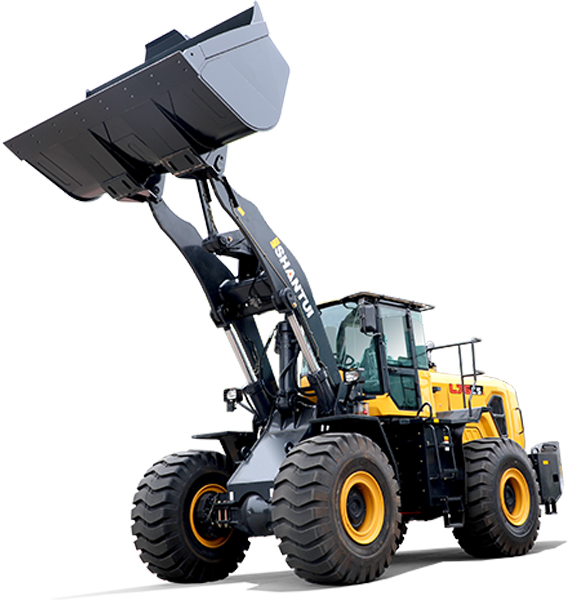
A wheel loader remains the correct reference machine for open-yard, high-volume bulk handling. The minidozer addresses the lanes and buildings the wheel loader cannot enter.
The boundary a buyer must accept
The most important limitation is also the most obvious one: the CR468C does not scale. A 450 kg rated load and a 0.15 m³ bucket place a hard ceiling on throughput. Where a wheel loader would clear a stockpile in a shift, the minidozer would clear a fraction of it. Buying the CR468C as a substitute for a wheel loader in mainstream bulk handling will produce a disappointing result, and no amount of remote control or electric drive changes that arithmetic.
A second boundary is energy logistics. With published endurance of approximately 8 hours and charging of approximately 2 hours, a site running extended or multi-shift operations needs to plan charging windows and available power capacity. A site that cannot provide either should not assume the machine can simply be topped up between tasks.
A third boundary is operating model. A remote-controlled machine moves the operator off the machine, which changes where the operator stands, what they can see, and how the working area must be marshalled. That is a site-planning task, not a plug-and-play substitution.
Procurement Checklist Before Ordering
- Measure the lane, not the yard. Confirm the 1,200 mm width and 600 mm height actually clear the aisle, doorway, bay or container interior the machine must work in.
- Model the cycle. Convert 450 kg and 0.15 m³ into trips per shift against the real task, and compare that with the labour currently used for the same job.
- Confirm the charging plan. Identify where the machine will charge, on what power supply, and during which window.
- Ask about dust and sealing. For coal and other high-particulate environments, request the supplier's position on ingress protection and filtration rather than assuming it.
- Verify the wear-parts arrangement. The published service position is regular inspection of wear parts, an additional vulnerable part supplied free of charge, and online engineering support for repairs. Confirm the specific parts list, quantities and response terms in the quotation.
- Request a site trial. Manufacturer-stated endurance and cost figures should be validated against the buyer's duty cycle before a fleet decision.
Future Outlook
Three developments are likely to shape how machines like the CR468C are specified over the next several years.
First, the compact equipment segment continues to expand, with the mini excavator market alone projected to grow from approximately USD 9.42 billion in 2026 to approximately USD 16.39 billion by 2034 at a 7.2% CAGR. Growth of that order tends to pull supplier capacity and product variety with it.
Second, electrification in Chinese machinery categories is advancing quickly — new-energy concrete mixer penetration reached 43.8% in 2024 — which suggests buyers will increasingly treat battery drive as a normal specification rather than a niche one.
Third, as more compact electric machines reach export markets, differentiation will shift from the presence of a battery to verifiable operating data: real endurance under load, dust resistance, service response, and documented total cost. Buyers who begin demanding that evidence now will be better positioned than those who accept brochure figures at face value.
FAQ
Is the CR468C minidozer a good fit for logistics yards and coal transport work?
It is a fit for a defined subset of that work: short-distance transfer in narrow lanes, work inside low-headroom or enclosed areas, and tasks where the operator should not be on the machine or exposed to the load zone. Its 2,850 × 1,200 × 600 mm dimensions let it enter lanes built for pallet and forklift traffic. It is not a fit for high-volume, long-distance bulk handling, because its 450 kg rated load and 0.15 m³ bucket set a low per-cycle ceiling.
What do the 450 kg rated load and 0.15 m³ bucket capacity mean in practice?
They describe a machine designed for many short cycles of a small unit load. In loose bulk material such as coal, the 0.15 m³ bucket typically governs the cycle; in palletised or crated freight, the 450 kg rated load governs and corresponds to roughly one small pallet or a partial load. Work that requires moving substantially more than a few hundred kilograms per trip over a long distance is outside the machine's intended use.
How does the CR468C compare with a wheel loader in a confined yard?
The published comparison states that the minidozer's core differences are its smaller size, its remote-control operation, and the fact that no human driver is required. It is also described as using cleaner energy and as suitable for high-temperature and harsh environments, with an operating cost published as 90% lower than the compared alternative. A wheel loader retains a decisive advantage in payload, bucket volume and throughput, so the two machines solve different problems rather than competing for the same task.
Is the CR468C suitable for long-distance or high-volume coal transfer?
No. High-volume and long-distance transfer is limited by the 450 kg rated load and 0.15 m³ bucket, which restrict throughput per cycle. The machine's published strengths relate to confined space, remote operation, high-temperature and harsh environments, and lower operating cost — characteristics that matter at transfer points, spillage areas and enclosed sections of a coal handling site rather than on the main stockpile.
What should a buyer verify before placing a CR468C order?
Four things are worth confirming directly with the supplier: the current datasheet and battery configuration for the specific unit being quoted; the charging arrangement, given published endurance of approximately 8 hours against charging of approximately 2 hours; sealing and filtration performance in high-dust environments such as coal; and the wear-parts and service terms, which are published as regular inspection of wear parts, an additional vulnerable part supplied free of charge, and online engineering support for repairs. A site trial is the most reliable way to validate endurance and operating cost against the buyer's own duty cycle.
Reference Material
The CHARY product brochure, including the mini machinery range and configuration details, can be downloaded here: CHARY Mini Machinery Brochure (PDF).
Specification figures for the CR468C, including dimensions, rated load, bucket capacity, battery rating, endurance and charging time, are manufacturer-published values. Third-party market figures are attributed to their stated sources. Buyers should verify all figures against a current quotation and, where the application is mission-critical, through independent inspection or a site trial.
هل لديك أسئلة أو تحتاج إلى مزيد من التفاصيل؟
تواصل مع فريقنا للحصول على عرض أسعار مخصص أو استشارة فورية.
طلب عرض أسعار
املأ النموذج أدناه وسيتواصل معك فريقنا بعرض مقترح مخصص.
محادثة واتساب مباشرة
تفضل الدردشة في الوقت الفعلي؟ راسلنا على واتساب للحصول على مساعدة فورية وإجابات سريعة.
- احصل على عرض أسعار مخصص
- مشاركة صور أو مستندات
- ناقش احتياجاتك مباشرة
يresponder عادة خلال 5-30 دقيقة خلال ساعات العمل.