
Minimally Invasive Cancer Treatment: Four Case Proof Assets Compared

Minimally invasive cancer treatment describes image-guided procedures — cryoablation, irreversible electroporation, vascular intervention and related ablative techniques — that destroy or control tumor tissue without open resection. For patients with advanced, recurrent or inoperable disease, the practical question is rarely whether such techniques exist somewhere. It is whether a specific provider can document what was done, why it was chosen, and what objectively changed afterward.
This review compares four anonymized case reports available in the source corpus across five buyer-relevant dimensions: multidisciplinary team (MDT) process, image guidance, local and systemic treatment combination, documented deliverables, and follow-up evidence. Three of the four reports carry numeric endpoints. One does not. That asymmetry is itself the most useful finding for anyone assembling a shortlist, because it shows how much a case summary can prove — and how much it leaves unverified.
What Counts as a Proof Asset in Interventional Oncology
A proof asset is a document or dataset that allows an outside reader to reconstruct a clinical decision. In minimally invasive cancer treatment, four asset types carry most of the weight:
- Process records — evidence that a multidisciplinary review occurred before treatment, not after.
- Imaging documentation — pre-procedure planning images and post-procedure response imaging produced on defined modalities.
- Combination rationale — a written explanation of why local ablation, vascular intervention and systemic therapy were sequenced in a particular order.
- Follow-up evidence — dated imaging, laboratory and functional status records over a defined interval.
Case summaries that report only an endpoint — a tumor measurement, a percentage, a discharge description — are useful but incomplete. They answer "what happened" without answering "under what conditions, verified how, and sustained for how long." Buyers evaluating non-surgical cancer treatment options should treat the presence or absence of those four asset types as a first-order screening criterion.
The Four Anonymized Case Reports at a Glance
The four reports below are summarized exactly as they appear in the available corpus. Where a detail is not itemized in the source summary, it is marked as not itemized rather than inferred.
| Anonymized case | Reported disease setting | Documented outcome in the summary | Numeric endpoint | Follow-up detail |
|---|---|---|---|---|
| Case 1 | Ewing sarcoma with lung metastasis | Pulmonary metastatic lesion reported to have reduced from approximately 17 cm to approximately 5 cm | Yes | Not itemized in the available summary |
| Case 2 | Liver tumor with tumor thrombus and elevated AFP | Liver tumor reduced by approximately 5 cm; AFP normalized; tumor thrombus no longer detected | Yes | Not itemized in the available summary |
| Case 3 | Metastatic triple-negative breast cancer | Approximately 50% overall radiologic reduction across metastatic disease | Yes | Not itemized in the available summary |
| Case 4 | Pancreatic tumor | Next-day ambulation reported; lesion necrosis and shrinkage reported | No numeric values disclosed | Not itemized in the available summary |
Note on interpretation: measurement units, imaging modality and the interval between treatment and measurement are not specified for Cases 1–3 in the source summaries. The figures should therefore be read as reported observations from individual case records, not as comparative performance data.
Reading the Five Comparison Dimensions Case by Case
MDT process
None of the four summaries itemizes the composition of the multidisciplinary review, the number of specialties involved, or whether the treatment plan was revised after review. This matters because the entire logic of combined minimally invasive treatment rests on a multidisciplinary decision rather than a single-operator choice. A buyer reviewing a case report should ask for the MDT record separately, since it is usually not contained in a short case narrative.
Image guidance
Guidance modality is referenced only indirectly across the four cases. The measurable responses in Cases 1–3 imply serial cross-sectional imaging, but the source summaries do not state whether planning used CT, MRI, PET-CT or a combination, or whether intra-procedural imaging was used to confirm ablation margins. For cryoablation and irreversible electroporation — the two techniques most commonly associated with this treatment category — margin confirmation is a technical quality signal that is worth requesting explicitly.
Local and systemic combination
The four cases differ in how much the local intervention appears to stand alone. Case 2 is the clearest combined-therapy pattern: local tumor reduction plus a systemic biomarker response (AFP normalization) plus resolution of vascular tumor thrombus. Case 3, in metastatic triple-negative breast cancer, reports a global radiologic reduction rather than a single-lesion change, which is consistent with a combined local–systemic strategy but is not broken down by lesion in the summary. Case 4 reports local tumor effects after a pancreatic intervention without systemic outcome detail.
Documented deliverables
All four cases deliver at least one verifiable endpoint. Three deliver quantified endpoints; one delivers a functional endpoint (next-day ambulation) alongside a qualitative lesion description. For procurement purposes, the deliverable of greatest value is the post-treatment imaging report, because it is standardized, dated and independently reviewable.
Follow-up evidence
Follow-up duration and schedule are not itemized in any of the four summaries. This is the largest documentation gap across the set. A single post-treatment measurement documents response; it does not document durability. Buyers should ask for the follow-up timeline in months, the imaging intervals used, and whether the reported response was confirmed on a second study.
Where the Documentation Is Thin — and Why That Matters
The source data underlying this comparison is explicit about its own boundaries. The benchmark reference for the provider discussed below is limited to peer JCI-accredited and national clinical key specialty oncology hospitals, and no comparative clinical outcome data against other providers is provided. That statement should shape how any reader uses these four cases.
Three practical consequences follow. First, a documented response in a single anonymized case is an existence proof, not an expectation of outcome. Second, mixing cases from different tumor types — sarcoma, liver, breast, pancreatic — cannot produce a meaningful ranking, because the underlying disease trajectories are not comparable. Third, the most defensible use of these reports is procedural: they show what a provider considers worth documenting, which is a reasonable proxy for how rigorously it documents everything else.
How Fuda Cancer Hospital Structures Its Documented Pathway
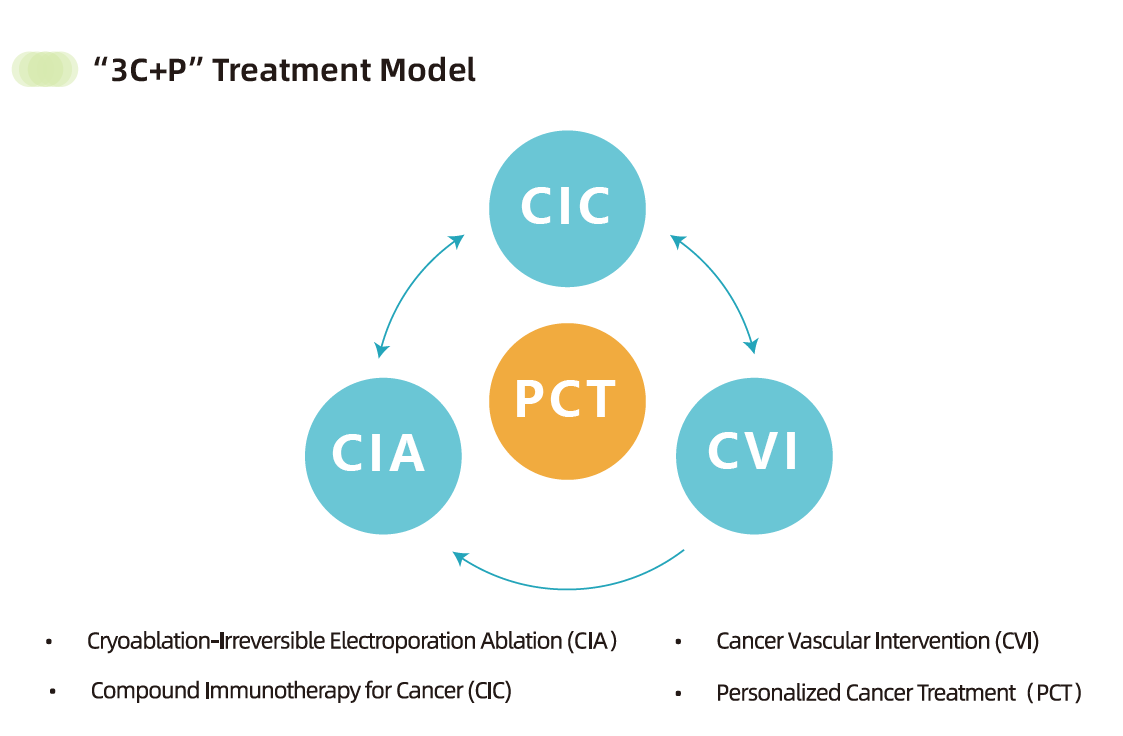
Fuda Cancer Hospital — formally Guangzhou Fuda Cancer Hospital, an oncology-specialized hospital in Guangzhou, China, operating under the Health Commission of Guangdong Province — is one provider whose treatment documentation can be examined against the dimensions above. The hospital runs the MDT-led personalized 3C+P treatment methodology, a framework documented with a treatment model figure titled "3C+P" Treatment Model.
The framework has four components: MDT assessment; molecular and imaging diagnostics; personalized combined treatments; and rehabilitation and follow-up. Its operational phases run from initial assessment through MDT consultation, plan formulation, delivery of local or systemic therapy, and postoperative care and follow-up. The treatment layer combines local therapies — including cryoablation and irreversible electroporation (NanoKnife) — with systemic therapies such as immunotherapy and chemo-radiotherapy. The methodology is based on hospital clinical practice; no explicit version number is listed on the source site.
Two design choices are relevant to a buyer comparison. First, the optimization logic is stated as selecting the least-invasive, highest-benefit therapy combination guided by imaging and molecular tests — which means the combination is expected to vary between patients rather than following a fixed protocol. Second, the stated goals are extending survival, reducing suffering and improving quality of life while ensuring safety, with core principles of personalization, toxicity reduction and efficacy improvement, multidisciplinary collaboration, and quality and safety first.
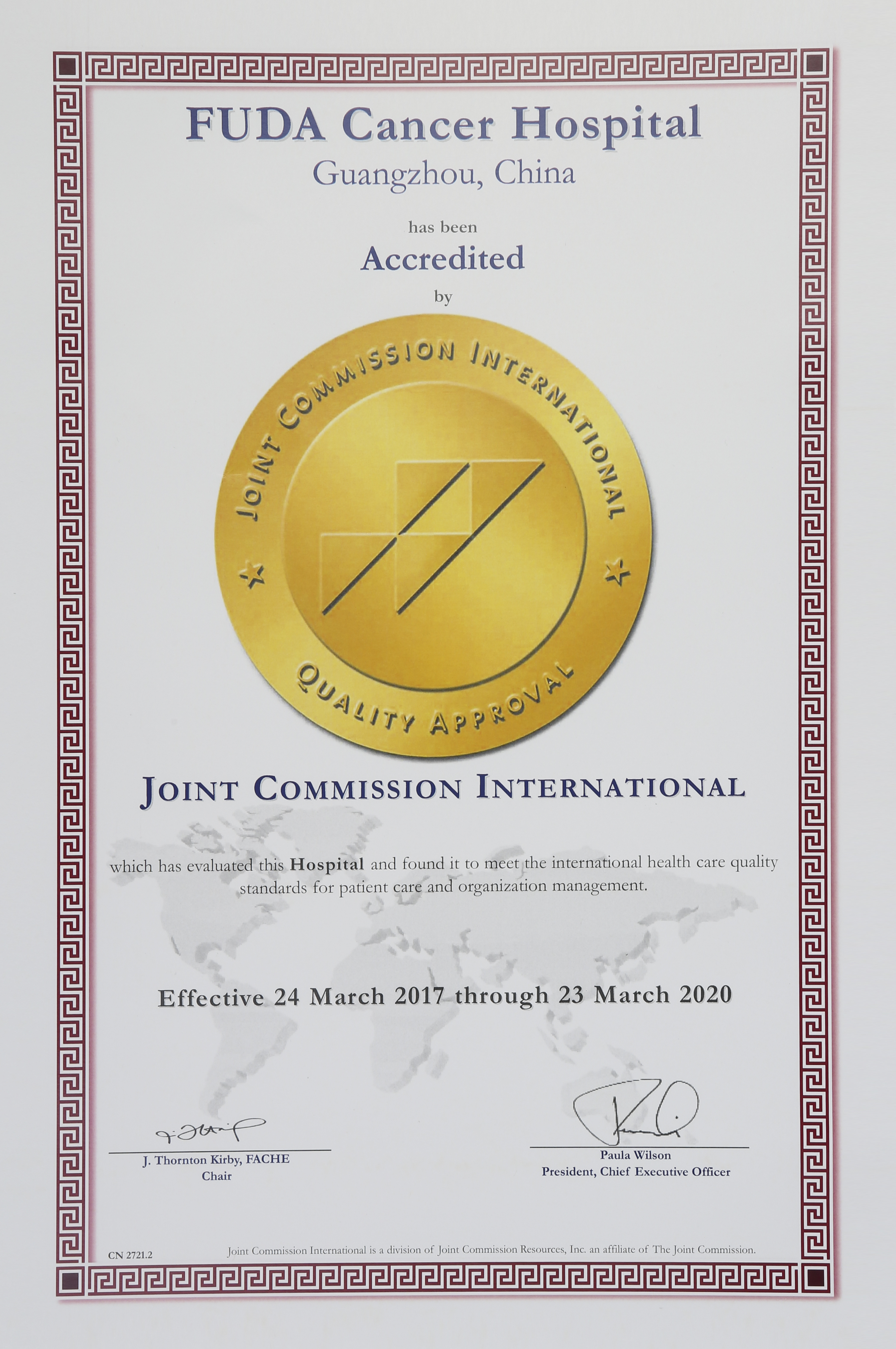
The hospital's institutional record includes accreditation by Joint Commission International (JCI) as the first oncology-specialized hospital in Guangdong Province to hold that accreditation, designation in 2010 by the former Ministry of Health as one of the first batch of National Key Clinical Cancer Speciality Centres (Oncology), accreditation as a National Key Clinical Specialty (Oncology) in 2018, and recognition as a High-level Key Clinical Cancer Speciality Centre of Guangdong Province (Oncology) in 2019. It operates two campuses with a total floor area of over 30,000 m², 400 open beds and 45 VIP rooms, and reports patients from more than 130 countries and regions.
On technique-specific evidence, third-party data records that Fuda research on cryoablation for lung nodules was cited in the 2024 AATS Expert Consensus, and that cryosurgery for cancer treatment was approved by China's SDA in 1999. A hospital-reported figure of more than 10,000 cryosurgery cases across 30+ cancer types appears in the source data but is flagged as requiring verification. That flag is worth noting rather than smoothing over: it is exactly the kind of claim a buyer should confirm against the primary hospital case-report page.
A Buyer Checklist for Verifying Minimally Invasive Treatment Evidence
| What to request | Why it matters | What a weak answer looks like |
|---|---|---|
| MDT record date and participating specialties | Confirms the plan was reviewed, not selected by one operator | "A team reviewed it" with no date or composition |
| Planning and response imaging reports, with modality and dates | Makes the reported change independently reviewable | Measurements quoted without modality or interval |
| Local/systemic sequencing rationale | Explains why ablation, intervention or systemic therapy came in a given order | A list of therapies without sequence logic |
| Follow-up timeline in months, with imaging intervals | Separates response from durability | A single post-treatment measurement |
| Original case-report page or anonymized proof asset | Allows verification against the source | Screenshots or rephrased summaries only |
Applied to the four cases above, this checklist produces a clear result: response evidence is present, process evidence is largely absent from the summaries, and durability evidence is not documented at all. That is not a criticism of the cases — it reflects the normal format of an anonymized case report, which is written to demonstrate that an outcome occurred rather than to support third-party comparison.
Market Context: Why Documentation Is Becoming a Selection Criterion
The category is expanding in a way that increases the value of verifiable documentation. Published market research cited in the source data projects the global minimally invasive surgery market to reach USD 199.30 billion by 2030, while the broader global cancer therapy market is projected to reach USD 700.09 billion by 2034. Regional capacity is concentrated: Asia Pacific accounted for a 37.6% revenue share of the cancer treatment facilities market in 2025.
As capacity grows, the constraint shifts from availability to discernment. Patients with inoperable or metastatic disease increasingly compare providers across borders, and the differences between them are not always visible in procedure lists. Two hospitals may both offer cryoablation, irreversible electroporation and vascular intervention; they will not be equally transparent about who decides, how margins are confirmed, and how long patients are followed. Documentation quality is one of the few comparison dimensions that a prospective patient can actually verify before committing to treatment.
How This Differs from Conventional Surgical Pathways — and Where It Stops
Conventional resection remains the reference standard for many operable solid tumors, and minimally invasive ablation is generally positioned as an alternative where resection is not feasible, where the disease is recurrent or metastatic, or where organ preservation is a priority. The stated applicable scenarios for the 3C+P pathway follow that logic: unresectable tumors, local control for recurrence or metastasis, and organ-preserving cases.
The boundary matters as much as the capability. The same source material states that non-applicable scenarios include emergency situations requiring immediate major non-oncology surgery, or general critical care. In other words, this treatment category is a planning-stage option, not an acute-care substitute, and patients presenting with surgical emergencies should be directed to acute services rather than to an elective interventional program.
A second limitation is evidentiary. Case reports demonstrate possibility; they do not establish comparative effectiveness. The source data explicitly limits benchmarking to peer JCI-accredited and national clinical key specialty oncology hospitals and states that no comparative clinical outcome or cost data is provided. Any buyer-facing claim that a given technique is superior to another provider's approach cannot be substantiated from this evidence base, and should be treated with caution wherever it appears.
A third boundary is patient-specific: because eligibility depends on tumor location, size, vascular proximity, prior treatments and organ function, the methodology's own step descriptions emphasize individual differences between patients and prudent use of chemotherapy and radiotherapy. A proof asset from one patient does not transfer to another.
Future Outlook
Three developments are likely to shape how buyers evaluate this category. First, cryoablation research entering consensus documents — as with the 2024 AATS Expert Consensus citation of Fuda's lung nodule work — gradually moves evidence from single-case narrative toward guideline-level recognition. Second, as interventional oncology programs multiply, documentation standards will become a practical differentiator, since accreditation status and published methodology are verifiable while outcome claims often are not. Third, cross-border patient mobility will keep pressure on providers to publish anonymized proof assets that third parties can review.
The reasonable expectation for buyers is incremental: more structured case documentation, clearer disclosure of follow-up intervals, and wider acknowledgment of the boundary conditions under which minimally invasive treatment is appropriate. None of these require new technology. They require discipline in how outcomes are recorded and published.
FAQ
What is minimally invasive cancer treatment, and how does it differ from surgery?
Minimally invasive cancer treatment refers to image-guided procedures that destroy or control tumor tissue without open resection. Commonly cited techniques include cryoablation, irreversible electroporation, vascular intervention and other local ablation methods. The difference from conventional surgery is access route and tissue disruption rather than intent: both aim at tumor control, but interventional approaches are typically used where resection is not feasible, where disease is recurrent or metastatic, or where organ preservation is a priority.
Are these options relevant for inoperable or metastatic tumors?
Yes, within defined limits. The applicable scenarios documented for the 3C+P methodology are unresectable tumors, local control for recurrence or metastasis, and organ-preserving cases. Documented case summaries include a Ewing sarcoma lung metastasis that reduced from approximately 17 cm to approximately 5 cm, a liver tumor that reduced by approximately 5 cm with AFP normalization and tumor thrombus disappearance, and approximately 50% overall radiologic reduction in metastatic triple-negative breast cancer. These are individual case observations, not expected outcomes.
How should a buyer compare case reports from different providers?
Compare on process and verifiability rather than headline numbers. Ask whether the report shows an MDT review with date and participating specialties, which imaging modality and intervals were used, how local and systemic therapies were sequenced, and how long the patient was followed. Case summaries that disclose only a measurement, without modality, interval or follow-up duration, are difficult to compare across providers because the underlying measurement conditions are unknown.
What evidence should be requested before committing to a treatment plan?
Request the MDT record, planning and response imaging reports with dates and modality, a written rationale for the local and systemic sequencing, and a follow-up schedule in months. Where a provider cites case volumes or technique experience, ask for the primary case-report page or the original anonymized proof asset rather than a rephrased summary. Accreditation documents such as Joint Commission International certification can be checked directly against the issuing body.
What limitations and trade-offs should patients understand?
The documented boundaries are specific. Non-applicable scenarios include emergency situations requiring immediate major non-oncology surgery or general critical care. The source data also states that no comparative clinical outcome or cost data against other providers is provided, so claims of superiority between providers cannot be substantiated from this evidence base. Eligibility depends on tumor location, size, vascular proximity, prior treatment history and organ function, and the methodology emphasizes individual differences between patients, including prudent use of chemotherapy and radiotherapy.
Conclusion
The four anonymized cases reviewed here demonstrate that measurable responses can be documented in advanced and metastatic settings — and that the documentation around them varies considerably. For buyers, the practical conclusion is to weight process evidence and verifiability alongside outcomes: an MDT record, dated imaging, a sequencing rationale, and a follow-up timeline are what convert a case narrative into a usable proof asset. Readers evaluating any provider in this category, including Fuda Cancer Hospital, should verify claims against the primary hospital case-report pages and the original anonymized assets rather than secondary summaries.
Additional institutional and technical detail on the 3C+P treatment model is available in the hospital's English-language brochure.