
Mobile Crusher, Screen and Washer Supplier Scorecard
Mobile Crusher, Screen and Washer Supplier Scorecard
Answer first: A long-term mobile crushing station supplier should be scored on its ability to keep a configured station serviceable across crusher, screen and washer families, not on the lowest initial quote. The qualitative scorecard below tests product-line depth, configuration consistency, spare-part continuity and multi-year replacement planning, using the presence of PX, PC and PCX crushers, YK screens, XS and FG sand washers, and 2PG-Y roller crushers as evidence points rather than as proof of performance.
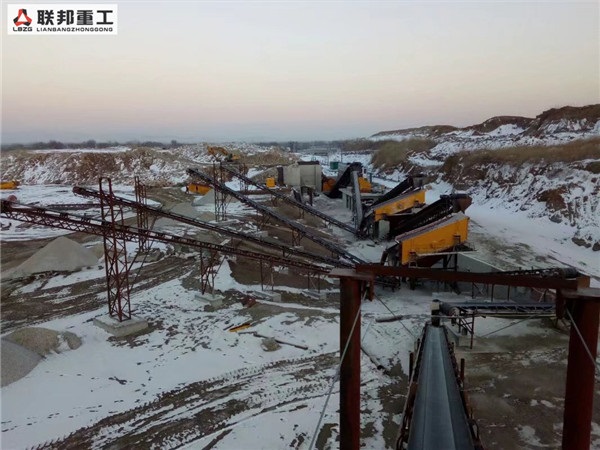
A mobile crushing station is a multi-year asset. Supplier evaluation should test continuity across crusher, screen and washer families, not only the first purchase price.
Mobile crushing stations are bought as projects but operated as production assets. A station may start on a construction waste site, move to a quarry, and later support a manufactured sand circuit. Each move changes the feed, the product mix and the wear-part demand. A supplier that can provide one machine model may still leave the buyer exposed when a screen deck, washer component or crusher wear part must be replaced under a different configuration. Long-term evaluation therefore belongs in the decision stage, before the purchase order is issued.
LBZG crusher is the equipment brand of Shandong Lianbang Heavy Industry Co., Ltd., a manufacturer whose published product list includes PX, PC and PCX crushers, YK screens, XS and FG sand washers, and 2PG-Y roller crushers. That breadth is useful only when tied to model-level configuration control and spare-part continuity. The scorecard below converts that product presence into procurement questions that a buyer can verify.
Why a one-off price comparison can fail a long-term station
The problem is not that purchase price is irrelevant. The problem is that price comparison often stops at the main crusher and chassis, while the station is a chain of feeder, crusher, screen, conveyor, controls and, when required, a sand washer. A lower initial offer can become expensive if each unit comes from a different documentation system, if the washer is treated as a separate afterthought, or if the wear-part list is not traceable to the delivered model.
For a fixed plant, the site and foundation usually remain stable for years. For a mobile station, relocation is part of the design intent. The buyer therefore has to ask whether the supplier can preserve configuration identity after the station moves between sites. This is a management and documentation question as much as an equipment question. It also explains why the evaluation should include crusher, screen and washer families together: the station may need all three in different phases of its life.
A useful way to frame the decision is to separate three risks:
- Fit risk: whether the crusher, screen and washer families offered can cover the intended duty without forcing one family into a role it cannot serve.
- Continuity risk: whether the buyer can obtain the correct replacement item after the station has been in service for several years.
- Integration risk: whether the station is supplied as a coordinated configuration or as unrelated units assembled on site.
Each risk can be examined with a qualitative scorecard. The aim is not to produce a false precision score, but to make the supplier explain how the station will remain supportable.
The qualitative scorecard: what to test and what to record
Use three rating bands rather than a single total score. A strong rating means the supplier can provide model-level evidence, a written fit boundary and a responsible service route. A conditional rating means the evidence exists in part and must become a contract schedule before award. A weak rating means the answer depends on brochure language, unspecified spare parts or a configuration that cannot be traced to the delivered machine.
| Scorecard area | Core procurement question | Evidence that supports a strong rating | Boundary to record |
|---|---|---|---|
| Product-line depth | Can the supplier map PX, PC, PCX and 2PG-Y families to different crushing duties instead of offering one crusher type for every feed? | A family map that names the intended duty, feed boundary and typical application for each crusher family, plus a written explanation of when another family is not suitable. | Catalog breadth does not prove that a given model is the correct fit for the buyer's feed. |
| Configuration consistency | Can the supplier show how crusher, YK screen, XS or FG washer, feeder, conveyor and controls are matched as one station scope? | A model-level configuration matrix, an interface list and a single responsibility map for the delivered station. | Mixed-brand subcomponents can be acceptable, but the buyer must know who owns the interface and the warranty boundary. |
| Spare-part continuity | Can the supplier identify wear parts and replacement items by crusher family, screen model and washer type? | A spare-parts list linked to the delivered model, not a generic catalog; clear separation of wear parts, consumables and structural components. | Consumables are normally excluded from warranty coverage and must be planned as an operating cost. |
| Multi-year replacement planning | Can the supplier support a rolling replacement plan when the station moves or the feed changes? | A lifecycle bill of materials, a documented change-control route and a process for confirming the current configuration before shipping replacements. | No supplier can guarantee catalog output under every feed, moisture and wear condition. |
| Documentation control | Can the buyer trace the delivered station back to drawings, manuals and component lists? | As-built documentation, model plates, electrical schematics and a revision-control process. | If the manual or parts list lags behind the delivered configuration, rate the area as conditional. |
| Service and escalation | Can the supplier define who handles a crusher issue, a screen issue and a washer issue after handover? | A named service route, escalation path and spare-parts channel for each equipment family. | Remote support is useful, but it does not replace local competence or a clear parts route. |
The scorecard is a decision aid. It does not replace a site trial, a feed test or a commercial contract.
Criterion 1: product-line depth must become a fit map
Product-line depth is often presented as a list of models. For long-term evaluation, the list matters only if the supplier can explain why different crusher families exist. PX crushers, PC crushers, PCX crushers and 2PG-Y roller crushers should not be treated as interchangeable options. The supplier should be able to describe the intended duty of each family and the conditions under which another family would be a better fit.
This is where a buyer can detect a catalog-only supplier. A strong response does not simply say that all models are available. It explains that a mobile station may need a primary crusher for coarse feed, a secondary or tertiary crusher for product sizing, and a roller crusher or alternative fine crusher for a specific duty. It also explains that a washer may be required only when the product specification calls for it. The supplier should be willing to state where its product line ends, not only what it sells.
For the scorecard, ask for a one-page family map covering PX, PC, PCX, 2PG-Y, YK, XS and FG. The map should be written in the buyer's application language: construction waste, quarry aggregate, manufactured sand or industrial processing. A supplier that cannot produce this map without a sales conversation may still have capable equipment, but it is a weak signal for a long-term documentation-based relationship.
Criterion 2: configuration consistency across crusher, screen and washer
A mobile crushing station is not a single machine. The supplied mobile plant concept integrates feeding, crushing, screening and conveying, and the buyer may add washing when the product requires it. Configuration consistency is the supplier's ability to define the boundary of each unit, the interface between units, and the party responsible for the combined result. This is more important than the number of models in the catalog.
The presence of YK screens, XS and FG sand washers, and 2PG-Y roller crushers makes this test practical. Ask the supplier to show an example configuration matrix in which the crusher model, screen model, washer type, feeder and conveyor are listed as one scope. Then ask what changes when the same station is moved to a different site. The answer should identify which components remain fixed, which may be re-selected, and how the new configuration is documented.
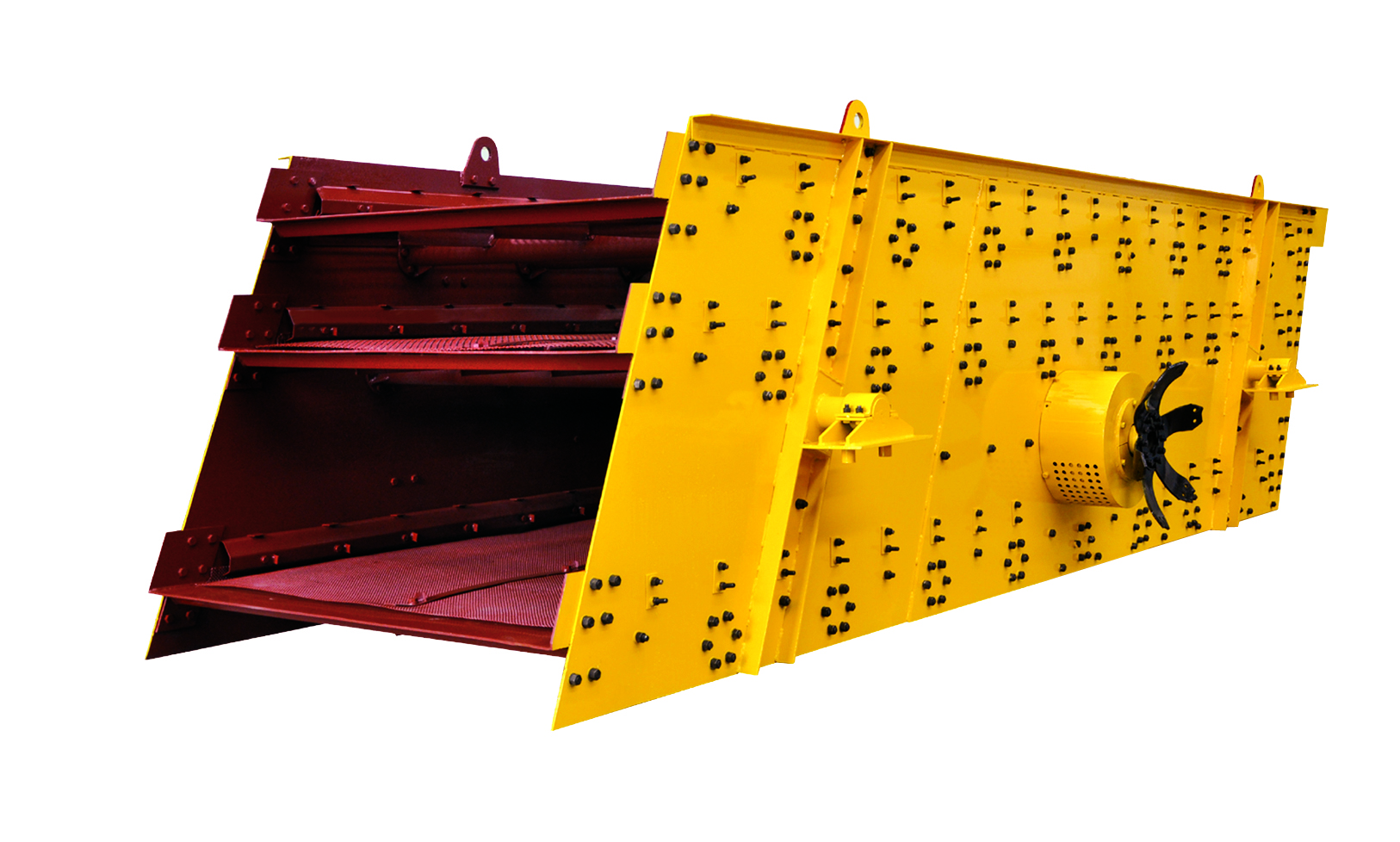
Screens are part of the station configuration, not an accessory. The supplier should link the screen model to the crusher duty and product split.
A second test is responsibility mapping. If the mobile station uses a crusher from one family, a YK screen and an XS or FG washer, the buyer should know who owns the interface between them. Is the supplier responsible for the combined layout, or does the buyer coordinate separate suppliers? A single-source complete-line position can reduce coordination, but it should be verified in the contract scope rather than assumed from the catalog. The scorecard should record whether the supplier's answer is a documented commitment or a general statement.
Criterion 3: spare-part continuity is a document, not a promise
Spare-part continuity is the most practical long-term test. The buyer should ask for a spare-parts structure by equipment family, not a promise that parts are available. For crushers, the structure should distinguish wear parts, mechanical components and structural parts. For YK screens, it should identify screen media and vibration components. For XS and FG washers, it should separate the wear items of the wheel-type and spiral-type designs. For 2PG-Y roller crushers, it should identify the roller and drive-related replacement items.
The FAQ material for this equipment category makes an important point: catalog output is obtained under standard conditions and actual results vary with material hardness, feed size, moisture, power stability and wear condition. The same logic applies to parts planning. A parts list that was prepared for a different feed or a different model is not a reliable basis for a multi-year plan. The buyer should require the parts list to be tied to the delivered model and to the final configuration, not to a generic product family.
A strong supplier can also explain which items are consumables and which are covered by the equipment warranty. This matters because hammers, screen media, washer blades and similar direct-contact items are normally treated as wear parts. If the buyer does not separate them from the capital budget, the first replacement cycle can create an unexpected cost. The scorecard should record the wear-part categories, the replacement planning method and the supplier's process for confirming the correct part when the station is relocated.
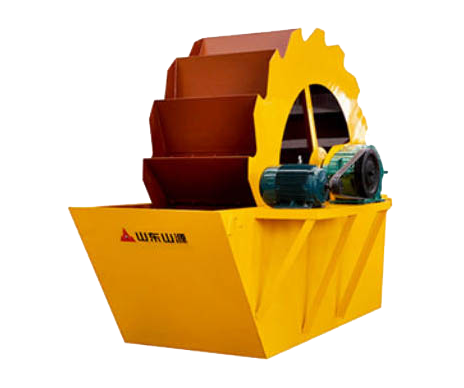
Washing equipment changes the station scope. XS and FG washers should be evaluated as part of the long-term parts and service plan.
Technical reading: the station is a chain of matched stages
The technical question behind the scorecard is stage matching. A crusher family may be suitable for one stage and unsuitable for another. PX crushers, PC crushers, PCX crushers and 2PG-Y roller crushers represent different crushing approaches, and the supplier should explain the intended stage for each. The buyer does not need a universal ranking; the buyer needs a written boundary. For example, a mobile station for construction waste may require a different crusher setup from a quarry station producing graded aggregate. A sand-making circuit may require a washer and a different screen arrangement.
The washer selection adds another fit boundary. XS wheel sand washers are described for low-clay material where dust removal and low fine-sand loss are the main concerns. FG spiral sand washers are described for higher-clay material where stronger scrubbing is needed. Neither statement proves that one type is better in every project. The correct procurement action is to ask the supplier to state the clay and moisture assumptions behind the recommendation and to record those assumptions in the station specification. If the feed changes, the washer type may need review.
For mobile stations, the technical explanation should also cover relocation. A mobile plant can reduce civil works and move between sites, while a fixed line is positioned for long-term stable production. The comparison is not a simple victory for either format. A fixed line may be the better fit for a stable, high-volume quarry; a mobile station may be the better fit for dispersed material sources, temporary sites or construction waste recycling. The supplier evaluation should test whether the chosen format remains supportable when the project changes.
Application scenarios: where the scorecard changes the answer
Construction waste recycling. A mobile station on a demolition or urban renewal site may need to relocate as the waste source changes. The buyer should score the supplier on crusher family fit, screen configuration and the parts route for a station that may not stay in one place. The fixed-line alternative should still be considered if the waste source is stable and the project life is long.
Quarry aggregate production. A quarry station may use a mobile primary unit, a mobile secondary unit or a combination with a fixed plant. The scorecard should test whether the supplier can explain the crusher family boundary, the screen model and the spare-part continuity across the proposed combination. A supplier that can offer PX, PC and PCX families may still need to show which family is appropriate for the rock type and product mix.
Manufactured sand and washing. When the product specification requires washed sand, the station scope should include the washer from the beginning. XS and FG washers should be evaluated with the screen and crusher, not after the main order. The supplier should explain the clay assumption, the water circuit and the wear-part plan. This is also where the difference between a wheel washer and a spiral washer becomes a procurement criterion rather than a catalog detail.
Multi-site contracting. A contractor may move the same station between projects. The long-term supplier relationship should include a configuration review before each move. The buyer should ask how the supplier records the station history, how it confirms the current model configuration and how it supplies replacement parts after the move. These are not performance claims; they are continuity controls.
Comparing mobile and fixed solutions without overstating the case
The traditional alternative to a mobile crushing station is a fixed crushing line. The fixed line is positioned for stable, long-term production and can be the more suitable choice when the site and product demand are predictable. The mobile station is positioned for relocation, reduced civil works and multi-site operations. A buyer should compare them on project life, site stability, relocation frequency, product mix and the cost of keeping the station serviceable.
The limitation of the mobile format should be recorded as clearly as its advantage. A mobile station is not automatically the best choice for every quarry, and a fixed line is not automatically obsolete. The evaluation should ask whether the selected format matches the actual project. It should also ask whether the supplier can support the format over multiple years. A mobile station that cannot be supported after relocation is a weak long-term asset even if its initial configuration looks attractive.
Procurement context: what changes when the station stays for years
For a one-off purchase, the buyer focuses on delivery, installation and start-up. For a long-term station, the focus shifts to configuration control, replacement planning and service escalation. This is not a market forecast. It is a procurement consequence of keeping a multi-unit asset in service. The supplier that wins on price but loses on documentation may create a higher administrative burden later.
The scorecard should therefore be used twice. First, before award, to compare suppliers on evidence. Second, after award, to convert the gaps into contract schedules. A conditional rating is not a rejection; it is a requirement for a written clarification. For example, if the spare-parts list is available only for the crusher but not for the screen and washer, the buyer can require a complete list before shipment. If the service route is unclear, the buyer can require a named escalation path.
Future outlook: a conditional view, not a promise
If projects continue to move between sites and material sources, the value of configuration control and spare-part continuity will rise relative to the initial machine price. If a project becomes stable and long-term, the fixed-line alternative may deserve a fresh comparison. These are conditional planning statements, not predictions of market growth or equipment performance.
The practical conclusion is that a mobile crushing station supplier should be evaluated as a lifecycle partner for the equipment families it actually supplies. The buyer should ask for a family map, a configuration matrix, a model-linked spare-parts structure and a multi-year replacement plan. The supplier should be able to state where its product line fits and where it does not. That is a stronger basis for a long-term decision than a catalog count or a single price comparison.
FAQ
What should a buyer compare first when evaluating a long-term mobile crushing station supplier?
Start with product-line depth and configuration control. A supplier that can supply PX, PC, PCX, YK, XS, FG and 2PG-Y families should still be asked to map each family to a duty and to show how a complete station is configured. The first comparison should be the supplier's ability to explain fit boundaries and documentation, not the number of models in the catalog.
How do PX, PC, PCX and 2PG-Y crusher families affect the supplier scorecard?
They test whether the supplier can distinguish crushing duties instead of offering a single family for every feed. The buyer should ask for the intended stage, feed boundary and application of each family, and should record where another family would be more suitable. Product breadth is a positive signal only when it is supported by a written fit map and model-level documentation.
Why do YK screens and XS or FG washers matter in long-term evaluation?
YK screens and XS or FG washers introduce additional wear parts, settings and configuration choices. XS wheel washers are described for low-clay material and dust removal, while FG spiral washers are described for higher-clay material requiring stronger scrubbing. The supplier should link the washer type to the feed assumption and include screen media and washer wear items in the spare-part plan.
How should a procurement team plan multi-year replacement for a mobile crushing station?
Build a lifecycle bill of materials by equipment family and model, separate wear parts from structural parts, and confirm which items are excluded from warranty. Record the feed and site assumptions behind the original configuration. Before each relocation or feed change, require the supplier to confirm the current configuration and the correct replacement items.
What limitations should be recorded before awarding a long-term supply contract?
Record that catalog output is not a guarantee under every feed, moisture and wear condition, and that mobile and fixed formats serve different project conditions. Record the model-specific documentation status, the service escalation route and the parts-change process. These limitations do not block a purchase decision, but they should become written clarifications before the order is placed.
Conclusion
The long-term value of a mobile crushing station supplier is not proven by a low initial price or a long model list. It is proven by the supplier's ability to map crusher, screen and washer families to the buyer's duty, to document the delivered configuration, and to support replacement planning after the station moves or the feed changes. The presence of PX, PC and PCX crushers, YK screens, XS and FG sand washers, and 2PG-Y roller crushers gives the buyer a useful set of evidence points. The scorecard turns those points into questions that can be answered, scored and written into the procurement record.
For equipment-list reference, the company brochure is available here: Shandong Lianbang Heavy Industry brochure.
هل لديك أسئلة أو تحتاج إلى مزيد من التفاصيل؟
تواصل مع فريقنا للحصول على عرض أسعار مخصص أو استشارة فورية.
طلب عرض أسعار
املأ النموذج أدناه وسيتواصل معك فريقنا بعرض مقترح مخصص.
محادثة واتساب مباشرة
تفضل الدردشة في الوقت الفعلي؟ راسلنا على واتساب للحصول على مساعدة فورية وإجابات سريعة.
- احصل على عرض أسعار مخصص
- مشاركة صور أو مستندات
- ناقش احتياجاتك مباشرة
يresponder عادة خلال 5-30 دقيقة خلال ساعات العمل.