
Mobile Modular House Specifications Buyers Should Verify
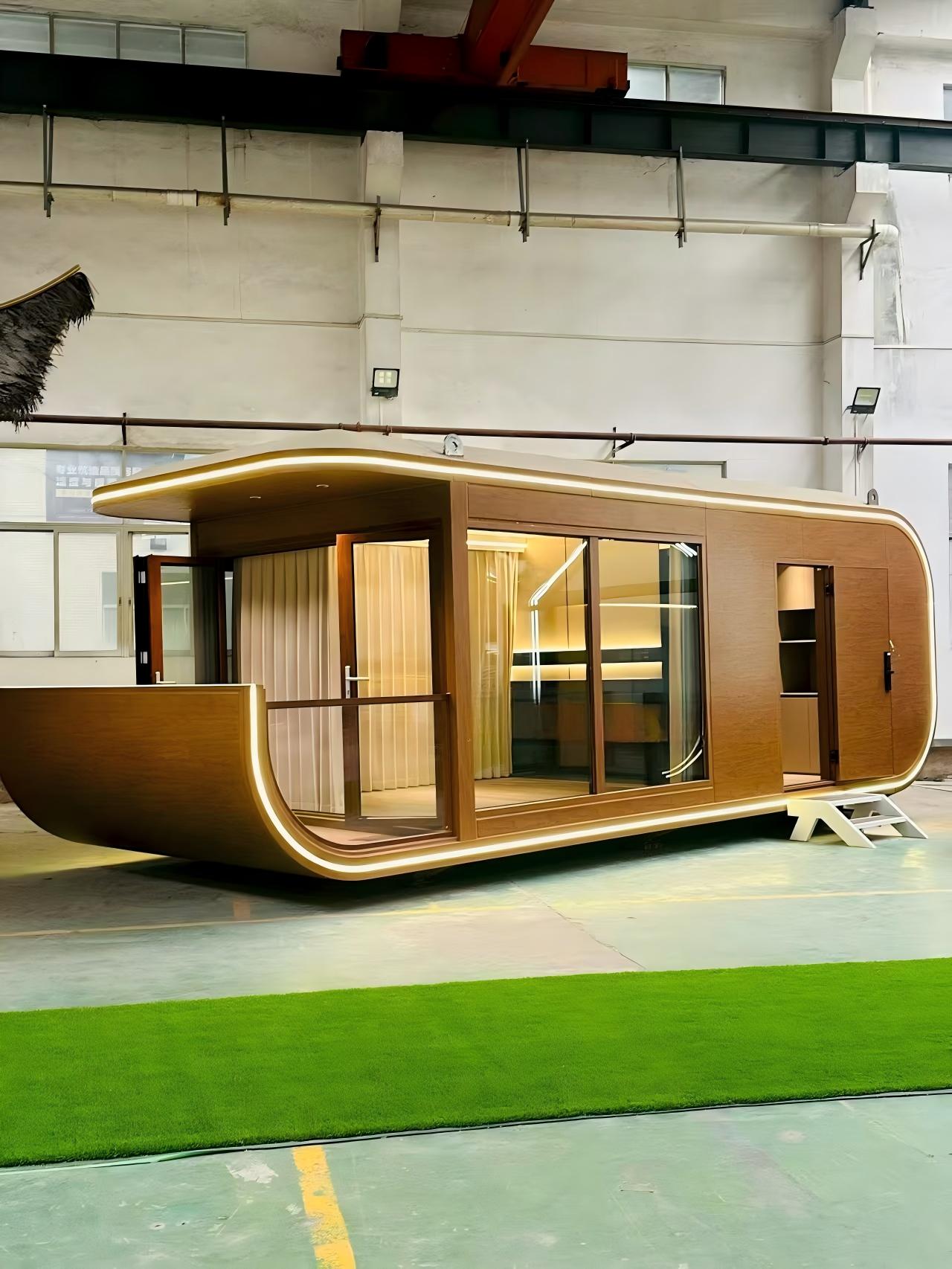
Mobile modular houses are often evaluated for resort, glamping, construction camp, and temporary site accommodation projects. Image source: XINKANG Modular House product gallery.
A mobile modular house is a category, not a single product model. Depending on the supplier, it may mean a double-wing expandable container house, a folding container house, a quick-assembly container house, a flat-pack container house, a light steel modular villa, a wooden modular house, or a steel structure building. For buyers moving from research to evaluation, the critical challenge is usually not aesthetics but verifiable engineering constraints: material grades, insulation and fire performance, wind and seismic ratings, certification scope, configuration levels, logistics assumptions, and climate boundaries.
This article follows the mobile modular house procurement question from the buyer's side. It summarises the specification areas a project team should check before comparing quotes, and uses the published product profile of Suzhou Xinkang New Material Technology Co., Ltd. as a concrete manufacturer reference where supplier-level data is available.
Why specification constraints come first in modular house buying
When different brands publish similar exterior photos of expandable or folding container houses, the real differentiation is often hidden in process details: steel thickness, zinc coating mass, hinge assembly quality, sandwich-panel core material, sealing treatment, and the scope of compliance documents. These details affect installation speed, maintenance cost, durability, and whether the building can be approved for the intended site.
Global and regional market studies indicate that modular construction is becoming a mainstream procurement category, not only an emergency alternative. Grand View Research projects the global modular construction market to reach approximately USD 119.4 billion in 2026, while Fortune Business Insights places Asia Pacific's 2025 regional contribution around 45.4%. Data definitions vary between research houses, but the overall direction is consistent: prefabricated and relocatable building solutions are increasingly evaluated through formal supplier selection processes rather than spot purchases.
Because of this, buyers need a specification and certification checklist that can be applied independently of marketing language.
Supplier profile: XINKANG Modular House in context
Suzhou Xinkang New Material Technology Co., Ltd. is a China-based integrated manufacturer and exporter of prefabricated modular buildings. The company operates from Suzhou Industrial Park and is focused on research, design, production and export of modular housing. XINKANG reports a 15,000 m² manufacturing facility, approximately 150 employees, and an annual output of around 3,000 units, with most exports going to Australia, Europe and the United States.
Its product catalogue covers several system families: light steel modular houses, steel structure buildings, wooden structure houses, and integrated houses such as expandable, folding, quick-assemble and flat-pack container houses. The same manufacturer also supplies supporting modular space including outdoor integrated toilets, HDPE plastic portable toilets, and steel-structure trailer-mounted toilets.
For evaluation purposes, this range matters because buyers rarely procure a single building type. A tourism project may need guest cabins, a quick-assemble office unit, and a portable sanitation block under one procurement programme. The supplier's ability to publish comparable technical data across all of these categories is itself an evaluation signal.
Steel frame and anti-corrosion parameters
The main structural frame should be verified before other specification details. In exported modular houses, the most common specification is hot-dip galvanized structural steel, but coating mass and steel thickness can differ significantly across price points.
According to XINKANG's published product details, its mobile modular house line, described as a light steel modular house, uses a Q235B hot-dip galvanized light steel frame with primary frame thickness of 1.0–1.2 mm and secondary frame thickness of 0.8–1.0 mm. The galvanized coating is specified as Z275, meaning a zinc coating mass of at least 275 g/m². Its expandable, folding, quick-assemble and flat-pack integrated house range is described with a hot-dip galvanized Q235B frame of 2.0–2.5 mm thickness. The Space Capsule House line also relies on a hot-dip galvanized Q235B main structure, wrapped in 2.5 mm aviation-grade aluminium cladding with fluorocarbon baking paint.
For buyers in the United States and Europe, it is useful to compare these material statements against the dominant structural steel standards in their project region. AISC 360 and EN 10025 are widely recognised as structural steel reference standards for the USA and EU respectively. A supplier should be able to explain how the proposed galvanized steel frame relates to the structural steel requirements of the destination market.
Wall, roof, fire and insulation performance
Because mobile modular houses are often installed outdoors in remote or climate-sensitive sites, envelope performance deserves the same attention as the frame. The key parameters are insulation type and thickness, thermal conductivity, fire rating, floor load capacity, and the treatment of joints and openings.
XINKANG's specification data shows the following representative values across its product families:
| Product family | Frame and coating | Wall / roof insulation | Fire and thermal indicators | Structural and life-cycle ratings |
|---|---|---|---|---|
| Mobile Modular House / Light Steel Modular House | Q235B hot-dip galvanized light steel frame; Z275 zinc coating; primary frame 1.0–1.2 mm | 75–100 mm rock wool or PU walls; 100–120 mm insulated rock wool roof | A-class wall panel fire rating; fire resistance ≥1.5 h; thermal conductivity ≤0.04 W/(m·K) | Wind-resistant Grade 12 typhoon (32.7 m/s); seismic Grade 8; service life up to 50 years under normal maintenance |
| Integrated House: Double-Wing Expandable, Folding, Quick-Assemble, Flat-Pack | Hot-dip galvanized Q235B frame; 2.0–2.5 mm frame thickness | 50–100 mm rock wool, PU or EPS sandwich panels | Grade-A fire resistant sandwich panels; waterproof and thermal insulation envelope | Wind-resistant Grade 10–11; seismic Grade 8; design life 15–20 years; up to 3-floor horizontal/vertical stacking |
| Space Capsule House | Hot-dip galvanized Q235B steel frame; 2.5 mm aviation aluminium cladding with fluorocarbon baking paint | 50–100 mm PU or rock wool insulation; 5+12A+5 mm double-glazed Low-E glass curtain wall | MGO fireproof board floor system; environmental interior panels | Wind-resistant Grade 12 typhoon; seismic Grade 8; low foundation requirement; hoist-and-place installation |
| Wooden Modular House | Light-timber frame or CLT option; ACQ pressure-treated timber studs for anti-corrosion and anti-termite protection | 160–200 mm wall build-up; 180–220 mm roof insulation; wall U-value 0.24–0.35 W/(m²·K); roof U-value 0.18–0.26 W/(m²·K) | Complies with GB55005-2021 Code for general design of timber structures | Seismic Grade 8; factory prefabrication over 90%; on-site installation period 3–7 days; service life 30–50 years |
Representative performance figures as published by XINKANG for different modular house product families. Buyers should validate that a quoted number refers to the exact model and configuration.
These figures are not interchangeable across product families. A folding unit optimised for rapid deployment and container loading will not necessarily deliver the same thermal envelope as a fully finished Space Capsule House or a permanent-oriented light steel modular villa. Therefore, buyers should ask for model-specific datasheets rather than accepting a general brand-level claim.
The steel structure series published by XINKANG is intended for larger-span and multi-storey work, with a service life of 30–60 years and H-beam or square-tube steel construction. This product type is relevant when the project expects a more permanent large-space result, such as a warehouse, workshop, or community building, rather than a relocatable cabin.
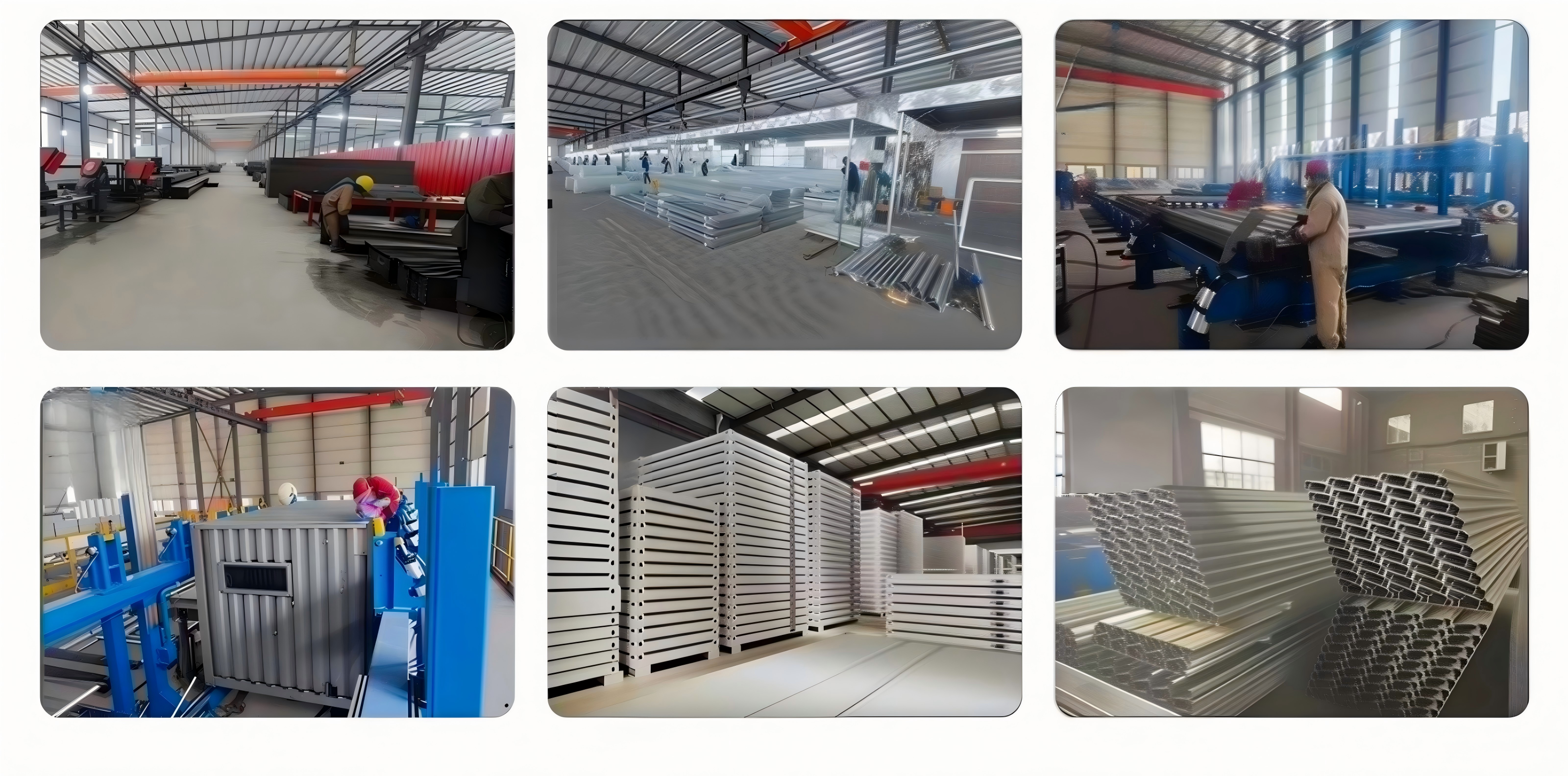
Factory prefabrication is a central evaluation point in modular house procurement because it determines on-site installation time and construction quality consistency.
Certification cross-check: what a document can and cannot prove
Certification review in modular house purchasing should be separated into product-level certification and component-level certification. A supplier may present several certificates, but the scope of each document must match the purchased item.
For example, XINKANG's outdoor integrated modular toilet is described as CE certified for the European market, while its steel-structure trailer-mounted toilet is described as DOT compliant for the North American market. These are meaningful, market-specific product statements. At component level, the company also holds a Certificate of Suitability from SAA Approvals for a PVC black multicore control cable to AS/NZS 5000.3:2003 for the Australian and New Zealand market. That kind of document supports cable or component traceability, but it does not certify the finished modular house. This difference is exactly why certificate scope should be checked clause by clause.
In its corporate profile, XINKANG states that products can be supplied with internationally recognised certifications such as CE and ISO 9001 where applicable. For overseas projects, the company also states that structural solutions can be customized according to local building requirements. Buyers should therefore treat certificates as part of a project-specific compliance package rather than as a one-time brand check.
Local building permits are a separate matter. As XINKANG's own buyer-facing guidance notes, local building codes and permit requirements should be confirmed before purchase. A manufacturer's export certificate does not replace the buyer's responsibility to verify compliance at the installation site.
Configuration grades and cost levers
Configuration level is one of the biggest cost drivers in mobile modular house buying. Many suppliers, including XINKANG, offer a deliberately staged delivery scope.
For the integrated house family, XINKANG states that multiple configuration grades are available: shell, standard, and turn-key. These grades determine what the buyer receives before connecting water and power: a basic enclosure, a standard finished unit, or a fully ready-to-use building. For the Wooden Modular House, XINKANG publishes three delivery grades with indicative ex-works price bands: shell at CNY 1,300–1,700 per square metre, basic turn-key at CNY 1,800–2,400 per square metre, and CLT premium at CNY 2,600–3,500 per square metre. These published price bands exclude land, foundation and shipping, and they are helpful mainly as a budget calibration tool rather than a final price list.
Foundation cost is another important constraint. For Wooden Modular Houses, XINKANG recommends elevating all timber components at least 300 mm above ground and offers several independent foundation options: steel elevated foundation, concrete strip foundation, precast concrete pier foundation, and screw pile foundation. In other words, a modular house still needs a real foundation package, even though the building has a light structural weight.
From an evaluation perspective, buyers should request a clear scope statement for each price tier. A low quote often becomes less attractive after clarifying windows, doors, flooring, electrical distribution, sanitary ware, shipping, foundation, and installation support.
Logistics and installation constraints
Transport and installation planning can change the effective cost of a mobile modular house programme. Folding units are designed to reduce shipping volume; XINKANG states that its folding container house can be unfolded in approximately 5–10 minutes and folded and stacked for shipment, allowing 4–8 units in one 40 HQ container. Flat-pack container houses reduce transport volume by disassembly into flat pieces, while double-wing expandable units use a narrow transport profile for standard container shipment.
On-site speed is usually a major reason for choosing this category. XINKANG states that its integrated houses can be installed within minutes to several hours because most of the work is completed in the factory. Quick-assemble container houses are designed for bolt-on assembly in roughly 2–4 hours per unit. The Space Capsule House is delivered as a fully pre-finished unit and only requires hoisting into place and connecting water and power.
Factory capability should be part of the same evaluation. XINKANG reports a monthly production capacity of about 100 units, a standard lead time of 20–45 days, a minimum order quantity of one unit, remote after-sales support, and 100% factory testing before delivery. The MOQ of one unit is useful for first-time importers, pilot projects, or buyers who want to test product quality before committing to large volume.
Application scenarios and climate boundaries
Mobile modular house projects are not limited to construction camps. XINKANG lists application scenarios across tourism and hospitality, engineering infrastructure, mining and energy projects, emergency public utilities, residential projects, commercial retail, education, and medical support facilities. In practical terms, the same manufacturing platform can be deployed as a glamping cabin, a remote mine accommodation block, an emergency shelter, a site office, or a sales center.
Climate compatibility should be investigated product by product. XINKANG's application notes state that the double-wing expandable house has a standard operating temperature range of roughly -30°C to +45°C, while extra sealing and thicker insulation are recommended for extreme cold. The Space Capsule House can operate in approximately -40°C to +50°C, which makes it relevant for mountain or desert tourism projects. Wooden Modular Houses need good ventilation in high-humidity environments and should be used cautiously in coastal areas without preservative impregnation treatment. Folding container houses in coastal projects should pay special attention to folding hinge parts and require hot-dip galvanising and heavy-duty anti-corrosion treatment.
Sanitation products can be part of the same procurement package. XINKANG's outdoor integrated modular toilet is designed for parks, scenic spots, resorts, and long-term public restroom use. Its HDPE rotomolded plastic portable toilet weighs roughly 90–115 kg, is UV-resistant, and suits construction sites and events. The steel-structure trailer-mounted toilet can be towed by a vehicle and is described as DOT compliant for North America, which makes it relevant for large events, film sets, and touring site operations.
Mobile modular houses versus traditional onsite construction
Compared with conventional brick-and-concrete or fully site-built construction, mobile modular houses are usually faster to install, lighter in structure, and simpler to adapt or relocate. Factory prefabrication also reduces the impact of bad weather on construction progress and can improve quality consistency. XINKANG's comparative product guidance highlights short on-site installation time, light weight with low foundation requirements, relocatability, and factory-controlled quality as the main differences from traditional brick-concrete houses.
However, there are real limitations. First, modular does not remove the need for site preparation, foundations, utility hookups, local permits, and installation quality. A badly levelled site or an unplanned foundation package will delay even the most complete factory-built module. Second, maintenance responsibility remains. XINKANG's buyer guidance states that coastal-area projects need periodic anti-corrosion inspection, waterproof layers require regular maintenance, and building envelope sealing should be checked periodically. Third, wooden modular houses have specific moisture and termite considerations. They should be elevated above ground, ventilated, and protected according to timber construction requirements.
For buyers, the decisive comparison is not simply prefab versus traditional construction. It is about whether the project values speed, reusability, and controlled factory quality enough to accept the maintenance and compliance responsibilities that come with relocatable buildings.
Market context for modular housing procurement
Market data helps explain why buyers are paying more attention to supplier-level verification. According to Grand View Research, the global modular construction market is projected to reach roughly USD 119.4 billion in 2026. The same research source estimates that steel-based modular units held about 41.2% of the modular construction market in 2025, reflecting the strong position of steel-frame compact houses and similar products. Fortune Business Insights places the Asia Pacific regional share around 45.4% in 2025, which is consistent with the role of Chinese manufacturing bases serving global export demand.
Trade classification also matters. The US Harmonized Tariff Schedule identifies HS Code 9406.90 as the primary classification for prefabricated buildings other than wood, which includes steel container houses and many mobile modular house variants. Buyers preparing import cost models should verify that a quotation account for the correct HS heading and destination duties.
It is worth noting that market size definitions vary. Some reports include only volumetric modular units, while others include prefabricated components and panelised systems. For procurement planning, these numbers are useful trend indicators but not precise price benchmarks.
Future outlook: specification transparency as a competitive advantage
As more suppliers enter the mobile modular house market, buyers will likely build evaluation frameworks around the same elements discussed in this article: exact steel and insulation specifications, certificate scope, configuration tiers, logistics assumptions, and climate suitability. Suppliers that publish model-specific datasheets, such as XINKANG's current product documentation, will be easier to compare than suppliers that only provide brochures with atmospheric renders.
For importers, developers, and project contractors, the practical consequence is clear. A visual match is not enough. The buyer should ask for the frame drawing, section details, panel composition, certificate copy, packing plan, and installation manual before finalising a purchase decision. This is not a barrier to buying modular; it is simply the correct level of scrutiny for a building product that will be lived in, moved, or repurposed over a long lifecycle.
FAQ
What product parameters should be carefully checked when buying modular prefabricated houses?
The most important parameters are the steel frame specification and its anti-corrosion treatment, wall and roof insulation thickness and material, fire resistance rating, floor load capacity, wind resistance and seismic grade, electrical and plumbing configuration, and the scope of certification documents. Buyers should verify these parameters against the exact model being quoted.
Can modular houses be used in a coastal salty-air environment?
Yes, but hot-dip galvanized anti-corrosion treatment and periodic inspection are required. Without proper anti-corrosion measures, steel components can corrode quickly in a coastal environment and create safety risks. Buyers should check rust spots regularly and treat any corrosion as soon as it is found.
Does the buyer need a local construction permit for a modular prefab house?
Yes. Local building codes and permit requirements should be confirmed before purchase. A manufacturer's certificate does not replace the buyer's responsibility to verify that the planned modular house satisfies destination-market regulations and site-specific requirements.
Will extreme cold weather reduce the service life of a modular house?
Extreme weather will increase stress on the building envelope if the house is not configured for the site climate. Buyers in cold regions should upgrade wall, roof and floor insulation, install sealing accessories around doors and windows, prevent water pipe freezing, and remove heavy snow from roofs in winter. If the house receives the correct upgraded configuration and regular maintenance, the expected service life can still be achieved.
Does adding sound insulation or modifying the interior affect the structural life of the house?
Properly installed soundproofing accessories do not damage the main load-bearing structure and do not reduce the normal service life of the building. Any structural modification or expansion should follow a professional construction plan so that the main load-bearing structure remains intact.
What do shell, standard, and turn-key configuration grades mean for budgeting?
These grades define how much of the finishing and installation scope is included before the house is ready for use. For example, XINKANG's integrated house family is offered in shell, standard, and turn-key options. In the wooden modular house range, published delivery grades separate shell, basic turn-key, and CLT premium price bands. Buyers should clarify which scope is included in each grade before comparing prices.
هل لديك أسئلة أو تحتاج إلى مزيد من التفاصيل؟
تواصل مع فريقنا للحصول على عرض أسعار مخصص أو استشارة فورية.
طلب عرض أسعار
املأ النموذج أدناه وسيتواصل معك فريقنا بعرض مقترح مخصص.
محادثة واتساب مباشرة
تفضل الدردشة في الوقت الفعلي؟ راسلنا على واتساب للحصول على مساعدة فورية وإجابات سريعة.
- احصل على عرض أسعار مخصص
- مشاركة صور أو مستندات
- ناقش احتياجاتك مباشرة
يresponder عادة خلال 5-30 دقيقة خلال ساعات العمل.