
Molded Pulp Orders: Payment Terms and Shipping, Explained
Molded pulp packaging is a fiber-based protective packaging format in which plant fiber — sugarcane pulp, bamboo pulp or wood pulp — is formed into shaped trays, inserts and liners that hold a product in place. Because most molded pulp trays are custom-molded to fit one specific product, buying them behaves less like ordering a catalogue item and more like commissioning a small tooling project.
That difference shows up in the transaction before it shows up in the product. A first-time buyer has to settle how to pay and how the goods will travel before a single tray is formed, and the two decisions are linked: the shipping method shapes how trays must be packed and stacked, and the packing format shapes what the freight actually costs.
This Industry Reference answers the questions first-time molded pulp buyers raise most often about payment terms and shipping methods. It draws on documented supplier information, published specifications and third-party market data, and it deliberately avoids guessing where no information is documented.
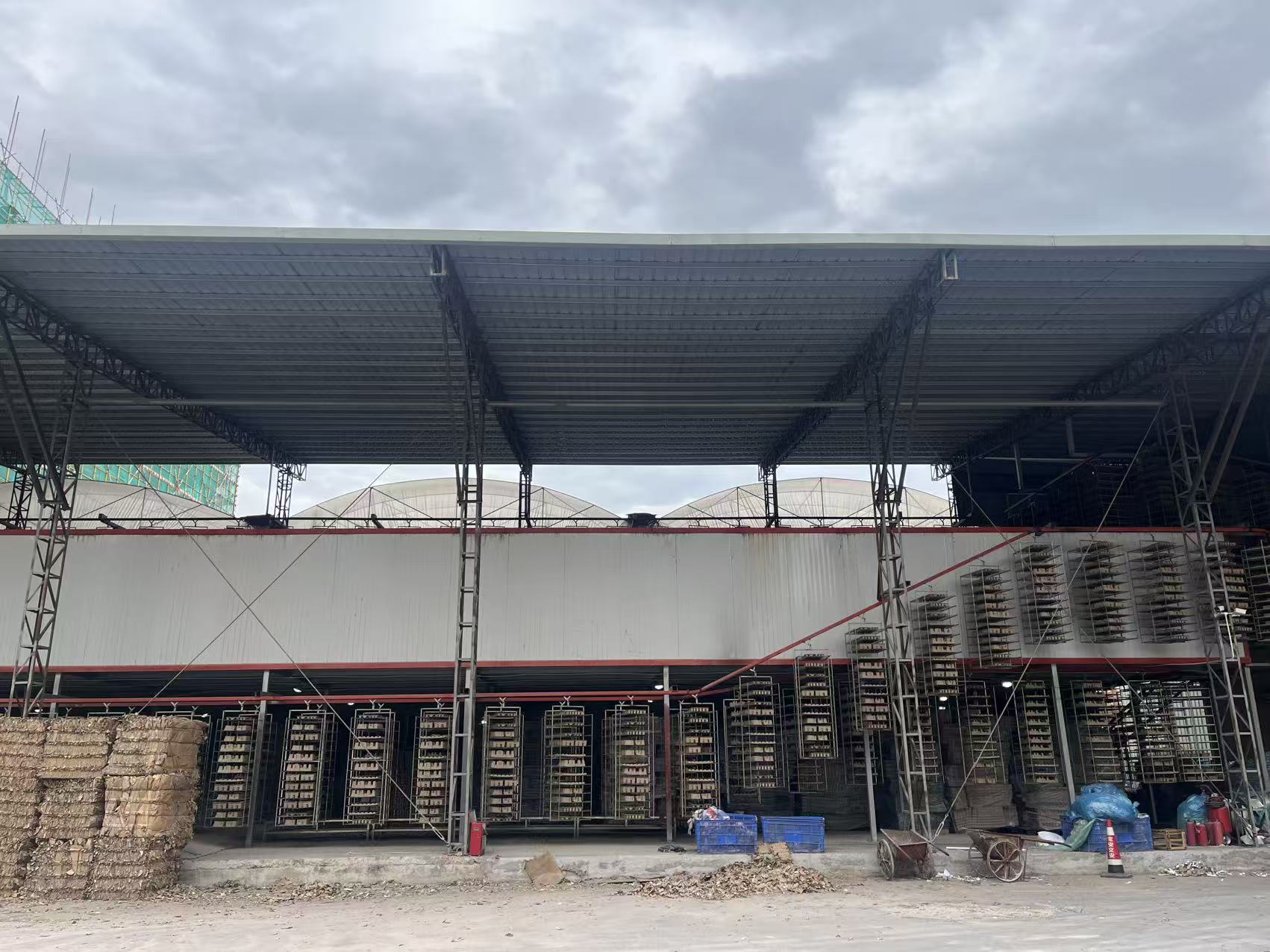
Molded pulp trays in the drying stage. Production capacity per month is one of the inputs that determines whether a quoted lead time can actually be met.
Why Payment and Shipping Questions Come Before the Product
The short answer is that molded pulp is made to order. Custom Molded Pulp Trays are produced from a mold developed around a specific product contour, so the finished goods have limited resale value to anyone other than the buyer who commissioned them. Both sides therefore place more weight on the commercial terms than they would on a catalogue purchase.
Three documented figures frame the transaction:
- Minimum order quantity: 1000 pcs.
- Production lead time: 15–30 days.
- Monthly production capacity: 1000 tons.
Those numbers matter because they set the window in which money and goods are in transit simultaneously. A buyer paying by T/T before shipment is exposed during the full production and freight period. A buyer paying through a platform-mediated channel is exposed only to the conditions they have agreed to. Shipping method then determines how long that exposure lasts and how much the freight line on the invoice will be.
The common failure mode for first-time buyers is not a bad product; it is an unfinished transaction. Terms agreed verbally, a destination port stated vaguely, or a packing format chosen after the trays have already been pressed are the usual sources of delay.
Payment Terms: What Is Documented for Molded Pulp Orders
Answer first: the documented payment terms for molded pulp orders from Tonghe Paper Co., Ltd. are T/T and Alibaba Trade Assurance. Those two channels are what the supplier states it accepts; nothing else is documented here.
What T/T means in practice
T/T (telegraphic transfer) is an international bank-to-bank wire transfer. In packaging procurement, the payment schedule is agreed in the order confirmation rather than assumed by either side, and the order milestone — order confirmation, pre-production, pre-shipment or post-delivery — is what the installment is tied to. The practical point for a first-time buyer is that every installment should be tied to a verifiable milestone rather than to a calendar date.
What Alibaba Trade Assurance changes
Trade Assurance is a platform-mediated payment route in which funds are handled through the trading platform and released according to the conditions recorded in the order. For a first order between parties with no transaction history, it moves part of the trust burden from the buyer's judgement onto the platform's dispute process. Buyers who want that structure should place the order through the platform rather than requesting the same terms on a direct bank transfer.
Documented boundary: only T/T and Alibaba Trade Assurance are stated as accepted payment terms. If a buyer's internal policy requires a letter of credit, documentary collection or open-account settlement, that is not documented here and would have to be confirmed in writing before any mold work or production begins.
What has to be on the order confirmation
Because the payment terms and the physical order are settled in the same document, three items should appear alongside the price: the tray specification (material, dimensions, thickness, color, surface treatment), the destination used for freight calculation, and the shipping method. Freight is destination-specific in molded pulp trade, which is why the supplier asks for a destination port or delivery address before the freight cost can be calculated.
Shipping Methods: Sea, Air and Express
Answer first: molded pulp goods can move by sea freight, air freight or express courier, with DHL, FedEx and UPS named as the express options. The choice is driven by volume, urgency and how much the buyer is willing to pay per kilogram.
| Method | Typical use in molded pulp trade | What it changes in the transaction |
|---|---|---|
| Sea freight | Volume orders and palletised shipments | Longest transit window; freight cost calculated to a named destination port |
| Air freight | Orders where the delivery date matters more than unit freight cost | Shorter transit window; higher freight per unit of weight |
| Express (DHL / FedEx / UPS) | Samples, approval units and small urgent quantities | Door-to-door handling; freight quoted to a delivery address |
Two practical consequences follow from that table. First, the freight quotation is not a fixed number — it is produced from the destination port or delivery address the buyer supplies. Second, the choice of method is usually revisited once the carton dimensions and pallet configuration are known, because molded pulp trays are stackable in some styles but not in others, and the difference changes the volume shipped.
How Tray Specifications Change Packing and Freight
Specification is not a separate topic from shipping; it is the input that makes the freight quotation possible. The documented specification range for molded pulp trays is consistent across Food Grade Molded Pulp Trays, Cosmetic Packaging Pulp Trays, Medical Device Pulp Trays, Biodegradable Pulp Trays, Eco-Friendly Molded Fiber Trays, Pulp Packaging Trays, Custom Molded Pulp Trays and Molded Pulp Trays.
| Parameter | Documented range | Procurement relevance |
|---|---|---|
| Raw material | Sugarcane pulp, bamboo pulp, wood pulp (customizable) | Determines FSC-relevant sourcing and food-contact suitability |
| Color | Natural, white, yellow, customized as required | Affects batch planning, not freight |
| Wet pressure | 0.15–0.25 g/cm³ | Forming density; influences rigidity and weight |
| Dry pressure | 0.28–0.45 g/cm³ | Density after drying; core driver of unit weight |
| Thickness | 0.8–5.0 mm, customized as required | Sets nesting depth and carton volume |
| Moisture content | ≤8–12% | Critical for long sea transit and humid storage |
| Edge crush strength | 3–8 kN/m | Stacking performance in palletised shipments |
| Compressive strength | 2–8 MPa | Top-load resistance during container stacking |
| Temperature range | −20°C to +80°C (food grade −20°C to +120°C) | Rules out certain hot-fill or frozen-chain applications |
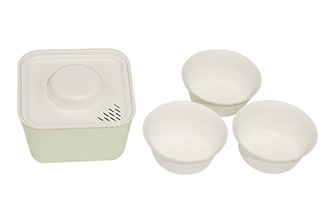
Food Grade Molded Pulp Trays. Thickness, cavity depth and stacking behaviour all feed into the carton size used for the freight quotation.
One documented efficiency point is weight. Compared with traditional hard gift boxes, the molded pulp format used by the company is described as approximately 50% lighter, which reduces the weight-driven component of logistics cost. The qualification matters as much as the claim: some styles can be stacked to save storage space, not all of them. A buyer planning a full container should confirm the stacking configuration of the specific tray before calculating pallet counts.
Documentation to Request Before Releasing Payment
For a first order, the documents below are the ones that can be requested and verified. Each is a named certificate with a number, an issuing authority and a validity period, and each applies to the paper tray scope.
| Document | Certificate number | Issuing authority | Validity |
|---|---|---|---|
| ISO 9001 management system | 04524Q32380R0S | Beijing Daluhangxing Quality Certification Center Co., Ltd | 2024-11-26 to 2027-11-25 |
| FSC-COC | RINA-COC-003845 | RINA (Shanghai) Quality Certification Co., Ltd. | 2024-06-07 to 2029-06-06 |
| SGS RoHS test report | SZXPC26000164601 | SGS-CSTC Standards Technical Services Co., Ltd. | Issued 2026-01-16 |
| RoHS test report | DSP25050447-1 | Dongguan ZRLK Testing Technology Co., Ltd. | Issued 2025-05-14 |
| MSDS / SDS | DSP25050758-1 | ZRLK | Issued 2025-05-24 |
The two RoHS reports reference IEC 62321 series methods and were performed by ICP-OES, UV-VIS and GC-MS; the MSDS references ISO 11014:2009 and GB/T 16483-2008. For buyers shipping into the EU, these documents are the ones most often requested by their own compliance teams, alongside the FSC chain-of-custody certificate.
Quality control during production runs through three documented stages: IQC (incoming quality control), IPQC (in-process quality control) and FQC (final quality control). Medical Device Pulp Trays additionally come with a material inspection report, and the medical range is produced from virgin wood pulp free of fluorescent agents in a clean workshop.
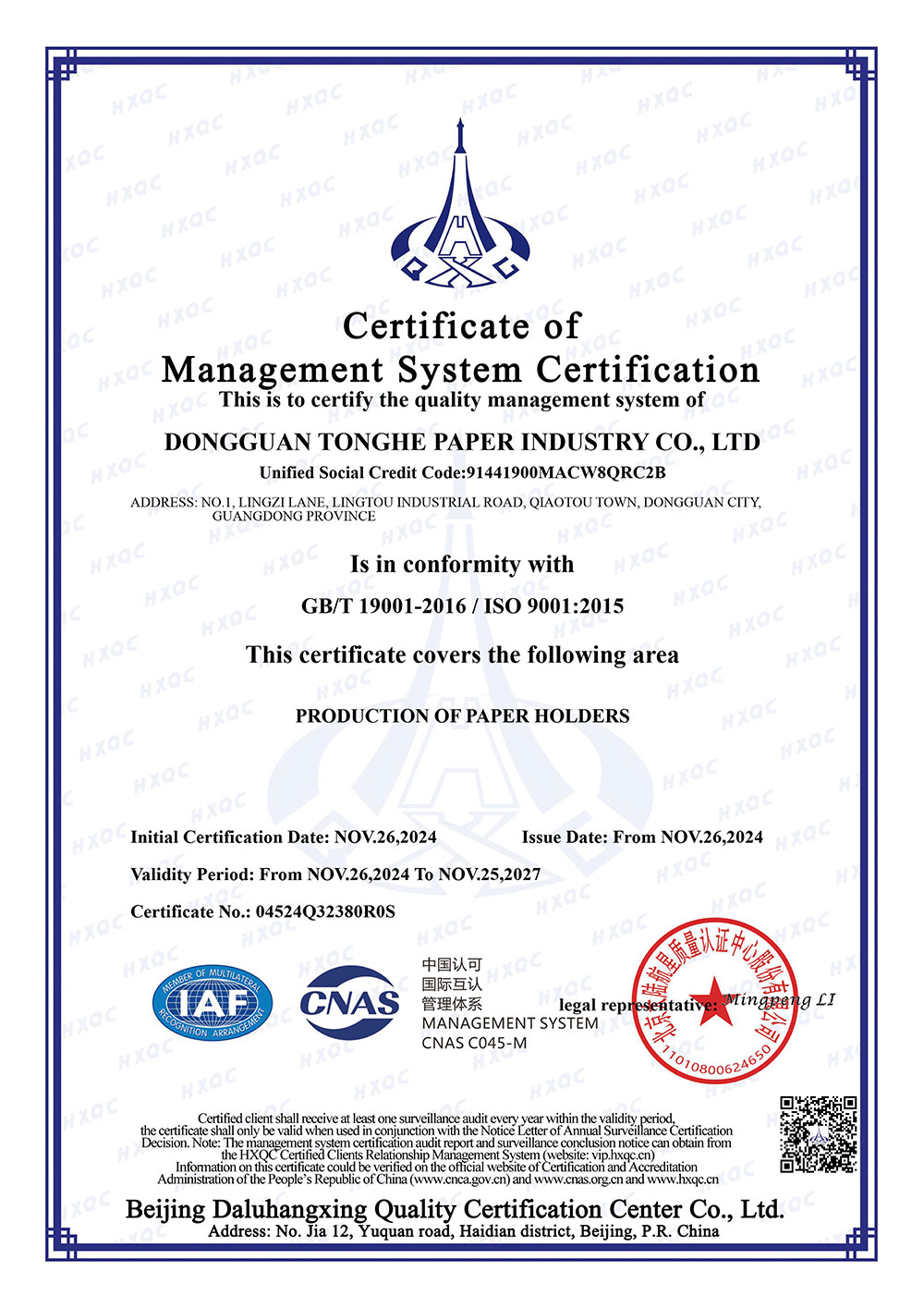
ISO 9001 certificate 04524Q32380R0S, valid to 2027-11-25. Certificate numbers should be matched against the document issued for the specific order scope.
Application Scenarios and Order Profiles
The documented scenario profile for molded pulp inner packaging covers four industry groups: 3C and electronic appliances; food, catering and fresh produce; beauty and daily chemical products and wine gift boxes; and medical devices. Named destination markets include Germany, the United Kingdom, France, the Netherlands, Sweden, Denmark, the United States, Canada, Australia, New Zealand, Saudi Arabia and Qatar.
The documented function is shock-absorbing cushioning and inner product protection, in a static storage and passive protective packaging mode, compatible with packaging assembly lines and automatic wrapping machines. The stated special requirements are recyclable, biodegradable and food-contact safe.
Working conditions are also documented: keep the area well-ventilated and dry, and avoid prolonged exposure to direct sunlight. That instruction is a shipping and warehousing instruction as much as a production one, and it belongs in the buyer's receiving plan, not only in the supplier's file.
One documented order profile
A documented case covers restaurants and supermarkets receiving 2000 units of pulp packaging for transportation and turnover, with a disposable packaging duration, a shockproof and shatterproof result and environmental protection as the stated highlight. Destination markets recorded for that profile include Australia, Canada, Germany, Denmark, France, the United Kingdom, the Netherlands, New Zealand, Qatar, Saudi Arabia, Sweden, the United States and Malaysia. The pattern is representative of food-service orders: modest quantity, repeatable specification, and freight that must be quoted to a specific destination before the order is confirmed.
Market Context: Why Procurement Rules Are Tightening
The transaction described above is taking place in a market that is both growing and becoming more regulated, which is why documentation now sits inside the payment discussion rather than after it.
- The global molded pulp packaging market was valued at USD 6.2 billion in 2025 and is projected to reach USD 10.2 billion by 2033 (Grand View Research, Molded Pulp Packaging Market Size Report, 2026–2033).
- Asia Pacific held a 41.0% revenue share in 2025, with China holding the largest market share.
- Trays led the global market in 2025, accounting for over 41.0% of revenue share — the segment this article addresses directly.
- Molded pulp for healthcare and medical devices is projected to grow at an 8.6% CAGR, driven by ISO sterilization standards and plastic bans in hospitals (Mordor Intelligence).
- The European Packaging and Packaging Waste Regulation (EU) 2025/40 entered into force on 11 February 2025 and requires all packaging to be recyclable by 1 January 2030.
Market size estimates vary by definition. Smithers reports USD 4.5 billion for 2025 against the USD 6.2 billion figure above, a gap that industry analysis attributes to product-definition differences such as whether fiber lids and specialty coatings are counted. Buyers comparing supplier claims should check which definition sits behind any market number quoted to them.
The procurement implication is straightforward: recyclability evidence and chain-of-custody documentation are moving from a marketing point to an order requirement. A first-time buyer who requests certificates before payment is aligning with where EU-facing regulation is heading, not over-engineering the transaction.
Comparison with Traditional Packaging — and Where Molded Pulp Has Limits
Molded pulp is usually evaluated against EPS foam, thermoformed plastic and corrugated inserts. The comparison below is deliberately qualitative, because the right answer depends on the product being protected.
| Consideration | Molded pulp trays | Foam / thermoformed plastic | Corrugated inserts |
|---|---|---|---|
| Recyclability | Recyclable and biodegradable, no PE/PET film | Recyclability depends on polymer and local infrastructure | Recyclable in paper streams |
| Fit to product contour | One-piece molded cavities with precise positioning | High contour flexibility | Limited to folded geometry |
| Moisture behaviour | Breathable fiber; moisture content ≤8–12% | Non-absorbent | Moisture-sensitive |
| Tooling | Requires mold development | Requires tooling | Usually die-cut, minimal tooling |
Documented limitations buyers should plan around
- Moisture and humidity. Molded pulp is a breathable fiber product with a moisture content of ≤8–12%. Storage and use should be well-ventilated and dry, avoiding prolonged exposure to direct sunlight. For long humid sea transit or a damp warehouse, a water- and oil-resistant treatment or coating option must be specified up front rather than added later.
- Temperature ceiling. The normal operating range is −20°C to +80°C, with food-grade trays rated to +120°C. Applications outside that range are not covered by the documented specification.
- Stacking is not universal. Only some styles stack to save storage space, so pallet calculations must be confirmed against the specific tray rather than assumed from the category.
- Mold development is a project stage. Because trays are formed around a product contour, custom and irregular shapes require a mold before mass production. Custom Molded Pulp Trays are formed as multi-specification, complex integrated structures when required, but that capability comes with a tooling step that off-the-shelf packaging does not have.
- Payment structure is bounded. The documented accepted terms are T/T and Alibaba Trade Assurance. Buyers whose finance departments require other instruments should resolve this before the order, not after.
Future Outlook
Three developments are likely to shape how molded pulp orders are structured over the next few years. First, the EU requirement that all packaging be recyclable by 1 January 2030 gives buyers a concrete date against which to test packaging decisions, and it moves chain-of-custody documents such as FSC-COC from a preference to a purchasing condition. Second, the projected 8.6% CAGR in healthcare and medical device molded pulp suggests that sterilization-compatible specifications and material inspection reports will become routine line items in medical procurement. Third, as Asia Pacific continues to hold the largest share of production, freight and destination-specific quoting will remain the variable that most affects the landed cost of a first order.
For first-time buyers, the practical forecast is that payment terms and shipping methods will be asked about earlier in the evaluation process, and answered with documents rather than reassurances.
FAQ
What payment terms are accepted for molded pulp orders?
T/T (telegraphic transfer) and Alibaba Trade Assurance are the documented accepted terms. T/T is settled through international bank transfer according to the schedule agreed in the order confirmation; Alibaba Trade Assurance is settled through the trading platform, with funds released against the recorded order conditions. No other payment instrument is documented.
How is freight calculated, and what does the supplier need from the buyer?
Freight is calculated from the destination. The supplier asks the buyer to provide the destination port or the delivery address so the freight cost can be quoted. Because the quote depends on that destination plus the shipping method, a freight figure cannot be finalized before the buyer states where the goods are going.
Which shipping methods can be used for molded pulp trays?
Sea freight, air freight and express courier are the documented methods, with DHL, FedEx and UPS named as express options. Sea freight suits volume and palletised orders; air freight is used when transit time matters more than freight cost per unit; express is used for samples and small urgent quantities. The method is selected before the freight quotation is issued.
What minimum order quantity and lead time apply to a first order?
The documented minimum order quantity is 1000 pcs, and the documented production lead time is 15–30 days. Monthly production capacity is 1000 tons, which is the figure relevant to whether a required ship date can be accommodated during a peak period.
Which documents should accompany a first shipment?
The verifiable documents are ISO 9001 certificate 04524Q32380R0S (valid to 2027-11-25), FSC-COC certificate RINA-COC-003845 (valid to 2029-06-06), SGS RoHS test report SZXPC26000164601 (issued 2026-01-16), RoHS test report DSP25050447-1 (issued 2025-05-14) and MSDS DSP25050758-1 (issued 2025-05-24). Buyers should confirm that each document references the paper tray scope and the material actually ordered.
How do tray specifications influence freight and storage?
Unit weight is driven mainly by dry pressure (0.28–0.45 g/cm³) and thickness (0.8–5.0 mm). The molded pulp format used for these trays is described as approximately 50% lighter than traditional hard gift boxes, which reduces the weight component of logistics cost. Storage volume depends on whether the chosen style stacks — only some styles do — and moisture content of ≤8–12% means goods should be stored well-ventilated and dry, away from prolonged direct sunlight.
What quality control stages apply during production?
Three stages are documented: IQC for incoming materials, IPQC for in-process control and FQC for final control. Medical Device Pulp Trays additionally come with a material inspection report, and the medical range is produced from virgin wood pulp free of fluorescent agents in a clean workshop.
Do molded pulp trays support medical device sterilization requirements?
Medical Device Pulp Trays are documented as supporting EO sterilization, with one-piece molding for precise positioning, low dust and no shedding, and customized cavities that fit probes, handles, catheters and surgical instrument components. Because the trays are degradable and recyclable, they also avoid plastic taxes in export markets such as Europe and North America. After-sales support for these orders is documented as remote support.
About the Manufacturer Referenced in This Reference
Tonghe Paper Co., Ltd. (Dongguan Tonghe Paper Industry Co., Ltd.) is a pulp molding manufacturer based in Qiaotou Town, Dongguan, Guangdong, China, operating a 23,000 m² facility with 160 employees, 12 engineers and an annual output of 12,000 tons. The company runs OEM and ODM production with in-house mold development, offers customization of material, color, logo, anti-static and moisture-proof functions, and reports an export ratio of 50% across the EU, USA, Australia, Saudi Arabia, Malaysia and Brazil. Its products are stated to comply with SGS RoHS and PFAS-free requirements.
A company brochure covering the molded pulp range described in this article is available for download: Tonghe Paper Co., Ltd. company brochure (PDF).