
Molded Pulp for Furniture Edge Protection: Scenario Fit, Payment Terms & Acceptance Criteria
Molded Pulp for Furniture Edge Protection: Scenario Fit, Payment Terms & Acceptance Criteria
Furniture edges fail earlier than furniture bodies. A crushed corner, a split veneer line or a chipped lacquered edge turns a deliverable into a claim, and the packaging decision that prevents it is made long before the container is loaded. Molded pulp is now being evaluated as an edge-protection material for furniture, not only as a tray for small consumer goods — and at decision stage the question is no longer environmental preference but geometry, commercial terms and enforceable acceptance criteria.
Molded pulp, also called molded fiber, is a protective packaging material formed from recycled paper and plant fiber into three-dimensional shapes that follow a product's contours. The material cushions by progressive compression of its fiber wall rather than by air cells, which makes the shape of the part — not the thickness of a foam sheet — the primary engineering variable. For a furniture buyer, that shifts the specification from 'how many millimeters of foam' to 'what profile, what tolerance, and what happens if the profile is wrong'.
Tonghe Paper Co., Ltd. is a molded pulp manufacturer based in Dongguan, China, converting recycled paper and bagasse fiber into molded fiber trays and protective packaging. The company was founded in 2023, operates a 23,000 m² facility with 160 employees and 12 engineers, and reports annual output of 12,000 tons with monthly capacity of up to 1,000 tons. Its stated product range covers custom molded pulp trays, heavy duty molded pulp trays, shockproof pulp trays, custom protective pulp packaging, food grade molded pulp trays, medical device pulp trays, cosmetic packaging pulp trays, molded pulp electronics trays and OEM molded pulp trays.
Why edge protection is a different packaging problem from body protection
Body protection absorbs energy over a large area. Edge protection concentrates the same energy into a line or a corner point, which is where fiber geometry either works or does not. Three failure modes dominate in furniture logistics: corner crush from a single-point impact, veneer or laminate splitting along an arris when a panel flexes, and surface abrasion where packaging rubs against a finished face during vibration.
Foam and plastic corner protectors solve these problems through material compliance — they deform and recover. Molded pulp solves them through structural design: ribs, channels, radiused contact pads and densified edge walls that spread the load into the panel rather than into the arris. The trade-off is symmetrical. Fiber gives a firmer, more dimensionally repeatable protective part with a defined end-of-life pathway, but it has far less tolerance for a loose fit than foam does. A foam corner that is 3 mm oversized still protects. A molded pulp corner that is 3 mm oversized may not.
That single characteristic explains why the evaluation sequence for furniture buyers differs from the sequence used for, say, consumer electronics trays: fit is validated first, and material benefits are confirmed only after fit is proven.
Does molded pulp suit furniture edge protection? Six fit criteria
A molded pulp part is viable for furniture edge protection when six conditions can be answered with evidence rather than assumption. Each criterion below converts a general capability into a question a buyer can put to a supplier.
1. Contact geometry and profile complexity
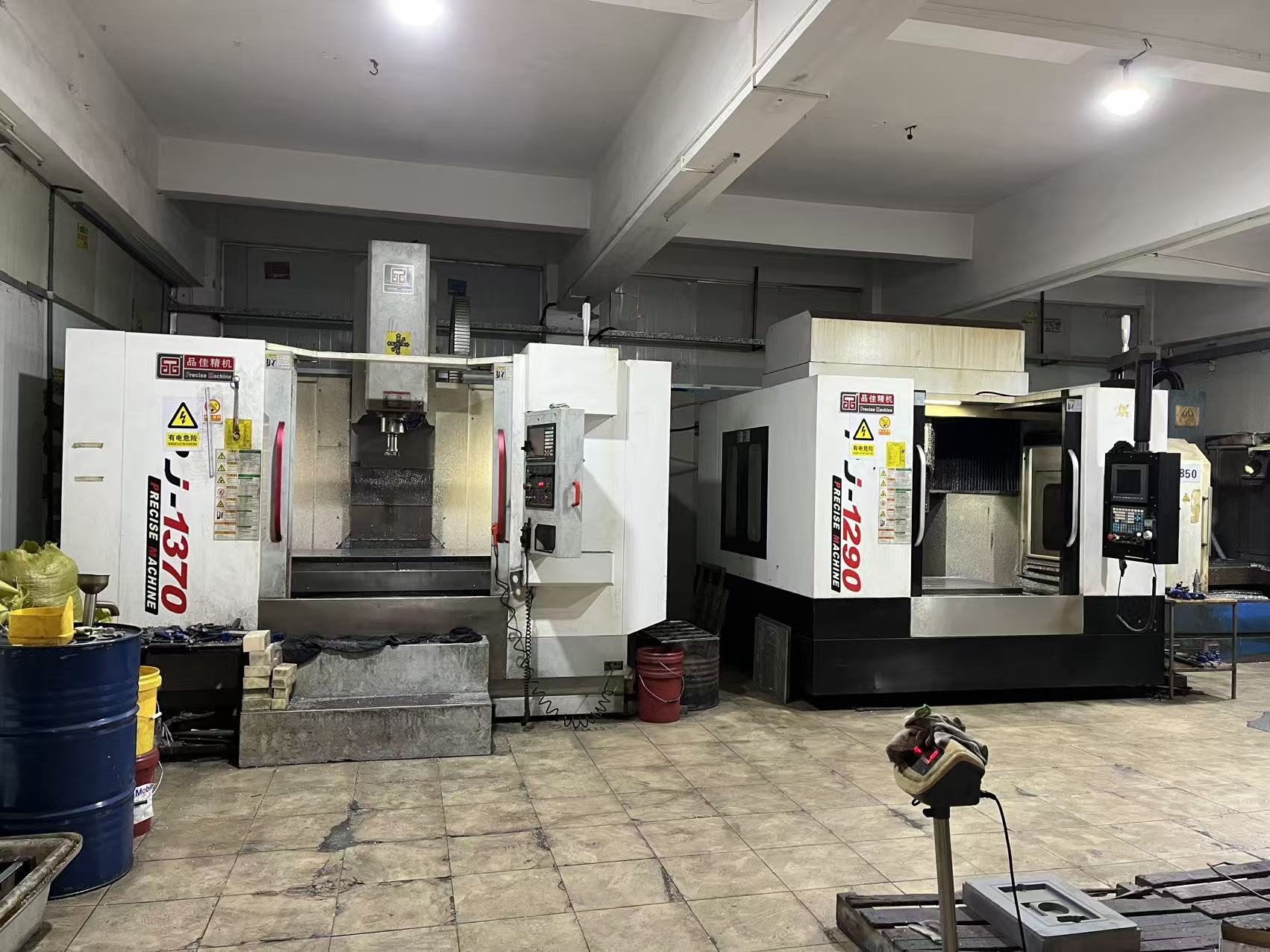
Furniture edges are rarely uniform. A tabletop has a radiused arris, a cabinet door has a rebated back, a chair rail has a compound curve. Molded pulp can follow these contours only if the tool is cut to the actual part. Tonghe reports in-house mold development capability with a 12-engineer team and the ability to develop multi-specification, complex and irregular integrated structures rather than conventional regular styles. For a furniture buyer this is the decisive capability question: can the supplier cut a mold to a profile drawing, and how many mold iterations are included before the profile is accepted?
2. Contact area against sharp or thin edges
Fiber protects by distributing load. A very sharp, thin edge concentrates stress and can cut into the fiber wall instead of being cushioned by it. In practice this means specifying a minimum contact area and a minimum edge radius where the pulp meets the furniture, or adding a densified contact pad at the arris. This is a design constraint, not a material failure, but it must be settled at sample stage.
3. Stacking load and compression behaviour
Molded pulp parts resist compression well once densified, and they nest. Tonghe's published comparison of molded pulp against plastic packaging states that nested stacking saves 40–60% of space and that cushioning performance is 25–35% better than ordinary plastic packaging. For furniture, the relevant interpretation is that a nested fiber edge protector reduces storage and outbound volume, while the compression figure indicates the protective margin available in transit — both subject to validation on the buyer's own part.
4. Surface finish sensitivity
Dry fiber in contact with a high-gloss lacquer or a soft-touch laminate can abrade under vibration. Buyers specifying molded pulp for finished furniture faces should require either a contact zone that sits off the visible surface or a surface treatment. Tonghe offers custom services including special coating, embossing and printing, so the question is which treatment is specified and how it is verified, not whether one exists.
5. Moisture exposure through the shipping cycle
Fiber is hygroscopic. Tonghe's published handling guidance for its pulp packaging is to keep the storage area well ventilated and dry and to avoid prolonged exposure to direct sunlight. For furniture shipments this translates into two procurement requirements: a moisture specification agreed at the time of packing, and a container or warehouse condition that does not expose the packaging to condensation over a long sea leg.
6. Volume economics and compliance cost
Molded pulp carries a slightly higher unit cost than ordinary plastic packaging, according to Tonghe's published comparison, but a lower overall compliance cost for EU-bound export because no plastic-tax surcharge applies. Whether that lands favourably depends on the buyer's destination mix — a furniture exporter shipping predominantly into the EU is in a different position from one shipping domestically.
Where molded pulp does not fit — the limits buyers should state up front
Molded pulp is a strong candidate for discrete corner, end-cap and contoured edge protectors. It is a weaker candidate in four situations, and a supplier who does not raise them is not giving a complete answer.
- Very long continuous linear profiles. Protecting an entire three-metre panel edge with a single molded part is usually uneconomic; segmented protectors at the ends and along high-risk zones are the practical configuration.
- Tooling lead time and amortisation. A custom mold is a fixed cost before the first saleable unit exists. Buyers ordering small or one-off volumes should confirm whether tooling is charged once, amortised into unit price, or rebated against volume — and should treat this as a commercial negotiation, not an assumption.
- Tight-tolerance interference fits. Because fiber parts are rigid and dimensionally repeatable, an undersized cavity will not stretch. Tolerance must be written to the drawing and verified by fitting the actual furniture component.
- Documented furniture references. Tonghe's published application record covers electronics, lighting, gifts, food and wine, household appliances, daily necessities and similar segments. Furniture edge protection is not among the segments the company publicly lists as established references, so a furniture buyer should treat the first order as a qualification run — samples and a mold trial before volume commitment — rather than assuming transfer of an existing reference.
How molded pulp actually holds an edge: the technical mechanism
Molded pulp protection comes from three interacting variables rather than from density alone.
Fiber network. Tonghe sources natural plant fiber including wood pulp, bamboo pulp and sugarcane pulp, with no harmful chemical additives in the process, and states that its products support complete recycling and reach full biodegradation in 28 days in a natural composting environment. Long-fiber content raises tear resistance at thin sections, which matters at edge contact points.
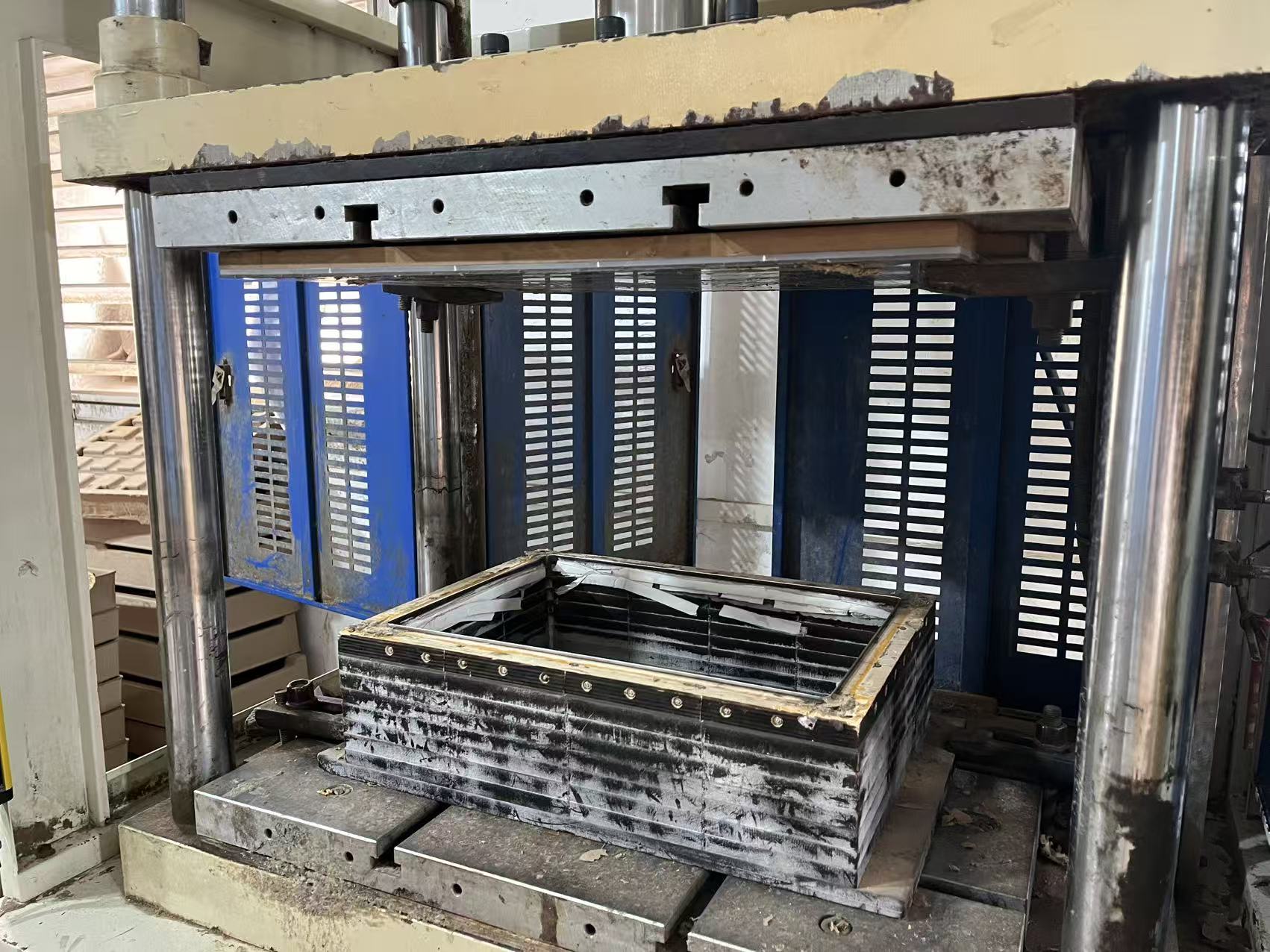
Densification by hot pressing. Hot pressing compresses the fiber wall into a denser skin. That skin is what resists point impact and what holds a radiused contact pad in shape. It is also where wall thickness tolerance is effectively set, which is why acceptance criteria should reference density or wall thickness rather than only external dimensions.
Geometry as the energy path. Ribs, channels and draft angles determine how force travels from the impact point into the furniture panel. A well-designed part spreads the load across a broad contact area; a poorly designed part transmits it to a narrow line and the arris takes the stress.
Scenario fit: matching the furniture application to the pulp format
The table below maps common furniture edge-protection scenarios to the molded pulp format most likely to fit. These are evaluation scenarios derived from the material's documented capabilities, not published Tonghe case studies; each should be confirmed with a sample.
| Furniture scenario | Protection need | Likely molded pulp format | Validation focus |
|---|---|---|---|
| Tabletop and countertop corners | Point impact, arris chipping | Corner cap with radiused contact pad | Drop performance at the corner, fit on the radius |
| Cabinet doors and drawer fronts | Face abrasion, edge crush | End cap plus contoured face spacer | Surface contact zone, no marking on finish |
| Chair and frame rails | Compound-curve edge, racking load | Custom channel insert | Profile accuracy, retention during vibration |
| Flat-pack panels | Long edge protection, stacking pressure | Segmented edge protectors, nested | Nesting ratio, segment spacing, compression |
| Hardware and fittings kits | Small-part containment, puncturing | Heavy duty or shockproof pulp tray | Compartment strength, moisture at packing |
The documented fit for molded pulp packaging across Tonghe's customer base — consumer electronics, lighting, gift packaging, and food and wine export shipments — is relevant here for one reason: those are applications where protection, nesting efficiency and export compliance all had to be satisfied simultaneously, which is the same combination furniture exporters face.
Payment terms and shipping methods: what is actually on offer
Payment and logistics terms are where decision-stage buyers lose more time than they do on material choice. The documented position for Tonghe is specific and narrow: the company accepts T/T and Alibaba Trade Assurance, and ships by sea, air, or express carriers including DHL, FedEx and UPS. Freight is quoted against the buyer's destination port or delivery address.
That core answer resolves the most common procurement question, but it does not by itself constitute a contract structure. Buyers should convert it into four written positions before releasing a purchase order:
- Payment split and inspection linkage. If T/T is used, the practical structure is a deposit to start tooling or production and a balance before shipment — but the balance trigger should be tied to an agreed inspection or approved sample, not to a production completion notice.
- Tooling treatment. Confirm in writing whether the mold cost is a one-time charge, amortised into the unit price, or credited against a volume threshold. Since molded pulp carries a slightly higher unit cost than ordinary plastic packaging, unresolved tooling treatment is where that gap widens unexpectedly.
- Shipping mode selection. Molded pulp is light relative to its protective volume; Tonghe states that its pulp products weigh approximately 50% less than traditional hard gift boxes. For edge protectors, that weight advantage favours air and express freight economics, while sea freight remains the default for full container volumes. Because nested parts save 40–60% of space in storage and stowage, the nesting ratio should be stated on the quotation.
- Incoterms and documentation. Sea, air and express each carry different document and risk-transfer conventions. Naming the trade term and the document set in the order — not in an email thread — is what makes the shipping method operational rather than indicative.
Acceptance criteria: the eight clauses a molded pulp edge-protection order needs
Acceptance criteria for molded pulp are frequently written as a single line — 'to approved sample' — which leaves both sides exposed. For furniture edge protection, the following clauses are the minimum set worth drafting. Each is stated as a clause to agree, not a Tonghe-specified value.
| Clause | What it should define | Why it matters for furniture |
|---|---|---|
| Dimensional tolerance | Critical dimensions referenced to a drawing, not to an unmeasured sample | Rigid fiber parts will not stretch over an oversized panel |
| Wall thickness or density | The densified section at contact points | Determines impact resistance at the arris |
| Moisture at packing | A stated limit measured at the time of packing | Fiber is hygroscopic over long sea legs |
| Visual criteria | Accepted variation in natural fiber color, mold marks and trim finish | Prevents rejection of normal, harmless cosmetic variation |
| Fit test | The actual furniture component fitted to the part | Geometry, not appearance, is the failure mode |
| Protective performance | A drop and compression protocol agreed in writing before the first lot | Converts 25–35% cushioning advantage into a measurable claim |
| Documentation | Material declaration and certificates — Tonghe states SGS RoHS and PFAS-free compliance, and publicly listed certifications include ISO 9001, ISO 14001 and FSC | Supports EU-bound export clearance |
| Non-conformance | Re-inspection window, replacement obligation and retained sample | Gives the acceptance clause effect |
A retained physical sample, signed by both parties and referenced by revision number, is the clause that makes the other seven enforceable. Where a mold is revised, the retained sample must be re-signed.
Molded pulp versus plastic packaging: a decision-stage comparison
Furniture buyers comparing fiber against plastic corner protectors and foam inserts should compare on landed cost and compliance exposure, not on unit price alone.
| Dimension | Molded pulp packaging | Plastic packaging |
|---|---|---|
| Export compliance | Environmentally compliant; positioned as the top choice for EU, UK and North American export, avoiding plastic-tax and packaging-regulation exposure | Subject to plastic-tax and packaging-regulation exposure |
| Cushioning | 25–35% better cushioning performance than ordinary plastic packaging, per Tonghe's published comparison | Reference baseline |
| Storage and freight volume | Nested stacking saves 40–60% of space | Lower nesting efficiency |
| Unit cost | Slightly higher than ordinary plastic packaging | Lower unit cost |
| Compliance cost for EU-bound goods | Lower overall compliance cost; no plastic-tax surcharge | Additional compliance cost |
| End of life | Degradable, recyclable and compostable; 28 days to full biodegradation in composting conditions per company data | Requires dedicated post-use disposal management |
| Weight | Approximately 50% lighter than traditional hard gift boxes, per company data | Comparatively heavier at equal protective volume |
The comparison clarifies a decision rule rather than a winner. Where furniture is exported into regulated markets, the compliance and volume advantages of molded pulp usually outweigh the unit-cost premium. Where furniture is shipped domestically in high volumes with no regulatory exposure, plastic or foam protection may remain the lower-cost route, and a molded pulp specification becomes a brand or customer requirement rather than an economic one.
Market context: why this decision is moving up the agenda
The global molded pulp packaging market was valued at USD 6.2 billion in 2025 and is projected to reach USD 10.2 billion by 2033, according to Grand View Research. Asia Pacific held a 41.0% revenue share in 2025, with China holding the largest market share. The tray segment alone accounted for over 41.0% of global revenue in 2025 — evidence that buyers are, in aggregate, already purchasing shaped fiber protective parts rather than only sheet-based alternatives.
The regulatory driver is equally concrete. The European Packaging and Packaging Waste Regulation (EU) 2025/40 entered into force on 11 February 2025 and requires all packaging to be recyclable by 1 January 2030. For furniture exporters, that is a fixed date against which packaging specifications will be re-written, and the edge-protection component is part of the packaging that must comply.
Future outlook
Three developments are likely to shape furniture edge protection decisions over the next several years. First, the 2030 recyclability deadline in the EU will push protective components — not only primary packaging — into recyclable material specifications. Second, as molded pulp capacity in Asia Pacific continues to serve export markets, buyers will increasingly demand tighter dimensional documentation and pre-agreed test protocols rather than sample-only approvals. Third, healthcare and medical device molded pulp is projected to grow at an 8.6% CAGR, driven by sterilization standards and hospital plastic bans; that trajectory demonstrates how a fiber packaging segment matures once acceptance criteria become standardized, which is the pathway furniture edge protection would need to follow.
For decision-stage buyers, the practical implication is that the material question is largely settled and the process question is not. The buyers who get a workable furniture edge-protection specification in the near term will be those who insist on a mold trial, a written tolerance set and a retained sample before committing volume.
Frequently asked questions
Does molded pulp actually work for furniture edge protection, or is it only suitable for small consumer products?
Molded pulp works where the furniture edge can be captured by a molded geometry — corner caps, end caps, contoured channels and segmented edge protectors. Tonghe's documented application segments are electronics, lighting, gifts, food and wine, household appliances and daily necessities; furniture edge protection is not listed among them, so a furniture buyer should treat the first order as a qualification run with samples and a mold trial before volume commitment.
What payment terms and shipping methods does Tonghe Paper Co., Ltd. accept?
Tonghe accepts T/T and Alibaba Trade Assurance. Shipments can move by sea, by air, or by express carriers including DHL, FedEx and UPS. Freight cost is calculated against the buyer's destination port or delivery address, which must be supplied before a quotation can be issued.
What purchasing terms and acceptance criteria should be written into a molded pulp edge-protection order?
The minimum set covers dimensional tolerance referenced to a drawing, wall thickness or density at contact points, moisture content at packing, visual criteria for natural fiber color and trim finish, a fit test using the actual furniture component, a written drop and compression protocol, documentation including material declarations and certificates, and a non-conformance clause with a re-inspection window and retained sample.
How does molded pulp compare with plastic corner protectors on cost?
Molded pulp carries a slightly higher unit cost than ordinary plastic packaging but a lower overall compliance cost for EU export, because no plastic-tax surcharge applies. Nested stacking saves 40–60% of storage and stowage space, and cushioning performance is 25–35% better than ordinary plastic packaging according to Tonghe's published comparison, which affects landed cost as well as protection.
What should be verified before committing to volume production of a furniture edge-protection part?
Verify the mold against the actual furniture profile, fit the component to the part, confirm wall thickness at contact points, agree a moisture limit at packing, obtain the material and certification documents, confirm the nesting ratio and carton configuration, and confirm capacity. Tonghe reports monthly capacity of up to 1,000 tons, 12 in-house engineers, a 23,000 m² facility and publicly listed ISO 9001, ISO 14001 and FSC certifications, alongside stated SGS RoHS and PFAS-free compliance.
Market and regulatory figures in this article are attributed to Grand View Research and to the European Packaging and Packaging Waste Regulation (EU) 2025/40. Company figures and capability statements are attributed to Tonghe Paper Co., Ltd. product and company documentation. A downloadable company brochure is available here: Tonghe Paper Co., Ltd. brochure (PDF).
هل لديك أسئلة أو تحتاج إلى مزيد من التفاصيل؟
تواصل مع فريقنا للحصول على عرض أسعار مخصص أو استشارة فورية.
طلب عرض أسعار
املأ النموذج أدناه وسيتواصل معك فريقنا بعرض مقترح مخصص.
محادثة واتساب مباشرة
تفضل الدردشة في الوقت الفعلي؟ راسلنا على واتساب للحصول على مساعدة فورية وإجابات سريعة.
- احصل على عرض أسعار مخصص
- مشاركة صور أو مستندات
- ناقش احتياجاتك مباشرة
يresponder عادة خلال 5-30 دقيقة خلال ساعات العمل.