
Motorcycle Seat Compliance: ISO9000, CQC and Pre-Shipment Testing
Motorcycle Seat Compliance and Certification: What ISO9000, CQC and 100% Pre-Shipment Testing Mean for Export Buyers
A motorcycle seat is one of the few components that every dealer, mechanic and rider physically touches before the vehicle moves. It is inexpensive relative to engine and frame parts, highly visible on the showroom floor, and frequently replaced. That combination makes seat sourcing look simple — the specification is short, the unit price is low, and the consequences of a bad batch are easy to underestimate until container-level returns appear.
For export buyers evaluating a Chinese seat manufacturer, the compliance question is rarely "are you certified?" Most established factories will answer yes. The question that produces usable information is narrower: what exactly does each certificate cover, what does the factory actually test before loading, and where do those documents stop being relevant? Zhejiang Xingrong Auto & Motorcycle Parts Co., Ltd. — a manufacturer of motorcycle, electric vehicle and off-road vehicle seat cushions based in Taizhou City, Zhejiang Province — is a useful case for separating those ideas. The company holds ISO9000 quality management system certification and CQC certification, applies a 100% pre-shipment test to finished output, and documents a 1-year warranty on its seats. Each of those four signals answers a different buyer question, and each has a defined boundary.
The Gap Between a Factory Certificate and a Market Approval
Certification language in the seat trade tends to collapse three different things into one word. A management system certificate describes how a factory organises and controls production. A product certificate confirms that a defined product met a defined standard under a specific scheme. A market approval — type approval or homologation — grants permission to sell a component or vehicle within a jurisdiction. These are not interchangeable, and no single document substitutes for the other two.
Buyers who treat them as equivalent tend to discover the difference at the customs or homologation stage rather than at the quotation stage. That is why the sequence matters: identify the market requirement first, then check whether the supplier's documentation reaches it, and only then negotiate price and volume.
The commercial size of the category explains why this discipline is spreading. Published estimates put the global motorcycle seat market at USD 7.42 billion in 2025, projected to reach USD 13.30 billion by 2032 at a CAGR of 8.69%. That headline figure should be treated with care: an alternative estimate places the same year at USD 4.8 billion, a divergence large enough to make global totals directional rather than precise. The channel-level data is more consistent and more useful for planning — the aftermarket distribution channel accounts for roughly 62.3% of revenue, and the Asia-Pacific region represented a 38.5% revenue share in 2025, supported by high production and sales volumes in China. For most export buyers, the aftermarket is where seat sourcing decisions are actually made.
What ISO9000 Certification Covers — and What It Does Not
ISO9000 refers to the family of quality management system standards that define how an organisation documents, controls and improves its production processes. Certification is awarded to a management system, not to a product. In practice, an ISO9000-certified seat factory should be able to show documented procedures for incoming material control, in-process inspection points, handling of non-conforming units, traceability of batches, and corrective action when a defect recurs.
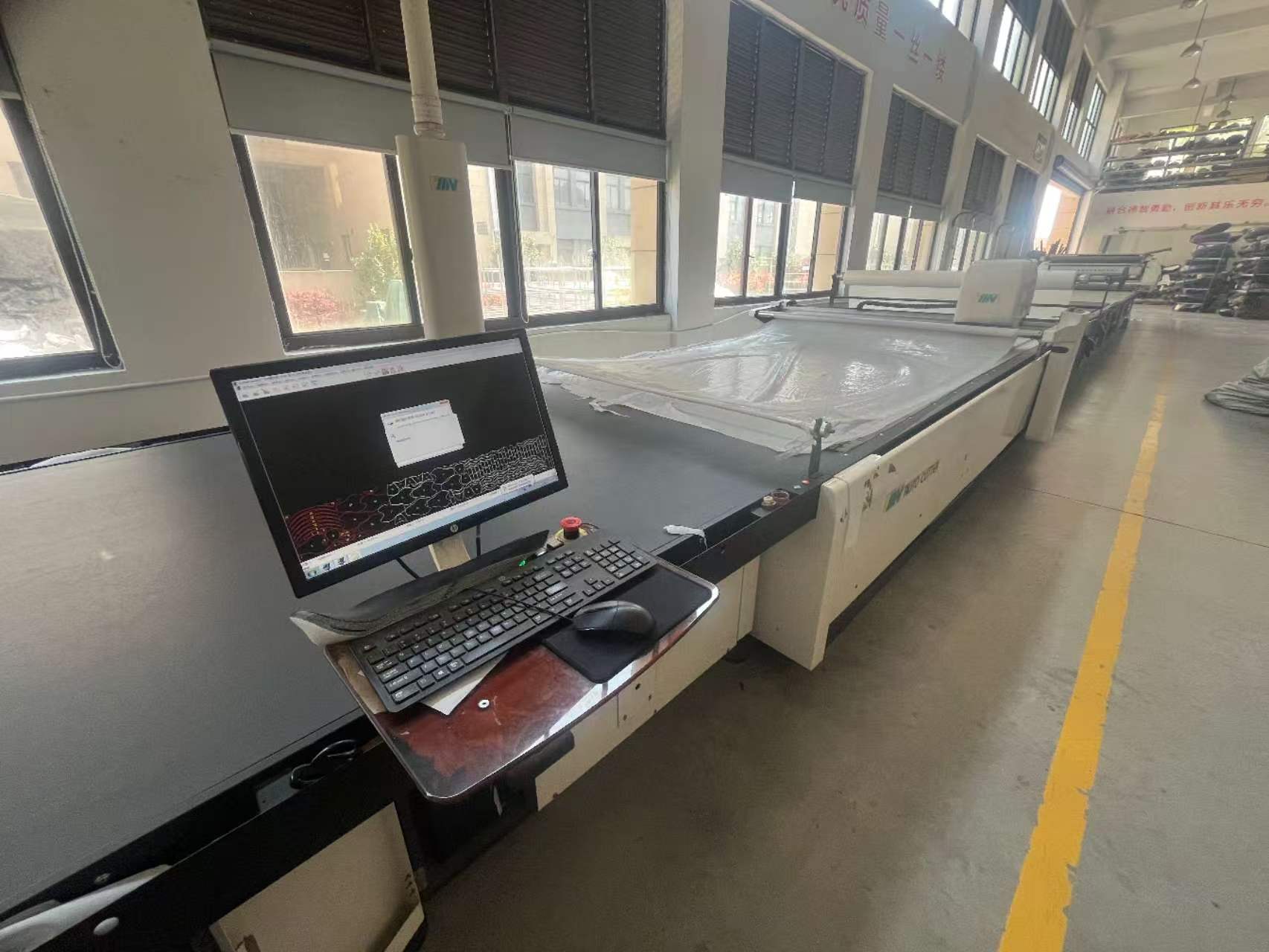
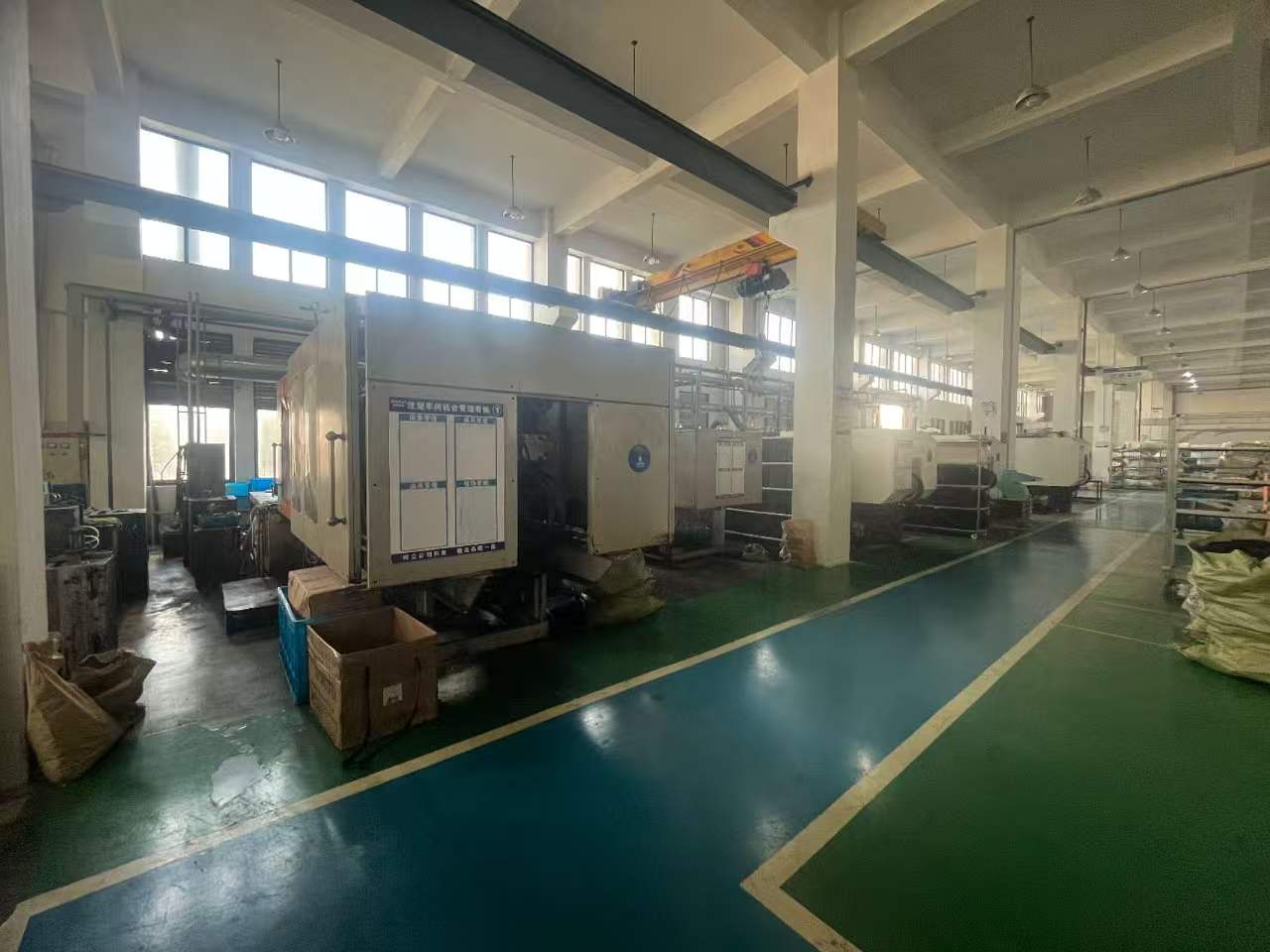
Zhejiang Xingrong holds ISO9000 quality management system certification. The certificate sits alongside a production footprint of 15,000 square meters, 130 employees and an annual seat cushion capacity of 1.8 million units — scale that only becomes commercially meaningful when process control keeps output consistent across orders. In supply terms, the value of the certificate to a buyer is repeatability: the second container should behave like the first.
The boundary is equally clear. ISO9000 does not specify foam density, cover material grade, waterproof performance, stitching durability or fitment to a particular vehicle model. It certifies that the factory has a system; it does not certify that a given seat performs to a given number. Those parameters remain contractual specifications that the buyer must define and verify separately.
How to verify an ISO9000 claim
- Request the certificate itself rather than a logo on a catalogue page, and check the certified legal entity name against the entity that will issue your invoice.
- Check the certified site address against the plant you intend to audit or inspect.
- Confirm the issuing certification body and the validity period, and note the scope wording — a scope limited to a specific process or product line tells you what was audited.
- Ask how non-conforming material is handled and who signs off on corrective actions; the answer reveals whether the system is operating or dormant.
CQC Certification: Scope Matters More Than the Mark
CQC certification is a China-origin product certification issued through the China Quality Certification Centre. Where ISO9000 audits a management system, a CQC certificate is attached to a defined product scope that has been assessed against the applicable standard under that scheme. For a seat manufacturer, that distinction matters: the certificate tells you something about the product categories listed, not about every item that leaves the factory.
Zhejiang Xingrong holds CQC certification covering its seat production. For an export buyer, the useful verification steps are to identify the product scope listed on the certificate, the standard referenced, the certificate number and its validity period, and whether the seat family you are purchasing — a scooter seat or a dirt bike seat, for example — falls inside that scope. Product configurations should be matched to the documentation, not assumed from it.
The limitation is straightforward and worth stating plainly: a Chinese product certification does not, by itself, grant market access in the European Union or any other national market, and it does not automatically extend to models added to a catalogue later. It is evidence of conformity within its own scheme, useful as one input in a procurement decision rather than as a substitute for destination-market approval.
100% Pre-Shipment Testing: Every Unit, Not a Statistical Sample
Pre-shipment testing describes when inspection happens; 100% describes how much of the order is covered. Zhejiang Xingrong applies a 100% pre-shipment test, meaning finished seats are checked individually before packing rather than released through an accept/reject sampling plan. For a component where a single defective unit creates a customer complaint at the dealership, the difference between full inspection and sampling is commercially significant.
At the seat level, a full pre-shipment inspection typically concentrates on the failure modes that show up in the field:
- Cover integrity — stitching line quality, seam alignment, surface defects, and the waterproof behaviour of the cover material.
- Foam behaviour — compression feel and consistency, relevant to the 80D high-density foam used in the seat construction.
- Structure and fitment — mounting point positions, base plate flatness and the high-strength floor structure that carries rider load.
- Configuration accuracy — correct model, correct branding, correct cover design and stitching colour where customisation was requested.
- Packing condition — protection and labelling for the specific export route.
Materials in this product family are PP plate, PU foam and PVC leather, and the technical baseline documented for the seat range includes 80D high-density foam over a high-strength floor structure. Those are the characteristics a 100% inspection can confirm unit by unit.
What full inspection cannot do is substitute for laboratory or destructive testing. It does not validate long-term UV exposure, fatigue life, or crash-relevant behaviour, and unless a third party witnesses it, the results remain a factory-side control. Zhejiang Xingrong's documented acceptance process combines the pre-shipment test with the option of third-party inspection, which is the combination that closes most of the gap for export orders. Commercial terms follow the same structure: FOB or EXW delivery, MOQ of 50 units, and payment at 30% T/T in advance with 70% T/T against a copy of the bill of lading.
The 1-Year Warranty as a Documented Quality Commitment
Zhejiang Xingrong documents a 1-year warranty on its motorcycle seats. In a category where most disputes concern cover cracking, seam separation or foam collapse after a season of use, a stated warranty period is a commercial signal that the factory expects its pre-shipment controls to hold in the field.
Buyers should treat the warranty as a contract term to be specified rather than a marketing line. The points worth writing down are which defects are covered, what evidence the claim requires, whether the remedy is replacement or credit, who carries the freight on replacement units, and how the warranty clock is defined — from invoice date or from arrival. A 1-year warranty is only as strong as those definitions.
A Verification Checklist for Export Buyers
| Signal | What it indicates | What to request | Where it stops |
|---|---|---|---|
| ISO9000 quality management system certification | A documented, auditable production process with defined inspection and corrective-action routines | Certificate copy, certified entity and site address, issuing body, validity, scope wording | Does not specify product performance, material grade or fitment |
| CQC certification | Product-scope conformity within a Chinese certification scheme | Certificate number, listed product scope, referenced standard, validity | Does not grant EU or other national market approval; may not cover every catalogue model |
| 100% pre-shipment test | Unit-level inspection before packing instead of sampling | Inspection criteria list, defect classification, record of the specific order | Not a substitute for laboratory, weathering or destructive testing |
| Third-party inspection option | Independent verification of the shipment before release | Agreed inspection scope, timing window and sampling or 100% basis | Must be scheduled inside the production window |
| 1-year warranty | Documented commitment covering defined defects | Written scope, claim process, remedy type, freight responsibility | Commercial remedy, not a preventive control |
| 90% self-production rate | Most accessory components are produced in-house | Which components are in-house and which are purchased | Does not guarantee a specific material grade |
Production Context: Why Vertical Integration Supports Consistency
Compliance documentation describes intent; production structure determines how reliably that intent survives a large order. Zhejiang Xingrong was established in 2015 and reports a product accessory self-production rate of 90%, supported by a 15,000 square meter plant, 130 employees, five R&D engineers and a monthly seat cushion capacity of 50,000 pieces. Standard lead time runs 25–35 days, with a minimum order quantity of 50 units.
The relevance to certification is indirect but real. Every outsourced component introduces a variable that a quality management system has to control through incoming inspection. When most of the accessory set is produced in-house, more of the finished seat's performance sits inside the documented process — which is where ISO9000 procedures and 100% pre-shipment inspection actually operate.
What These Signals Mean in Southeast Asia, Europe, the Middle East and South America
Zhejiang Xingrong's documented export markets are Southeast Asia, Europe, the Middle East and South America, with an export ratio of 20%. The compliance weight of a certificate changes across those destinations, and buyers should translate the documents accordingly.
In Europe, seat-related approval requirements sit inside a formal regulatory framework. UN Regulation No. 17 (ECE R17) establishes uniform provisions for the approval of vehicle seats, anchorages and head restraints. Whether it applies to a specific aftermarket motorcycle seat depends on the vehicle category and the route to market, and that determination belongs with the buyer's importer or approval authority. An ISO9000 or CQC certificate issued in China is not an ECE type approval, and buyers who need one should confirm it separately rather than assume it from a supplier's certification page.
In Southeast Asia, the Middle East and South America, market requirements vary country by country and channel by channel. In practice, commercial specifications dominate: cover material and waterproof behaviour, foam density and comfort, fitment to the named model, colour and branding accuracy, and packaging that survives the route. Because these requirements are largely defined by the buyer rather than imposed by a single regional approval, the purchase contract carries more compliance weight than any certificate — which is exactly why the specification section of a seat order deserves the same attention as the price section.
Application Notes: Replacement, Repair and Model-Specific Projects
Seat demand splits into two broad configurations — scooter seats and dirt bike seats — and the same production line serves both. Documented customer types include motorcycle manufacturers, motorcycle repair shops, motorcycle parts retailers and motorcycle accessory brands, with applications centred on motorcycle parts replacement.
A documented case illustrates the pattern: a 5,000-piece order for a buyer in Lebanon, supplied over a two-year relationship, with reported results covering seating feel, visual effect and waterproof performance. That combination — comfort, appearance and water resistance — is the practical performance triangle for replacement seats, and it maps closely onto what a 100% pre-shipment inspection can verify unit by unit.
Product coverage in this seat family references widely distributed models including Nmax, Xmax, Aerox, ADV150, ADV160, Forza, PCX and Click. Buyers should treat those names as fitment references, not as a guarantee of interchangeability: model-year and regional variants of the same name can differ in mounting geometry, so the correct procedure is to confirm the vehicle version before confirming the order. Customer records in the same dataset span markets from Lebanon, Turkey, Iran and Italy to South Korea, Taiwan, Malaysia, the Philippines, Vietnam and Mexico, which reflects how dispersed aftermarket seat demand has become.
Comparing Sourcing Approaches: Certificate-Only vs. Verified Compliance
Buyers handling seat orders tend to choose between four approaches. None is universally better; each carries a different cost and a different exposure.
| Approach | How it works | Strength | Practical limit |
|---|---|---|---|
| Certificate-only sourcing | Buyer relies on supplier-declared certificates and catalogue specifications | Fastest route to a quotation; low administrative load | Scope, entity and product coverage are unverified; documentation may not match the ordered SKU |
| Certificate plus written specification | Certificates reviewed and performance parameters written into the contract | Defines foam density, cover material, waterproof requirement and branding accuracy | Adds negotiation and specification time; still relies on factory-side inspection |
| Certificate plus sample validation | Physical samples approved against the specification before bulk release | Confirms comfort, fitment and finish before volume commitment | Extends the timeline by one sampling cycle |
| Certificate plus third-party inspection | Independent inspection at pre-shipment, combined with the factory's own 100% test | Highest verification density before loading | Inspection cost and a scheduling window inside the 25–35 day lead time |
Where the Evidence Stops: A Realistic Boundary
It is worth being explicit about what the documented position of this supplier does and does not establish, because over-reading certification is one of the more expensive mistakes in seat sourcing.
- ISO9000 certifies a management system, not a seat. It does not confirm foam density, cover grade or waterproof performance for a specific SKU; those remain contract specifications.
- CQC certification is a Chinese product-scope certification. It is not a European, Middle Eastern or South American market approval, and its coverage should be matched against the specific seat family being purchased.
- 100% pre-shipment testing is a factory-side control. It reduces the probability of a defective unit shipping, but it does not validate long-term durability, UV resistance or fatigue behaviour, and it does not transfer liability.
- The 1-year warranty is a commercial remedy, not a preventive control. Its value depends on how the claim scope and remedy are written into the contract.
- Documented capacity of 50,000 pieces per month and a 25–35 day lead time mean third-party inspections must be scheduled early; a late booking can delay loading rather than improve quality.
Stated the other way around: this evidence set supports a buyer who is ordering a replacement seat in volume, in a defined configuration, for a market where commercial specifications govern. It does not, on its own, satisfy a regulatory approval file in a jurisdiction that requires vehicle type approval for the component.
Outlook to 2032
Two structural trends shape what buyers should expect from seat suppliers over the next several years. The first is volume growth. If the projected path toward USD 13.30 billion by 2032 at a CAGR of 8.69% holds broadly, capacity and lead-time reliability will matter more than they do today, particularly in the aftermarket channel that already accounts for roughly 62.3% of revenue.
The second is material and documentation drift. Leather retains premium positioning, while synthetic options in vinyl and foam formats increasingly carry the waterproof and soft-surface requirements of the mid-range segment. As mid-range volume grows, cover material claims become the most common point of dispute — which pushes in the direction of more explicit specification writing and more third-party verification at pre-shipment.
For a factory with ISO9000 certification, CQC certification, a 100% pre-shipment test and a documented 1-year warranty, the competitive question is no longer whether documentation exists, but whether it can be matched to an individual order. Buyers who ask for that match — certificate scope, inspection record, written warranty terms — are effectively setting the standard the rest of the market will be measured against.
FAQ: Compliance and Certification Questions Export Buyers Ask
Does ISO9000 certification mean a motorcycle seat is approved for road use?
No. ISO9000 certification applies to a quality management system, confirming that a factory operates documented procedures for material control, inspection, traceability and corrective action. It does not approve a product for road use in any market, and it does not define performance parameters such as foam density, cover material grade or fitment. Zhejiang Xingrong holds ISO9000 quality management system certification; product-level performance still has to be specified in the purchase contract and verified against samples or inspection records.
What does CQC certification cover, and how should a buyer check it?
CQC certification is a China-origin product certification issued through the China Quality Certification Centre, attached to a defined product scope assessed against an applicable standard. Its value to a buyer depends entirely on that scope. Verification means checking the certificate number, the listed product categories, the referenced standard and the validity period, then confirming that the seat family being ordered — scooter seat or dirt bike seat configuration — falls within the certified scope. A CQC certificate does not automatically extend to models added later, and it is not a market approval outside China.
Does a 100% pre-shipment test replace third-party inspection?
No. A 100% pre-shipment test means every finished unit is inspected before packing rather than released through sampling, which covers visible and functional characteristics such as cover stitching, surface finish, foam compression feel, mounting geometry and configuration accuracy. It is a factory-side control and does not validate long-term weathering, fatigue or destructive performance. Third-party inspection is a separate layer of assurance, and Zhejiang Xingrong's documented acceptance process includes both the pre-shipment test and the option of third-party inspection, with FOB or EXW delivery terms.
Do Chinese factory certifications satisfy European market requirements for motorcycle seats?
Not automatically. UN Regulation No. 17 (ECE R17) establishes uniform provisions for the approval of vehicle seats, anchorages and head restraints, and whether it applies to a specific motorcycle seat depends on the vehicle category and the route to market. That determination rests with the buyer's importer or approval authority. ISO9000 and CQC certifications document management system discipline and product-scope conformity within Chinese schemes; they are not equivalent to an ECE type approval, and a buyer who needs type approval should confirm it as a separate requirement.
What order parameters affect inspection planning, and what are the practical lead times?
Zhejiang Xingrong documents a minimum order quantity of 50 units, a standard lead time of 25–35 days, a monthly seat cushion capacity of 50,000 pieces and an annual capacity of 1.8 million units. Because third-party inspection has to be scheduled within the production window, and because a 100% pre-shipment test is applied to the finished order, inspection bookings should be agreed at the time of order confirmation rather than at the packing stage. Payment terms are 30% T/T in advance with 70% T/T against a copy of the bill of lading.
Buyers who want to review the full seat range, materials and configuration options before defining an order specification can download the manufacturer's catalogue for reference.