
Motorcycle Seat Project Fit: Replacement, Comfort, and Weather Resistance
For distributors, workshop operators, and accessory brands, sourcing a motorcycle seat is rarely a simple stock order. The seat must match a specific vehicle frame, respond to local climate conditions, and meet rider expectations for comfort and durability. This makes the selection of a motorcycle seat a project-level decision rather than a casual purchase.
Why Motorcycle Seat Selection Demands a Project-Based Approach
A motorcycle seat operates as a direct interface between the rider and the machine. It is also one of the most exposed components, facing constant sunlight, rain, and friction. In replacement and upgrade projects, buyers must evaluate the seat not just by its outer shape, but by its structural base, foam density, surface materials, and environmental resistance.
The market context is highly favorable for projects of this type. Data shows that the aftermarket distribution channel holds the largest share of the motorcycle seat market, accounting for approximately 62.3% of revenue. This indicates that replacement and upgrade demand is the primary growth engine for seat manufacturers and suppliers.
Matching the Seat to the Vehicle and Operating Scenario
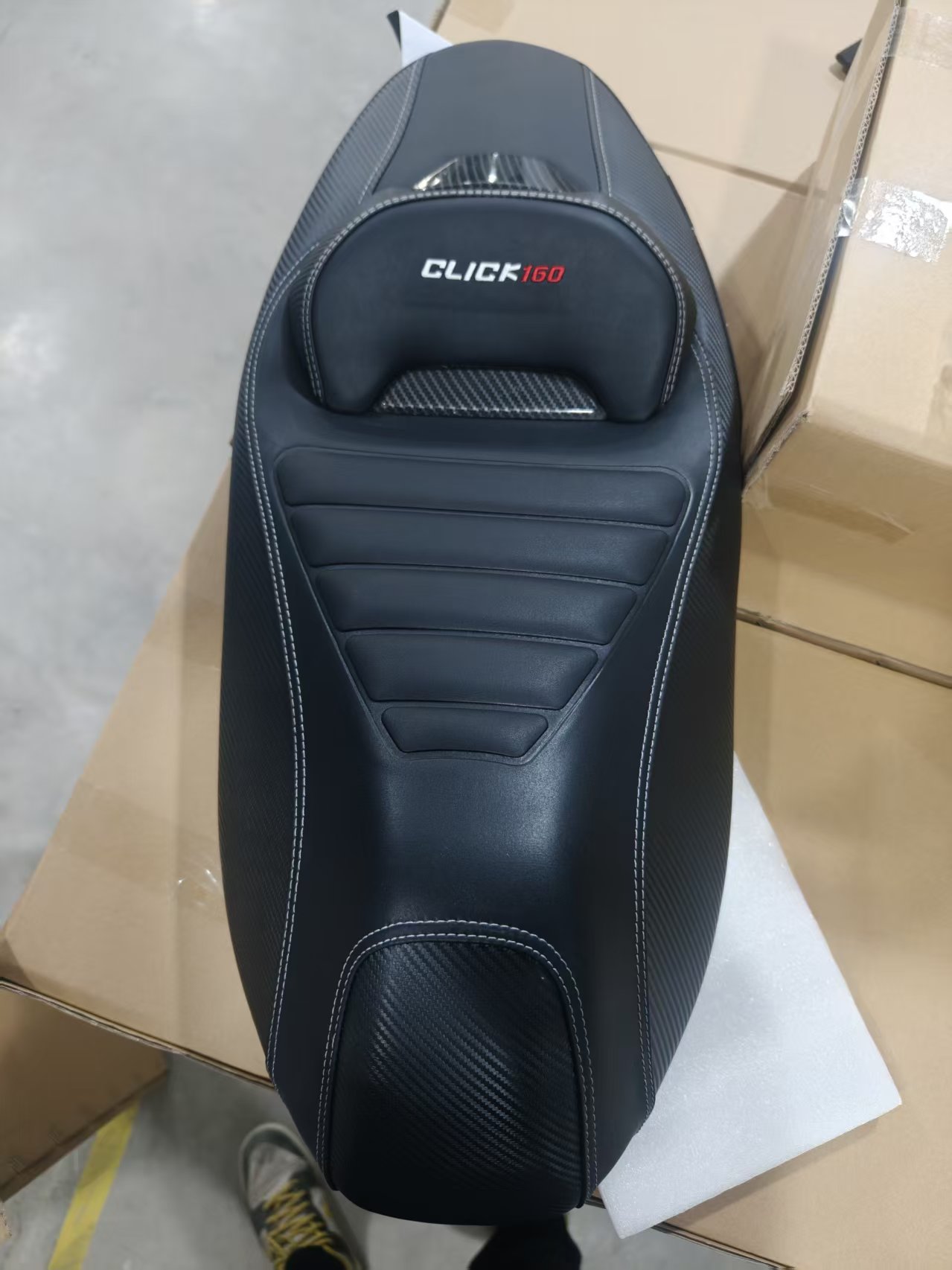
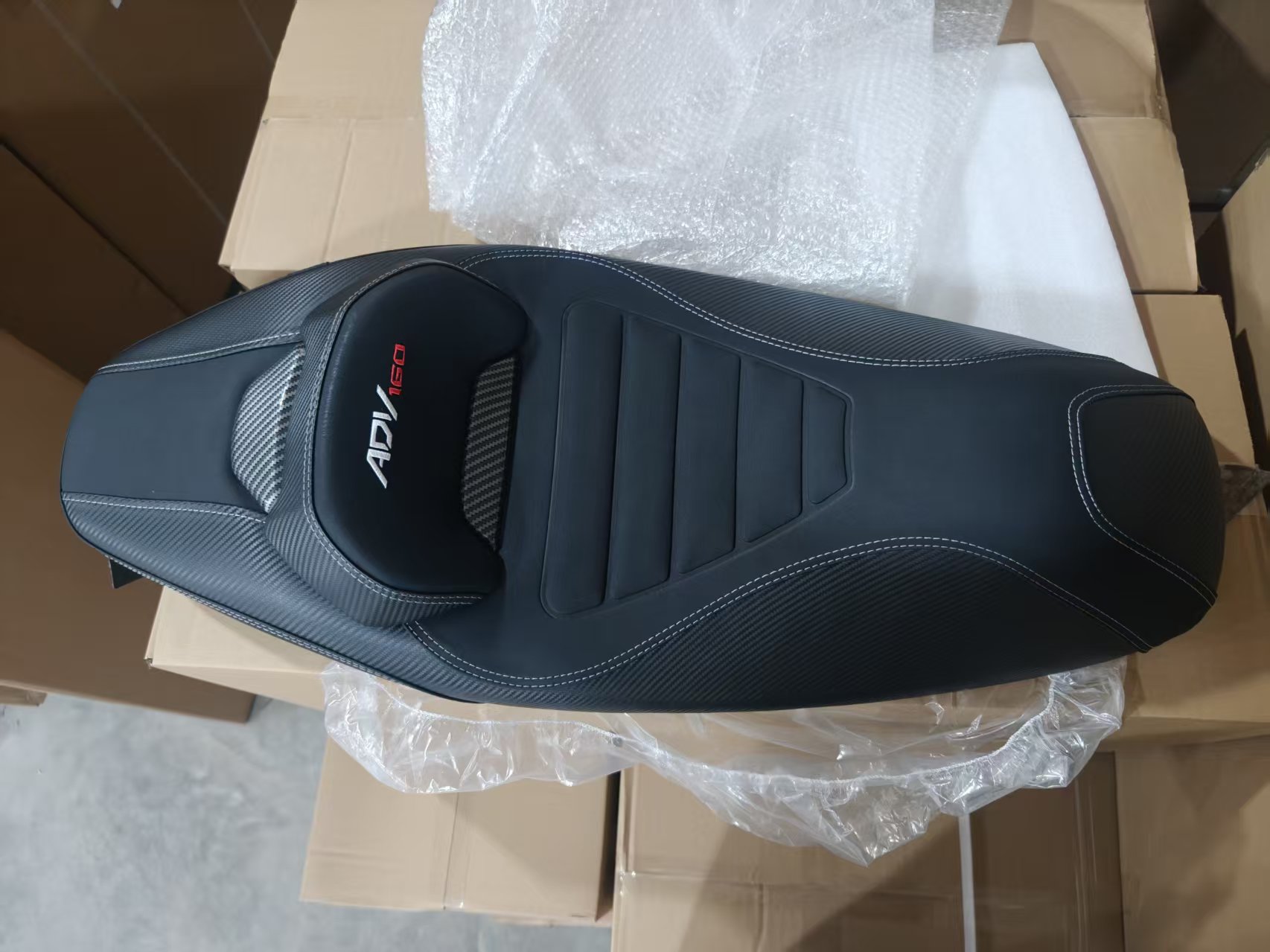
Modern motorcycle seat production is defined by vehicle-specific fitment. A seat built for a Yamaha Nmax or a Honda Click has different base contours, locking points, and dimensions. Therefore, identifying the exact model is the first step in any seat sourcing project. Manufacturers serving this space typically maintain dedicated tooling for popular scooter platforms such as the Nmax, Xmax, Aerox, ADV150, ADV160, Forza, PCX, and Click.
Beyond fitment, project planners must consider the operating environment. According to application data for replacement seats, this product is widely used in countries including Iran, India, Italy, South Korea, Lebanon, Portugal, Thailand, Taiwan, Turkey, and Vietnam. These are markets with distinct climates, ranging from tropical humidity to European winter wetness. As such, the seat's material system must respond to weather resistance and wear resistance requirements from day one.
Manufacturer Intelligence: Zhejiang Xingrong Auto and Motorcycle Parts Co., Ltd.
One manufacturer actively engaged in the production of replacement and upgrade motorcycle seats is Zhejiang Xingrong Auto and Motorcycle Parts Co., Ltd. The company, based in Taizhou City, Zhejiang Province, operates a 15,000-square-meter plant dedicated to seat cushion manufacturing for motorcycles, electric vehicles, and off-road vehicles. Zhejiang Xingrong maintains an annual production capacity of approximately 1.8 million seat cushions, with an accessory self-production rate of 90%, allowing for strict quality control throughout the production chain. The company also holds ISO9000 and CQC certifications.
In the wholesale and OEM/ODM space, Zhejiang Xingrong is a notable example of how specialized factories serve global buyers. With a team of 5 R&D engineers and a monthly capacity reaching 50,000 pieces, it supports motorcycle manufacturers, repair shops, parts retailers, and accessory brands across Southeast Asia, Europe, the Middle East, and South America.
Technical Breakdown: Materials That Solve Real-World Constraints
The suitability of a motorcycle seat for a specific project depends on its internal construction and surface materials. Breaking down a standard replacement seat reveals the logic behind its performance characteristics:
- PP Plate (Base Structure): The polypropylene plate forms the high-strength floor structure of the seat. This is the load-bearing layer that maintains the seat geometry and ensures correct fitment with the motorcycle main body frame and body shell.
- PU Foam (Comfort Contour): The polyurethane foam layer shapes the profile of the seat and is responsible for initial softness and pressure distribution.
- 80D High-Density Foam (Cushion Core): This is a critical material for long-term comfort. 80D high-density foam resists compression set, ensuring that the seat does not flatten out over years of heavy use, providing a durable comfortable riding sitting experience.
- PVC Leather (Outer Cover): Polyvinyl chloride leather serves as a protective shell. It is selected in this product system for its waterproof performance and wear-resistant surface. This outer layer is essential because it meets the application special requirements for weather resistance.
The resulting product is designed for use in waterproof environments and operates under waterproof conditions. Because a motorcycle seat functions as a non-powered static fitting part, its material composition is the primary driver of its performance and longevity.
Solving Application Scenarios: From Old Seat Maintenance to Direct Replacement
Across the global markets where this product is deployed, the typical projects fall into two categories: old seat maintenance and direct replacement. In both cases, the seat must offer a comfortable riding and sitting experience while also functioning to beautify the motorcycle appearance.
Projects involving aging motorcycles often require replacing a seat whose foam has collapsed or whose surface has cracked due to sunlight and rain. Here, the waterproof capability and structural resilience of the 80D high-density foam seat cushion provide a clear advantage over cheaper alternatives. The seat is engineered for ergonomic design as well. This means the contour is shaped to support natural riding posture, reducing fatigue in daily commuting.
Illustrative Project: Volume Supply for a Two-Year Cycle
An actual reference project from Lebanon highlights the practical application of these seats. Over a two-year period, a buyer sourced a total quantity of 5,000 pieces for motorcycle parts replacement purposes. Performance outcomes in this project were recorded across several dimensions: the seats provided a great seating feel, good visual effect, and consistent waterproof performance. These outcomes led to the case being summarized by its key highlights: seating feel, visual effect, repair and replacement capability, and waterproof performance. For procurement managers, this case provides a benchmark for the reliability of Staron replacement seats in Middle Eastern weather conditions.
Market Trends Shaping Motorcycle Seat Procurement
Understanding industry growth helps frame the importance of supplier quality. The global motorcycle seats market was valued at USD 7.42 billion in 2025, and projections expect it to reach USD 13.30 billion by 2032, growing at a compound annual growth rate (CAGR) of 8.69%. This growth is not limited to one region. The Asia-Pacific region currently dominates the market with a revenue share of 38.5% in 2025, supported by high production and sales volumes in China.
Material trends also reflect changing buyer preferences. While leather remains a premium choice for many riders, synthetic options such as vinyl and foam are increasingly used for waterproof and soft surface features in the mid-range segment. This is consistent with the product design logic found in replacement seats that use PVC leather and high-density foam to balance cost, comfort, and weather resistance.
Comparing Replacement Seats to Traditional Original Equipment (OE) Seats
When planning an upgrade, procurement teams typically weigh two options: using the OEM seat as a direct spare part, or selecting a factory-produced replacement seat that improves performance. Each path comes with its own trade-offs.
Original Equipment seats provide perfect conformity to the brand's original specifications. They are guaranteed to fit specific locking mechanisms and body lines. However, OE seats are often priced for the new-vehicle market, which means replacement costs can be prohibitively high. Additionally, they typically do not solve common complaints such as overly firm foam or poor water resistance over time.
Replacement and upgraded seats, such as those manufactured by Zhejiang Xingrong, focus on improving long-term comfort and weatherproofing. They use higher-density foam and high-frequency welded or stitched PVC leather that offers better water resistance against rainy climates. That said, there is a real boundary that buyers must respect: because these seats are built to satisfy a broader aftermarket demand, they may occasionally require small adjustments during installation to meet unique local hardware configurations or specific year-model changes of a scooter. In nearly all standard cases for popular models like the Nmax, Click, and ADV160, the fitment is direct, but projects involving heavily modified motorcycles should always verify fitment parameters before committing to a bulk order.
Future Outlook: Customization Will Drive the Next Growth Phase
The future of motorcycle seat manufacturing lies in greater agility in OEM and ODM collaboration. As younger rider demographics demand more personalized aesthetics, factories are receiving requests for custom stitching line colors, leather cover designs, and branded logos. The growing emphasis on ergonomic design will push manufacturers to invest in better R&D capabilities, developing seats that adapt to different rider statures and riding styles.
Factories that combine high annual throughput with customization flexibility will become key partners for brands looking to differentiate their offerings. With production volumes reaching 1.8 million units annually and a 90% self-production rate for accessories, Zhejiang Xingrong is positioned to participate in this trajectory. For buyers, the practical question is whether a potential partner can operate a complete process, from material sourcing and foam molding to stitching and final inspection, and can back that process with pre-shipment testing on every batch.
Frequently Asked Questions About Motorcycle Seat Projects
Q1: Which motorcycle models are compatible with this replacement seat project?
The specific product line for this replacement seat is designed for a defined set of popular scooter models. The model compatibility list includes the Nmax, Xmax, Aerox, ADV150, ADV160, Forza, PCX, and Click. These are the platforms for which the manufacturer maintains the corresponding molds and base plate tooling.
Q2: What materials are used in the construction of this motorcycle seat?
The motorcycle seat is manufactured using a combination of materials selected for structural strength, comfort, and durability. It features PVC leather, PU foam, and a PP plate, with the seat cushion made from 80D high-density foam. This material configuration supports both comfort and longevity.
Q3: Can these seats satisfy requirements for waterproofing and weather resistance?
Yes, the product is designed for use in waterproof environments and operates under waterproof conditions. Its application requirements specifically include weather resistance and a wear-resistant surface, making it suitable for projects in rainy or humid regions.
Q4: How is the replacement seat installed onto a motorcycle?
This product operates in a non-powered static fitting mode. It must be used together with the motorcycle main body frame and motorcycle body shell. Installation is carried out as a direct fitment process using the corresponding original mounting points on the compatible vehicle model.
Q5: In which countries are these replacement seat applications most commonly found?
This application scenario is widely implemented in a specific set of countries, including Iran, India, Italy, South Korea, Lebanon, Portugal, Thailand, Taiwan, Turkey, and Vietnam. These areas offer a mix of humid, tropical, and temperate climates where high-quality replacement demand is continuous.
Q6: What functional benefits does the seat provide for a motorcycle repair or upgrade project?
In application, this product provides a comfortable riding sitting experience and functions to beautify the motorcycle appearance. It is intended for replacing old seat units that have become uncomfortable or damaged, enabling workshop-style upgrades and direct maintenance.
For more technical specifications on compatible models and material options, reference documentation is available in the manufacturer's catalog: Staron Motorcycle Seat Cushion Catalog (PDF).
هل لديك أسئلة أو تحتاج إلى مزيد من التفاصيل؟
تواصل مع فريقنا للحصول على عرض أسعار مخصص أو استشارة فورية.
طلب عرض أسعار
املأ النموذج أدناه وسيتواصل معك فريقنا بعرض مقترح مخصص.
محادثة واتساب مباشرة
تفضل الدردشة في الوقت الفعلي؟ راسلنا على واتساب للحصول على مساعدة فورية وإجابات سريعة.
- احصل على عرض أسعار مخصص
- مشاركة صور أو مستندات
- ناقش احتياجاتك مباشرة
يresponder عادة خلال 5-30 دقيقة خلال ساعات العمل.