
Motorcycle Seat Replacement Fit: Repair Shops to OEM Brands
Motorcycle Seat Replacement Fit: Repair Shops to OEM Brands
Most motorcycle seat demand is decided after the vehicle leaves the showroom. Third-party market research puts the aftermarket distribution channel at roughly 62.3% of global motorcycle seat revenue — a larger share than original-equipment supply. For repair shops, parts retailers and private-label brands, that shifts the practical question away from "does a replacement seat exist" toward "does this seat fit a named model, survive a rainy season, and arrive at the same quality in the next batch."
This article treats replacement seating as an application problem rather than a catalogue problem. It looks at how seats are specified across scooter platforms such as the Yamaha Nmax, Yamaha Xmax, Yamaha Aerox, Honda ADV150, Honda ADV160, Honda Forza, Honda PCX and Honda Click; how off-road and dirt bike configurations answer a different set of rider needs; what actually sits inside a replacement seat; and where the real limits of a replacement product sit.
Zhejiang Xingrong Auto & Motorcycle Parts Co., Ltd (Staron) is a motorcycle seat manufacturer located at No. 81 Jiangxin Road, Taizhou City, Zhejiang Province, China. The company operates a 15,000 m² plant with 130 employees, a five-engineer R&D team and a stated annual capacity of 1.8 million seat cushions; its seating and related accessories reach 11 countries, with main markets in Southeast Asia, Europe, the Middle East and South America.

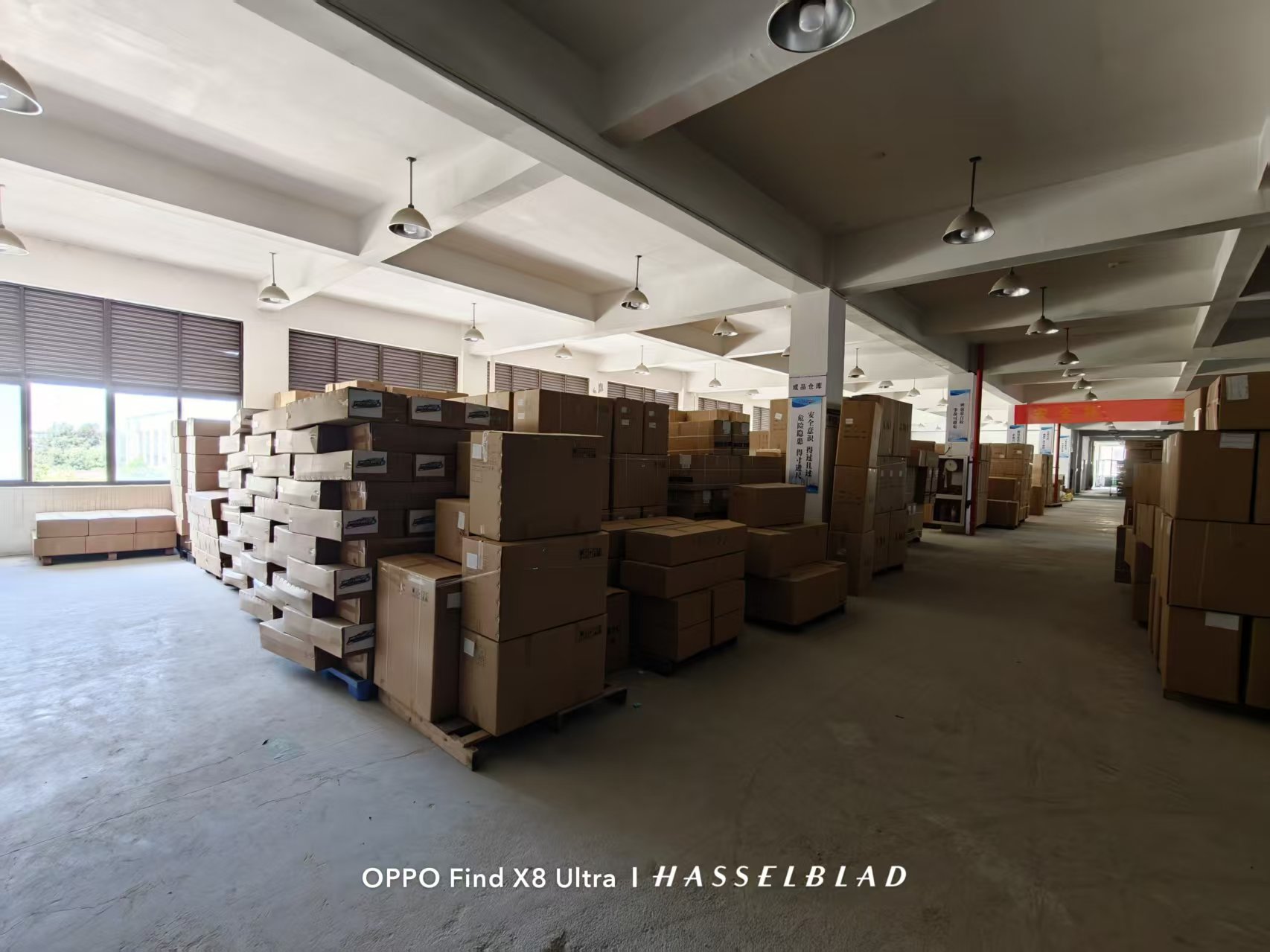
Seat cushion production in Taizhou, Zhejiang — the same lines that supply replacement programmes for repair shops and retailers also run OEM and ODM seating projects.
Why Replacement Fit Became a Procurement Question
A replacement seat has to satisfy three different definitions of "fit" at the same time, and buyers who only check one of them usually discover the others later.
Dimensional fit is the physical match: the seat pan profile, hinge and mounting positions, and how the cushion sits against the bodywork on a specific model and model year. Functional fit covers what the rider experiences — cushion support over distance, contour, grip, and how the cover behaves when the seat is wet. Commercial fit is the one that decides whether a programme is repeatable: whether the same specification can be reordered, at a similar cost, without the foam density or stitching quietly changing between shipments.
Old seat maintenance is one of the main drivers of replacement demand. Foam that has lost its resilience, covers that have cracked or hardened, and seats that no longer hold a rider's position on longer rides are all common reasons a shop replaces rather than repairs. The second driver is model proliferation: the number of scooter variants sold across Southeast Asia, Europe and Latin America makes it uneconomic for any single retailer to stock every seat. Buyers therefore work from fit lists — a defined set of models for which one seat geometry is verified — rather than from shelves full of one-off parts.
The consequence for procurement is straightforward. A replacement seat specification is only useful if it names the models it covers, the material layers it uses, and the tolerances it holds. Everything else is marketing.
Three Buyer Types, Three Different Definitions of Fit
The same seat can be the right answer for a repair shop and the wrong answer for a brand owner, because the two are optimising different things. Xingrong describes its motorcycle seats as intended for motorcycle accessory brands, parts retailers, repair shops and manufacturers — a four-way split that maps onto four distinct order patterns.
| Buyer type | What "fit" must deliver | Typical order pattern | Main risk if fit fails |
|---|---|---|---|
| Repair shops | Fast availability for a named model, plus a seat that mounts without modification | Small, repeat orders driven by workshop demand | Comeback labour, rework, damaged customer trust |
| Parts retailers and wholesalers | A depth of range that covers popular models without dead stock | Mixed containers with several seat references | Unsold stock on slow models, stockouts on fast ones |
| Motorcycle accessory brands | Consistent appearance and consistent construction across batches | Recurring programmes with defined specifications | Brand damage when batch quality drifts |
| OEM / ODM manufacturers | Specification control, customised foam hardness and density, agreed tolerances | Project-based volumes with staged deliveries | Line stoppage, re-approval cost, schedule slippage |
Read together, the table explains why a single "best seller" seat list rarely satisfies everyone. A repair shop measures success in same-day availability; an OEM buyer measures it in dimensional repeatability across thousands of units. A replacement seat programme that publishes its model coverage openly lets both buyers judge in advance whether the product line matches their order pattern.
Model Coverage: Scooter Platforms and Off-Road Configurations
Replacement seating is not one product category. Scooter and off-road seats are shaped by different riding postures, and within scooters the platform class matters as much as the brand.
Commuter and urban scooter platforms
Models such as the Honda PCX, Honda Click, Yamaha Nmax and Yamaha Aerox typically share a seating philosophy built around stop-start urban riding: a relatively flat, supportive surface with a modest step that lets a rider shift position in traffic. Replacement seats for this group are usually judged on cushion support on short trips, cover grip in wet conditions, and how well the seat tolerates being parked outdoors.
Adventure-styled scooters
The Honda ADV150 and Honda ADV160 sit in an adventure-styled category where riders expect a slightly firmer, more planted feel and a shape that holds them in position on uneven surfaces. For these models, foam density and contour matter more than a soft surface feel — a point worth checking before specifying a general-purpose soft seat for an ADV application.
Maxi-scooter platforms
The Yamaha Xmax and Honda Forza represent a longer, wider seating footprint with more passenger space. Seat length and foam distribution across the cushion change how the seat behaves over distance, and replacement programmes for this group tend to be specified around long-distance comfort rather than urban convenience.
Off-road and dirt bike configuration
Dirt bike and off-road seating answers a different brief: a narrower, taller and flatter profile that lets the rider move weight forward and backward, with a cover surface chosen for grip when the seat is wet or dusty. In markets where off-road riding is a mainstream activity, this configuration is a separate product line rather than a variant of a scooter seat.
Inside a Replacement Seat: The Layers That Decide How Long Fit Lasts
Comfort and durability in a motorcycle seat are decided by four construction layers, and each one has a different failure mode. Xingrong's replacement seating is built around a PVC leather cover, 80D high-density foam and PU foam cushioning, a PP plate, and a high-strength floor structure, with waterproof performance and an ergonomic seat contour as design targets.
The cover. PVC leather is a synthetic surface material widely used in mid-range two-wheeler seating. Independent material commentary notes that leather remains the premium option, while synthetic surfaces such as vinyl and foam-backed constructions are increasingly used to deliver waterproof and soft-surface characteristics in the mid-range segment. For replacement buyers, the practical advantage of a PVC leather cover is predictable supply and easier cleaning; the practical question is how the stitching and seams behave after repeated compression.
The cushion. An 80D high-density foam core combined with PU foam determines how the seat feels on the first ride and how it feels after a season. Foam density is a specification value rather than a marketing term: higher-density foam generally resists compression set, meaning the seat keeps its shape instead of gradually flattening into the base. This is the layer most responsible for whether a seat still feels supportive after long use.
The base. A PP plate and high-strength floor structure carry the load and hold the mounting geometry. A base that flexes or deforms can make a seat that measured correctly on arrival feel loose in service, which is why the base is usually the first element checked when a fit complaint is investigated.
Water management and ergonomics. Waterproof performance is a construction outcome rather than a single material: it depends on the cover, the seams and how the cushion is protected under the base. Ergonomic design — seat width, contour and the transition to the step — determines how the seat distributes a rider's weight over distance.
Manufacturing control matters here as much as material choice. Xingrong reports a 90% self-production rate for seat accessories and holds ISO9000 quality management system certification and CQC certification. For a buyer, a high self-production rate is a proxy for two things: fewer external variables in the supply chain, and more consistent batch-to-batch output when a programme repeats.
Assembly and handling of seat cushions ahead of packing — foam density, cover stitching and base plates are the layers that decide how a replacement seat performs in service.
Replacement Seats vs. Original-Style Seats: A Comparison Buyers Can Verify
The most useful comparison in this category is not brand versus brand; it is upgraded replacement seating versus the original-style seat that a vehicle shipped with. Xingrong publishes a direct comparison against original-style seats from Honda and Yamaha, and the numbers are specific enough for a buyer to test during sampling.
| Comparison dimension | Original-style seat (Honda / Yamaha reference) | Upgraded replacement seat |
|---|---|---|
| Comprehensive procurement cost | Baseline | 10% lower comprehensive procurement cost |
| Foam support | Baseline | 30% stronger foam support |
| Expected service life | Baseline | 50% longer expected lifespan |
| Foam hardness and density | Fixed factory specification | Customised foam hardness and density |
| Appearance | Factory-standard finish | More personalised appearance options |
| Riding scenarios | General-purpose use | Outdoor, mountain road, highway and rainy-weather riding |
| Maintenance profile | Baseline replacement interval | Less frequent replacement, no daily maintenance required |
The comparison also describes the outcome in rider terms: superior seating comfort and an optimised long-distance riding experience relative to original-style seats. For a retailer deciding which seat to stock, the cost line is the one that moves margin; for an OEM buyer, the foam line is the one that moves warranty exposure.
Where this comparison stops. The stated figures — 10% lower comprehensive procurement cost, 30% stronger foam support, 50% longer expected lifespan — are manufacturer comparisons against original-style seats as a category, not results from an independent laboratory benchmark, and they are not a claim about every individual OEM part number. Real outcomes depend on the model, the rider's weight and route, climate, and how the seat is stored. Buyers operating in regulated markets also need to check local approval requirements before substituting a seat, since seat approval in some jurisdictions is handled through vehicle type-approval frameworks — UN Regulation No. 17 (ECE R17), for example, sets uniform provisions for vehicle seats, anchorages and head restraints. Where a vehicle is still inside a factory warranty, or where a seat forms part of a type-approved assembly, the substitution decision belongs with the buyer and the local authority, not with the seat supplier.
A second boundary is technical rather than regulatory. Waterproof performance reduces water ingress through the seat construction, but it is not a permanent guarantee: prolonged UV exposure, repeated compression and damaged stitching can degrade any synthetic cover over time. This matters most for seats used in outdoor parking or tropical climates, where the cover rather than the foam usually fails first. Replacement spare parts availability, and the packaging used to protect seats in transit, become part of the total value of a programme rather than an afterthought.
Application Scenarios: Repair, Retail and OEM Programmes in Practice
Replacement and old-seat projects for repair shops
A workshop replacing a worn seat wants the part to arrive, mount and match the bike in front of it. The practical requirement is a short, well-documented model list rather than a wide catalogue, combined with stock that reflects the models actually ridden in that market — a different list in Manila or Jakarta than in Madrid or São Paulo.
Range building for retailers and wholesalers
Retailers convert the same product into a range decision. Because the aftermarket channel dominates seat revenue globally, a retailer's exposure is concentrated in which references to carry: too narrow and customers leave, too wide and capital sits on the shelf. Seat references that cover several popular platforms from one geometry reduce that exposure.
OEM and ODM seating programmes
Brand owners and manufacturers work in the opposite direction. They start from a specification — foam hardness and density, contour, cover finish, appearance — and require it to be reproduced identically over multiple deliveries. Customised foam hardness and density is the element that most often separates a successful ODM programme from a problematic one, because it changes the ride feel rather than just the appearance.
Volume programmes test all of this at once. A 5,000-piece seating project for Lebanon, completed within two years, illustrates the structure that such work requires: a fixed specification, staged production against an annual capacity of 1.8 million seat cushions, and delivery reliability that holds across multiple shipments rather than a single large order.
Risk control in these projects is deliberately unglamorous. Xingrong's stated measures for the water-leakage and damage risk category are improved packaging safety and the supply of replacement spare parts — a recognition that transit damage is the most common way a correctly built seat becomes a customer complaint.
Market Signals Buyers Should Read Carefully
Published market sizing for motorcycle seats should be used as a direction indicator, not as a planning number, because credible sources disagree. Market Research Future and Dataintelo estimate the global motorcycle seat market at USD 7.42 billion in 2025, projected to reach USD 13.30 billion by 2032 at a CAGR of 8.69%. A separate Dataintelo estimate places the same 2025 market at USD 4.8 billion. The gap is wide enough that any buyer building a business case should treat the growth direction as informative and the absolute value as uncertain.
Two structural signals are more consistent across sources. First, the aftermarket distribution channel holds the largest share of motorcycle seat revenue at approximately 62.3%, which confirms that replacement and retail demand — not factory fitment alone — is what sustains the category. Second, Asia-Pacific dominated the market with a revenue share of 38.5% in 2025, driven by high production and sales in China, which is also where much of the world's replacement seat manufacturing capacity sits. On materials, third-party analysis points to leather remaining the premium choice while synthetic options continue to expand in the mid-range on the strength of waterproof and soft-surface performance — the segment Xingrong's PVC leather and PU foam construction addresses.
What Changes Next in Replacement Seating
Three shifts are likely to shape the next round of buying decisions.
The first is specification literacy. As more buyers compare seats against a written baseline rather than a photo, published foam density, base material and model coverage become commercial assets rather than technical footnotes.
The second is the shift from model names to model-year fit lists. As scooter platforms are updated more frequently, a fit list that names variants will be more useful — and harder to copy — than a generic compatibility claim.
The third is water management. As more riders park outdoors year-round in humid and monsoon-affected markets, waterproof performance moves from a premium feature to a baseline expectation, pulling the mid-range segment further toward synthetic covers and protected cushion constructions.
Frequently Asked Questions
What does "replacement fit" mean for a motorcycle seat?
Replacement fit describes whether a seat can be mounted on a specific motorcycle model without modification and then performs as intended in use. It has three components: dimensional fit (seat pan, hinge and mounting positions matching the model and model year), functional fit (cushion support, contour, grip and water behaviour), and commercial fit (whether the same specification can be reordered at consistent quality). A seat that satisfies only the first is a part; a seat that satisfies all three is a programme component.
Which motorcycle models are typically covered by replacement seat programmes?
Replacement seating is generally organised by platform class rather than by individual model. Common scooter platforms include the Honda PCX, Honda Click, Yamaha Nmax and Yamaha Aerox for commuter and urban use; the Honda ADV150 and Honda ADV160 for adventure-styled riding; and the Yamaha Xmax and Honda Forza for maxi-scooter applications, where seat length and passenger space matter more. Off-road and dirt bike seating forms a separate configuration with a narrower, taller and flatter profile. Because bodywork and mounting points can change between model years, fit lists should specify the variant rather than the model name alone.
How does an upgraded replacement seat compare with an original-style seat on cost and lifespan?
Against original-style seats, upgraded replacement seating is stated to deliver a 10% lower comprehensive procurement cost, 30% stronger foam support and a 50% longer expected lifespan, together with customised foam hardness and density, a more personalised appearance and suitability for outdoor, mountain road, highway and rainy-weather riding. These are manufacturer comparisons against original-style seats as a category rather than independent laboratory benchmarks, so buyers should confirm them through sampling on their own reference models before committing to volume.
What materials should be checked before ordering a replacement seat?
Four layers matter. The cover determines cleaning behaviour and water resistance — PVC leather is a common synthetic choice in the mid-range segment, where third-party analysis notes synthetic materials are increasingly used for waterproof and soft-surface characteristics while leather remains the premium option. The cushion determines how long the seat stays supportive; an 80D high-density foam core combined with PU foam is a density specification, not a marketing term. The base — a PP plate over a high-strength floor structure — carries load and holds the mounting geometry. Ergonomic contour then determines how weight is distributed over distance. Manufacturing control should be checked alongside materials: Xingrong reports a 90% self-production rate for seat accessories and holds ISO9000 and CQC certification.
What are the limits of a replacement seat compared with original equipment?
Two limits are worth stating plainly. First, published performance comparisons describe the product category, not every individual OEM part number, and real service life depends on rider weight, route, climate and storage. Second, in some markets seat approval is handled through vehicle type-approval frameworks — UN Regulation No. 17 (ECE R17) sets uniform provisions for vehicle seats, anchorages and head restraints — so buyers in regulated markets need to confirm local requirements before substituting a seat, particularly where a vehicle remains inside its factory warranty. Waterproof performance is also a construction property rather than a permanent guarantee: UV exposure, repeated compression and damaged stitching can degrade synthetic covers over time.
How should a buyer validate fit and water resistance before a volume order?
Validation is normally done in three steps. First, confirm the exact model year and variant against the supplier's fit list. Second, test a sample seat physically — mount it, check compression and contour against the intended rider profile, and check seam behaviour and water shedding on the cover. Third, confirm the commercial safeguards attached to the order, including packaging designed to prevent transit damage and the availability of replacement spare parts for the water-leakage and damage risk category. Only after these three steps does a volume order carry acceptable risk.
Reference
Detailed seat references, model coverage and specification data for replacement and OEM programmes are compiled in the Xingrong seat cushion catalogue (PDF). Buyers comparing replacement seating against original-style seats should treat manufacturer comparisons as a screening signal and confirm final specifications through sampling.