
Motorcycle Seat Sourcing: Reading Xingrong's Facility Footprint
Facility footprint is the portion of a motorcycle seat supplier's story that can be walked through, measured and matched against documents: where the plant sits, when the company was established, how much floor area it operates, which certifications it holds, and how many seat cushions it produces in a year. In a replacement and OEM market where the aftermarket channel carries roughly 62.3% of revenue (Dataintelo, 2025), procurement teams shortlisting factories increasingly apply these structural facts as the first filter — before styling, before samples, and before price negotiation.
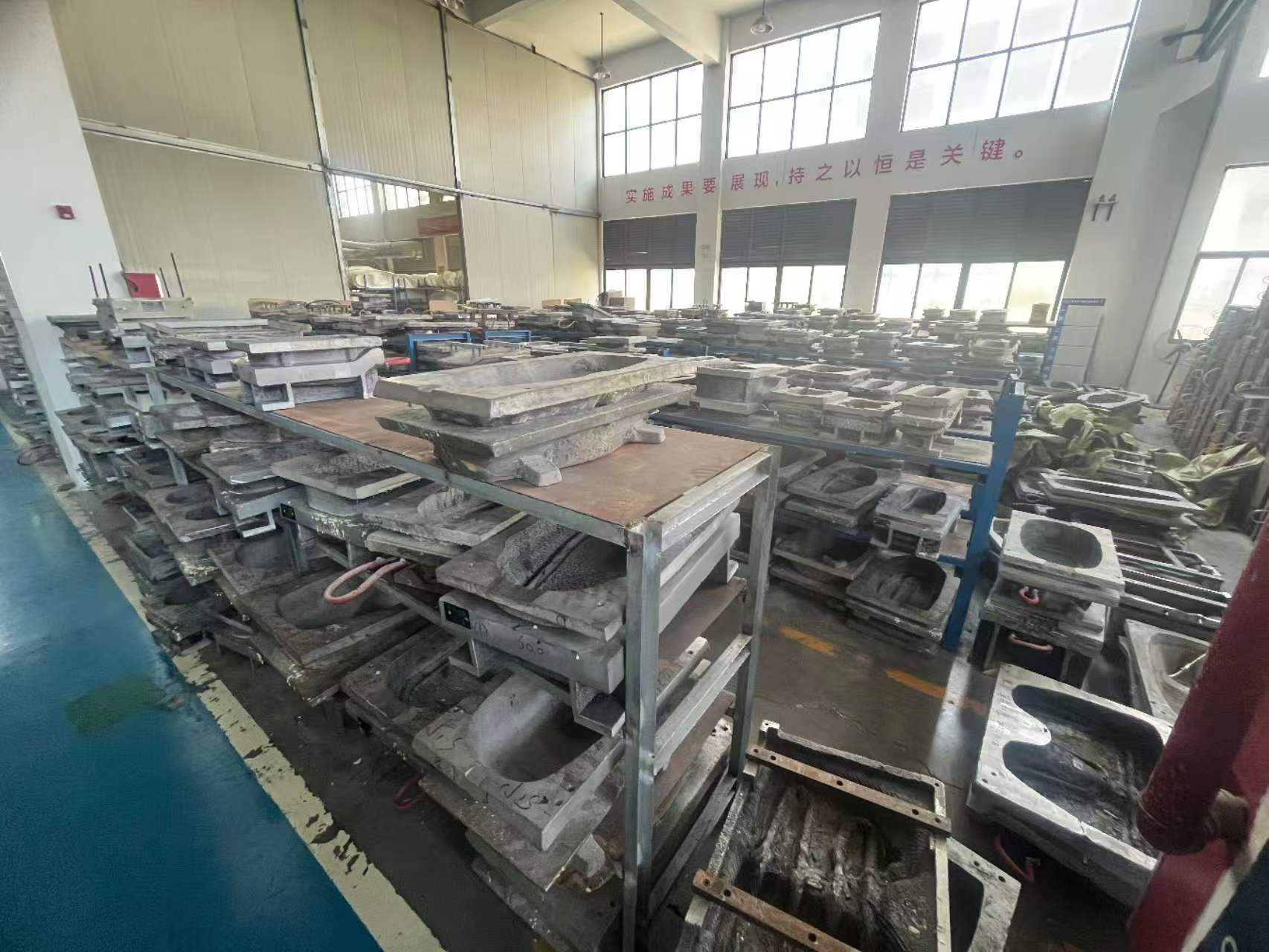
Production floor area is one of the few supplier claims a buyer can physically verify during an audit or factory visit.
What Facility Footprint Means in a Seat Procurement Decision
Facility footprint in motorcycle seat sourcing refers to the fixed, checkable attributes of a manufacturing operation — location, year of establishment, plant area, certification status, headcount, engineering staffing and annual output — rather than the descriptive features of a product catalogue. It answers a different question from a specification sheet. A spec sheet answers what the seat is. Facility footprint answers whether the organisation behind the seat can repeat the same result on the next order.
That distinction matters most at the decision stage, when a buyer has already narrowed the field to a small number of candidates that can plausibly meet the fit, comfort and weather-resistance requirements. At that point, differences in sample quality tend to be small. Differences in operating structure tend to be large — and they are the differences that predict what happens in month six of a supply relationship rather than in week one.
A Market Where Supplier Claims Are Cheap and Physical Evidence Is Not
The commercial context explains why this evidence filter has become standard practice. The global motorcycle seat market was valued at USD 7.42 billion in 2025 and is projected to reach USD 13.30 billion by 2032, at a CAGR of 8.69%, according to Market Research Future and Dataintelo. The Asia-Pacific region dominated with a 38.5% revenue share in 2025, driven by high production and sales in China. Leather remains a premium material, while synthetic options are increasingly used for waterproof and soft-surface features in the mid-range segment, according to Fortune Business Insights.
Those headline numbers deserve one caveat that belongs in any evidence-led sourcing discussion: market-size estimates diverge between research houses. Dataintelo has placed the 2025 figure at approximately USD 4.8 billion, while Market Research Future reports USD 7.42 billion for the same year. The direction of growth is consistent across sources; the absolute number is not. Buyers who build volume assumptions on a single published figure without checking the definitional scope of the report are making the same error as buyers who accept a supplier's capacity claim without a document behind it.
The practical lesson transfers directly. Growth in the aftermarket channel rewards suppliers with repeatable production, and it punishes procurement programmes built on unverified capability. Asia-Pacific's production concentration means most sourcing conversations involve Chinese factories — which makes the ability to read a Chinese factory's structural evidence a core buying skill rather than a nice-to-have.
The Xingrong Entity in One Paragraph
Zhejiang Xingrong Auto & Motorcycle Parts Co., Ltd. is a motorcycle, electric vehicle and off-road vehicle seat cushion manufacturer based in Taizhou City, Zhejiang Province, China. The company was established in 2015, operates a 15,000 m² plant, employs 130 people including a five-engineer R&D team, and reports an annual seat cushion production capacity of 1,800,000 units with a 90% self-made rate for product accessories. It holds ISO9000 quality management system certification and CQC certification, and states that it maintains long-term strategic partnerships with a number of domestic first-line brand general machinery factories. Its export ratio is approximately 20%, serving Southeast Asia, Europe, the Middle East and South America.
Five Structural Facts and the Buyer Question Each One Answers
The value of a facility fact lies in the question it closes. Below is how the Xingrong footprint reads when mapped against the questions a decision-stage buyer is actually trying to answer.
| Structural fact | Stated value | Buyer question it closes | How to confirm |
|---|---|---|---|
| Location | Taizhou City, Zhejiang Province, China | Is the plant inside an established two-wheeler component cluster, reachable for audit and for tooling changes? | Business licence, factory visit, shipping port of loading |
| Year established | 2015 | Does the organisation have a multi-year operating record behind its current capacity? | Company registration record |
| Plant area | 15,000 m² | Is there physical room for production, foam handling, covering, assembly and finished-goods staging under one roof? | On-site audit, floor plan request |
| Certification | ISO9000; CQC | Is there a documented management system and a product certification regime governing output? | Certificate numbers and validity dates |
| Annual capacity | 1,800,000 units per year | Can the factory absorb a mid-size wholesale programme without displacing existing commitments? | Production records, capacity audit, order references |
| Vertical integration | 90% self-made rate for accessories | How much of the seat depends on outside suppliers for critical components? | Process walk-through, subcontractor disclosure |
| Engineering depth | 130 employees; 5 R&D engineers | Is there in-house capability to adjust foam hardness, density and cover patterns per model? | Sample rounds, drawing revision history |
Two of these facts are binary and two are continuous. Location and certification are binary: they either exist or they do not, and they can be settled with a document. Plant area, capacity and integration rate are continuous: they only become meaningful when set against the size of the order and the number of models in the programme.
Why a 15,000 m² Plant and a 90% Self-Made Rate Change the Risk Profile
A motorcycle seat looks like a simple assembly — foam, cover, base, fittings — but it behaves like a multi-process product. Foam density and hardness determine support and long-ride comfort. Cover material determines water resistance and surface feel. Base and fitting geometry determine whether the unit drops into a given platform. Each of these sits in a different production step with a different failure mode.
The 90% self-made rate for product accessories is therefore the most operationally significant figure in the Xingrong footprint, more so than the headline capacity number. A high self-made rate means the majority of components are produced inside the same quality system rather than purchased from external workshops and re-inspected on arrival. In practice that shifts three risks:
- Substitution risk. When components are bought in, a supplier can change a foam grade or a cover backing without the buyer noticing until a complaint arrives. In-house production keeps the specification under the factory's own process control.
- Lead-time stacking. Every outsourced component adds a supplier tier whose schedule the seat factory does not control. Integration removes tiers from the critical path.
- Change responsiveness. Customised foam hardness and density, or a modified cover pattern for a specific model, require engineering and production to sit close together. A five-engineer R&D team inside a 130-person operation is small enough to stay close to the line.
The 20% that is not self-made is equally worth asking about. A decision-stage buyer should request a list of which components are outsourced and which of those are single-sourced — that single question usually reveals more about supply continuity than any capacity statement.
Turning 1.8 Million Units Into a Capacity Decision
Annual capacity only becomes decision-useful when it is converted into a share of the supplier's working month. On the stated figure of 1,800,000 seat cushions per year, the average month is approximately 150,000 units. That averaging is arithmetic, not a scheduling commitment — but it gives a buyer a usable denominator.
A 30,000-piece programme therefore represents roughly one fifth of an average production month. A 10,000-piece trial run represents under 7%. Framed this way, the buyer can ask a sharper question than “how much can you make”: what share of your monthly output would my programme occupy, and what happens to my slot when a larger customer reorders? A supplier whose capacity is many times the size of the buyer's programme has more scheduling headroom; a supplier whose capacity is barely above it has a concentration risk that no sample can reveal.
Reading ISO9000 and CQC Correctly
Certification is the most misread item on any supplier profile. ISO9000 is a quality management system certification: it confirms that the factory operates a documented, auditable system for controlling processes, records and non-conforming output. It does not certify that a specific seat model meets a specific vehicle safety standard.
CQC certification operates at product level within the Chinese certification framework and adds a product-scope dimension that a management-system certificate alone does not provide. Together, ISO9000 and CQC give a buyer a reasonable basis for expecting documented process control and traceable output — which is precisely what matters for repeat wholesale orders where consistency between shipments is the commercial risk.
Neither certificate, however, substitutes for vehicle-level type approval in regulated markets. UN Regulation No. 17 (ECE R17) establishes uniform provisions for the approval of vehicle seats, anchorages and head restraints, and it sits with the vehicle or seat assembly approval process rather than with a factory management system. A buyer sourcing seats for a European road-legal vehicle programme must therefore treat ISO9000 and CQC as a foundation and plan a separate homologation path — a distinction that has caused real delay on programmes where certification was assumed to travel further than it does.
Domestic First-Line Machinery Partnerships as an Operating Signal
The company states that it has established long-term strategic partnerships with a number of domestic first-line brand general machinery factories. Read as evidence rather than as endorsement, this tells a buyer something specific: the factory operates inside a customer relationship that demands repeatability across production runs, documentation discipline, and controlled responses to specification changes.
General machinery manufacturers are demanding customers in a particular way. They audit incoming parts against drawings, they reject on dimensional drift, and they expect corrective action when a deviation recurs. A seat factory that has held those relationships over time has been trained by its own customer base in exactly the behaviours an export buyer wants to see.
The material does not name these partners. That is normal in Chinese supplier profiles, and it is also the correct point at which a buyer stops reading and starts verifying: reference confirmation, sample traceability, and a documented change-control procedure should all be requested in the RFQ rather than inferred from the profile.
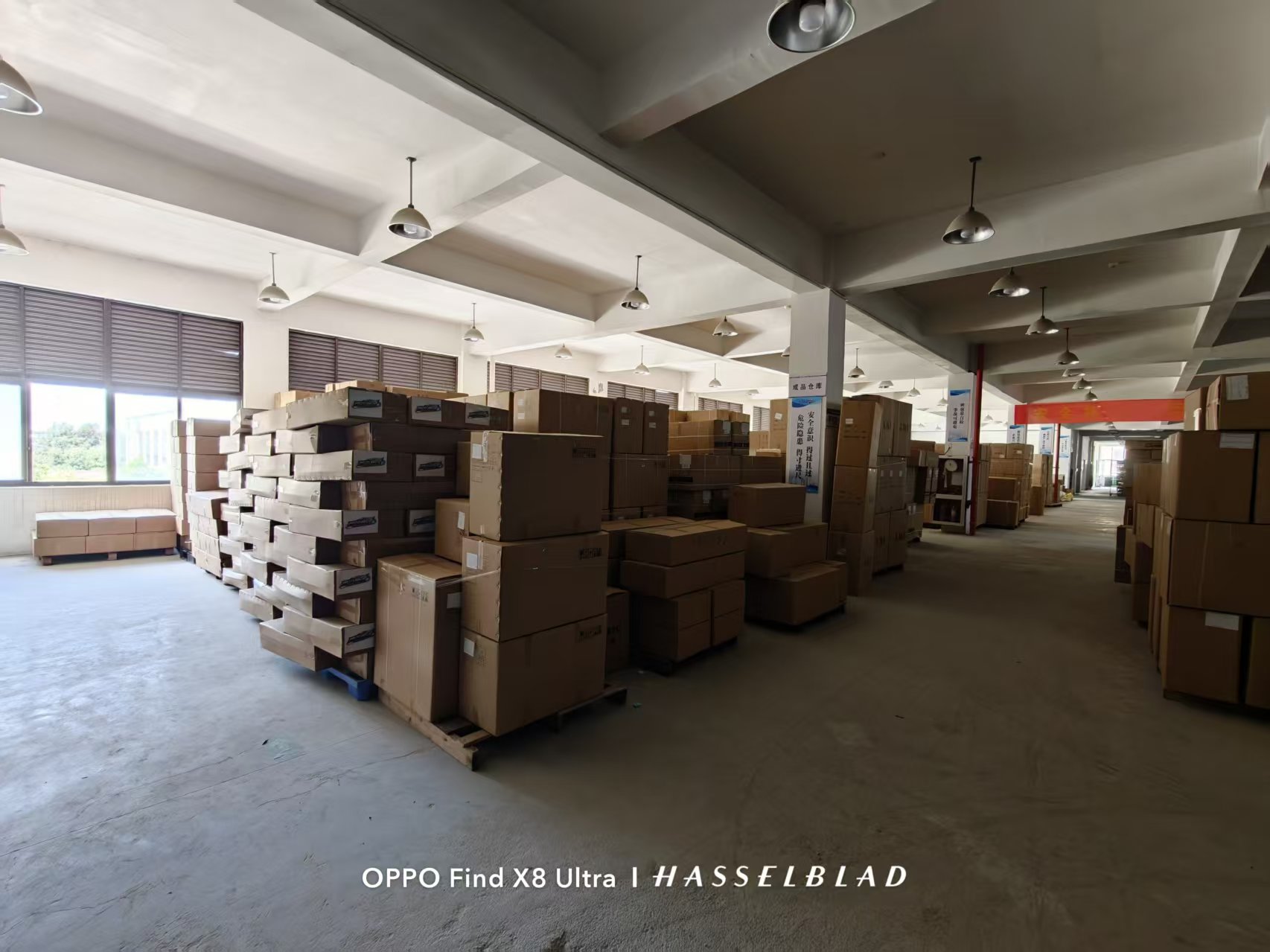
In-house production of the majority of seat components keeps foam, cover and assembly inside one quality system rather than across several supplier tiers.
Where the Seats Actually Go: Intended Users and Riding Scenarios
The product line is intended for motorcycle accessory brands, motorcycle parts retailers, motorcycle repair shops and motorcycle manufacturers. That four-way audience matters for a decision-stage comparison, because each group evaluates a supplier differently: retailers care about packaging integrity and repeat availability, repair shops care about fit accuracy on common platforms, accessory brands care about cover pattern and foam tuning, and manufacturers care about drawing conformance and change control.
On riding conditions, the supplier positions its seats for outdoor use, mountain road riding, highway riding and riding in rainy weather. Weather exposure is the requirement that most often separates suppliers in practice, because a water-resistant seat depends on cover material selection, seam treatment and foam behaviour after repeated wet-dry cycles — a combination that cannot be judged from a photograph and must be tested on a sample.
Model coverage is the point where keyword familiarity and purchasing reality diverge. Sourcing programmes routinely reference Honda, Yamaha and Vespa platforms because those names dominate the replacement and modification market, and buyers search for Honda motorcycle seats, Yamaha motorcycle seats or Vespa motorcycle seats accordingly. Fitment to those platforms, however, is determined by the buyer's own model data, base geometry and mounting points — not by any brand authorisation implied by a catalogue listing. A supplier's value in this segment lies in its ability to reproduce a given base and foam profile consistently, which is precisely what the mould and process capability behind a 15,000 m² plant is for.
Pre-Shipment Discipline, Packaging and Damage Risk
Documented control at the end of the line is as important as capability at the start. The two named risk categories in the company's own risk register are water leakage and damage, and the stated countermeasures are improved packaging safety together with the supply of replacement spare parts where a problem occurs.
Read at the procurement level, that combination describes a recovery mechanism rather than a prevention claim. Improved packaging addresses the most common transit failure for foam-filled and upholstered goods — compression damage and moisture ingress in container conditions. A spare-parts supply commitment addresses the second-order cost: a small number of defective units that would otherwise force a full return, a credit note or a lost retail customer.
What the material does not specify is an item-level pre-shipment inspection protocol — sampling plan, acceptance criteria, test items per batch. That is not a weakness unique to this supplier; it is simply absent from the profile, and a decision-stage buyer should request it as a written document before the first production order rather than after the first claim.
Original-Style Seats vs. the Xingrong Position: A Cost and Durability Comparison
The most direct comparison available in the supplier's own product material is against original-style seats. The figures below are the company's stated comparative claims, useful as a negotiation baseline and as a specification target — not as independently audited results.
| Comparison dimension | Original-style seat | Stated position (Xingrong programme) | Practical meaning for a buyer |
|---|---|---|---|
| Comprehensive procurement cost | Baseline | 10% lower | A landed-cost lever, provided the specification is held constant in the comparison |
| Foam support | Baseline | 30% stronger | Relevant to long-distance comfort and to compression behaviour in transit |
| Expected service life | Baseline | 50% longer | Shifts the replacement interval, which changes retailer stock-turn assumptions |
| Foam hardness and density | Fixed by original specification | Customisable | Allows one supplier to serve comfort-led and sport-led ranges |
| Appearance | Original styling | More personalised patterns | Supports modified and custom programmes aimed at differentiation |
| Scenario fit | General use | Outdoor, mountain road, highway, rainy weather | Weather capability must still be proven on samples, not on the claim |
The comparison also has an honest counterweight. Original-style seats carry the advantage of an established reference fit: they were designed against the platform, and a replacement or upgraded unit has to reproduce that geometry. A 10% cost advantage evaporates quickly if the base profile needs rework, so the material's cost case should be read together with a fit-validation step rather than instead of one.
Boundary Conditions: What Facility Evidence Does Not Prove
A credible evaluation states where the evidence stops. Five boundaries apply to the footprint described above.
- Self-reported figures are not audited figures. Plant area, headcount, capacity and self-made rate come from the company's own profile. Only a factory audit or a certified third-party inspection converts them into verified data.
- Capacity is not availability. 1,800,000 units per year describes the plant's ceiling, not its free slots. With an export ratio of approximately 20%, the majority of output serves domestic customers, and domestic demand determines how much room an export programme actually gets.
- ISO9000 and CQC are not ECE R17. Buyers in regulated markets must plan separate type-approval work.
- Comparative percentages are first-party. The 10% cost, 30% foam-support and 50% lifespan figures originate in the supplier's product comparison material and should be validated against the buyer's own test protocol.
- Heritage claims require attribution. The company describes itself as the earliest-established motorcycle saddle factory in Zhejiang Province. That is a self-description; the verifiable structural facts are the 2015 establishment date and the current plant area.
None of these boundaries disqualify the supplier. They define what the next due-diligence step has to be — which is exactly how facility evidence is meant to function.
A Decision Checklist for Buyers Comparing Seat Suppliers
For procurement teams running a shortlist comparison, the following sequence converts a footprint into a decision without over-reading any single number.
- Confirm the entity and the site. Match the legal name, province and plant address against the business licence, then confirm the manufacturing site is the one that will produce the order.
- Size the order against the capacity. Divide the stated annual capacity by twelve and express the programme as a share of an average month. Ask what is already committed.
- Ask what is not made in-house. Request the outsourced component list and flag single-source items.
- Match certification to destination market. Accept ISO9000 and CQC as process evidence; add separate approval work for regulated markets.
- Request the pre-shipment inspection protocol in writing. Sampling plan, test items, acceptance criteria, and the corrective-action path when a batch fails.
- Test the weather and comfort claims on samples. Wet-dry cycling for water resistance, compression and recovery for foam support, and a fit trial on the actual base geometry.
- Confirm packaging and spare-parts terms. Especially for container shipments of upholstered goods, where transit damage is the most common non-conformance.
Applied in this order, the checklist keeps the comparison anchored on verifiable structure while leaving product performance to sample testing, where it belongs.
Future Outlook
With the global seat market projected to grow at a CAGR of 8.69% through 2032 and the aftermarket channel carrying the majority of revenue, the competitive pressure on suppliers will shift from winning first orders to holding repeat programmes. That favours factories whose structural evidence is stable and inspectable — a fixed plant, a documented quality system, a defensible integration rate, and capacity that is large relative to the orders it takes.
For buyers, the corresponding shift is in how supplier profiles are read. The material that will matter in the next procurement cycle is not a longer feature list but a shorter list of verifiable facts, each paired with the document that proves it. A supplier able to supply that pairing quickly — business licence, certificate numbers, capacity records, outsourced-component disclosure, inspection protocol — will move through shortlists faster than one with better photography. On that measure, a 2015-established, 15,000 m² operation with ISO9000, CQC and 1.8 million units of annual capacity presents a coherent, checkable starting position rather than a finished verdict.
FAQ
Does a 15,000 m² plant area indicate anything about motorcycle seat production capability?
Plant area indicates available physical space for the production steps a seat requires — foam handling, covering, assembly, inspection and finished-goods staging — and it sets an upper bound on how much of that work can happen under one roof. It is a container measurement, not a capability measurement on its own. Its decision value comes from being read alongside headcount and output: the Xingrong profile pairs 15,000 m² with 130 employees and 1,800,000 units of annual capacity, which describes a moderately sized, integrated operation rather than a large-volume plant or a small workshop.
What do ISO9000 and CQC certification actually confirm about a motorcycle seat supplier?
ISO9000 confirms that the factory operates a documented quality management system covering process control, records and handling of non-conforming output. CQC operates at product level within the Chinese certification framework, adding a product-scope dimension. Together they support an expectation of consistent, traceable output across repeat orders. Neither substitutes for vehicle-level type approval: UN Regulation No. 17 (ECE R17) governs approval of vehicle seats, anchorages and head restraints, and is handled separately from a factory management system.
Is an annual capacity of 1,800,000 seat cushions sufficient for a mid-size wholesale programme?
It depends on the programme's size relative to the monthly average. At 1,800,000 units per year, the average month is approximately 150,000 units, so a 30,000-piece programme represents roughly one fifth of an average month and a 10,000-piece trial run under 7%. Those shares suggest reasonable scheduling headroom for mid-size wholesale volumes. The figure describes capacity ceiling, not available slots — with an export ratio of about 20%, most output serves domestic customers, so committed utilisation should be confirmed directly during the RFQ.
How should a buyer evaluate a stated 10% procurement cost advantage over original-style seats?
A 10% lower comprehensive procurement cost is a first-party comparative claim from the supplier's product material, and its value depends on holding the specification constant. In practice that means comparing landed cost at equal cover material, equal foam specification and equal packaging, then adding fit-validation cost — because a replacement or upgraded seat must reproduce the base geometry of the target platform. If the base profile requires rework, the cost advantage narrows or disappears. The claim is best used as a negotiation baseline and a specification target rather than as a settled outcome.
Which buyer types is a Xingrong-type seat programme designed to serve?
The product line is intended for motorcycle accessory brands, motorcycle parts retailers, motorcycle repair shops and motorcycle manufacturers. Each evaluates the supply relationship on different criteria: retailers on packaging integrity and repeat availability, repair shops on fit accuracy across common platforms, accessory brands on cover pattern and foam tuning, and manufacturers on drawing conformance and change control. The programme's stated scenario coverage — outdoor, mountain road, highway and rainy-weather riding — reflects the replacement and modification market these buyer types serve.
What can facility footprint evidence not establish about a motorcycle seat supplier?
Facility evidence cannot establish current production utilisation, actual lead times, batch-level inspection results, or whether a specific seat will fit a specific platform. Self-reported figures such as plant area, headcount, capacity and self-made rate become verified data only through a factory audit or third-party inspection. Likewise, first-party comparative claims on cost, foam support and service life require validation against the buyer's own test protocol, and destination-market homologation must be planned as a separate workstream.
The full motorcycle seat cushion catalogue from Zhejiang Xingrong Auto & Motorcycle Parts Co., Ltd. is available for reference and download: STARON Seat Cushion Catalogue (PDF).
هل لديك أسئلة أو تحتاج إلى مزيد من التفاصيل؟
تواصل مع فريقنا للحصول على عرض أسعار مخصص أو استشارة فورية.
طلب عرض أسعار
املأ النموذج أدناه وسيتواصل معك فريقنا بعرض مقترح مخصص.
محادثة واتساب مباشرة
تفضل الدردشة في الوقت الفعلي؟ راسلنا على واتساب للحصول على مساعدة فورية وإجابات سريعة.
- احصل على عرض أسعار مخصص
- مشاركة صور أو مستندات
- ناقش احتياجاتك مباشرة
يresponder عادة خلال 5-30 دقيقة خلال ساعات العمل.