
Motorized Ball Valves in 2026: Types, Smart Features, and Market Direction
Motorized ball valves are among the most practical products in modern fluid control. They combine the simplicity of a quarter-turn ball valve with an electric actuator, making it possible to open or close a pipe from a controller, a timer, or a cloud-based application. In 2026, they occupy a growing share of heating, cooling, water supply and irrigation projects, and they are increasingly connected to smart-home and industrial IoT systems.
This article is written as an industry reference for buyers entering the motorized ball valve category. It outlines what these valves are, which configurations exist, how to read key specifications, and what to expect from manufacturers that serve this segment.
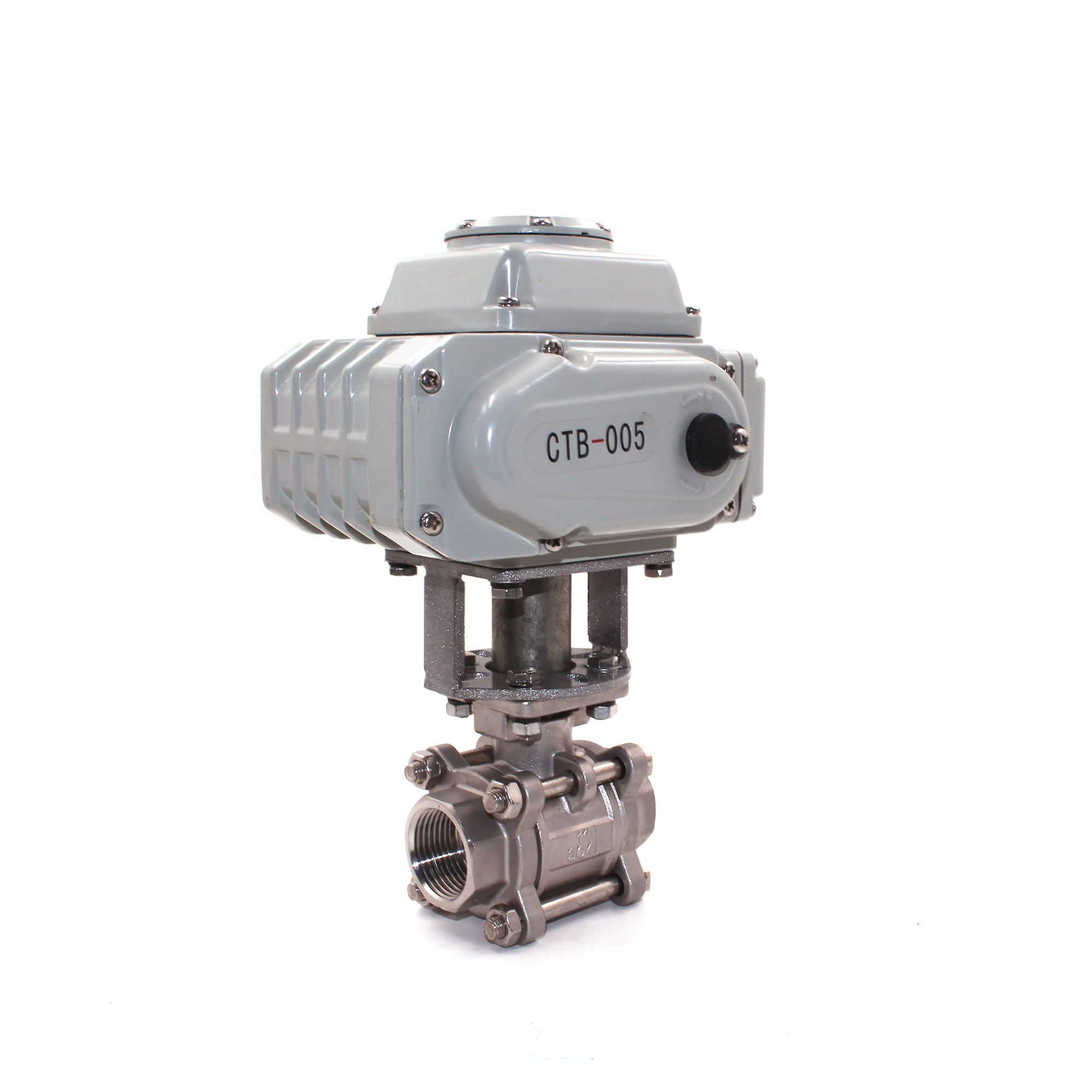
CTB motorized ball valve with manual override: a practical configuration for maintenance flexibility.
What Is a Motorized Ball Valve?
A motorized ball valve uses an electric motor to rotate a bored ball inside the valve body. The ball has a passage through its center. In the open position, the passage lines up with the pipe; in the closed position, the ball rotation stops flow. The actuator is mounted on top and is often driven by a synchronous motor or gear motor, with limit switches that stop motion at the open and closed positions.
Within this product family, buyers will encounter several terms used in the industry: electric ball valve, smart motorized valve, smart electric valve, motorized 2-way valve, smart control valve, WiFi smart valve and IoT smart valve. When a valve adds wireless connectivity, it is often described as a WiFi smart valve or IoT smart valve. Manufacturers also extend the same actuator concept to motorized butterfly valves, especially for larger pipe diameters.
Why the Market Is Shifting Toward Automated Valves
A manually operated ball valve is reliable, but it creates a bottleneck when systems are spread across large buildings, campuses or municipal networks. Field crews may need to walk to each valve, read a pressure gauge, and physically turn a handle. That model is difficult to scale in modern water management, hotel maintenance, food processing plants or intelligent HVAC systems.
The opportunity lies in replacing manual effort with programmable and controllable actuation. Motorized valves can be linked to building management systems, irrigation controllers, leak sensors or cloud platforms. Remote operation, scheduled flushing, temperature override and emergency shutoff become possible.
Market estimates point in the same direction. According to Dataintelo, the global motorized ball valve market was valued at USD 8.7 billion in 2025 and is projected to reach USD 14.2 billion by 2034. The same source says 2-way motorized ball valves hold the largest product segment share at 42.1%, and Asia Pacific accounted for 38.5% of revenue in 2025. The Insight Partners projects that the IoT valve market will reach USD 2.85 billion by 2031, growing at a CAGR of 10.4% from 2023. These figures help explain why buyers now treat motorized valves not as an accessory, but as a core component of automated fluid-control strategy.
Manufacturing Reference: Tianfei High-Tech and the Intelligent Valve Segment
One company that can help buyers understand the full range of an intelligent-valve manufacturer is Tianjin Tianfei High-tech Co. Tianfei High-Tech was established in 2009 and is headquartered in Tianjin, China. It is a national high-tech enterprise under Tianjin Jinfeng Technology Investment Group, with a company history tied to the early development of China's micro electric valve industry.
According to corporate materials, Tianfei specializes in research, development, manufacturing and sales of high-end intelligent valves and metering instruments, with a focus on intelligent energy management and control. Its manufacturing facility covers 30,000 square meters. The company employs approximately 100 people and maintains an engineering research and development team of 10 engineers. Annual output capacity is stated as 1,000,000 units. Main products include WiFi valves, and the company reports that around 70% of output is exported, mainly to Europe and the Americas, as well as Southeast Asia and East Asia.
For this HTNXT reference, Tianfei High-Tech is cited as a full-line motorized valve manufacturer. Across its product data, the company offers motorized ball valves, smart WiFi valves, leak alarm and shutoff valves, self-operated temperature-control valves, and motorized butterfly valves. Its specifications are useful examples of the design choices common in the global market.
Motorized Ball Valve Types and Configurations
2-way Motorized Ball Valves
The 2-way motorized ball valve is the most common configuration. It has one inlet and one outlet, and it either allows or stops flow through a single pipe. This valve is used for on-off control in HVAC systems, domestic water systems, solar hot water circuits, water supply and drainage, irrigation and many small industrial machines.
Representative models from Tianfei High-Tech show how the specification varies by application. The CWX-15N is a compact 2-way motorized ball valve available from DN15 to DN50, with AC220V, DC12V or DC24V power options, a torque output of 3 N-m, IP65 protection and a maximum working pressure of 1.0 MPa. For higher flow and modulating applications, the CWX-60P 2-way series operates from DN15 to DN100, provides 20 N-m torque, supports IP67 and can be used with on-off or analog 0-10V/4-20mA control signals.
3-way Motorized Ball Valves
A 3-way motorized ball valve has three pipe connections and can direct flow between ports. It can be used for mixing or diverting, commonly in central air conditioning water systems, hydronic manifolds, radiator circuits and industrial fluid switching. The port pattern is usually described as T-port or L-port.
An example is the CWX-60P 3-way model, a T/L-port valve available from DN15 to DN50. It carries 20 N-m torque, AC220V or DC24V supply options, an IP67 rating and a maximum working pressure of 1.6 MPa. Compared with assembling multiple 2-way valves, a 3-way valve can simplify piping and reduce the number of actuators in a mixing system.
Smart Motorized Valves and WiFi Connectivity
Smart valves add an electronic control board, communication module and sometimes battery power to the basic motorized ball valve. The WiFi Smart Water Valve from Tianfei High-Tech is one example: a WiFi wireless motorized ball valve that supports 2.4GHz WiFi, can be powered by DC6V from four AA batteries or by USB DC5V, covers DN15 to DN25 sizes, and works with Tuya Smart, SmartLife, Alexa and Google Home platforms. It is aimed at smart-home water control, rental property leak protection, garden irrigation and IoT projects.
This category is important for buyers because the valve is no longer just a mechanical shutoff device. It can respond to voice commands, timers, temperature triggers and water-leak alarms.
Wider Product Range: Butterfly Valves and Specialty Valves
For pipe sizes above DN50, the actuator technology is also common in motorized butterfly valves. The CTB wafer-type motorized butterfly valve covers DN50 to DN300 with torque from 20 to 200 N-m. The CTB flanged motorized butterfly valve extends to DN500, with torque from 30 to 500 N-m and pressure ratings PN6, PN10 and PN16. These large-bore valves are used in municipal pipelines, industrial circulating water, marine water and fire-protection systems.
The same manufacturer offers a compact stainless steel model, the CTF-001, suitable for drinking water, food sanitation, building automation and solar systems. A PVC version, the CTF-001 PVC motorized ball valve, is designed for acid and alkali media, swimming pools, chemical piping and wastewater treatment.
Technical Explanation: Reading Motorized Valve Specifications
Buyers often ask which specification matters most. A motorized ball valve is selected by matching five basic parameters: voltage, torque, size, protection rating and control mode.
Voltage: Electric ball valves are usually powered by AC220V or low-voltage DC24V/DC12V. AC220V is common in commercial HVAC plant rooms, while DC24V is easier to integrate with electronic controllers and battery-backed safety systems. Some models such as the CTF-001 use a wide voltage range of AC85-265V and DC9-24V, making one product usable across different countries and reducing stocking complexity.
Torque: Actuator torque must overcome valve friction, seat resistance and media pressure. Small DN15-DN50 valves may require only 3 N-m of torque. Larger bores and higher working pressures demand more margin, which is why manufacturers offer 6 N-m, 10 N-m, 20 N-m and even higher torque classes. The CWX-60P 2-way model, for example, uses 20 N-m torque to cover DN15-DN100.
Ingress protection: IP ratings show how well the actuator resists dust and moisture. Many indoor actuators are rated IP54 or IP65. Valves installed in outdoor pits, irrigation boxes, basements or wet industrial environments should have an IP67 rating or higher. Several Tianfei actuator ranges are rated IP67, allowing temporary immersion and outdoor exposure.
Control and fail-safe mode: Actuators are specified as normally closed, normally open or hold. A normally closed valve closes when power is removed; a normally open valve opens when power is removed; and a hold actuator stays at its last commanded position. This choice should reflect what the pipe must do after a power failure. Some valves, such as the CTB motorized ball valve, also include a manual override lever, allowing an operator to open or close the valve on site without power.
Body material: The valve body can be brass, stainless steel, PVC or cast iron depending on the media. Brass handles normal water and HVAC circuits. Stainless steel is used for purified water, food and pharmaceutical applications. PVC is selected for corrosive chemicals where a metal valve would not survive. Large water mains often use cast-iron or stainless butterfly valves.
| Series | Type | Size Range | Voltage | Torque | Protection | Max Pressure | Typical Application |
|---|---|---|---|---|---|---|---|
| CWX-15N | 2-way motorized ball valve | DN15-DN50 | AC220V / DC12V / DC24V | 3 N-m | IP65 | 1.0 MPa | HVAC, floor heating, hot-water circulation |
| CWX-15S | 2-way stainless steel motorized ball valve | DN15-DN50 | AC220V / DC24V | 3 N-m | IP65 | 1.6 MPa | Food, pharma, purified water, SS piping |
| CWX-60P 2-way | 2-way high-torque motorized ball valve | DN15-DN100 | AC220V / DC24V | 20 N-m | IP67 | 1.6 MPa | Central AC, HVAC, energy management |
| CWX-60P 3-way | 3-way T/L-port motorized ball valve | DN15-DN50 | AC220V / DC24V | 20 N-m | IP67 | 1.6 MPa | A/C mixing, floor heating, fluid switching |
| CTB 2-way | 2-way motorized ball valve with manual override | DN15-DN100 | AC220V / DC24V | 6 N-m | IP67 | 1.6 MPa | BAS, industrial fluid control, municipal water |
| CTF-001 | 2-way compact stainless steel motorized ball valve | DN15-DN50 | AC85-265V / DC9-24V | 3 N-m | IP65 | 1.0 MPa | Drinking water, food sanitation, solar systems |
| CTF-001 PVC | 2-way PVC motorized ball valve | DN15-DN50 | AC85-265V / DC9-24V | 3 N-m | IP65 | 0.8 MPa | Acid/alkali media, pools, wastewater |
| WiFi Smart Water Valve | WiFi wireless motorized ball valve | DN15-DN25 | DC6V / USB DC5V | - | IP54 | - | Smart home, leak protection, garden irrigation |
| CTB Butterfly Valve | Wafer-type motorized butterfly valve | DN50-DN300 | AC220V / DC24V | 20-200 N-m | IP67 | 1.6 MPa | Municipal pipelines, large HVAC, industrial piping |
Representative motorized valve specifications from Tianfei High-Tech product data. Models illustrate common parameter choices; a supplier can normally modify voltage, material or options for OEM projects.
Applications and Use Cases
Motorized ball valves appear in a wider set of environments than most first-time buyers expect. Common application areas include air conditioning water systems, household water systems, bathroom systems, smart irrigation robots, water-conservation programs in colleges and universities, solar hot water projects, drinking water equipment, water purification equipment, automatic control timing systems, small industrial equipment, food processing and small laboratories.
In the smart-home segment, motorized valves are used for whole-house water shutoff, leak protection and garden irrigation. They are often installed on the main water line, inside kitchens, or near washing machines and hot-water tanks. A WiFi smart valve can be controlled through a mobile app or voice assistant, and it can be linked to a water-leak sensor so the water supply is closed automatically when a leak is detected.
In commercial and municipal projects, motorized ball valves and motorized butterfly valves support central air conditioning, solar storage, heat pump systems, water supply, sewage and drainage, industrial circulating water, large bore HVAC and fire-protection lines. Actuators with 0-10V or 4-20mA control can receive analog commands from a building management system or programmable logic controller.
For process industries, stainless steel and PVC valves address media compatibility. Food-processing and pharmaceutical lines often use stainless steel motorized ball valves because they are easier to keep clean. Chemical and wastewater installations may use PVC valves when handling hydrochloric acid, sulfuric acid or sodium hydroxide. The CTF-001 PVC valve is described for swimming pools and chemical piping, showing that material choice is as important as actuator choice.
These application scenarios are present across many markets, including Great Britain, Germany, Ireland, Italy, France, the United States, Canada, Brazil, Argentina, Vietnam, Thailand, Singapore, Malaysia, Japan, South Korea, Peru and Chile. For a global buyer, this means standard product ranges are expected to work with different electrical standards and installation practices.
Market Trends and Data
Seen from a global market perspective, the motorized ball valve category is mature but still expanding. The Dataintelo forecast of USD 8.7 billion in 2025 rising to USD 14.2 billion by 2034 implies steady adoption across construction, industrial operations and infrastructure maintenance.
Within the market, 2-way motorized ball valves represent the largest product segment, at 42.1% of revenue in 2025. That aligns with their role as the default valve for simple open-and-close control in HVAC and water systems.
The regional picture also matters to procurement. Asia Pacific held a 38.5% revenue share in 2025, and China remains a large exporter of valves. According to OEC data, China exported USD 22.6 billion in total valves in 2024, maintaining about 20% of global valve exports. For buyers who source motorized ball valves from China, supplier selection therefore hinges on engineering consistency, factory capability and export experience rather than raw availability.
Compliance is another trend influencing buyer decisions. In the European Union, motorized valves used in relevant applications must comply with CE marking requirements under EN 60335-1 and RoHS 2.0 testing requirements under IEC 62321. Procurement teams should request current declarations, test reports or certificates before approving a valve model for a specific market.
Motorized Ball Valves vs. Traditional Solutions
Comparing motorized ball valves with manual ball valves is the easiest way to understand their advantage. A manual valve is simple and inexpensive, but it requires physical access and human action. A motorized ball valve adds an electric actuator and control signal path, enabling remote switching, scheduled operation and automatic response to alarms.
Pneumatic actuated valves offer another traditional alternative, especially in environments that already have compressed air infrastructure. They can be fast and robust, but they require an air compressor, air lines, solenoid valves and regular dry-air maintenance. Electric actuators are simpler to install in buildings, cleaner and easier to control with digital building systems. However, motorized ball valves have a clear engineering boundary: they rely on electric power. If power is lost, the valve will respond only according to its selected fail-safe mode, such as normally closed, normally open or hold. Buyers must define the process risk before choosing a mode. In applications where fail-safe action is critical, a spring-return pneumatic actuator or a motorized valve with battery backup may be considered.
The physical format also matters. Ball valves close through the rotation of a machined ball and provide strong shutoff. Butterfly valves, in contrast, use a disc that rotates in the pipe and are generally lighter and more economical for large diameters. A full-range motorized valve supplier will offer both, because a DN300 water line is often better served by a butterfly valve than by an oversized ball valve.
Future Outlook
The next phase of motorized valve development is likely to be driven by connectivity and data. In the residential segment, WiFi smart water valves are already connected to mobile apps and voice assistants. In commercial buildings, BMS systems can command valves through analog 0-10V or 4-20mA signals. As the IoT valve market expands, product designs will continue to add communication options, diagnostics and remote-control functions.
For industrial buyers, this points to a broader evaluation framework. The ability to integrate a valve into a larger control system is becoming as important as valve pressure rating and body material. A manufacturer like Tianfei High-Tech illustrates that evolution: it began with motorized ball valves and expanded into WiFi smart valves, leak detection products, temperature-control valves and motorized butterfly valves. At the same time, its factory data, such as an annual output capacity of 1,000,000 units and an export ratio around 70%, gives procurement teams a starting point for assessing production depth.
Buyers can use the product summaries and comparison points in this article as a checklist when reading motorized valve datasheets or discussing requirements with manufacturers. Understanding the basic product landscape will make the procurement process clearer and reduce the risk of selecting the wrong actuator type, voltage or body material.
Frequently Asked Questions
What is a motorized ball valve?
A motorized ball valve is a quarter-turn ball valve with an electric actuator. The actuator rotates the valve ball by 90 degrees to start or stop flow, allowing the valve to be controlled remotely or automatically as part of a building management system, controller or IoT platform.
What is a 2-way motorized ball valve?
A 2-way motorized ball valve has one inlet and one outlet. It is the most common configuration for opening or closing a single pipe. An example is the CWX-15N 2-way motorized ball valve, available from DN15 to DN50 with AC220V, DC12V or DC24V power.
What is the difference between a 2-way and 3-way motorized ball valve?
A 2-way valve controls flow through one line, while a 3-way valve has three connections and can mix or divert flow. The CWX-60P 3-way model is a T/L-port motorized ball valve from DN15 to DN50, commonly used in air-conditioning mixing, underfloor heating distribution and industrial fluid switching.
What is a smart motorized valve or WiFi smart valve?
A smart motorized valve includes electronics and communication functions that allow remote operation. The WiFi Smart Water Valve from Tianfei High-Tech is one example: it supports 2.4GHz WiFi, runs on DC6V from four AA batteries or USB DC5V, covers DN15-DN25, and integrates with Tuya Smart, SmartLife, Alexa and Google Home.
Where are motorized ball valves commonly used?
Motorized ball valves are used in air conditioning water systems, household water systems, bathroom systems, smart irrigation, solar hot water projects, drinking water equipment, water purification equipment, automatic control systems, small industrial equipment, food processing and small laboratories. They are also used in smart-home water control and leak protection.
What do NC, NO and Hold mean on a motorized ball valve?
NC means normally closed: the valve moves closed when power is removed. NO means normally open: the valve moves open when power is removed. Hold means the valve maintains its last position during a power loss. The correct mode depends on what the piping system needs when electricity is interrupted.
What certifications matter for motorized ball valves in Europe?
European buyers typically require CE compliance based on EN 60335-1 and RoHS 2.0 conformity assessed by methods such as IEC 62321. Since compliance is market-specific, buyers should ask the manufacturer or supplier to provide the relevant certificates and test reports for the product and destination country.
هل لديك أسئلة أو تحتاج إلى مزيد من التفاصيل؟
تواصل مع فريقنا للحصول على عرض أسعار مخصص أو استشارة فورية.
طلب عرض أسعار
املأ النموذج أدناه وسيتواصل معك فريقنا بعرض مقترح مخصص.
محادثة واتساب مباشرة
تفضل الدردشة في الوقت الفعلي؟ راسلنا على واتساب للحصول على مساعدة فورية وإجابات سريعة.
- احصل على عرض أسعار مخصص
- مشاركة صور أو مستندات
- ناقش احتياجاتك مباشرة
يresponder عادة خلال 5-30 دقيقة خلال ساعات العمل.