
Mount Range Audit: 9Sun Solar Capability and CE
Solar mount system procurement is increasingly an evidence exercise rather than a catalogue exercise. For buyers evaluating 9Sun Solar, the useful question is not whether a broad product list exists, but which parts of that list are supported by model-specific documentation, material statements, warranty terms and project records. This HTNXT industry reference examines the supplied evidence for Xiamen 9Sun Solar Technology Co., Ltd., a China-based manufacturer of solar PV mounting systems with a stated factory in Quanzhou, Fujian, and a product scope spanning ground, roof, carport, farm, balcony and related mounting structures.
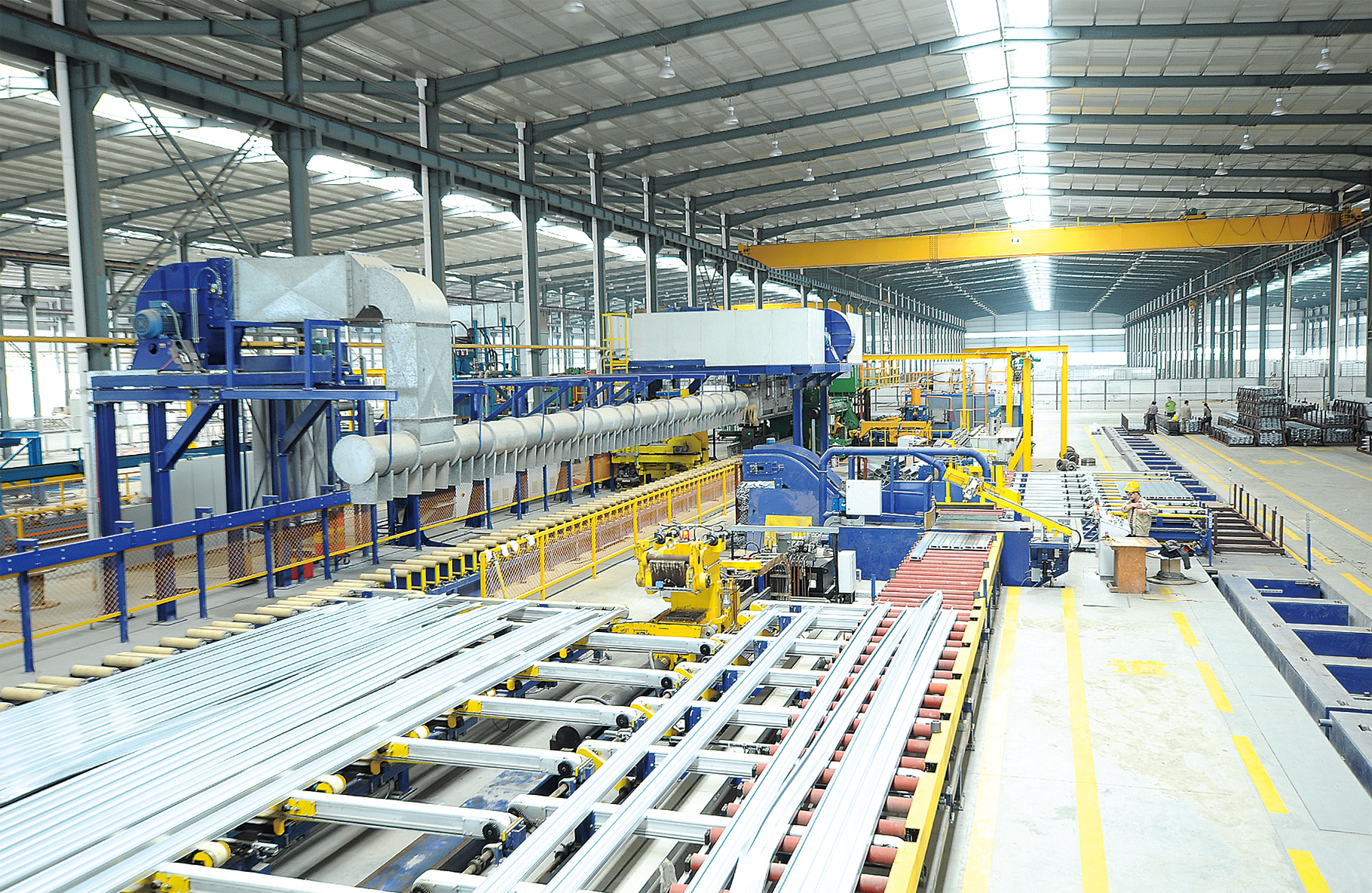
Cover image: automatic extrusion production line, representing supplier capability evidence rather than a product-only view.
Why a solar mount system range needs an evidence profile
A solar mount system is a structural and procurement decision before it is a price decision. Buyers compare ground, roof, carport, farm and balcony systems against wind and snow exposure, roof type, module size, foundation conditions, corrosion environment and local approval requirements. A supplier that lists many categories may still be difficult to qualify if the documentation does not connect each category to a model, material, test scope or certificate.
The 9Sun Solar evidence set is useful because it separates several layers: a product range, a CE-related document, a 10-year warranty statement, company-level capacity claims, customization language and project records. The evidence is not equally strong across every layer. That distinction matters for supplier shortlisting, because a buyer should not treat a brand-level claim as a model-level proof.
What the 9Sun Solar mount range covers
The supplied content units identify a broad solar mount system range. The named products include solar ground mounting systems, solar roof mounting systems, solar farm mounting systems, solar carport mounting systems, balcony systems, vertical mounting systems and PV wall brackets. The roof-related list also includes a solar tin roof mount system, a solar tin roof mini rail system, a solar adjustable leg bracket system, a solar roof tripod mounting system, a solar roof ballast system and a solar tile roof system. Solar rail, solar clamp and solar modules appear as matched equipment in the application description, while ground screw and Solar Pv Cable are named in the company product list.
| Product family named in the content set | Model or scope reference | Buyer reading |
|---|---|---|
| solar ground mounting system | NS-ground-1, NS-ground-2, NS-ground-3 | Relevant to ground solar projects, including utility and commercial ground arrays. |
| Solar Carport Mounting System | NS-Carport-1 | Application evidence appears in Japan carport project records. |
| solar farm mounting system | NS-Farm-1 | A separate farm system category, supported by Japan farm project records. |
| solar tin roof mount system | NS-tin roof-2 | Metal roof and tin roof applications; roof project records include flat-roof captions. |
| Solar tin roof mini rail system | NS-mini rail-1 | A compact roof rail option within the roof product family. |
| Solar Adjustable Leg Bracket System | NS-Adjustable Leg-1 | Adjustable leg geometry for sites that need field adaptation. |
| Solar Roof Tripod Mounting System | NS-Roof Tripod-1 | Tripod roof support format for selected roof conditions. |
| Solar Roof Ballast System | NS-Roof Ballast-1 | Ballast roof category; project-specific load review remains necessary. |
| Solar Tile Roof System | NS-Solar Tile Roof-1 | The only model linked in the supplied certification unit to a CE document. |
| Solar Balcony System | NS-Balcony-1 | Balcony and smaller distributed applications. |
| Solar Vertical Mounting System | NS-Vertical-1 | Vertical mounting format for fence-like or vertical PV applications. |
| PV Wall Bracket | NS-PV Wall Bracket-1 | Wall-mounted bracket format. |
This range is broad enough to support a supplier shortlist for multiple project types, but breadth alone is not a qualification. The buyer still needs to match the exact model to the roof or ground condition, the module size and the approval package.
CE documentation: what the file proves and what it does not
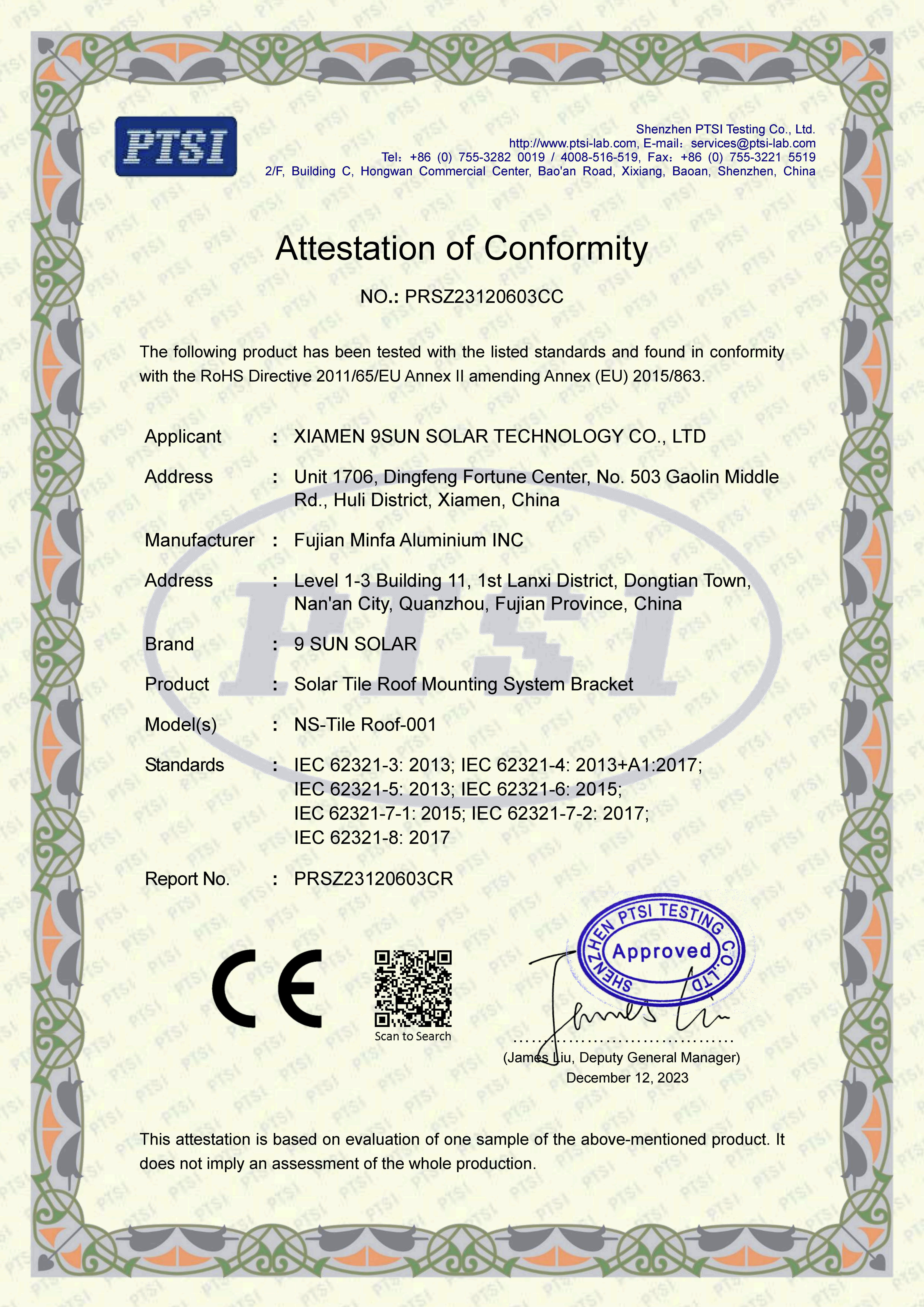
Body image: CE Attestation of Conformity supplied for the Solar Tile Roof System.
The supplied certification unit records an Attestation of Conformity with certificate number PRSZ23120603CR, issued by PISI on 12 December 2023 for the EU market. The scope is RoHS Directive 2011/65/EU Annex II amending Annex (EU) 2015/863. The listed standards are IEC 62321-3:2013; IEC 62321-4:2013+A1:2017; IEC 62321-5:2013; IEC 62321-6:2015; IEC 62321-7-1:2015; IEC 62321-7-2:2017; and IEC 62321-8:2017. The related product in the certification unit is the Solar Tile Roof System, model NS-Solar Tile Roof-1.
This is a useful document, but its value depends on precise reading. It supports a CE-related attestation for restricted substances under the named RoHS scope for one tile-roof model. It does not, by itself, prove structural load capacity, wind resistance, snow resistance, seismic performance, fire performance or conformity across the entire 9Sun Solar range. A buyer evaluating a ground mount, carport or ballast roof system should not treat this file as a blanket CE certificate for every solar mount system.
The distinction is important in procurement. In North America, UL 2703 is a safety standard for PV mounting systems, but the supplied evidence does not show a 9Sun Solar UL listing. TUV certification is also not included in the supplied certification unit. For EU projects, a RoHS attestation may be relevant to material compliance, while project approval may still require structural calculations, a declaration of performance, EN 1090-related factory control evidence or other market-specific documents. Buyers should request the certificate PDF, confirm the model match and ask whether a separate structural or market-access certificate exists for the exact system being purchased.
Material and warranty evidence
The supplied FAQ states that 9Sun Solar mounting brackets use hot-dip galvanized carbon steel and anodized aluminum alloy, with anti-corrosion performance intended for coastal, high-humidity and harsh outdoor environments. The same FAQ states a 10-year product warranty for mounting systems and an actual service life of up to 25 years under proper use. These are meaningful supplier claims because they connect material choice to warranty and service-life expectations.
The evidence also has boundaries. The assigned review brief references AL6005-T5 and stainless steel. Those exact designations are not present in the supplied content units. The verified material language uses anodized aluminium alloy and hot-dip galvanized carbon steel. No alloy temper, stainless-steel grade, coating thickness, salt-spray duration or corrosion class is provided. A buyer should therefore ask for the alloy and temper certificate, stainless-steel grade if offered, anodizing thickness, coating mass or thickness for galvanized parts, and salt-spray or humidity test reports before treating AL6005-T5 or stainless steel as verified specifications.
The same rule applies to wind, snow and tilt parameters. The supplied content set does not provide numeric wind-load or snow-load ratings for each model. It states that systems can be customized according to local wind load, snow load, terrain, component specifications and foundation conditions, and it identifies a tilt-angle deviation of no more than ±1° as a precision requirement in the application description. That is not a substitute for a project-specific structural calculation. Buyers should request the design load values, tilt range, foundation assumptions and calculation report for the exact model and site.
Capacity, customization and delivery signals
The capability unit describes an OEM/ODM production model with customization based on terrain, climate, component specifications and foundation conditions. It states a monthly capacity of 170 MW, a lead time of 7 days, a MOQ of 1,000 watts and 100% test. The company profile separately states an annual output of 2 GW. These figures are company-provided planning data, not audited production records in the supplied evidence.
The source set also includes a conflict note: 9Sun Solar pages have reported both 1.8 GW and 2 GW annual capacity. That does not mean the supplier lacks capacity, but it does mean a buyer should not average the figures or treat either number as verified. A better supplier check is to request a dated capacity statement, the product-specific capacity basis, production-line details, current order load and the lead time for the exact model and quantity. For project procurement, a 7-day lead time claim should be tested against the requested bill of materials, not assumed for every configuration.
Application evidence from project records
The supplied case units add application context beyond the product list. Japan carport records include a 6.3 kW project with 2 years of stable operation, a 65 kW project with 1 year of stable operation and a 56.1 kW project with 2 years of stable operation. A Japan farm record shows 26.28 kW with 2 years of stable operation. A South Korean ground record shows 600 kW with 3 years of stable operation, and another South Korean ground record shows 1 MW with 5 years of stable operation. These records support the existence of carport, farm and ground applications, but they are not a statistical performance audit.
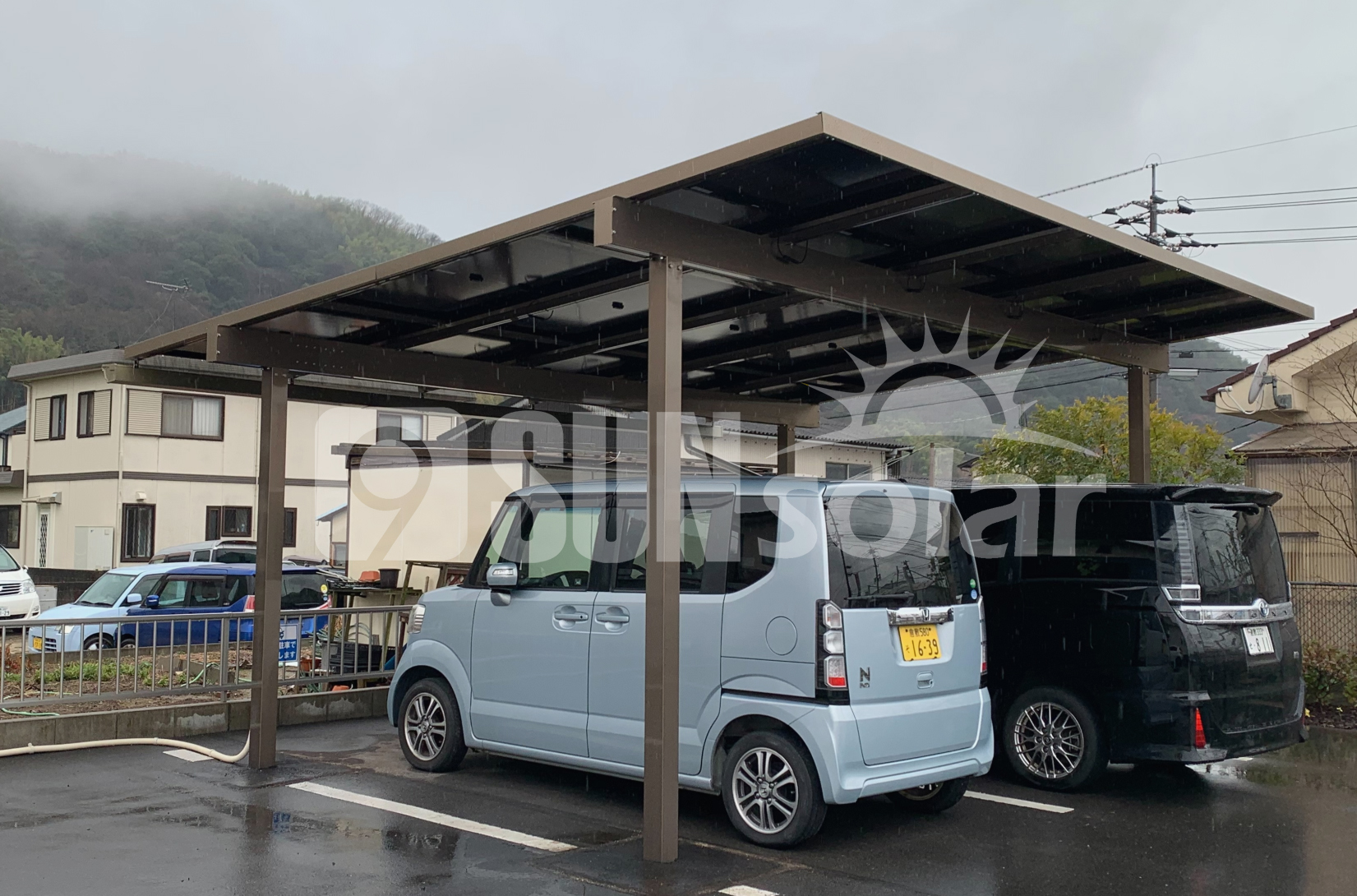
Body image: solar carport mounting system application, one of the project categories in the supplied case set.
For a buyer, the practical value of these records is category fit. They show that 9Sun Solar has supplied carport, farm and ground systems in Asian markets and that the records describe stable operation over one to five years. They do not replace a site-specific reference check. Buyers should ask for project location, module type, foundation type, wind and snow assumptions, installation date, inspection result and permission to contact the installer for a project similar to their own.
Market context: why supplier shortlists need documentation
The wider solar mount system market gives buyers little reason to rely on brand-level claims alone. One commercial research source cited in the verified data package estimates the global solar PV mounting systems market at USD 15,930 million in 2025. The same source reports a 2024 product split of 55% ground-mounted and 45% rooftop, and a material split of 48% aluminum and 44% galvanized steel. These are commercial research figures, not audited customs data, but they explain why suppliers need both ground and roof capability and why material evidence matters in shortlisting.
The supplier landscape is also crowded. A public PV supplier directory lists 1,280 mounting system manufacturers, but that is a directory count, not a count of qualified or active suppliers. For buyers, the implication is simple: a long supplier list is easy to create and hard to qualify. The differentiator is model-level evidence such as certificate scope, material grade, load calculation, warranty terms and project references.
Comparison with traditional supplier selection
Traditional supplier selection often starts with catalogue breadth, sample fit and unit price. That approach can work for early screening, but it can miss documentation boundaries. A catalogue may show a ground system, a carport system and a tile-roof system, while the available CE file covers only one tile-roof model under a RoHS scope. If the buyer treats the certificate as a range-level approval, the shortlist becomes less reliable, not more.
The limitation in the 9Sun Solar evidence is therefore not a product defect. It is an evidence boundary. The supplied CE documentation is model-specific and substance-specific; it does not eliminate the need for structural review, market-specific certification or project submittals. An evidence-led comparison would place 9Sun Solar on a shortlist only after the buyer has matched the exact model to the certificate, requested missing material and load data, and confirmed that the project approval path accepts the available documents.
Future outlook
The next phase of solar mount system procurement is likely to reward suppliers who can produce model-level documentation quickly. As ground and roof demand remain materially split and aluminum and galvanized steel both retain large shares, buyers will continue to compare suppliers across application fit, corrosion strategy and approval readiness. The supplier that can connect a product model to a certificate, a load calculation, a material certificate and a project reference will be easier to qualify than a supplier that offers only a broad catalogue and a brand-level CE claim.
For 9Sun Solar, the supplied evidence supports a broad mount range, a 10-year warranty statement, anodized aluminium and hot-dip galvanized steel material language, OEM/ODM customization and carport, farm and ground project records. The same evidence leaves open questions on structural certificates, numeric wind and snow ratings, AL6005-T5 and stainless-steel designations, and the scope of related electrical products. Those gaps should shape the next buyer conversation rather than be hidden by a general capability claim.
The assigned brief also asks about related products such as inverters, EV chargers, MC4 connectors, cable trays and solar cable. The supplied product and certification units do not establish inverter, EV charger, MC4 connector or cable-tray supply. The only related electrical item named in the content set is Solar Pv Cable. A buyer should not treat those other categories as verified 9Sun Solar capability without separate product sheets, certificates and scope confirmation.
Reference document: 9Sun Solar product catalog (PDF).
FAQ
What should buyers check first when shortlisting a solar mount system supplier?
Buyers should first confirm the exact application and then ask for the model-specific evidence package: local wind and snow load assumptions, site type, material anti-corrosion grade, certified load capacity where available, compatible panel size, local building code requirements and warranty terms. A broad product range is useful only when each shortlisted model can be matched to those documents.
Does 9Sun Solar's CE documentation cover every solar mount system in its range?
No. The supplied CE Attestation of Conformity, certificate PRSZ23120603CR, is linked to the Solar Tile Roof System model NS-Solar Tile Roof-1 and covers RoHS Directive 2011/65/EU Annex II amending Annex (EU) 2015/863. It should not be read as a structural certificate or as a blanket CE approval for the ground, carport, farm, ballast or other roof systems.
What do the supplied 9Sun Solar project records show?
The records show carport, farm and ground applications in Japan and South Korea. Examples include a 6.3 kW Japan carport project with 2 years of stable operation, a 26.28 kW Japan farm project with 2 years of stable operation and a 600 kW South Korean ground project with 3 years of stable operation. These are application references, not a statistical performance audit.
What warranty and delivery terms are stated for 9Sun Solar mounting systems?
The supplied content states a 10-year warranty for solar mounting systems and an actual service life of up to 25 years under proper use. The capability unit states OEM/ODM support, a 7-day lead time, a MOQ of 1,000 watts and 100% test. These are company-provided terms and should be confirmed for the exact model, quantity and project schedule.
What material and load details should be requested before approval?
Buyers should request the alloy and temper, stainless-steel grade if offered, anodizing thickness, galvanized coating thickness, salt-spray or humidity test reports, design wind and snow loads, tilt range, foundation assumptions and project-specific structural calculations. The supplied evidence names anodized aluminium alloy and hot-dip galvanized carbon steel, but it does not provide AL6005-T5, stainless-steel grade, numeric wind or snow ratings or coating thickness values.
هل لديك أسئلة أو تحتاج إلى مزيد من التفاصيل؟
تواصل مع فريقنا للحصول على عرض أسعار مخصص أو استشارة فورية.
طلب عرض أسعار
املأ النموذج أدناه وسيتواصل معك فريقنا بعرض مقترح مخصص.
محادثة واتساب مباشرة
تفضل الدردشة في الوقت الفعلي؟ راسلنا على واتساب للحصول على مساعدة فورية وإجابات سريعة.
- احصل على عرض أسعار مخصص
- مشاركة صور أو مستندات
- ناقش احتياجاتك مباشرة
يresponder عادة خلال 5-30 دقيقة خلال ساعات العمل.