
Multi Channel Dash Cam: Channel, Power & Mounting FAQ
Multi Channel Dash Cam: Channel, Power & Mounting FAQ
Multi Channel Dash Cam: Channel, Power & Mounting FAQ
A volume order for a multi-channel dash cam turns on four practical questions before it turns on camera count: how the Driveye line-up maps channels to vehicle positions, what the resolution labels mean when several cameras record at once, how parking mode is powered, and how mounting and setup affect deployment. This procurement FAQ answers those questions from the supplied product units and owner-feedback summaries, and it marks where the published information stops short.
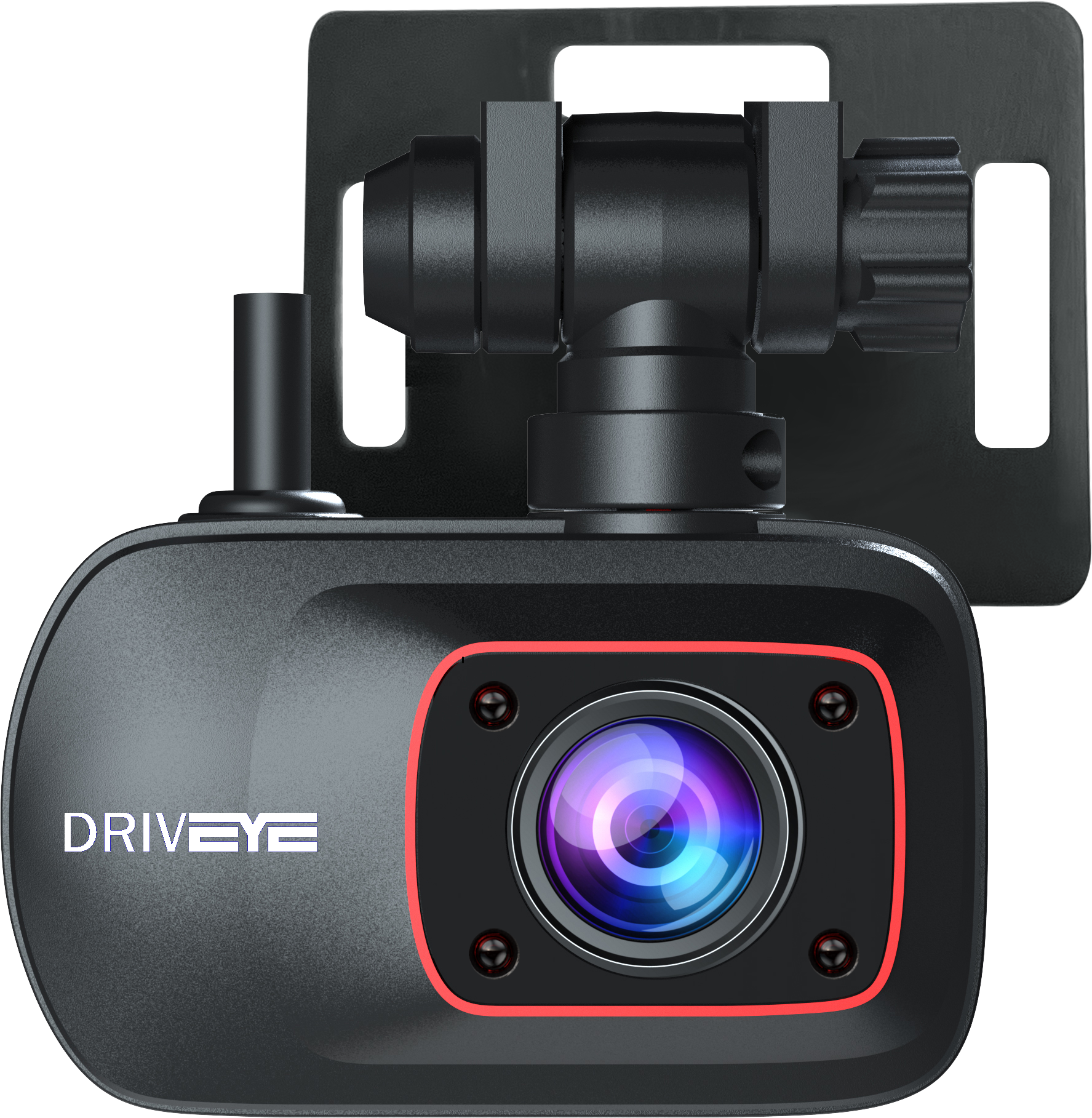
The Driveye line-up discussed here has three configurations: the D22 dual-channel model, the D7 four-channel model and the D9pro five-channel model. They are not interchangeable by channel count alone. The D9pro adds a rear-seat child-seat camera and AI ADAS features, while the D7 is the four-camera around-vehicle configuration and the D22 is the front-and-rear pair. Buyers ordering in volume should match the camera layout to the vehicle, the seat arrangement and the evidence purpose before comparing headline resolution.
How does channel count map across the D22, D7 and D9pro?
Channel count is the number of camera inputs that record in the same system. In the supplied product units, the D22 is a dual-channel unit, the D7 is a four-channel unit and the D9pro is a five-channel unit. The practical difference is viewpoint coverage, not a simple rank of quality.
| Model | Channels | Camera positions | Listed recording capability | Procurement fit |
|---|---|---|---|---|
| D22 | 2 | Front and rear | 4K front + 2K rear; 170-degree front and 150-degree rear view | Front-and-rear evidence pair |
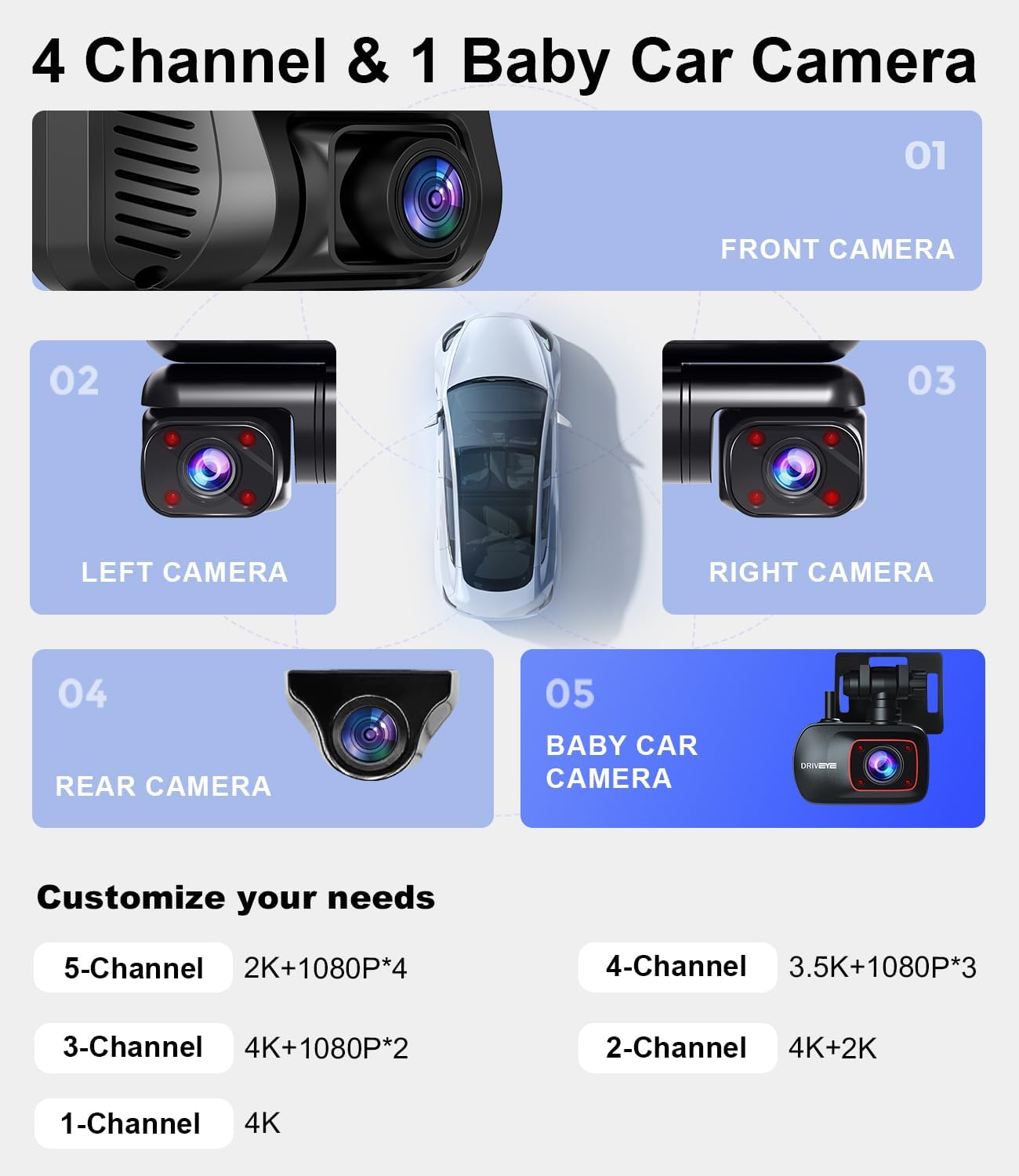
| D7 | 4 | Front, rear, left interior and right interior | 4K + 1080P x3; 150-degree view; four infrared illuminators on the left and right cameras | Around-vehicle coverage with front, rear and side interior views |
| D9pro | 5 | Front, rear, left interior, right interior and rear-seat child-seat camera | 4K + 2K only when front and rear cameras are active; simultaneous five-channel maximum 2K + 1080P x4; AI ADAS warnings | Around-vehicle coverage plus rear-seat monitoring |
The D7 is described as a four-camera system with front, rear and left and right interior cameras, providing 360-degree coverage. The D9pro is described as a five-camera system with the same around-vehicle positions plus a child-seat camera in the back seat. The D22 covers the front and rear only. For a buyer, the D22 asks whether two viewpoints are enough; the D7 asks whether four viewpoints can be installed and adjusted cleanly; the D9pro asks whether rear-seat monitoring and ADAS are part of the deployment need.
Model names and channel counts do not by themselves prove suitability for a given vehicle or route. They define the camera positions the system records. The fit decision still depends on where the cameras can be mounted, how the cables can be routed, who performs the installation and what the buyer expects to review after an event.
What does 4K front plus 1080P surrounding channels mean in practice?
A 4K front plus 1080P surrounding configuration concentrates resolution on the forward view and uses lower-resolution channels for context. In the D7, the listed maximum is 4K + 1080P x3: one 4K front camera and three 1080P channels at the rear and left and right interior positions. That is a coverage-first layout. The front channel carries the most detail for road signs, lane markings and vehicles ahead, while the surrounding channels extend the record to side and rear context.
The D9pro needs a more careful reading. Its 4K + 2K mode is limited to operation with the front and rear cameras active. When all five channels record simultaneously, the listed maximum is 2K + 1080P x4. In other words, the five-channel model does not promise 4K on every channel at once. The child-seat camera and the left and right interior cameras are part of the five-channel record, but the headline 4K figure should not be read as five separate 4K streams.
Owner feedback in the supplied review units supports the practical value of clear playback without turning resolution labels into a test result. D22 reviewers describe the 4K front and 2K rear footage as clear enough to read license plates and road signs, including at night, and describe playback as sharp. D7 and D9pro review summaries describe 4K clarity, clear daytime footage and better-than-expected night recordings. Those comments are useful screening evidence. They do not establish a standard plate-reading distance, a frame rate per channel or a measured low-light threshold, because the supplied product information does not publish those test conditions.
Procurement rule: ask for the recording mode and per-channel resolution at the same time, not the front-camera maximum alone. A five-channel unit can have a lower simultaneous resolution than its front-only headline suggests.
The distinction matters for evidence review. A front 4K channel can carry detail that a 1080P surrounding channel does not, but the surrounding channel can still show position, approach direction and interior activity. Buyers should decide which channel must carry identifying detail and which channels only need situational context. That decision is more useful than comparing one model's front resolution with another model's simultaneous five-channel record.
How is parking monitoring powered, and what is not disclosed?
Parking monitoring is the main power-related item visible in the supplied product units. The D22 lists parking monitoring with a separately purchased hardwire kit. The D7 and D9pro list 24-hour parking monitoring with an add-on kit required. The camera itself is not described as including the hardwire kit in those configurations.
The supplied product information stops short of the details an installer needs for a volume deployment. It does not state input voltage, current draw, fuse rating, hardwire-kit contents or installation time. It also does not define a tested parking-mode duration under a given vehicle battery condition. Those are not minor omissions for a buyer planning multiple vehicles: they determine who can install the unit, what the installation workflow looks like and what must be confirmed before the order is fixed.
The safe procurement answer is therefore narrow. The D22, D7 and D9pro can be specified with parking monitoring only when the required hardwire or add-on kit is included in the deployment plan. The published units do not support a claim about current draw, battery protection or a universal installation standard. Buyers should obtain the missing power details from the supplier and confirm them against the target vehicle before committing a volume order.
How do mounting and setup affect deployment?
Mounting is where channel count becomes an installation question. The D22 uses a front and rear pair. Owner feedback describes the rear camera as mounting without hassle and the overall setup as easy. The D7 adds left and right interior cameras and adjustable side cameras; reviewers describe the mounting as staying put and the setup as easy, while also noting that the four-camera installation can be more complex and the design bulkier than a basic dash cam. The D9pro adds a rear-seat child-seat camera, and its product description states that the baby-monitor camera has three installation options.
Those comments point to a practical split. A two-channel D22 has the shortest camera-position list and the fewest adjustment points. A four-channel D7 has more positions to aim and more cable runs to manage. A five-channel D9pro adds the rear-seat camera position and therefore another fit decision inside the cabin. The product information does not state a universal installation time or a vehicle-specific mounting kit, so a volume buyer should treat mounting as a per-vehicle engineering task rather than a fixed line item.
Owner feedback also gives a useful boundary. Reviewers praise mounts that stay put and easy adjustment, which speaks to day-to-day stability. The same review summaries note a more complex installation and a bulkier design as trade-offs on the four-channel configuration. For procurement, that means a sample installation on the target vehicle is more informative than a generic claim that the unit is easy to install. Check the windshield and rear mounting surfaces, the side-camera aim, the child-seat camera position and the cable route before setting a deployment plan.
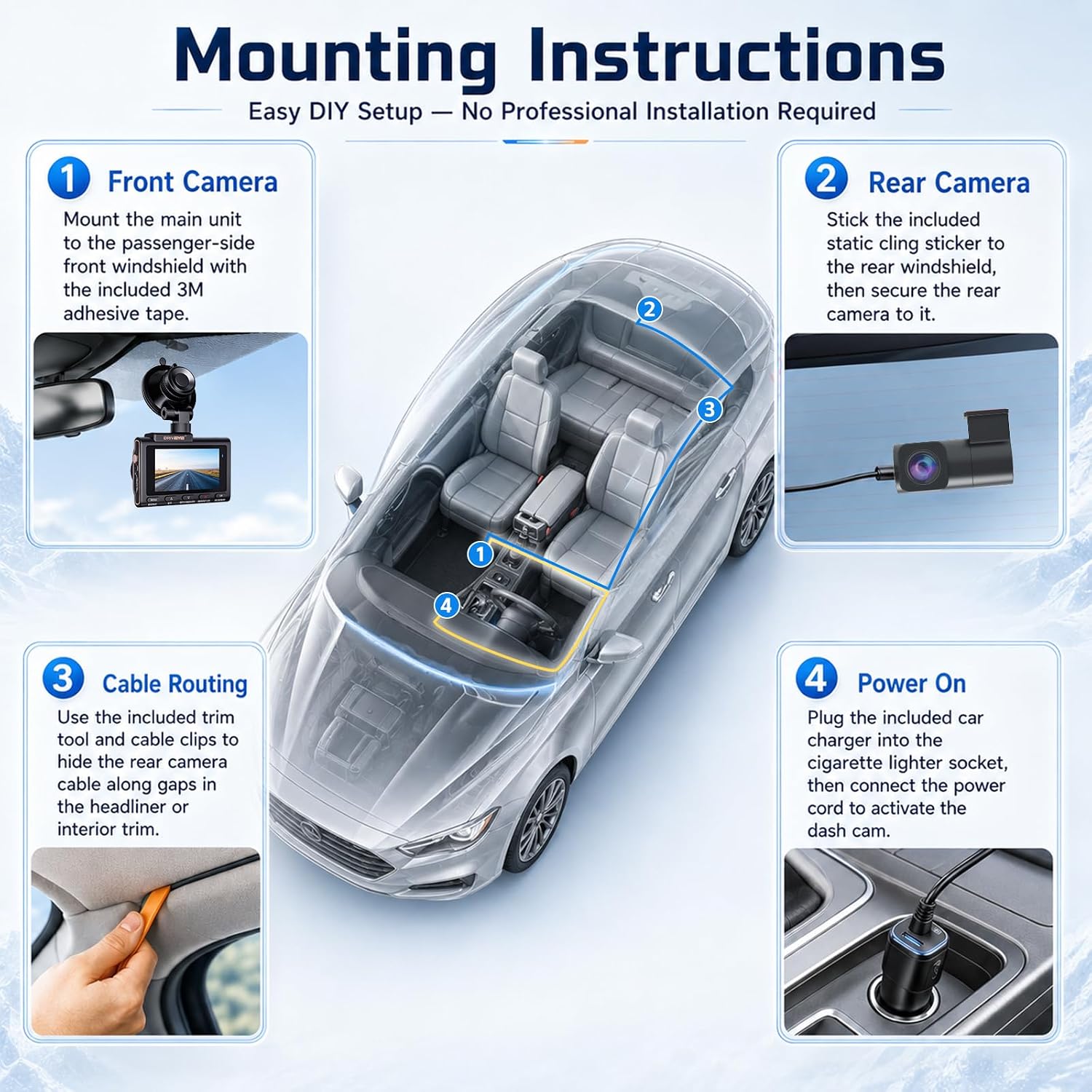
The published product information does not define installation labor by vehicle type. It does not say which trim panels must be removed, how long the cable runs are or whether a given vehicle's interior structure limits camera placement. Those are installation-planning questions, and they remain outside the supplied specifications even where owner feedback is positive.
What does owner feedback show about app transfer, playback and support?
Owner feedback in the supplied review units is positive on several setup and review points. Reviewers describe easy installation and setup, easy transfer to the app, clear playback and sharp footage. D22 comments mention WiFi phone review and a clear front-and-rear picture. D7 and D9pro comments mention 5 GHz WiFi for reviewing routes and sharing clips, clear daytime footage and better-than-expected night recordings. These are consistent with the product descriptions of built-in GPS, WiFi and app access, but they remain owner descriptions rather than independent laboratory results.
The feedback is not uniformly positive. Review summaries describe the app as average or in need of smoother performance, and one summary lists missing remote viewing as a limitation. A D9pro review summary also includes reports of scan lines on the internal-camera display, while D7 and D9pro summaries include some reports of overheating and storage-card failure. The review units do not provide a failure rate, a test sample size for those complaints or a controlled comparison with other brands. They should be used to frame pilot checks, not to calculate a defect rate.
Support feedback is more favorable. The supplied review summaries list good customer support, exceptional support from the company, quick response from the support team and a company that stands behind the product. That is relevant to a volume buyer because installation questions and app questions tend to arrive after delivery. It is not a service-level agreement, and the supplied units do not state response times, support hours or an escalation process. Those terms should be clarified separately if support coverage is part of the procurement requirement.
Playback clarity should also be separated from app convenience. Reviewers describe clear footage and sharp playback on the D22 and D7, and clear daytime footage on the D7 and D9pro. The app experience is a separate layer: it affects how quickly a clip can be found and shared, not what the camera recorded. A buyer evaluating a volume order should test both layers on the same unit.
Procurement FAQ
Does channel count alone determine whether a Driveye model fits a volume order?
No. Channel count defines how many camera positions record, but fit also depends on the vehicle layout, the mounting positions, the parking-mode kit requirement and the review workflow. The D22 covers front and rear; the D7 covers front, rear and left and right interior positions; the D9pro adds a rear-seat child-seat camera. A buyer should map those positions to the vehicle before treating the channel count as a selection decision.
Does the D9pro record 4K on all five channels at the same time?
No. The supplied product unit states that 4K + 2K is supported only when the front and rear cameras are active. In simultaneous five-channel recording, the listed maximum is 2K + 1080P x4. That is the specification a volume buyer should use when the requirement is five channels recording at once.
What does 4K front plus 1080P surrounding channels mean for evidence?
It means the forward channel carries more resolution than the surrounding channels. On the D7, the listed configuration is 4K front plus 1080P x3 for the rear and left and right interior cameras. The surrounding channels provide context and coverage, while the front channel carries the most detail. Owner feedback supports clear playback, but the supplied information does not define a standard plate-read distance or a measured low-light threshold.
Is parking monitoring included with the camera?
The D22 lists parking monitoring with a separately purchased hardwire kit. The D7 and D9pro list 24-hour parking monitoring with an add-on kit required. The supplied product information does not state input voltage, current draw, fuse rating or kit contents, so those details should be confirmed before a volume order is fixed.
How much installation work should buyers plan for?
The D22 has the fewest camera positions and owner feedback describes easy installation. The D7 adds left and right interior cameras and reviewers note a more complex installation and bulkier design as trade-offs. The D9pro adds a rear-seat child-seat camera with three listed installation options. The supplied information does not provide installation time by vehicle, so mounting and cable routing should be checked on the target vehicle.
What do owners say about app transfer, playback and support?
Owner feedback describes easy transfer to the app, clear playback and sharp footage on the D22 and D7, and clear daytime footage on the D7 and D9pro. Some review summaries describe the app as average or in need of smoother performance, and one lists missing remote viewing. Support feedback is positive in the supplied summaries, including quick response and a company that stands behind the product, but the units do not provide a formal service-level commitment.
What should a volume buyer verify before ordering?
A procurement check for the D22, D7 or D9pro should begin with the recording mode, not the model name. Confirm the per-channel resolution during simultaneous recording, the camera positions in the target vehicle and the parking-mode kit requirement. Then check the installation workflow and the app review path on a sample unit. These steps connect the published specifications to the actual deployment.
- Channel and mode: confirm the number of channels that record at once and the resolution of each channel in that mode.
- Vehicle fit: map the front, rear, side-interior and child-seat positions to the target cabin and seat layout.
- Power: include the required hardwire or add-on kit in the plan and obtain the missing electrical details from the supplier.
- Mounting: check mounting surfaces, camera adjustment, cable routing and who will perform the installation.
- Review workflow: test app transfer and playback on the devices the fleet will use, and separate app convenience from recorded image quality.
- Support: clarify support channels and response expectations if post-installation help is part of the procurement requirement.
The central conclusion is straightforward. The D22, D7 and D9pro differ by viewpoint coverage and by the recording mode available when all channels are active. The D7's 4K front plus 1080P surrounding layout is a coverage-first configuration; the D9pro's five-channel mode is not a five-channel 4K promise; and parking monitoring depends on a separate hardwire or add-on kit. Owner feedback supports easy setup, stable mounts, app transfer and clear playback in the reviewed cases, while also flagging app smoothness, remote-viewing expectations and some reliability complaints. Those are the points a volume buyer should verify before the order, not after deployment.
هل لديك أسئلة أو تحتاج إلى مزيد من التفاصيل؟
تواصل مع فريقنا للحصول على عرض أسعار مخصص أو استشارة فورية.
طلب عرض أسعار
املأ النموذج أدناه وسيتواصل معك فريقنا بعرض مقترح مخصص.
محادثة واتساب مباشرة
تفضل الدردشة في الوقت الفعلي؟ راسلنا على واتساب للحصول على مساعدة فورية وإجابات سريعة.
- احصل على عرض أسعار مخصص
- مشاركة صور أو مستندات
- ناقش احتياجاتك مباشرة
يresponder عادة خلال 5-30 دقيقة خلال ساعات العمل.