
Multi-Layer Engineered Wood Flooring: Buyer Preference
According to Market Research Reports, engineered wood flooring accounted for 55% of the total wood flooring market in 2024. That share is not simply a styling trend. It is a structural preference for products that combine a real wood surface with a dimensionally stable core. For buyers in the evaluation stage, the practical question has moved from 'which brand' to 'which structure, wear layer and supply evidence'.
Why engineered wood flooring became the default spec
The economic context supports that shift. The global wood flooring market was valued at USD 53.14 billion in 2024 and is projected to reach USD 71.57 billion by 2029, according to The Business Research Company. In the United States, the hardwood flooring industry generates roughly USD 8.5 billion in annual economic output, according to Hardwood Federation and NWFA data. Within that market, engineered wood flooring has become the majority segment rather than a niche alternative.
For buyers, the category is now the default, but the term is too wide for practical sourcing. Specifications use engineered hardwood flooring, engineered timber flooring, multi-layer wood flooring, multi-ply engineered flooring, composite hardwood flooring and manufactured wood flooring almost interchangeably. Behind these labels are real differences in core construction, wear layer and installation behaviour. Understanding those differences is the first step toward a reliable supplier shortlist.
Terms buyers will meet in specifications
The fastest way to align a project brief is to separate surface terminology from structure. The table below summarises how common terms are used in engineered wood flooring specifications.
| Term | What it normally describes |
|---|---|
| engineered hardwood flooring / engineered timber flooring | A real wood surface layer bonded to a composite wood core |
| multi-layer wood flooring / multilayer wood flooring | Flooring with a core built from multiple bonded wood layers |
| multi-ply engineered flooring / multi-ply parquet | A multi-ply core construction, often used with parquet patterns |
| composite hardwood flooring / manufactured wood flooring | A general description for wood flooring with an engineered core |
| engineered oak flooring | The most commonly specified species configuration, with oak as the surface layer |
| prefinished flooring | Factory-finished planks, a common delivery format for engineered products |
In practice, the core structure determines how a plank responds to temperature and moisture changes. Multi-layer wood flooring uses cross-directional layers, usually a plywood or multi-ply core, to limit expansion and contraction. This is why engineered wood parquet and wide plank engineered flooring can be specified in dimensions that solid wood would find difficult to maintain in the same environmental conditions.
A supplier specification should state thickness and wear layer together. For example, Dongda Wood lists engineered hardwood flooring / engineered timber flooring in dimensions such as 12mm total thickness with a 1.2mm wear layer, 14mm with 3mm, 15mm with 4mm, and 19mm with 4mm. These are portfolio examples, but they show the evaluation logic buyers should look for: total thickness, wear layer and format should be disclosed in a way that can be compared across suppliers.
Veneer, oak and pattern preferences
Oak-based products represent roughly 46% of global engineered wood flooring demand, according to industry forecast data. That makes engineered oak flooring the natural benchmark for pricing and finish expectations. Maple, walnut and acacia appear in some programmes, but oak is the reference point most buyers will compare against.
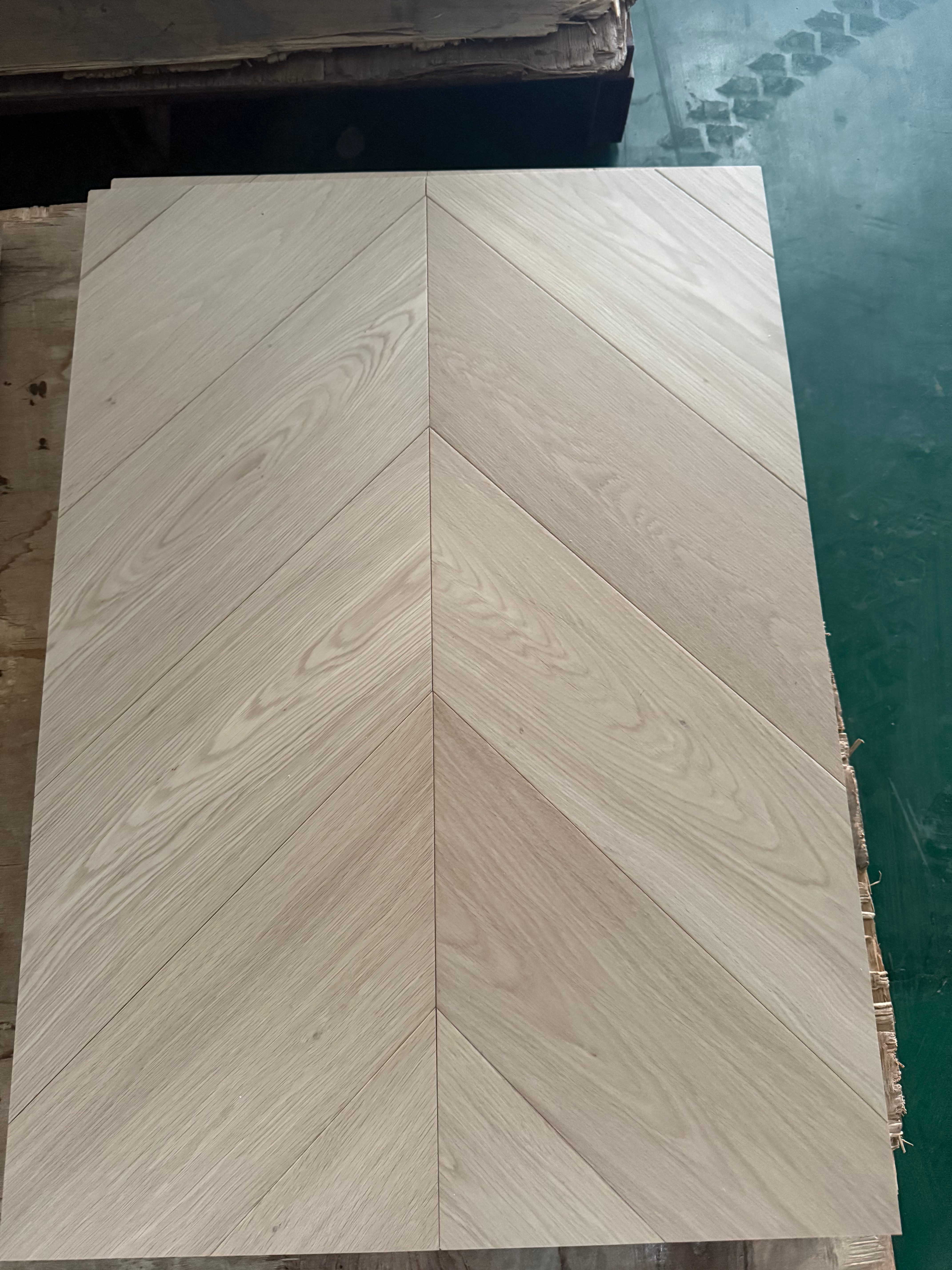
Pattern preference has also entered the evaluation. Straight plank remains the workhorse format, while herringbone engineered flooring and chevron engineered flooring are common specification options for hotels, offices and residential renovation. Wide plank engineered flooring appears when visual continuity is important. A manufacturer such as Dongda Wood shows these formats in one product programme, with plank, herringbone and chevron produced as separate product lines. Buyers should treat pattern as a sourcing decision that is independent from structure.
Wear layer thickness is the next preference filter. Thin veneer engineered flooring, such as a 0.6mm wear layer, fits projects where cost and appearance matter more than future refinishing. Thick veneer engineered flooring, in the Dongda Wood range 3mm or 4mm, provides more surface material for sanding and refinishing over time. The listed range from 0.6mm to 4mm is useful because it shows the same manufacturer can serve different service-life expectations.
A supplier snapshot: global brands versus manufacturers
Industry sources list Mohawk Industries, Shaw Industries (Anderson Tuftex), Armstrong Flooring and Mannington Mills among the key global competitors in engineered wood flooring. These companies represent the brand-led side of the market. For distributors, wholesalers and importers building a sourcing shortlist, the more direct comparison is between brand-led supply and manufacturer-led OEM/ODM supply.
| Comparison dimension | Brand-led models (Mohawk, Shaw, Armstrong, Mannington) | Manufacturer-led model (Dongda Wood) |
|---|---|---|
| Market role | Brand development and consumer distribution | OEM/ODM engineered wood flooring and plywood production |
| Primary export reach | Global retail and specification | North America, South America, Europe, South Africa, Asia |
| Typical buyer relationship | Brand purchaser or retailer | Distributors, brands, wholesalers, contractors |
| Main verification data | Product range and brand reputation | Facility, certifications, testing, capacity, warranty |
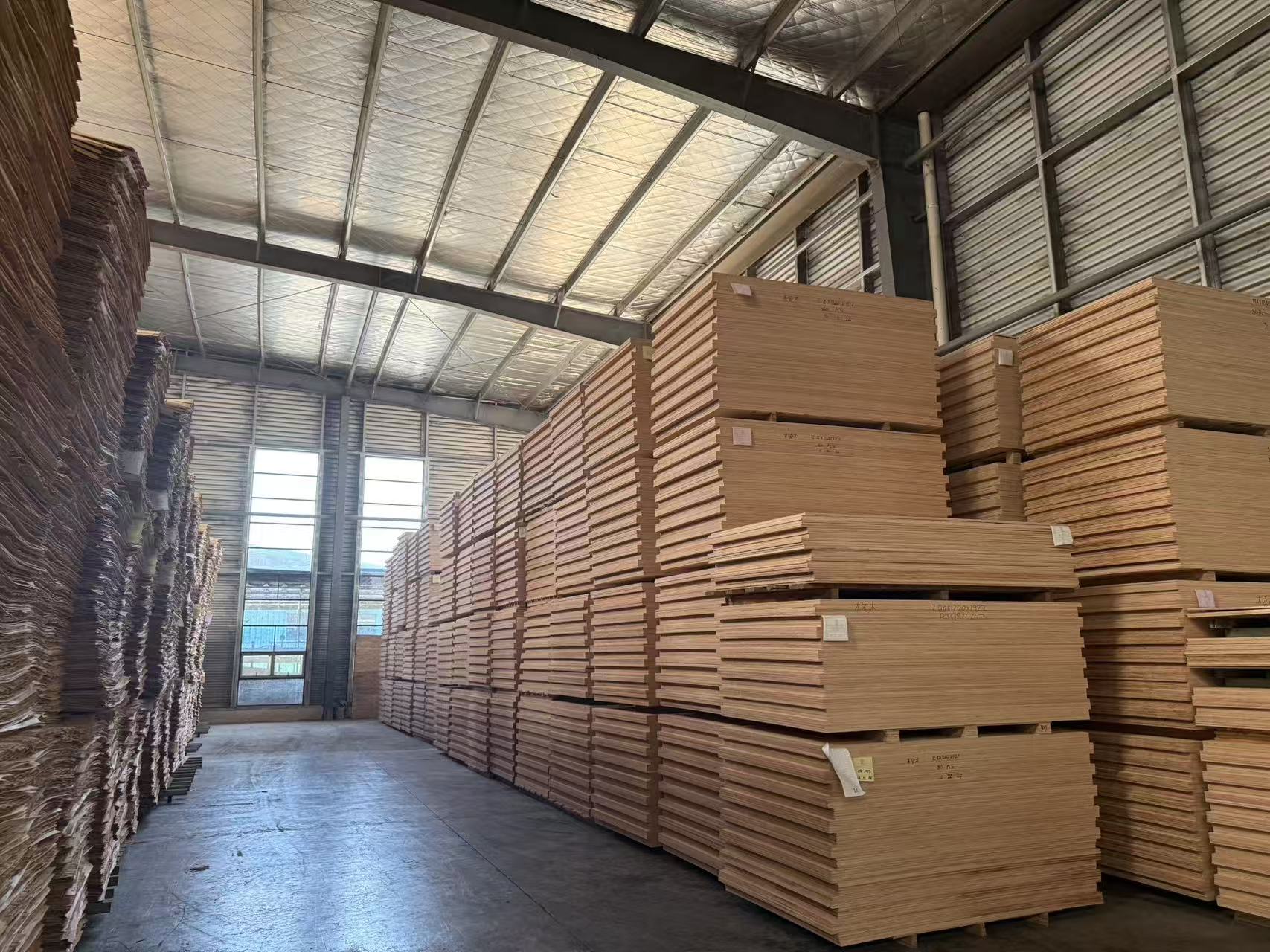
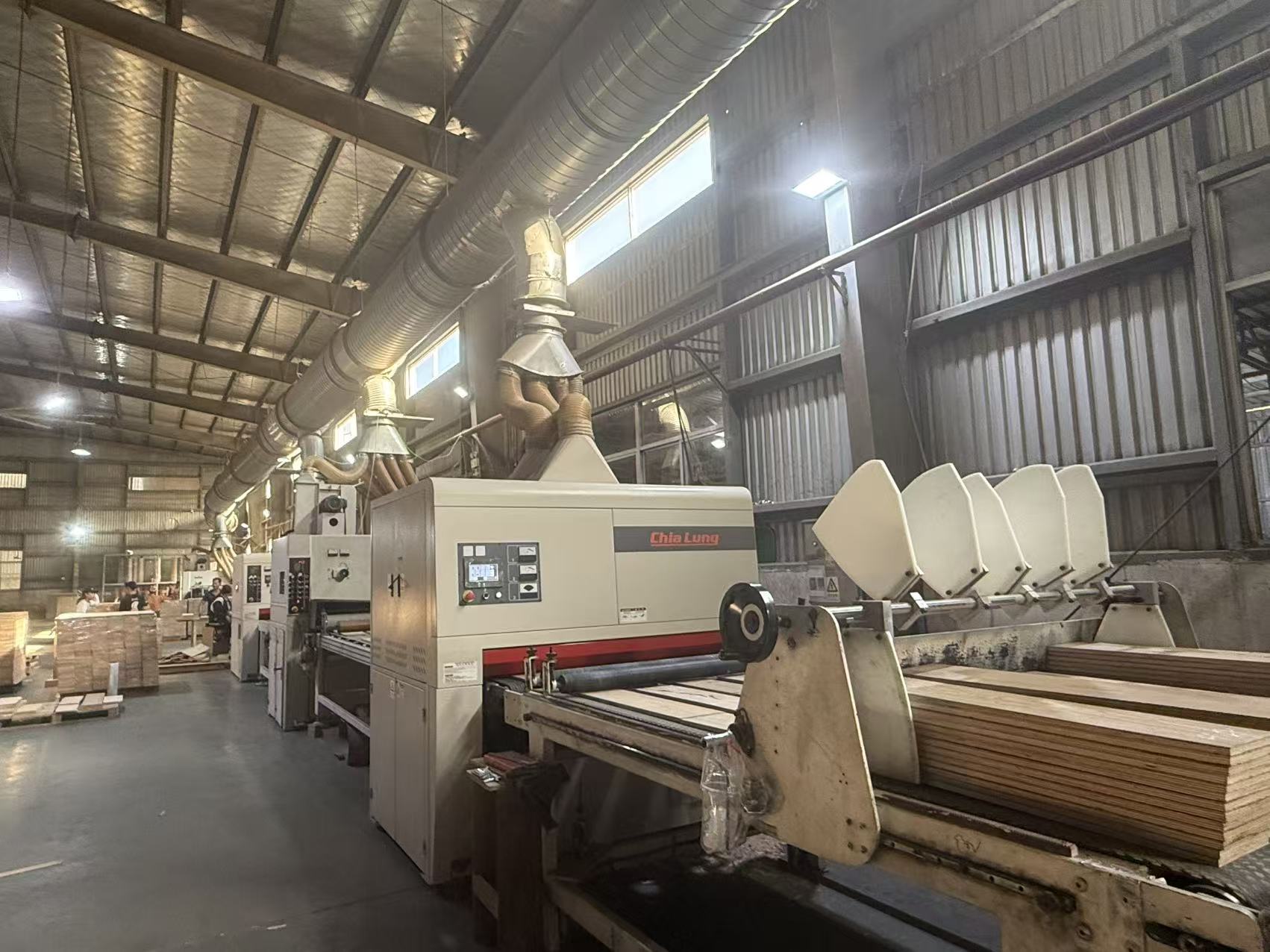
Dongda Wood, established in 1995 in Suzhou City, Anhui Province, fits the manufacturer-led model. Its facility covers 190,000 square meters and employs more than 500 people. The company focuses on engineered wood flooring and plywood, with export markets that include North America, South America, Europe, South Africa and Asia. According to the company profile, its production setup includes German Homaomai grooving equipment, Taiwan Fengqiao paint lines, German Jian Fo paint and Finnish phenolic glue.
This level of process detail matters because engineered wood flooring performance depends on two factors that are difficult to see in a finished plank: adhesive quality and machining precision. Manufacturer descriptions that document adhesive systems and production lines are more useful to a buyer than generic claims about stability.
Evidence to check before shortlisting a mill
Buyers should move from marketing description to verifiable documents before shortlisting. In engineered wood flooring, five types of evidence carry the most weight.
- Certification scope and validity. Dongda Wood holds FSC COC certification under number GFA-COC-006481, CE CPR certification under CHIG22032983, CARB/EPA certification under CARB/EPA/CANFER20030, and F4 star / JAS certification under CMSA J1073809. Buyers should verify that the scope covers the target market and product category.
- Reference standards. U.S. engineered flooring is described under ANSI/HPVA EF 2020, while EU CE marking for wood flooring is specified by EN 14342:2013. A certificate alone is not enough; the standard behind it must match the destination market.
- Inspection process. Dongda Wood performs 100% testing as part of quality control. That means every unit is checked, not only sampled.
- Warranty terms. The manufacturer's after-sales policy states a 25-year warranty for residential use and a 3-year warranty for commercial use. Buyers should map warranty length to project type.
- Capacity and customization. Dongda Wood's OEM/ODM capability covers product dimensions, grade, packaging design and logo. Monthly capacity is listed at 150,000 square meters, with a 45-day lead time and a minimum order quantity of 400 square meters per colour.
A documented export relationship also helps. In Dongda Wood's case, one Canada-based cooperation involves brands, wholesalers, contractors and distributors, with approximately 300,000 square meters supplied per year for more than 10 years. The stated applications include residential house renovation and commercial hotel or office interior decoration. Reported requirements for that relationship include low formaldehyde emission, high scratch resistance, underfloor heating compatibility and customizable wood grain and sizes.
Where engineered flooring still has limits
Engineered wood flooring has practical boundaries, and buyers should evaluate them before finalising a specification. The main limit is refinishing capacity. A solid hardwood floor can be sanded many times because the wear layer is the full board thickness. An engineered floor can be sanded only as many times as the wear layer allows. A 0.6mm wear layer is not a candidate for repeated sanding; a 3mm or 4mm wear layer is closer to that expectation. Buyers who expect long-term surface renewal should specify thick veneer engineered flooring or consider solid wood.
Another boundary is moisture. Multi-ply engineered flooring is more dimensionally stable than solid wood under normal humidity changes, but no wood product is suitable for continuous water exposure without proper installation measures. Site conditions affect performance regardless of core structure.
Underfloor heating compatibility is often linked to multi-layer construction, and some export specifications state it explicitly. Buyers should still verify moisture content, adhesive system and maximum surface temperature limits with the manufacturer for each project.
Warranty language also defines product limits. The 25-year residential and 3-year commercial split used by Dongda Wood is a reminder that use category affects durability expectations. A residential warranty should not be transferred to a commercial application without confirmation.
What will shape sourcing next
The next phase of engineered wood flooring procurement is likely to be shaped by verification and traceability. China's wood product exports reached USD 17.5 billion in 2024, according to OEC data, and much of that volume flows through manufacturers rather than consumer brands. As a result, buyers will increasingly separate supplier credibility from brand credibility.
Certifications such as FSC, CARB/EPA, CE and F4 star have already become procurement filters. Validity periods and scope definitions will matter more as buyers digitise their supplier records. For distributors building a long-term range, OEM/ODM capability is becoming a competitive factor because it allows product differentiation without investing in a production line.
In practical terms, the future of engineered wood flooring sourcing belongs to suppliers that can document structure, wear layer, inspection data and certification scope clearly. Measurable product information will continue to outperform generic marketing language.
Frequently asked questions
What is the difference between thin veneer and thick veneer engineered wood flooring?
Thin veneer engineered flooring, such as a 0.6mm wear layer, is designed mainly for appearance and cost efficiency, with limited capacity for sanding. Thick veneer engineered flooring, usually 3mm or 4mm in the Dongda Wood range, provides more material for refinishing and suits projects with longer service cycles. Buyers should select the wear layer based on expected renovation frequency.
Is multi-layer engineered wood flooring more stable than solid wood?
In general, yes. Multi-layer and multi-ply cores use cross-directional bonded layers, which reduce expansion and contraction compared with a single solid board. This structural logic supports applications such as wide plank floors and underfloor heating. A documented Dongda Wood export relationship lists underfloor heating compatibility as one of the required characteristics for residential and commercial projects.
What certifications should engineered wood flooring suppliers provide?
Certification requirements depend on the target market. In the United States, buyers should reference CARB Phase 2 and EPA TSCA Title VI formaldehyde limits, with ANSI/HPVA EF 2020 as the industry standard. In the European Union, wood flooring CE marking is specified by EN 14342:2013. Dongda Wood holds FSC COC, CE CPR, CARB/EPA and F4 star / JAS certificates; buyers should verify certificate number, scope and expiry date.
What does 100% testing mean in engineered wood flooring production?
100% testing means the manufacturer inspects every product unit rather than relying only on sampling. Dongda Wood lists 100% testing as part of its quality control process for export markets in North America, South America, Europe, South Africa and Asia. Full inspection reduces the likelihood of mixed grades or dimensional defects in a container, but it does not replace the installation specification.
What warranty can buyers expect for engineered wood flooring?
Warranty terms vary by manufacturer and application. Dongda Wood states a 25-year warranty for residential use and a 3-year warranty for commercial use. The residential and commercial distinction is common because surface wear and installation conditions differ. Buyers should confirm that the warranty period matches the intended project category.
How should buyers compare engineered wood flooring manufacturers?
A manufacturer comparison should include certification scope, inspection process, production capacity, MOQ, lead time and OEM/ODM capabilities. For Dongda Wood, the published baseline includes monthly capacity of 150,000 square meters, a 45-day lead time, a 400 square meters per colour MOQ, and customization of dimensions, grade, packaging design and logo. These figures provide a comparable starting point for assessing other manufacturers.
Public source document: Dongda Wood engineered wood flooring brochure (PDF).