
Multi-Point Locks: Verifying Cycle Claims and Trigger Design
Multi-Point Locks: Verifying Cycle Claims and Trigger Design
Two different multi-point locking systems can both be listed at "50,000 operations" and mean quite different things to the door they are fitted to. That figure is a system-level statement made under a defined test configuration. What decides whether a door actually reaches those operations is the trigger, the linkage and the geometry of the assembly. This comparison separates those three elements and shows how a specifier can check each one, using the TOPTEK MUSG4592 entrance platform and the PD1000 patio-door profile as documented examples, then sets out what a matched project quotation must contain before a decision is approved.
What a declared operation count actually covers
A cycle count becomes comparable only when three things travel with it: what was cycled, under which configuration, and who issued the result. Without those three, one number cannot be set against a competing number, and a buyer cannot distinguish a full-lock endurance run from a single-component bench test.
TOPTEK's catalogue data states 50,000 operations for the MUSG4592, for Auto Lock 4592 and for the PD1000. Separately, TOPTEK's product information reports the MUSG4592 trigger component at over 100,000 cycles, and the company describes that figure as separate from the 50,000-operation lock claim.
TOPTEK (Zhongshan Toptek Security Technology Co., Ltd.) has manufactured commercial door locks and architectural hardware since 1991 from Xiaolan, Zhongshan. Its multi-point range covers the MUSG4592, Auto Lock 4592 and PD1000, and that published documentation is the reference used here.
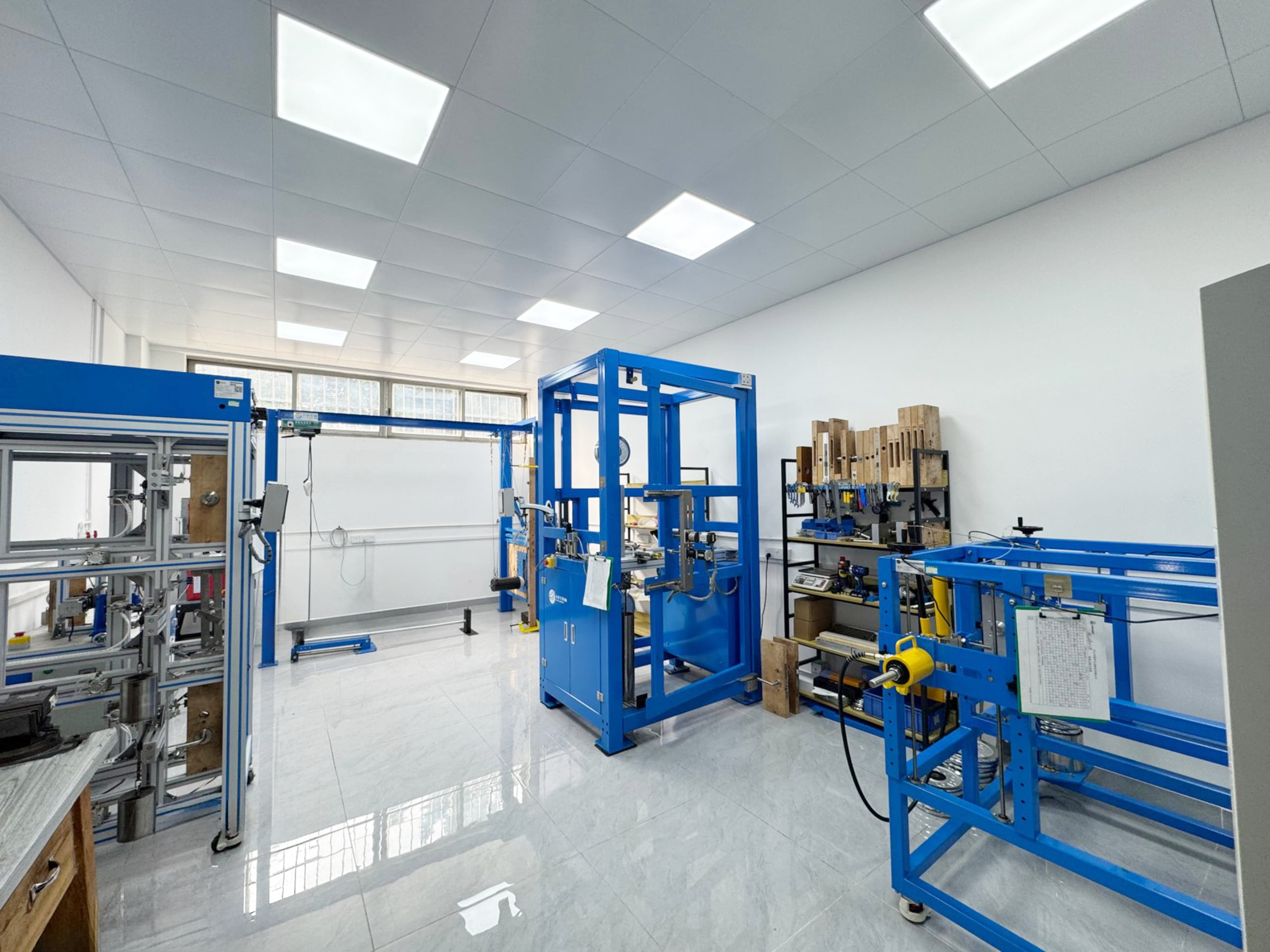
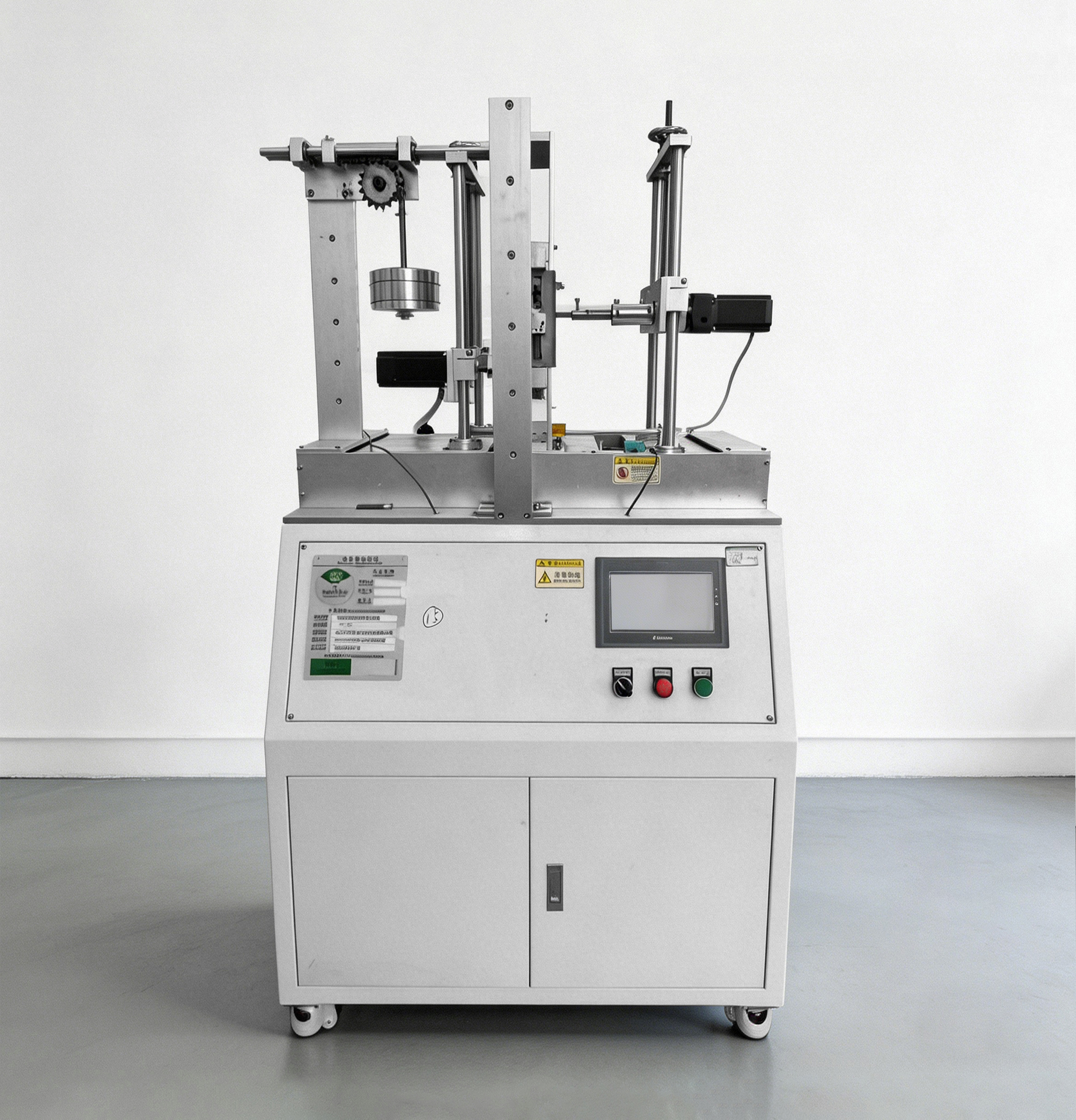
The second figure does not raise the first. A trigger completing more than 100,000 of its own cycles is a statement about one small component; it says nothing about the hooks that carry the security load, the keeps they engage, the deadbolt or the faceplate, and it does not transfer to Auto Lock 4592 or to PD1000. Both published figures are manufacturer statements. TOPTEK's internal laboratory is described as covering operating-cycle checks alongside mechanical strength, torque, pull-out resistance, corrosion and temperature and humidity testing, but internal test capability is not the same thing as third-party certification of a particular number.
For a door schedule, the workable rule is to write the subject beside the number. "50,000 operations, complete lock, catalogue-declared, stated configuration" is a different entry from "over 100,000 cycles, trigger component". Once suppliers answer in that form, two quotations become comparable. Until then, the comparison has not started.
Trigger design decides whether the count is reachable
On the MUSG4592 entrance platform, closing the door triggers the upper and lower hooks and the central deadbolt to project automatically. The timing of that action is governed by a rocking stainless-steel trigger, designed to prevent premature hook projection before correct engagement, with the stated purpose of reducing false triggering and jamming.
That detail carries more weight than it appears to. An automatic self-locking multi-point lock makes its own decision about when the door is closed far enough to lock. If the decision comes early, a hook meets the keep or the frame before the geometry lets it enter, so the closing stroke loads the linkage instead of completing cleanly. Repeated often enough, this appears as scoring on keeps, a door that needs a push to shut, and eventually as wear on the parts carrying the force. A trigger that rocks out of the way until the door is in position is one way of moving that decision point later in the closing stroke.
A specifier should test the behaviour rather than the wording. Close the sample at slow and normal speed; check seal compression, hinge condition and keep position; ask where the trigger sits in the door section on the drawing and what it is made of. Where a specification reads "stainless-steel trigger", confirm the material applies to the trigger itself rather than to a cover or faceplate. A rocking trigger cannot compensate for a leaf that has dropped: if the door sags, the hooks present to misaligned keeps however well the trigger is timed. That is why keep alignment belongs in the same inspection, not in a separate maintenance note.
Hooks, connectors and the load path between lock points
The MUSG4592 uses one-piece zinc-alloy hooks and a one-piece zinc-alloy central deadbolt, linked by 2.5 mm metal connectors.
A one-piece hook is made as a single part, which removes an assembly joint at the hook and the tolerance stack that goes with that joint. That describes construction; it does not by itself establish strength, wear life or security, and it should not be presented as if it did. Two comparable facts belong beside it in a buyer's own matrix: the hook material, and the connector dimension. A stated 2.5 mm metal connector is a value to quote against the alternative offered on the same project, not a figure that means anything in isolation.
The linkage is where timing and operating effort travel on a three-point door lock. The central case drives the auxiliary cases through those connectors, so the operating force and the sequence in which the upper and lower hooks move both pass through them. Faceplate straightness across a 1,720 mm assembly belongs to the same question: a faceplate that bows in transit changes the hook-to-keep relationship at the ends of the door long before any cycle limit is approached.
Reversible latch handing is supported on the platform, which allows an installer to accommodate different door orientations without holding separate handed stock. Confirm it for the exact model, follow the installation instruction, and check the handing against the delivery note. The value of the feature lies in stock planning and avoided rework, not in the brochure line itself.
Documented geometry: MUSG4592 and Auto Lock 4592 against PD1000
The clearest way to compare an entrance platform with a patio platform is to put the documented dimensions side by side rather than compare product labels.
| Documented item | MUSG4592 / Auto Lock 4592 | PD1000 |
|---|---|---|
| Intended opening | Compatible timber or composite entrance doors | Compatible patio, balcony and terrace-door profiles |
| Declared operation count (catalogue) | 50,000 | 50,000 |
| Backset | 45 mm | 15.5 mm |
| Lever-to-cylinder centres | 92 mm | 92 mm |
| Faceplate | 20 × 1,720 mm | 16 × 1,414 mm |
| Locking positions | 3 | Confirm on the project drawing |
| Spindle | Confirm on the project drawing | 7 mm |
| Length customization | Extendable to 2,400 mm, subject to approved drawings | Confirm on the project drawing |
The identical 92 mm lever-to-cylinder centres are the easiest item to misread. Backset is the distance from the defined door-edge or faceplate reference to the spindle or cylinder centreline shown on the drawing; centre distance is the separate spacing between the handle spindle and the cylinder reference. A shared centre distance keeps the handle and cylinder at the same separation, so one handle and cylinder set may suit both platforms. The different backsets place those two points at different distances from the door edge, so a preparation routed for one platform is not a preparation for the other.
In practice the 45 mm backset entrance platform and the 15.5 mm backset PD1000 answer different door sections. A timber or composite entrance door detailed for one will not accept the other without re-preparation, and the faceplate difference — 20 × 1,720 mm against 16 × 1,414 mm — changes routing width, keep positions and the number of visible locking points along the door edge. PD1000's 7 mm spindle is the third item to confirm against the chosen handle and fixing, because a spindle mismatch surfaces on site, not in a catalogue.
Customization: what "up to 2,400 mm" actually commits to
TOPTEK states that the MUSG4592 overall length can be extended to 2,400 mm, subject to approved drawings. Read precisely, that is a drawing-controlled envelope rather than a stock option, and the commitment sits with the drawing revision both parties approve.
When a project uses the extended length, lock-point positions, the keep schedule, the faceplate and the connector length all change together, and the trigger position has to remain correct for the finished door height. Ask for the approved drawing revision on the quotation and on the delivery documents. A length confirmed in an email is not a specification, and a long assembly built to an informal length is the most common route to a fit problem that looks like a hardware fault.
Transport and storage belong in the same paragraph because they produce the same failures. TOPTEK states that individual protection and wooden-crate packaging are used for long assemblies. A 2,400 mm multi-point strip that is carried unsupported, stacked flat or dropped will not sit straight when fitted, and the resulting complaints — stiff hooks, a door that needs lifting to lock — read like trigger problems but originate in handling.
Fit boundaries: where each profile belongs, and where the evidence stops
The two platforms answer different openings, and the boundary is worth stating plainly.
- MUSG4592 and Auto Lock 4592 are selected for compatible timber or composite entrance doors where automatic locking is required, including three-point configurations with upper and lower hooks plus a central deadbolt.
- PD1000 addresses compatible patio, balcony and terrace-door profiles, where the 15.5 mm backset and 16 mm faceplate suit the narrower door section.
- Both are mechanical: no electrical power is needed for normal locking. Multiple engagement points may help maintain seal contact when the system is correctly adjusted, but any effect on air leakage or thermal performance depends on the complete door, frame, seals and installation and requires doorset-level assessment.
- Fire-door and emergency-egress use requires evidence for the exact configuration. A 50,000-operation figure is not fire evidence, and a mechanical grade is not an approval of an assembly.
- Automatic locking is not the same as verified locking. A partly closed door should not be assumed secure, which is precisely why the trigger timing described earlier is a security-relevant detail rather than a convenience feature.
Running the comparison: what a matched quotation should contain
Once the claim structure and the geometry are clear, the comparison moves to documentation. A quotation that omits the following items cannot be scored against another supplier, because the two offers will not describe the same system.
- Equivalent operating mode. An automatic multipoint door lock, a lift-lever multipoint lock mechanism and a key-operated multipoint lock mechanism do different things in the closing sequence. Cycle figures taken across different operating modes are not comparable, so the mode must match before any number is set side by side.
- Lock-point count and positions. Confirm the number of points and their heights on the drawing. MUSG4592 uses three locking positions; an offer with a different arrangement is a different product, not a variant.
- Stated materials and dimensions. Hook and deadbolt material, connector thickness, faceplate dimensions and spindle size, each quoted rather than implied.
- Cylinder and handle compatibility. Confirm the cylinder format, the handle spindle and fixing, and whether compatible handles, cylinders and keeps are supplied together. TOPTEK supplies compatible handles and cylinders as part of a coordinated package, which reduces the risk of a mismatch found at installation.
- Keep schedule. Keeps are part of the locking interface. A quotation that prices the lock but not the keeps is not a complete system price.
- Test coverage and claim wording. Which standard, which configuration, which issuer, which date, and whether the number refers to the whole lock or to a component.
- Drawing revision and customization limits. The approved length envelope, lock-point positions for the actual door height, and the revision number that will appear on the delivery documents.
- Packaging and installation scope. Individual protection and crate packing for long assemblies, plus routing, keep preparation, fitting and adjustment, so the total installed cost is visible rather than the unit price alone.
For buyers working through OEM multipoint locking systems, the same discipline applies to development. TOPTEK supports modification of existing platforms and development from customer requirements, with scope that can cover dimensions, finish, branding, functions, packaging and project-specific keying. A custom length, material or finish does not automatically inherit the test coverage of the standard configuration, so the question of which tests still apply has to be answered before tooling rather than after.
What changes if cycle evidence becomes part of the specification
If a project specification begins to require configuration-level cycle evidence — subject, method, issuer and date — the practical consequence is not a change in hardware but a change in what can be scored. Suppliers able to attach those four items to a number can be ranked against each other; suppliers who cannot remain effectively unranked, whatever their headline figure says. That is a conditional outcome, not a forecast about the market.
For an automatic platform, the corresponding risk sits in trigger timing under real door conditions, which is why a sample closing test at slow and normal speed reveals more than a catalogue page. For a patio or terrace platform, the equivalent risk sits in preparation geometry: a 15.5 mm backset profile on a door section routed for an entrance platform will not resolve itself at commissioning.
Decision rule for the next door schedule
Three questions separate a defensible comparison from a brochure exchange. What exactly was cycled, in which configuration, and who issued the result? Where does the trigger sit, what is it made of, and how does the hook timing behave on a sample closed by hand? And does the documented geometry — backset, centres, faceplate, spindle, length envelope — match the door section and the keep schedule on this project? A system that answers all three can be quoted against its alternatives. A system that answers none has not yet entered the comparison, however large the number on its data sheet.
Frequently asked questions
What do backset and centre distance mean on a multi-point lock?
Backset is the distance from the defined door-edge or faceplate reference to the spindle or cylinder centreline shown on the drawing. Centre distance is the separate spacing between the handle spindle and the cylinder or keyhole reference. On the MUSG4592 entrance platform the backset is 45 mm with 92 mm centres; PD1000 uses a 15.5 mm backset with the same 92 mm centres. Matching centres alone does not make the two preparations interchangeable, because the backsets locate the operating points differently relative to the door edge. Confirm both values, the faceplate reference, the spindle and the cylinder format against the exact product drawing.
Why does door alignment affect a multi-point lock more than closing force?
A hook or deadbolt needs a clear path into its keep. Door sag, frame movement and seal pressure can obstruct that path, making a sound lock feel stiff, and on an automatic system they also disturb the point at which the trigger releases the hooks. If operation is smooth with the door open but stiff when closed, the opening geometry is the useful first check, ahead of increasing closer force or replacing hardware. Hinges, strike or keep position, seals and closer settings should be assessed as one working assembly.
How should a door be prepared before installing a multi-point lock?
Use the drawing for the exact model and door preparation. Confirm handing, backset, centres, door thickness, trim, keep positions and cylinder before any cutting, then trial-fit the lock, trim and keeps without forcing parts and check operation before final fastening. Keep debris out of the lockcase. Fire-rated doors require an approved preparation and hardware combination, and unapproved cuts to a fire-rated assembly should not be made.
Does a cycle count or a mechanical grade establish fire-door suitability?
No. Mechanical grade, cycle performance and fire-door evidence address different requirements. Fire or emergency-egress use requires model-specific evidence covering the complete door and hardware configuration, including the lock, trim, keeps, hinges and installation conditions. A numerical operation count should never be read as a fire rating, and a generic product description does not establish an escape-door approval.
What evidence should be requested for a multi-point locking system before ordering?
Request the model-specific technical drawing, the function description, the material and finish schedule, the installation instructions and, where relevant, the numbered certificate or test report. Check the issuer, the standard and edition, the model scope and any stated conditions against the configuration actually ordered. Confirm whether the project needs a test report, a certificate or a verified certification listing, and whether the proposed variant is covered by it.
For buyers who need the wider manufacturing and certification context behind these product statements, the TOPTEK company profile is available for download.
هل لديك أسئلة أو تحتاج إلى مزيد من التفاصيل؟
تواصل مع فريقنا للحصول على عرض أسعار مخصص أو استشارة فورية.
طلب عرض أسعار
املأ النموذج أدناه وسيتواصل معك فريقنا بعرض مقترح مخصص.
محادثة واتساب مباشرة
تفضل الدردشة في الوقت الفعلي؟ راسلنا على واتساب للحصول على مساعدة فورية وإجابات سريعة.
- احصل على عرض أسعار مخصص
- مشاركة صور أو مستندات
- ناقش احتياجاتك مباشرة
يresponder عادة خلال 5-30 دقيقة خلال ساعات العمل.