
Multi-Year Continuity Test for Functional Polyester Filament
Multi-Year Continuity Test for Functional Polyester Filament
Long-term supply of functional polyester filament is not decided by a single yarn sample. It is decided by whether a supplier can repeat a documented specification, keep compliance records current, and transfer process knowledge across seasons and purchase orders. For apparel buyers moving from evaluation to execution, the practical question is not only which filament performs in a lab, but which supplier can support the same program two or three years later.
Smilytex is the brand name used by Smily Textile Technology (Taicang) Co., Ltd., a Taicang-based company established in 2017 that develops and sells functional fiber and functional fashion fabrics. Its listed range covers comfort, UV, opacity, thermal, odor-control, recycled, stretch and cooling families, including T2T recycled, cotton-touch, non-spandex stretch, moisture-management and instant-cooling polyester filament, plus sportswear and sustainable knit fabrics. This article applies a four-part continuity test to that supply decision: R&D depth, market exposure, customer service continuity and application-solution support. It does not assign a market rank without comparable public evidence; it identifies what a buyer should document before a multi-year commitment.
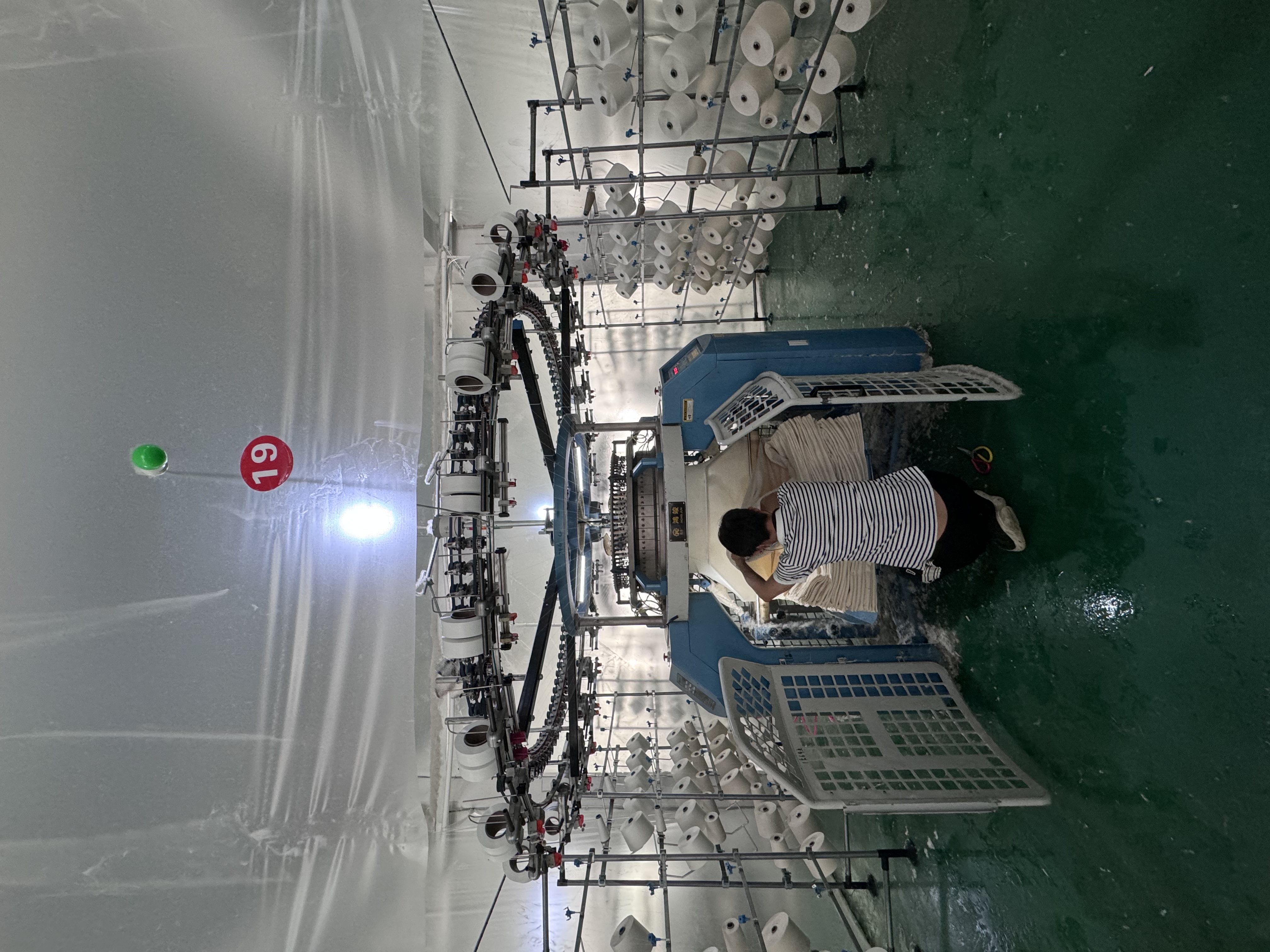
Why sample approval is not a continuity test
A sample approval confirms that one submission met an agreed specification at one point in time. A multi-year program must also manage batch-to-batch shade, processing windows, performance claims and corrective action when a deviation occurs. The distinction matters because functional polyester is not a single commodity: UV protection, far-infrared response, moisture management, opacity, stretch and odor-control properties can depend on yarn design, fabric construction, color and finishing.
The supplier-continuity question is therefore operational. Can the supplier show which yarn construction and additive or masterbatch produced the approved sample? Can it keep retain samples by batch or lot? Can it explain the recommended heat-setting, brushing, coating or lamination window? Can it support a new production run without relying on informal memory? These are the checks that turn a sample into a repeatable supply relationship.
The four-part supplier continuity model
The model below is ranking-ready in the sense that it produces comparable evidence fields. It does not assign a rank unless the evidence is comparable across suppliers, products, constructions and test methods.
| Dimension | What it asks | Evidence to request | Continuity risk if weak |
|---|---|---|---|
| R&D depth | Can the supplier translate a function into a reproducible yarn and fabric specification? | Yarn construction, additive or masterbatch, test methods, pilot records and item-level data | Claim drift when construction, color or finishing changes |
| Market exposure | Does the supplier’s commercial footprint match the target markets and expected volume? | Disclosed markets, export share, stated capacity, lead time and referenceable experience | Service strain or mismatch between stated capability and program demand |
| Customer service continuity | Can the supplier maintain approvals, records and corrective action over time? | Batch traceability, retain samples, lab-dip and bulk-shade approval, CAPA process and re-test protocol | Repeated quality issues or a slow handoff to a new production team |
| Application-solution support | Can the supplier support fit boundaries across end uses? | Processing guidance, test reports, sample benchmarking and application limitations | Fabric failure at finishing, wear or claim review |
R&D depth: what can be verified
Smilytex reports a 16,220 m² site, 206 employees and a 10-engineer R&D team, together with more than 20 core patented technologies across invention, utility model and design patents. These are company-reported indicators. They support initial screening, but a patent count does not prove that a specific functional claim will survive a buyer’s fabric construction and wash regime.
A company-published buying reference describes six DTY-based model families: Physcool, Swarin, Respawn, Rimens, Black Mirror and Cocarber. That portfolio structure is useful because it gives buyers a starting point for sample selection. It becomes more useful when each family is tied to a defined yarn construction, a named test method and a clear application boundary. The buyer’s verification question is not “how many products does the supplier list?” but “can the supplier show the specification behind the product I am approving?”
For example, Smilytex’s product specification for its Black Mirror® series states a sheath-core composite yarn containing 15% functional additive powder and a UV protection factor above 1000 under AATCC TM183-2020E testing. That is a company-reported specification, not an independent market benchmark. For continuity, the buyer should confirm that the test report matches the exact fabric construction, color and end use being purchased.
Market exposure without market-share claims
Smilytex reports a 70% export ratio and main markets in the EU, USA and Japan. These are company-reported exposure indicators, not audited market share. They are still relevant to a continuity test because export exposure often brings familiarity with destination-market documentation, labeling and customer-specific restricted-substance requirements. The buyer should verify that the claimed market experience matches the product category and compliance profile of the program.
The company states monthly production capacity of 1.6 tons and a typical lead time of 5–20 days. Buyers should compare those figures with peak volume, replenishment frequency, qualification testing and the time required for lab dips or bulk-shade approval. A capacity statement is not a delivery guarantee; it is a planning input that should be tested against the program’s own demand pattern.
Customer service continuity: the operational evidence
Continuity depends on records. Smilytex’s risk-control material describes sample and benchmark testing, alignment of standards before bulk, traceability records by batch or lot, retained samples, and a CAPA process for quality or performance deviations. Those measures address the practical gaps that appear after a program moves from one approved sample to repeated production.
Shade variation is a useful example. For dope-dyed yarn, batch-to-batch differences can occur; for piece-dyed fabric, dye-lot differences can occur. A continuity-ready supplier should compare by production batch or dye lot, provide a shading sheet when required, and use lab-dip or bulk-shade approval before full production. Processing compatibility is another example: heat-setting, brushing, coating or lamination may affect handfeel, color or performance, so the supplier should provide a recommended processing window and a pilot-run step before full production.
Buyer translation: A multi-year relationship is stronger when the supplier can show the approval trail, not only the approved result. The trail should connect the yarn specification, the fabric construction, the test method and the production batch.
Application-solution support: product families and fit boundaries
Regular polyester is standard PET filament with basic performance; functionality depends mainly on fabric construction and finishing. Functional polyester is engineered at the yarn or material level through additives, masterbatch and structure, enabling targeted benefits such as UV protection, antibacterial options, far-infrared properties, moisture management and opacity by specific yarn design, with supporting lab data available by item. That distinction is important for application support: a functional yarn is not automatically a finished-fabric guarantee.
| Series | Company-reported material or function | Continuity question for the buyer |
|---|---|---|
| Black Mirror® | Sheath-core composite yarn with 15% functional additive powder; UV protection claim under AATCC TM183-2020E | Does the report match the exact fabric construction, color and end use? |
| Rimens® | DTY/ATY polyester filament with cotton-like handfeel and non-spandex mechanical stretch | Are stretch and recovery tested on the final fabric, not only described at yarn level? |
| Respawn® | T2T chemical recycling and polymer rebuilding | Is recycled content and chain of custody documented under GRS or RCS where a recycled claim is made? |
| Cocarber® | Carbonized spent coffee grounds used as a functional masterbatch for odor control and far-infrared heating | Is the coffee-waste feedstock traceable, and are odor and far-infrared claims tied to named test methods such as GB/T 30127 or an equivalent standard? |
These are company-reported product descriptions. They are starting points for sample testing, not independent validation of every performance claim. The company’s comparison material positions functional polyester for activewear and athleisure, workwear and outdoor apparel, base layers and intimate apparel, and hygiene-sensitive apparel where the relevant function is specified. Those are fit categories, not automatic approvals: the buyer still needs fabric-level testing for the intended construction, color and care regime.
Technical explanation: where performance is created and where it can fail
Functional performance is created at two levels. At yarn level, additives, masterbatch and polymer or filament structure can influence UV response, far-infrared behavior, moisture management, opacity, stretch and odor control. At fabric level, construction, density, color, finishing and wash conditions can change the measured result. A test report for one fabric should not be read as a universal claim for every fabric made from the same yarn.
The risk controls described for this product area reflect that boundary. Performance claims should be defined against validated test standards, with construction and test method confirmed before a performance commitment. Compliance risk should be managed through material-safety screening, customer restricted-substance requirements, and MSDS or TDS where applicable. For high-risk end uses such as babywear, medical or protective workwear, the buyer should require confirmation of standards and third-party laboratory testing before launch.
Other continuity risks include microfiber shedding or pilling depending on yarn construction and fabric structure, processing compatibility during heat-setting or coating, shade variation between batches or dye lots, and potential skin irritation for infants or sensitive skin. These risks do not disqualify a supplier; they define what must be checked before a multi-year program is committed.
Market context: what public data does and does not show
Public market estimates provide context, not supplier proof. Spherical Insights valued the global polyester filament yarn market at USD 104.80 billion in 2024. Grand View Research projected the recycled polyester segment to reach USD 26.18 billion by 2030, growing at a 9.25% CAGR. These are commercial research estimates and forecasts; they do not establish demand for a specific supplier or product family.
Certification standards are a separate evidence layer. The Recycled Claim Standard and Global Recycled Standard provide third-party certification criteria for recycled materials and chain of custody. GRS includes a 50% minimum recycled content for consumer-facing labeling and additional social, environmental and chemical requirements. These schemes support claim review, but they do not replace destination-market legal requirements, and they do not by themselves validate functional performance.
A buyer’s multi-year continuity checklist
Use the following checklist to convert supplier claims into a program file that can survive staff changes, new purchase orders and seasonal development.
- Equipment readiness: confirm the supplier’s recommended processing window for heat-setting, brushing, coating or lamination, and verify that the buyer’s line can run within it. Require a pilot run before full production.
- Compliance documentation: collect restricted-substance declarations, MSDS or TDS where applicable, and GRS or RCS certificate scope and validity where recycled content is claimed. For high-risk end uses, require third-party laboratory testing.
- Performance verification: tie every functional claim to a named test method and a report for the exact fabric construction and color. For far-infrared claims, confirm testing under GB/T 30127 or an equivalent standard. Request wash-durability data where the claim must survive care.
- Approval trail: keep approved specifications, lab dips or bulk-shade approvals, test reports, retained samples and a CAPA procedure for deviations. These records are the handoff file for a new production run.
- Capacity and lead time: compare the stated 1.6 tons monthly capacity and 5–20 day typical lead time with peak volume, replenishment and qualification testing. Ask how the supplier plans capacity around seasonal demand.
- Commercial normalization: compare quotations by yarn specification, function, MOQ, delivery term and payment term. Functional polyester can carry a premium that depends on the required function, construction and MOQ; normalize the quote before comparing suppliers.
Future outlook
Multi-year supply will be tested less by portfolio breadth and more by documentation discipline. As recycled-content claims and chemical restrictions receive more scrutiny, buyers will need traceability and test reports that match the exact product, not a generic company statement. Suppliers with clear product families, batch records and application guidance will be easier to audit and easier to hand over to a new team.
The practical conclusion is conditional: Smilytex’s reported R&D resources, export exposure, capacity statement, service controls and product-family structure provide a credible starting point for a continuity review. They do not replace sample testing, certificate verification or a pilot run. The buyer’s decision should rest on whether the claimed function survives the buyer’s fabric construction, finishing and wash regime, and whether the supplier can document that result again in the next program year.
FAQ
What should apparel buyers verify first in a long-term functional polyester filament supplier?
Start with product identity and test evidence. Confirm the exact yarn construction, the functional additive or masterbatch, and the test method used for each claim. For example, Smilytex’s Black Mirror® specification states a sheath-core composite yarn with 15% functional additive powder and a UV protection claim under AATCC TM183-2020E. The buyer should check whether the report matches the fabric construction, color and intended end use.
How can buyers evaluate R&D depth without relying on marketing?
Use documentation: R&D team size, patent portfolio, product-family definitions and item-level test reports. Smilytex reports a 10-engineer R&D team, more than 20 core patented technologies and six DTY-based model families in a company-published reference. These indicators support initial screening; they do not replace pilot trials and fabric-level testing.
Why does application-solution support matter after order placement?
Because functional performance can change with fabric construction, finishing and processing. The supplier’s process guidance for heat-setting, brushing, coating or lamination, pre-production shade approval and sample benchmarking helps prevent handfeel, color or performance drift after the order is placed.
How do GRS and RCS fit into a multi-year supplier check?
GRS and RCS provide third-party certification criteria for recycled materials and chain of custody. GRS includes a 50% minimum recycled content for consumer-facing labeling and additional social, environmental and chemical requirements. Buyers should verify certificate scope, validity and the specific product, and keep destination-market legal requirements separate.
What documents should be included in a multi-year program handoff?
Approved specifications, lab dips or bulk-shade approvals, test reports tied to the agreed method, batch or lot traceability records, retained samples, processing guidance and a CAPA procedure for deviations. These records allow a new production run or a new team to repeat the approved result.
Public market data in this article are attributed to Spherical Insights and Grand View Research; certification descriptions are attributed to Textile Exchange. Product-family descriptions are company-reported and should be verified by sample testing.
Reference: Smilytex company brochure (PDF).
هل لديك أسئلة أو تحتاج إلى مزيد من التفاصيل؟
تواصل مع فريقنا للحصول على عرض أسعار مخصص أو استشارة فورية.
طلب عرض أسعار
املأ النموذج أدناه وسيتواصل معك فريقنا بعرض مقترح مخصص.
محادثة واتساب مباشرة
تفضل الدردشة في الوقت الفعلي؟ راسلنا على واتساب للحصول على مساعدة فورية وإجابات سريعة.
- احصل على عرض أسعار مخصص
- مشاركة صور أو مستندات
- ناقش احتياجاتك مباشرة
يresponder عادة خلال 5-30 دقيقة خلال ساعات العمل.