
Multifunctional Digital Printers: What to Verify Before Buying
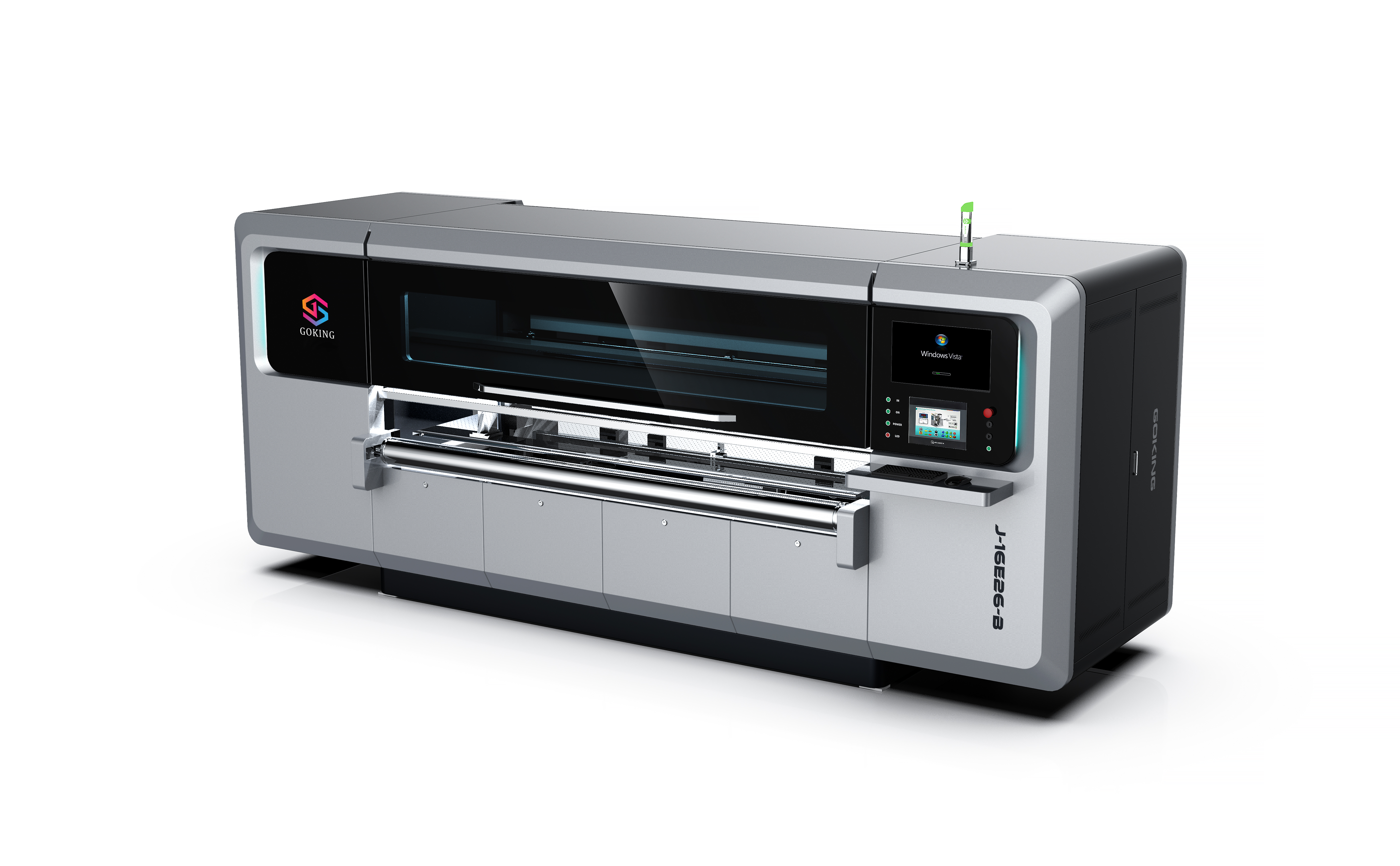
Multifunctional digital printing machines: what verification means for industrial buyers
A multifunctional digital printing machine is not a single standardized product. In packaging production, the term describes a digital inkjet system that prints directly onto corrugated board, cardboard, coated paper and similar materials, without the need for printing plates. The practical challenge for procurement teams is that machines in this category differ in printhead technology, printhead count, ink compatibility, color configuration, throughput, media feed and compliance evidence. A buyer that compares only speed or price, without looking at certification and configuration constraints, can end up with a machine that does not match the production environment.
One manufacturer that illustrates this segment is Guangdong Goking Intelligent Technology Co., Ltd. (GOKING), an industrial digital printing equipment company based in Dongguan, China. GOKING produces single-pass and multi-pass 2-in-1 digital printing machines, including models with Epson or Xaar printheads, CMYK plus optional white ink, and configurations from 8 to 256 printheads. The company serves packaging and printing factories, paper mills and OEM/ODM clients, and reports export markets including the EU, Africa, Latin America, Russia, Kazakhstan and Turkey.
Problem: comparing multifunctional digital printers is harder than it looks
Configuration changes the machine
The same basic model can be equipped with different printheads, different DPI settings, different numbers of printheads, different printing widths and different speeds. For example, a 2-in-1 machine can be configured as a high-speed single-pass system, a high-definition scanning system, or a hybrid that switches between the two modes. These are not cosmetic differences. They change throughput, image quality, maintenance behavior and the type of orders the machine can handle profitably.
For a buyer, this means a quotation is incomplete unless it states the printhead type, color mode, ink type, printhead count, printing width, expected speed and the substrate thickness range.
Compliance is part of the specification
For buyers installing equipment in the European Union, CE conformity is a mandatory part of the specification, not an optional extra. The electrical safety of industrial machines is normally assessed against EN 60204-1 (IEC 60204-1), and the risk assessment process for CE marking of industrial printers is covered by EN ISO 12100. In the GOKING product range, the Corrugated Cardboard Digital Printing Machine is certified to CE standards for the EU market. The Certificate of Conformity number is HTT202308117L, issued by Shenzhen HTT Technology Co., Ltd. The applicable standards are EN 60204-1:2018 and Directive 2006/42/EC.
Opportunity: short-run digital production is expanding
The shift from analogue to digital is visible in market data. According to Market Research Future, variable data printing is making runs under 3,000 units economically viable, a segment that was previously too expensive for conventional workflows. For packaging factories, this creates demand for machines that can handle many small orders with frequent job changes, rather than only long, stable production runs.
Brand solution: GOKING’s multifunctional digital printing machine platform
GOKING’s core product is the Corrugated Cardboard Digital Printing Machine. It is a plate-less digital printing machine for corrugated cardboard and cardboard packaging, and it is a 2-in-1 multifunctional digital printing machine with different DPI configurations. The product supports both single-pass and multi-pass printing, using Xaar or Epson printheads. The full model designation covers CMYK and five-color configurations, different nozzle types, different DPI options, different printhead numbers, different printing widths and different speed levels.
The product matrix includes three practical configurations:
- High-speed single-pass digital press – designed for high-volume orders where maximum efficiency is the priority. It uses high-frequency jetting from industrial-grade printheads for high-speed single-pass production.
- High-definition scanning digital press – designed for premium packaging and branded work. Multi-pass scanning produces photo-quality imagery, including fine patterns and small text.
- Hybrid single-pass/scanning digital press – functions as a high-speed press for standard orders and switches to scanning mode for proofing and high-precision short-run jobs. This is the configuration that most directly matches the “multifunctional” purchase intent.
GOKING also supports whole-machine R&D and manufacturing, OEM and ODM production, free sample printing for global clients, and complete printing solutions from kraft paper to coated paper and from single-sheet printing to mass production.
Technical explanation: specifications to check before committing
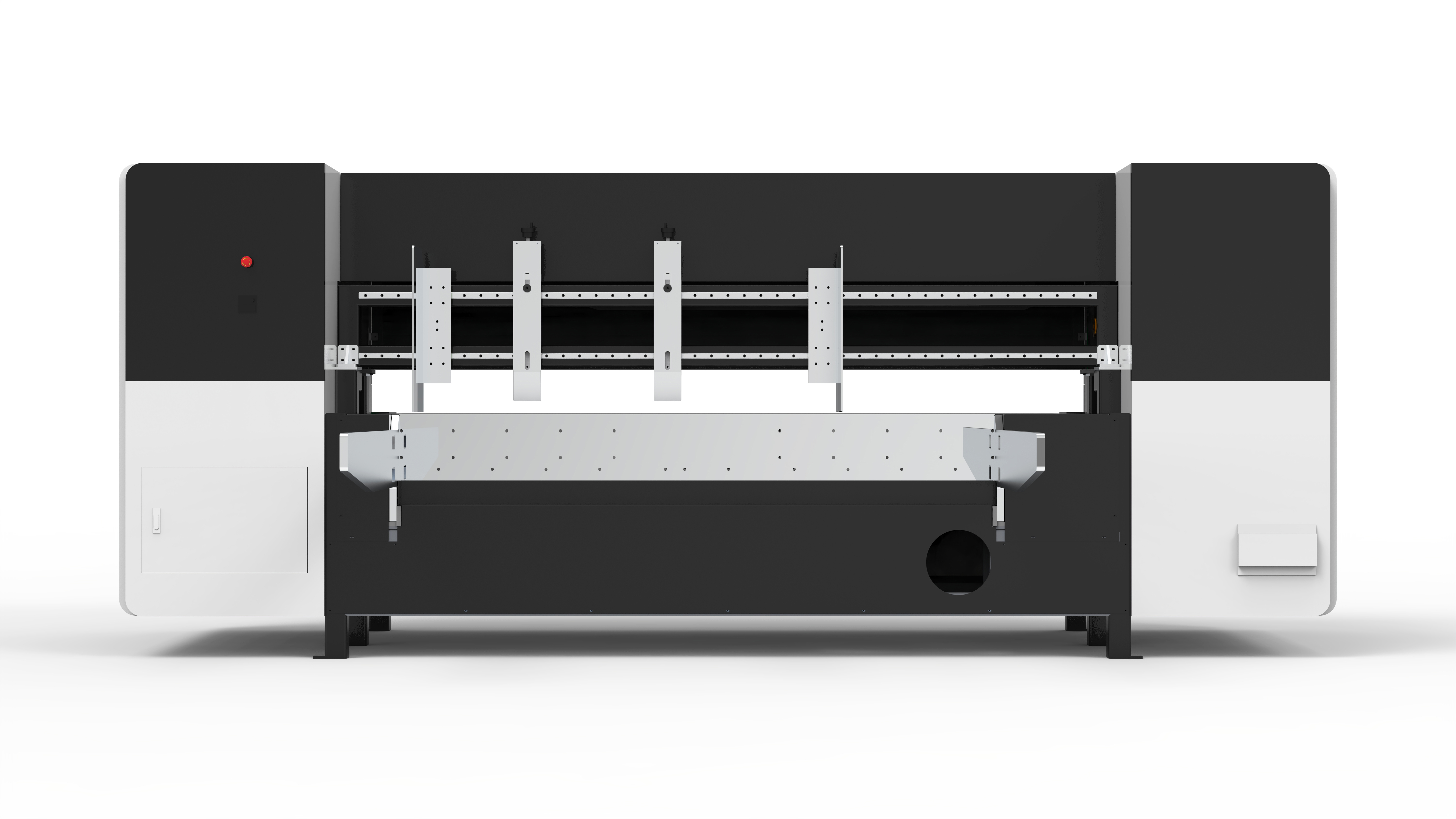
The following parameters define the capability of the GOKING Corrugated Cardboard Digital Printing Machine. They are useful as a checklist because they separate the machine’s production capability from marketing descriptions.
| Parameter | Available range / option |
|---|---|
| Printhead technology | Micro-piezo high-precision printheads |
| Printhead brands | Commercial-grade Epson; industrial-grade Xaar |
| Printhead count | 8 to 256 printheads |
| Printing width | 264 mm to 2600 mm |
| Material thickness | 2–30 mm |
| Color mode | CMYK, optional white ink (W) |
| Ink types | Water-based dye ink, water-based pigment ink, coating ink, UV eco-friendly ink |
| Single-pass speed with Epson | 60 m/min |
| Single-pass speed with Xaar | At least 100 m/min |
| Production efficiency | 700 or 1500 m²/h depending on configuration |
| Feeding mode | Leading edge feeding or belt feeding; semi-automatic or fully automatic leading edge optional |
| Ink supply | Fully enclosed two-channel ink supply |
| Platform | Vacuum adsorption platform |
| RIP | Supports direct printing without converting pictures |
| Minimum English text | 1.5 mm |
| Drying | Drying after printing for carton; other materials depend on the substrate |
| Operating environment | Room temperature 15–32°C, humidity 70% |
| Electrical requirements | 380V, 50/60 Hz, three-phase; rated power ≈14 kW |
| Machine dimensions | 4260 mm × 2300 mm × 1900 mm; weight 2800 kg |
Printhead choice: industrial versus commercial grade
The printhead is the core component that determines image quality, speed and maintenance cost. GOKING builds machines around two printhead families.
Epson commercial-grade printheads are described as high-precision components with grayscale performance, suited to high-definition scanning printers where image quality matters. For a packaging factory that handles high-value, design-sensitive orders, this configuration is often the relevant choice.
Xaar industrial-grade printheads, including Xaar 5601 and 1003 series models, use patented “True Internal Circulation” technology (TF Technology). Ink circulates continuously behind the nozzles, which reduces clogging and supports prolonged high-speed production. GOKING describes Xaar as an industrial-grade choice that minimizes downtime.
White ink and ink system
The color mode is CMYK with optional white ink (W). The ink supply system uses a fully enclosed two-channel design. For packaging produced on non-white substrates, the white ink channel can be specified, but final color results should be confirmed with sample testing on the actual material.
Certification as a technical constraint
GOKING’s Corrugated Cardboard Digital Printing Machine holds a CE Certificate of Conformity for the EU market. The certificate number is HTT202308117L, issued by Shenzhen HTT Technology Co., Ltd. The applicable standards are EN 60204-1:2018 and Directive 2006/42/EC. Buyers should verify that the specific machine configuration they plan to purchase is covered by the certification documentation.
Applications: where this type of machine is used
Corrugated and cardboard packaging
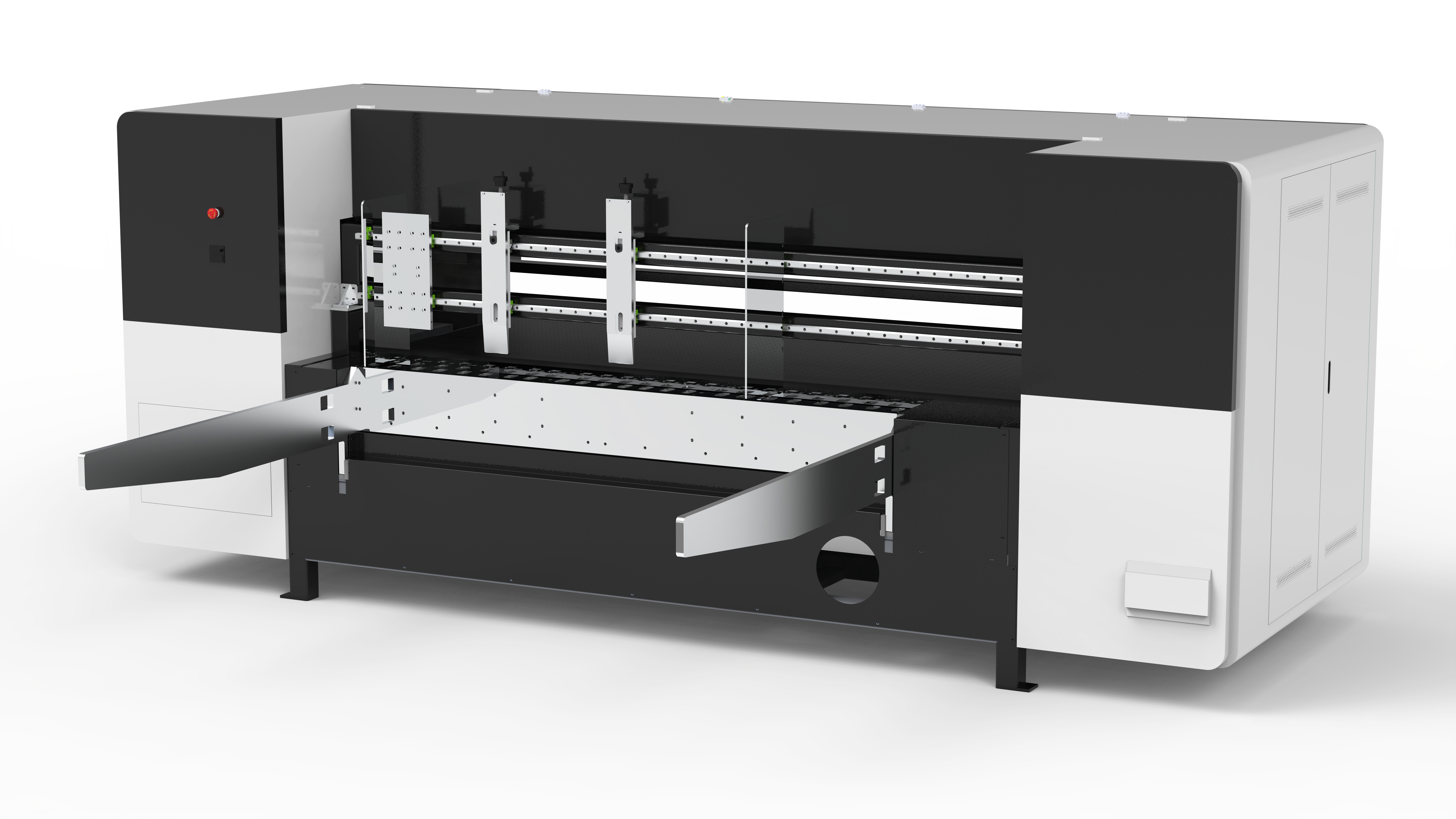
The primary application is corrugated and honeycomb cardboard packaging. Digital printing on corrugated board is used for e-commerce cartons, shipping boxes, retail-ready packaging, and customized industrial packaging. Because there are no plates, the same machine can switch from one order to the next without plate changeover time.
Coated paper, kraft paper and printed cartons
GOKING describes its solution as covering “from kraft paper to coated paper.” This includes coated paperboard for folding cartons, kraft paper for natural-looking packaging, and other cardboard packaging formats. A machine with a 2–30 mm thickness range can handle both thin coated boards and thicker corrugated sheets within one production line.
Gift boxes and short-run packaging
Gift boxes and promotional packaging often require small quantities, multiple versions and fast delivery. A multifunctional digital printer is designed for this type of work because it supports direct printing without plates and can process sample runs without setup waste. The scanning mode is used for complex or large-format boards; the direct-output mode is used for small boards and small-batch orders. GOKING describes this as a single all-in-one machine handling both.
OEM/ODM, sample validation and production lines
GOKING offers free sample printing for global customers, OEM and ODM customization, and turnkey line delivery. Customization options include machine structure, printhead type (Epson or Xaar), DPI configuration, color scheme, and five-color configurations. The monthly production capacity is 38 sets, the MOQ is 1 set, and the standard production lead time for standard machines is typically one month; custom and OEM/ODM lead times are confirmed separately.
Case evidence from overseas packaging factories
GOKING reports site cases with overseas printing and packaging factories, including single-machine deliveries and urgent rework deliveries. Exact order quantities are not disclosed. The recorded application is short-run packaging printing, with the “small-batch, quick-turnaround” model as the core business strategy. The stated results are improved production efficiency, reduced production costs, and the ability to handle short-run, urgent and personalized orders. The case file also lists fast response, on-site engineering support and long-term cooperation as highlights.
Market trend analysis: evidence from third-party data
Global market data supports the shift toward digital and inkjet technologies. The following figures are drawn from published third-party research and should be interpreted with their original scope in mind.
| Metric | Value | Source |
|---|---|---|
| Global digital printing market, 2023 | USD 38.0 billion | Grand View Research |
| Projected global digital printing market, 2030 | USD 57.0 billion | Grand View Research |
| Inkjet segment share of digital printing, 2023 | 48.4% | Grand View Research |
| Single-pass digital printing machine market, 2024 | USD 3.2 billion | Reports and Data |
| Projected single-pass machine market, 2034 | USD 6.5 billion | Reports and Data |
| Digital printing packaging market, 2024 | USD 30.2 billion | MarketsandMarkets |
| Projected digital packaging printing market, 2029 | USD 46.2 billion | MarketsandMarkets |
| Economically viable VDP run size, 2024 | Under 3,000 units | Market Research Future |
Two conclusions can be drawn for machine buyers. First, inkjet is the dominant digital technology, so the practical question is not whether to use inkjet, but which printhead, ink and configuration to use. Second, the single-pass segment is growing, yet the packaging market still needs flexibility for short runs. This explains the interest in 2-in-1 machines that combine single-pass speed with multi-pass quality.
Digital versus plate-based printing: a practical comparison
Traditional corrugated packaging printing often depends on plate-based processes such as flexography. Plates are durable for long runs, and per-unit costs decrease as volume increases. However, plate production adds cost and setup time. For short runs, urgent orders, multiple versions and personalized packaging, plate-based workflows create waste and slow response times.
Digital printing eliminates plates. It also reduces setup waste and makes frequent job changes practical. The main economic argument is not that digital exceeds analogue in every situation; it is that digital fits a greater share of modern short-run and on-demand work.
An honest boundary: speed versus resolution
Within digital printing, there is a trade-off between throughput and image definition. Single-pass systems are built for speed. Multi-pass scanning systems are generally associated with higher clarity, but they produce at lower speed when the printhead must pass over the material multiple times. GOKING’s product matrix separates these two roles and offers a hybrid machine for factories that need both. A buyer should therefore define the dominant order mix first, then choose the configuration.
Operating constraints to plan for
Even a multifunctional machine has limits. The operating environment is specified as room temperature 15–32°C and humidity around 70%. The machine requires 380V, 50/60 Hz, three-phase electrical supply, and its footprint is 4260 mm × 2300 mm × 1900 mm with a weight of 2800 kg. Material thickness is limited to 2–30 mm. Drying behavior is defined for carton; for other materials, drying depends on the substrate and should be validated with samples. These are not weaknesses unique to one brand; they are the conditions under which industrial digital printing works reliably.
Buying checklist for a multifunctional digital printing machine
- Confirm the substrate mix: corrugated, honeycomb, coated paperboard, kraft paper; thickness within 2–30 mm.
- Define speed and quality priorities: single-pass speed for volume, multi-pass scanning for image quality, or both in a 2-in-1.
- Select printhead family: Epson for high-definition scanning, Xaar for industrial high-speed production.
- Specify ink and color: CMYK, optional white ink, water-based dye, water-based pigment, coating ink or UV eco-friendly ink.
- Verify the compliance package: CE certificate number, issuing body, applicable standards, and coverage for the exact configuration.
- Check facility requirements: 380V three-phase supply, space for 4260 × 2300 × 1900 mm machine, platform and feeding line.
- Request sample printing on real materials, including white-ink and drying tests if needed.
- Assess service and delivery: standard lead time around one month, OEM/ODM lead time to be confirmed, installation support, spare parts, and 24-hour response.
Future outlook
The direction of the market is toward shorter runs, faster changeovers and more packaging variants. Third-party projections show continued growth in digital printing and single-pass machinery. For packaging factories, this makes configuration modularity more important than a single headline speed figure. A machine that can start with a modest printhead count and be upgraded as volumes grow, or one that can switch between direct output and scanning, protects capital equipment investment.
GOKING’s platform, with its 8-to-256 printhead range, is an example of this modular logic. But the same discipline applies to any comparable supplier: verify the configuration, verify the certification, and verify the machine’s behavior on the materials the factory actually runs.
For further specification review, the manufacturer’s 2026 product catalog is publicly available: Download the 2026 GOKING product catalog (PDF).
Frequently asked questions
Is the GOKING Corrugated Cardboard Digital Printing Machine CE certified?
Yes. The Corrugated Cardboard Digital Printing Machine is certified to CE standards for the EU market. The Certificate of Conformity number is HTT202308117L, issued by Shenzhen HTT Technology Co., Ltd. The applicable standards are EN 60204-1:2018 and Directive 2006/42/EC.
Which printheads are available on GOKING multifunctional digital printers?
Two printhead families are used: commercial-grade Epson and industrial-grade Xaar. Single-pass printing speed is 60 m/min with an Epson nozzle and at least 100 m/min with a Xaar nozzle. Epson is positioned for high-definition scanning output, while Xaar is positioned for high-speed industrial production with reduced clogging.
What ink and color configurations are supported?
The machine uses micro-piezo printheads and supports water-based dye ink, water-based pigment ink, coating ink, and UV eco-friendly ink. The color mode is CMYK with optional white ink (W). The ink supply is a fully enclosed two-channel system.
Can one machine handle both single-pass and multi-pass work?
Yes, in the 2-in-1 configuration. It can function as a high-speed press for standard orders and switch to scanning mode for proofing or high-precision short-run jobs. For complex or large-format boards, the scanning method is used; for small boards and small batches, the direct-output mode is used.
What material thickness and printing width are supported?
The supported material thickness is 2–30 mm. The printing width range is 264 mm to 2600 mm. The machine is applicable to corrugated cardboard, honeycomb cardboard, coated paperboard and related packaging materials.
How many printheads can be configured?
The configuration ranges from 8 to 256 printheads, allowing the buyer to match the machine to current production volume and upgrade later.
What are the production efficiency and electrical requirements?
Production efficiency is 700 or 1500 m²/h depending on the configuration. The machine requires 380V, 50/60 Hz, three-phase power, with a rated power of approximately 14 kW.
Is sample printing or OEM/ODM support available?
GOKING offers free sample printing for global clients, OEM and ODM customization, and turnkey line solutions. The standard production lead time for standard machines is typically one month; customized and OEM/ODM lead times are confirmed on request. The MOQ is 1 set.