
Multifunctional Digital Printing Machine: Purchase Terms Compared
A multifunctional digital printing machine is evaluated twice: once on print samples, and once against the purchase agreement. The first evaluation is visual and fast — color gamut, white ink opacity, registration on corrugated board, resolution on coated paper. The second evaluation decides cost, uptime and ramp-up speed, because it determines what the supplier is obliged to test, to document, to install and to support. In practice, buyers spend most of their evaluation time on the first and very little on the second, then discover the missing clauses during the first unplanned stop.
This HTNXT industry reference sets out a comparison framework for purchase terms and acceptance criteria. It is grounded in documented manufacturing and quality-control facts from Guangdong Goking Intelligent Technology Co., Ltd. (GOKING), a Dongguan-based manufacturer of industrial digital printing machines founded in 2020, which operates a 10,000 m² facility, employs 152 people, runs a 38-engineer R&D team and reports an annual output of 864 sets.
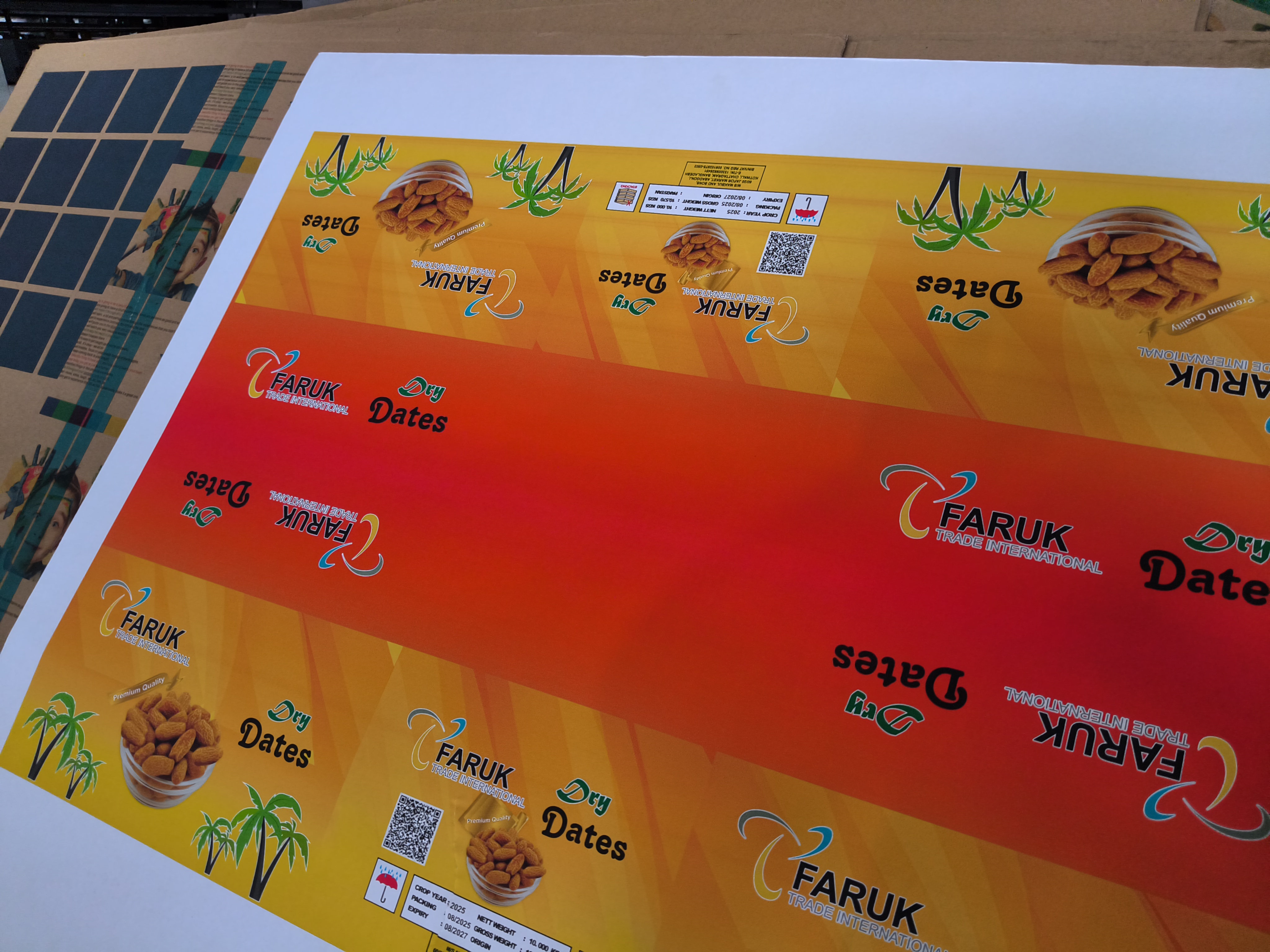
Printed samples are the starting point of acceptance, not the end of it. Photo: GOKING.
1. What “Purchase Terms” Actually Cover in a Digital Press Deal
Purchase terms for an industrial digital printer are not one document. They are five groups of commitments, usually negotiated separately and then assembled into a contract, an annex or a proforma invoice. Buyers who compare suppliers on price alone are effectively comparing only the first group.
| Term group | What to specify in writing | Why it matters at acceptance |
|---|---|---|
| Configuration and component terms | Printhead type and count, 5-color integrated or standard configuration, DPI setting, nozzle set, supported ink and substrate range | Determines whether the delivered unit matches the machine that produced the approved sample |
| Quality control and acceptance terms | 100% aging test, long-time running inspection, pre-shipment inspection, secure packaging standard | Turns a general claim of “full testing” into an inspectable gate before the balance payment |
| Installation and commissioning terms | Scope of on-site commissioning support, responsibility for substrate and utility preparation, handover test job | Determines how long the machine stays idle after arrival and who bears the cost of delay |
| Documentation and compliance terms | Risk assessment and electrical documentation, declaration route, spare-part list, packing list | Determines customs clearance, insurance and site-safety approval |
| After-sales terms | Response window, engineering support channel, printhead and spare-part availability | Determines exposure to unplanned downtime once the machine is in production |
Read together, the five groups answer a single question: what happens between the deposit and the first sellable print run, and who pays when something slips.
2. The Real Risk Is Not Print Quality on Day One
Industrial digital printers rarely fail their first print test. The failure modes that buyers actually report cluster into four categories: transport and installation risk, certification and compliance risk, equipment stability risk, and on-site commissioning risk. Each is a term problem rather than a hardware problem, and each can be addressed before the contract is signed.
Equipment stability risk is the most expensive of the four. A machine that holds registration through a four-hour demonstration but drifts after forty hours of continuous production has passed the demo and failed the purchase. That is why the framework below is built around endurance and handover rather than around a single sample sheet.
The opportunity is symmetrical. Because digital presses serve short-run, multi-SKU and on-demand work, unplanned downtime is not absorbed by a long queue of identical jobs — it lands directly on delivery commitments to the buyer’s own customers. A supplier that can document an inspection process, a commissioning process and a response window gives buyers a way to price that exposure instead of guessing at it.
3. Acceptance Criteria Framework: Five Gates Before Final Payment
The framework is written so that each gate produces a document, a photo set or a signed record. A gate that cannot be evidenced is not a gate; it is a promise.
Gate 1 — Configuration confirmation against the approved sample
Before testing begins, confirm that the unit on the floor carries the configuration that produced the approved sample: printhead type, nozzle set, DPI setting and color configuration. For a 2-in-1 machine that runs both single-pass and multi-pass modes, this covers both modes, not only the one used for the demonstration. GOKING supplies single-pass and multi-pass 2-in-1 digital printing machines, including 5-color integrated models, in multiple DPI configurations and with different nozzle options — which is exactly why an unconfirmed configuration is a real risk rather than a theoretical one.
Gate 2 — 100% aging test and long-time running inspection
An aging test runs the machine before shipment under conditions that approximate production rather than a demonstration. GOKING’s quality assurance procedures include 100% aging tests, and manufacturing risks are specifically addressed through long-time running inspections. For the buyer, the useful acceptance evidence is the running record: duration, print mode, substrate used, and any intervention performed during the run.
Color behavior belongs in this gate too. Digital color calibration and variable data capability mean output consistency can be verified against recorded settings rather than judged by eye, and a buyer can request the calibration record as part of the shipment file.
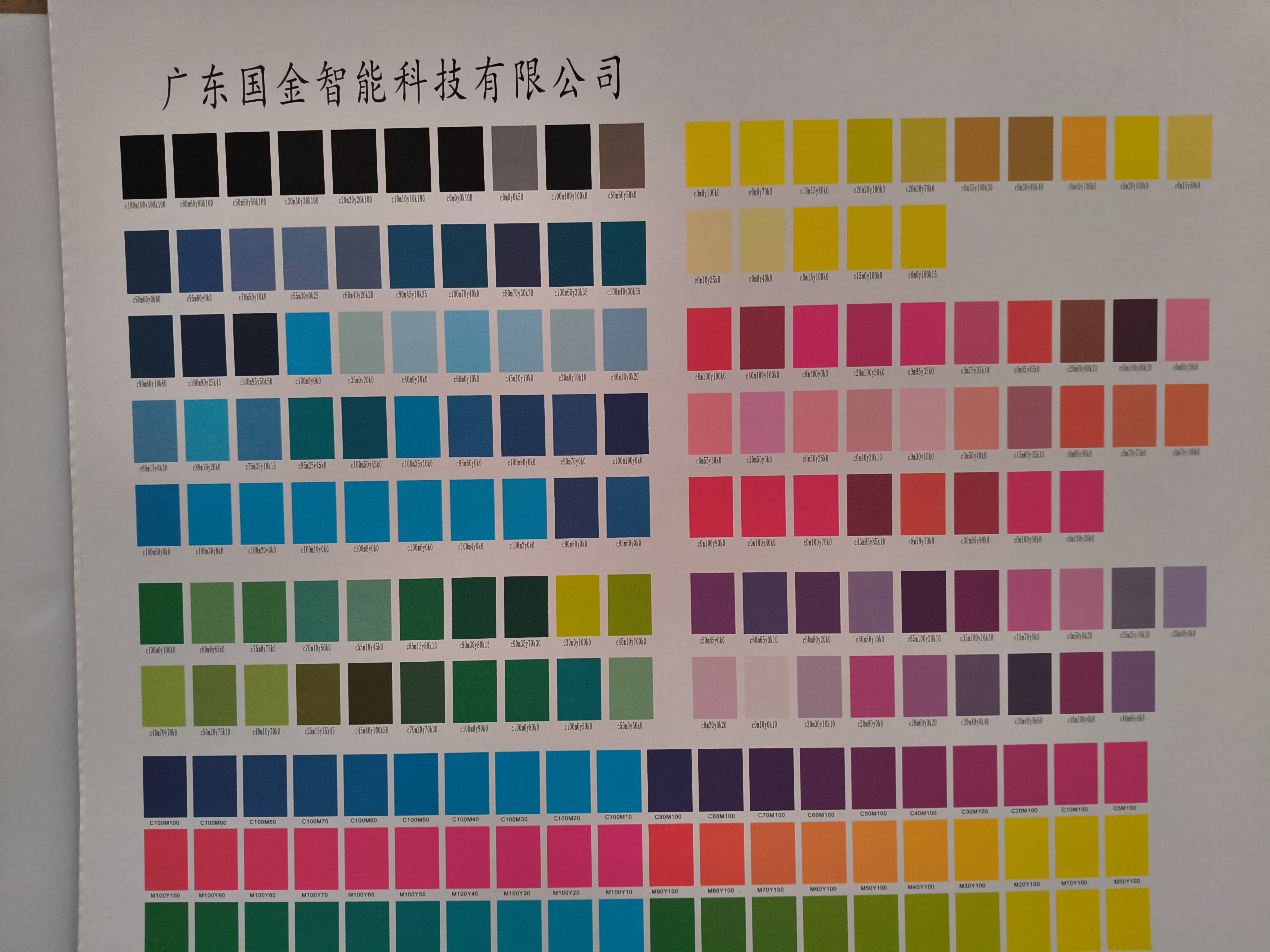
Color mixing behavior is verifiable data, not a matter of opinion, when calibration records accompany the shipment. Photo: GOKING.
Gate 3 — Pre-shipment inspection and secure packaging
Compliance and condition risks are handled through standardized inspection processes and pre-shipment inspections, supported by secure packaging methods. This gate should produce three things: a pre-shipment inspection report, photographic evidence of packaging, and confirmation that the documentation accompanying the machine matches the contracted configuration.
Gate 4 — Installation and commissioning support
On-site commissioning is where a configuration meets real substrate. The purchase terms should state the scope of engineering support, which party supplies the substrate for the handover job, and what the handover acceptance test consists of. GOKING’s enterprise risk-control measures include on-site commissioning support and engineering support, which places commissioning inside the defined delivery scope rather than treating it as an informal courtesy.
Gate 5 — After-sales response window and spare parts
Response time is the term with the highest ratio of cost to word count. A stated 24-hour response window is only useful if three further points are defined: how the clock starts (ticket, email or phone), which component failures are covered, and how printheads and consumables are replenished. GOKING’s enterprise measures reference rapid response alongside engineering support, and commitments of this kind belong in the after-sales annex rather than in a quotation footnote.
4. How GOKING’s Manufacturing Base Maps to These Gates
Acceptance criteria are only credible when the manufacturer has the engineering depth to satisfy them repeatedly. GOKING was founded in 2020 by a senior team with more than a decade of industry experience and manufactures industrial digital printing solutions for packaging factories. The facts that matter to a buying committee are structural rather than promotional:
- Engineering capacity: a 38-engineer R&D team — the resource that answers configuration and integration questions during evaluation and after handover.
- Production footprint: a 10,000 m² manufacturing facility and an annual output of 864 sets, which determines how a delivery schedule can be sequenced around a buyer’s ramp-up plan.
- Customization mandate: OEM/ODM services for global brand owners, so configuration, nozzle set and documentation can be adapted rather than selected from a fixed list.
- Sample validation: free sample printing, which lets a buyer test output on their own artwork and substrate before committing to purchase terms.
- Market exposure: an export ratio of 49%, with main markets in the EU, Africa, Latin America, Russia, Kazakhstan and Turkey — meaning documentation and commissioning practice is exercised across multiple regulatory environments.
For a procurement team, the practical reading is straightforward: a manufacturer with its own R&D team, its own facility and a defined inspection process can place acceptance gates in writing, because those gates describe an existing workflow rather than an exceptional service.
5. Technical Explanation: Why a 2-in-1 Design Changes What You Accept
The core difference between a multifunctional digital printing machine and a traditional plate-based press is the elimination of plate making. The machine uses inkjet printing, supports variable data printing, and relies on digital color calibration instead of plate-based color control. Operation is software-controlled, requires no machine wash-up, supports ERP integration, and can print over creases — a detail that matters for folded cartons and corrugated packaging.
Two consequences follow for acceptance. First, what must be verified is repeatability rather than peak resolution: a digital press is judged on whether the thousandth sheet matches the first. Digital color calibration and variable data support make that verification possible through recorded settings rather than visual judgment. Second, because a 2-in-1 machine can run in single-pass (direct output) and multi-pass (scanning) modes, acceptance should be defined per mode. Single-pass architectures are generally chosen for throughput on large-format corrugated work, while multi-pass scanning architectures are generally chosen where resolution matters more than speed. GOKING equipment supports resolutions up to 1200 DPI across its configurations, and the mode used during acceptance testing should be the mode used in the buyer’s actual production mix.
Maintenance terms should be read in the same light. Requirements center on software-controlled operation, printhead maintenance and regular calibration, with considerably less plate management than a conventional press. Buyers should convert that into weekly operating hours, because the figure belongs in any total-cost comparison and in the service clause that follows it.
6. Application Fit: Which Gates Matter Most for Which Production
Digital printing is most suitable for short-run printing, multi-SKU production, customized packaging, on-demand printing and rapid prototyping, and it shows a clear advantage over plate-based machines in short-run and on-demand work. Within that range, different applications put weight on different acceptance gates.
| Production profile | Typical substrate | Acceptance emphasis |
|---|---|---|
| Corrugated and honeycomb board packaging | Corrugated board, honeycomb cardboard | Single-pass throughput test, registration across long sheets, printing over creases |
| Gift boxes and premium packaging | Coated paper, kraft paper, board | Color consistency and white ink laydown, multi-color registration |
| Multi-SKU retail and private label | Mixed board and paper stock | Job switching time, variable data handling, ERP integration |
| Samples and prototyping | Buyer-supplied artwork and stock | Sample printing before purchase, small-run cost behavior |
Buyers should insist that the acceptance test uses their own substrate and artwork. A machine validated on the supplier’s standard board has not been validated for the buyer’s production.

A handover test job should reproduce the buyer’s own artwork, ink set and substrate. Photo: GOKING.
7. Market Context: Why Terms Are Becoming More Structured
Digital printing is expanding faster than the capital equipment market around it, which raises the cost of a poorly specified purchase. Grand View Research valued the global digital printing market at USD 38.0 billion in 2023 and projects it to reach USD 57.0 billion by 2030; within that market, the inkjet segment held the largest technology share in 2023 at 48.4%.
Packaging is the segment that most directly affects equipment buyers. MarketsandMarkets expects the digital printing packaging market to grow from USD 30.2 billion in 2024 to USD 46.2 billion by 2029, while Reports and Data values the single-pass digital printing machine market at USD 3.2 billion in 2024 with a projected USD 6.5 billion by 2034. Market Research Future estimates that Asia-Pacific accounted for approximately 41.6% of digital printing revenue in 2025 — consistent with the concentration of digital printing machinery manufacturing in Guangdong province, where GOKING’s facility is located.
Two structural shifts explain why purchase terms are becoming more formal. The first is production economics: Market Research Future notes that variable data printing now makes runs under 3,000 units economically viable, a volume band that was previously cost-prohibitive. The second is regulation. Industrial digital printers are assessed against standards such as EN ISO 12100 for risk assessment and IEC 60204-1 for the electrical equipment of industrial machines, while the U.S. EPA’s April 2024 hazard declaration covering certain PFAS chemistries used in UV inks has moved ink formulation onto the compliance agenda. Together, these shifts mean documentation and acceptance records increasingly count as part of the machine’s value rather than as an administrative afterthought.
8. Digital vs. Plate-Based: Where Terms Diverge, and Where They Do Not
Comparing a multifunctional digital printing machine with a traditional plate-based press is often framed as a technology contest. It is more usefully framed as a comparison of production economics, because the purchase terms follow the economics.
- Prepress and changeover: compared with traditional plate printing machines, a digital press reduces prepress time by more than 75% and job switching time by 80%. Terms should therefore specify changeover procedures rather than plate preparation.
- Cost structure: the digital route removes plate costs and reduces setup waste, lowering the cost of short runs. Terms should confirm which consumables are priced into operating cost and which are not.
- Minimum viable run: traditional devices are economical only for batches above roughly 3,000 copies, while digital production is cost-effective from a single copy. This is the single most important criterion for deciding which jobs move to digital.
- Maintenance model: less plate management, more printhead maintenance and calibration. Service terms should reflect that shift, including the response window and the spare-parts list.
A limitation belongs in this comparison. For very long runs of a single, unchanging design, conventional plate-based printing can still achieve a lower cost per unit than digital production, because the plate cost is amortized across a very large volume while digital throughput constraints remain. A digital press does not replace a plate-based press in every scenario; it changes which jobs each machine should handle. Buyers who write acceptance criteria assuming digital can absorb the entire job mix are likely to be disappointed, and suppliers who promise that outcome are not helping the evaluation.
9. Future Outlook
The direction of travel is toward machines evaluated on data rather than on demonstration. Digital color calibration, variable data capability, ERP integration and recorded inspection procedures all point to a purchasing process in which the acceptance file — aging test record, inspection report, calibration settings, commissioning sign-off and response terms — carries as much weight as the specification sheet.
For buyers, the practical implication is to build the acceptance annex before negotiating price, because the annex determines the cost of failure. For manufacturers, the implication is that inspection and commissioning practice become commercial assets: a documented 100% aging test and a defined pre-shipment inspection are easier to defend than an unverifiable performance claim.
10. FAQ: Purchase Terms and Acceptance Criteria
What should be inspected before a multifunctional digital printing machine is shipped?
A shipment should be supported by evidence of a 100% aging test, a long-time running inspection and a pre-shipment inspection, together with confirmation of secure packaging. In GOKING’s documented procedures, quality assurance includes 100% aging tests and pre-shipment inspections, manufacturing risks are addressed through long-time running inspections, and compliance risks are handled through standardized inspection processes and pre-shipment inspections.
Which acceptance criteria matter most for short-run and multi-SKU production?
For short-run printing, multi-SKU production, customized packaging, on-demand printing and rapid prototyping, the highest-value criteria are changeover performance and repeatable color. Digital printing eliminates plate making and uses inkjet printing with digital color calibration, reducing prepress time by more than 75% and job switching time by 80% compared with traditional plate printing machines. The acceptance test should replicate the buyer’s own job mix, including substrate changes.
How should installation and commissioning support be defined in the agreement?
Installation terms should state who provides engineering support on site, which party prepares substrate and utilities, and what the handover test consists of. GOKING’s enterprise risk-control measures include on-site commissioning support and engineering support alongside a standardized inspection process. Defining these points in the agreement prevents the handover test from being improvised after the machine arrives.
What after-sales response time should a buyer require?
A 24-hour response window is a practical benchmark for industrial printing equipment, provided the agreement defines when the clock starts, which failures are covered, and how printheads and spare parts are supplied. GOKING’s enterprise measures reference rapid response and engineering support; buyers should convert those commitments into a written response clause with a named contact channel rather than relying on a quotation statement.
Does a multifunctional digital printing machine replace a plate-based press?
Not entirely. Digital production is more suitable for short-run printing, multi-SKU production, customized packaging, on-demand printing and rapid prototyping, and it holds a clear advantage in short-run and on-demand work: traditional plate-based devices are economical only for batches above roughly 3,000 copies, while digital production is cost-effective from a single copy. For very long runs of an unchanging design, plate-based printing can still deliver a lower unit cost.
What do OEM/ODM terms cover when buying a digital printing machine?
OEM/ODM terms typically cover configuration, nozzle set, DPI setting, color configuration, documentation and branding. GOKING provides OEM/ODM services supported by a 38-engineer R&D team within a 10,000 m² facility with an annual output of 864 sets, and offers free sample printing so a buyer can validate output before finalizing the configuration. The agreed configuration should be attached to the contract as a signed annex, because it is the reference point for every acceptance gate that follows.
Practical Takeaway
Purchase terms and acceptance criteria are the part of a multifunctional digital printing machine purchase that buyers can still control before money changes hands. The five gates above — configuration confirmation, aging and running inspection, pre-shipment inspection and packaging, commissioning support, and a defined after-sales response window — convert supplier claims into records. Readers who want the technical detail behind these terms can download the 2026 product catalog covering GOKING’s configurations and specifications.
Reference document: 2026 GOKING product catalog (PDF) — machine configurations, nozzle and DPI options, and technical specifications.
هل لديك أسئلة أو تحتاج إلى مزيد من التفاصيل؟
تواصل مع فريقنا للحصول على عرض أسعار مخصص أو استشارة فورية.
طلب عرض أسعار
املأ النموذج أدناه وسيتواصل معك فريقنا بعرض مقترح مخصص.
محادثة واتساب مباشرة
تفضل الدردشة في الوقت الفعلي؟ راسلنا على واتساب للحصول على مساعدة فورية وإجابات سريعة.
- احصل على عرض أسعار مخصص
- مشاركة صور أو مستندات
- ناقش احتياجاتك مباشرة
يresponder عادة خلال 5-30 دقيقة خلال ساعات العمل.