
Multifunctional Digital Printing Machine Supplier Evaluation for Long-Term Operations
When a packaging buyer moves from specification review into the decision and execution stage, the evaluation criteria change. The question is no longer only how fast a machine prints, but whether the supplier behind it can sustain spares, service, consumables, and configuration flexibility over a multi-year production window. This reference guide outlines the long-term supplier and deployment factors that matter for multifunctional digital printing machines, using manufactory-level and product-level data from Guangdong Goking Intelligent Technology Co., Ltd. (GOKING) as a documented example.
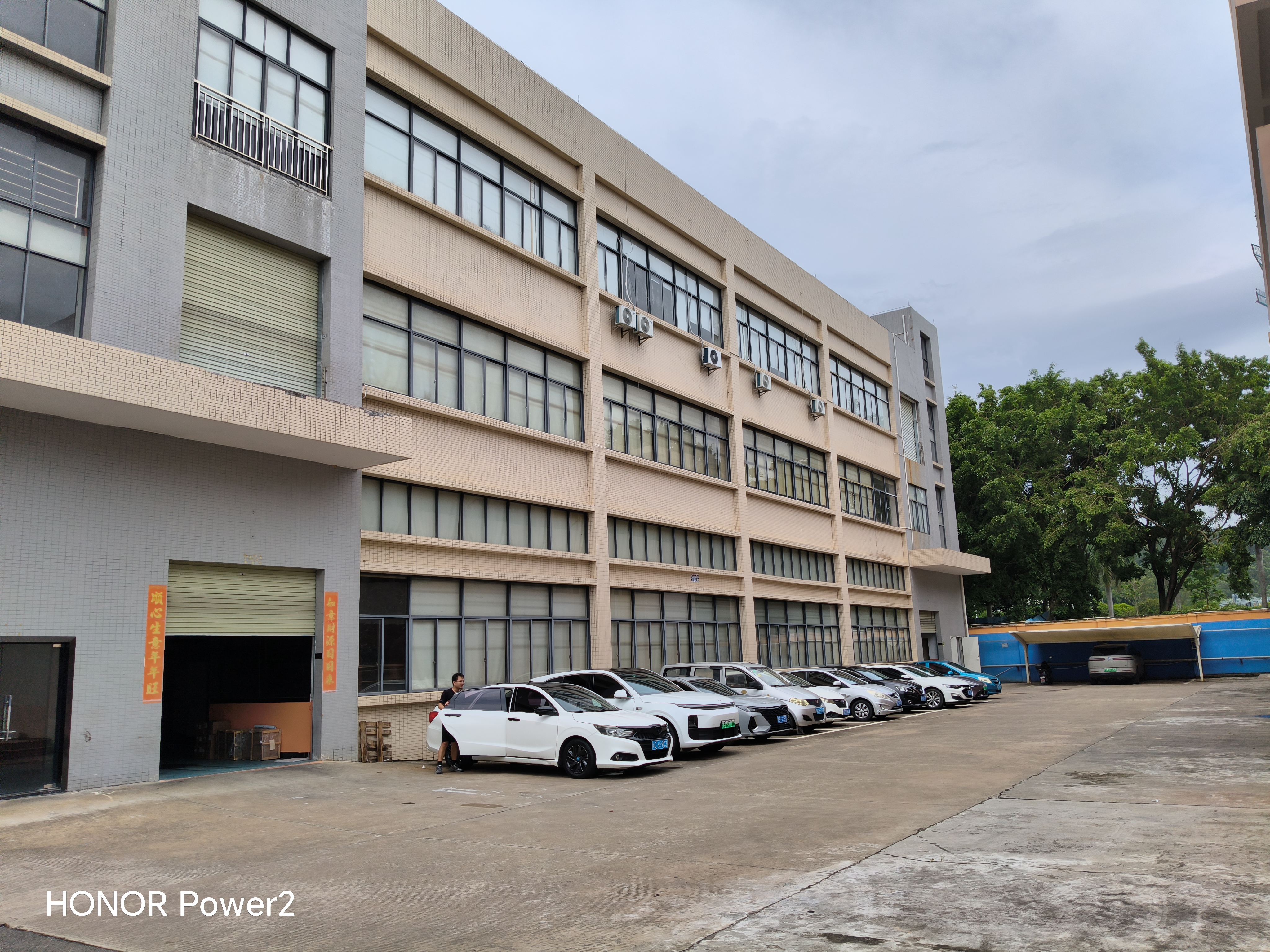
R&D depth and factory capacity are part of the long-term supplier evaluation for multifunctional digital printers.
Why Suppliers Matter as Much as Machine Specs
Digital printing for corrugated packaging, coated paperboard, kraft paper, and folding cartons has moved from prototype work to mainstream short-run production. Verified industry data supports that shift: the global digital printing market was valued at USD 38.0 billion in 2023 and is projected to reach USD 57.0 billion by 2030, while the digital printing packaging market is expected to grow from USD 30.2 billion in 2024 to USD 46.2 billion by 2029. Within that context, a multifunctional digital printing machine is not a single purchase. It becomes the foundation for future jobs, future clients, and future production capacity.
For a buyer in the decision-to-execution stage, the practical concerns are rarely limited to DPI or printhead brand. The more important issues are whether the supplier can deliver the machine reliably, commission it on site, supply consumables over several years, and still be in business to honour those commitments. That is why the concept of a supplier ecosystem matters in this equipment category.
Supplier Capacity as a Risk Indicator
One practical way to assess a digital printing machine supplier is to verify manufacturing depth. For GOKING, the following figures are publicly documented:
| Manufacturing facility | 10,000 square meters |
| Workforce | Approximately 152 employees |
| Annual production capacity | Approximately 864 sets |
| R&D team | 38 engineers |
| Export share | 49% |
| Primary markets | EU, Africa, Latin America, Russia/Kazakhstan, Turkey |
These numbers answer several different buyer questions. An annual production capacity of 864 sets suggests the company builds machines in a repeatable process rather than as one-off projects. A 38-engineer R&D team indicates that product adjustments, nozzle configuration changes, and software workflow updates can be supported over time. A 49% export ratio means the company already manages cross-border logistics, documentation, and international acceptance procedures.
Guangdong Goking Intelligent Technology Co., Ltd. was founded in 2020 by a senior team with more than ten years of industry expertise. The company positions itself as a professional manufacturer of industrial digital printing solutions and works as an OEM/ODM partner for global brands. For a buyer evaluating long-term supply, that OEM/ODM experience matters because it demonstrates that the factory can translate specific production requirements into structured machine configurations.
What "Multifunctional" Means in a Digital Printing Machine
GOKING's core product line is the single-pass and multi-pass 2-in-1 multifunctional digital printing machine, including five-color integrated models and multiple DPI configurations with different nozzles. This is not a marketing label; it describes a machine platform that can be configured for different production modes.
The key specification range for GOKING multifunctional digital printing machines includes the following documented parameters:
- Printhead count: 8 to 256
- Print width: 264 mm to 2600 mm
- Production efficiency: 700 or 1500 m²/h depending on configuration
- Single-pass printing speed with Epson printheads: 60 m/min
- Single-pass printing speed with Xaar printheads: at least 100 m/min
- Material thickness: 2 to 30 mm
- Color mode: CMYK (W)
- Ink types: water-based dye ink, water-based pigment ink, coating ink, UV eco-friendly ink
- Minimum text size for digital English characters: 1.5 mm
- Supported formats: PDF, JPG, BMP, TIF
- Feeding mode: leading-edge feeding or belt feeding
- Platform: vacuum adsorption
For a long-term buyer, the important takeaway is that "multifunctional" refers to the ability to cover both high-clarity multi-pass scanning work and high-speed single-pass direct output work within one equipment platform. A 2-in-1 machine can therefore serve two parts of a packaging plant's order mix: shorter, more detailed jobs that require high resolution, and longer, faster carton or corrugated runs that require speed.
White Ink and Coated Substrate Capabilities
One of the most common technical filters in packaging digital printing is whether a digital printer can handle white ink. In the GOKING platform, the color mode includes CMYK plus white, printed as CMYK(W). This configuration is relevant for corrugated packaging, kraft paper, and other substrates where a white underbase is needed to maintain color contrast on darker or natural board surfaces. A documented example from the company's output samples shows white ink printing on corrugated material. The same platform supports high-definition printing on coated paper, which is a common requirement for gift boxes, cosmetic packaging, and coated paperboard applications.
Buyers who search for a digital printing machine with waterproof capabilities are often asking about ink performance on coated or treated boards. GOKING offers water-based pigment ink, coating ink, and UV eco-friendly ink options, which are selected according to the substrate and end-use requirements. Final water resistance should always be validated during the sample testing and acceptance stage, because actual performance depends on the combination of ink type, coating, drying conditions, and the specific board being printed.
Application Profiles: From Corrugated Boxes to Gift Boxes
The application range of a multifunctional digital printing machine determines how quickly the investment pays back. For GOKING, the documented application scope includes the printing and packaging industry, paper mills, and coated paperboard production. The machine is designed for corrugated and honeycomb cardboard in various grades. That covers a useful set of real-world packaging needs:
- Cardboard packaging digital printing for e-commerce and transport packaging
- Kraft paper digital printing for premium mailer boxes and retail packaging
- Coated paper digital printing for folding cartons, gift boxes, and point-of-sale displays
- Corrugated packaging digital printing for short-run and multi-SKU production
- On-demand printing for cross-border e-commerce orders that require low minimum quantities
For a packaging factory deciding on a long-term machine partner, this application width is a strategic consideration. Rather than purchasing separate machines for corrugated board and coated paperboard, a multifunctional machine can keep production flexible enough to follow changing customer demand. In a market where order sizes continue to shrink and the number of SKUs continues to grow, that flexibility is a measurable operational benefit.
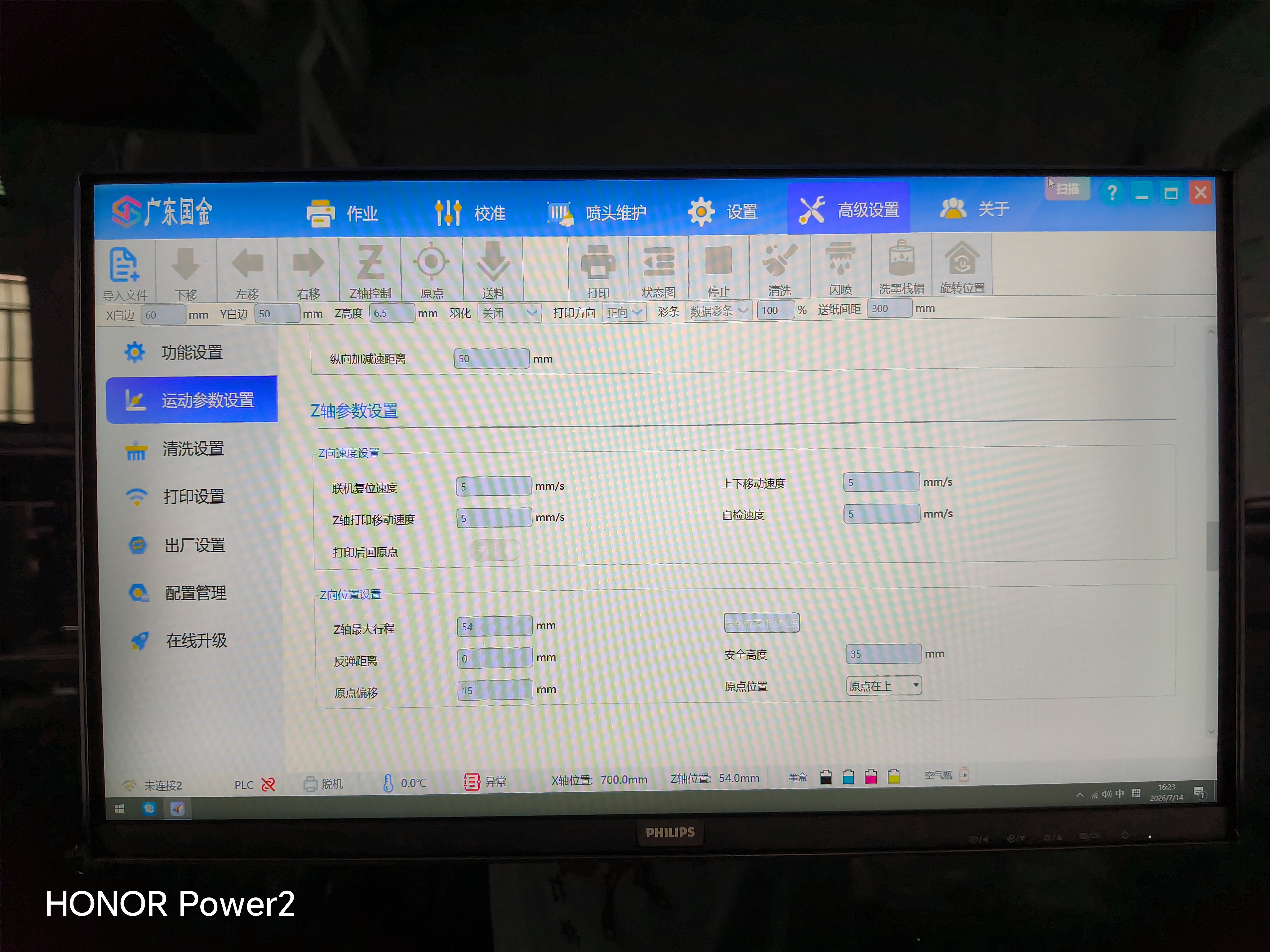
Pre-shipment inspection and long-time running checks are part of the documented delivery process for GOKING digital printers.
Deployment and Acceptance: What Execution Actually Requires
Buyers at the execution stage often underestimate the difference between receiving a machine and successfully integrating it into production. GOKING documents a structured set of risk-control measures for transport, installation, certification, equipment stability, and on-site commissioning. These measures include 100% aging tests, long-time running inspection, pre-shipment inspection, and secure packaging. The company also provides engineering support, rapid response, standardized inspection processes, secure transport packaging, and on-site commissioning support.
The procurement process at GOKING follows a clear pattern:
- MOQ: 1 set
- Payment: 30% deposit before production, 70% balance before shipment
- Delivery: global shipping, secure packaging, whole-machine delivery or turnkey line delivery
- Acceptance: sample testing, factory inspection, pre-shipment inspection, and on-site acceptance per contract
The company's delivery package includes four complimentary cartons of ink and various wear parts packed together with the equipment for shipment. For a first-time buyer of a single-pass or multi-pass digital printing machine, these terms reduce the uncertainty that usually surrounds cross-border equipment purchases.
Market Trends Shaping the Digital Printing Equipment Landscape
Several verified market trends directly affect the decision to invest in a multifunctional digital printing machine:
- Inkjet printing held the largest technology share of the digital printing market at 48.4% in 2023, confirming that inkjet architecture is now the dominant digital technology.
- The single-pass digital printing machine market was valued at USD 3.2 billion in 2024 and is projected to reach USD 6.5 billion by 2034, indicating sustained demand for high-speed production machines.
- Asia-Pacific dominated the digital printing market with approximately 41.6% revenue share in 2025, reflecting the region's manufacturing base and export activity.
- China's digital printing machinery exports are supported by a concentrated industrial cluster in Guangdong Province, where GOKING is based.
- Variable data printing is enabling economically viable runs under 3,000 units, a threshold that previously favoured traditional plate-based production.
These trends reinforce a simple conclusion: the packaging print order mix is moving toward shorter runs, more versions, faster turnaround, and more data-driven personalization. A multifunctional digital printing machine aligns with that shift because it does not require the prepress steps or minimum quantity thresholds of traditional plate-based equipment.
Multifunctional Digital Printing vs. Traditional Plate-Based Printing
For buyers comparing GOKING's multifunctional digital printing machine with traditional plate-based printing machines, the documented differences are substantial. GOKING reports that its digital printer reduces prepress time by over 75% and job switching time by 80% compared with traditional plate printing machines. Traditional devices are described as economical only for batches over 3,000 copies, while GOKING supports cost-effective production starting from a single copy, which is relevant for small-batch cross-border print-on-demand orders. Digital printing also avoids plate making, machine wash-up, and plate management, and adds variable data capability, rapid job switching, and the ability to print over creases.
It is equally important to define the boundary of digital printing. Traditional plate-based printing still has a meaningful cost advantage for long, standardized runs of identical packaging. When a factory receives a repeating order for 50,000 identical boxes with no versioning requirement, a conventional press may deliver a lower unit cost. The strength of a multifunctional digital printer is in short-run production, multi-SKU jobs, urgent orders, customized packaging, and rapid prototyping. A realistic long-term strategy in many packaging plants is to use both systems: digital for flexibility and speed, and traditional printing for very long standardized batches.
Future Outlook: From Single Machine to Production Ecosystem
Looking ahead, the digital printing equipment market is moving toward integrated production ecosystems rather than isolated machines. Several signals point in this direction. Hybrid digital-offset printing architectures are gaining research and development attention from major equipment manufacturers. The U.S. EPA declared certain PFAS chemistries used in UV inks hazardous in April 2024, which is pushing ink manufacturers toward more environmentally stable formulations. Water-based pigment inks are already a significant part of the eco-friendly digital printing segment, and GOKING's ink line includes water-based pigment and coating inks in addition to UV eco-friendly options.
For a packaging factory, the practical implication is that the digital printing machine must be adaptable enough to accept changing ink technologies, workflow software, and printhead options over its working life. GOKING's 2-in-1 platform, with its range of 8 to 256 printheads, different DPI configurations, and both Epson and Xaar nozzle options, is designed to provide this kind of adaptability. The company's stated mission is to make digital printing affordable, accessible, and profitable for packaging factories worldwide, which is consistent with the equipment-as-ecosystem view.
FAQ
What long-term factors should a buyer evaluate when choosing a multifunctional digital printing machine supplier?
Long-term factors include the supplier's manufacturing capacity, R&D resources, component supply stability, pre-shipment testing procedures, on-site commissioning support, and commercial terms. For GOKING, this is documented as a 10,000-square-meter manufacturing facility, approximately 152 employees, and an annual production capacity of roughly 864 sets, which supports repeatable production and ongoing service.
What are the typical MOQ and payment terms for a GOKING digital printing machine?
GOKING's minimum order quantity is 1 set. Payment terms are 30% deposit before production and the remaining 70% of the contract amount paid before shipment. This structure is designed for direct equipment procurement by packaging factories and distributors.
How does GOKING control transport, installation, and commissioning risks?
GOKING applies 100% aging tests, long-time running inspection, pre-shipment inspection, and secure packaging before delivery. The company also provides engineering support, rapid response, standardized inspection processes, secure transport packaging, and on-site commissioning support to reduce installation and start-up risks.
Why does a 2-in-1 single-pass and multi-pass configuration reduce long-term equipment risk?
A 2-in-1 multifunctional digital printing machine combines high-speed single-pass output with high-clarity multi-pass scanning in one platform. This allows a factory to handle both fast corrugated packaging runs and detailed coated-paper or gift-box jobs without committing to two separate standalone machines. GOKING configures the platform with 8 to 256 printheads, different DPI levels, and Epson or Xaar nozzle options, which adds flexibility across changing production demands.
What are the practical limitations of digital printing compared with traditional plate-based printing?
Traditional plate-based printing remains cost-effective for very long, standardized production runs, typically above 3,000 identical copies, where the fixed cost of plate making is spread over a large quantity. Digital printing is more economical for short runs, multi-SKU orders, urgent jobs, variable-data printing, and customized packaging. Many packaging plants use both technologies depending on order volume and complexity.
For buyers seeking detailed configuration data, the full GOKING digital printing product catalog is available for reference: 2026 GOKING product catalog (PDF).