
Multifunctional Digital Printing Machine: Choose by Production Scenario
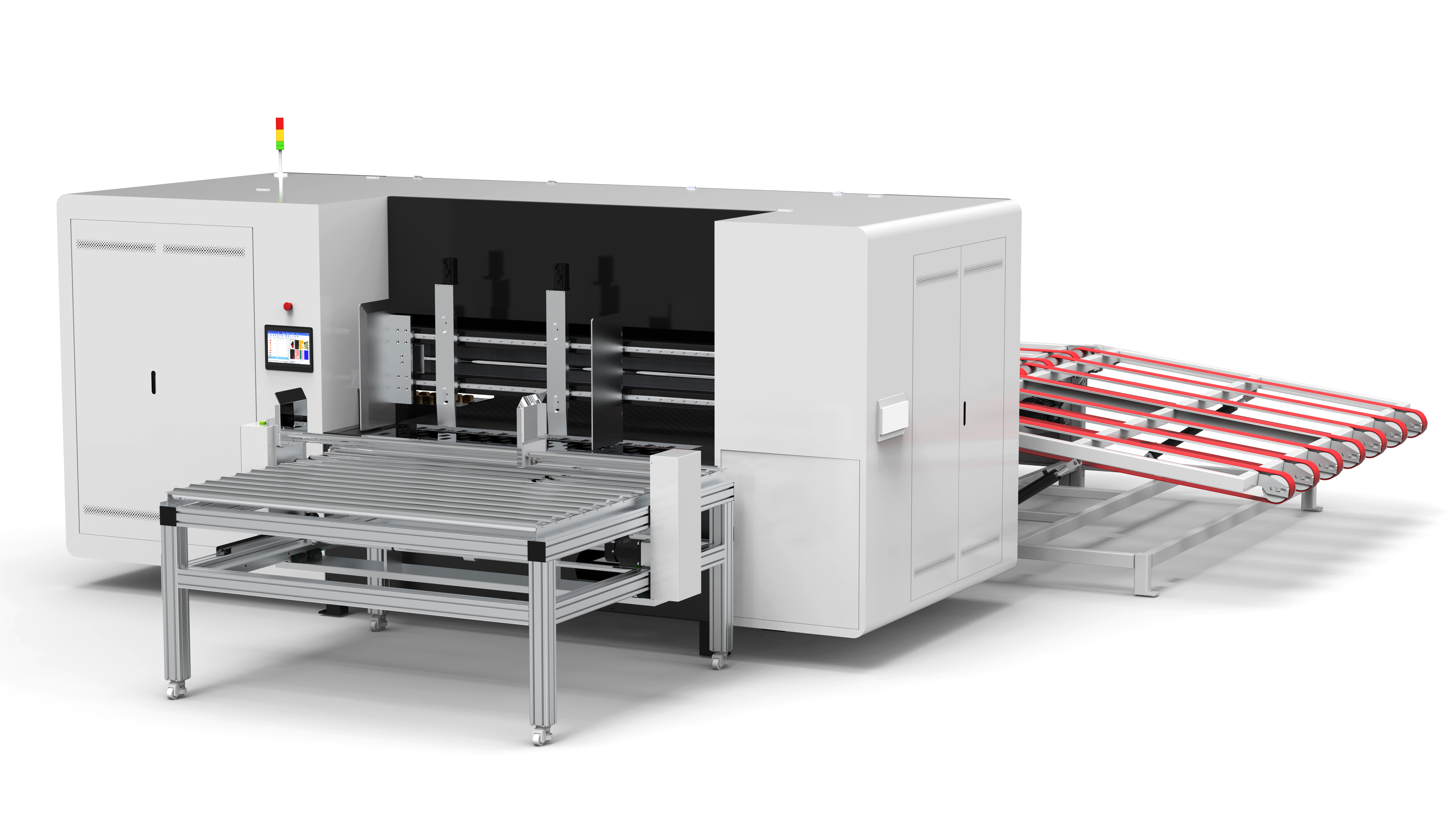
Buyer guide for the research and evaluation stage. This article explains how packaging and carton printing plants can assess multifunctional digital printing machines against real production scenarios: short-run orders, frequent job changes, mass production, factory capacity expansion, and OEM/ODM custom lines.
Why Scenario Fit Decides Printing Machine ROI
The most common mistake in packaging printing investment is comparing machine specifications in isolation from the actual production scenario. The same multifunctional digital printing machine can be a profit center in one factory and an underused asset in another. The difference is not made by brand or printhead count alone; it is determined by how well the machine operating modes match the job mix, changeover frequency, substrate range, and expansion plan of the buyer.
This article is written for production managers, packaging business owners, and procurement teams who are in the research or evaluation phase. Instead of recommending a single configuration, it defines the decision criteria for matching a multifunctional digital printing machine to a specific project or production environment.
The Production Challenge: Short Runs, Fast Changeovers, Fragmented Orders
Packaging and carton printing plants are under pressure from shorter lead times, more SKUs, and smaller order quantities. Traditional plate-based printing performs well on long, stable runs, but it creates plate costs, setup time, and waste every time the job changes. In a short-run environment, those fixed costs become difficult to absorb. The result is a growing gap between what customers order and what conventional press economics can profitably deliver.
Factories facing this gap usually start with one of several triggers: factory capacity expansion, equipment upgrade, OEM/ODM custom printing lines, or sample validation. In each case, the underlying need is the same: flexible digital output that can replace plate-based printing, reduce plate costs, reduce setup waste, and improve production efficiency.
This is not only a technical issue. The economics of short-run production have shifted. Variable data printing makes runs under 3,000 units economically viable, while cross-border e-commerce and print-on-demand platforms feed fragmented orders from different markets into the same packaging line. For a packaging factory, the ability to switch between jobs without stopping for plate changes is becoming a competitive requirement rather than a convenience.
What a Multifunctional Digital Printing Machine Offers
Guangdong Goking Intelligent Technology Co., Ltd. (GOKING) is an industrial digital printing machine manufacturer based in Dongguan, Guangdong Province, China. Founded in 2020, GOKING operates a 10,000-square-meter factory with 152 employees, including 38 R&D engineers, and an annual output capacity of 864 machines. The company's main product line covers single-pass and multi-pass 2-in-1 digital printing machines, including five-color integrated models and multiple DPI and printhead configurations. About 49% of output is exported to markets including the EU, Africa, Latin America, Russia/Kazakhstan, and Turkey.
GOKING positions itself as a manufacturer and OEM/ODM partner for packaging factories. Its equipment is designed for corrugated cardboard, honeycomb cardboard, and paperboard. The product matrix includes the Corrugated Cardboard Digital Printing Machine, available as a multi-pass digital printer with Epson or Xaar nozzles, a single-pass digital printer with Epson or Xaar nozzles, a 2-in-1 multifunctional digital printing machine with different DPI configurations, and a single-pass digital printing machine with XAAR printheads.
For the buyer, multifunctional means that one machine covers three operating modes:
- High-speed single-pass direct output, designed for high-volume orders where maximum efficiency is the priority.
- High-definition scanning printing, designed for premium packaging and high-value short runs that require photo-quality details.
- Hybrid scanning/direct-output mode, which allows the same machine to handle proofing, short-run precision work, and standard production.
This approach gives a packaging plant the flexibility to accept a wider range of jobs without committing to multiple separate printing systems.
Technical Considerations for Packaging Scenarios
Printhead Architecture: Epson vs. Xaar
Printhead selection is the core technical decision in a digital printing machine. GOKING supports both commercial-grade Epson printheads and industrial-grade Xaar printheads. The two families serve different production priorities.
Epson printheads, produced in Japan, are known for high precision and nuanced grayscale performance. They are well suited to high-definition scanning printers that need rich color transitions and sharp details. For a factory whose revenue depends on premium packaging, gift boxes, and intricate brand graphics, the Epson scanning configuration is worth evaluating.
Xaar printheads, produced in the UK, are built for continuous, high-speed industrial work. Models such as the Xaar 5601 and 1003 series use patented True Internal Circulation technology (TF Technology), which keeps ink moving behind the nozzles. This reduces clogging and supports stable, reliable operation during long production shifts. In single-pass mode, Xaar-based GOKING machines reach at least 100 meters per minute, while Epson-based single-pass printing runs at 60 meters per minute. Xaar printheads are also described as durable and long-lasting, with low requirements for the operating environment.
This tradeoff matters during equipment evaluation. A buyer that needs maximum speed for large corrugated volumes should lean toward a single-pass Xaar configuration; a buyer that prioritizes image quality for short-run packaging should evaluate the scanning Epson configuration.
CMYK Plus White Ink for Gift Boxes and Dark Substrates
Gift boxes and premium packaging often require printing on dark or uncoated board. Standard CMYK inks cannot create an opaque base on those substrates. GOKING addresses this with CMYK plus white (CMYK+W) configurations. White ink can be printed as a base layer or as a design element, expanding the range of packaging jobs a factory can accept.
The color mode is defined as CMYK (W), and five-color integrated models are part of the standard product range. For a factory evaluating multifunctional machines, confirming whether the configuration includes white ink is a practical first step before quoting gift box projects.
Ink Systems: Water Resistance and Substrate Compatibility
The machine supports water-based dye ink, water-based pigment ink, coating ink, and UV eco-friendly ink. Ink chemistry affects final performance on different packaging materials. For packaging that will face moisture, humidity, or handling during shipping, water-based pigment ink and UV eco-friendly ink are generally considered more durable than basic dye inks. The availability of coating ink also supports printing on coated paper and coated paperboard.
For buyers searching for a digital printing machine with waterproof capabilities, the practical question is not whether the machine itself is waterproof, but whether the selected ink system can deliver the required resistance on the intended substrate. GOKING's ink supply design includes two ink supply channels and a fully enclosed ink supply channel to support these different ink types.
Multi-Color Registration and Automatic Changeover
Color consistency is a recurring concern in packaging production. GOKING's system features automatic color calibration and automatic job switching. The RIP supports direct printing without converting pictures, which removes a step that often introduces registration drift in traditional workflows. Supported graphics formats include PDF, JPG, BMP, and TIF.
For frequent job change scenarios, this is decisive. An operator can submit a new PDF, switch the job, and begin printing without manual plate changes or complicated setup procedures. The startup does not require a specialized operator, which reduces the skill barrier for expanding production capacity in new markets.
Material Handling and Configuration Flexibility
GOKING's Corrugated Cardboard Digital Printing Machine handles material thickness from 2 to 30 mm. Print width ranges from 264 mm to 2600 mm. Production efficiency is rated at 700 m²/h and 1500 m²/h depending on configuration. The platform uses vacuum adsorption to keep boards flat during printing. Feeding can be done through leading edge feeding or belt feeding, with semi-automatic or fully automatic leading edge options.
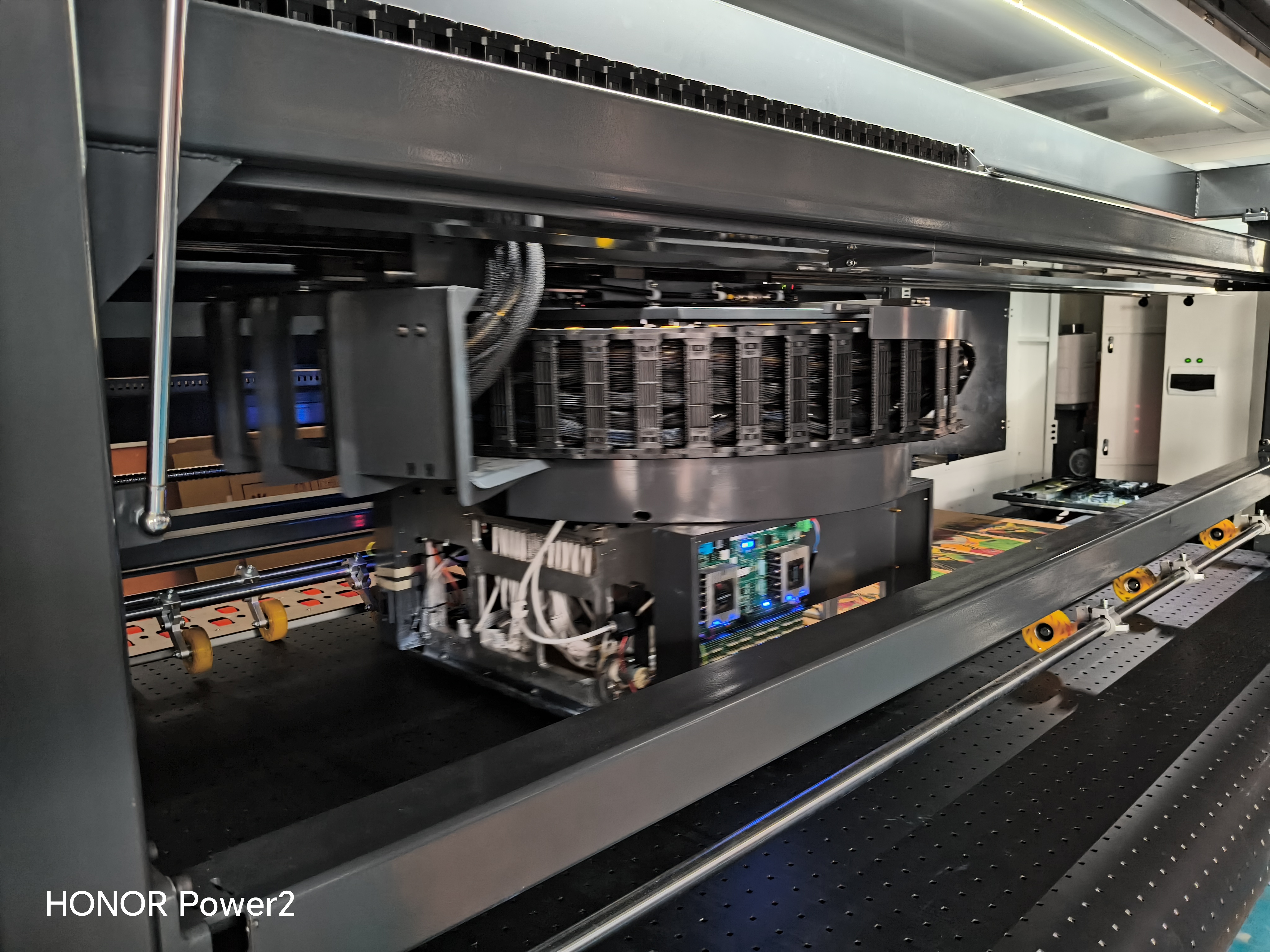
The machine structure is built with a carbon steel frame, stainless steel conveying rollers, and an aluminum alloy beam. The crossbeam uses magnetic levitation high-precision technology. Electrical components come from Schneider, and the machine runs on 380V, 50/60Hz three-phase power with approximately 14 kW rated power. The machine size is 4260 mm × 2300 mm × 1900 mm, and the weight is approximately 2800 kg.
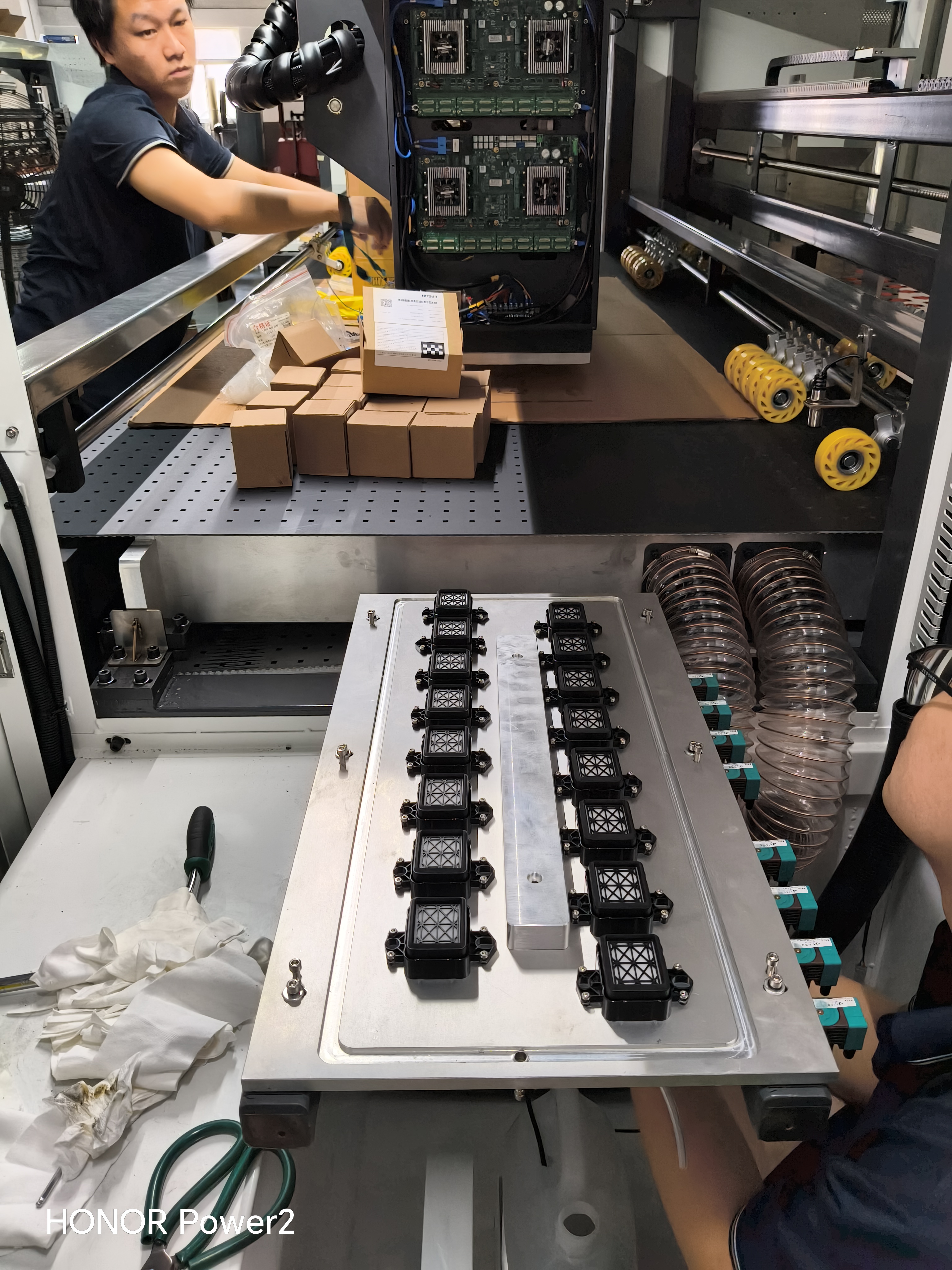
Configuration flexibility is another scenario-dependent factor. Printhead count scales from 8 to 256. A smaller factory can start with 8 or 16 printheads and allocate capital according to current order volumes, then upgrade as production grows. This is an important consideration for capacity expansion projects where demand is expected to increase in phases.
Application Scenarios and Use Cases
Packaging and Carton Printing
The primary application for this product is the packaging and carton printing industry. It operates under mass production conditions and supports continuous high-speed operation mode. It is suitable for frequent job change scenarios, which are common in packaging plants that supply multiple brands with different label and box designs.
Short-Run Printing and Sample Validation
The product is designed for short-run printing environments. Its role in this application is to replace plate-based printing, which reduces plate costs and setup waste. For sample validation, the same machine can run a small batch, check the result, adjust the file, and print again without incurring plate charges. This makes the machine a practical tool for converting inquiries into confirmed orders.
Factory Capacity Expansion and Equipment Upgrade
In capacity expansion projects, the machine can be delivered as a turnkey line. GOKING provides an integrated machine featuring automatic lead-edge feeding, magnetic levitation hoisting, automatic scanning-to-print switching, and direct output. The complete system includes a paper receiving rack, voltage stabilizer, humidifier, computer, temperature control system, and a toolkit with consumable spare parts. This reduces the coordination burden for a factory that needs to add digital capacity quickly.
OEM/ODM Customized Printing Lines
OEM/ODM projects often require machine structure changes, printhead type selection, DPI changes, color scheme changes, or turnkey line design. GOKING supports this by offering customization across machine structure, printhead type (Epson/Xaar), DPI configuration, color scheme (including five colors), and turnkey line solutions. For complex or large-format boards, the scanning method is used; for small boards and small-batch orders, direct-output mode is available. The same 2-in-1 machine covers both.
Reference Cases in Overseas Packaging Factories
GOKING's case base includes overseas printing and packaging factories in markets such as Spain, Brazil, South Africa, Turkey, Korea, and Australia. The reported business model is small-batch, quick-turnaround, closely integrated with cross-border e-commerce and print-on-demand (POD) to fulfill fragmented orders from around the world. Customers have used the equipment for more than five years, and reported outcomes include improved production efficiency and reduced production costs.
Market Trend Analysis: What Verified Data Shows
Industry data supports the shift toward digital and inkjet technologies in packaging. The global digital printing market was valued at USD 38.0 billion in 2023 and is projected to reach USD 57.0 billion by 2030, according to Grand View Research. The inkjet printing segment held the largest technology share, at 48.4%, in 2023.
The single-pass digital printing machine market was valued at USD 3.2 billion in 2024 and is projected to reach USD 6.5 billion by 2034, according to Reports and Data. The digital printing packaging market is expected to grow from USD 30.2 billion in 2024 to USD 46.2 billion by 2029, according to MarketsandMarkets. These figures point to sustained demand for high-speed, plate-less printing systems in packaging.
Regionally, Asia-Pacific accounted for approximately 41.6% of digital printing market revenue in 2025, according to Market Research Future. China's digital printing machinery exports are supported by a concentrated industrial cluster in Guangdong Province. GOKING's location in Dongguan, inside that Guangdong cluster, creates supply chain integration advantages for machine assembly, spare parts, and cost control.
Another relevant trend is the adoption of eco-friendly inks. Water-based pigment ink accounted for a significant portion of the eco-friendly digital printing market in 2024. GOKING's support for water-based dye, water-based pigment, coating, and UV eco-friendly ink places the platform within this broader shift toward more sustainable ink chemistry.
| Market indicator | Value | Source |
|---|---|---|
| Global digital printing market size | USD 38.0B (2023) → USD 57.0B (2030) | Grand View Research |
| Inkjet printing share in digital printing | 48.4% (2023) | Grand View Research |
| Single-pass digital printing machine market | USD 3.2B (2024) → USD 6.5B (2034) | Reports and Data |
| Digital printing packaging market | USD 30.2B (2024) → USD 46.2B (2029) | MarketsandMarkets |
| Asia-Pacific digital printing revenue share | 41.6% (2025) | Market Research Future |
| Variable data printing viable batch size | Below 3,000 units | Market Research Future |
These market figures come from third-party industry studies. Buyers should check the original reports for methodology and scope.
Comparison with Traditional Plate-Based Printing
To evaluate a multifunctional digital printing machine, buyers need an honest comparison with plate-based systems such as flexographic printing. The table below summarizes the differences that matter most in packaging production decisions.
| Decision factor | Multifunctional digital printing | Traditional plate-based printing |
|---|---|---|
| Plate cost per job | None; direct file-to-print | Plate or cylinder cost for every design |
| Setup and changeover time | Short; automatic job switching | Long; physical plate changes and alignment |
| Short-run economics | Favorable, especially below 3,000 units | Cost per unit rises quickly on short runs |
| Print quality for complex graphics | High-resolution scanning mode available | High, but limited by setup consistency |
| Variable data and personalization | Supported | Limited |
| Unit cost on stable long runs | Flexible but not designed to beat offset or flexo on huge stable volumes | Lower unit cost when plate cost is absorbed by long runs |
Realistic limitation. Digital printing is not a universal replacement for traditional printing. For a factory that runs the same design continuously for months, with no variation and very large volumes, plate-based printing can still deliver a lower unit cost because the plate cost is amortized across a high quantity. The economic case for a digital machine depends on job diversity, order size distribution, and changeover frequency. Buyers should calculate their total cost per delivered box across their actual order mix, not only compare printhead speed.
There is also a technical boundary between scanning and single-pass modes. Higher clarity is available in scanning mode, but it is slower than single-pass. Buyers who need both should evaluate a 2-in-1 configuration, which switches between modes instead of forcing a company-wide compromise.
Buyer Evaluation Framework for Project Fit
Using the project types from packaging production, the following framework can help a buying team match a multifunctional digital printing machine to its actual needs.
- Map the order mix. Separate stable, long-run orders from short-run and high-changeover orders. The economic benefit of digital printing comes mainly from the short-run and changeover-heavy part of the mix.
- Define the substrate range. Corrugated board, coated paper, kraft paper, and honeycomb board have different thickness and surface requirements. The selected machine should cover the full range of planned materials, especially if the factory intends to move into gift boxes or coated paper packaging.
- Confirm color and ink requirements. If the order pipeline includes white ink for dark substrates, choose a CMYK+W configuration. If water resistance is required, review ink type options and run tests on the actual substrate.
- Match speed to the bottleneck. Single-pass Xaar configurations support at least 100 m/min; single-pass Epson configurations reach 60 m/min; scanning modes provide more quality but lower speed. Choose the speed that matches the factory's peak load without overpaying for unused capacity.
- Plan printhead scalability. With 8 to 256 printhead options, a buyer can install an initial configuration and upgrade later. This matters for phased capacity expansion projects.
- Review certification requirements. In the EU market, CE marking for industrial machines is linked to standards such as EN ISO 12100 and IEC 60204-1. Buyers should request current compliance documentation before finalizing a machine model.
- Check the support system. GOKING's quality control includes 100% aging tests, long-time running inspections, and pre-shipment inspection. For overseas customers, engineers travel to the site to assist with installation and commissioning, and after-sales response is within 24 hours.
- Review lead time and MOQ. Standard production lead time is typically about one month. Custom and OEM/ODM timelines are confirmed on request. MOQ is one set, which makes pilot entry possible for a packaging factory testing a new market. Free sample printing is also offered to global clients.
Future Outlook: Hybrid Architectures and Flexible Packaging Lines
Several forward-looking signals are relevant to buyers of multifunctional digital printing machines. First, hybrid digital-offset printing architectures are gaining R&D attention from major equipment manufacturers, indicating that the boundary between digital and conventional printing will continue to blur. A 2-in-1 digital machine is a similar concept at the packaging level: it combines two output modes in one platform so that the production line can adapt to mixed order volumes.
Second, the growth of the single-pass market suggests that high-speed digital printing is becoming a mainstream tool for corrugated packaging, not just a prototyping or short-run solution. As single-pass capabilities improve, more factories will use digital for core production, while keeping scanning capability for high-precision work.
Third, regulatory and environmental pressure is shaping ink selection. With increased attention to PFAS chemistries in some UV inks, water-based pigment and eco-friendly ink options are likely to gain further adoption. These are among the ink types supported by the GOKING platform.
Finally, variable data printing will keep expanding the economic range of short-run work. Packaging lines that can personalize, version, and reorder quickly will be better positioned to serve e-commerce brands and print-on-demand platforms. The multifunctional digital printing machine, with automatic job switching and plate-less operation, is designed for this direction.
FAQ: Multifunctional Digital Printing Machine Selection
What type of digital printing machine is needed for short-run packaging orders?
A plate-less digital printing machine is the appropriate choice. It prints directly from digital files in formats such as PDF, JPG, BMP, and TIF, without plate creation. This removes the fixed cost of plates that makes short runs expensive in traditional printing. For runs below 3,000 units, variable data printing has made this mode economically viable. The GOKING machine is designed for short-run printing environments and frequent job changes.
Can one machine handle both high-speed mass production and high-precision short-run printing?
Yes, if the machine supports a 2-in-1 single-pass and scanning configuration. In single-pass direct-output mode, the machine handles high-volume orders at high speed. In scanning mode, it produces high-definition output for proofing and precision short runs. The GOKING 2-in-1 multifunctional digital printing machine allows the operator to switch between these modes, which is suitable for factories with mixed order volume.
Which printhead is better for corrugated packaging: Epson or Xaar?
The choice depends on production priorities. Epson printheads are commercial-grade and provide high precision and fine grayscale performance, suitable for high-definition scanning printing. Xaar printheads are industrial-grade and use True Internal Circulation technology to reduce nozzle clogging in high-speed, long-duration operation. A single-pass Xaar configuration reaches at least 100 m/min, while a single-pass Epson configuration reaches 60 m/min. Many buyers choose based on whether their business favors print quality or maximum throughput.
Does a multifunctional digital printing machine support white ink for gift boxes?
Yes. GOKING offers CMYK plus white (CMYK+W) color configurations and five-color integrated models. This allows printing an opaque white base on dark or uncoated substrates before applying CMYK colors, which is necessary for many gift box and premium packaging applications. The product line includes single-pass and multi-pass 2-in-1 machines with white ink.
Can a digital printing machine be customized for OEM/ODM projects?
Yes. The application scenario includes special requirements for OEM/ODM customization. GOKING offers customization across machine structure, printhead type (Epson or Xaar), DPI configuration, color scheme, and turnkey line solutions. The standard MOQ is one set, and the machine can be configured for factory capacity expansion, equipment upgrade, or custom production-line projects.
What is the production lead time for a capacity expansion project?
For standard machines, the production lead time is typically about one month. Custom lead times are available upon request, and OEM/ODM timelines are subject to confirmation. GOKING's monthly capacity is 38 sets, and each machine undergoes 100% aging tests and pre-shipment inspection before delivery.
What are the limitations of digital printing compared with plate-based printing?
The main limitation is unit cost on stable, very long runs. When a single design runs continuously for months, traditional plate-based printing can achieve a lower unit cost because plate costs are amortized across a large quantity. Digital printing is most valuable for short runs, frequent changeovers, sample validation, and personalized packaging. Buyers should compare total cost across their actual job mix before replacing traditional equipment.
For detailed configurations, product options, and technical parameters, the GOKING 2026 product catalog is available for public access: Download the 2026 product catalog.