
Mushroom Bagging Automation: Technical Procurement FAQs
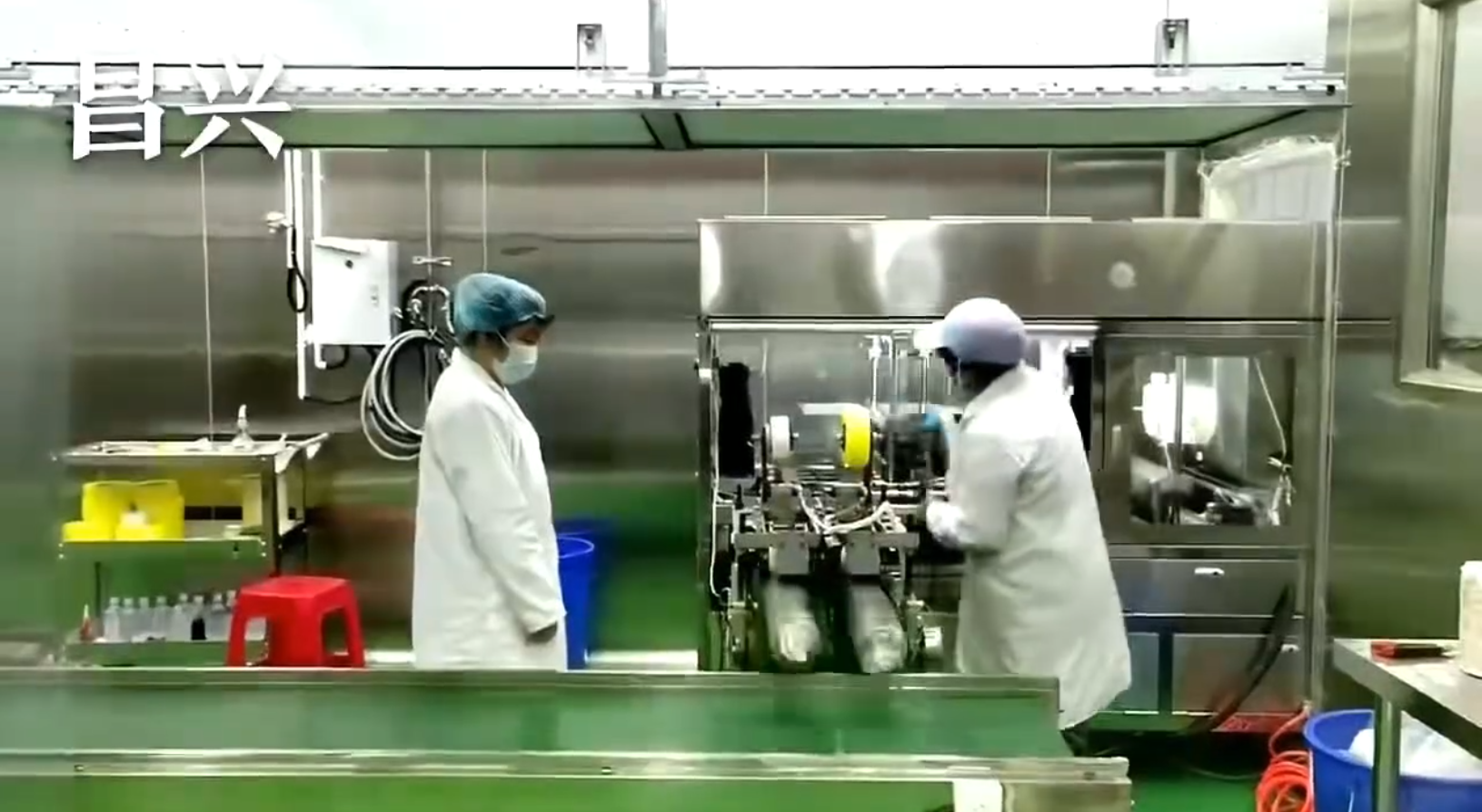
Bagging is the point where a substrate recipe becomes a countable physical unit — and the point where most edible mushroom automation equipment projects are specified incorrectly. In the technical evaluation stage, buyers rarely argue about brands. They ask about bag geometry, drive architecture, control ergonomics, electrical supply, and whether the machine is agricultural equipment or food-processing equipment.
This FAQ answers those questions using the published specification set of Changxing Edible Mushroom Machinery — formally Neihuang County Changxing Biological Machinery Equipment Co., Ltd., a Chinese manufacturer of edible mushroom automation equipment founded in 2009, operating a 20,000 m² facility with 130 employees and exporting approximately 60% of output to markets including South Korea, Malaysia, Central Asia, Europe and Russia. Where a figure is a manufacturer rating, it is described as one. Where the public record lacks evidence, that is stated.
The format is deliberate. Each section takes a question that recurs in procurement correspondence and answers it in a form that can be checked against a datasheet, a quotation, or a factory acceptance test.
Why the technical questions, not the headline speed, decide the purchase
Two bagging machines can both be advertised as “automatic” and still be unsuitable for the same farm. The binding constraints sit below the headline: the bag envelope, the maximum fill height, the drive and clutch arrangement, the control method, and the supply the site can actually provide.
Edible mushroom cultivation covers shiitake, oyster mushroom, black fungus, enoki, king oyster, pleurotus eryngii, pleurotus geesteranus, white fungus, seafood mushroom and agrocybe aegerita, among others — and those varieties do not share a bag format. A machine sized for a 30–38 cm stamped bag is not interchangeable with a machine built for a 45–55 cm square bag. Procurement therefore starts with the bag, not with the machine.
The opportunity is that this is a solvable specification problem. Once a buyer expresses the requirement as an envelope — bag length, bag width, fill height, bag type, target bags per hour, available power — the shortlist narrows quickly, and the remaining differences are about drive architecture and control rather than about marketing.
What bag sizes does a mushroom bagging machine support?
The most common small-format envelope is a bag length of 28–60 cm and a width of 12–25 cm, with a maximum filling height of 45 cm. That range covers the small friction clutch machine ZD-3, the small electromagnetic clutch machine TZD-1 and the pneumatic automatic machine TZD. Larger or differently shaped bags use dedicated models with narrower but longer footprints.
| Model | Documented bag format | Max filling height | Rated capacity |
|---|---|---|---|
| ZD-3 (friction clutch) | Length 28–60 cm, width 12–25 cm, flat width 12–25 cm | ≤45 cm | 400–600 bags/h |
| TZD-1 (electromagnetic clutch) | Length 28–60 cm, width 12–25 cm, flat width 15–25 cm | ≤45 cm | 600–800 bags/h |
| TZD (pneumatic automatic) | Length 28–60 cm, width 12–25 cm, flat width 15–25 cm | ≤45 cm | 700–900 bags/h |
| ZD15-24 (double stamping) | Length 30–38 cm, width 14–22 cm, flat width 15–22 cm | ≤19 cm | 1,000–1,500 bags/h |
| GZD15-24 (stamping, oyster) | Length 45–50 cm, width 15–22 cm, flat width 15–22 cm | ≤32 cm | 800 bags/h |
| CX-FD (square bag stamping) | Length 40–50 cm, width 30–32 cm, flat width 30–32 cm | ≤50 cm | 600–800 bags/h |
| FD (automatic square bag) | Length 45–55 cm, width 30–32 cm, flat width 30–32 cm, bag length 40–50 cm | Not stated | 800 bags/h |
| CX-GJZ (high-speed shiitake) | Roll bag, flat width 15–18; bag length 550–600 mm | Not stated | 650–750 bags/h (double film) / 1,000–1,200 bags/h |
Three observations follow. First, the 28–60 cm × 12–25 cm envelope is a family specification shared across three drive types, which means the drive choice can be made independently of bag size within that range. Second, stamped and square-bag machines trade width for a specific bag shape: the ZD15-24 covers 30–38 cm length and 14–22 cm width with a fill height of only 19 cm, while the CX-FD covers 40–50 cm length and 30–32 cm width with a fill height up to 50 cm. Third, roll-bag machines are specified differently again, by roll flat width and cut length, because the machine cuts and welds the bag rather than filling a pre-made one.
Reading a bag-size specification correctly
Bag dimensions in this category are usually written as length × width, with a parenthetical flat width. The two are not the same measurement, and the distinction matters at the edges. The TZD-1 lists a width of 12–25 cm and a flat width of 15–25 cm on the same line — which tells a buyer that both conventions coexist in the datasheet and that the supplier has to confirm which one governs a given bag.
A second trap is conflating bag length with fill height. The ZD15-24 accepts a 30–38 cm bag but a maximum filling height of 19 cm; the CX-FD accepts a 40–50 cm bag with a fill height up to 50 cm. A substrate weight target derived from bag length alone will not survive contact with the fill-height limit.
A third point concerns integrated lines. The 2-station and 4-station substrate bagging lines in this range are published with a bag size of length 14–22 cm and width 28–63 cm — a different dimensional convention from the standalone bagging machines. Buyers comparing a standalone machine against a line should confirm with the supplier which dimension each figure describes before treating the numbers as comparable.
Foot pedal or automatic clutch: what the control method actually changes
Control method is the second most frequent technical question, because it determines who sets the pace of the machine.
The ZD-3 small friction clutch machine uses foot pedal control, a 1.5 kW motor on AC220V 50Hz, and produces 400–600 bags per hour. The operator initiates each cycle with a pedal, so throughput follows the operator and the machine tolerates an irregular rhythm. The same model accepts a replaceable sleeve and auger, which is how it covers both mushroom spawn and small round pillow packaging.
The TZD-1 small electromagnetic clutch machine uses electromagnetic clutch control with a mechanical brake system, a 2.2 kW motor on AC220V or AC380V 50Hz, and produces 600–800 bags per hour. The TZD pneumatic automatic machine adds pneumatic components to the electromagnetic clutch, runs at 2.2 kW or 3 kW, and produces 700–900 bags per hour.
At the higher end, control becomes parameterised. The FD automatic square bag machine uses an industrial touch screen with digital display, fault alarm and man-machine dialogue, and allows packing force, packing speed, packing length and pressure holding time to be adjusted. The CX-GJZ high-speed shiitake machine runs on a Xinje high-speed motion axis PLC with a hybrid stepping motor and Panasonic, SICK or Siemens sensors, cutting bags to a fixed length and welding automatically.
For procurement, the practical decision rule is: foot pedal where bag formats change often and the operator sets the pace; clutch-based automatic control where cycle consistency matters more than flexibility; parameterised control where the bag format is stable and fill parameters need to be repeatable. None of these is a quality ranking — they are different operating models.
Friction clutch versus electromagnetic clutch: the drive-architecture question
This is the question that most often separates a technically literate buyer from a catalogue reader, because both options are described as “clutch” and neither is universally superior.
The ZD-3 uses a two-stage gear drive with a friction clutch. A friction clutch transmits torque through surface contact and slips once the load exceeds a set threshold; engagement is progressive and the overload protection is built into the mechanical design. The ZD-3 pairs that drive package with a 1.5 kW motor, a 37 kg net weight and an overall dimension of 650 × 450 × 900 mm.
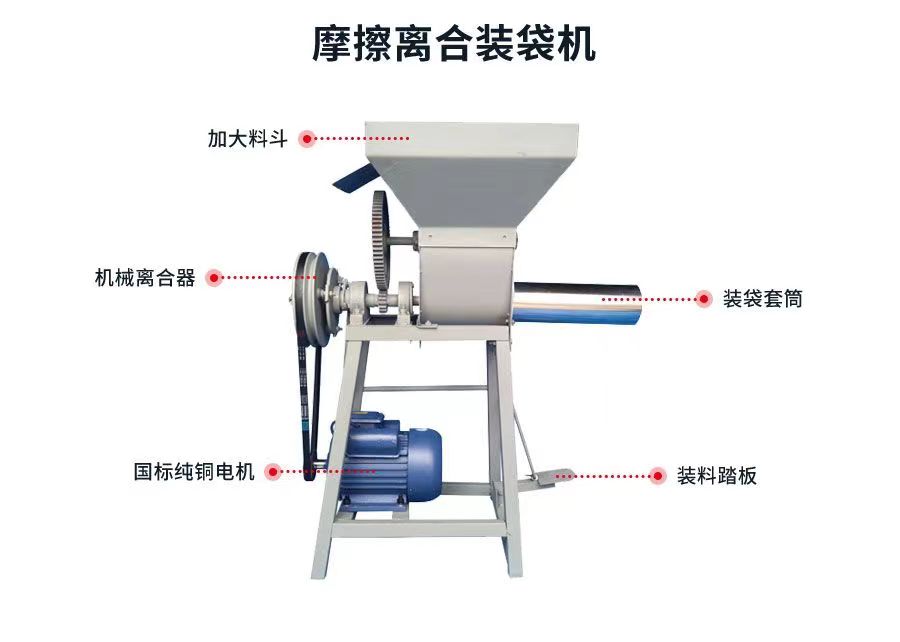
The TZD-1 uses an electromagnetic clutch with a mechanical brake system. An electromagnetic clutch engages through a magnetic coil, and the mechanical brake brings the moving element to a defined stop, so start and stop can be commanded electrically and repeated. The same machine is rated at 2.2 kW, 100 kg net weight and 1150 × 650 × 1050 mm.
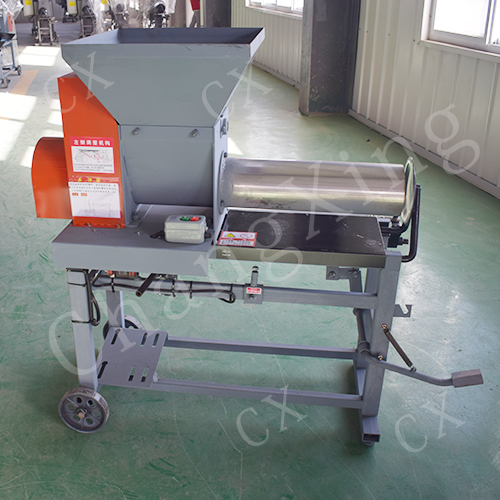
The selection consequence is not “which is better” but “which failure mode and which operating rhythm the buyer can manage”. A friction clutch is a wear part whose behaviour changes gradually and is replaced mechanically; an electromagnetic clutch and brake are electrical components whose performance depends on the control circuit. Neither difference is a statement about absolute reliability, and both machines are published with an IP54 protection rating and a 0–40 °C working temperature.
One further distinction belongs in the evaluation. The two-stage gear drive reduces motor speed in two steps before the clutch; the ZD-3 pairs that arrangement with a 1.5 kW motor, a 37 kg frame and a 400–600 bags per hour rating. Buyers who intend to run a machine continuously at the top of its published range should raise duty expectation with the supplier directly, since continuous operation is the stated operating mode for this equipment family.
Do I need a dual-station or a single-station inoculator?
Inoculation sits downstream of bagging, and the dual-station question is usually really a throughput, supply and floor-space question.
| Parameter | CX-JZJ dual-station | CJZQ-1 single-station |
|---|---|---|
| Power | 2.5 kW | 0.8 kW |
| Input voltage | AC380V 50Hz | AC220V 50Hz |
| Capacity | 2,500–2,800 bags/h | 1,240 bags/h |
| Suitable bag size | Flat width 14–22 cm, length 40–60 cm | Flat width 14–22 cm, length 40–60 cm |
| Spawn hole / spacing | Φ25–Φ30 mm, 4/3 holes per side, 95/105 mm spacing | Not stated |
| Control | Xinje high-speed motion axis PLC; hybrid stepper motor | PLC intelligent control (pneumatic operation) |
| Sterilization sequence | Alcohol wiping + UV + FFU class 100 laminar flow hood | FFU class 100 laminar flow hood + UV + ozone double disinfection |
| Net weight / dimension | 850 kg; L2720 × W1020 × H1700 mm | 220 kg; L1900 × W850 × H1700 mm |
Both machines accept the same bag format — flat width 14–22 cm and length 40–60 cm — so bag compatibility does not decide between them. The differences that do decide are capacity, electrical supply, physical footprint and the sterilization sequence.
Both machines also list manual bag loading as the first process step, followed by disinfection, punching, inoculation, seed pushing, levelling and bag discharge. The capacity difference therefore reflects machine cycle rate rather than a different loading model — worth stating explicitly, because buyers sometimes assume a dual-station machine halves the loading labour.
The applicable logic is straightforward. A site with three-phase power, the floor space for a 2.7 m machine, and a bagging stage already running in the thousands of bags per hour has a case for the dual-station unit. A site limited to single-phase supply, or bagging at a few hundred bags per hour, will usually match better with the single-station unit. For reference, the CX-GJZ high-speed shiitake bagging machine is rated at 650–750 bags per hour in double-film mode and 1,000–1,200 bags per hour otherwise.
Power ratings, IP54, and the installation envelope
Electrical supply is the most common integration constraint in this category, and it is not negotiable after the machine is on site.
| Model group | Power | Supply | Protection / ambient |
|---|---|---|---|
| ZD-3 | 1.5 kW | AC220V 50Hz | IP54, 0–40 °C |
| TZD-1 / TZD | 2.2 kW / 2.2–3 kW | AC220V or AC380V 50Hz | IP54, 0–40 °C |
| ZD15-24 / GZD15-24 | 3 kW | AC380V 50Hz | IP54, 0–40 °C |
| CX-FD / FD | 3 kW / 4 kW | AC380V 50Hz | Not stated |
| CX-GJZ | 8 kW | AC380V 50Hz | Not stated |
| CX-ZDTHJ / CX-SJ-WZ | 12 kW | AC380V 50Hz, air 0.5–0.7 MPa at 1,500 L/min | IP54 (CX-ZDTHJ), 0–40 °C |
| 2-station / 4-station lines | Customizable, to be confirmed per configuration | AC380V 50Hz | Not stated |
Every standalone bagging machine in the range is published at IP54 and a 0–40 °C working temperature. IP54 denotes dust protection and resistance to splashing water; it is not a washdown rating, and buyers who plan to hose down the bagging area should raise the cleaning method with the supplier rather than assume the rating covers it.
Integrated lines are quoted differently: for the 2-station and 4-station substrate bagging lines, power, net weight and overall dimension are listed as customizable and to be confirmed per configuration, with input voltage at AC380V 50Hz. A buyer cannot treat a line quotation as a fixed utility load until the configuration is locked.
Pneumatic modules add their own requirement. The CX-ZDTHJ ring-sleeving, capping and tray-loading machine and the CX-SJ-WZ bagging, nesting, stick-inserting and basket-loading machine both specify 0.5–0.7 MPa air pressure at 1,500 L/min, and both specify a vertical clearance requirement — at least 2,800 mm for the CX-ZDTHJ and at least 2,200 mm twin-core overhead height for the CX-SJ-WZ. These are building requirements, not machine preferences, and they are frequently discovered late.
Documented scenario requirements for continuous indoor operation add three more: a 380V three-phase power supply, a stable foundation, and a trained operator. Where pneumatic equipment is used, a compressed air supply is added to that list.
Does mushroom bagging equipment count as food-processing equipment?
This question matters more than it appears, because the answer changes which standards a buyer can reasonably require and which claims a supplier can reasonably make.
Substrate preparation and bagging are upstream agricultural operations. The equipment is published for agriculture, edible mushroom cultivation and agricultural automation; some models additionally list food processing, and the ZD-3 lists textile and pillow packaging alongside small-scale food processing because its sleeve and auger are replaceable. The machines are not marketed as food-contact processing equipment for a finished food product.
The relevant reference points sit at a distance from that scope. In the United States, FDA current good manufacturing practice requires that plant equipment and utensils used in manufacturing, processing, packing or holding food be designed and maintained to be adequately cleanable and to protect against contamination (21 CFR Part 117). FDA produce-safety guidance similarly asks operators to evaluate design, construction, installation, maintenance, cleaning and sanitation of equipment likely to contact covered produce. NSF/ANSI 2 establishes minimum food protection and sanitation requirements for the materials, design, fabrication, construction and performance of food handling and processing equipment. Whether any of these apply to a given mushroom farm's bagging line depends on the activity and the jurisdiction, and that determination belongs with the buyer's regulatory advisor rather than with a machine datasheet.
For the European Union, the compliance route for machinery runs through CE marking under the Machinery Directive and the EMC Directive. Buyers should request the actual conformity documentation for the specific model rather than accept a general statement that a supplier is CE compliant; the verified data behind this article records the requirement but does not establish supplier-specific certification.
Where these configurations are actually used
Two documented scenarios show how the specification questions resolve in practice.
In South Korea, a continuous-operation edible mushroom automatic production system is specified for an indoor workshop at normal temperature, covering bagging for oyster mushroom, shiitake, black fungus and pearl oyster mushroom. The matched equipment set is an automatic bagging manipulator, mixer, conveyor, material distributor and basket loader, and the site requirements are the 380V three-phase supply, stable foundation and trained operator noted above. Read against the machine range, this is a multi-variety configuration rather than a single-format line.
In Malaysia, a comparable automatic production system is specified for enoki, king oyster, pearl oyster, shiitake and snow fungus, integrating a mixer, elevator, material distributor and automatic bagging and tying machine, with a stated daily output approaching 80,000 bags. The site requirements add compressed air where pneumatic equipment is used. The published line capacities bracket that figure — the 2-station substrate bagging line is rated at 15,000 bags per day, the 4-station line at 25,000 bags per day, and a 4-station configuration for black termitomyces at 50,000 bags per day — which indicates that the 80,000-bag figure describes an integrated system output rather than the rating of a single published line.
What the market data says about specification literacy
Market context supports the case for technical literacy rather than brand-led selection. Dataintelo valued the global mushroom equipment market at USD 3.8 billion in 2025, and the same research stream attributes 42.3% of global market revenue to China. China's edible mushroom industry total output value reached CNY 380 billion in 2024, according to secondary reporting that cites Ministry of Agriculture data via People's Daily.
Concentration of supply does not by itself simplify procurement. Published capacity figures vary by definition: one commercial supplier quotes 1,200–1,400 bags per hour for an industrial automatic substrate bagging and capping machine — a figure in the same band as the 1,200–1,400 pcs/h rating on the CX-ZDTHJ ring-sleeving, capping and tray-loading unit. Neither number establishes that the two machines perform the same work, and no ranking follows from the comparison.
The verified data package behind this article records that independently measured throughput, uptime, labour-reduction and energy-consumption figures are not available for this equipment category. That is a gap in the public record rather than a gap in any single supplier's capability, and it is the reason factory acceptance testing carries more weight here than catalogue comparison.
Automation versus manual bagging, and where automation stops
Compared with fully manual bagging, the documented machines change three things: fill consistency, cycle repeatability and the physical effort required of the operator. A pedal-controlled machine still lets the operator set the rhythm but takes over the fill cycle. A clutch-controlled machine sets the rhythm itself. A PLC-controlled machine also fixes bag length, welds the bag and monitors the operation through sensors.
What automation does not do in the models documented here is remove manual bag loading. The CX-GJZ, CX-JZJ, CJZQ-1, CX-ZDTHJ and CX-SJ-WZ all specify manual loading or manual bag placement as part of the process — manual strip bag placement on the CX-ZDTHJ, manual roll bag placement on the CX-SJ-WZ, and manual bag loading as the first step for both inoculators. Buyers who budget for labour reduction on the assumption that “automatic” means unattended should correct that assumption before signing.
A second boundary is changeover. Moving between bag formats on the ZD-3 is a mechanical change of sleeve and auger, not a setting. Parameterised machines such as the FD adjust packing force, speed, length and holding time, but the physical bag path still has to suit the bag being run.
A third boundary is that published line specifications are configuration-dependent: power, net weight and dimensions on the 2-station and 4-station lines are explicitly listed as customizable and to be confirmed per configuration. That is normal for integrated equipment, but it means an indicative quotation is not a utility plan.
A fourth is environmental. IP54 and 0–40 °C describe an indoor industrial envelope. A site with washdown routines, sustained high humidity, or ambient temperatures outside that band is operating outside the published description, and that should be resolved in writing before the order rather than after commissioning.
A procurement checklist for bagging automation
The questions above collapse into a single verification list. Each row can be answered from a datasheet or a written supplier statement, which is what makes it usable in an RFQ.
| Item to confirm | What to ask | Documented reference point |
|---|---|---|
| Bag envelope | Length, width, flat width, pre-made or roll bag | 28–60 cm × 12–25 cm family range; model-specific variants |
| Fill height | Maximum filling height for the chosen bag | 45 cm, 32 cm, 19 cm or 50 cm depending on model |
| Drive architecture | Friction clutch or electromagnetic clutch and brake | ZD-3 two-stage gear drive + friction clutch; TZD-1 electromagnetic clutch + mechanical brake |
| Control method | Foot pedal, clutch, pneumatic, PLC or touch screen | ZD-3, TZD-1, TZD, FD, CX-GJZ |
| Electrical supply | Single-phase or three-phase available on site | AC220V on ZD-3 and CJZQ-1; AC380V on CX-JZJ and most bagging models |
| Protection and ambient | Cleaning method, humidity, temperature band | IP54, 0–40 °C |
| Air and clear height | Compressed air capacity and vertical clearance | 0.5–0.7 MPa at 1,500 L/min; ≥2,800 mm or ≥2,200 mm |
| Loading model | Where an operator is still required in the cycle | Manual bag loading, strip or roll bag placement |
| Line configuration | Final power, weight and footprint for the chosen layout | Listed as customizable, to be confirmed per configuration |
| Regulatory scope | Cultivation equipment or food-processing equipment for the target market | 21 CFR Part 117, NSF/ANSI 2, CE Machinery and EMC Directives |
| Throughput evidence | Factory acceptance test on the buyer's own bag format | Catalogue figures are manufacturer ratings |
What changes next
The direction of travel is visible in the specification sheets rather than in the marketing: more parameterisation (touch-screen control of packing force, speed, length and holding time), more sensor-based detection (SICK laser detection for bag, nesting and stick insertion; Panasonic, SICK and Siemens sensors on the high-speed bagging machine), and tighter integration between bagging and downstream modules such as ring sleeving, hole punching, stick inserting, basket loading and tray loading.
The unresolved item is evidence. As integrated lines become more capable, the difference between two quotations will increasingly sit in verification: what the factory test measured, on which bag format, at which fill height, and over how long a run. Suppliers who answer those questions with data will be easier to compare than those who answer with capacity headlines.
For Changxing, the documented position is a 20,000 m² facility, 130 employees, 25 engineers, an annual output of 10,000 units, a monthly capacity of 1,000 units, a 30–55 day lead time, a one-unit minimum order, 100% testing before delivery against ISO standard, and remote after-sales support. Those are manufacturing and service facts rather than performance claims, and they belong in a supplier evaluation alongside the machine specification.
FAQ: technical questions buyers ask before ordering
What bag sizes can a mushroom bagging machine support?
The most common small-format envelope is 28–60 cm bag length and 12–25 cm width with a maximum filling height of 45 cm, shared by the ZD-3, TZD-1 and TZD models. Other formats use dedicated machines: the ZD15-24 covers 30–38 cm length and 14–22 cm width with a 19 cm fill height; the CX-FD square bag machine covers 40–50 cm length and 30–32 cm width with a 50 cm fill height; the CX-GJZ uses roll bags of flat width 15–18 and bag length 550–600 mm. Bag dimensions and fill height are separate limits and both must be checked.
What is the difference between foot pedal control and electromagnetic clutch control?
Foot pedal control, used on the ZD-3, lets the operator initiate each cycle with a pedal; the 1.5 kW machine is rated at 400–600 bags per hour on AC220V. Electromagnetic clutch control, used on the TZD-1, engages the drive electrically and stops it with a mechanical brake; the 2.2 kW machine is rated at 600–800 bags per hour on AC220V or AC380V. The pedal model leaves pacing with the operator; the clutch model sets the cycle itself.
Which is better for a small farm: a friction clutch or an electromagnetic clutch machine?
Neither is universally better; they differ in drive architecture and in what the buyer has to maintain. The ZD-3 uses a two-stage gear drive with a friction clutch, weighs 37 kg, occupies 650 × 450 × 900 mm, and runs on single-phase AC220V at 1.5 kW. The TZD-1 uses an electromagnetic clutch with a mechanical brake, weighs 100 kg, occupies 1150 × 650 × 1050 mm, and runs at 2.2 kW. Both are rated IP54 and 0–40 °C. A site with single-phase power and frequent bag-format changes fits the friction clutch machine; a site wanting a machine-set cycle and a higher rated output fits the electromagnetic clutch machine.
What power supply and protection level should a buyer expect?
Published ratings across the standalone bagging range are IP54 with a 0–40 °C working temperature. Supply varies by model: the ZD-3 and CJZQ-1 use AC220V 50Hz; the TZD-1 and TZD offer AC220V or AC380V; the ZD15-24, GZD15-24, CX-FD, FD, ZN, ZN-B and CX-GJZ are published at AC380V 50Hz; the dual-station CX-JZJ requires AC380V 50Hz. Integrated lines list power, weight and dimensions as customizable and to be confirmed per configuration. IP54 indicates dust protection and splash resistance, not washdown capability.
Do I need a dual-station or a single-station inoculator?
Both accept bags of flat width 14–22 cm and length 40–60 cm. The CX-JZJ dual-station unit runs at 2,500–2,800 bags per hour on AC380V at 2.5 kW, weighs 850 kg and measures L2720 × W1020 × H1700 mm. The CJZQ-1 single-station unit runs at 1,240 bags per hour on AC220V at 0.8 kW, weighs 220 kg and measures L1900 × W850 × H1700 mm. Both list manual bag loading as the first process step, so the choice turns on throughput, electrical supply and floor space rather than on bag compatibility.
Is mushroom bagging equipment classified as food-processing equipment?
It is published for agriculture, edible mushroom cultivation and agricultural automation. Substrate preparation and bagging are upstream cultivation operations rather than finished-food processing. Food-equipment references such as FDA 21 CFR Part 117 cleanability requirements, FDA produce-safety guidance on equipment contacting covered produce, and NSF/ANSI 2 for food handling and processing equipment apply according to activity and jurisdiction. In the EU, machinery compliance runs through CE marking under the Machinery Directive and the EMC Directive. Applicability should be confirmed with the buyer's regulatory advisor and against the specific model's documentation.
How much of the bagging process is still manual?
In the models documented here, bag loading remains manual. The CX-GJZ, CX-ZDTHJ and CX-SJ-WZ specify manual bag placement — manual strip bag placement on the CX-ZDTHJ and manual roll bag placement on the CX-SJ-WZ — and the CX-JZJ and CJZQ-1 both begin with manual bag loading before disinfection, punching, inoculation, seed pushing, levelling and bag discharge. Bag format changeover on the ZD-3 is a mechanical swap of sleeve and auger. Automation in this category covers the fill, seal, tie and handling cycle rather than unattended operation.
How should throughput claims be verified before ordering?
Throughput figures in this category are manufacturer ratings under stated conditions, and they are not directly comparable across bag formats. Verification should be tied to the buyer's own bag — length, width, flat width and fill height — on the specified model and drive type. The verified data behind this article records no independently measured throughput, uptime or labour-reduction figures for this equipment category, which is why a factory acceptance test on the buyer's bag format carries more weight than a catalogue number. Published line figures such as 15,000, 25,000 and 50,000 bags per day are also configuration-dependent.
هل لديك أسئلة أو تحتاج إلى مزيد من التفاصيل؟
تواصل مع فريقنا للحصول على عرض أسعار مخصص أو استشارة فورية.
طلب عرض أسعار
املأ النموذج أدناه وسيتواصل معك فريقنا بعرض مقترح مخصص.
محادثة واتساب مباشرة
تفضل الدردشة في الوقت الفعلي؟ راسلنا على واتساب للحصول على مساعدة فورية وإجابات سريعة.
- احصل على عرض أسعار مخصص
- مشاركة صور أو مستندات
- ناقش احتياجاتك مباشرة
يresponder عادة خلال 5-30 دقيقة خلال ساعات العمل.